


Table of Contents
- What Private Label Food Packaging Sourcing Covers
- Step 1: Turn the Brand Brief into a Packaging Brief
- Step 2: Match Packaging Formats to the Food Application
- Step 3: Compare Sourcing Routes and Assign Responsibilities
- Step 4: Confirm Compliance, MOQ, and Commercial Scope
- Step 5: Approve Artwork and Brand Controls
- Step 6: Validate Samples Before Production
- Step 7: Release Production with Clear Quality Controls
- Step 8: Coordinate Export Delivery, Storage, and Reorders
- Private Label Food Packaging Sourcing FAQs
- Key Takeaways for a Controlled Packaging Launch
Coordinate your private-label packaging launch with a practical workflow covering the brand brief, material selection, supplier responsibilities, sample approval, production controls, and export delivery.
What Private Label Food Packaging Sourcing Covers
Private label food packaging sourcing works best as a sequence of written approvals: define the food application and brand requirements, agree on the packaging specification, validate samples, then authorize production and export delivery. The buyer needs a supplier that can translate branding into packaging that fits the food, filling process, destination market, and replenishment plan.
Definition: Private-label food packaging is packaging produced for sale or use under the buyer’s brand. It can use an existing packaging structure with custom printing or a newly developed size and structure. The arrangement does not automatically include food manufacturing, filling, or exclusive ownership of a design.
Guangzhou YBJ Paper & Plastic Co., operating since 1998, supports custom printed paper and plastic food packaging through design, sampling, production, quality control, and export service. Buyers should confirm which services and responsibilities are included in their specific project.
This workflow connects those stages. Detailed artwork, compliance, and quotation checks remain separate tasks, but each needs an owner and an approval point before the next stage begins.
Step 1: Turn the Brand Brief into a Packaging Brief
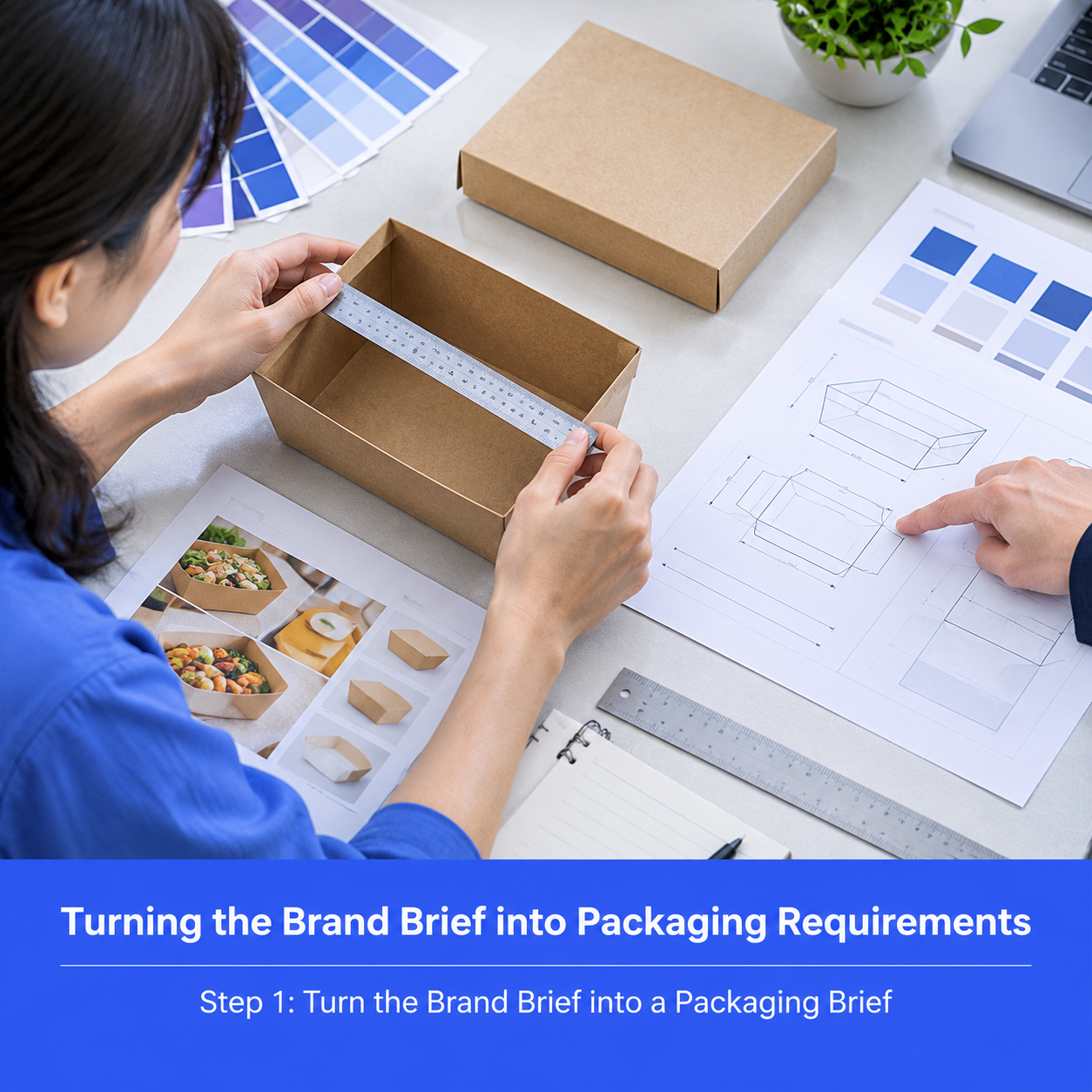
A usable brief describes both the customer experience and the conditions the packaging must withstand. A logo and a target unit price are insufficient for a production decision.
- Define the food: Identify ingredients, grease, moisture, acidity, filling conditions, storage, and expected contact duration.
- Describe operations: State whether staff or equipment will fill, close, label, stack, and transport the pack.
- Set physical requirements: Provide dimensions or capacity, usable fill level, closure, lid, accessories, and storage-space constraints.
- Set brand requirements: Identify artwork versions, colors, languages, mandatory text, and acceptable print variation.
- Map demand: Separate launch quantity, quantity per SKU, forecast repeat orders, and destination markets.
A SKU is a separately managed stock item; different sizes or artwork versions may require separate production quantities. Decide who approves food performance, brand appearance, and commercial terms. One project coordinator should consolidate feedback so the supplier receives a single controlled revision.
Use the food packaging dimensions and capacity guide to resolve measurement differences before sampling.
Step 2: Match Packaging Formats to the Food Application
Select the format by food protection and handling requirements before choosing its visual finish. A coating is a surface layer used to modify properties such as moisture or grease resistance; its composition affects performance and disposal claims.
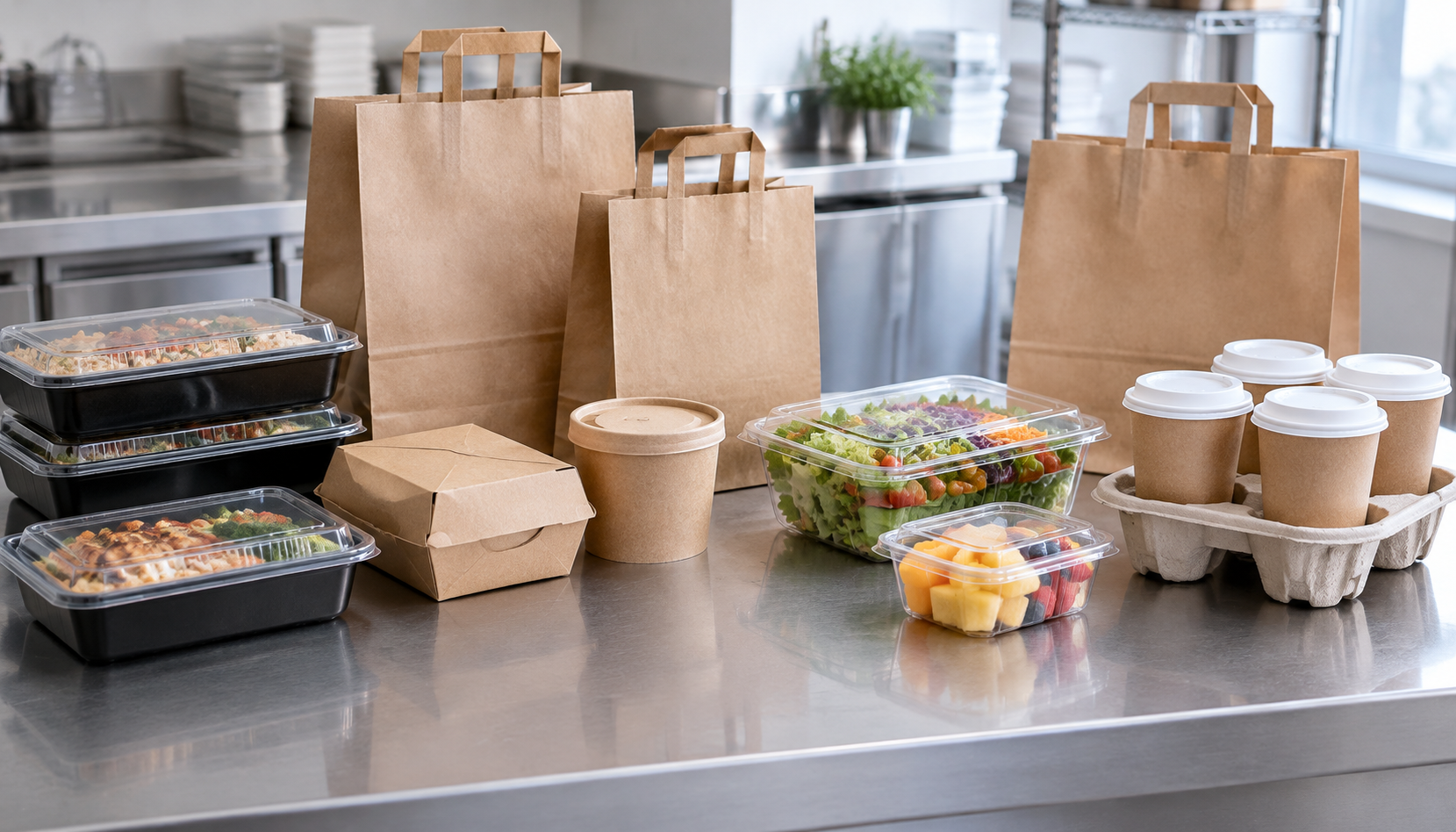
| Format | Applications to assess | Specifications to confirm | Main validation priority |
|---|---|---|---|
| Paperboard boxes | Bakery, sandwiches, takeaway meals | Board grade, dimensions, coating, folds, closure | Grease exposure, strength, and assembly |
| Paper bowls and cups | Soup, beverages, desserts | Capacity, lining, rim, lid, seam construction | Leakage and lid retention in intended use |
| Paper bags and wrap sheets | Baked goods, snacks, food wrapping | Paper grade, weight, barrier treatment, seams, sheet size | Grease transfer and handling strength |
| Plastic containers | Chilled foods and other specified applications | Resin, wall construction, dimensions, closure, printing or label area | Suitability for the actual temperature and food contact |
| Plastic bags | Food storage and frozen-product applications | Film structure, thickness, seal, closure, print position | Seal integrity and performance under intended storage conditions |
These are selection categories, not confirmed performance ratings. Material names alone cannot establish microwave, freezer, hot-fill, or shelf-life suitability. For paper options, the paper food packaging coatings comparison explains questions to resolve before choosing a barrier structure.
Step 3: Compare Sourcing Routes and Assign Responsibilities
The right sourcing route depends on how much structural customization the launch requires. Compare development obligations as well as appearance.
| Route | Potential advantage | Trade-off to confirm |
|---|---|---|
| Existing format with custom print | Uses an established structure | Available dimensions, print areas, and material choices may limit the brief |
| Existing format with a label or sleeve | Can separate branding from the primary pack | Adds components, application work, and fit checks |
| Custom size or structure | Can address specific portion, closure, or presentation needs | May require tooling, development samples, and additional validation |
Ask private label packaging suppliers which processes they perform and which involve subcontractors. Agree on ownership, storage, maintenance, and reuse rights for paid tooling and artwork. If exclusivity matters, define its product, market, and duration in writing.
Record approval responsibilities: the buyer controls brand content and market requirements; the supplier confirms manufacturing feasibility and the agreed production specification. Importers, filling partners, and laboratories may also have defined roles.
Step 4: Confirm Compliance, MOQ, and Commercial Scope
Confirm regulatory suitability and commercial assumptions before paying for development or approving an order. Food-contact requirements depend on the complete material structure, intended use, and destination market.
Request documentation that can be connected to the proposed material, coating, ink, adhesive, and manufacturing configuration as applicable. Check whether supporting tests cover the intended food type, contact duration, and temperature conditions. The food packaging compliance documents guide provides a detailed request framework.
Recyclable means suitable for an applicable recycling system; compostable means meeting defined composting conditions and relevant requirements. Biodegradable describes breakdown under specified conditions and does not establish compostability. Plastic-free concerns composition, including coatings and accessories. None of these claims follows automatically from a paper appearance.
- MOQ: Confirm the minimum order quantity per size, material, and artwork version.
- Cost: Separate packaging, samples, tooling, printing setup, testing, packing, and freight.
- Schedule: Identify dependencies for material procurement, approvals, production, inspection, and dispatch.
- Delivery terms: Specify the named place and responsibility for transport, insurance, clearance, and duties.
MOQ, price, and lead time depend on the exact specification and order conditions. Use the supplier quote comparison checklist to align competing offers.
Step 5: Approve Artwork and Brand Controls
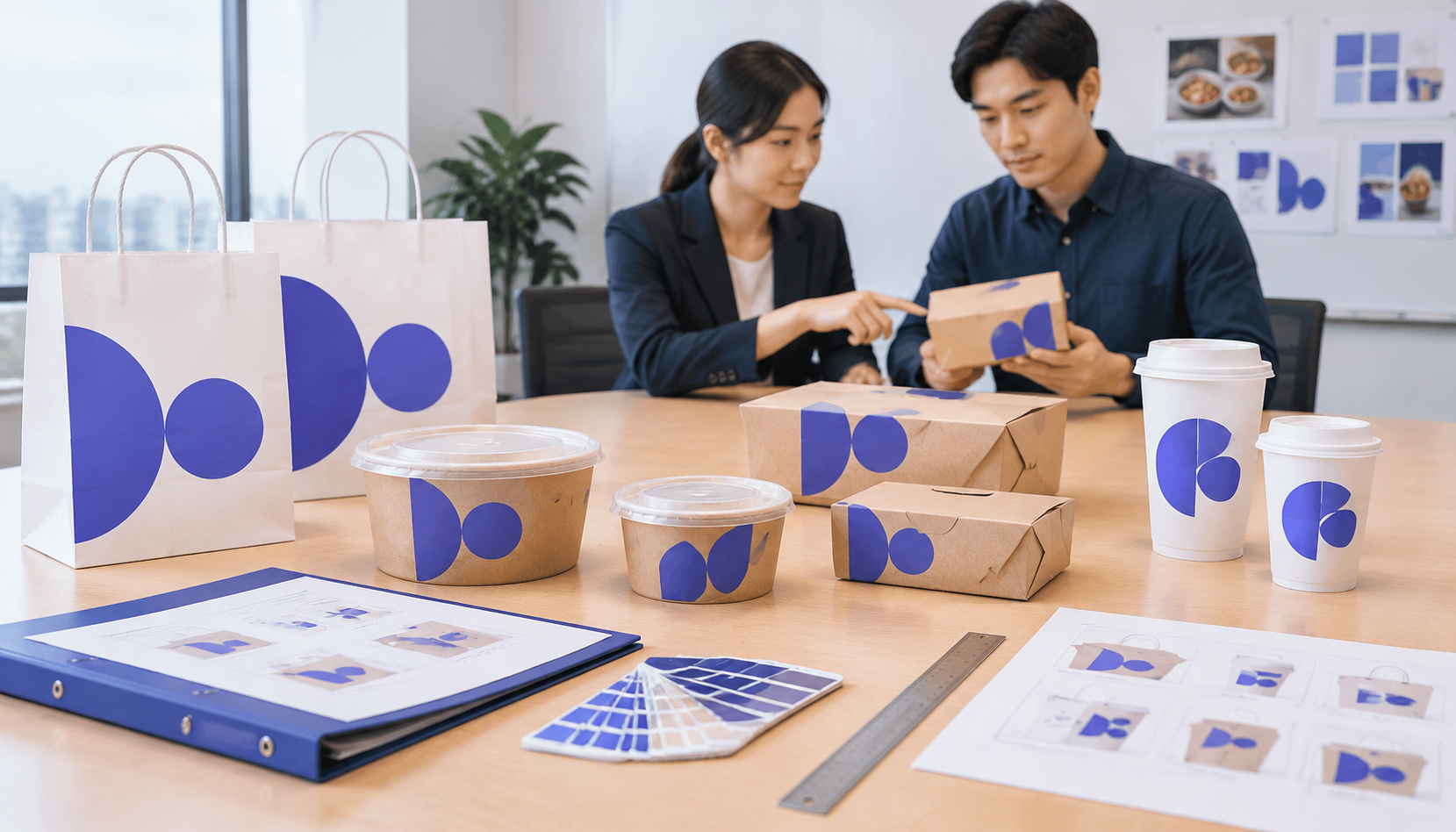
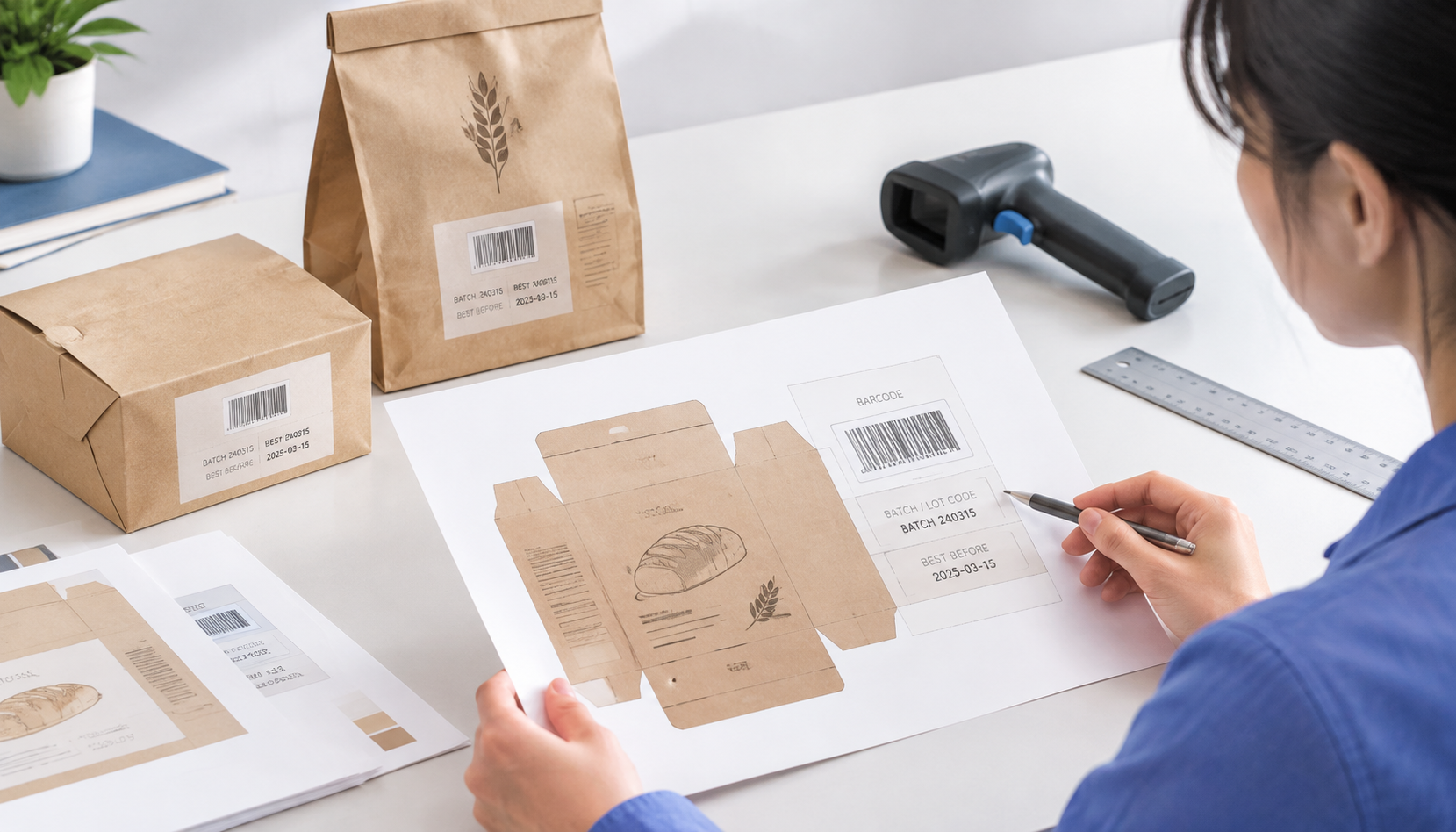
Approve artwork on the supplier-confirmed dieline before printing. A dieline is the layout showing cut edges, folds, seams, and other structural boundaries.
Check logo placement, reading direction, mandatory text, barcodes where used, and areas affected by folds or closures. Assign a version identifier to every approved file and remove obsolete versions from the production handover.
A digital proof checks content and layout but does not establish final color on the chosen substrate. Agree on the physical color reference, assessment conditions, and acceptable variation. Confirm whether a sample uses the intended production printing process.
The custom food packaging artwork requirements explain file preparation. Keep the sourcing approval focused on which artwork version and print reference authorize production.
Step 6: Validate Samples Before Production
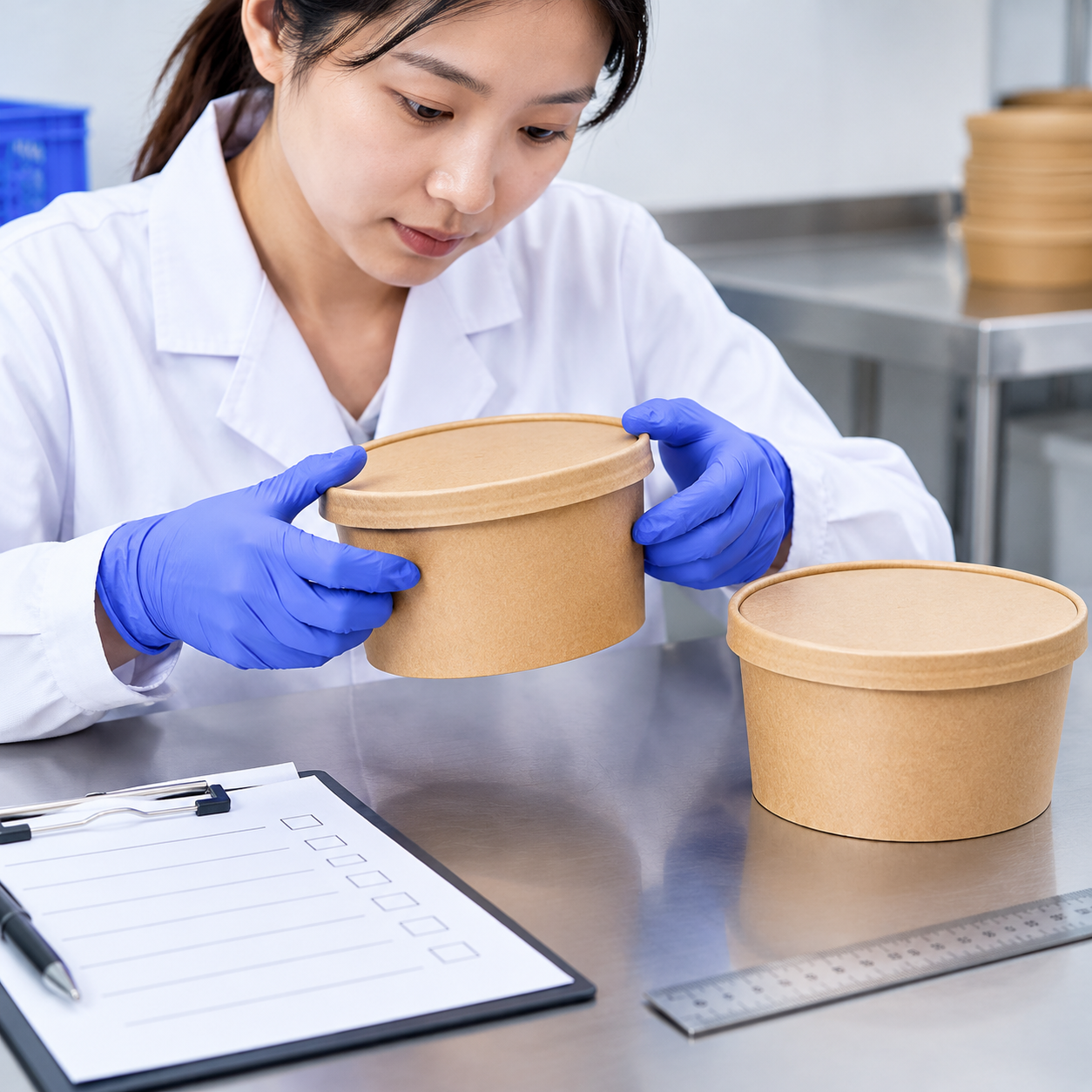
Packaging sample approval should establish what has been tested and what remains unverified. An unprinted structural sample can check fit; a printed sample can assess appearance; a production-representative sample can support broader performance checks.
- Measure the pack and verify portion fit, usable capacity, lid compatibility, and accessory fit.
- Run filling and closure trials using the intended food and actual operating conditions.
- Assess leakage, grease transfer, deformation, stacking, and handling through the expected service period.
- Trial transport, label adhesion, and barcode readability where relevant.
- Record results, deviations, and approval conditions against an identified sample.
For retail food products, packaging trials do not replace food shelf-life validation. Evaluate the filled product and its storage conditions through an appropriate validation program.
Retain matching reference samples with the buyer and supplier. If the sample differs from planned production in material, printing, or converting method, document the difference and decide what further verification is required.
Step 7: Release Production with Clear Quality Controls

Release food packaging production only when the order references an agreed specification, approved artwork, and identified sample. A purchase order stating only “same as sample” leaves material and inspection requirements unclear.
Production release record: Include the SKU, specification revision, artwork version, material and coating, dimensions and tolerances, lid or accessory code, order quantity, packing arrangement, compliance requirements, inspection criteria, and dispatch conditions.
Agree on measurable acceptance criteria for dimensions, print registration, closure fit, seams, appearance, and carton quantities. Define defect categories and an inspection sampling plan appropriate to the order, including whether independent inspection is required.
Require written approval before material, coating, ink, tooling, or accessory substitutions. Identify how nonconforming goods will be isolated and corrected. Keep production and carton identification linked so a complaint can be traced to the relevant batch.
Step 8: Coordinate Export Delivery, Storage, and Reorders
Plan shipping around packed volume and arrival readiness, not unit price alone. Food packaging can occupy substantial freight and warehouse space relative to its value.
Confirm units per carton, carton dimensions, gross weight, pallet requirements, protective packing, and destination labels. Match shipment documents to the purchase order and ask the importer or broker to confirm destination-specific requirements.
On arrival, check quantities, visible damage, pack identity, and agreed incoming-quality criteria before releasing stock. Store packaging in clean, dry conditions protected from contamination, sunlight, and crushing, following the supplier’s material-specific guidance.
For reorders, reference the approved specification revision and review any change in food, artwork, market, or manufacturing conditions. Track actual consumption and replenishment time so forecast changes do not force unapproved substitutions.
Private Label Food Packaging Sourcing FAQs
Does private-label packaging require a new structural design?
No. An existing format with custom printing may be suitable. Develop a new structure when fit, closure, handling, or presentation requirements justify it.
Can different artwork versions share one MOQ?
Sometimes, but shared material does not guarantee a combined MOQ. Ask the supplier to confirm minimum quantities and setup costs for each size and artwork version.
Is a digital proof enough to approve production?
A digital proof can approve layout and text. It does not verify physical fit, barrier performance, closure integrity, or final printed color.
Who checks food-contact compliance for the destination market?
The supplier should provide relevant material information and supporting documents. The buyer or importer must confirm applicable obligations and whether the evidence covers the intended use and market.
What changes require renewed approval after sampling?
Changes to material, coating, dimensions, closure, printing, food application, or destination requirements should trigger a review. The effect of the change determines whether new samples, tests, or documents are needed.
Key Takeaways for a Controlled Packaging Launch
Successful private label food packaging sourcing connects the brand brief to a verified production specification. Every approval should make the next decision clearer.
- Define food conditions, responsibilities, and SKU quantities before requesting samples.
- Approve structure, artwork, compliance evidence, and performance separately.
- Release production against written criteria and control subsequent changes.
- Include export packing, receiving checks, and reorder planning in the sourcing decision.
FAQ
Does private-label packaging require a new structural design?
No. An existing format with custom printing may be suitable. Develop a new structure when fit, closure, handling, or presentation requirements justify it.
Can different artwork versions share one MOQ?
Sometimes, but shared material does not guarantee a combined MOQ. Ask the supplier to confirm minimum quantities and setup costs for each size and artwork version.
Is a digital proof enough to approve production?
A digital proof can approve layout and text. It does not verify physical fit, barrier performance, closure integrity, or final printed color.
Who checks food-contact compliance for the destination market?
The supplier should provide relevant material information and supporting documents. The buyer or importer must confirm applicable obligations and whether the evidence covers the intended use and market.
What changes require renewed approval after sampling?
Changes to material, coating, dimensions, closure, printing, food application, or destination requirements should trigger a review. The effect of the change determines whether new samples, tests, or documents are needed.
Need the Right Packaging for Your Food Product?
Tell YBJ Packing your product type, food application, packaging type, dimensions or capacity, preferred material and coating, quantity per artwork version, printing requirements, lid or accessory needs, and destination market. Share your artwork and intended filling and storage conditions so our team can review the brief, recommend a suitable structure, and prepare sampling and quotation options.