

Table of Contents
- What Should Be Standardized Across Multiple Menus?
- Map Packaging for Food Delivery Orders by Food Behavior
- Compare Materials by Delivery Performance
- Build a Practical Container and Accessory Family
- Set Packing Rules for Mixed Orders
- Test the Pack System on Representative Deliveries
- Control MOQ, Printing, Inventory, and Export Costs
- Key Takeaways for Buyers
- Frequently Asked Questions
- Conclusion
Standardize delivery packaging around food performance, shared container footprints, compatible lids, and repeatable packing rules. This guide explains how to simplify mixed-menu orders without compromising food quality or creating unnecessary packaging inventory.
What Should Be Standardized Across Multiple Menus?
The most practical way to standardize packaging for food delivery orders is to create a small family of containers, lids, bags, and accessories matched to food behavior. Share footprints and packing procedures where possible, but retain separate solutions for liquids, crisp foods, cold dishes, and drinks. This helps restaurants and delivery kitchens handle mixed aggregator orders without forcing every dish into one unsuitable container.
Packaging standardization means assigning approved pack combinations to repeatable menu groups. A pack family is a set of containers and accessories with documented compatibility. A SKU, or stock-keeping unit, identifies each separately stocked item, including lids.
Standardize three things first: container footprints, verified lid pairings, and order assembly rules. Capacity, barriers, ventilation, and food separation may still vary. Two containers with similar dimensions do not necessarily accept the same lid.
This approach focuses on the operational challenge of assembling different dishes into one delivery order. It is especially useful when several restaurant brands share a kitchen, packing station, or purchasing team.
Map Packaging for Food Delivery Orders by Food Behavior
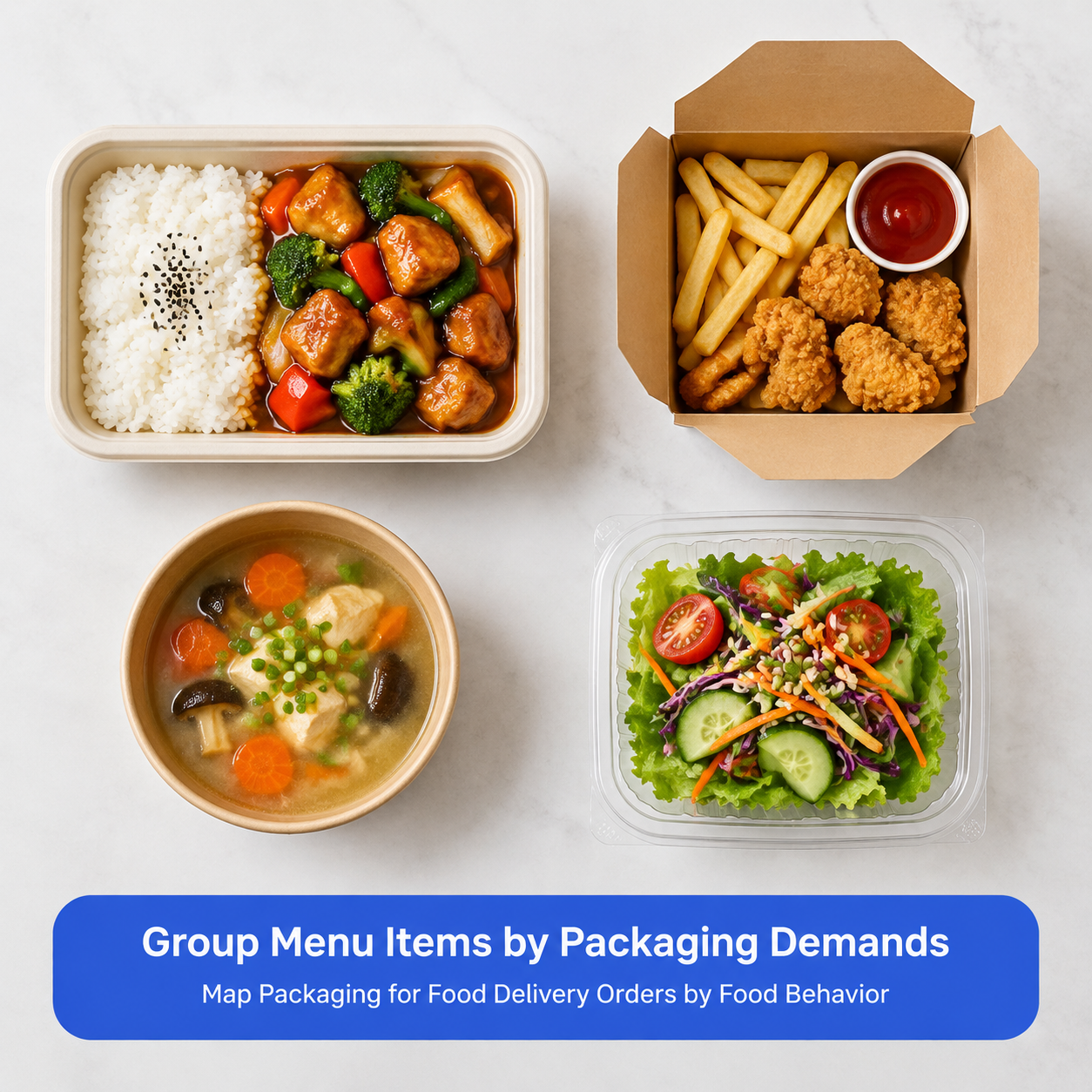
Group dishes by their packaging demands before grouping them by cuisine or brand. A rice bowl and a pasta dish may share a pack, while fried chicken and chicken curry usually need different moisture management.
- Record the served portion: include solids, sauce, garnishes, and required headspace.
- Identify the failure risk: leakage, condensation, crushing, drying, or ingredient mixing.
- Define the delivery conditions: packing temperature, holding time, likely journey duration, and transport orientation.
- Assign an approved pack: document the container, lid, liner, accessory, and bag combination.
- List exceptions: retain specialist packaging when a shared format fails food-quality or handling checks.
Use actual portions rather than menu names to select capacity. Excess space can increase movement; insufficient space can interfere with closure. The packaging size and portion-control guide provides related sizing considerations.
Menu mapping record: dish group; portion range; packing temperature; sauce level; crispness requirement; container code; lid code; accessory code; bag assignment. Update this record whenever recipes or portion sizes change.
Compare Materials by Delivery Performance
Select materials against the actual food and handling conditions. A material name alone does not establish leak resistance, microwave suitability, or an approved temperature range.
| Material option | Potential role | Main trade-off | Buyer verification |
|---|---|---|---|
| Coated paperboard | Meal boxes and folded takeaway packs | Coating and construction determine moisture resistance; folds may create leakage paths | Barrier specification, seam performance, closure, and filled-pack strength |
| Polypropylene (PP) | Rigid containers for suitable hot or cold applications | Suitability depends on the resin, structure, lid, and declared use conditions | Food-contact documentation, temperature limits, lid fit, and intended reheating use |
| Polyethylene terephthalate (PET) | Clear packs for suitable chilled dishes | Conventional cold-use PET should not be assumed suitable for hot filling | Exact grade, declared application, closure, and chilled transport performance |
| Molded bagasse | Fiber-based meal trays and clamshells | Wet-food durability and grease resistance vary with formulation | Barrier treatment, holding performance, compression, and destination compliance |
| Aluminum foil | Trays for suitable cooked meals | Rims can deform; closure and food compatibility need attention | Tray gauge, lid system, acidic or salty food suitability, and handling instructions |
For fiber options, consult the food packaging materials guide. Food-contact compliance must cover the exact material, coating, printing, intended use, and destination market.
Recyclable means compatible with an available collection and recycling route. Compostable requires evidence for specified composting conditions. Biodegradable describes breakdown under defined conditions and does not establish a disposal route. Plastic-free claims require checking coatings, liners, and accessories as well as the visible substrate.
Build a Practical Container and Accessory Family
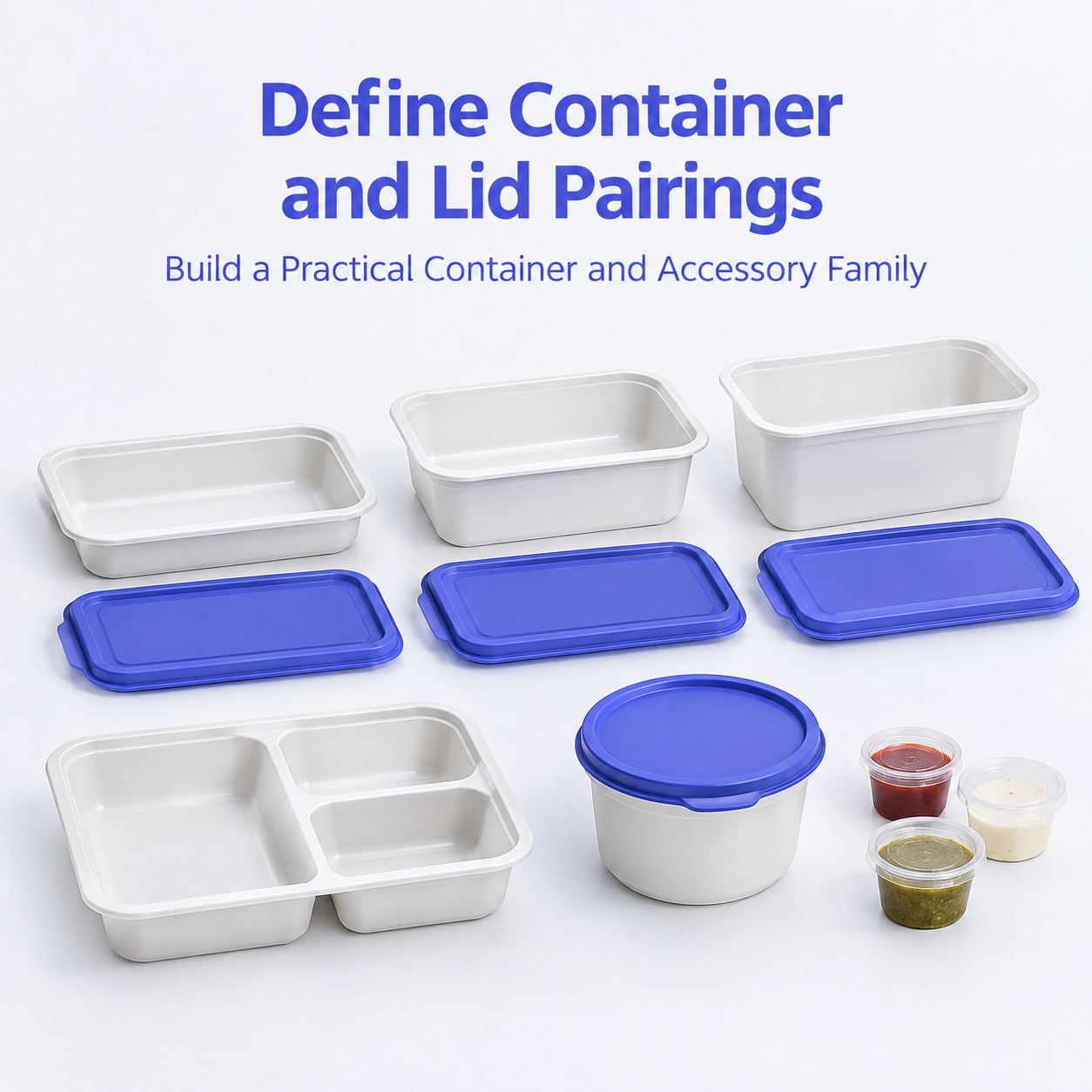
Start with the smallest pack family that passes your menu trials. The following product-format table is a planning template; it does not indicate confirmed stock, shared tooling, or universal compatibility.
| Pack format | Menu group | Standardization opportunity | Specification to lock |
|---|---|---|---|
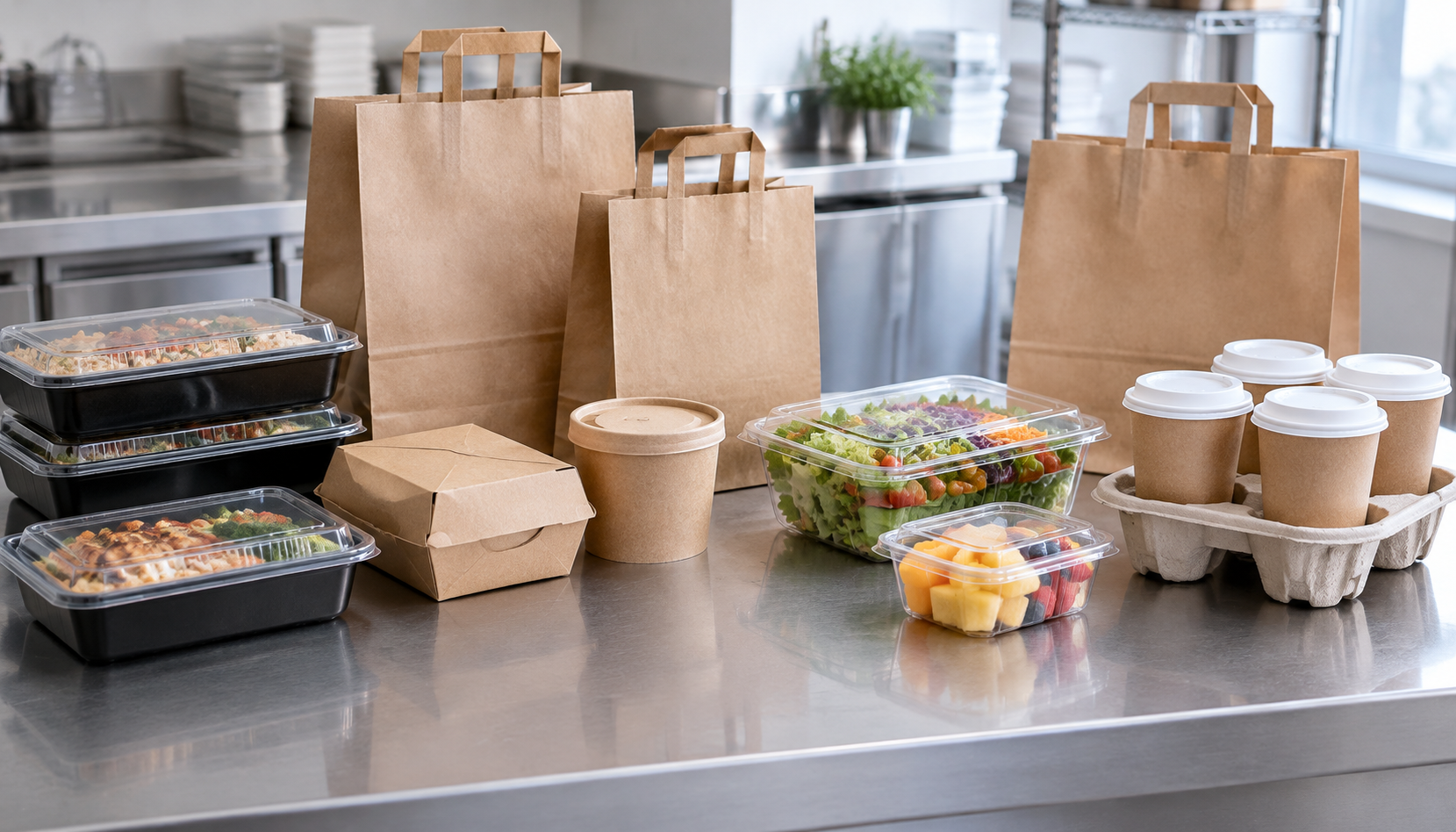
| Rigid meal container | Rice, pasta, and suitable sauced dishes | Common footprint with different approved depths | Usable capacity, rim geometry, lid code, stacking contact points |
| Compartment tray | Meals requiring ingredient separation | Shared outer dimensions where practical | Compartment volumes and resistance to sauce migration |
| Vented box | Fried foods and crisp sides | Shared assembly method and outer dimensions | Vent arrangement, grease barrier, and loaded strength |
| Soup container | Broths and liquid-rich dishes | Limited capacity family with verified lids | Fill line, closure engagement, and leakage performance |
| Clear cold-food pack | Salads, sushi, and chilled desserts | Shared handling and labeling rules | Food clearance, lid retention, and cold-use conditions |
| Cup carrier and delivery bag | Drinks and assembled orders | Defined combinations for order sizes | Cup fit, loaded stability, bag base, and handle strength |
Approve container and lid pairs together. Matching nominal diameter or capacity does not prove delivery container lid compatibility. For delicate chilled dishes, the sushi packaging and compartment guide explains additional separation and presentation needs.
Set Packing Rules for Mixed Orders
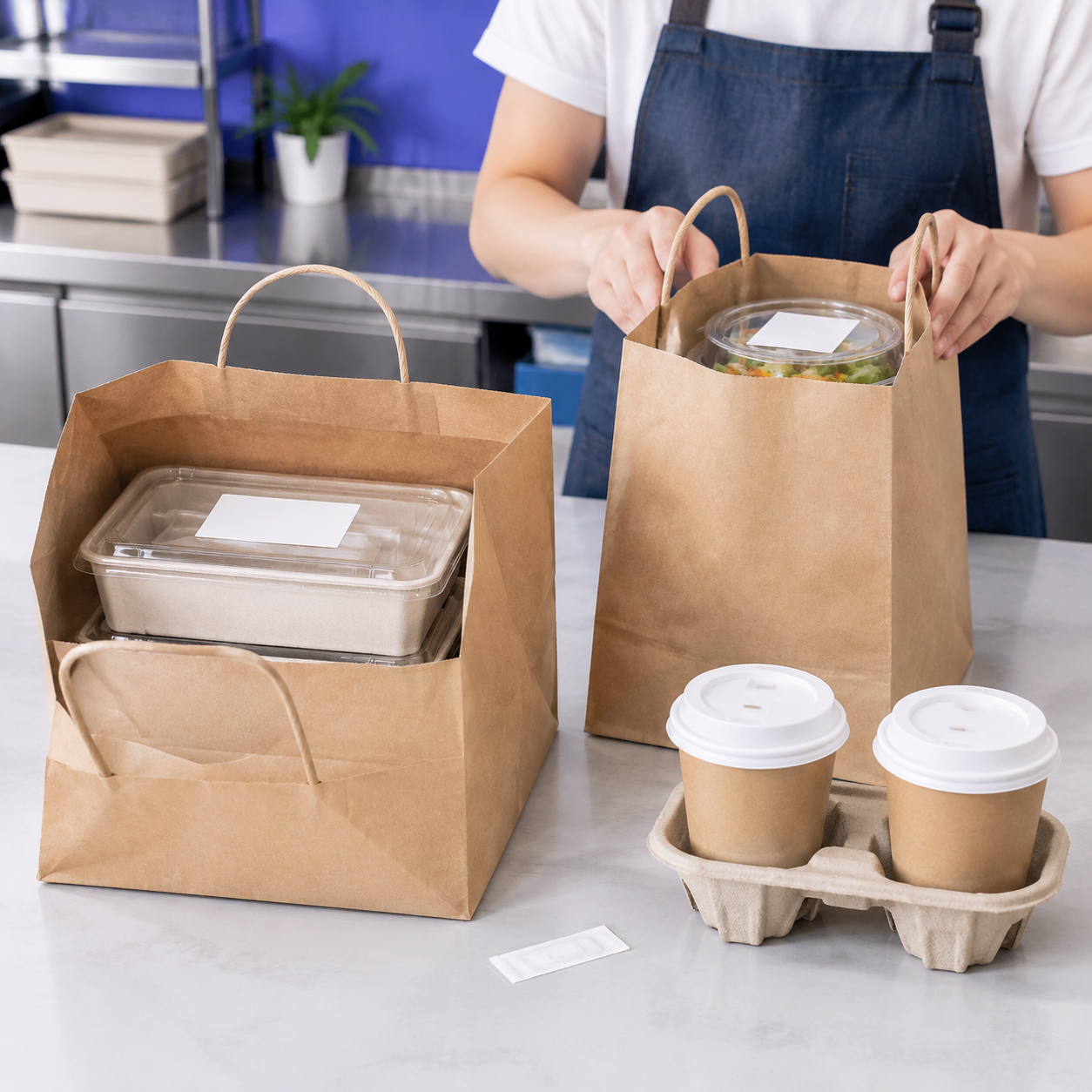
A shared pack family works only when staff assemble orders consistently. Establish a packing sequence that protects closures, controls moisture, and keeps the aggregator order identifiable.
- Separate hot and cold items: use separate bags or a validated arrangement that limits unwanted heat transfer.
- Protect crisp foods: keep them away from steam-producing dishes. Ventilation can release moisture but may also increase heat loss.
- Build stable stacks: put heavier, rigid packs below lighter items. Avoid loading a container lid unless the complete stack has passed testing.
- Secure drinks: check the actual cup base and profile in the carrier, including mixed cup sizes.
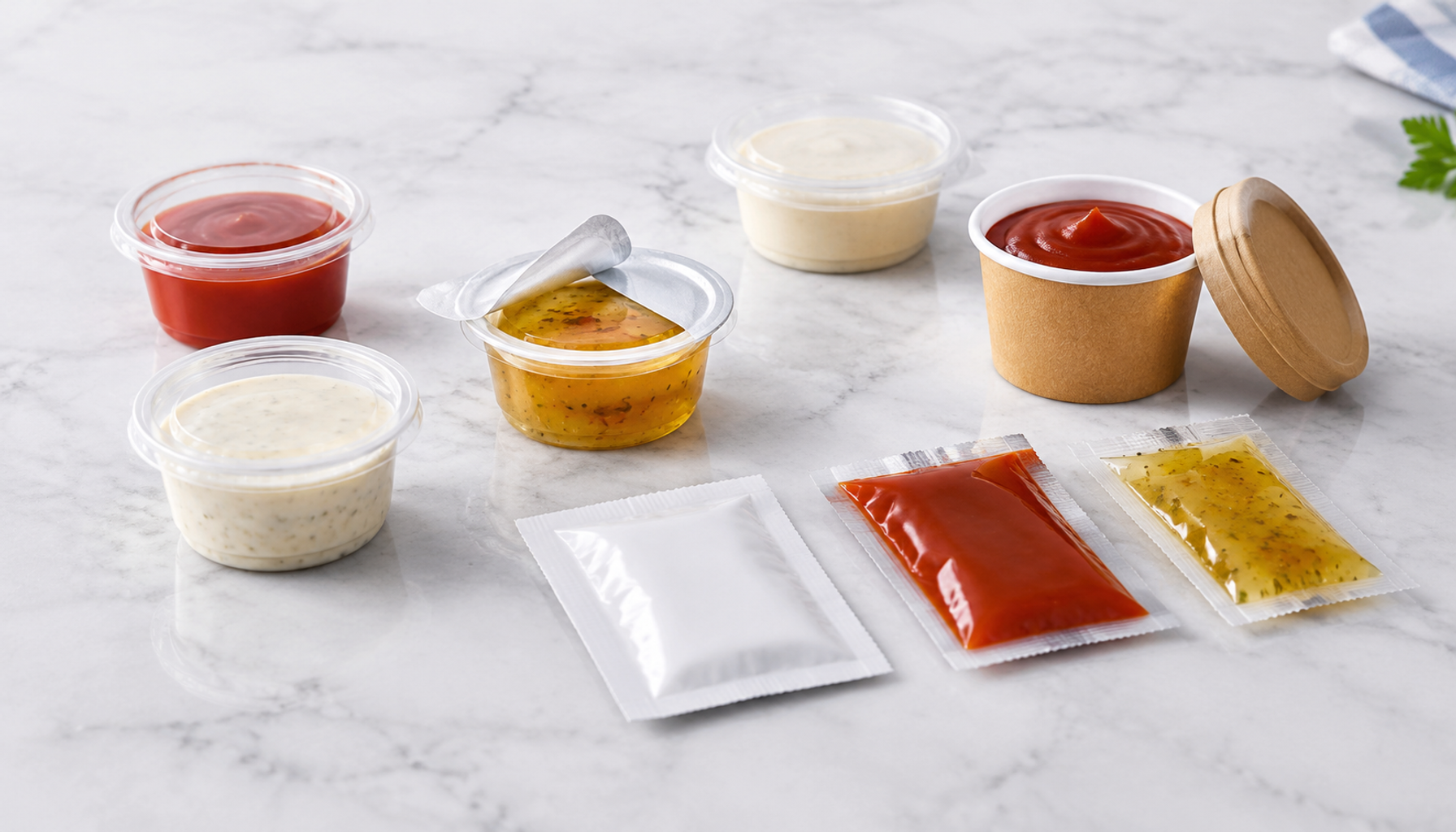
- Control accessories: assign sauce cups, cutlery, and napkins according to menu and customer selection.
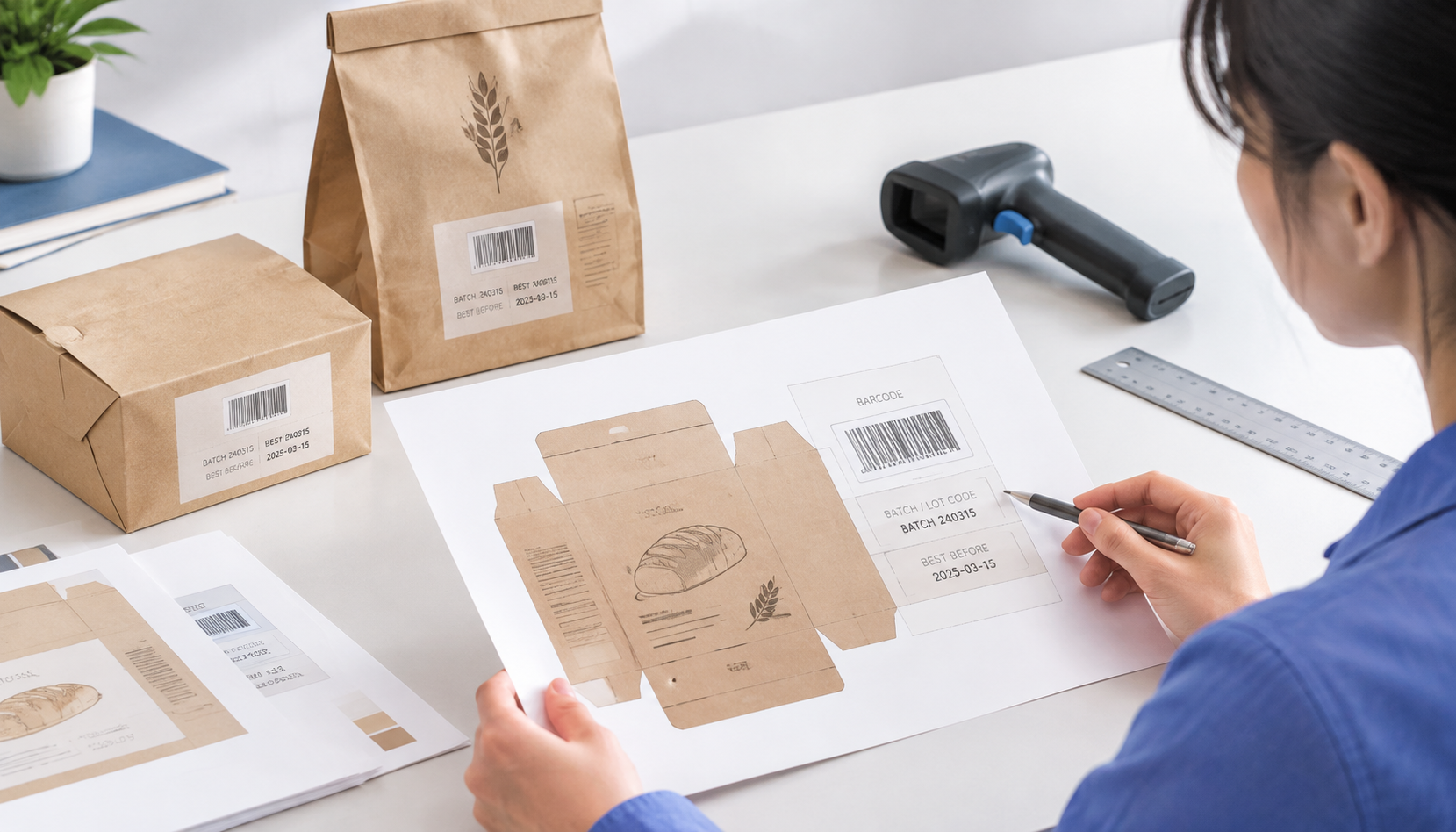
- Identify every bag: repeat the order identifier and mark bag sequence so multi-bag orders remain together.
Apply tamper evidence after checking contents and closures. A seal should show disturbance at the intended opening point; it does not make the pack leakproof. Follow the tamper-evident takeout packaging guide for related closure considerations. Keep vent openings and necessary handling instructions visible.
Test the Pack System on Representative Deliveries
Approve packaging for food delivery orders through filled-pack trials that reproduce your operating conditions. Empty samples cannot establish how the system behaves with food, steam, weight, and transport movement.
- Select challenging orders: include liquid dishes, crisp sides, chilled items, drinks, and the largest normal mixed order.
- Pack as staff would: use actual portions, packing temperatures, closures, labels, and accessories.
- Reproduce the journey: include realistic holding time, carrier handling, movement, and delivery duration.
- Inspect against agreed criteria: record leakage, lid release, stack deformation, condensation, sogginess, temperature change, and drink movement.
- Repeat after changes: retest substitutions, new lids, revised coatings, different portions, or altered packing sequences.
Set acceptance criteria before testing and photograph failures. Packaging trials support pack selection; they do not replace food-safety controls or establish a universal safe holding time. Use applicable food-safety requirements for the menu and operating market.
Control MOQ, Printing, Inventory, and Export Costs
Compare the cost of a complete approved order pack, including handling and logistics, rather than container price alone. Fewer SKUs can simplify inventory, but oversized packs or extra accessories can offset those benefits.
Request separate pricing for containers, lids, carriers, bags, printing, tooling, samples, carton packing, and freight. Confirm whether minimum order quantity applies per size, material, artwork, or production run. Shared footprints do not automatically create a shared MOQ.
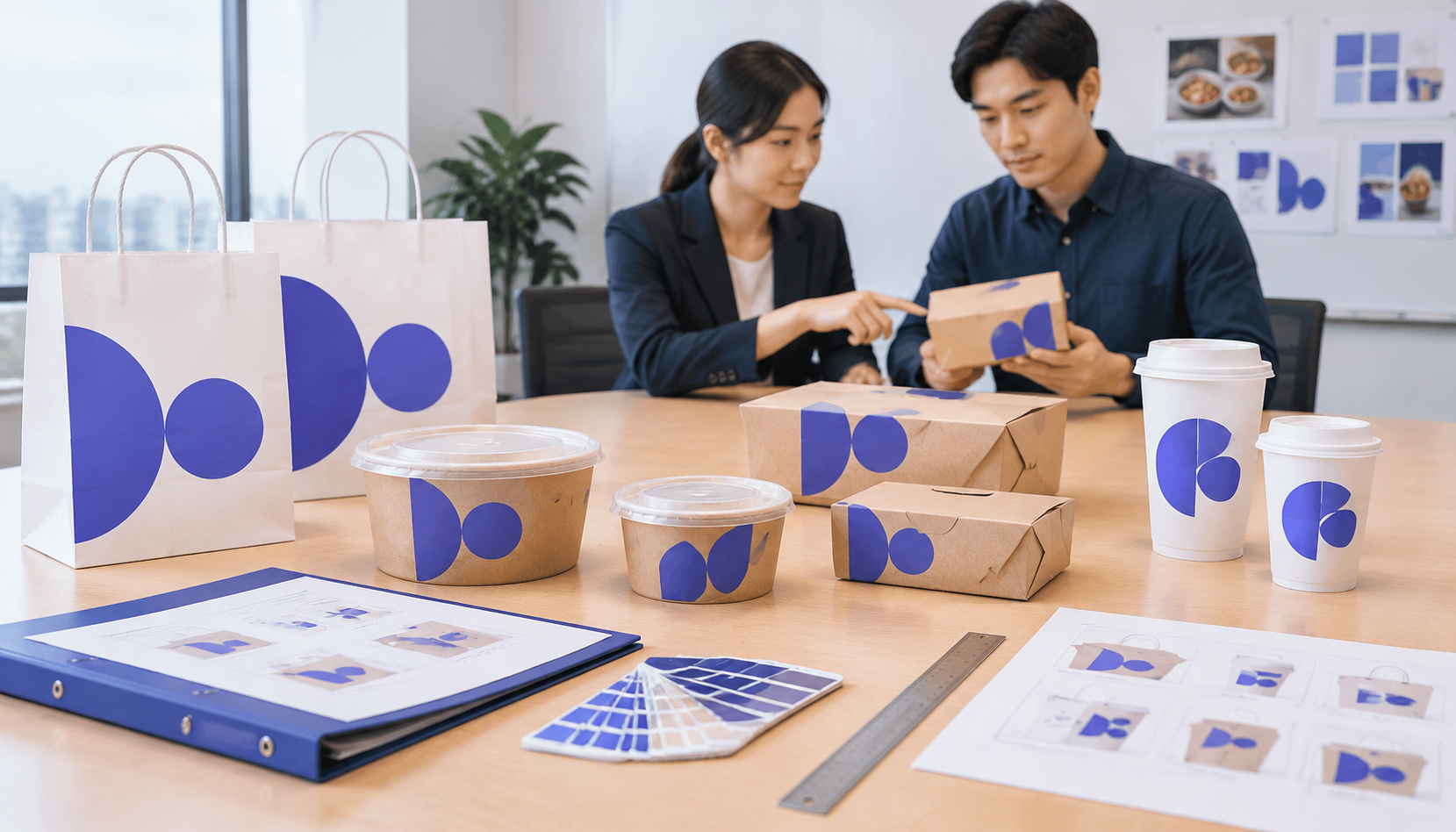
For kitchens operating several brands, compare neutral packaging with brand-specific labels against fully printed packs. Labels provide flexibility but add application labor and require adhesion checks. Custom printing needs approved artwork, proofs, and clear controls on surfaces that may contact food.
Forecast container and lid demand together. Store packaging clean, dry, protected from contamination, and according to supplier instructions. Check carton dimensions, nesting, storage space, and transit protection when comparing landed cost.
Guangzhou YBJ Paper & Plastic Co., operating since 1998, supports custom food packaging design, samples, production, quality control, and export service. MOQ, price, production timing, and shipping arrangements depend on the exact specification and destination. Agree on sample approval, inspection criteria, and supplier change notification before production.
Key Takeaways for Buyers
- Standardize around food behavior and shared handling requirements.
- Approve lids, containers, carriers, and bags as complete combinations.
- Keep specialist packs where moisture, liquid containment, or presentation requires them.
- Measure complete-order cost and validate the system with representative deliveries.
Frequently Asked Questions
The following answers address common purchasing decisions for mixed-menu delivery operations.
Conclusion
Effective packaging for food delivery orders combines a manageable pack family with clear assembly rules and validated performance. Share formats where they work, retain necessary exceptions, and approve the complete mixed order before committing to production. This gives buyers a practical basis for inventory planning, supplier comparison, and consistent delivery presentation.
FAQ
Can one container serve every delivery menu?
Usually, one container cannot satisfy all liquid, crisp, chilled, and presentation requirements. Standardize a small pack family with shared footprints and verified accessories, while keeping specialist formats for dishes that fail trials.
How many packaging SKUs should a kitchen keep?
There is no universal target. Keep the fewest SKUs that cover actual portions, food behavior, and delivery conditions. Count lids and accessories separately, and review rarely used formats before removing them.
Do vented containers improve fried-food delivery?
Vents can help moisture escape, but they may also increase heat loss. Test the filled container inside the actual delivery bag and keep crisp items away from steam-producing dishes.
Can containers of different depths share one lid?
Only when their rim geometry and closure system are designed and verified for that lid. Confirm compatibility in writing and test each container depth under filled delivery conditions.
What should buyers send when requesting a packaging quote?
Provide food applications, portions, dimensions or capacity, material and coating preferences, quantities by format, printing, lids and accessories, delivery conditions, and destination market. MOQ, price, compliance requirements, and lead time depend on these details.
Need the Right Packaging for Your Food Product?
Tell us your product or packaging type, food application, dimensions or capacity, material and coating preferences, quantity by format, printing requirements, lids or accessories, and destination market. For mixed menus, include representative orders and delivery conditions. Our team will recommend a suitable structure and prepare sampling and quotation options.