

Table of Contents
- Understanding Sushi Packaging Materials and Compartments
- Material Options for Sushi Packaging
- Compartment Configurations and Sizing
- Performance Considerations for Catering and Delivery
- Printing and Branding for Sushi Packaging
- Sourcing, MOQ, and Sampling Guidance
- Storage and Shipping Considerations
- Conclusion
A practical B2B guide to selecting sushi packaging materials and compartments for catering and delivery, covering plastic, paperboard, bagasse, sizing, performance, branding, and sourcing considerations.
Understanding Sushi Packaging Materials and Compartments
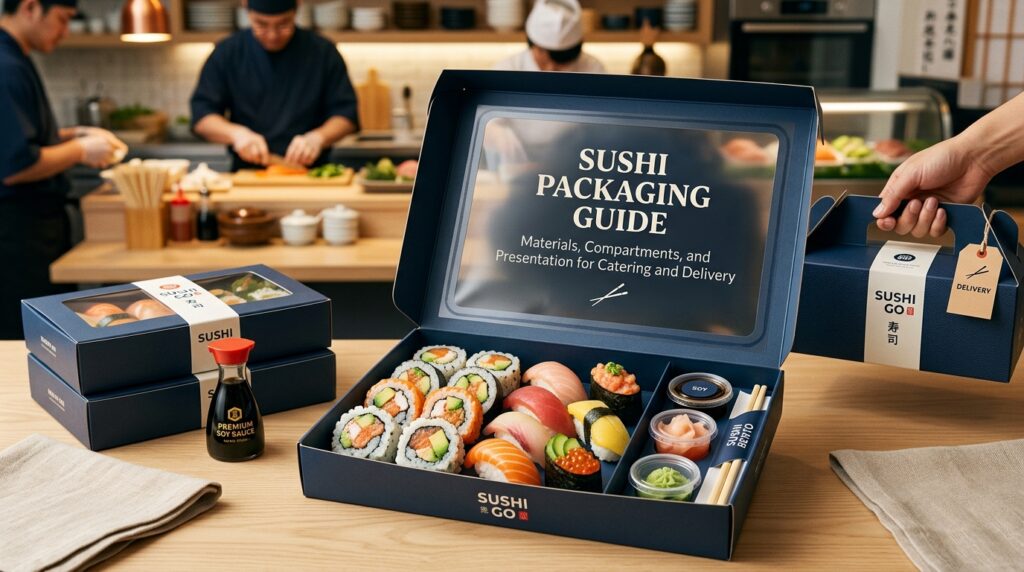
Sushi packaging materials and compartments directly affect food safety, presentation, and delivery performance. For catering and delivery orders, the right container keeps sushi pieces separated, prevents sauce migration, maintains temperature, and supports brand presentation. The most common materials are plastic (PET, PP), paperboard (often coated), and bagasse (molded fiber). Each offers different moisture resistance, heat tolerance, recyclability, and printability. Compartment layouts range from single-compartment trays to multi-divider designs that hold sushi rolls, nigiri, ginger, wasabi, and soy sauce separately. The exact specification—material, coating, compartment count, lid fit, and printing—depends on the service style, food application, and destination market compliance requirements. This guide explains the key selection criteria for B2B buyers sourcing sushi packaging for catering, takeout, and delivery.
Material Options for Sushi Packaging
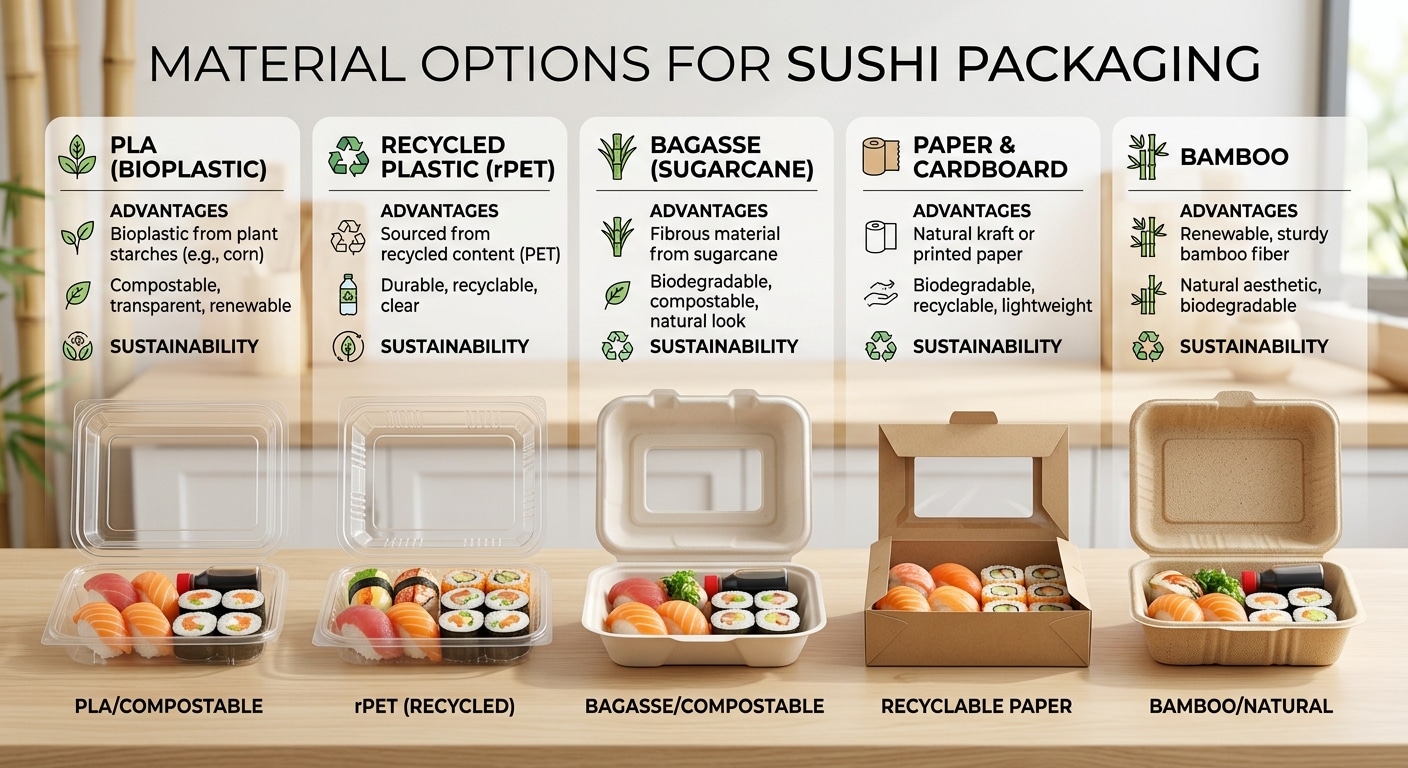
Selecting the right material requires balancing moisture resistance, clarity, sustainability goals, and cost. Below are the three primary material families used for sushi containers.
Plastic Sushi Containers (PET, PP, PS)
Plastic is the most common material for sushi packaging because it is clear, rigid, and affordable. PET (polyethylene terephthalate) offers excellent clarity and is widely accepted in recycling streams where facilities exist. It is best for cold sushi and sashimi—do not use PET for hot foods or microwave reheating. PP (polypropylene) is slightly cloudy but more heat tolerant and can be microwaved, making it suitable for warm items like grilled eel or tempura rolls. PS (polystyrene) is still used but faces increasing restrictions due to environmental concerns; many buyers are switching to PET or PP. For custom plastic tray specifications and printing options, see the custom plastic tray wholesale guide.
Paperboard and Bagasse Sushi Containers
Paperboard containers are often coated with a thin layer of PE (polyethylene) or PLA (polylactic acid) to resist moisture and oil. Uncoated paperboard will absorb moisture from sushi rice and become soggy. PLA-coated paperboard is industrially compostable, but not all municipalities accept it. Bagasse (molded sugarcane fiber) is a popular sustainable alternative: it is compostable, has good heat resistance, and can be molded into compartment trays. However, bagasse may require a lining for very wet items and is not transparent. For a detailed comparison of bagasse and paperboard, read the bagasse vs paperboard containers guide.
Other Materials: Bamboo, Wood, and Reusable Options
Bamboo and wooden trays are used for dine-in presentation and premium catering events. They are not typically suitable for delivery because they lack a secure lid and are not leak-proof. Reusable plastic containers (e.g., Tritan) are emerging for high-end catering but require a return logistics system. Always verify food-contact compliance for any material, especially when sourcing from new suppliers.
Compartment Configurations and Sizing
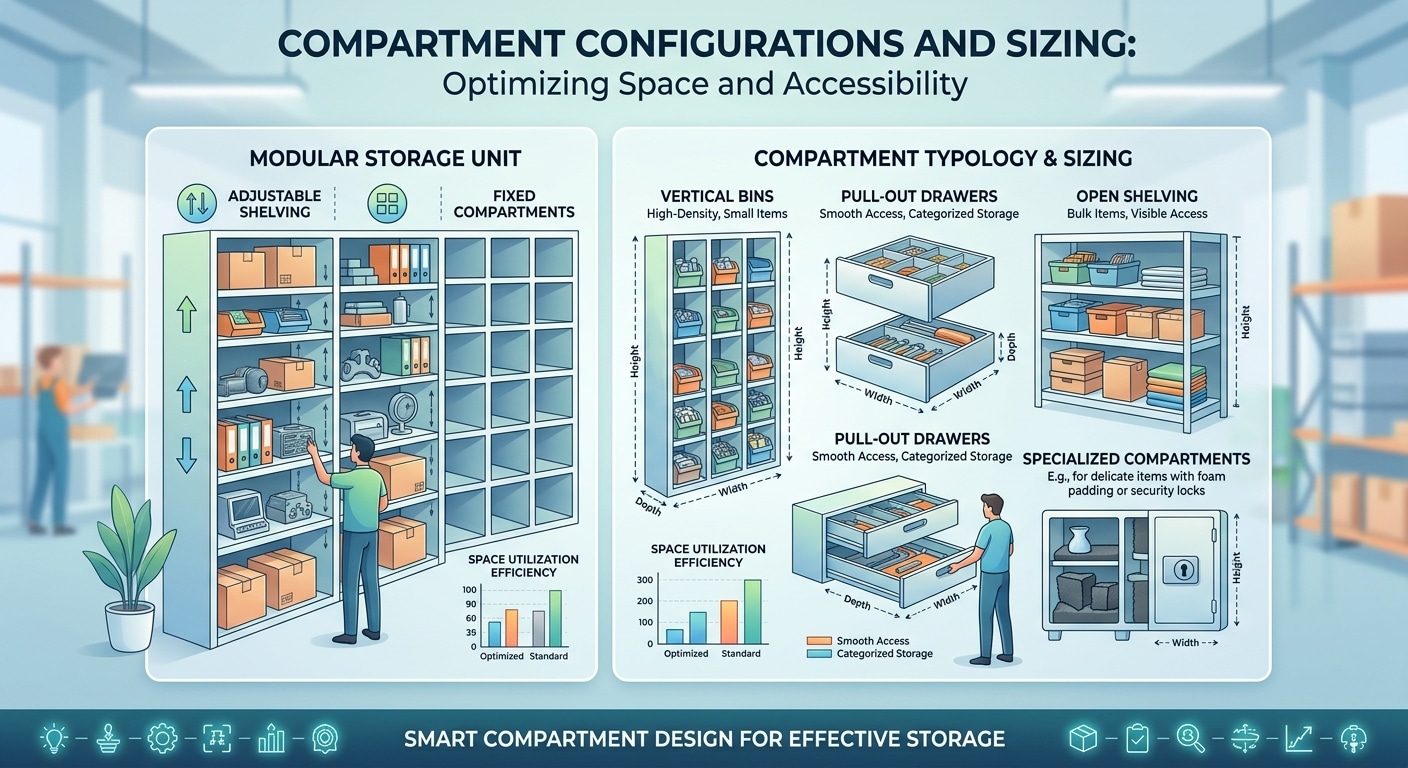
Compartment design determines portion control, sauce separation, and presentation. Common configurations include:
- Single compartment: For simple rolls or nigiri sets, often with a separate sauce cup.
- Two compartments: Main sushi area plus a small divider for ginger/wasabi.
- Three compartments: Typically one large area for rolls, one medium for nigiri, and one small for condiments.
- Four to five compartments: Used for mixed platters in catering, keeping sashimi, rolls, and garnishes separate.
Sizing is usually expressed in fluid ounces (oz) or milliliters (ml). Common sushi tray capacities range from 8 oz (single serving) to 32 oz (sharing platter). The compartment depth should accommodate sushi height without crushing toppings. Lid selection is critical: flat lids work for uniform trays, dome lids provide extra clearance for decorated rolls, and snap-fit lids offer secure closure. For a full lid comparison and leak testing methods, refer to the choosing lids guide. When specifying compartments, consider whether the container will be used for cold grab-and-go or delivery—compartment walls should be high enough to prevent sauce migration during transport.
Performance Considerations for Catering and Delivery
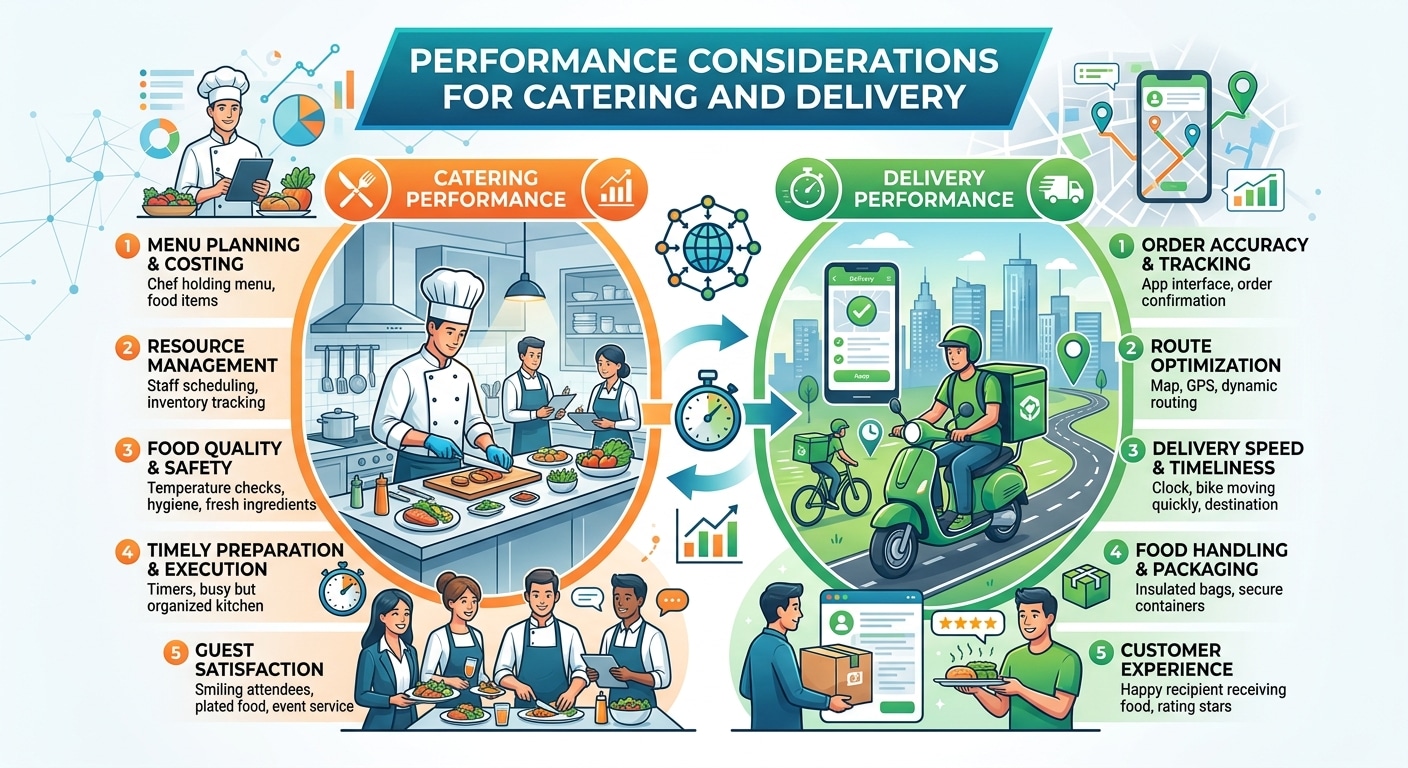
Sushi packaging must withstand transport, temperature control, and customer handling. Key performance factors include:
- Leak resistance: The container and lid must prevent soy sauce or condensation from leaking. Perform regular seal testing using the food packaging seal testing checklist.
- Tamper evidence: For delivery orders, tamper-evident features such as security seals or adhesive labels help reassure customers. Explore options in the tamper-evident delivery bags guide.
- Temperature retention: Sushi must stay chilled (below 5°C / 41°F). Select materials that can withstand cold temperatures without becoming brittle (PET and PP both perform well). Consider adding insulated liners or cold packs for long deliveries.
- Stackability: For catering trays, ensure the container design allows stable stacking without damaging contents. Dome lids may reduce stackability; flat lids are better for stacking.
- Ventilation: Some containers include small vents to prevent condensation buildup, but this can allow odor transfer. Evaluate based on delivery distance.
Always test packaging with actual food under simulated delivery conditions before full rollout.
Printing and Branding for Sushi Packaging
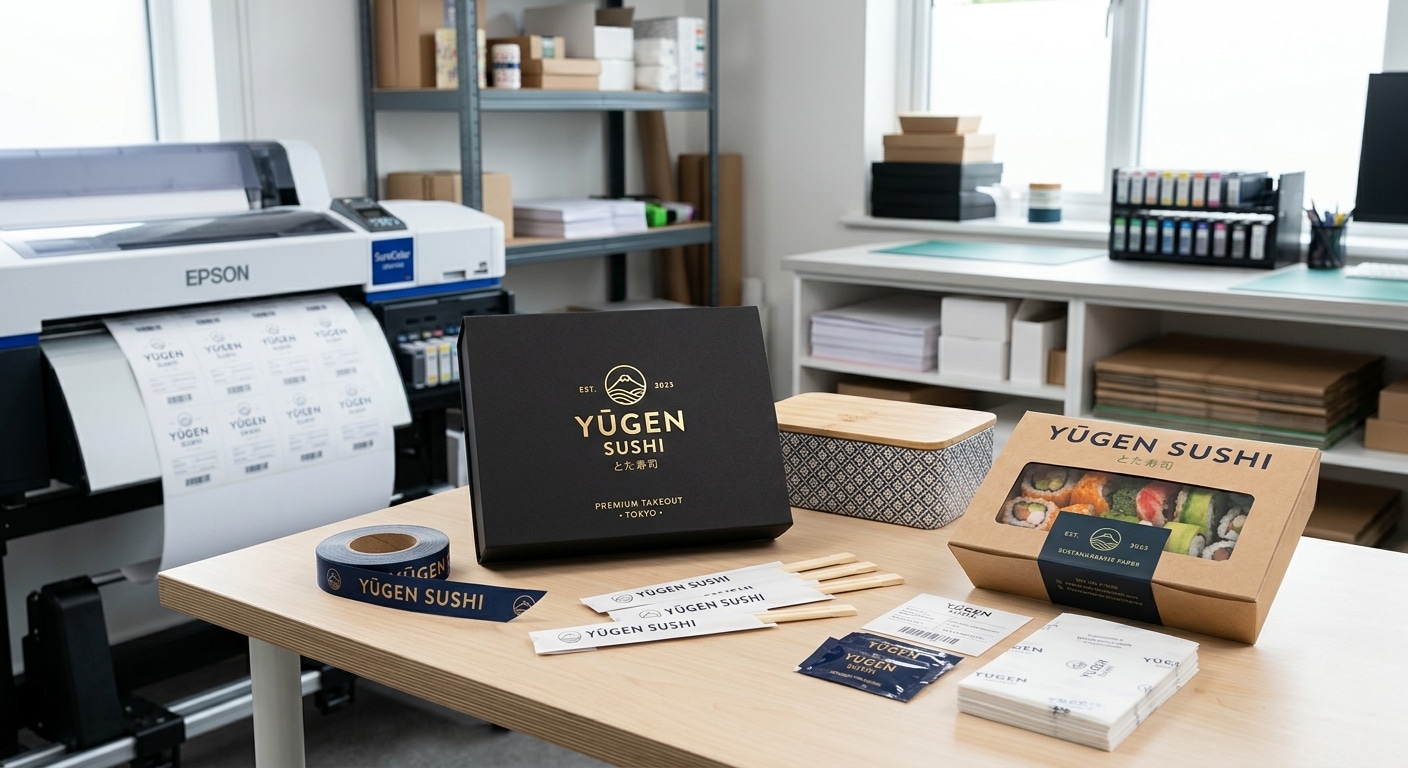
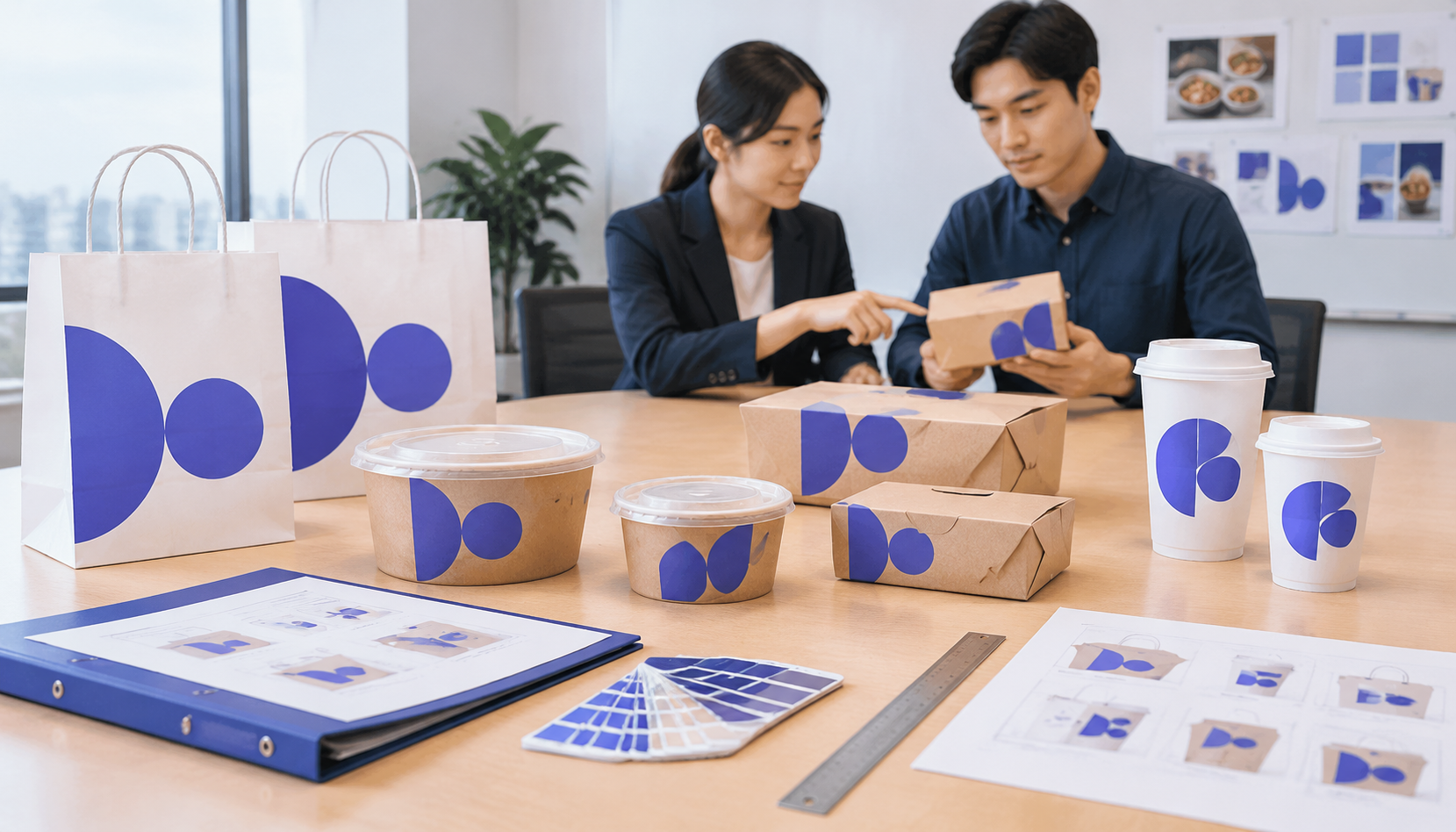
Custom printing on sushi containers enhances brand recognition and can communicate important information. Common printing areas include the lid, container base, or both. Options include:
- Offset printing for high-quality, full-color graphics on paperboard lids.
- Flexographic printing for larger runs on plastic lids or film.
- Digital printing for short runs and sampling.
- Labels as a lower-cost alternative for branding and allergen/ingredient information.
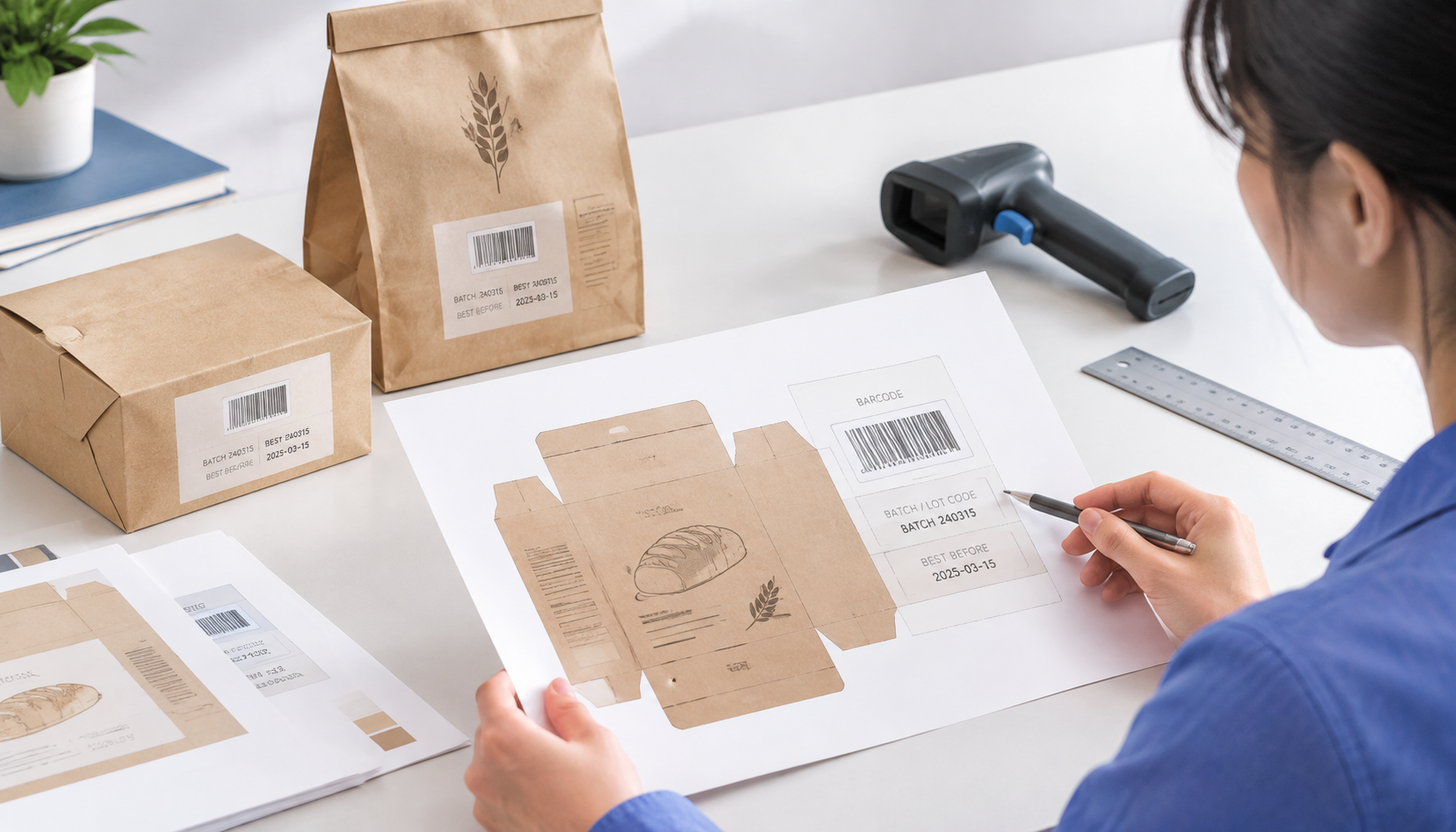
Printing typically increases MOQ. For plastic trays, printing is often done on the lid or a film seal. When specifying printing, provide dielines or artwork in vector format. Ensure that inks used are food-safe and comply with destination market regulations. Consider adding space for date/lot codes or QR codes for traceability.
Sourcing, MOQ, and Sampling Guidance
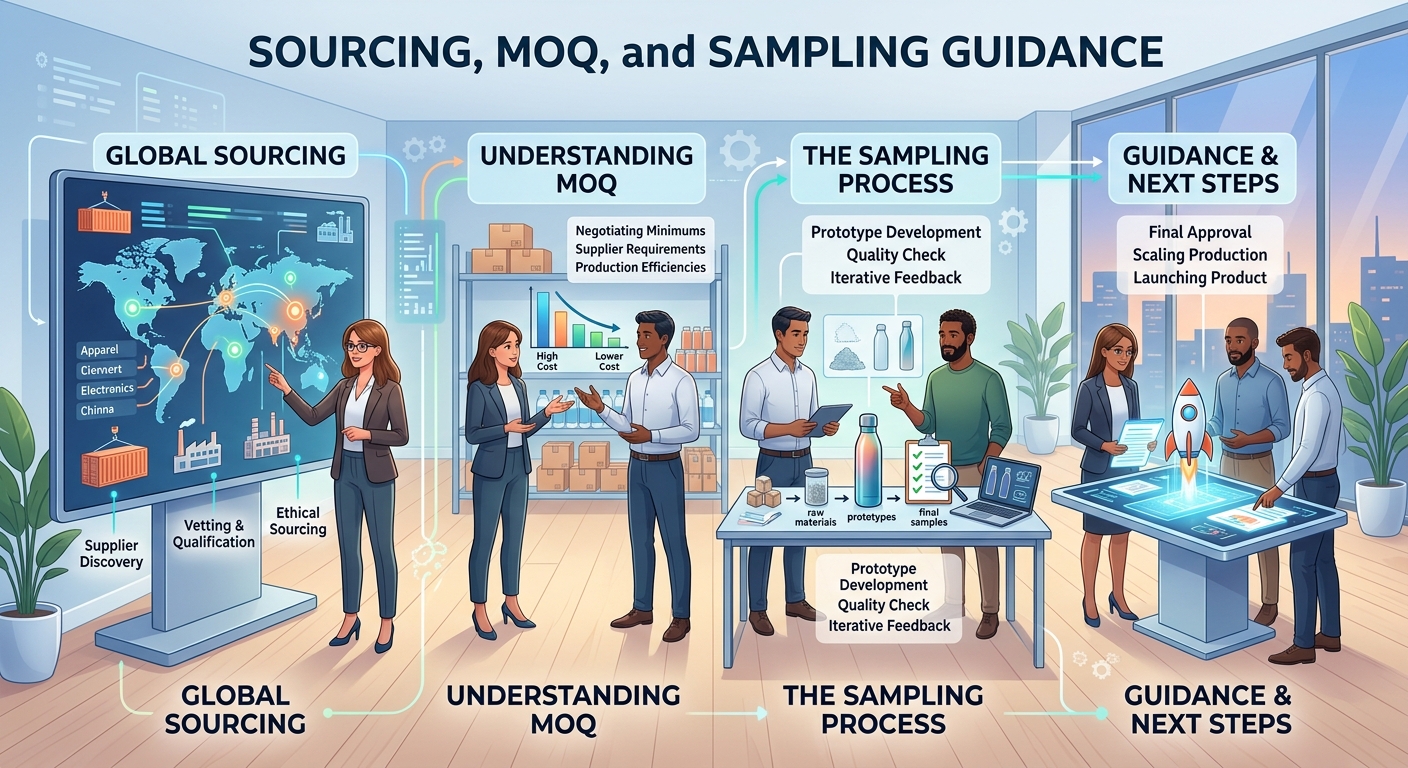
For custom sushi packaging, MOQs vary significantly by material, printing method, and supplier. Unprinted stock containers may have MOQs as low as 1,000–5,000 pieces, while custom printed containers often start at 10,000–50,000 pieces per size. Always request:
- Material certificates (food-contact compliance such as FDA, EU 10/2011, or LFGB).
- Production samples before mass production, including printed samples if applicable.
- Pre-production samples (PPS) to approve color, registration, and die-cutting.
- Third-party test reports for migration or heavy metals if required by your market.
Work with a supplier that can support design, sampling, quality control, and export documentation. For meal-prep style compartment trays, the principles in the meal prep and grab-and-go packaging guide are also applicable to sushi.
Storage and Shipping Considerations
Improper storage can warp plastic trays, degrade paperboard, or cause mold on bagasse. Follow these best practices:
- Store sushi containers in a cool, dry place away from direct sunlight and heat sources.
- Keep plastic containers in their original poly bags to avoid dust and static.
- For paperboard and bagasse, maintain relative humidity below 70% to prevent warping.
- Do not stack heavy items on container cartons.
- When shipping internationally, ensure cartons are reinforced and consider moisture barrier liners for ocean freight.
For a detailed guide on food packaging storage conditions, see food packaging storage conditions.
Conclusion
Selecting the right sushi packaging materials and compartments requires evaluating material performance, compartment design, lid fit, printing needs, and sourcing logistics. Plastic (PET/PP) offers clarity and rigidity, while paperboard and bagasse provide more sustainable options with trade-offs in moisture resistance and transparency. For catering and delivery, prioritize leak resistance, tamper evidence, and temperature retention. Always request samples, verify food-contact compliance, and test packaging under real delivery conditions before committing to a large order.
FAQ
What is the best material for sushi delivery containers?
PET and PP are the most common because they are clear, rigid, and moisture-resistant. PET is best for cold sushi; PP offers better heat tolerance. Paperboard and bagasse are chosen when sustainability is a priority, but they may require a lining and lid film to prevent leaks.
How many compartments should a sushi container have?
Two to three compartments are standard for individual meals: one large area for rolls/nigiri and one or two small spaces for ginger and wasabi. Catering platters often use four to five compartments to separate different sushi varieties and sauces.
What MOQ can I expect for custom printed sushi containers?
MOQs vary by supplier, material, and printing method. Unprinted stock containers may start at 1,000 pieces, while custom printed orders typically start at 5,000–10,000 pieces, depending on the supplier.