


Table of Contents
- What Is Fried Chicken Packaging and Why Does It Matter?
- Fried Chicken Buckets: Capacity, Strength, and Grease Control
- Fried Chicken Boxes: Folded Cartons, Locking Corners, and Venting
- Greaseproof Bags for Fried Chicken: When Bags Protect Crispness Better
- Fried Chicken Packaging Comparison: Buckets vs. Boxes vs. Greaseproof Bags
- How to Choose the Right Fried Chicken Packaging for Your Operation
- Custom Printing and Branding for Fried Chicken Packaging
- Quality Control, Storage, and Shipping Checks for Fried Chicken Packaging
- Conclusion: Match the Packaging to the Product and the Customer Experience
A practical B2B guide to selecting fried chicken packaging, covering paper buckets, folding cartons, and greaseproof bags for hot, greasy takeout items.
What Is Fried Chicken Packaging and Why Does It Matter?
Fried chicken packaging is any food-contact container or wrap designed to hold hot fried chicken while protecting the coating, controlling grease, and maintaining temperature. In foodservice, the right fried chicken packaging is not just a box or bag—it is a moisture management system. Oil from fried chicken quickly softens untreated paperboard, steam condenses on closed lids, and uncoated paper can leak within minutes. This guide compares the three workhorse formats for crispy takeout: buckets, folding carton boxes, and greaseproof bags.
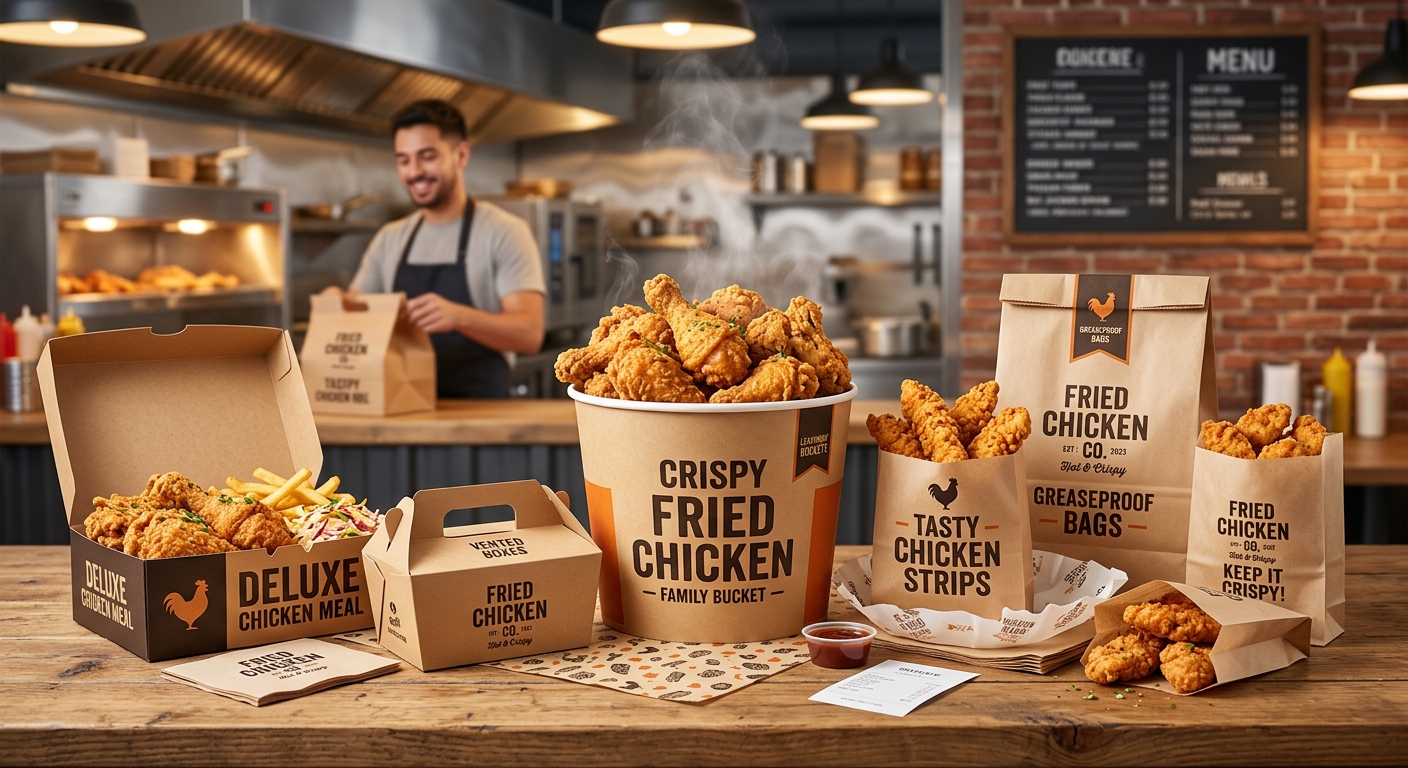
Fried Chicken Buckets: Capacity, Strength, and Grease Control

Buckets are tapered paperboard containers that can hold multiple pieces of fried chicken and are often used for family meals or group orders. They are typically made from solid bleached sulfate (SBS) or coated recycled board, with a PE coating or alternative barrier on the food-contact side to prevent oil strike-through. Grease resistance depends on the coating weight and board density, not just thickness.
Key advantages include high brand visibility on the curved surface, good stacking stability, and a familiar fast-food presentation. Trade-offs: buckets are bulkier than boxes for the same piece count and may require a separate lid or interlocking top to reduce steam loss. When specifying a bucket, confirm the top diameter, bottom diameter, height, capacity in ounces or pieces, handle style, and whether a lid is included. For a deeper dive into bucket specifications and ordering, see custom paper food buckets wholesale guide.
Fried Chicken Boxes: Folded Cartons, Locking Corners, and Venting

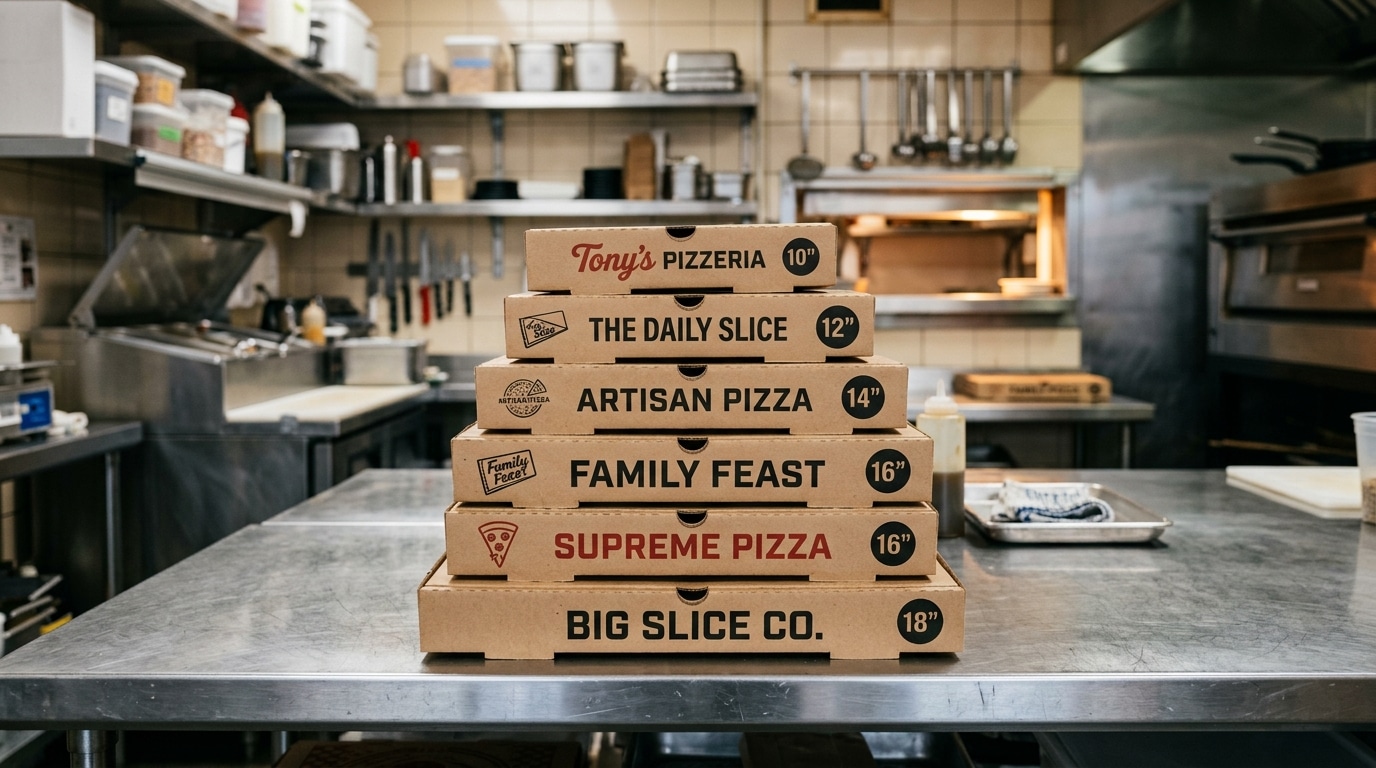
Boxes provide more structural protection and individual portioning than buckets or bags. Common styles include tuck-top cartons, auto-lock bottom boxes, and clamshell-style folded cartons. Most fried chicken boxes use solid bleached sulfate (SBS) or folding box board (FBB) with a grease-resistant coating on the inside. Vent holes are critical: without them, steam trapped inside softens the batter and converts crisp skin into a soggy layer. When comparing designs, check the vent pattern, since too many holes reduce heat retention and too few cause condensation.
Custom printed chicken boxes often use the inside surface for grease-resistant print or an unprinted food-safe coating. For proven box designs tailored to fried chicken, review custom fried chicken wing packaging boxes with logo.
Greaseproof Bags for Fried Chicken: When Bags Protect Crispness Better

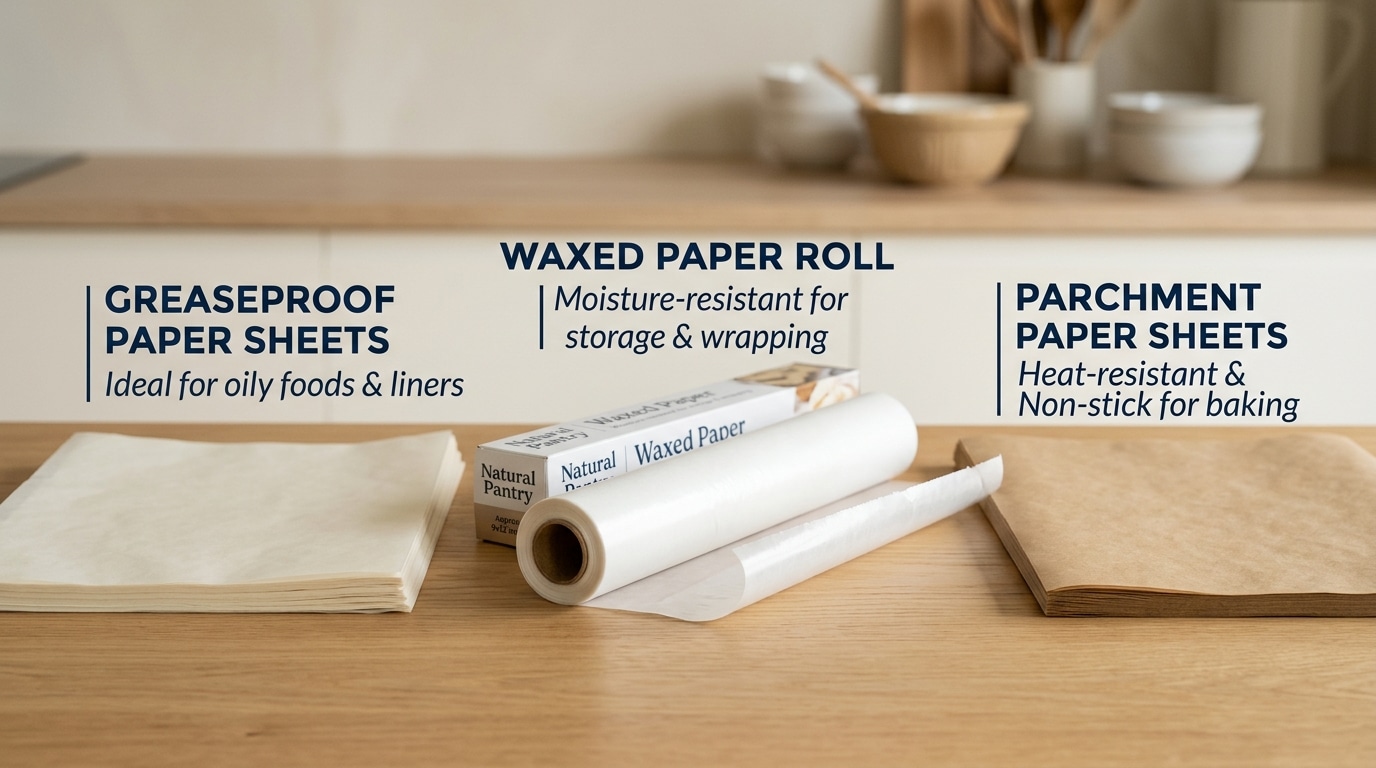
Greaseproof paper bags are made from paper that has been refined to resist oil penetration, often with a fluorochemical-free or plant-based oil repellent treatment. This is not the same as a PE-coated bag; PE provides a continuous plastic film, while greaseproof treatments are absorbed into the paper fibers. For fried chicken, bags work best for boneless tenders, wings, nuggets, or small portions that are eaten by hand. They allow steam to escape slowly through the paper, which can reduce condensation compared to a sealed box, but they provide less crush protection. If orders include heavy bone-in pieces with sharp edges, a bag alone may puncture; a box or bucket is safer. Learn more about material options in the greaseproof paper bags buyer’s guide.
Fried Chicken Packaging Comparison: Buckets vs. Boxes vs. Greaseproof Bags
The table below compares the three formats on practical factors for foodservice buyers. Actual performance depends on the exact board, coating, and design; use this as a starting point for sample testing.
| Factor | Bucket | Box | Greaseproof Bag |
|---|---|---|---|
| Structure | Tapered rigid container, optional handle | Folded carton with locking panels | Flexible paper bag, optional gusset |
| Grease resistance | PE or barrier coating on inside | Coated interior, often PE or clay | Oil-repellent treatment in paper fibers |
| Steam venting | Usually no dedicated vents; rely on loose lid or openings | Pre-cut vent holes common | Paper breathes slightly, reduces condensation |
| Portion flexibility | Family meals, multiple pieces | Single serving to combo meals | Small hand-held items, tenders, wings |
| Branding area | Large curved printable surface |