

Table of Contents
- Why Storage Conditions Matter Before Use
- Recommended Food Packaging Storage Conditions
- Material-Specific Storage Guidance
- Receiving and Inspection Checklist
- Warehouse Handling, Rotation, and Issue Control
- Questions for Suppliers and Freight Partners
- Conclusion: Food Packaging Storage Conditions Are a Quality-Control Step
Correct food packaging storage conditions help preserve cleanliness, shape, print quality, seal performance, and food-contact suitability before packaging reaches the production line. This guide explains how B2B buyers should receive, inspect, store, rotate, and handle paper, plastic, and bagasse packaging.
Why Storage Conditions Matter Before Use
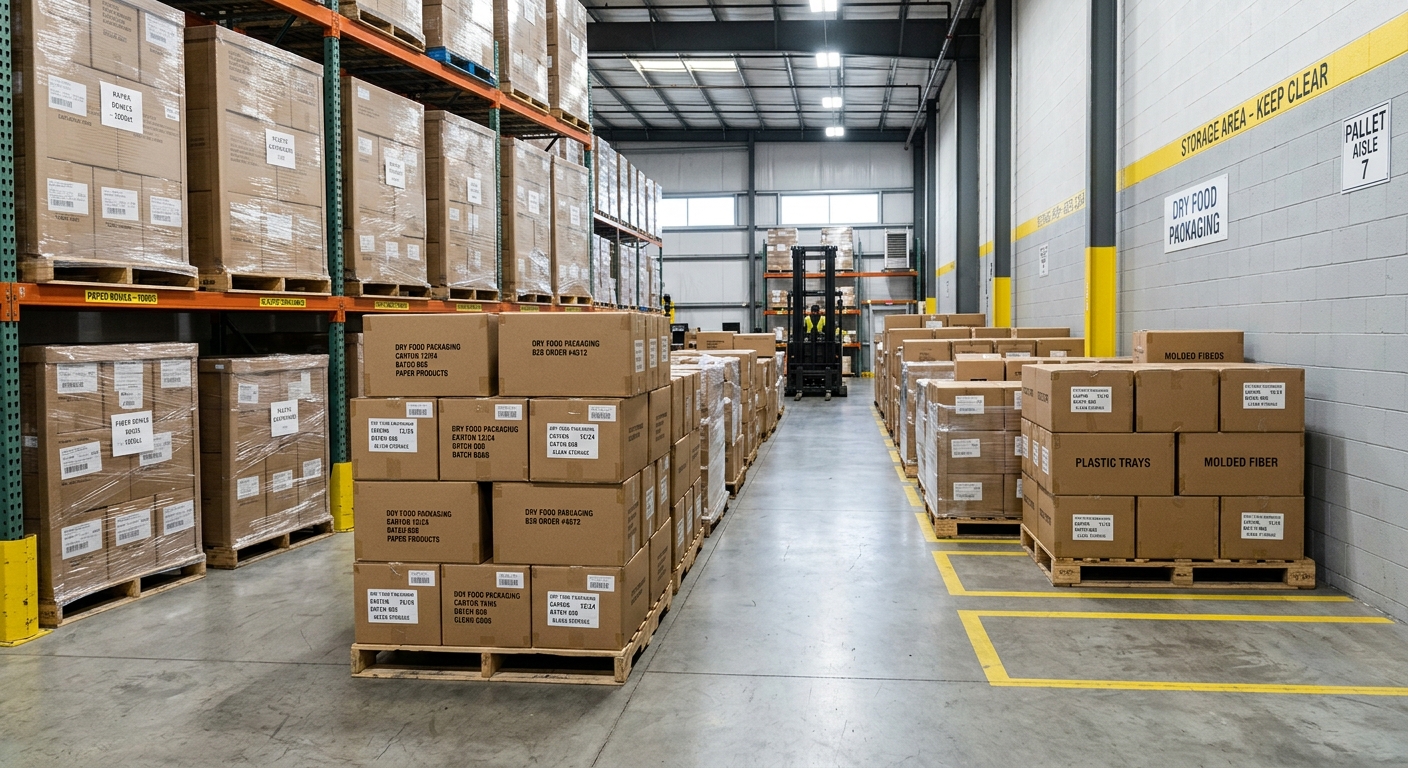
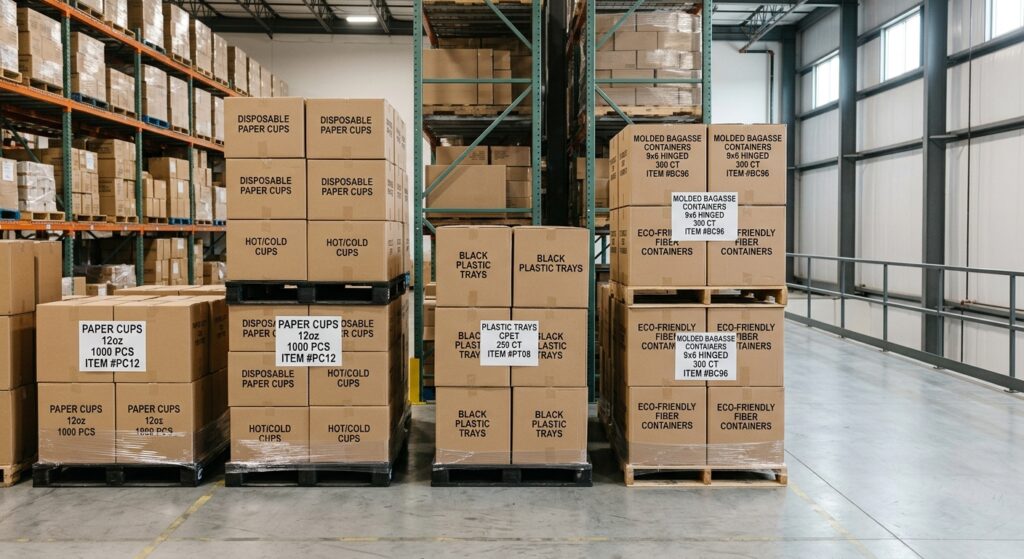
The right food packaging storage conditions are clean, dry, protected from direct sunlight, and controlled against excessive heat, moisture, dust, pests, odors, and physical damage. Packaging should remain in its original protective packaging until required for production or service, and the exact acceptable conditions should be confirmed against the material and supplier specification.
Storage is not simply an inventory activity. Paper can absorb moisture and lose stiffness, plastic can deform or become brittle under unsuitable conditions, and bagasse fiber products can be affected by humidity, compression, and contamination. These changes may influence stacking, filling, sealing, printing appearance, dispensing, and customer presentation.
In this guide, storage conditions means the environmental and handling controls applied between delivery and use. Food-contact packaging means packaging intended to touch food during the stated application. A clean warehouse does not replace the supplier’s food-contact documentation, and good storage cannot correct unsuitable material selection or damaged packaging.
Recommended Food Packaging Storage Conditions
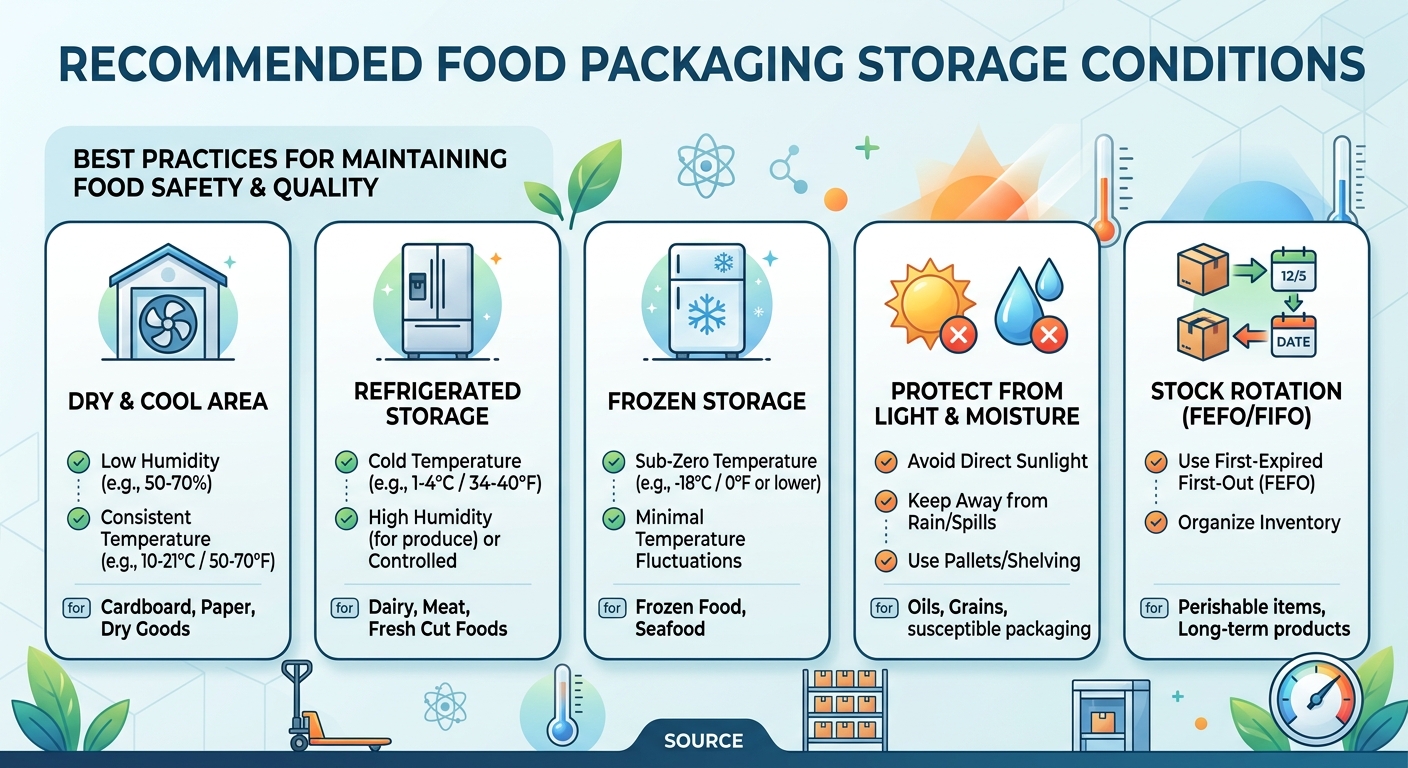
There is no single universal temperature or humidity value for every food packaging product. Storage requirements depend on the substrate, coating, adhesive, ink, closure, packaging format, protective wrapping, and destination market. Buyers should request the supplier’s written handling recommendation for the exact item.
Core warehouse controls
- Cleanliness: Use a dedicated or suitably controlled area that is free from dust, chemicals, waste, pests, strong odors, and standing water.
- Dryness: Protect cartons and inner packs from rain, condensation, leaks, wet floors, and high humidity. Do not place packaging directly on the floor.
- Temperature stability: Avoid extreme heat, freezing conditions, heaters, steam, and rapid temperature changes. Allow cold or hot shipments to stabilize before opening when condensation could form.
- Light protection: Keep products away from direct sunlight and strong artificial light that could affect certain colors, films, coatings, or printed surfaces.
- Physical protection: Keep cartons level, prevent over-stacking, and avoid crushing, dragging, puncturing, or placing heavy goods on top of lightweight packaging.
- Airflow and access: Leave sufficient clearance for inspection and cleaning, while keeping packaging sealed until needed.
Control the environment, not just the carton
A carton may appear dry while packaging inside has been exposed to condensation or humid air. Warehouse teams should monitor the storage area according to their quality system and record relevant observations. If the supplier specifies limits, those limits should take priority over general guidance. Any local food-contact, hygiene, or workplace requirements should also be included in the warehouse procedure.
Material-Specific Storage Guidance
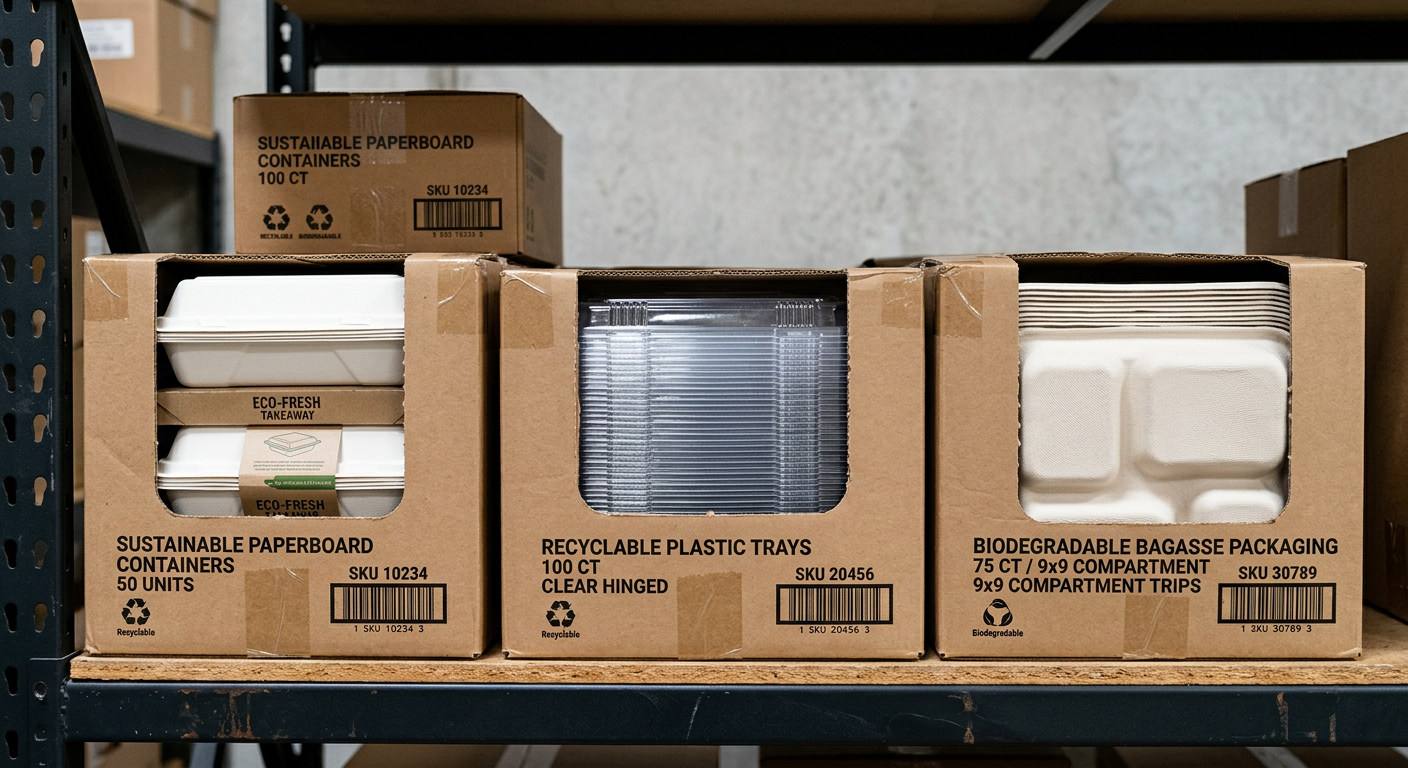
Material names describe the main substrate, but performance also depends on thickness, forming method, coating, printing, and construction. The following guidance is a practical starting point rather than a substitute for an item-specific specification.
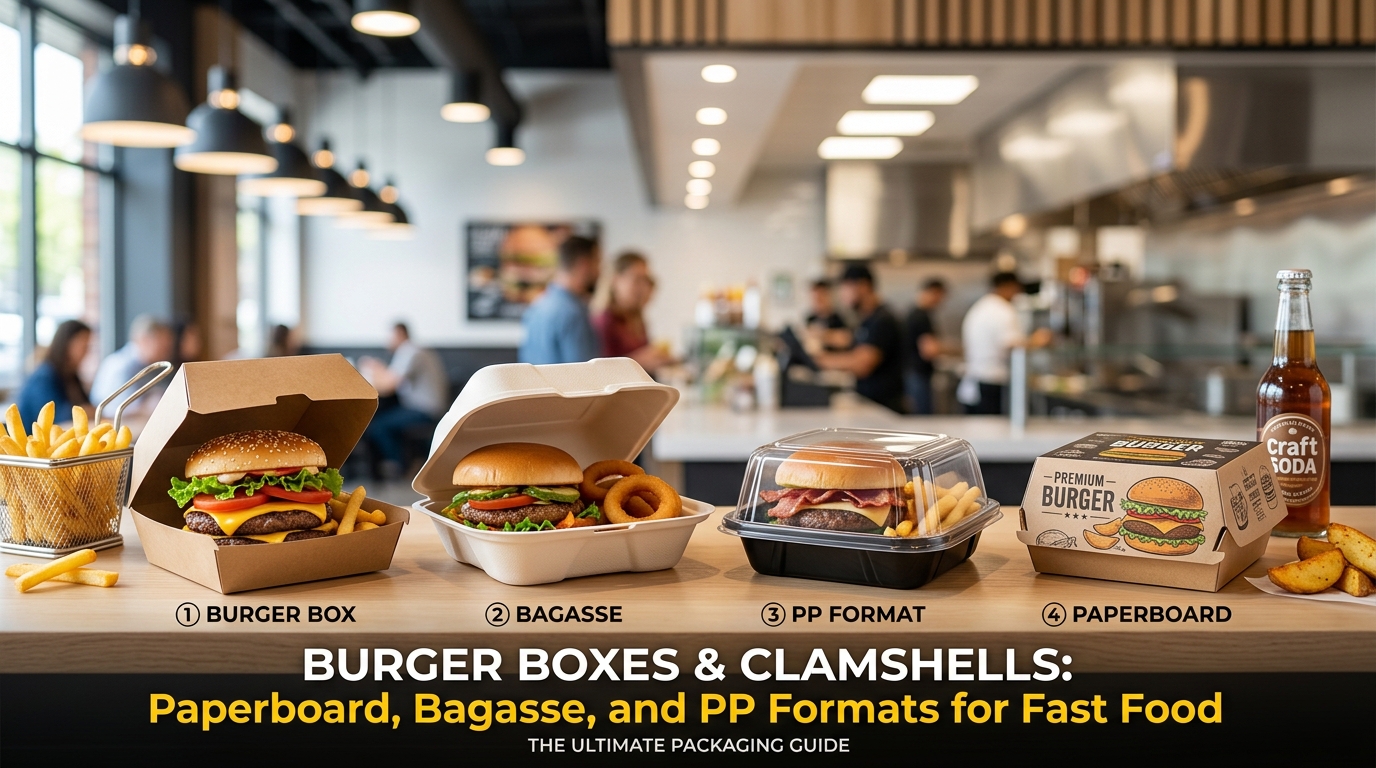
Paper and paperboard packaging
Paper and paperboard are hygroscopic, meaning they can take up or release moisture from surrounding air. Excess moisture may soften cartons, change dimensions, reduce stacking strength, affect folds, or make surfaces feel wavy. Excessively dry conditions may contribute to brittleness or dimensional changes in some constructions. Store paper products in closed cartons or protective wrapping, away from walls, floors, leaks, and direct airflow. Avoid opening more packs than can be used promptly.
Plastic packaging
Plastic packaging generally requires protection from heat, ultraviolet exposure, sharp objects, and deformation. Do not store it close to heaters, hot machinery, windows with intense sunlight, or incompatible chemicals. Keep nested containers, trays, lids, and films supported in their intended orientation. Check whether the exact plastic, print, coating, or closure has special storage instructions, especially when appearance, transparency, sealing, or dimensional fit is important.
Bagasse and molded-fiber packaging
Bagasse packaging is molded fiber packaging made from plant-fiber pulp; the term does not by itself define whether a product is recyclable, compostable, biodegradable, or suitable for a particular food application. Fiber products can be sensitive to humidity, compression, dust, and odor absorption. Keep them dry, sealed, well supported, and away from direct contact with floors or walls. Inspect for softening, warping, surface contamination, unusual odor, or loss of nesting and stacking performance.
For service-specific requirements, buyers can compare material and format considerations in the yogurt containers buyer’s guide or the custom plastic tray guide.
Receiving and Inspection Checklist
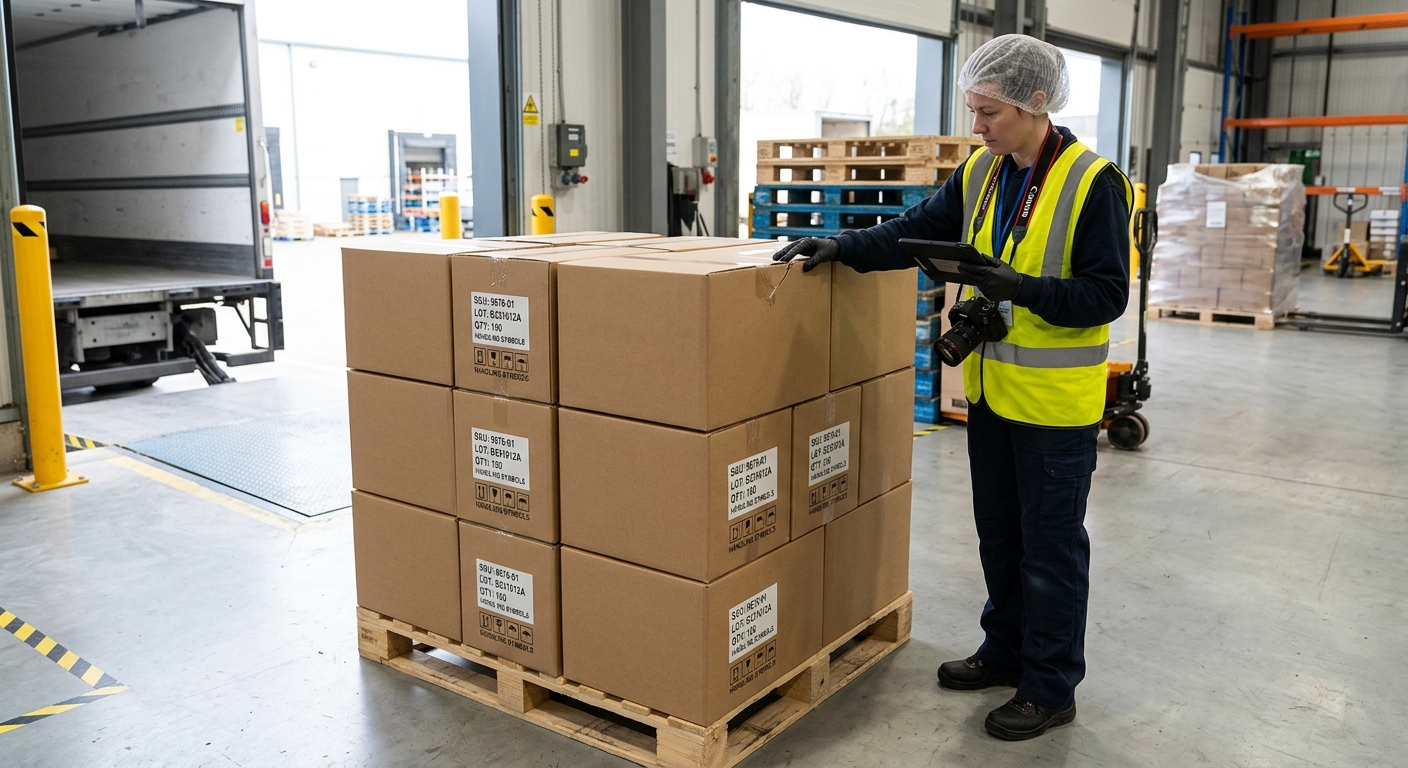
Storage quality begins when the shipment arrives. A receiving check helps separate transport damage from later warehouse damage and gives the buyer evidence for supplier or carrier follow-up.
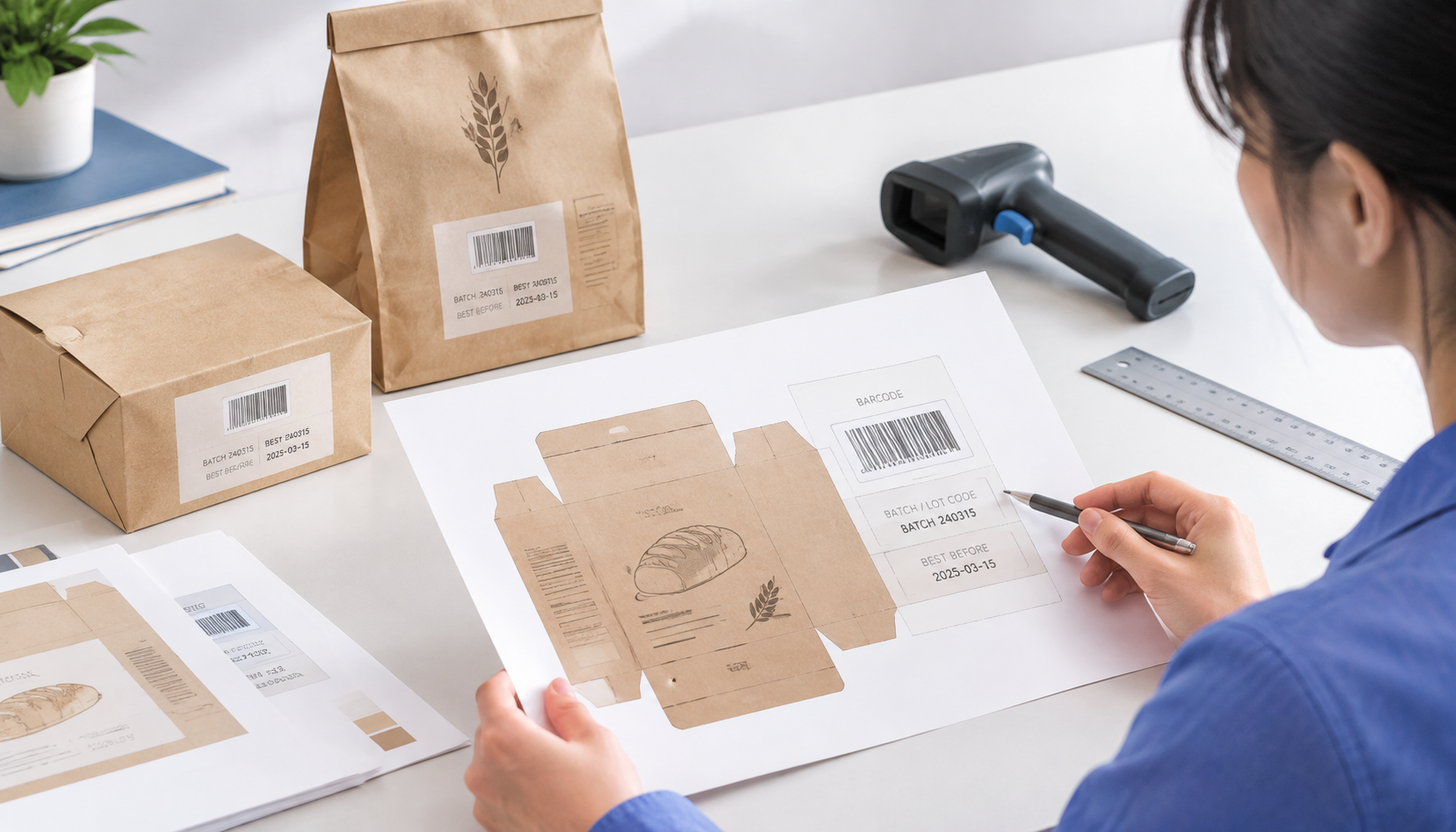
- Compare the purchase order, carton labels, item code, quantity, dimensions, material, and printing against the delivery documents.
- Inspect outer cartons for punctures, crushing, water marks, open seals, dirt, pests, or evidence of re-taping.
- Record photographs and lot or batch details before moving damaged goods into general stock.
- Open representative cartons according to the receiving procedure and check cleanliness, odor, moisture, warping, nesting, print quality, and closure or seal fit where relevant.
- Place questionable goods on hold until the responsible quality or procurement team decides whether to release, rework, return, or test them.
- Confirm that the packaging has remained protected during unloading and has not been placed on a wet dock or exposed to rain.
Sampling should reflect the buyer’s quality plan and product risk. Visual inspection may identify obvious damage, but it does not prove food-contact compliance, barrier performance, seal strength, migration compliance, or suitability for a particular food and distribution route. Those matters require the appropriate supplier documents or agreed testing.
Warehouse Handling, Rotation, and Issue Control
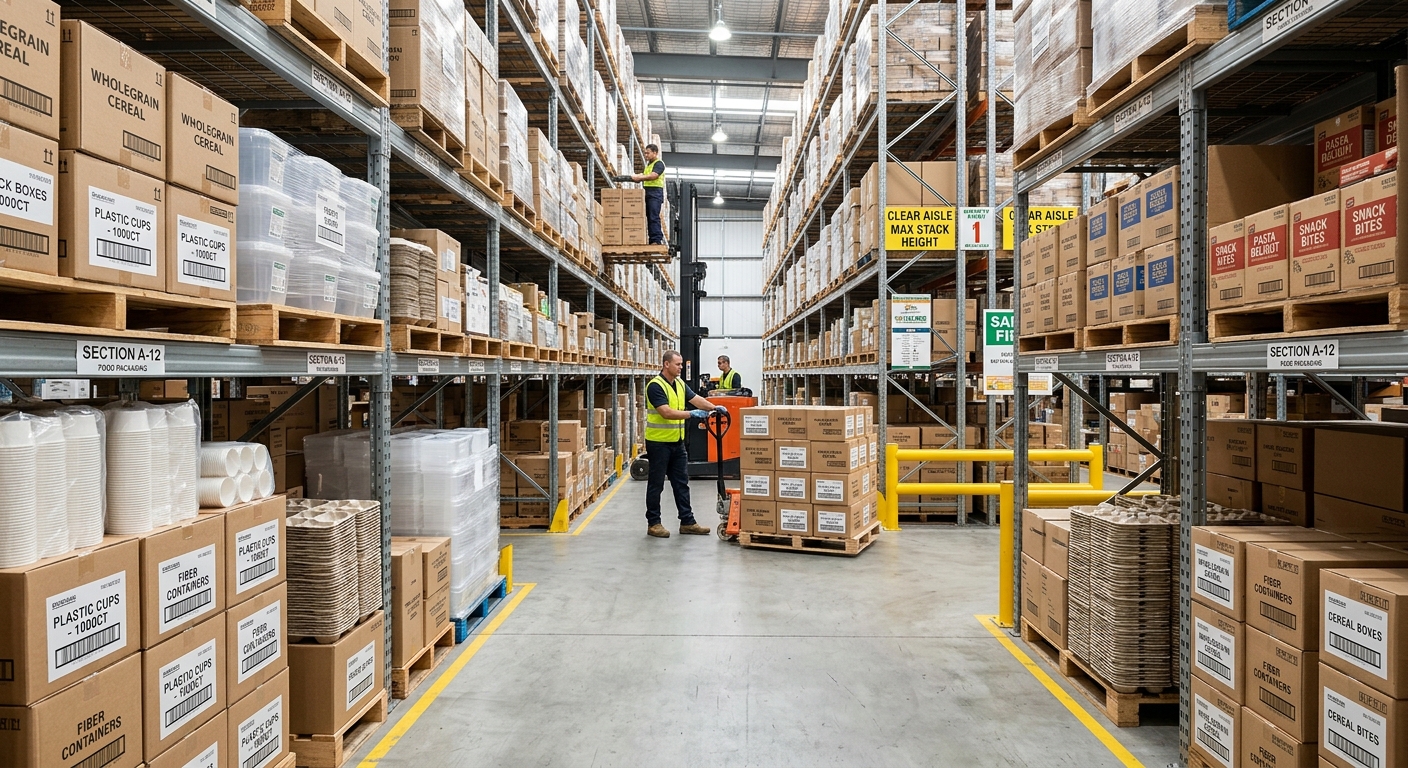
Use a documented stock-control process rather than relying on memory. Label each pallet or carton with the item code, lot information where available, receipt date, and status. Apply FIFO or another approved rotation method, while also considering any supplier-defined shelf-life or recommended-use period. Do not assume that a product has an unlimited shelf life simply because it is dry packaging.
Practical handling rules
- Keep inner bags, sleeves, and cartons closed until issue to the line or service area.
- Use clean hands, gloves, or handling equipment according to the site’s hygiene procedure.
- Do not store food packaging beside cleaning chemicals, fuels, fragrances, waste, or materials that can transfer odor or contamination.
- Keep cartons on clean pallets or shelving with clearance from walls and floors.
- Do not mix approved, rejected, returned, and uninspected stock.
- Recheck packaging after warehouse relocation, flooding, roof leaks, HVAC failure, pest activity, or unusually humid weather.
Before production, allow the packaging to equilibrate to the operating environment when required by the supplier or process. Sudden changes can create condensation or dimensional variation. For cups, lids, trays, and other nested products, verify that stacking and dispensing remain smooth after storage rather than assuming the original packing condition is unchanged.
Questions for Suppliers and Freight Partners
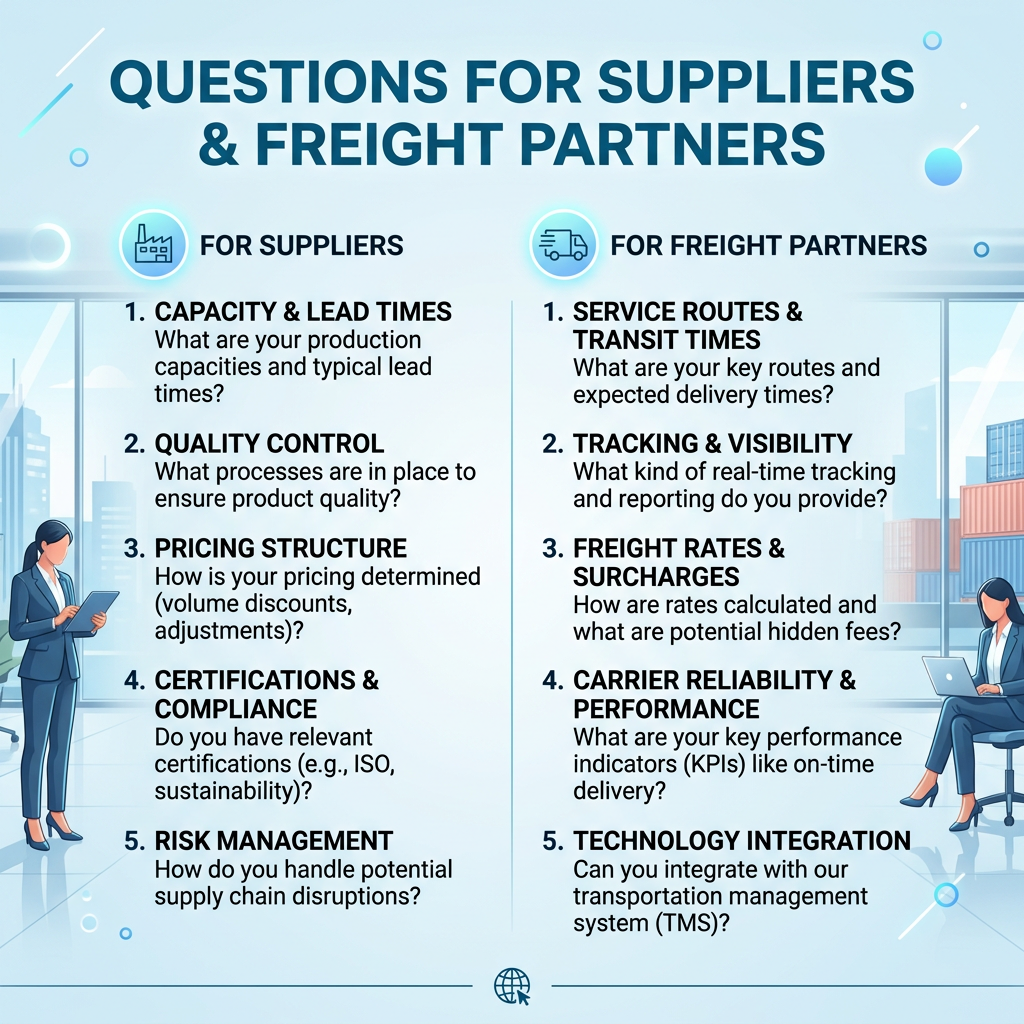
Before approving a packaging program, ask the supplier and logistics provider for information that matches the exact specification. Useful questions include:
- What storage environment and handling limits apply to this material, coating, ink, and format?
- Is a recommended use-by period or shelf-life available, and how should lots be identified?
- What protective inner packaging is used during production, export packing, and shipment?
- How should cartons be stacked, opened, resealed, and transported inside the buyer’s facility?
- Which inspection points should be checked after arrival, such as moisture, odor, deformation, print rub, nesting, or seal fit?
- What food-contact documents and destination-market requirements apply to the final product?
- What is the agreed process for samples, nonconforming goods, claims, and replacement decisions?
Sampling, MOQ, production timing, packaging configuration, and shipping method depend on the exact product and order specification. Buyers should confirm these points before placing a purchase order and should validate the final design, material, dimensions, coating, printing, accessories, and destination market through approved samples and documentation.
Conclusion: Food Packaging Storage Conditions Are a Quality-Control Step
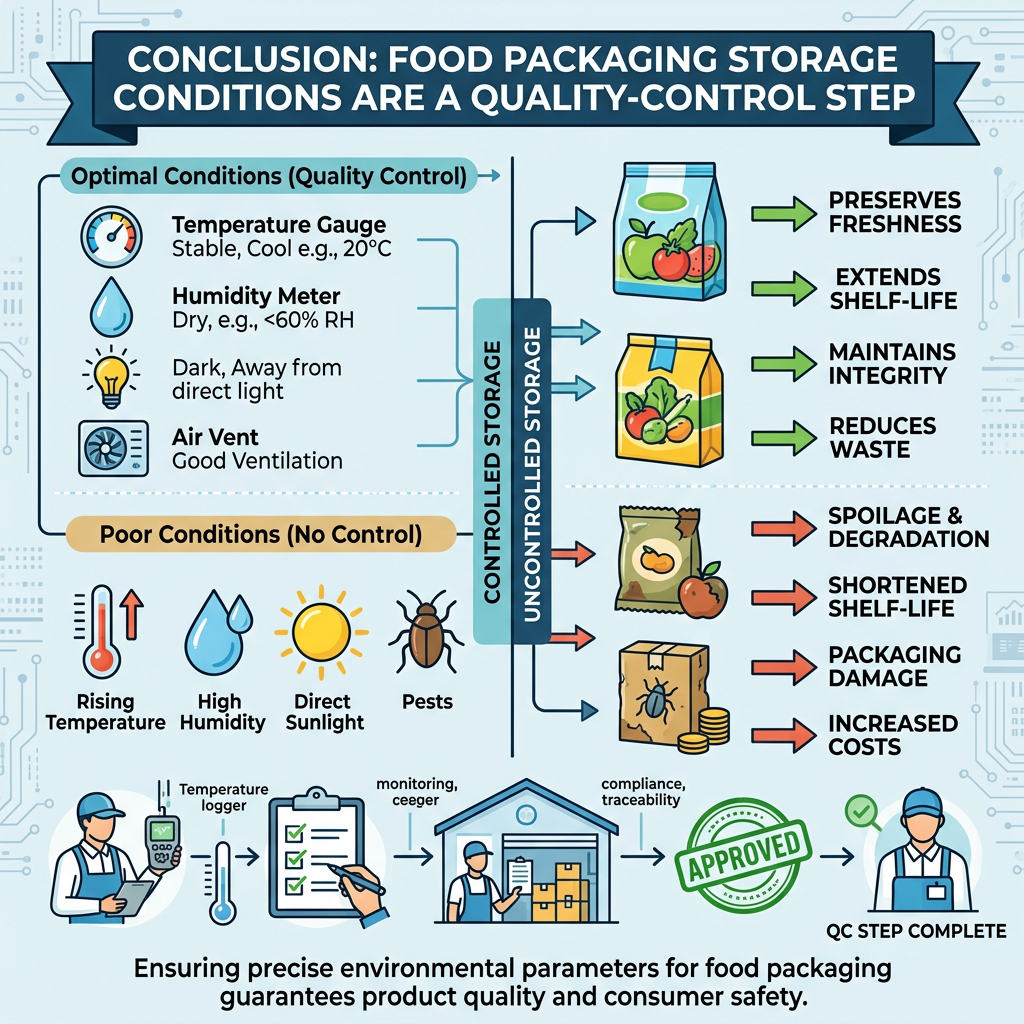
Correct food packaging storage conditions protect the investment made in material selection, printing, forming, and logistics. Keep paper, plastic, and bagasse packaging clean, dry, covered, stable, and physically supported; inspect shipments on arrival; rotate stock; and follow the written instructions for the exact specification. When damage, moisture exposure, odor, deformation, or uncertainty is found, place the stock on hold and investigate before use.
Storage guidance must be matched to the product, application, packaging construction, and destination-market requirements. It should complement—not replace—supplier documentation, food-contact evaluation, sampling, and the buyer’s own quality procedures.
Discuss Your Packaging Storage and Supply Requirements
YBJ Packing can help B2B buyers review the packaging format and handling details for a specific project. Send your product type, food application, dimensions or capacity, material, coating, quantity, printing, lid or accessory requirements, and destination market for an accurate recommendation and quotation.