

Table of Contents
- How to Choose Among Paper Cup Printing Methods
- Flexographic Printing for Wholesale Paper Cups
- Offset Printing for Detailed Cup Graphics
- Digital Printing for Shorter or Variable Runs
- Key Comparison Factors for Procurement
- Artwork, Sampling, and Quality Checks
- Wholesale Ordering Process and Logistics
- Conclusion: Selecting the Right Paper Cup Printing Method
The best paper cup printing method depends on order quantity, artwork complexity, color requirements, material structure, and delivery market. Flexographic printing is commonly considered for repeat wholesale production, offset printing can support detailed graphics through a printed paper sheet process, and digital printing may suit shorter or variable runs. This guide explains the practical differences buyers should review before requesting samples or quotations.
How to Choose Among Paper Cup Printing Methods
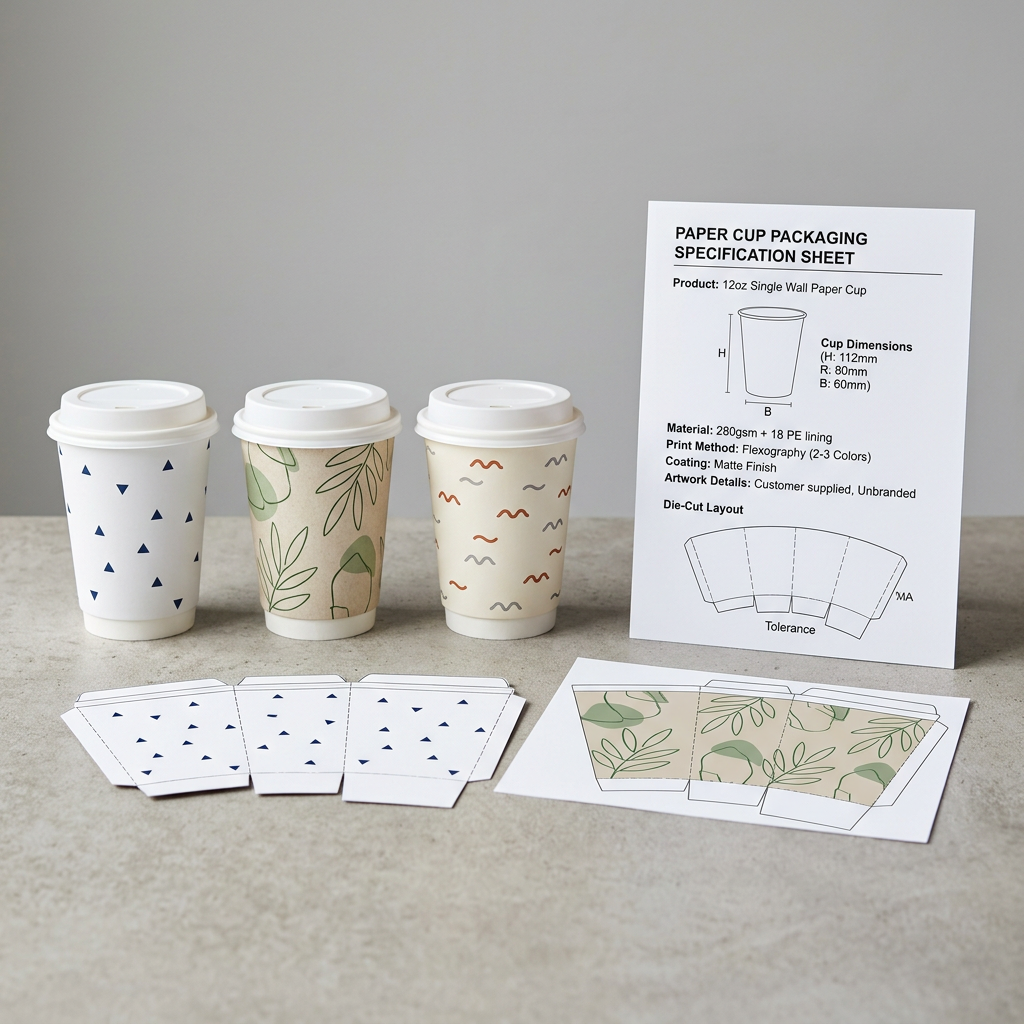
The most suitable paper cup printing methods depend on the order quantity, artwork, required color consistency, cup construction, budget, and destination market. Flexographic printing is often evaluated for regular wholesale production, offset printing is commonly used when detailed graphics are first printed on paper and then converted into cup blanks, and digital printing can be useful when buyers need shorter runs or changing designs. The final recommendation should be confirmed against the exact cup size, paperboard structure, coating, artwork, quantity, and compliance requirements.
Before comparing processes, define the product clearly. A paper cup is usually made from paperboard with a moisture-resistant lining or coating. The cup may be single-wall or double-wall, and it may be supplied with a rim, lid, sleeve, or other accessory. These construction details affect the printable surface, color appearance, forming process, packing method, and quality-control plan.
For broader beverage-packaging planning, review this coffee to-go packaging guide, which explains how cups work together with sleeves, lids, and carriers.
Flexographic Printing for Wholesale Paper Cups
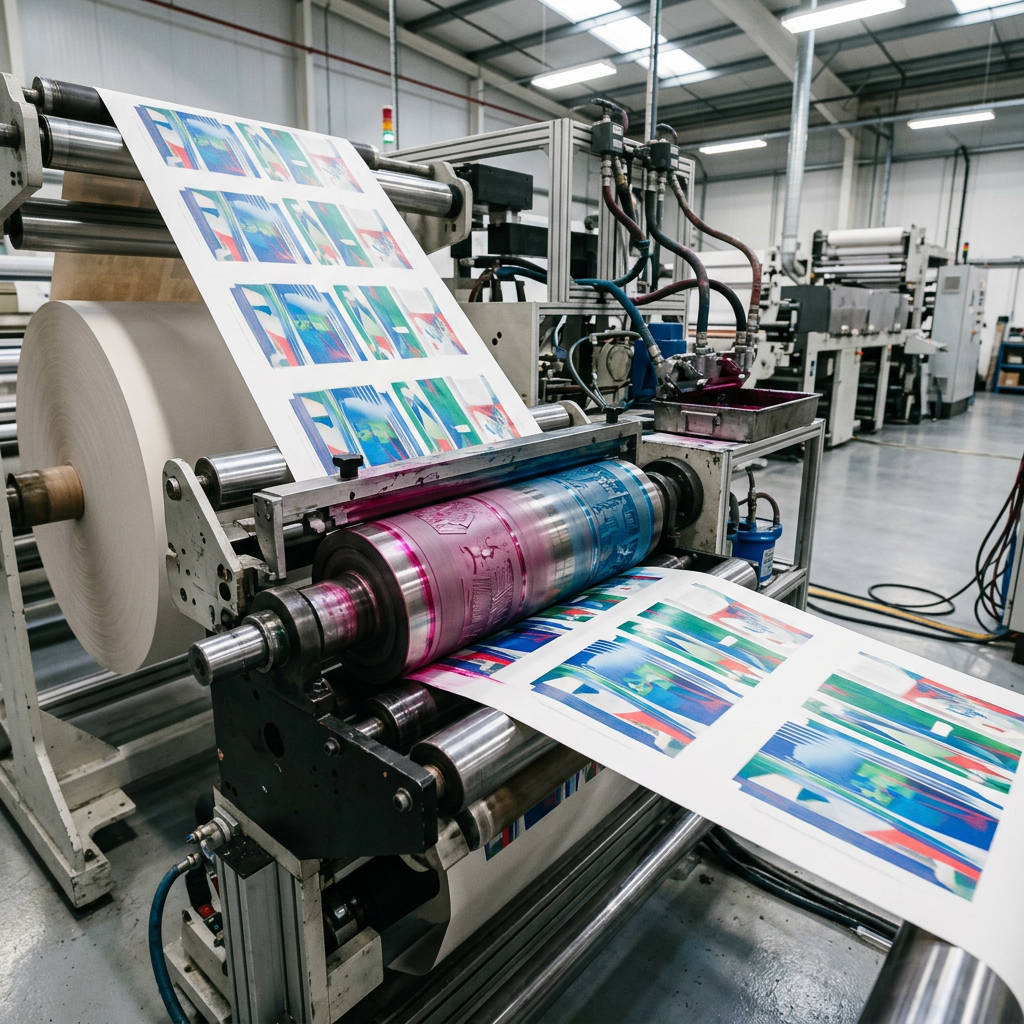
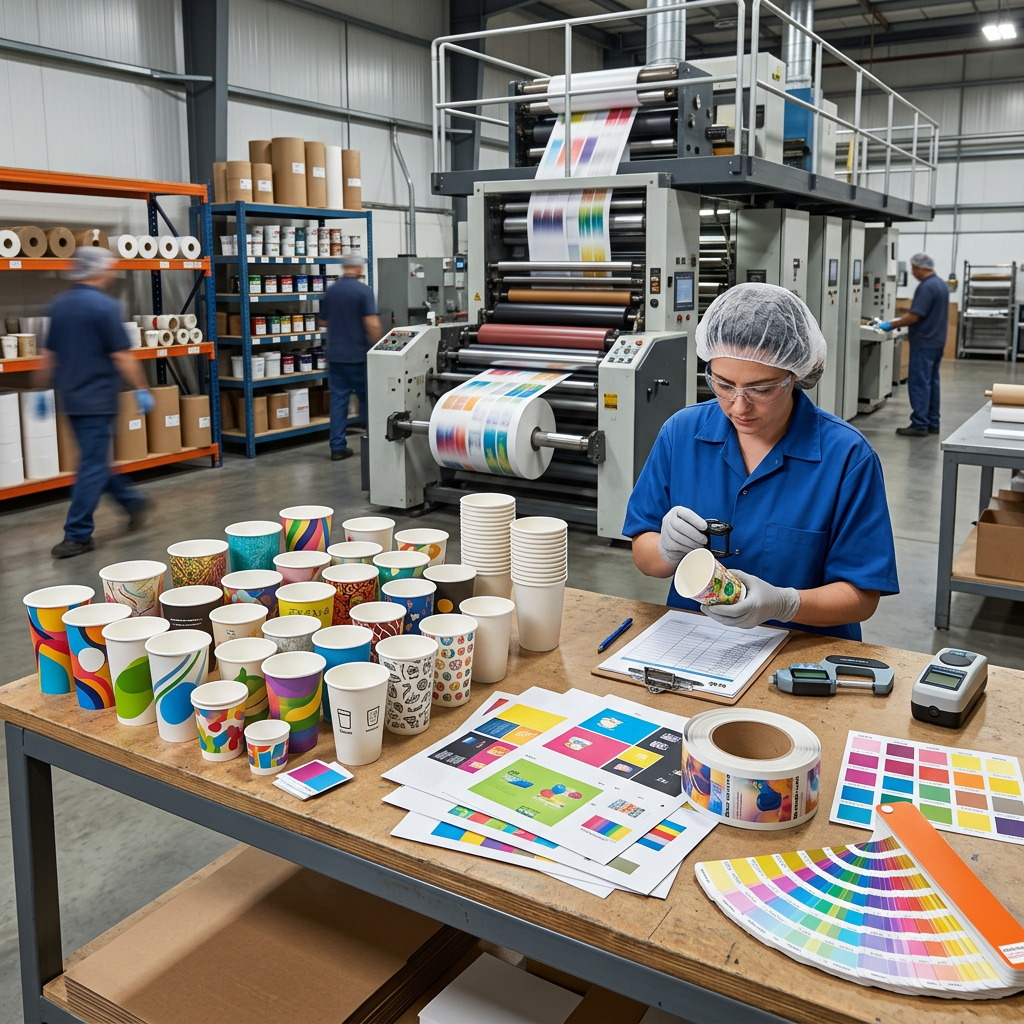
Flexographic printing uses flexible printing plates to transfer ink onto the selected paper material. In paper cup production, the design may be printed on the paperboard before the material is die-cut and formed into cup blanks. The exact production sequence depends on the manufacturer’s equipment and cup specification.
Where flexographic printing can fit
- Repeat wholesale programs with stable artwork.
- Brand designs using solid colors, logos, patterns, or practical foodservice graphics.
- Orders where production efficiency and repeatability are important.
- Customers who expect the same design to be reproduced across planned replenishment orders.
Plate preparation is an important consideration. The buyer should confirm whether printing plates are required, how artwork revisions affect plate preparation, and whether the same plates can be used for later orders. Plate-related charges, setup requirements, minimum order quantities, and color controls vary by supplier and specification, so they should be stated in the quotation rather than assumed.
Flexographic results depend on paper surface, ink system, line screen, artwork details, registration control, and the relationship between the printed sheet and the cup-forming process. Small text, fine lines, gradients, and very close color matching should be reviewed through a proof or production sample.
Offset Printing for Detailed Cup Graphics
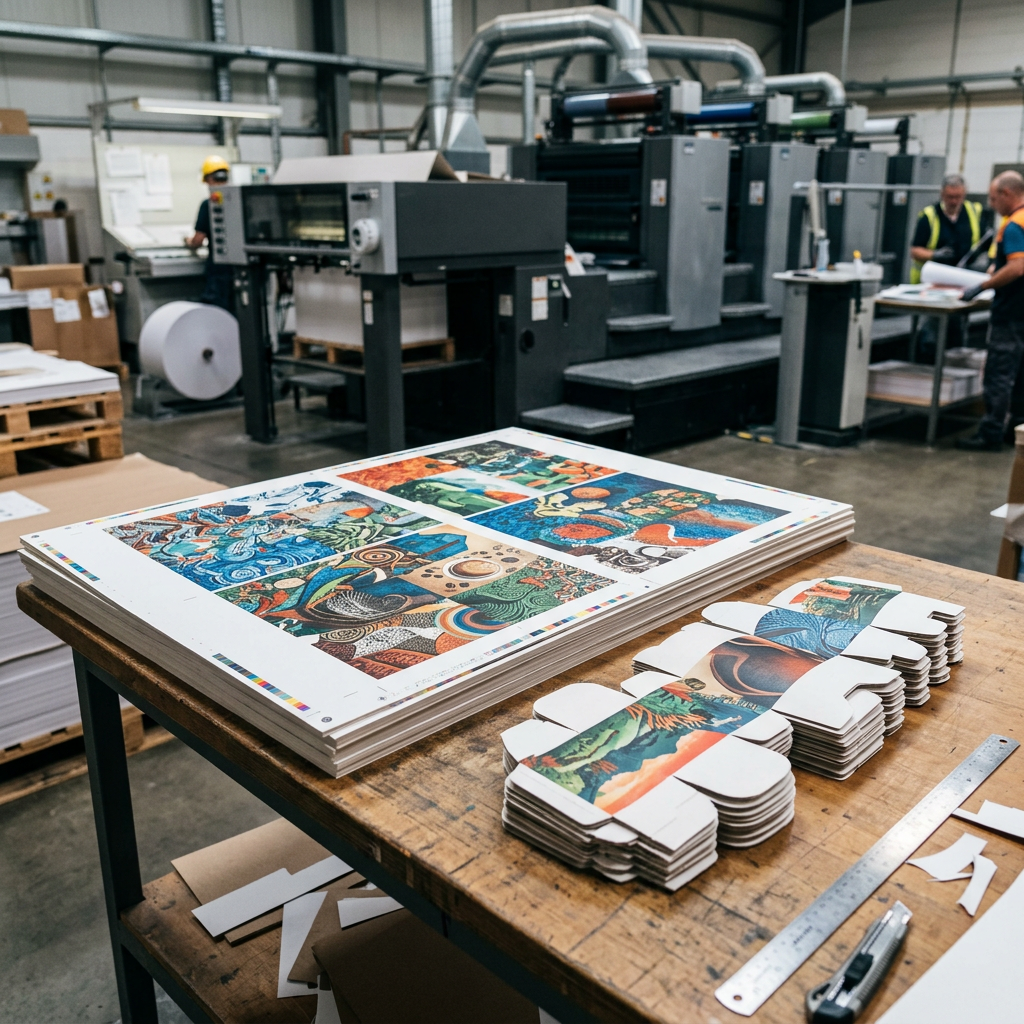
Offset printing transfers ink between a plate, a rubber blanket, and the printing surface. For paper cups, offset printing may be used to print a paper sheet that is later cut into blanks and formed. This differs from printing directly on an already formed cup, and the conversion stage must be considered when evaluating artwork and registration.
Potential advantages
- Detailed illustrations, photographic-style graphics, and complex brand artwork can be reviewed using an offset production process.
- Large-area artwork can be planned across a sheet layout before die-cutting.
- Color separation and proofing can be discussed in a familiar print-production workflow.
Offset printing is not automatically the best choice for every paper cup order. Sheet layout, paper compatibility, coating, die-cutting, seam position, and forming tolerances can influence the final appearance. A graphic that looks correct on a flat proof may shift in position or appear different after the blank is shaped into a tapered cup. Buyers should request a dieline and check the printable area, seam zone, top and bottom clearance, and any areas hidden by a lid or sleeve.
Offset printing may involve setup steps and minimum quantities that differ from flexographic or digital production. Ask the supplier to identify all prepress, plate, proofing, tooling, and conversion requirements in writing.
Digital Printing for Shorter or Variable Runs
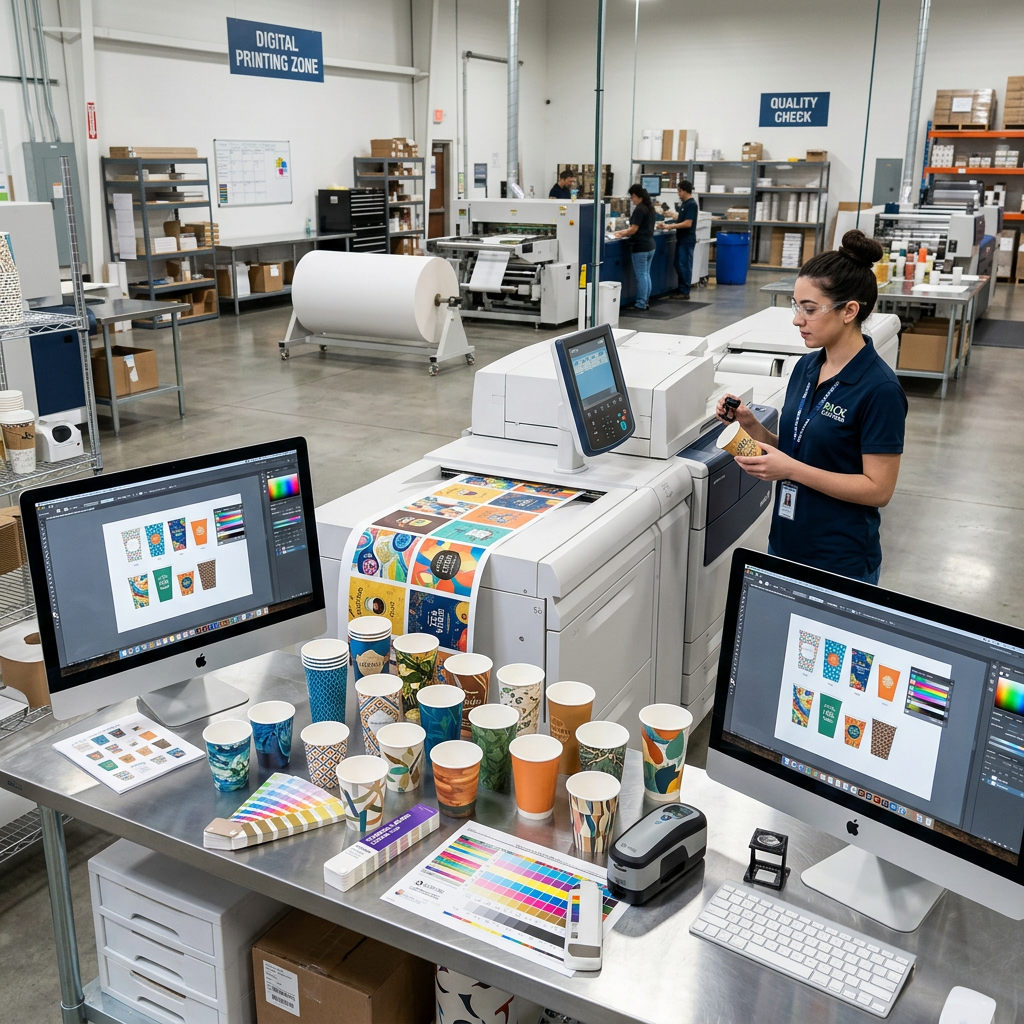
Digital printing transfers artwork from a digital file without the same plate-making stage used in conventional plate-based printing. It may be considered for shorter runs, multiple designs, seasonal artwork, market tests, or customized versions. Availability depends on the manufacturer’s equipment, printable material, cup format, and finishing process.
When digital printing may be considered
- A buyer needs several designs instead of one large repeat order.
- Artwork may change between campaigns or customer groups.
- The buyer wants to test a new design before committing to larger production.
- Variable graphics or individualized versions are part of the project.
Digital printing does not remove every production constraint. The supplier should confirm the minimum order quantity for each design, whether setup or file fees apply, the available color workflow, acceptable paper or coating, and how the printed material will be converted into cups. Color appearance may also vary between digital equipment, substrates, and viewing conditions.
For a buyer comparing digital printing with conventional methods, the key question is not simply which process is cheapest. Compare the complete order cost, including prepress, sampling, quantity by design, packaging, inspection, and freight. A shorter run can be commercially useful even when its unit cost is different from a larger production run.
Key Comparison Factors for Paper Cup Printing Methods
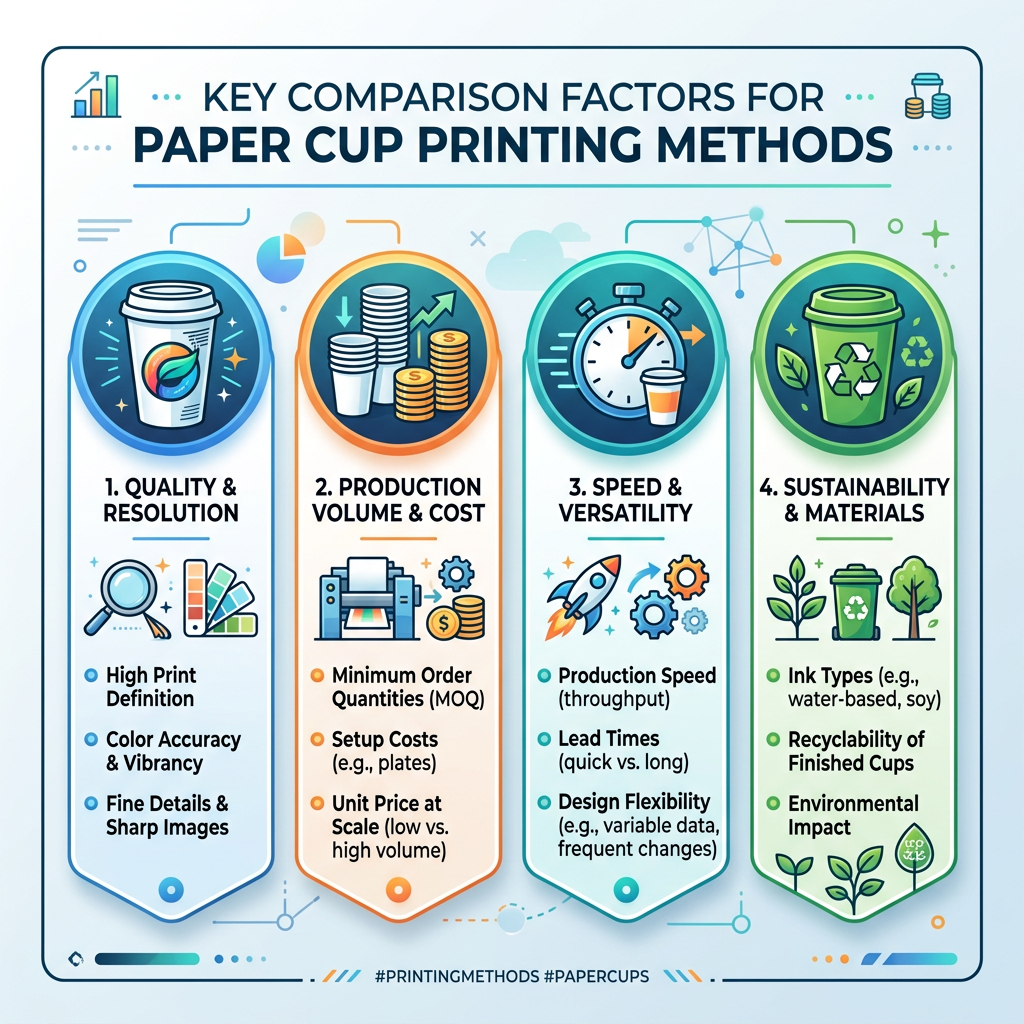
Procurement teams should compare printing methods against the whole packaging project rather than focusing on the press name alone. The following factors help create a usable request for quotation.
- Quantity and repeat frequency: State the total quantity, quantity per design, expected reorder pattern, and whether artwork will remain unchanged.
- Artwork complexity: Identify spot colors, process colors, gradients, photographs, fine text, barcodes, and variable information.
- Color expectations: Provide brand color references and clarify whether the requirement is visual approval, a defined color standard, or a close production match. No printing process guarantees identical appearance across every material and viewing condition.
- Material and coating: Confirm paperboard type, thickness or basis specification, lining or coating, and food-contact requirements for the destination market.
- Forming and seam position: Check how the design wraps around the tapered cup and whether important graphics fall near the side seam, rim, base, or lid-covered area.
- Commercial terms: Compare MOQ, sampling charges, plate or tooling charges, production terms, carton packing, and shipping arrangements.
Recyclability, compostability, biodegradability, and plastic-free claims are not interchangeable. The printing process alone does not determine the environmental status of a cup. Such claims depend on the full material structure, coating or lining, local definitions, available waste systems, and destination-market rules.
For related liquid-food packaging considerations, see this guide to leak-proof paper containers for hot delivery.
Artwork, Sampling, and Quality Checks
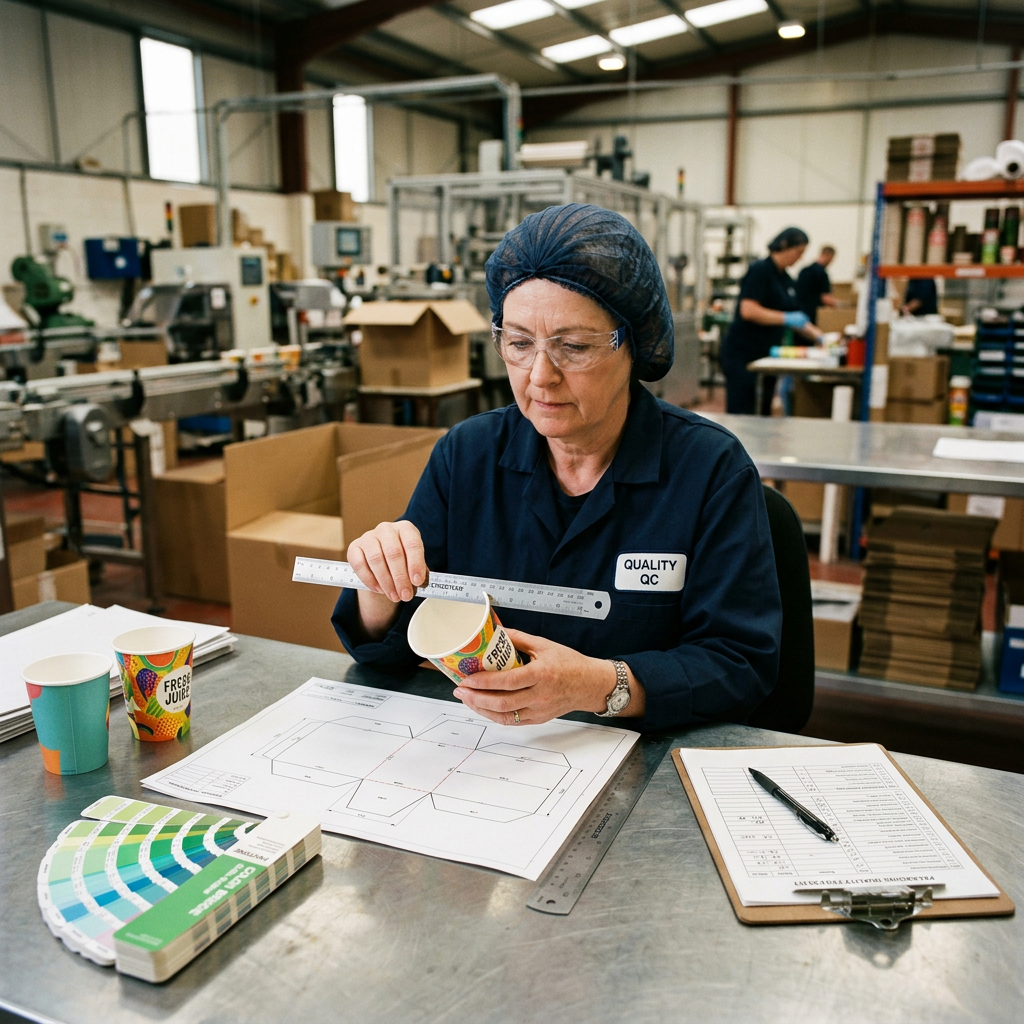
A reliable printing project begins with a controlled artwork file and a documented approval process. Supply the cup dieline in the manufacturer’s requested format and keep important text, logos, and regulatory information inside the approved safe area. Confirm bleed, seam allowance, barcode placement, lid clearance, and the direction in which the design will face when the cup is held.
Recommended approval sequence
- Confirm the cup size, capacity, wall structure, paper material, coating, and printable area.
- Submit editable artwork, fonts or outlined text, color references, and any required food-contact or market information.
- Review a digital proof or prepress proof for layout, wording, dimensions, and seam placement.
- Request a physical sample when appearance, forming, fit, or application performance must be assessed.
- Approve a controlled reference before mass production and record any permitted tolerances.
- Inspect finished goods for print position, missing print, smearing, color variation, cup forming, rim condition, leakage, carton count, and visible damage as applicable to the specification.
Printing inspection should be separated from functional testing. A visually attractive cup still needs evaluation for the intended beverage, filling process, stacking, lid fit, transport, and storage. Test conditions should reflect the buyer’s actual application. Material performance and food-contact compliance depend on the complete specification and destination market; they should be supported by appropriate supplier documentation and testing where required.
YBJ Packing supports design coordination, samples, production, quality control, and export service for global B2B buyers. Review the company’s company profile and manufacturing service information when assessing a supplier.
Wholesale Ordering Process and Logistics
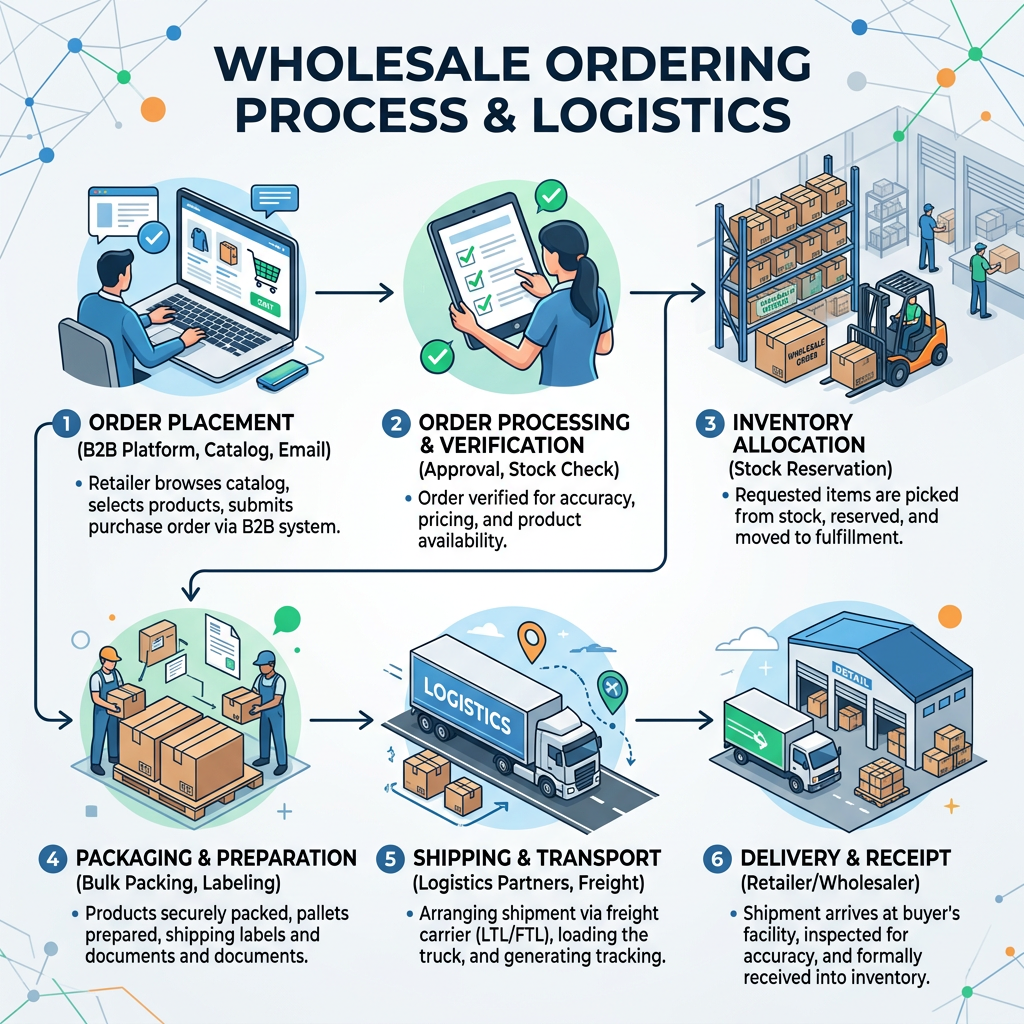
Ask for a quotation using one complete specification so different printing methods can be compared fairly. Include the product type, cup capacity or dimensions, single-wall or double-wall construction, paper material, coating or lining, printing colors, artwork status, quantity per design, lid or accessory requirements, packing expectations, and destination market.
Sampling may include artwork approval, a structure sample, a printed sample, or a production sample. Confirm which sample is being provided and whether its material, printing process, and forming process match the planned mass-production order. Sampling charges, MOQ, production timing, and shipping arrangements depend on the exact project and should be confirmed by the supplier.
Storage and shipping also affect the final result. Keep packed cups in clean, dry conditions away from moisture, heat, strong odors, and direct sunlight. Follow the supplier’s packaging and storage instructions. For export orders, confirm carton dimensions, palletization if applicable, shipping marks, documentation, trade terms, and destination-market requirements before production approval.
Do not select a printing method based on unit price alone. A complete comparison should include setup, plates, samples, production quantity, inspection, packing, freight, inventory risk, and the cost of changing artwork. This approach helps buyers choose a process that fits both current demand and future replenishment.
Conclusion: Selecting the Right Paper Cup Printing Method
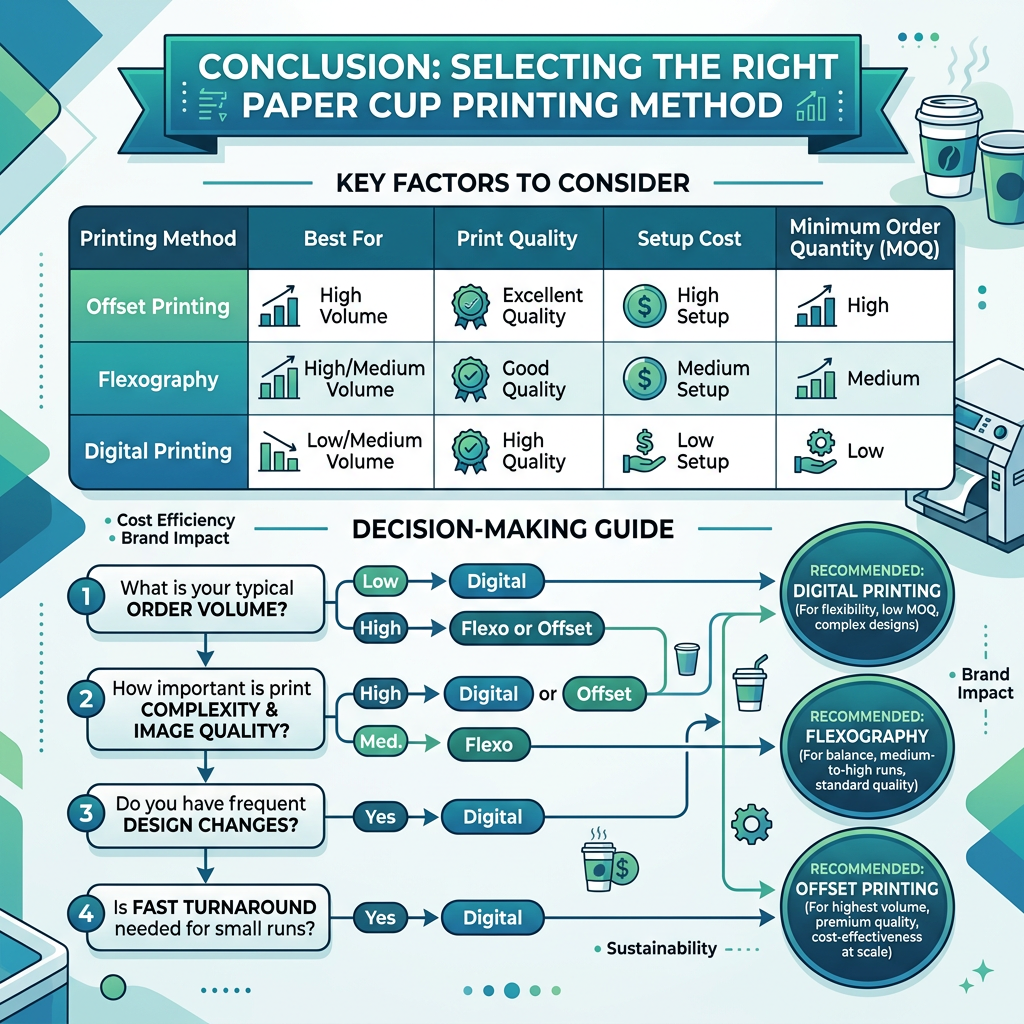
The right paper cup printing method is the one that matches the buyer’s quantity, artwork, color expectations, material structure, conversion process, and destination-market requirements. Flexographic printing may suit stable repeat wholesale designs, offset printing may be considered for detailed artwork printed on sheets before forming, and digital printing may support shorter, variable, or test orders. These are practical starting points, not universal rules.
Request a dieline, proof, sample plan, quality criteria, MOQ, complete quotation, storage guidance, and shipping details before approving production. Because material performance, food-contact compliance, price, and lead time depend on the exact specification and destination market, the supplier should confirm each point for the finished cup rather than relying on a general printing-method comparison.