

Table of Contents
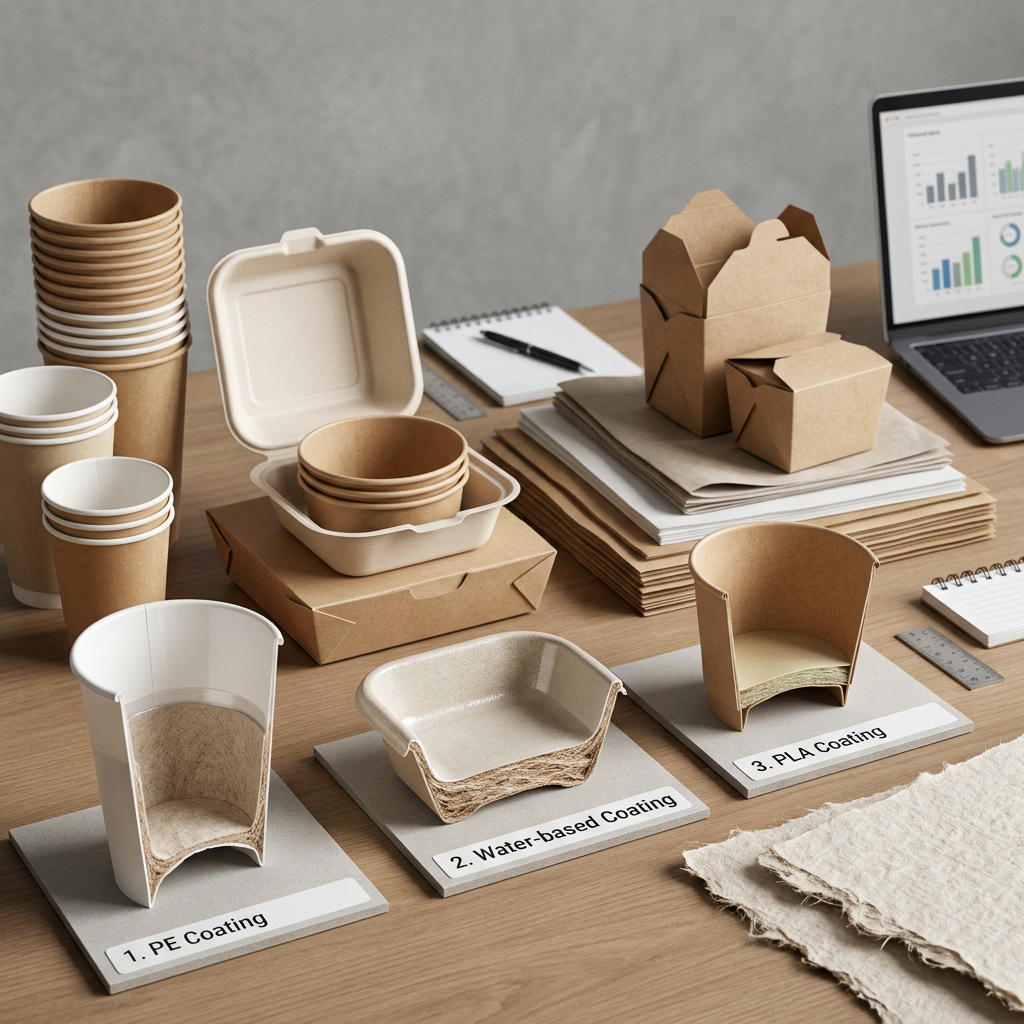
- What Are Paper Food Packaging Coatings?
- PE-Coated Paper: Established Moisture and Grease Protection
- Water-Based Coatings: A Fiber-Based Barrier Approach
- PLA-Coated Paper: A Bio-Based Polymer Option
- Uncoated Paper: When Simplicity Is the Right Choice
- How to Select Paper Food Packaging Coatings
- Sampling, Testing, Production, and Shipping Checks
- Conclusion: Match the Coating to the Food and Disposal Route
The right paper food packaging coating depends on moisture, grease, heat, shelf life, disposal infrastructure, and the destination market. This buyer-focused guide compares PE, water-based, PLA, and uncoated paper so foodservice and retail buyers can select a practical specification.
What Are Paper Food Packaging Coatings?
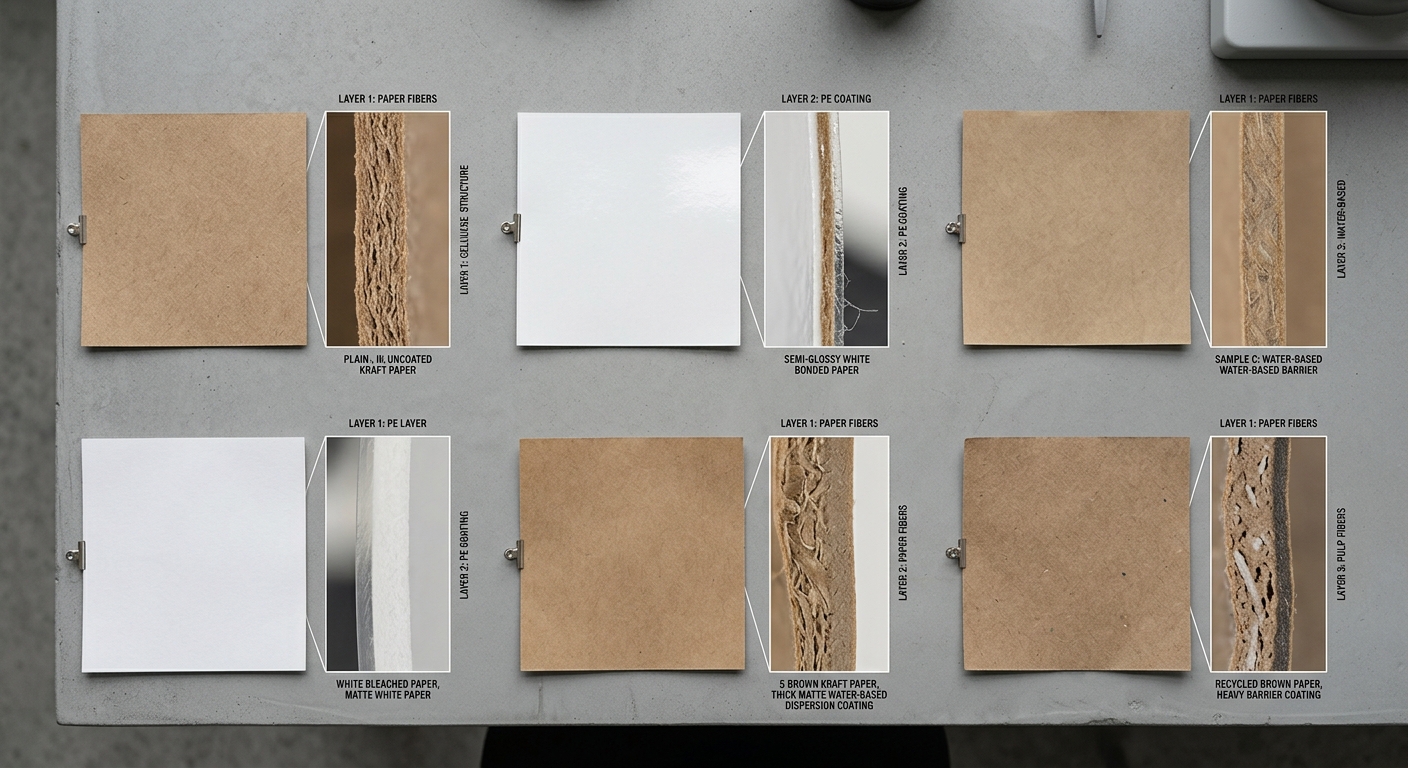
Paper food packaging coatings are thin barrier layers applied to paperboard or paper to help control contact with water, oil, grease, oxygen, or other substances. The best choice is not automatically the most sustainable or the most expensive option. It depends on the food, filling temperature, service time, required shelf life, converting process, disposal system, and destination-market rules.
In this guide, PE means polyethylene, a plastic polymer commonly used as a heat-sealable and moisture-resistant layer. Water-based coating means a coating formulated with water as the carrier; the dried barrier layer may contain other materials, so the term does not automatically mean plastic-free. PLA means polylactic acid, a bio-based polymer that can be used as a coating but still requires suitable industrial composting conditions where compostability is claimed. Uncoated paper has no added barrier layer on the food-contact surface.
Coating selection should be separated from marketing language. Recyclable, compostable, biodegradable, bio-based, and plastic-free describe different attributes. Confirm the exact structure, coating chemistry, local collection system, and supporting documentation before using any claim. See our guide to sustainable packaging claims for a broader explanation.
PE-Coated Paper: Established Moisture and Grease Protection
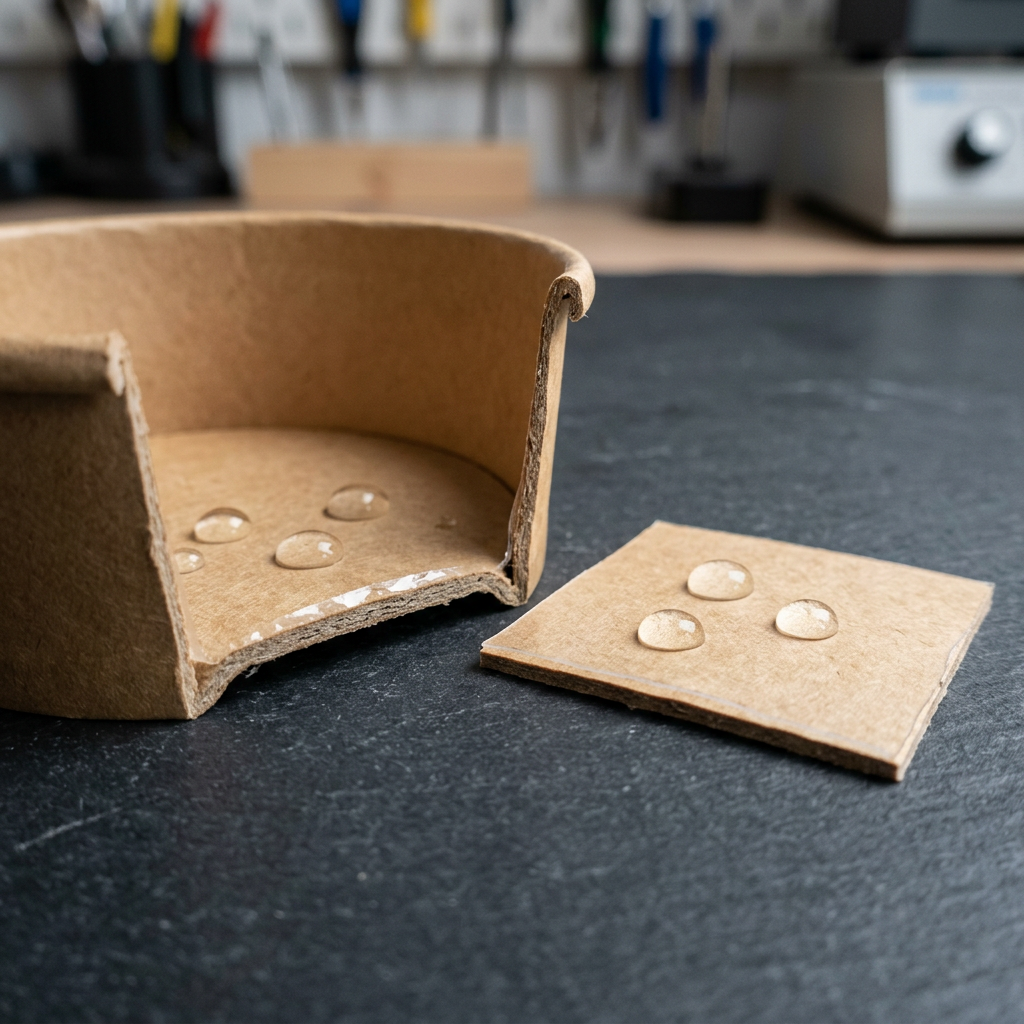
PE-coated paper uses a polyethylene layer to improve resistance to moisture and, depending on the construction, grease. It is widely considered when a package must hold liquid or wet food for a defined service period, form a seal, or maintain stiffness while exposed to condensation.
Typical applications
- Paper cups and containers for drinks or wet foods
- Takeout packs requiring a moisture barrier
- Foodservice packaging that needs heat sealing or improved leak resistance
- Greasy foods where the paper alone may absorb oil too quickly
PE does not make every package suitable for every temperature or application. The paper grade, coating weight, number of coated sides, seal design, food temperature, dwell time, and closure all matter. A PE-coated structure may also affect the practicality of fiber recovery, depending on the local recycling process and the amount of polymer relative to fiber.
Ask the supplier to identify whether the coating is single-sided or double-sided, the intended food-contact side, the nominal paperboard structure, and the applicable food-contact documentation. For hot or frozen applications, request application-specific testing rather than relying on the word “PE.” Our guide to microwave, oven, and freezer safety explains why the complete package must be assessed.
Water-Based Coatings: A Fiber-Based Barrier Approach
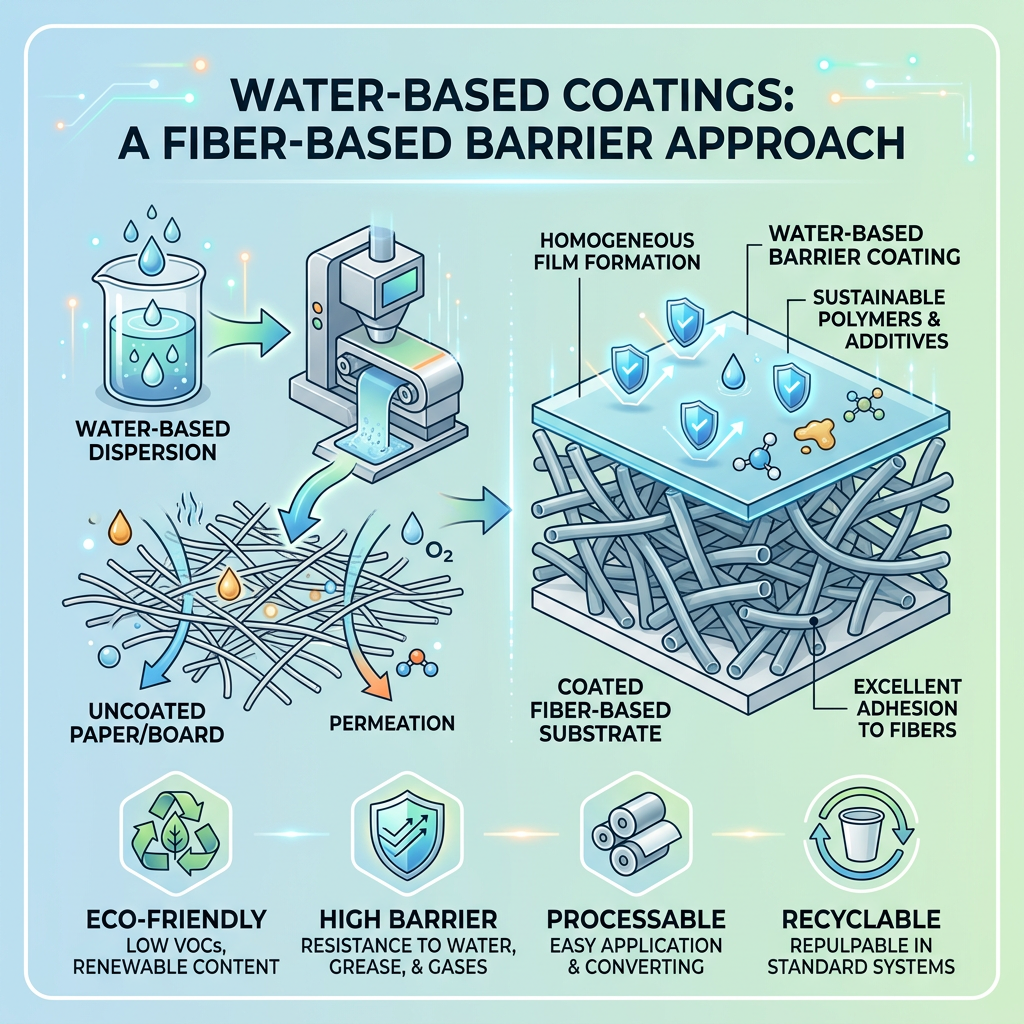
Water-based coatings are applied as liquid formulations and dried to create a functional surface layer. They are often considered when a buyer wants a paper-led structure, a particular print or tactile finish, or a barrier alternative to conventional plastic film. However, “water-based” describes the application system and should not be treated as proof that the finished package is plastic-free, recyclable, or compostable.
These coatings may be suitable for selected bakery packs, cartons, wraps, trays, and dry or moderately demanding food applications. The correct grade depends on the required resistance to water, oil, alcohol, condensation, scuffing, and heat. A coating that performs well against light moisture may not be sufficient for oily fried food or extended contact with hot liquid.
When evaluating this option, request the coating’s intended barrier function, food-contact declaration, application limits, sealability information, and end-of-life guidance. Confirm whether the coating is applied to one side or both sides and whether it affects folding, creasing, die cutting, or printing. For fried foods, packaging also needs ventilation and grease-management planning; see our guide to fried food packaging and grease management.
PLA-Coated Paper: A Bio-Based Polymer Option
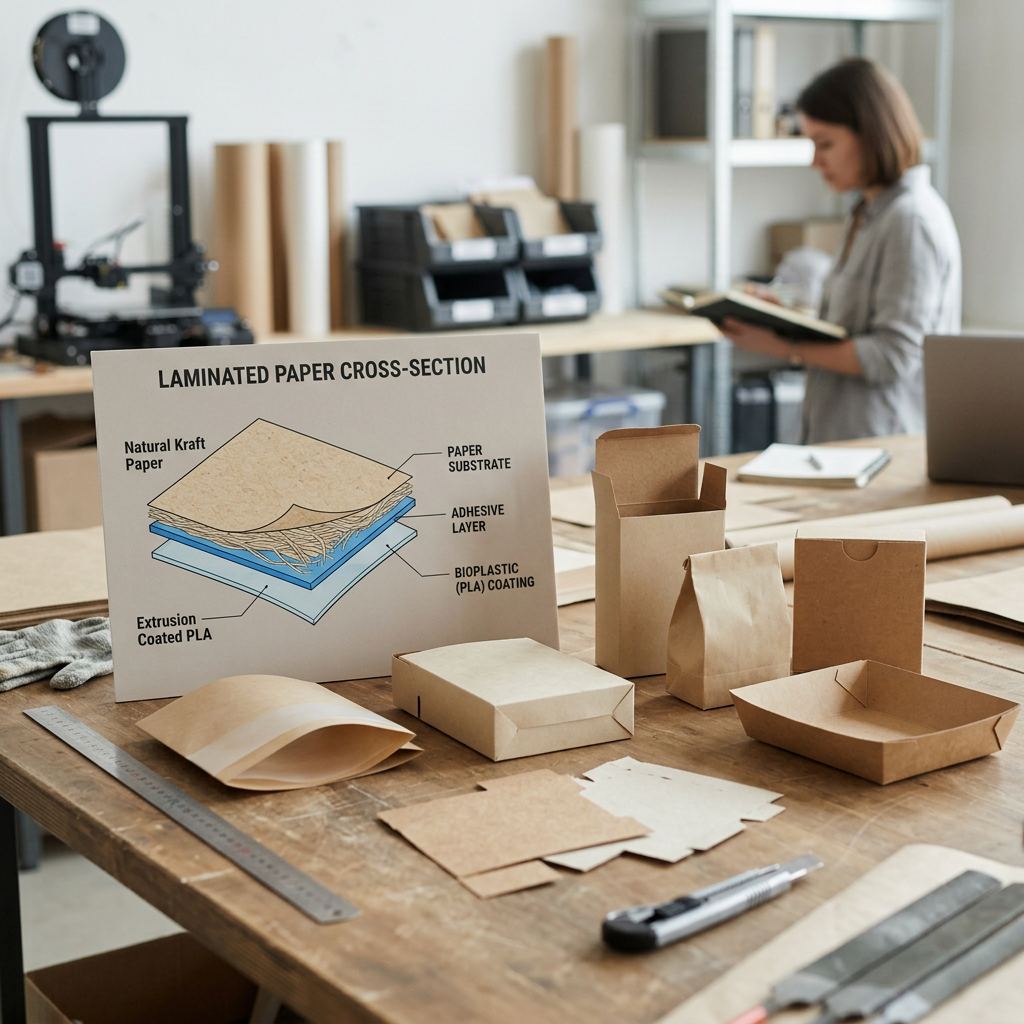
PLA-coated paper combines a paper substrate with a polylactic acid layer. PLA is a polymer made from bio-based feedstocks, but bio-based content and compostability are not interchangeable claims. A PLA-coated package should be described as compostable only when the complete product, relevant inks and adhesives, certification or documentation, and destination composting conditions support that claim.
PLA may be considered for selected cups, food containers, and service items where the buyer wants a paper-and-PLA structure. Its performance must still be matched to the application. Check liquid retention, grease resistance, sealing, filling temperature, storage conditions, and expected use time. Do not assume that a PLA coating is suitable for an oven, microwave, freezer, or long shelf-life application without written confirmation and testing.
End-of-life planning is essential. Commercial composting access varies by country, region, and operator, and a package labeled compostable may not break down in home composting or ordinary landfill conditions. Confirm the destination market’s accepted materials and required labeling before final artwork approval.
Uncoated Paper: When Simplicity Is the Right Choice
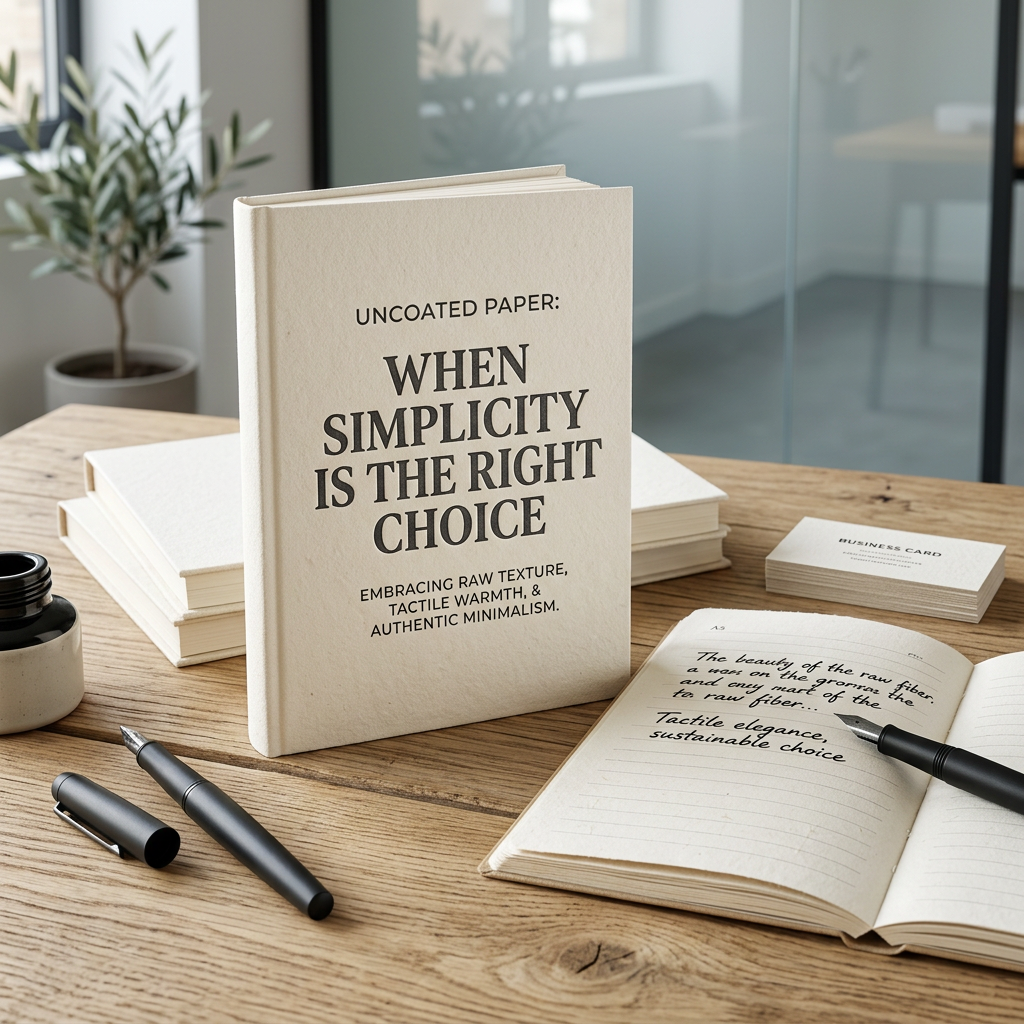
Uncoated paper has no additional barrier layer on the food-contact surface. It can be a practical choice for dry, low-grease foods and short service periods where appearance, printability, recyclability objectives, and easy converting are more important than liquid or oil resistance.
Potential applications
- Dry bakery products and outer sleeves
- Paper bags for foods with limited surface moisture
- Interleaving sheets and wraps for short contact periods
- Secondary packaging that does not directly contain wet or greasy food
The main trade-off is absorption. Moisture, oil, sauces, condensation, and prolonged contact can weaken paper, stain the pack, transfer grease, or reduce its visual quality. A suitable paper grade, caliper, sizing treatment, folding pattern, and food-contact design may improve results, but uncoated paper should not be selected solely because it appears more sustainable.
Run a practical trial using the actual food, fill weight, contact time, handling method, and storage conditions. If the product is oily or fried, consider a purpose-designed grease barrier, liner, or vented structure rather than assuming that a heavier paper grade alone will solve the problem.
How to Select Paper Food Packaging Coatings
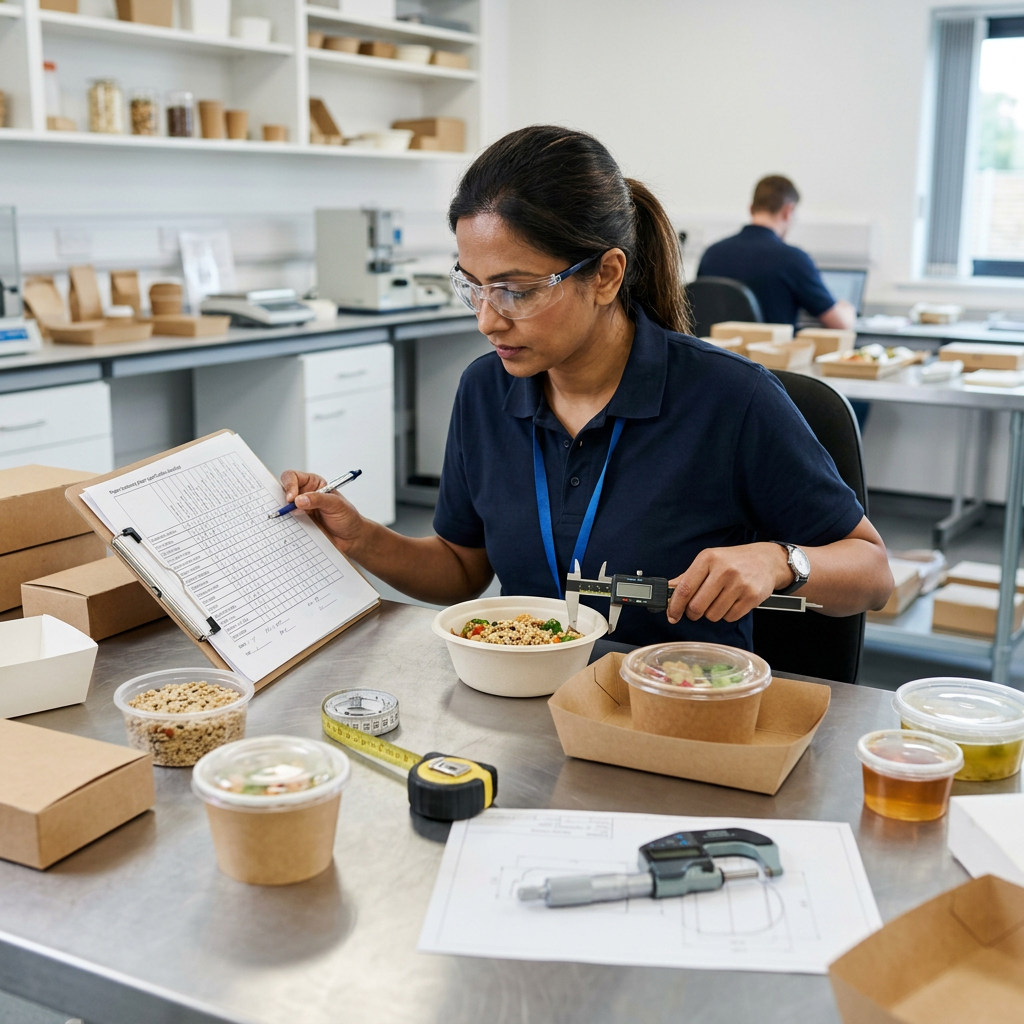
Use the following procurement sequence before selecting among paper food packaging coatings:
- Define the food. Record moisture, oil, acidity, alcohol content, particulates, and whether the food is dry, chilled, frozen, hot, or served with sauce.
- Define contact conditions. Specify fill temperature, contact time, storage duration, condensation, stacking pressure, transport movement, and whether reheating is expected.
- Define the barrier requirement. Decide whether the package needs water resistance, grease resistance, sealability, aroma retention, scuff resistance, or only basic containment.
- Define the complete structure. Confirm paper grade, caliper, coating type, coating side, coating weight or specification, inks, adhesives, lids, windows, and accessories.
- Check compliance and claims. Request food-contact documentation for the destination market and evidence supporting any recyclable, compostable, bio-based, or plastic-free claim.
- Assess operations. Review forming, filling, sealing, stacking, printing, storage, and shipping conditions. A coating that works in a laboratory may fail during actual conversion or distribution.
There is no universal winner. PE may be practical for demanding moisture and sealing requirements; water-based coatings may suit selected paper-led structures; PLA may support a bio-based polymer strategy where the end-of-life route is available; and uncoated paper may be adequate for dry, short-contact applications.
Sampling, Testing, Production, and Shipping Checks
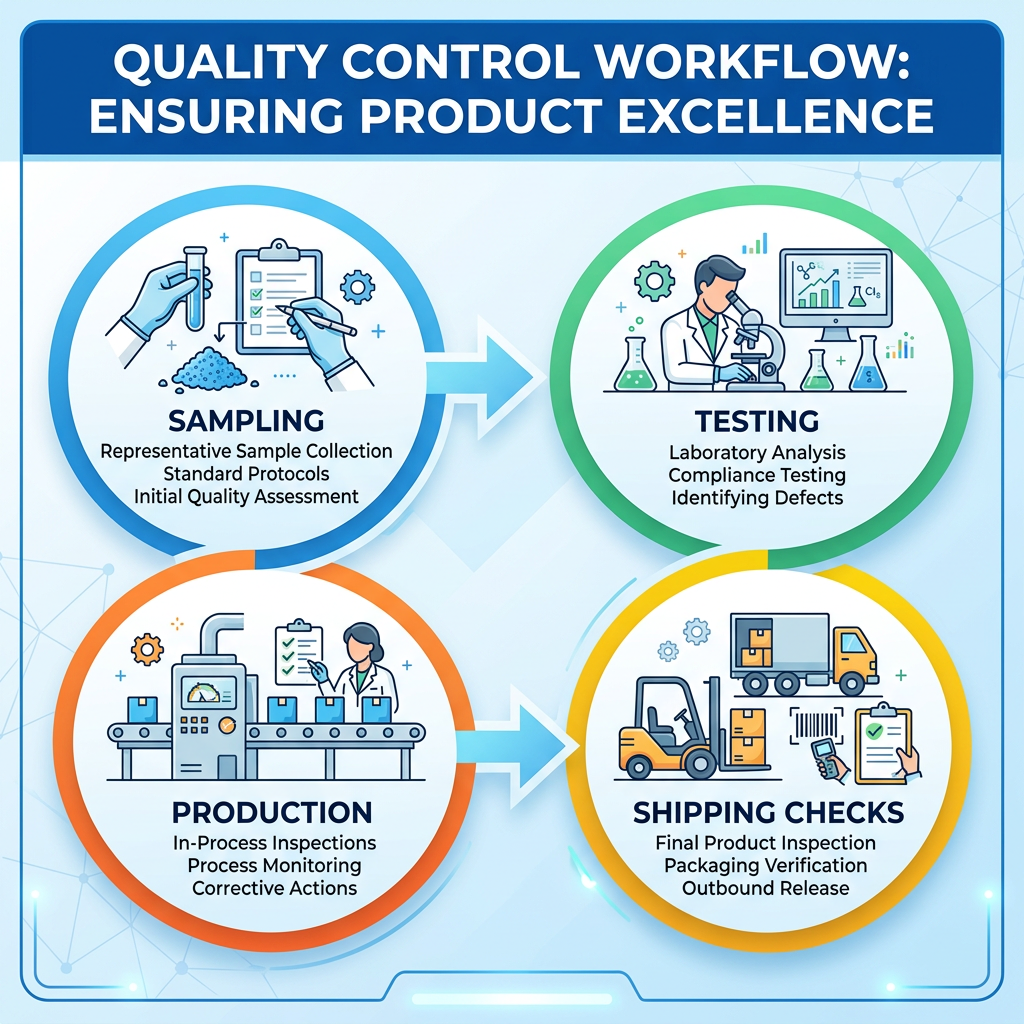
Before approving mass production, request samples made as close as possible to the intended paper grade, coating, dimensions, artwork, and forming method. Test the finished package rather than only a flat paper sheet.
Practical checks
- Fill with the actual food and inspect leakage, staining, softening, delamination, and odor transfer.
- Record performance at the intended temperature and contact duration; test reheating or freezing only when relevant to the specification.
- Check seals, folds, creases, closures, lids, and accessories during normal handling and stacking.
- Review print adhesion, rub resistance, color consistency, and scuffing after filling and transport.
- Confirm carton packing, palletization, humidity protection, storage limits, and shipping marks.
MOQ, sampling charges, production timing, material availability, price, food-contact compliance, and shipping arrangements depend on the exact product specification and destination market. Ask the manufacturer to confirm whether the requested coating is standard or custom, whether the MOQ changes with size or artwork, and which documents can be supplied for approval.
For branding, coating choice can affect ink adhesion and finishing. Coordinate the material decision with the artwork and print process; our guide to CMYK and Pantone food packaging printing covers color-selection considerations.
Conclusion: Match the Coating to the Food and Disposal Route
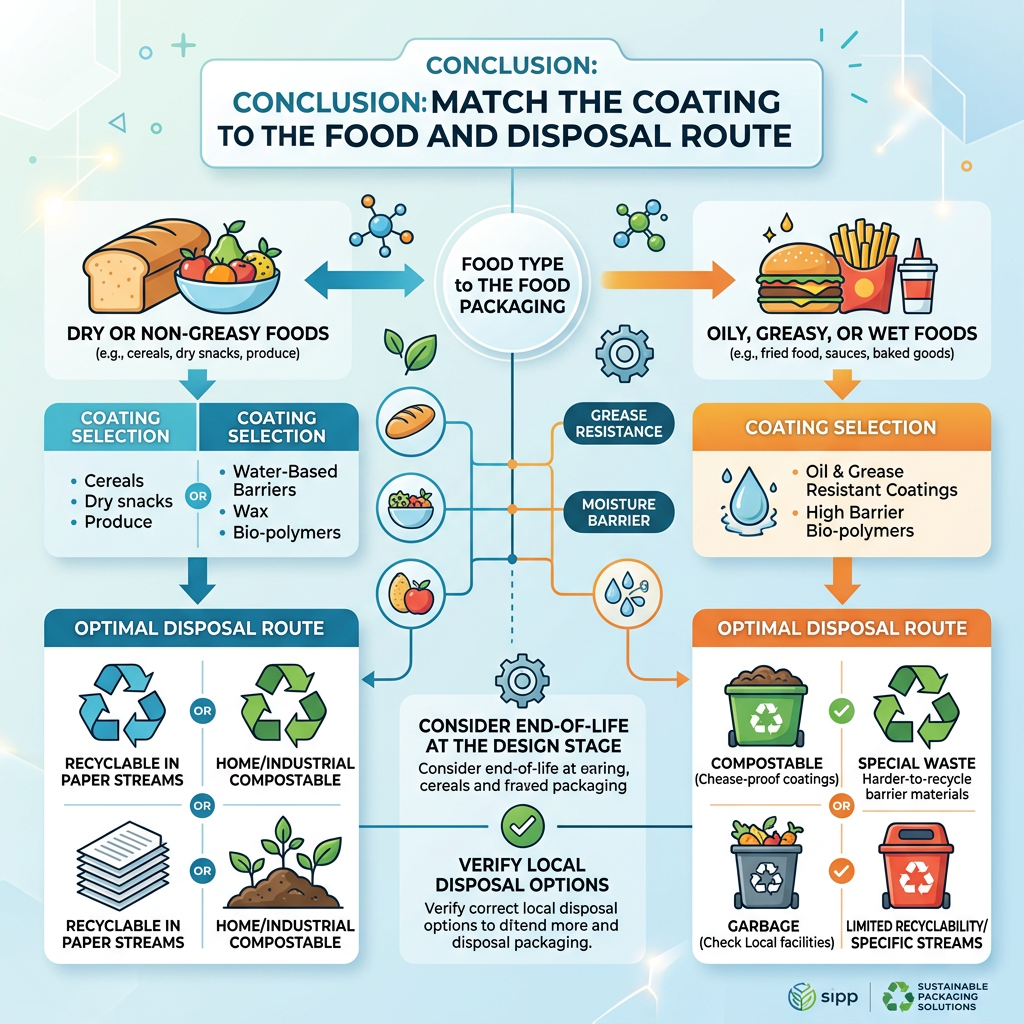
The most suitable paper food packaging coatings are selected through application testing, not marketing terminology alone. PE, water-based, PLA, and uncoated paper each involve different balances of barrier performance, converting behavior, environmental claims, cost, documentation, and end-of-life practicality. Start with the food and service conditions, then confirm the structure, test samples, and review destination-market requirements before ordering.
A transparent supplier should explain the material construction, limitations, available documentation, MOQ, sampling process, production requirements, storage conditions, and shipping plan. This gives procurement teams a clearer basis for comparing options and avoiding an unsuitable coating specification.