

Table of Contents
- What Tamper-Evident Delivery Bags Do
- Common Bag Formats for Foodservice
- Closure Options and Their Trade-Offs
- Material and Specification Checks
- Verification Checks Before Approval
- Sampling, Production, Storage, and Shipping
- How to Select Tamper-Evident Delivery Bags
Tamper-evident delivery bags help foodservice operators show whether an order may have been opened after packing. This guide explains bag formats, security closures, material choices, verification checks, sampling, production, storage, and shipping considerations for B2B buyers.
What Tamper-Evident Delivery Bags Do
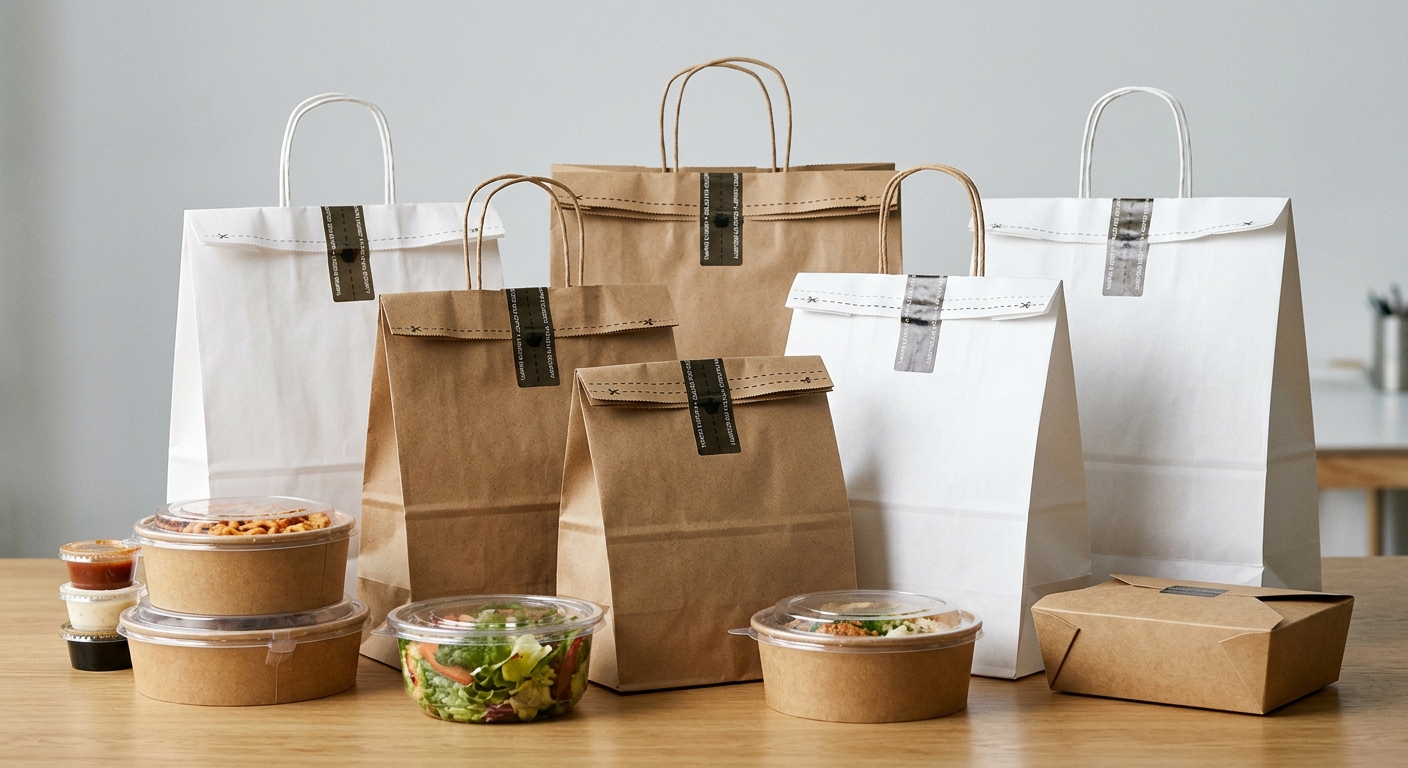
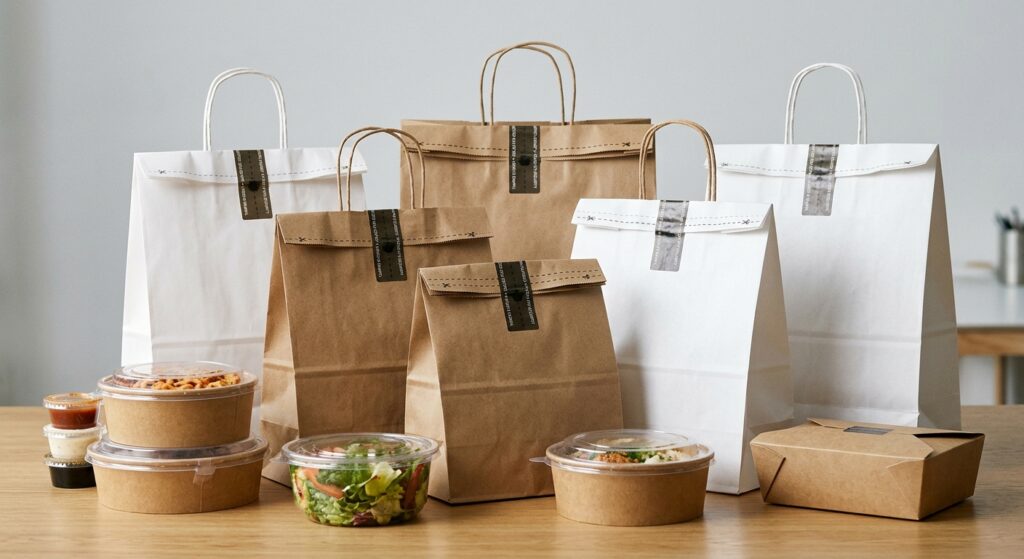
Tamper-evident delivery bags are foodservice bags designed to show visible evidence if the closure has been opened, disturbed, or removed after packing. They do not guarantee that food has never been accessed, and they should not be confused with tamper-proof packaging, which is an absolute claim. Their purpose is to create a clear visual signal and a controlled handoff between the restaurant, courier, and customer.
For procurement teams, the most important question is not simply whether a bag has a seal. It is whether the complete bag-and-closure system is suitable for the order size, food containers, delivery route, brand requirements, and destination market. A seal that works on a light paper bag may not perform the same way when the bag is overfilled, exposed to condensation, or carried by the handles.
- Tamper-evident: designed to reveal an attempted opening or interference.
- Security seal: an adhesive or integrated closure that restricts access and leaves visible evidence when disturbed.
- Bag format: the overall construction, such as a flat-handle paper bag, SOS-style bag, or self-sealing mailer-style bag.
Common Bag Formats for Foodservice
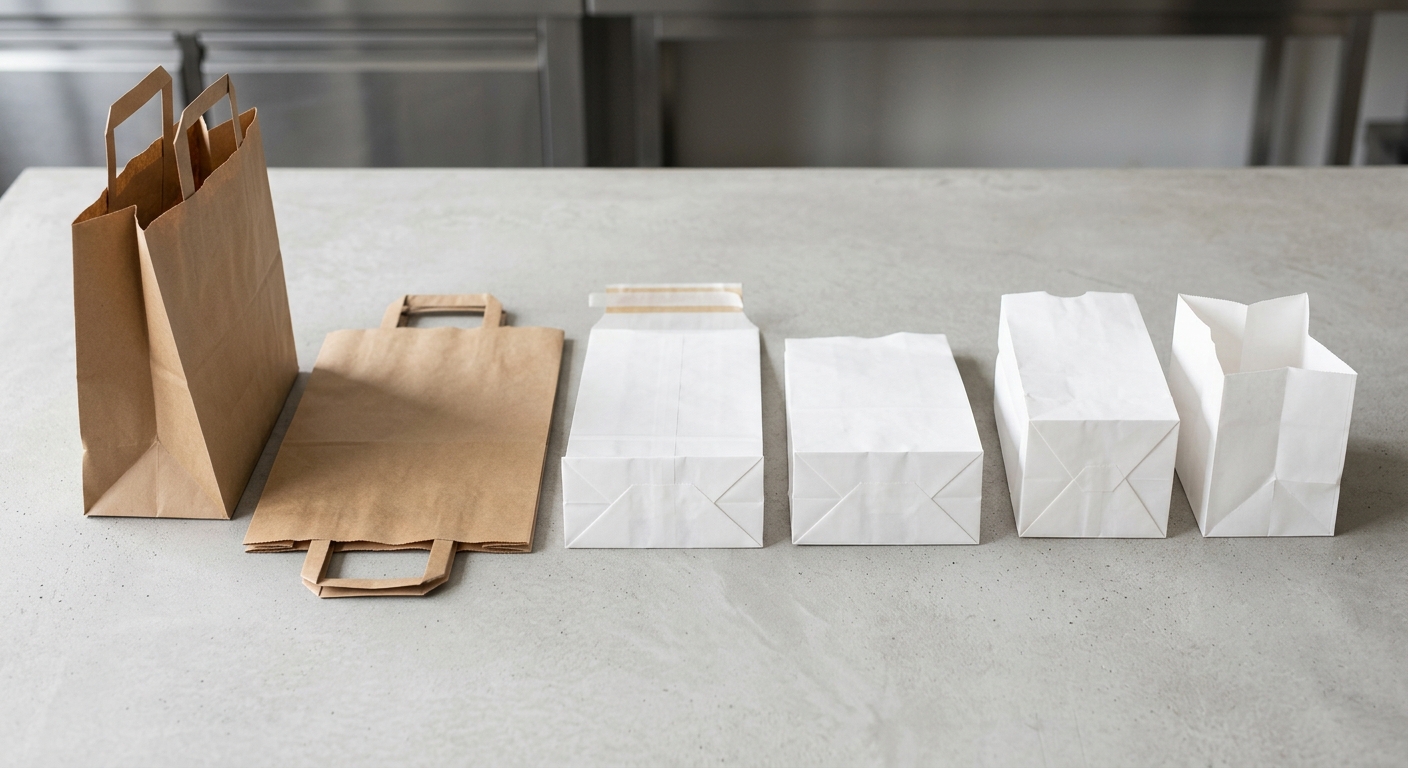
Different foodservice operations need different combinations of access control, carrying strength, capacity, and packing speed. The following formats are common starting points for specification discussions.
Self-sealing paper delivery bags
These bags use an integrated adhesive strip or security flap. They can provide a clean, simple packing workflow because the operator closes the bag after inserting the order. They are often suitable for restaurant delivery, catering portions, and takeaway orders where a visible seal is preferred over a separate sticker.
Paper bags with flat handles
Flat handles improve carrying convenience for many takeaway applications, while an integrated closure can help indicate whether the top has been opened. Buyers should confirm that the handle attachment, top fold, and seal area are compatible with the expected load. Handle strength and seal performance should be checked as separate characteristics.
Kraft and white paper formats
Kraft paper is commonly selected for a natural appearance, while white paper provides a lighter background for logos, instructions, and delivery messages. Neither color alone establishes recyclability, compostability, food-contact suitability, or moisture resistance. Those claims depend on the exact paper, coating, adhesive, inks, and local requirements.
For a product reference, review the tamper-evident kraft food delivery bag with security seal and compare its construction with the dimensions and loading method required for your operation.
Closure Options and Their Trade-Offs
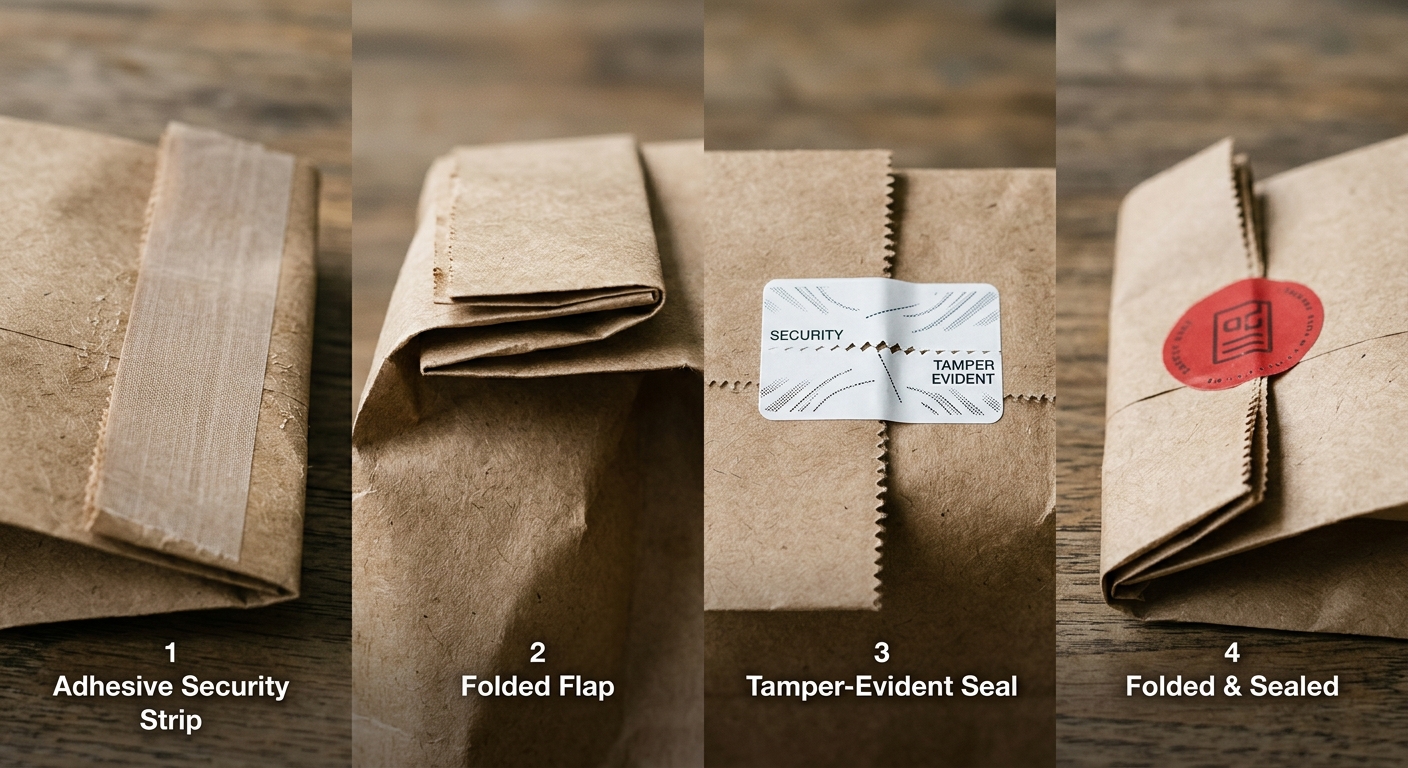
The closure is the functional center of a tamper-evident bag. It should be specified according to how the bag will be packed, transported, and checked at handoff.
- Integrated adhesive security strip: supports fast closing and a consistent appearance. The adhesive must bond to the selected paper surface and remain protected during storage before use.
- Fold-over security flap: can cover the opening and provide a broad branded area. The fold geometry must match the filled bag so that the flap is not under excessive tension.
- Separate tamper-evident sticker: may offer flexible placement and simple artwork changes, but it introduces an extra packing step and requires control of sticker supply and application position.
- Perforated or tear-open feature: can make opening obvious to the customer, but the tear path should be evaluated for clean opening and accidental damage during handling.
Ask the supplier to state what visual evidence is expected after opening. Examples may include a broken strip, torn paper, lifted adhesive area, or a changed printed message. The evidence should be easy for staff and customers to recognize without special tools.
Two similar-looking products may not have the same closure behavior. Review the self-sealing white kraft tamper-evident takeout bag when comparing integrated adhesive closure requirements.
Material and Specification Checks for Tamper-Evident Delivery Bags
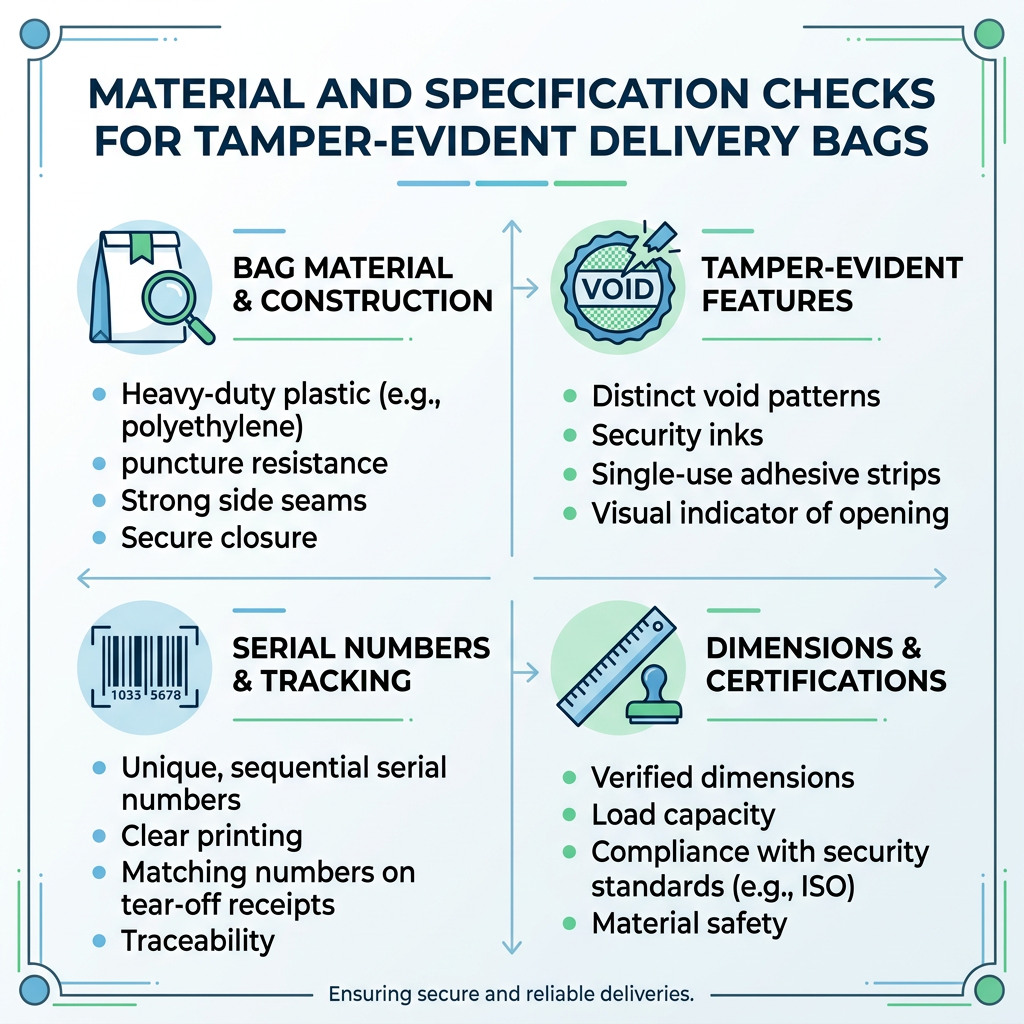
Before requesting a quotation, prepare a complete specification rather than asking for a generic delivery bag. At minimum, define:
- Bag length, width, gusset, and usable internal height.
- Target food containers, number of items, and approximate filled weight.
- Paper type, color, basis weight or thickness requirement, and any coating.
- Handle style, handle material, and attachment position if handles are required.
- Closure type, seal placement, opening method, and required tamper indication.
- Printing colors, artwork format, barcode or variable information needs, and print coverage.
- Order quantity, expected repeat-order pattern, packaging method, and destination market.
Material performance depends on the exact specification. Paper moisture resistance, seal adhesion, carrying strength, and print durability can change with paper grade, coating, adhesive, humidity, filling method, and storage conditions. If a bag will carry hot or condensation-producing food, test the filled configuration rather than relying only on an empty-bag inspection.
Also separate environmental claims carefully. Recyclable, compostable, biodegradable, and plastic-free are not interchangeable descriptions. A paper bag may contain coatings, adhesives, or other components that affect the appropriate claim. Confirm the intended claim against the full construction and the rules of the destination market.
For white paper alternatives, see the secure white paper food delivery bag with tamper-proof seal as a reference point for discussing color, closure, and application.
Verification Checks Before Approval
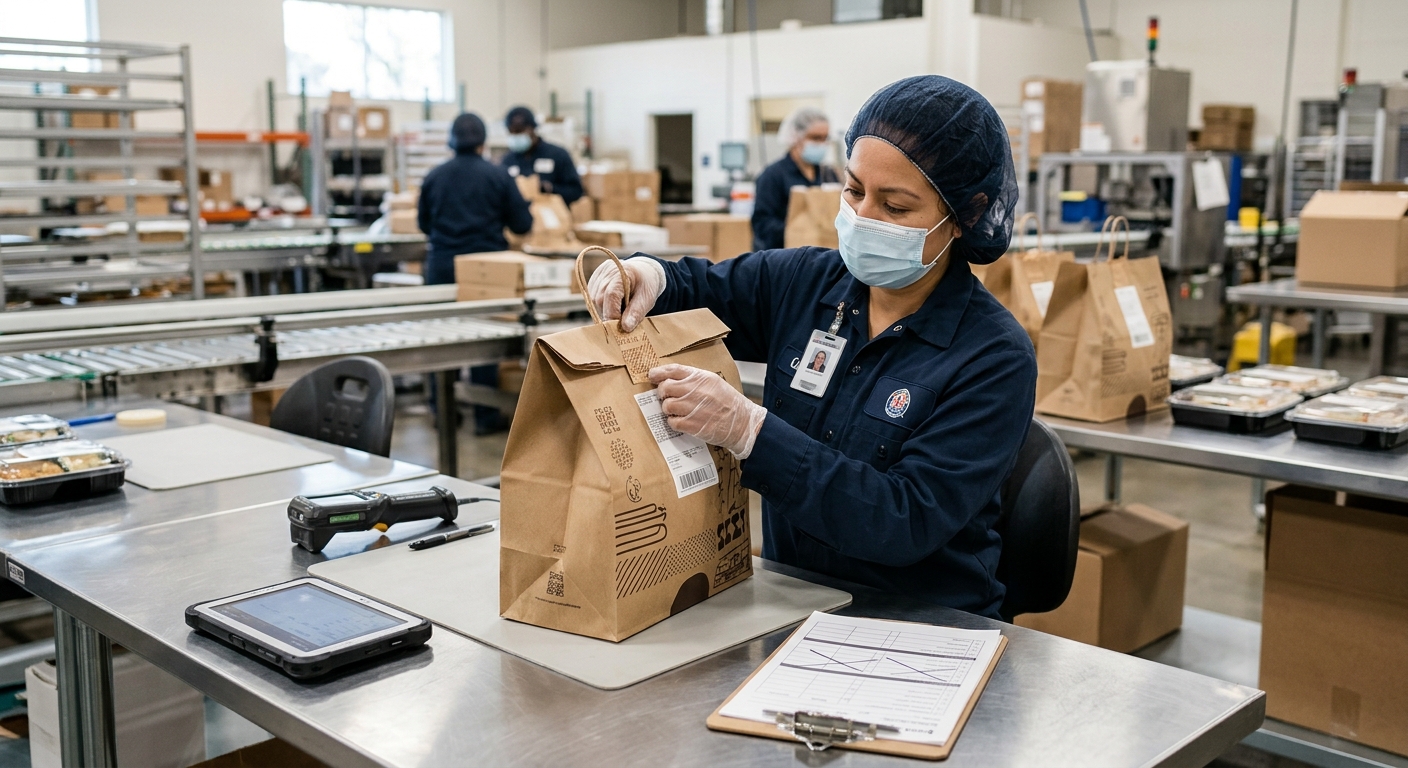
A supplier sample should be checked as a complete packaging system. Record the sample specification, test conditions, and pass or fail observations so that production can be compared with the approved reference.
Closure and tamper indication
- Close the bag using the intended production method and verify that the adhesive or flap engages across the required area.
- Attempt a normal opening and record whether the seal leaves clear, consistent evidence.
- Check whether the closure can be repositioned without obvious damage if that is not intended.
- Inspect the seal after handling, stacking, and carrying rather than only immediately after application.
Strength and handling
- Fill the bag with representative containers and the expected arrangement.
- Lift and carry it using the intended handles or gripping area.
- Inspect the bottom, side seams, handle attachments, folded top, and seal area.
- Repeat handling with realistic movement and stacking conditions established by the buyer.
Foodservice and print checks
- Evaluate contact with condensation, grease, sauces, and chilled or warm containers as relevant to the application.
- Check print legibility, logo position, barcode readability, and color against the approved artwork.
- Confirm that the bag dimensions fit the containers without excessive empty space or forced closure.
- Request applicable food-contact documentation and compliance information for the exact materials and destination market.
These checks are not universal laboratory standards. They are practical buyer controls that should be adapted to the application and supplemented by any destination-market testing or documentation requirements.
Sampling, Production, Storage, and Shipping
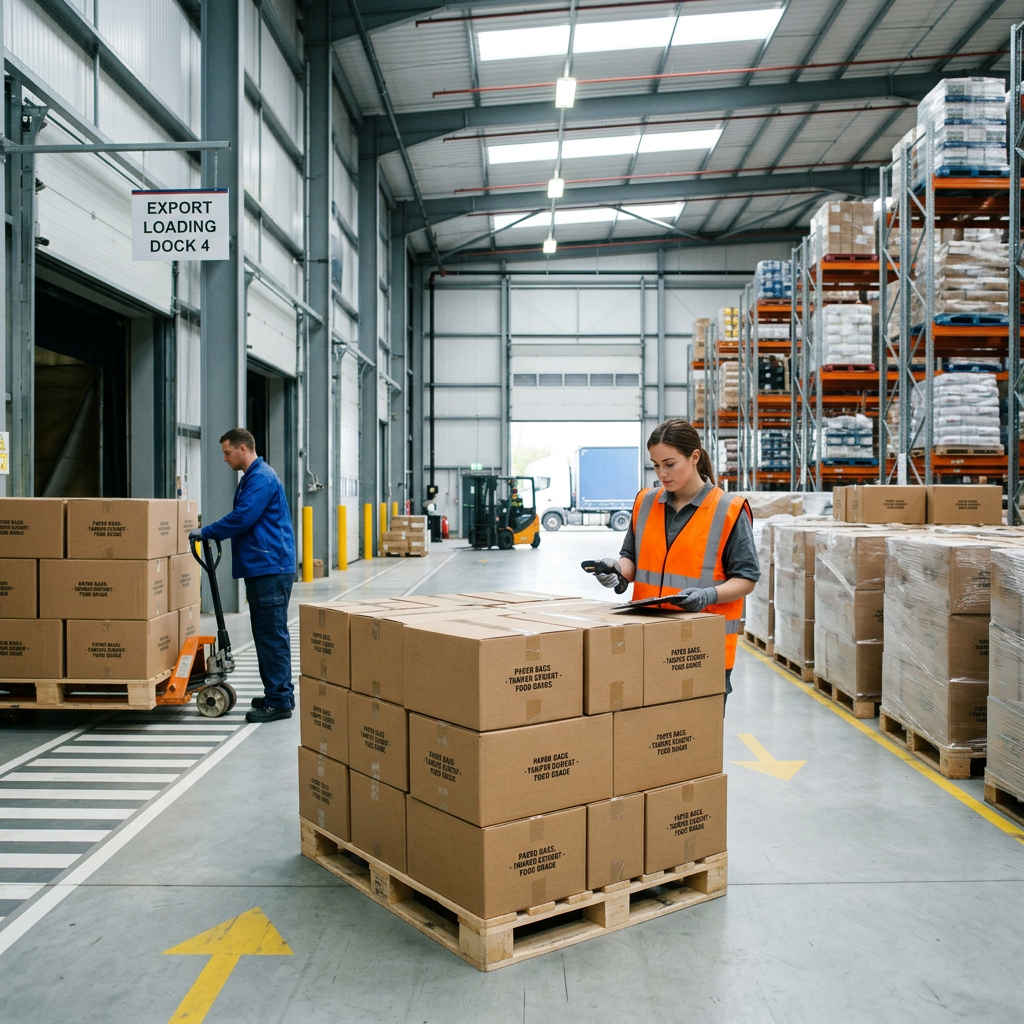
Sampling should confirm more than artwork. Request samples with the proposed paper, closure, dimensions, handle construction, and printing method whenever possible. If a structural change is made after sampling, request a revised sample or documented approval before mass production.
MOQ, price, and lead time depend on the exact size, material, printing, closure, order quantity, production schedule, and destination. Ask the manufacturer to identify whether the MOQ applies per size, artwork, color, or combined order. Clarify the sampling process, sample charges if applicable, production approval point, inspection method, carton packing, and export documents before placing an order.
Storage is particularly important for adhesive closures. Keep finished bags protected from excessive humidity, heat, dust, compression, and direct sunlight. Follow the supplier’s handling instructions and use stock in a controlled rotation. The suitable storage period and closure performance should be confirmed for the exact adhesive and packaging configuration rather than assumed from a general paper-bag specification.
For shipping, confirm carton dimensions, units per carton, pallet or container loading method, moisture protection, shipping marks, and destination port or delivery term. Paper bags can be compressed or affected by rough handling, so inspect outer cartons and sample cartons during receiving. Any required import, food-contact, labeling, or packaging documentation should be agreed before dispatch.
For a handle-focused option, compare the kraft paper tamper-proof delivery bag with flat handles with your required load and carrying method.
How to Select Tamper-Evident Delivery Bags
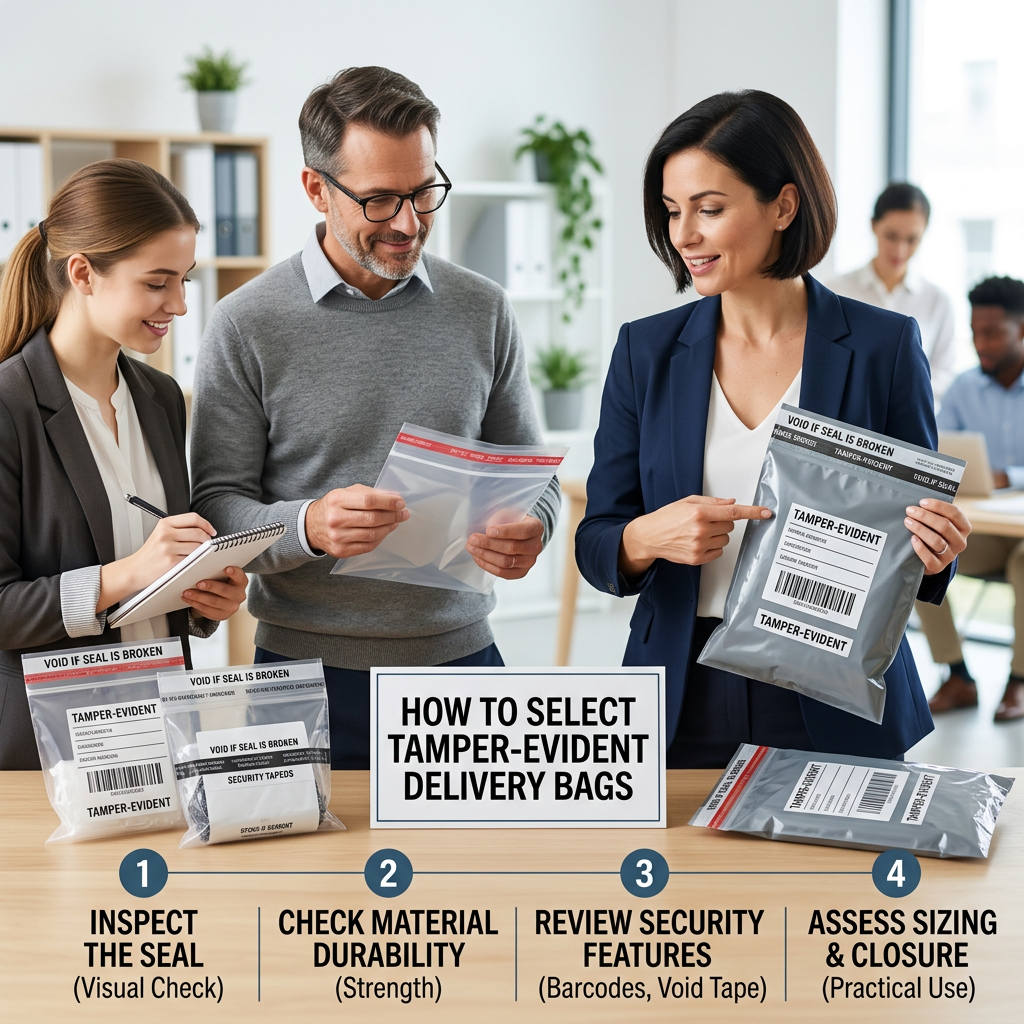
Start with the customer handoff requirement: what must the customer see if the bag has been opened? Then work backward through the closure, bag format, material, dimensions, handles, printing, and logistics. Select a design that your packing team can close consistently and your delivery team can check quickly.
Use a documented sample approval process, test filled bags under realistic handling conditions, and keep the approved specification with the purchase order. Do not approve a bag based only on a product photo or an unfilled sample. Food-contact compliance, material performance, MOQ, price, and lead time depend on the exact specification and destination market.
When the design is finalized, a qualified packaging manufacturer can support artwork review, samples, production, quality control, and export coordination. The best solution is the one that balances visible security, packing efficiency, carrying performance, brand presentation, and total delivery risk.
Discuss Your Tamper-Evident Delivery Bag Specification
For an accurate recommendation and quotation, send us your product type, food application, bag dimensions or capacity, material, coating, quantity, printing requirements, lid or accessory needs, and destination market. YBJ Packing can review the specification and support sampling, production, quality control, and export service.