

Table of Contents
- What Food Packaging Seal Testing Means
- Define the Package and Closure Before Testing
- Food Packaging Seal Testing Checklist
- Testing by Package Format
- Set Test Conditions, Sampling, and Acceptance Criteria
- Common Seal Failures and Corrective Actions
- Questions to Ask a Packaging Manufacturer
- Conclusion: Turn Closure Performance into a Purchase Requirement
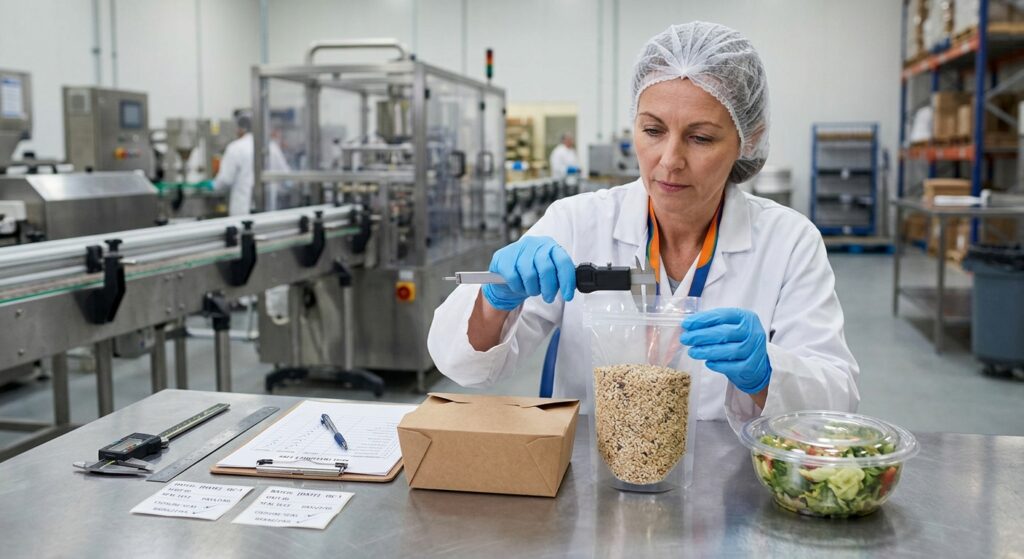
Food packaging seal testing confirms whether a package closes securely, protects its contents, opens as intended, and remains functional through handling, transport, storage, and use. This practical checklist covers paperboard boxes, flexible bags, lidded containers, and tamper-evident closures for B2B food packaging procurement.
What Food Packaging Seal Testing Means
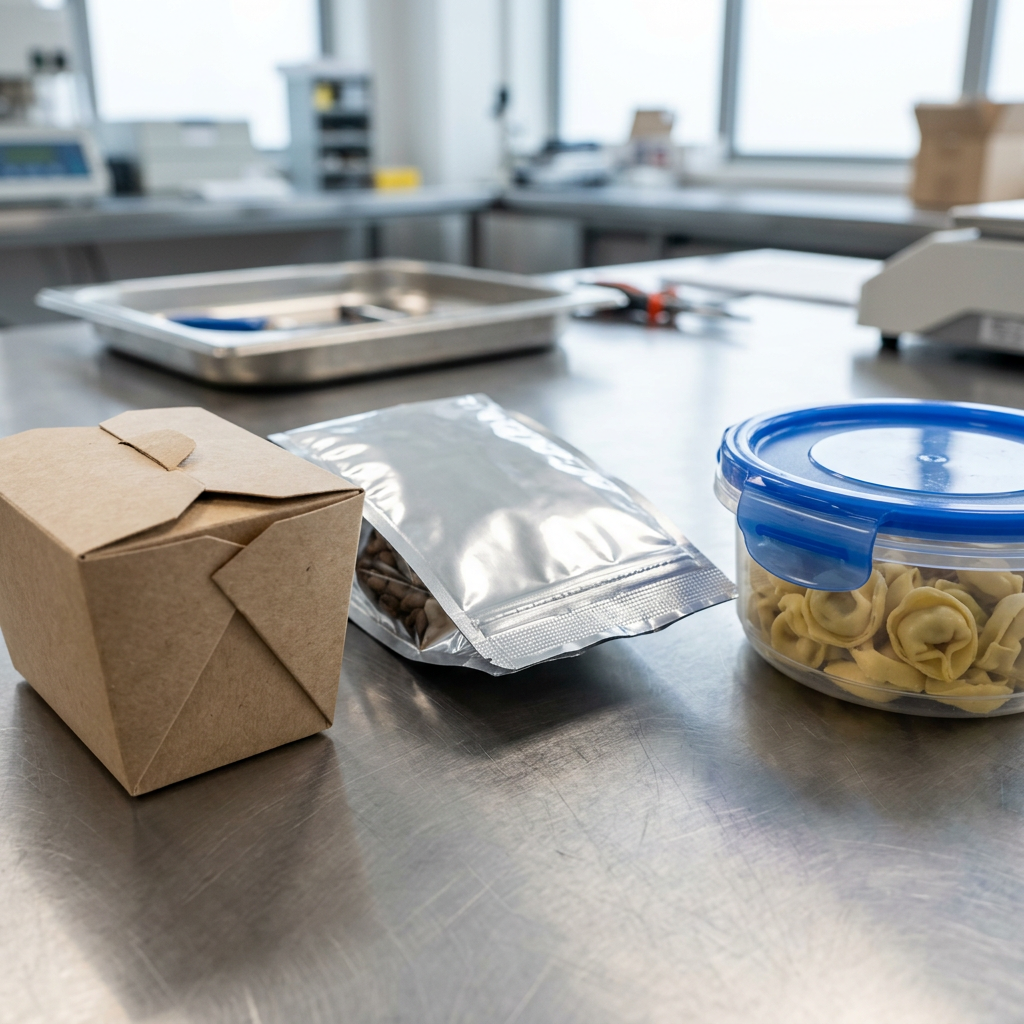
Food packaging seal testing is the planned inspection and measurement of a package’s closure system to determine whether it protects food during filling, handling, transport, storage, and opening. A seal may be a heat-sealed film, adhesive joint, folded paperboard lock, pressure-fit lid, snap closure, zipper, or tamper-evident feature.
The objective is not simply to make a package difficult to open. A suitable closure should balance containment, product protection, opening convenience, line performance, appearance, and the requirements of the destination market. The exact material structure, coating, contents, dimensions, filling temperature, storage conditions, quantity, and shipping route determine the appropriate test method and acceptance criteria.
Seal integrity means the closure remains sufficiently continuous and functional to prevent unwanted leakage, contamination, loss of product, or accidental opening. Seal strength is the force required to separate or rupture a sealed area. These terms are related but not interchangeable: a strong seal can still leak if there is a channel or puncture, while a package designed for easy opening may intentionally use a lower opening force.
For broader moisture and grease considerations, review this guide to grease resistance in food packaging. Seal performance should be assessed together with the package’s barrier and material properties.
Define the Package and Closure Before Testing
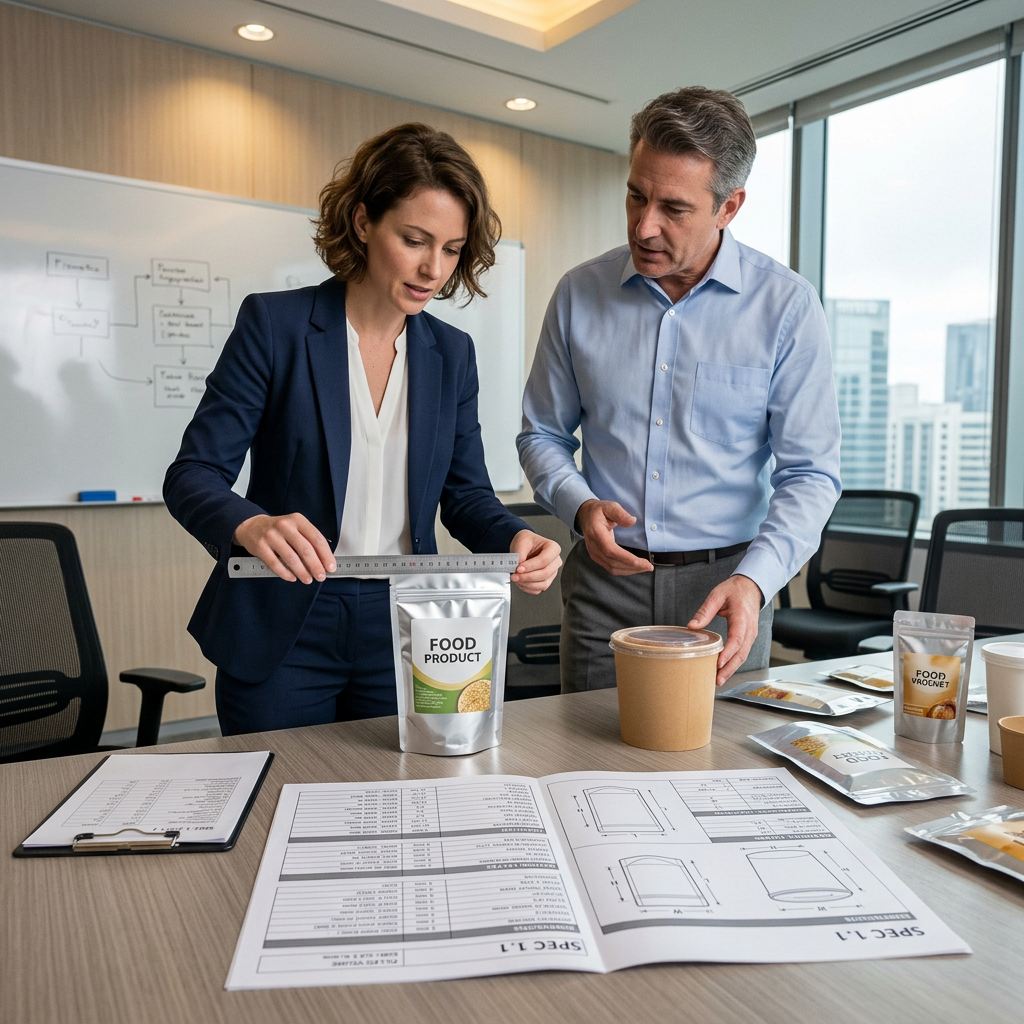
Before requesting a test, create a clear closure specification. A manufacturer cannot select a meaningful method from the product name alone because a paper food box, stand-up pouch, and plastic container have different failure modes.
- Package format: Identify the box, bag, tray, cup, tub, bottle, pouch, or container.
- Closure type: Record the folding lock, adhesive seam, heat seal, zipper, snap-fit lid, press-on lid, shrink band, tear strip, or other feature.
- Material structure: Specify paperboard or plastic type, thickness or basis weight where known, coating, liner, film, laminate, and lid material.
- Food application: Describe dry, oily, liquid, chilled, frozen, hot-filled, ready-to-eat, or powder contents.
- Dimensions and fill level: Include internal dimensions or capacity, headspace, product weight, and the maximum expected fill.
- Use environment: State expected temperature exposure, humidity, stacking, vibration, delivery duration, and whether the package is opened by hand or on equipment.
- Required user experience: Define whether the closure must be leak-resistant, resealable, tamper-evident, easy-open, child-resistant, or compatible with a packing line.
For delivery programs, closure testing should also reflect the handling conditions described in the guide to tamper-evident delivery bags. Tamper evidence and leak resistance are separate requirements and should not be treated as substitutes.
Food Packaging Seal Testing Checklist
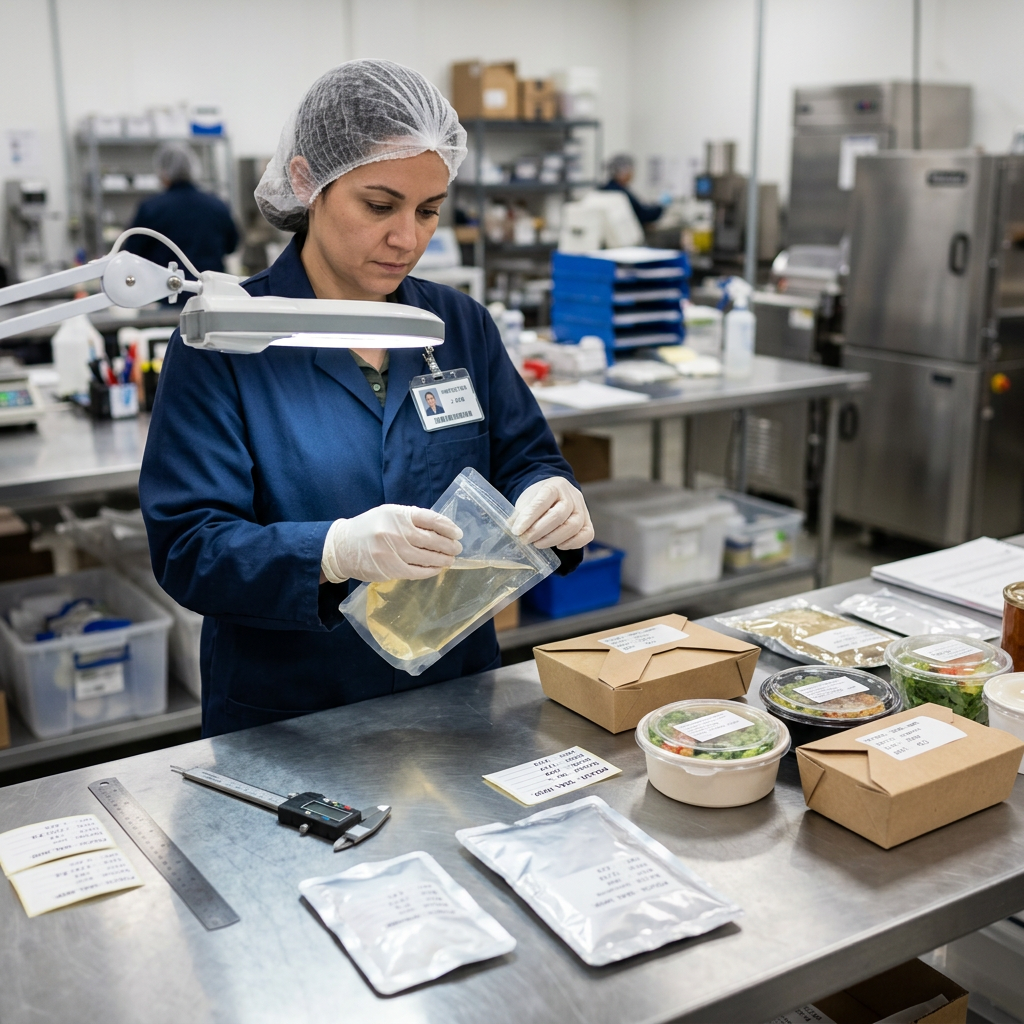
Use the following checklist during prototype review, pre-production approval, and incoming quality inspection. Select only the tests that match the closure and application.
- Visual seal inspection: Check for wrinkles, incomplete bonding, contamination, delamination, uneven adhesive, open corners, crushed folds, pinholes, lid distortion, and poor registration of tear features.
- Opening and closing function: Confirm that the package closes fully and opens at the intended location. For resealable formats, repeat the open-close cycle and check whether the closure remains functional.
- Seal strength or opening force: Measure separation force where a numerical result is useful. Define the test direction, sample width, speed, conditioning, and whether the requirement is minimum, maximum, or a target range.
- Leak or containment testing: Fill the package with a suitable representative product or test medium and inspect for leakage after standing, inversion, pressure, or handling. The medium should reflect product viscosity, oil content, particles, and temperature as relevant.
- Pressure or vacuum evaluation: Use only when appropriate for the package. Observe bubbles, pressure loss, deformation, or closure displacement. The selected pressure and duration must be agreed in advance rather than copied from an unrelated package.
- Distribution simulation: Evaluate filled samples after stacking, vibration, drops, compression, or other handling exposures relevant to the shipping route. Inspect both the closure and the surrounding material.
- Environmental conditioning: Where applicable, condition samples at the expected temperature or humidity before testing. Paperboard folds, adhesives, films, and lids can respond differently to moisture and heat.
- Food-contact and migration documentation: Confirm that the complete food-contact material structure, coatings, inks, adhesives, and closure components are suitable for the destination market and intended food use. Documentation requirements vary by market and application.
- Production consistency: Compare samples from different production times, cavities, sealing lanes, or cartons. A successful prototype does not automatically demonstrate stable mass production.
Record sample identification, production date, material lot, equipment settings where available, test conditions, observations, measurements, failures, photographs, and final disposition. A clear report is more useful than a pass statement without traceable conditions.
Testing by Package Format
Paperboard boxes
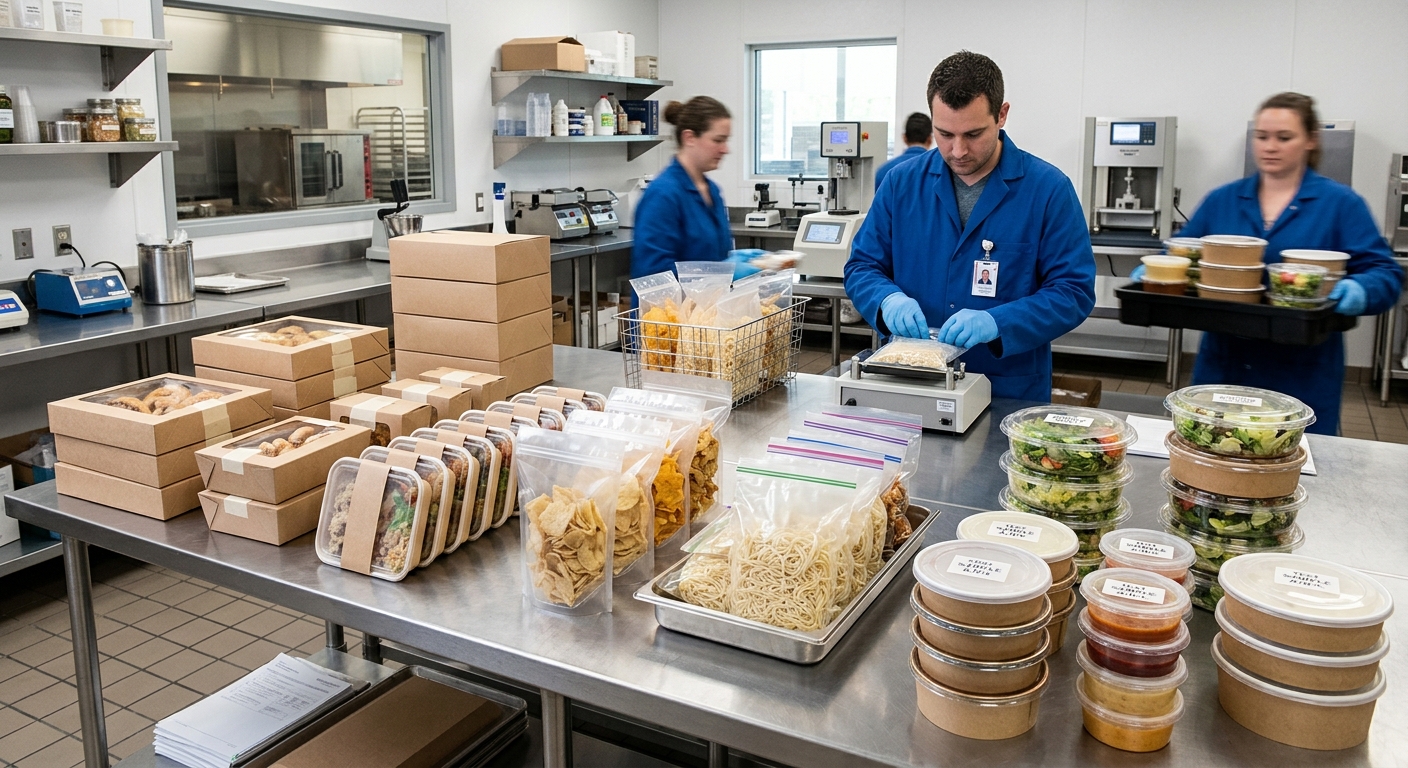
For folding boxes and takeaway cartons, inspect glued seams, locking tabs, corners, bottoms, and any window attachment. Test whether the box stays closed when filled, lifted, stacked, tilted, and carried. If the contents are hot, oily, or moist, inspect the board and coating after realistic contact. A package can remain mechanically closed while still softening or staining around the closure.
Flexible bags and pouches
Inspect heat-seal bands, side seams, bottom gussets, zipper tracks, tear notches, and corners. Test samples with representative fill weight and headspace. Pay particular attention to product trapped in the seal area, because particles or oil can interfere with bonding. For resealable bags, test both the original seal and repeated zipper operation.
Lidded containers
For cups, tubs, trays, and food containers, check lid fit, flange condition, rim cleanliness, liner or film seal, stacking, and removal force. Test filled containers in the orientation used during storage and delivery. If a lid is intended to be leak-resistant rather than hermetically sealed, state that requirement precisely.
Hot and cold applications can create different closure risks. Condensation, filling temperature, cooling, and reheating may affect paper, coatings, films, and fit. The related guide on hot versus cold food packaging can help define the operating conditions before testing.
Set Test Conditions, Sampling, and Acceptance Criteria
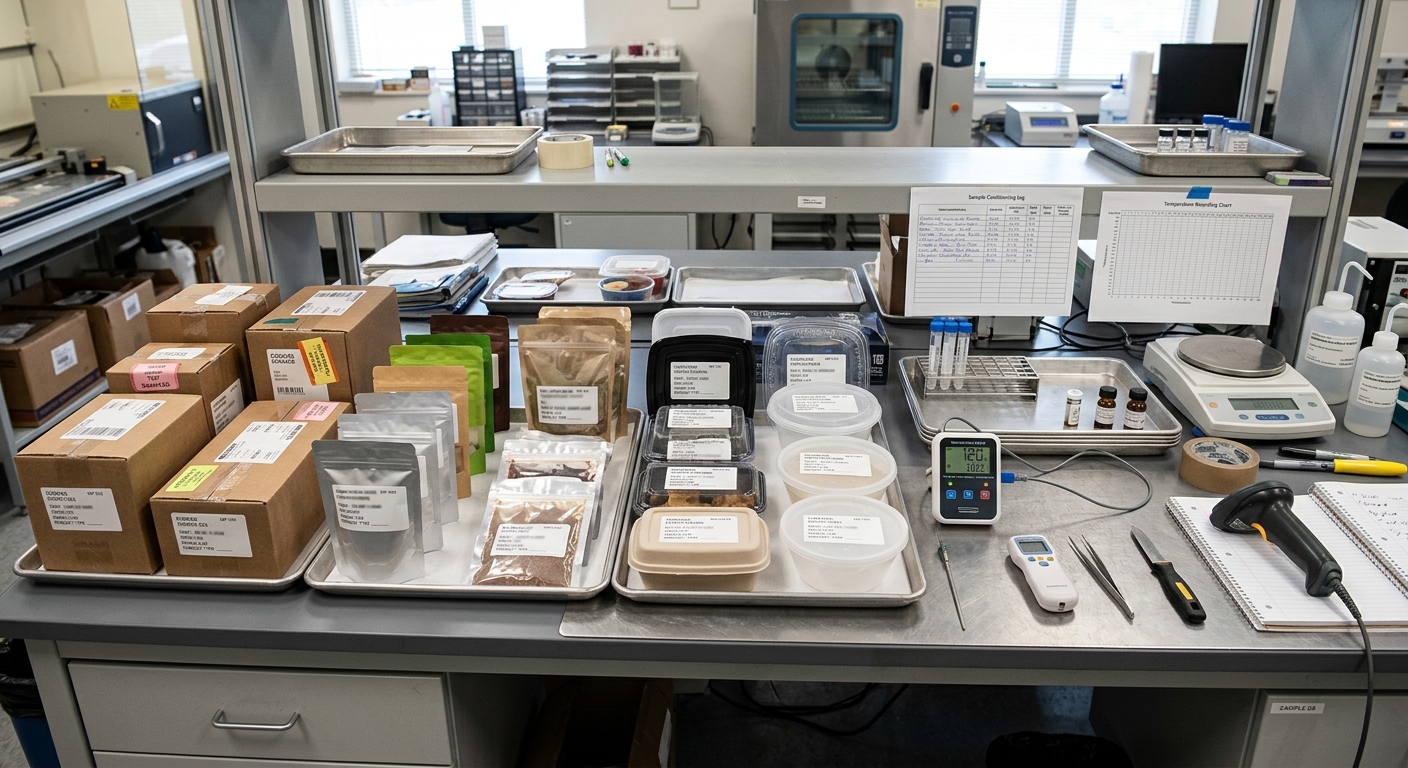
Testing is only useful when the conditions are defined. Agree on the sample stage, quantity, conditioning, method, equipment, operator, and acceptance rule before production approval.
- Sample stage: Use development samples for design learning, production samples for process approval, and finished-goods samples for ongoing quality control.
- Sample selection: Take samples from relevant production runs and locations rather than selecting only visually perfect units. The sampling plan should be agreed by the buyer and supplier.
- Representative contents: Test with the actual product where practical. If a substitute is used, document its viscosity, particle size, oil content, weight, and temperature.
- Conditioning: Define time after filling, storage orientation, temperature, humidity, and any transport simulation before inspection.
- Acceptance criteria: State whether the requirement is no visible leakage, no unintended opening, a defined opening-force range, intact tamper evidence, acceptable appearance, or another measurable result.
- Retesting: Establish what happens after a failure: investigation, additional samples, process adjustment, corrective action, and approval by the responsible buyer.
Do not approve a seal based only on a supplier’s general statement such as “leakproof” or “food grade.” Ask for the exact tested construction and conditions. Material performance, food-contact compliance, MOQ, price, and lead time depend on the exact specification and destination market.
Packaging should also be checked for its intended use in delivery and stacking. See the practical guide to meal-prep and grab-and-go packaging for related operational considerations.
Common Seal Failures and Corrective Actions
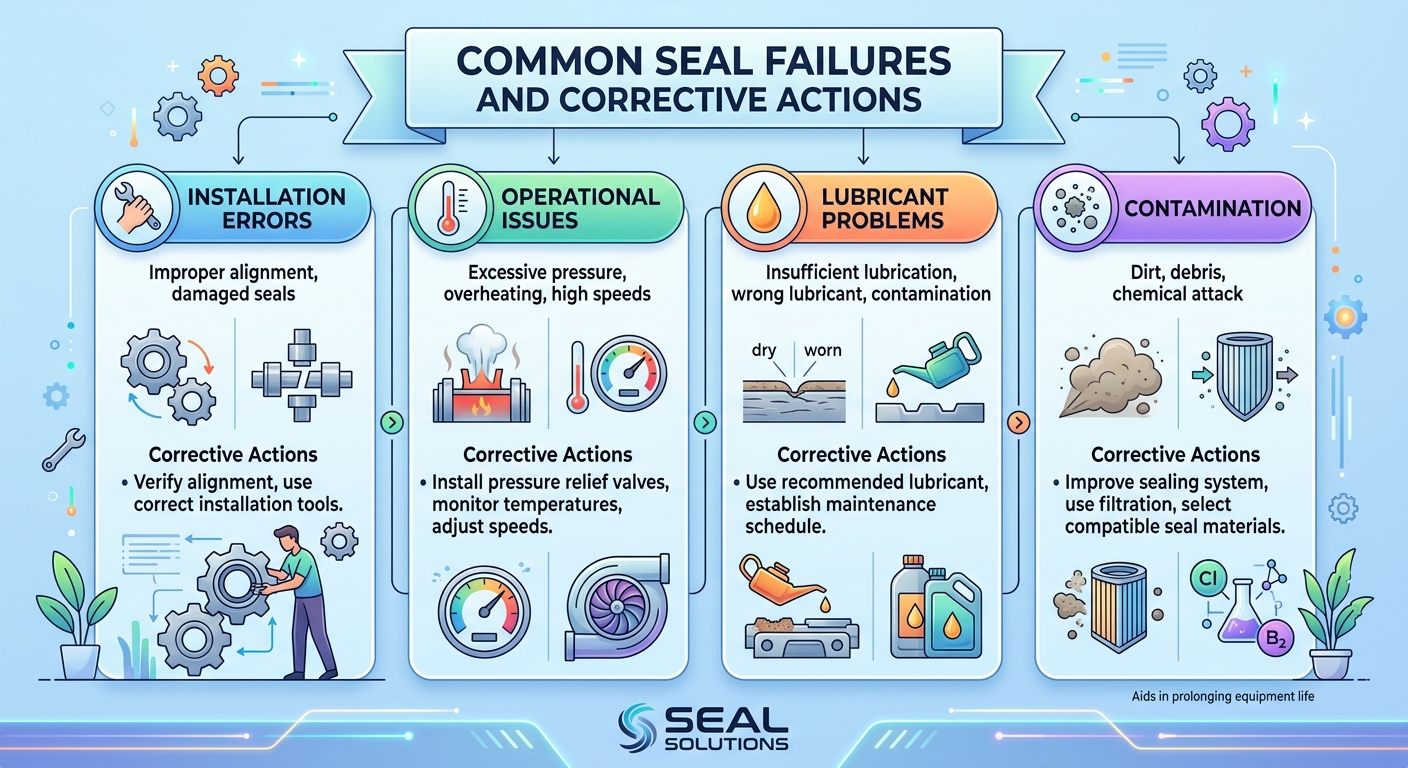
Incomplete bonding or open channels may result from unsuitable sealing conditions, contamination, uneven pressure, or inconsistent material. Review the sealing window, contact surfaces, equipment alignment, and product control.
Peel or tear at corners often indicates stress concentration, sharp geometry, insufficient seal width, poor lid fit, or overfilling. Review the corner design, fill level, and handling method.
Leakage without obvious visual damage may come from microchannels, pinholes, poor flange contact, or a product trapped in the closure. Use a suitable leak method and inspect the complete seal path rather than only the center.
Packages that are too difficult to open can cause user complaints and product damage. Evaluate opening force, tear direction, notch position, and the difference between intended tamper evidence and excessive seal strength.
Closure failure after transport may be caused by compression, vibration, impact, temperature change, or stacking loads rather than the initial seal alone. Test filled packages in the shipping configuration and investigate the surrounding box or pallet design.
Corrective action should identify the failure mechanism before changing material thickness or adding a coating. A design change may affect print appearance, recyclability claims, packing speed, MOQ, shipping efficiency, and food-contact documentation.
Questions to Ask a Packaging Manufacturer
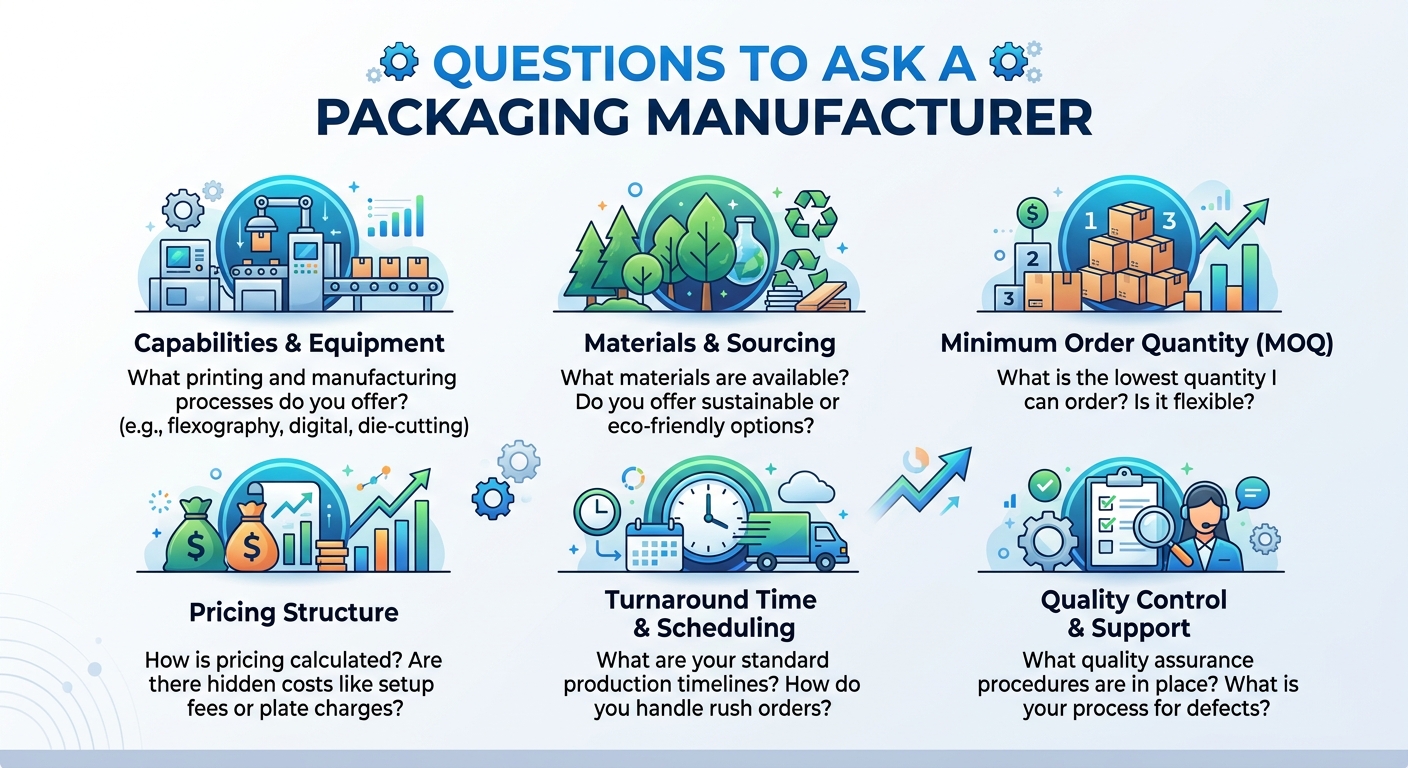
Include these questions in a supplier review or RFQ:
- Which closure construction is recommended for the product, fill weight, temperature, and distribution route?
- What seal or closure controls are checked during production, and how are results recorded?
- Can the supplier provide samples made with the intended material, coating, film, lid, adhesive, and printing process?
- Which tests are available in-house, and which require an external laboratory or buyer-side validation?
- What information is needed to assess food-contact suitability for the destination market?
- What are the MOQ, sample process, production schedule, packaging method, storage conditions, and shipping arrangement for the specified design?
- How are nonconforming units handled, and what information is included in the quality report?
Request samples before committing to a full order. Test the samples with the actual food or a documented substitute, then repeat key checks on production samples. Store samples in conditions that reflect the intended warehouse and distribution environment. Packaging specifications, sampling arrangements, MOQ, production timing, and export logistics must be confirmed for the exact order rather than assumed from a standard product.
Conclusion: Turn Closure Performance into a Purchase Requirement
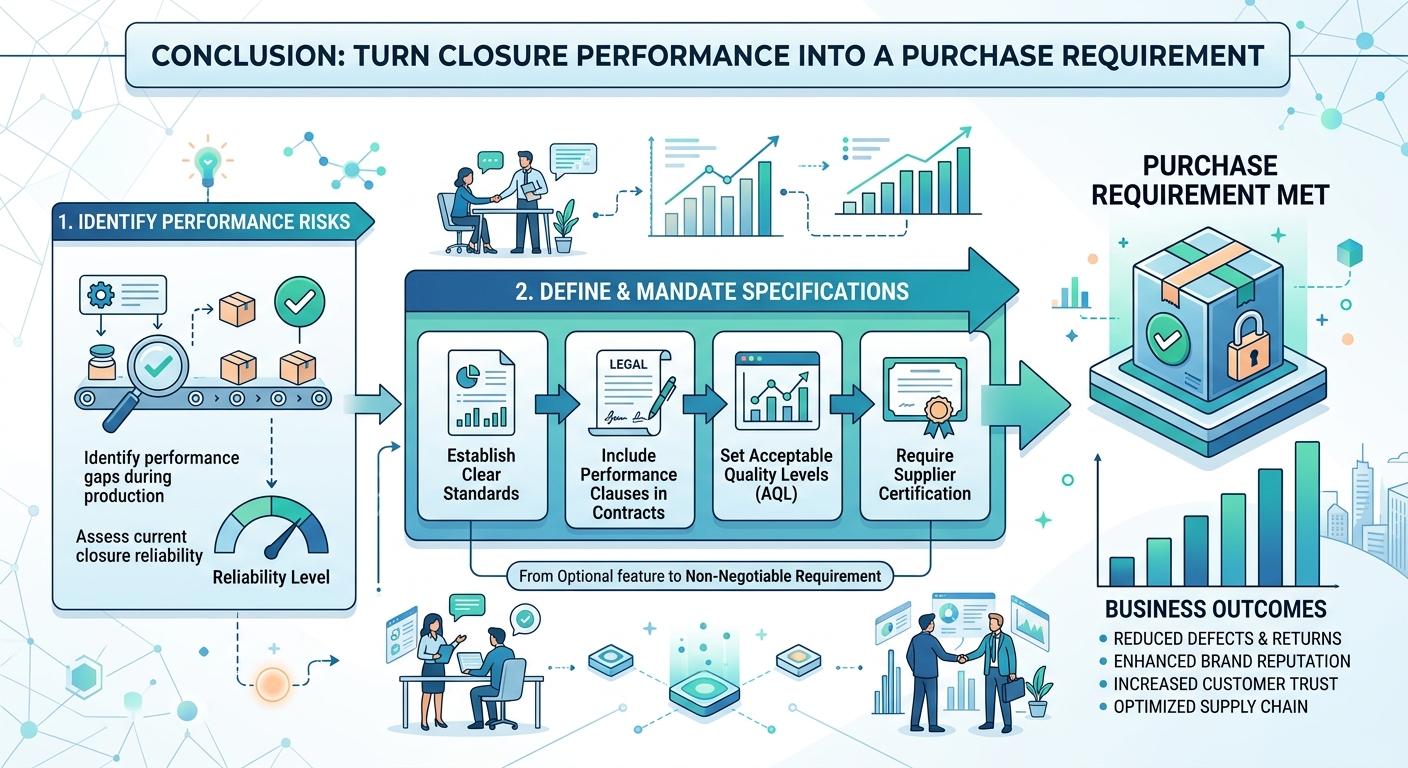
Food packaging seal testing should be treated as a specification and approval process, not a final visual check. Define the closure, food application, handling environment, test conditions, sampling plan, and acceptance criteria before mass production. Then evaluate prototype and production samples for integrity, opening function, transport durability, appearance, and applicable food-contact documentation.
When these requirements are written into the packaging brief, buyers can compare suppliers more fairly and reduce failures caused by leakage, accidental opening, difficult use, or inconsistent production. Always qualify that material performance, compliance, MOQ, price, and lead time depend on the exact specification and destination market.