

The Strategic Importance of Plastic Cutlery in B2B Food Service
For procurement managers, restaurant owners, and distributors, plastic cutlery is more than a utility; it is a critical component of the customer experience and operational efficiency. Choosing the right plastic cutlery wholesale supplier involves balancing cost, material performance, and brand representation. Whether you are sourcing for a high-volume quick-service restaurant (QSR) or a premium catering business, understanding the technical specifications of disposable utensils is essential for making an informed investment.
This guide provides a comprehensive technical breakdown of the materials, weight classifications, and customization options available in the modern market. By the end of this article, you will have the data necessary to select products that minimize breakage, enhance brand perception, and optimize your supply chain costs. If you are ready to explore specific product lines, you can view our full range of [YABG_LINK:0] to see how these specifications translate into real-world products.
Material Science: Selecting the Right Resin
The performance of disposable cutlery is primarily dictated by the polymer resin used during the injection molding process. Each material offers distinct advantages regarding heat resistance, flexibility, and clarity.
Polystyrene (PS)
Polystyrene is a popular choice for bulk plastic cutlery due to its rigidity and cost-effectiveness. It is available in two primary forms: General Purpose Polystyrene (GPPS), which is crystal clear, and High Impact Polystyrene (HIPS), which is opaque and more durable.
- Pros: Excellent rigidity, high clarity (in GPPS), and lower cost per unit.
- Cons: Brittle nature; it tends to snap under high pressure rather than bend. It has a lower heat deflection temperature (HDT) compared to PP.
- Best Use Case: Cold or room-temperature foods, salads, and standard takeout services.
Polypropylene (PP)
Polypropylene is the preferred material for food grade plastic cutlery intended for hot applications. It is a semi-crystalline thermoplastic known for its toughness and flexibility.
- Pros: High heat resistance (up to 120°C or 248°F), microwave safe, and highly resistant to chemical fats and oils. It bends rather than snaps, reducing the risk of sharp shards.
- Cons: Naturally translucent rather than clear; slightly more expensive than PS in some markets.
- Best Use Case: Hot soups, steaks, heavy pasta dishes, and any application requiring microwave reheating.
CPLA and Bio-Plastics
Crystallized Polylactic Acid (CPLA) is a plant-based alternative designed for businesses focusing on sustainability. While it performs similarly to PS in terms of rigidity, it requires specific industrial composting conditions to break down effectively.
| Feature | Polystyrene (PS) | Polypropylene (PP) | CPLA (Bio-Plastic) |
| Heat Resistance | Low (up to 80°C) | High (up to 120°C) | Medium (up to 90°C) |
| Flexibility | Brittle / Rigid | Flexible / Tough | Rigid |
| Clarity | High (Clear) | Translucent / Opaque | Opaque |
Weight Classifications and Durability
In the industry, cutlery is categorized by its weight, which directly correlates to the amount of resin used per piece and, consequently, its strength and “hand-feel.” As a professional plastic cutlery manufacturer, we categorize products into three main tiers:
Medium-Weight Cutlery
This is the standard for high-volume, cost-sensitive environments. A medium-weight fork typically weighs between 2.5g and 3.5g. It is suitable for soft foods but may struggle with dense proteins or hard vegetables.
Heavy-Weight Cutlery
Heavy-weight utensils (typically 5.0g to 6.5g per fork) provide a more premium experience. They offer significant resistance to bending and are often used in casual dining and mid-range catering. The increased density allows for more complex ergonomic designs and textured handles.
Extra Heavy-Weight Cutlery
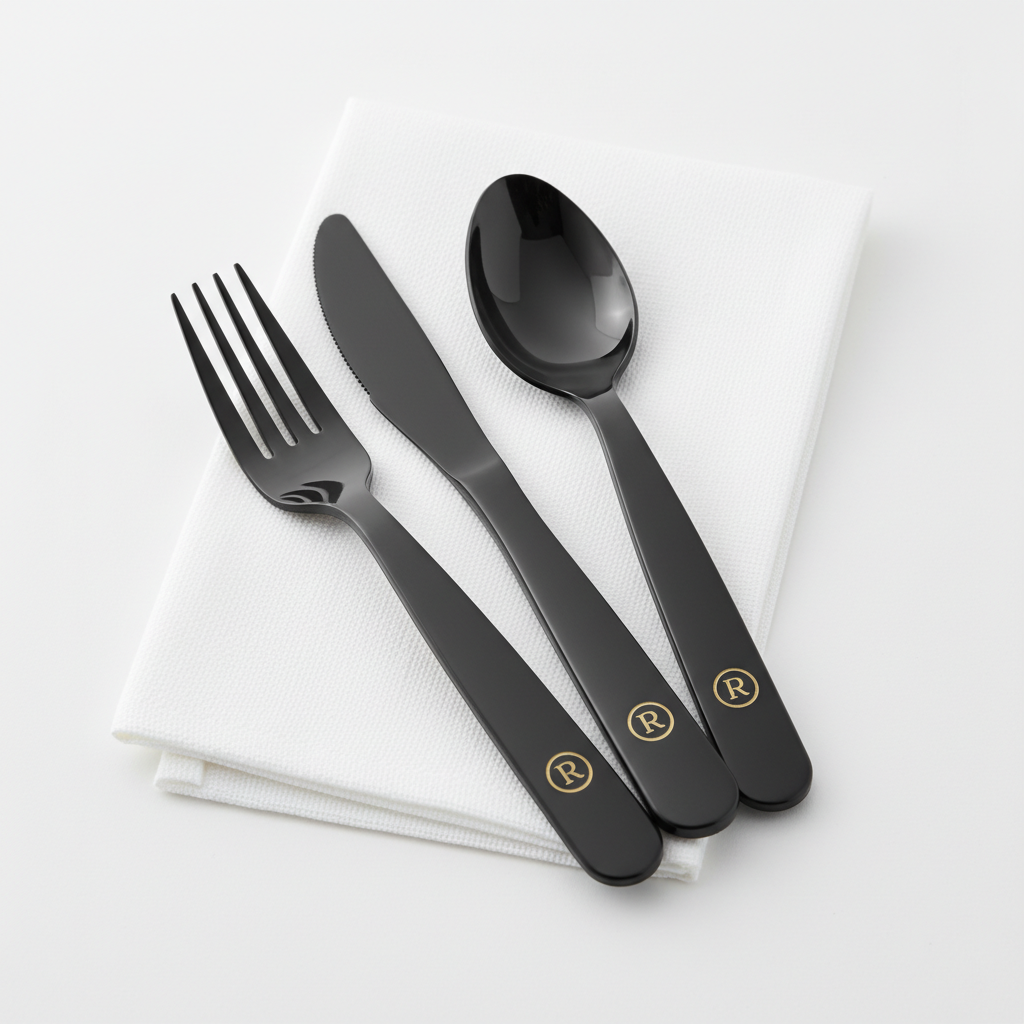
At 7.0g and above, extra heavy-weight cutlery is designed to mimic the performance of stainless steel. These are essential for “tough” foods like steak or heavy BBQ. For many brand owners, this weight class is preferred for printed plastic cutlery as the thicker handle provides a better surface for high-quality logo application.
Customization and Branding Options
For modern food brands, the packaging is a mobile billboard. Customization allows you to maintain brand consistency from the storefront to the customer’s home. When sourcing custom food packaging, consider the following branding methods for your cutlery:
1. Custom Colors (Pantone Matching)
Instead of standard white, black, or clear, manufacturers can inject the resin with specific masterbatch pigments to match your brand’s Pantone colors. This is highly effective for bubble tea shops, dessert bars, and corporate catering.
2. Printed Plastic Cutlery
Logo printing is typically done on the handle of the utensil. This requires specialized pad printing or laser marking equipment. When ordering [YABG_LINK:1], ensure your artwork is provided in vector format (AI or EPS) to maintain sharpness on the small surface area of a spoon or fork handle.
3. Embossed Logos
For high-volume orders, a custom mold can be created that includes your logo as a raised or recessed element in the plastic itself. While this has a higher upfront tooling cost, it provides a permanent, high-end branded look without the need for inks.
4. Custom Wrapped Sets
Hygiene is a top priority for consumers. Customizing the outer film of individually wrapped cutlery sets is an excellent way to display branding, QR codes for loyalty programs, or social media handles. You can learn more about the logistics of these options on our [YABG_LINK:2] page.
Technical Specifications and Quality Control
When evaluating a plastic cutlery supplier, technical consistency is paramount. B2B buyers should request specification sheets that include:
- Tensile Strength: The maximum stress the utensil can withstand before failing.
- Dimensional Tolerances: Ensuring every spoon in a 1,000-count box is the same length and width.
- Flash and Burrs: High-quality molds ensure smooth edges, preventing mouth injuries and improving the tactile experience.
- Food Grade Certification: Verification that the resins and colorants used are compliant with international safety standards for food contact.
At YBJ Packing, we implement multi-stage quality inspections, including raw material testing, in-process monitoring of injection pressures, and final product stress tests. This ensures that the bulk plastic cutlery you receive performs reliably in a commercial environment.
Logistics and Procurement Strategy
The cost of plastic cutlery is heavily influenced by shipping and storage. Because these items are relatively lightweight but high-volume, optimizing the “cube” is essential.
Packaging Configurations
- Bulk Pack: Usually 1,000 pieces per carton. Best for high-volume back-of-house use.
- Individually Wrapped: Enhances hygiene and is preferred for delivery and takeout.
- Cutlery Kits: Includes a fork, knife, spoon, napkin, and sometimes salt/pepper or a wet wipe. These streamline service for large-scale events or airline catering.
Lead Times and MOQs
Standard products often have lower Minimum Order Quantities (MOQs), while custom plastic cutlery with unique colors or molds may require higher volumes to offset machine setup times. Typical lead times range from 15 to 30 days depending on the level of customization and the current production schedule. For urgent inquiries, it is best to [YABG_LINK:3] directly to discuss current capacity.
Common Use Cases by Industry
Selecting the right cutlery depends on the specific demands of your sector:
- Quick Service Restaurants (QSR): Focus on medium-weight PP for versatility with hot and cold items. Bulk packaging is usually preferred to reduce waste.
- Catering and Events: Heavy-weight PS or CPLA provides the necessary rigidity for formal plating. Custom colors often play a role in event themes.
- Healthcare and Education: Safety is the priority. Flexible PP is often chosen to prevent the creation of sharp edges if broken. Individually wrapped sets are mandatory for hygiene.
- Airlines and Travel: Weight is the primary concern. Specialized thin-walled, high-strength designs are used to minimize fuel consumption while maintaining functionality.
Checklist for B2B Cutlery Buyers
Before placing a wholesale order, use this checklist to ensure the product meets your requirements:
- Identify the hottest food item the cutlery will touch (determines PP vs PS).
- Determine the required weight class based on the toughness of the menu items.
- Decide if individual wrapping is necessary for your service model.
- Confirm if custom branding (printing or embossing) is required for marketing goals.
- Request samples to test ergonomics and strength in a real-world setting.
- Verify the supplier’s ability to scale production as your business grows.
Frequently Asked Questions (FAQ)
1. What is the difference between PS and PP cutlery?
PS (Polystyrene) is rigid and clear but brittle, making it better for cold foods. PP (Polypropylene) is flexible and heat-resistant, making it ideal for hot foods and microwave use.
2. Can I get my logo printed on the cutlery?
Yes, as a specialized plastic cutlery manufacturer, we offer pad printing and embossing services. This is a common requirement for wholesale food packaging clients looking to build brand identity.
3. What is the standard lead time for a bulk order?
Standard orders typically ship within 2-3 weeks. Custom orders involving new molds or specific Pantone colors may take 4-6 weeks depending on the complexity.
4. Is your plastic cutlery BPA-free?
Yes, our food grade plastic cutlery is manufactured using high-quality resins that do not contain BPA, ensuring safety for all food contact applications.
5. Do you offer eco-friendly alternatives to traditional plastic?
We offer CPLA and other bio-plastic options for businesses looking to reduce their environmental impact. These materials provide similar performance to traditional plastics in many applications.
6. How is the cutlery packaged for shipping?
We offer several configurations, including bulk cases (500-2000 count), individually wrapped pieces, and pre-assembled cutlery kits with napkins and condiments.
7. Can I request a sample before placing a large order?
Absolutely. We encourage B2B buyers to test our products. You can request a sample pack through our [YABG_LINK:3] page to verify the weight and quality.
Conclusion
Choosing the right plastic cutlery wholesale partner is a strategic decision that affects your bottom line and your brand reputation. By understanding the nuances of material science, weight classifications, and customization options, you can ensure that your utensils are an asset rather than a liability. Whether you need high-heat resistant PP spoons or elegantly printed plastic cutlery for a premium brand, YBJ Packing provides the manufacturing expertise to meet your specifications.
Ready to upgrade your disposable tableware? Explore our [YABG_LINK:1] or contact our team today to discuss your custom requirements and receive a competitive quote.