

Table of Contents
- What Takeaway Box Board Grades Mean
- How to Specify Thickness and Strength
- How to Specify Folding and Forming Performance
- Match the Board to Food, Moisture, and Coating Needs
- Testing and Quality Checks Before Production
- Sampling, MOQ, Production, Storage, and Shipping
- Conclusion: Build a Complete Board Specification
Takeaway box board grades should be selected by food application, moisture exposure, box structure, filling process, and transport conditions—not by paper weight alone. This guide explains how buyers can specify thickness, strength, folding performance, coating, testing, and production requirements for custom takeaway boxes.
What Takeaway Box Board Grades Mean
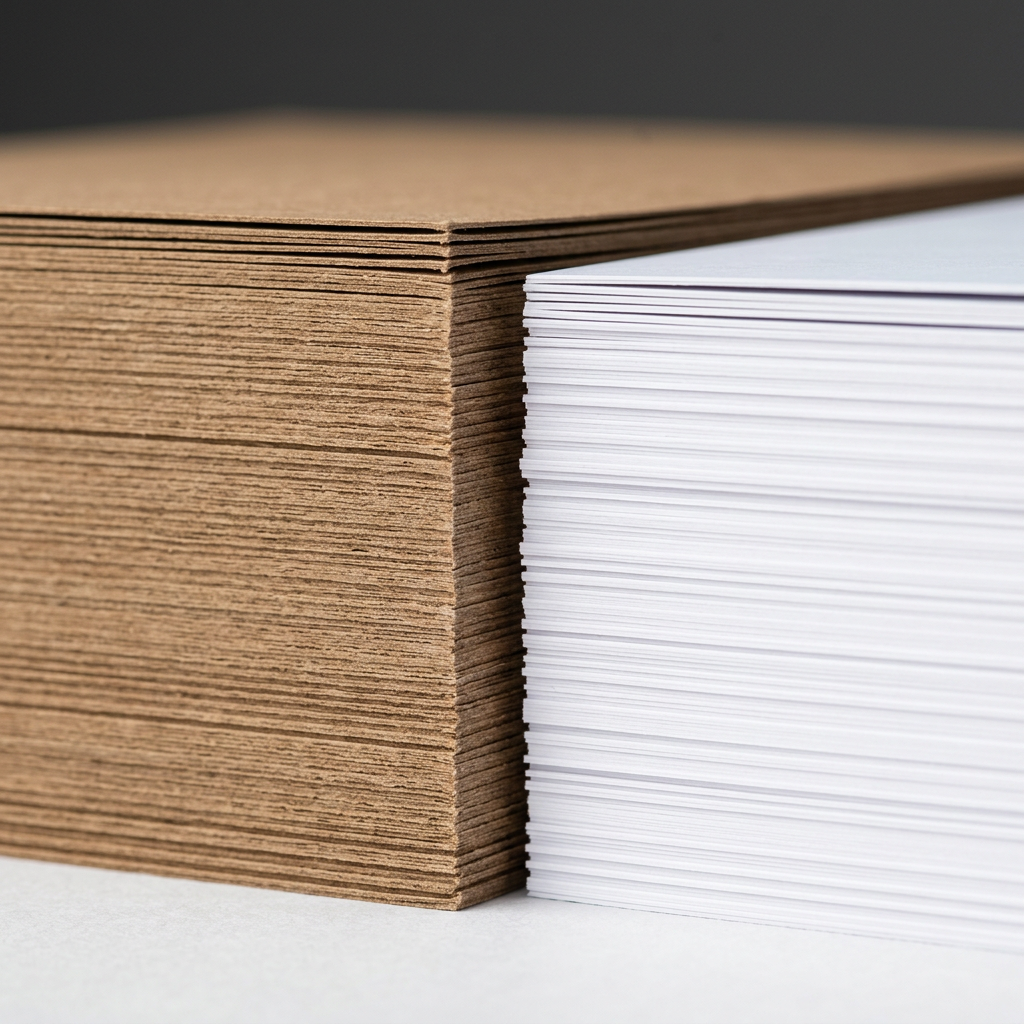
Takeaway box board grades describe the paperboard substrate selected for a food box, but there is no single grade that suits every menu or box style. Buyers should specify the board by its basis weight, caliper, fiber type, surface, coating, moisture exposure, box construction, and required forming performance. A suitable specification balances stiffness, foldability, print quality, food-contact requirements, pack-line performance, and delivered cost.
Paperboard is a relatively thick paper-based sheet used to make cartons, trays, sleeves, and takeaway boxes. Basis weight, often expressed as GSM or grams per square metre, describes mass per unit area. Caliper is the sheet thickness, usually measured in micrometres or millimetres. GSM and caliper are related but are not interchangeable: two boards with similar GSM may have different thickness, density, stiffness, and folding behaviour.
Common substrate families include kraft paperboard, white paperboard, folding boxboard, solid bleached sulfate-type board, recycled paperboard, and corrugated board. The exact trade name, fiber composition, coating, food-contact status, and available specifications must be confirmed with the manufacturer for the destination market.
For background on the differences between common food packaging substrates, see the food packaging materials guide. The objective is not to choose the heaviest board automatically. It is to select the lightest practical structure that protects the food, survives handling, folds consistently, and meets the buyer’s quality requirements.
How to Specify Thickness and Strength
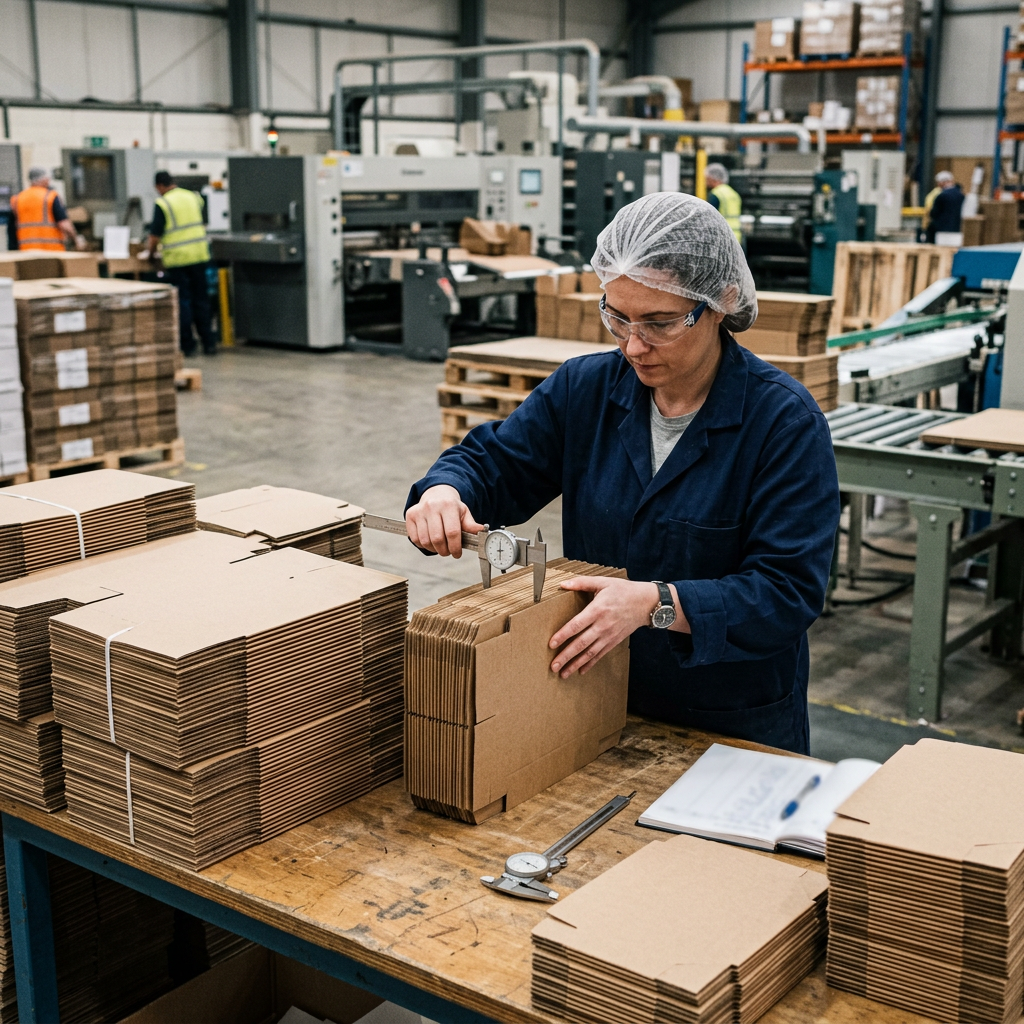
Thickness affects how a takeaway box feels in the hand, how well it resists buckling, and how reliably it runs through die-cutting and folding operations. However, thickness alone does not define strength. Fiber direction, density, moisture, crease design, box geometry, print coverage, and coating can change the final result.
Record both GSM and caliper
- State the target GSM or basis-weight range.
- State the target caliper or an agreed tolerance.
- Ask whether the quoted value applies to the uncoated board or finished coated sheet.
- Confirm the machine and test method used for measurement.
- Request a retained reference sample for future production comparison.
Describe the actual load
Tell the supplier what the box will hold, including approximate food weight, product shape, stacking arrangement, filling temperature, oil or sauce exposure, and expected delivery duration. A small dry snack box, a fried chicken box, and a sauce-heavy meal box may require different board and coating structures even when their external dimensions are similar.
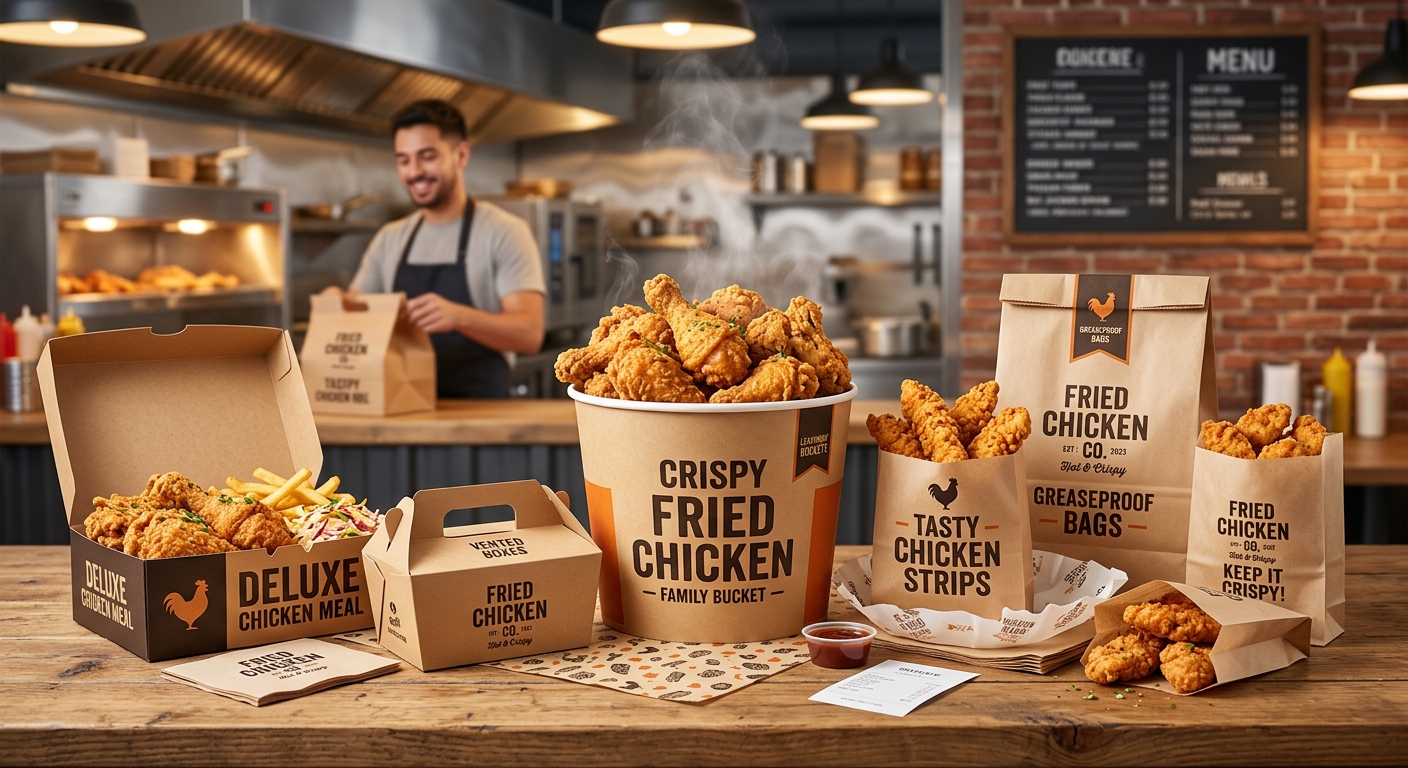
Useful strength requirements may include compression resistance, stacking performance, puncture or tear resistance, edge stiffness, and resistance to deformation after contact with moisture or oil. These should be agreed as application-specific acceptance criteria rather than assumed from GSM alone. For a practical product reference, review the fried chicken box buyer’s guide.
How to Specify Folding and Forming Performance

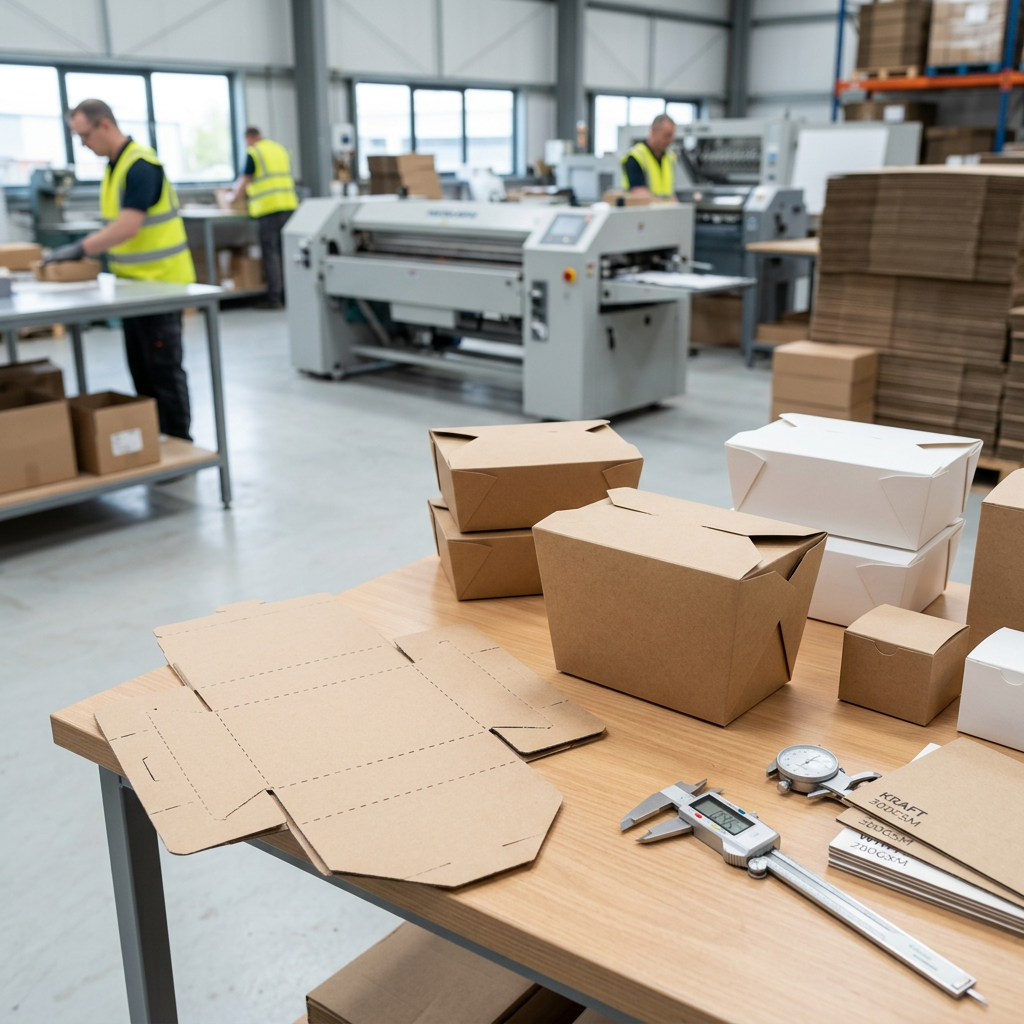
A box can have adequate sheet strength and still fail during forming if the crease, grain direction, scoring pressure, or coating is unsuitable. Folding performance means the sheet can be die-cut, creased, folded, and locked without unacceptable cracking, delamination, spring-back, tearing, or loss of shape.
Include these construction details
- Finished internal and external dimensions, with a drawing or dieline.
- Board grain direction in relation to the main folds.
- Crease and score positions, including narrow panels and locking tabs.
- Box style, closure method, handle design, ventilation, and stacking features.
- Whether the box is erected manually or by an automatic packing machine.
- Required flatness, squareness, opening shape, and closure force.
Ask for a folding dummy before mass production. A blank sample checks board behaviour and dieline geometry, while a printed sample also checks ink coverage, registration, coating, and visual appearance. Inspect tight-radius folds and inside folds particularly carefully. Cracking on a printed outer surface may be more visible when the ink film or coating is less flexible.
Folding performance also depends on storage conditions. Paperboard can gain or lose moisture, which may affect curl, stiffness, crease response, and box opening. Store samples and finished cartons in a clean, dry environment and compare them under conditions reasonably similar to the packing area.
Match the Board to Food, Moisture, and Coating Needs
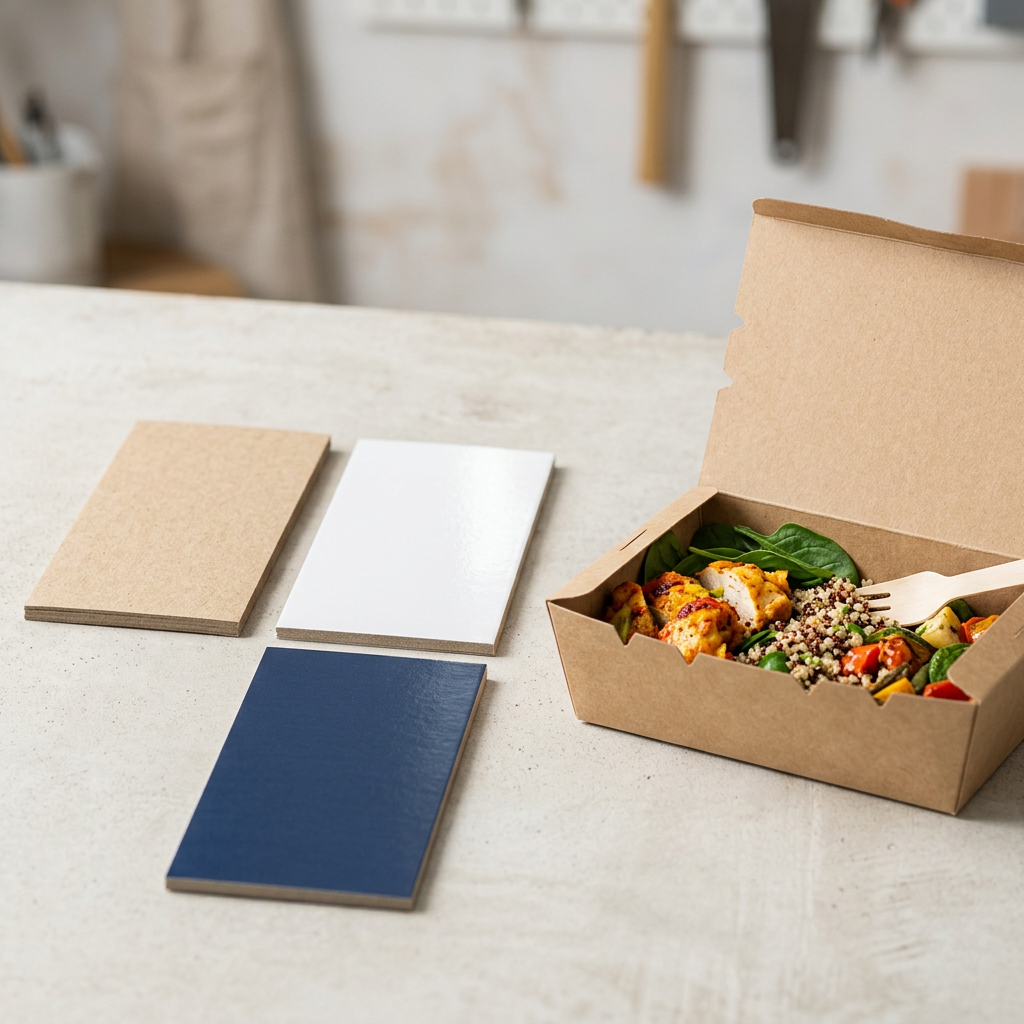
Board selection must follow the food contact and barrier requirement. A dry bakery item, hot fried food, chilled sushi, and a sauced meal expose the package to different combinations of heat, water, oil, condensation, and pressure. The supplier needs the application details before recommending a board and coating.
Specify the exposure profile
- Food type and whether it is dry, oily, wet, acidic, salty, or sauce-based.
- Food temperature at filling and expected temperature during delivery.
- Contact duration and whether condensation is expected.
- Direct food contact areas and whether a liner, insert, or paper bag is used.
- Required grease resistance, moisture resistance, aroma retention, or leak protection.
Possible structures include uncoated board for suitable dry applications, a water-based or other coating selected for the required barrier, or a PE-coated paper structure where specified. Coatings can influence recycling routes, folding, sealing, printing, and food-contact documentation. A coating should not be selected simply because it sounds stronger; it must be compatible with the food, forming process, disposal expectations, and destination-market rules.
Recyclable, compostable, biodegradable, and plastic-free are different claims. Recyclability depends on local collection and processing systems. Compostability requires the relevant conditions and applicable conformity evidence. Biodegradable does not automatically mean compostable, and a coated paper box is not necessarily plastic-free. Buyers should request written material and compliance information for the exact finished structure. For coated paper applications, consult the PE-coated packaging buyer’s guide.
Testing and Quality Checks Before Production

Testing should confirm that the specified board works as a finished box, not only as a flat sheet. The exact test plan depends on the product, destination market, equipment, and agreed quality standard. Do not accept unverified temperature ratings, food-contact claims, or strength values without documentation for the selected material and construction.
Recommended approval sequence
- Specification review: Confirm material family, GSM, caliper, coating, dimensions, grain direction, printing, and closure design.
- Material review: Check the board appearance, surface, odor, curl, moisture condition, and supplier documentation.
- Blank sample review: Die-cut and fold the unprinted blank to assess creases, tabs, locking, squareness, and spring-back.
- Filled-box trial: Use the real food or a representative test load and observe leakage, softening, deformation, stacking, and carrying.
- Transport simulation: Evaluate packed cartons through the intended handling and distribution process where practical.
- Pre-production approval: Approve a signed or retained reference sample and define acceptable variations.
Quality control may include incoming board checks, in-process dimensions, print registration, color comparison, die-cut accuracy, crease position, glue application where applicable, carton count, and final packing inspection. Food-contact compliance is destination-specific; the buyer should identify the importing market and request the documentation required there.
Sampling, MOQ, Production, Storage, and Shipping
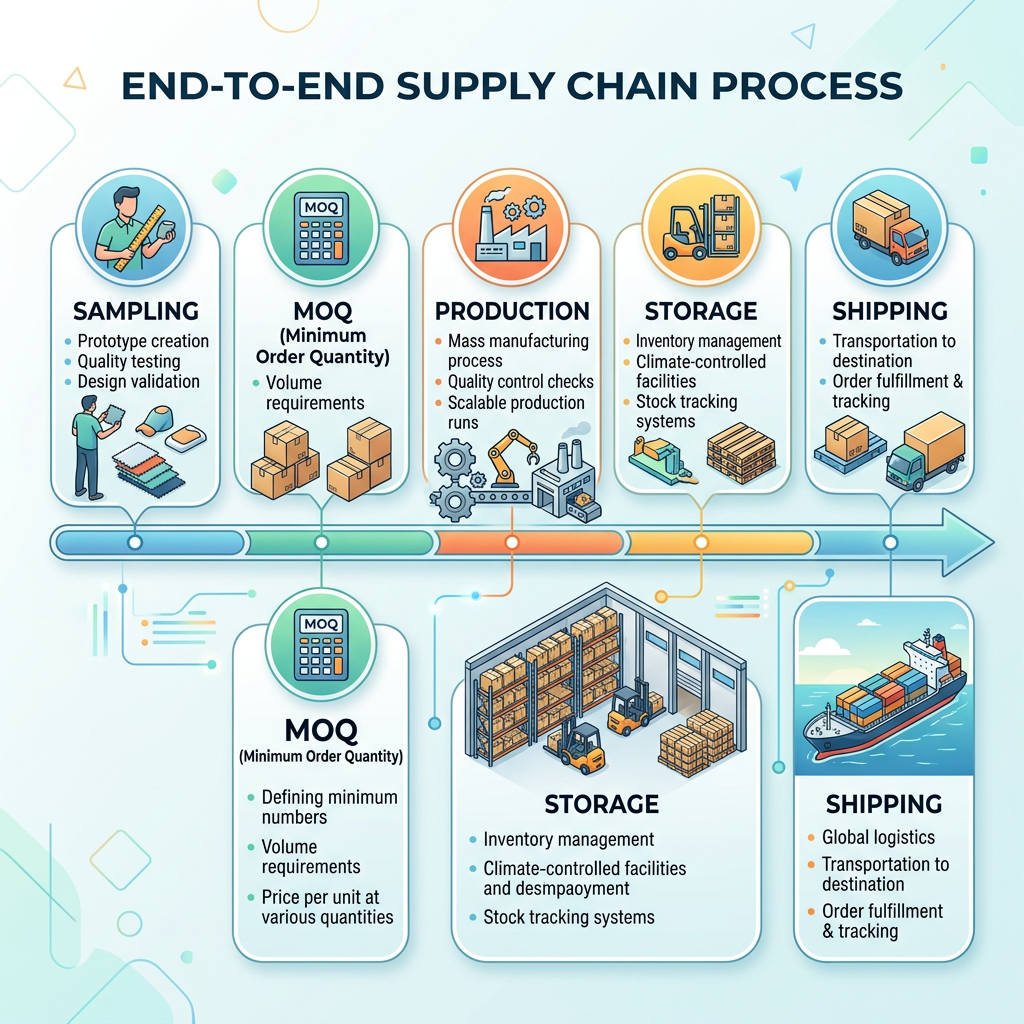
A technically correct board grade can still create procurement problems if the order is not planned around sampling, minimum order quantity, production scheduling, and export handling. Confirm these points before approving artwork or committing to a launch date.
Buyer checklist
- Sampling: Request a blank structural sample first, followed by a printed proof or production-equivalent sample when appearance matters.
- Artwork: Confirm dieline dimensions, bleed, barcode placement, ink coverage, print colors, and the printable surface.
- MOQ: Ask for the MOQ by size, material, printing version, and coating. MOQ depends on the exact specification and production setup.
- Production: Confirm the approved sample, inspection points, packing method, and change-control process before production.
- Storage: Keep flat cartons or blanks protected from moisture, direct sunlight, odor, compression, and sudden environmental changes.
- Shipping: Confirm packed dimensions, carton or pallet configuration, shipping marks, export documents, and destination requirements.
Price and lead time depend on board grade, coating, dimensions, printing, tooling, quantity, packing, and current production conditions. Sampling, production, quality control, and export arrangements should therefore be quoted against a complete specification rather than a general request for a “thick paper box.”
Conclusion: Build a Complete Board Specification

The right takeaway box board grades choice is defined by the finished packaging performance required for a specific food application. Specify GSM and caliper together, then add fiber type, coating, grain direction, dieline, crease design, food exposure, printing, testing criteria, packing method, quantity, and destination market. Approve the structure with a real sample before mass production, because board performance can change after printing, coating, die-cutting, folding, and exposure to moisture.
Material performance, food-contact compliance, MOQ, price, and lead time depend on the exact specification and destination market. A complete technical brief allows YBJ Packing to evaluate the construction more accurately and reduce avoidable sampling or production changes.