

Table of Contents
- What Does Greaseproof Paper GSM Mean?
- How GSM Affects Packaging Performance
- How to Choose Greaseproof Paper GSM by Application
- Format, Folding, and Converting Considerations
- Barrier Performance, Food Contact, and Testing
- Sampling, Ordering, Storage, and Shipping Checks
- Conclusion: Specify More Than GSM
Greaseproof paper GSM is a useful starting point for selecting food packaging, but the correct specification also depends on format, food type, coating, converting method, printing, and destination-market requirements.
What Does Greaseproof Paper GSM Mean?

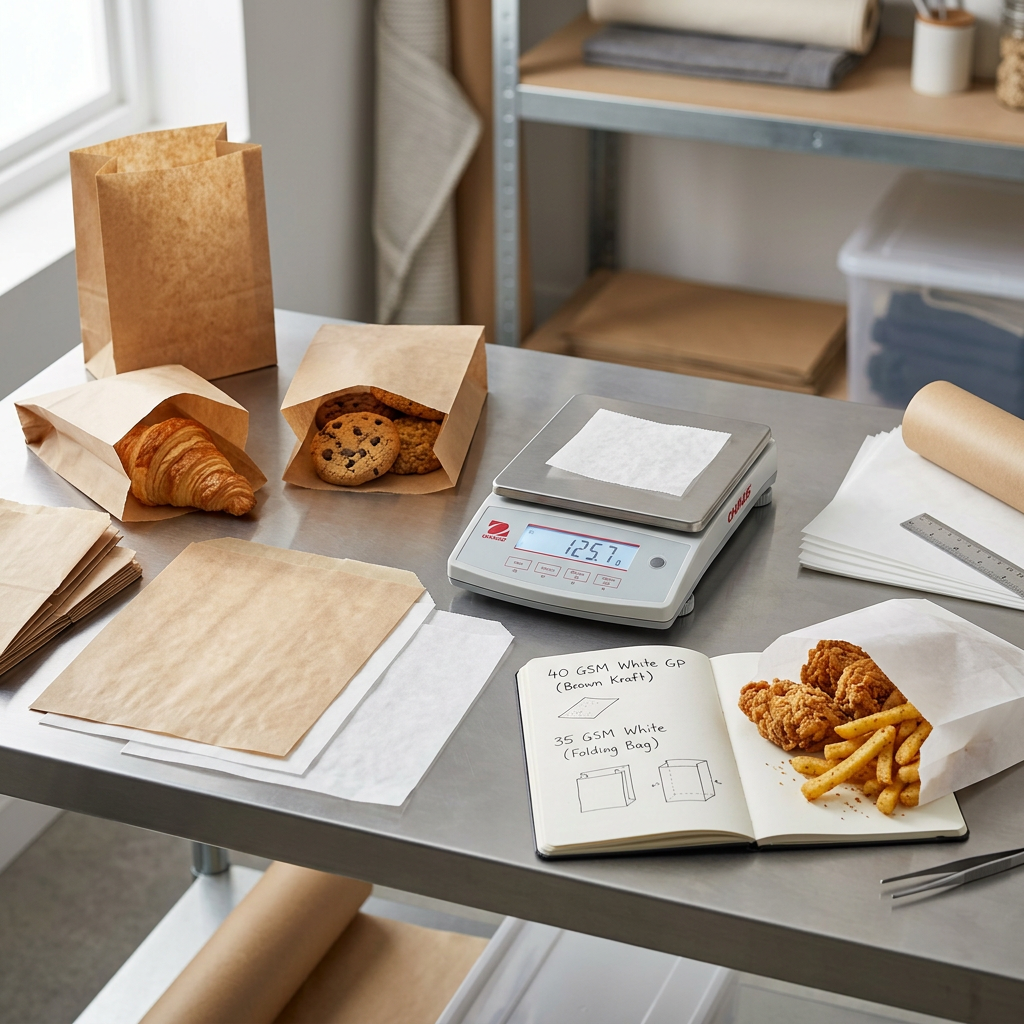
Greaseproof paper GSM means the paper’s grammage, expressed in grams per square metre. It describes mass per area, not a direct measurement of thickness or grease resistance. For example, a 60 GSM and a 70 GSM paper may both be used for food bags, but their actual stiffness, bulk, porosity, coating, and barrier performance depend on the paper structure and manufacturing specification.
In food packaging, greaseproof paper is paper designed to slow or resist the passage of oils and fats. The result may come from a dense paper structure, refining, sizing, a coating, or a combination of these features. GSM is therefore a useful purchasing reference, but it should not be treated as a complete performance specification.
Paper weight and paper thickness are related but different. GSM is measured by mass per unit area, while thickness is normally measured in micrometres. Two papers with similar GSM can have different caliper and stiffness because of fibre type, density, moisture, fillers, and coating. Ask the supplier to confirm the agreed GSM tolerance and, when relevant, thickness or caliper.
For a practical product reference, YBJ Packing lists food-grade brown kraft paper options at 60 GSM for selected bulk greaseproof snack bags. This is an example of a supplied specification, not a universal recommendation for every food application.
How GSM Affects Packaging Performance
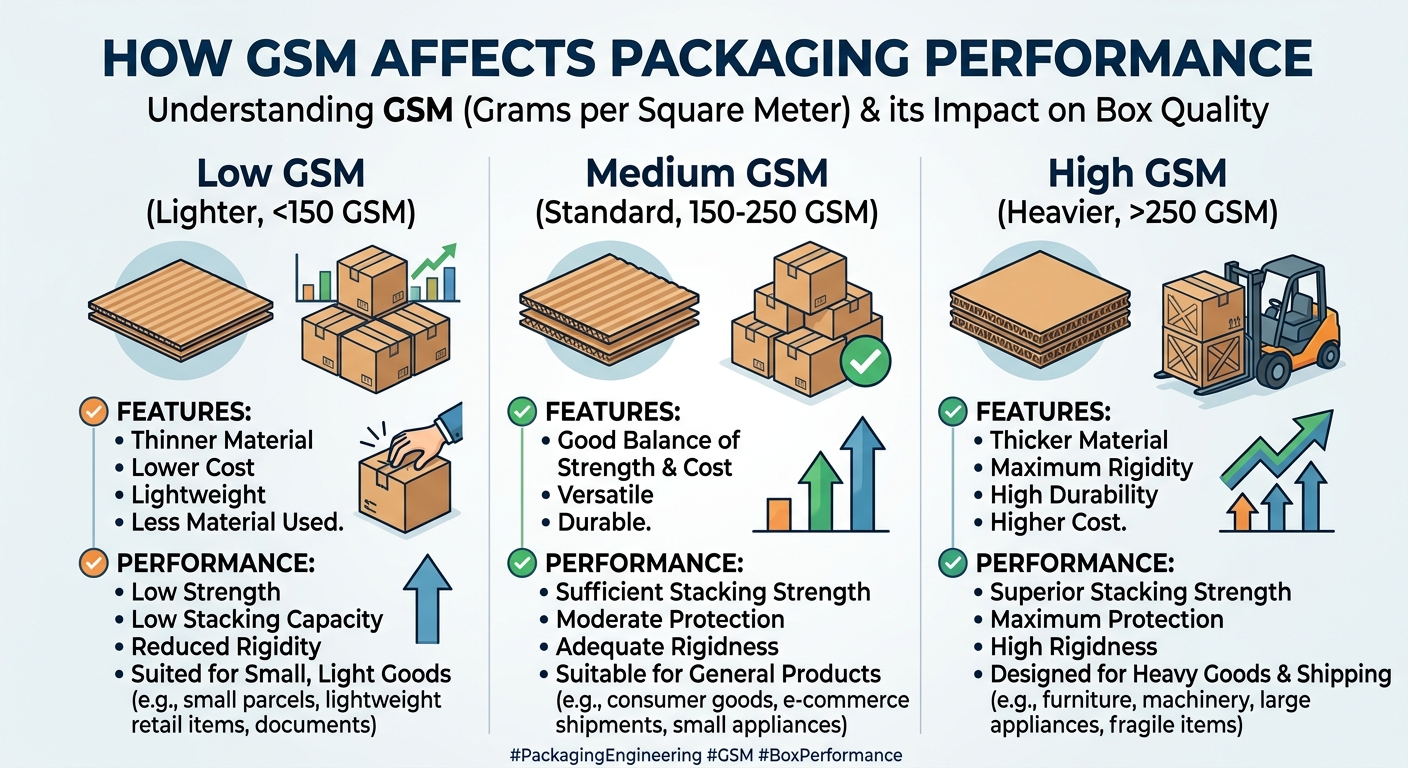
Increasing GSM can add material strength and body, but more weight does not automatically create better grease resistance. Buyers should evaluate GSM together with the following properties:
- Stiffness and handling: Heavier or denser paper may hold a bag shape better and feel more substantial during filling and service.
- Tear and puncture resistance: This depends on fibre orientation, paper structure, seams, folds, and the food’s shape as well as GSM.
- Foldability: A higher-weight or coated paper may need different creasing, scoring, or converting settings. Excessive stiffness can make small bags harder to open or fold.
- Oil and grease resistance: Barrier performance depends on paper density, surface treatment, coating, and contact conditions. Oil resistance should be tested with the intended food rather than inferred from GSM alone.
- Moisture tolerance: Greaseproof performance does not necessarily mean resistance to water, steam, condensation, or wet fillings.
- Print and appearance: Surface smoothness, colour, absorbency, and coating influence ink coverage, registration, rub resistance, and colour consistency.
A lighter paper can be suitable for a dry bakery item or short service cycle, while a heavier specification may be useful when the package must stand upright, carry a heavier product, or tolerate more handling. However, the final choice should be confirmed through samples and application testing.
Do not use GSM alone to compare a paper bag with a paper sheet, wrap, liner, or laminated structure. The format, seams, die cuts, folds, and any additional layer can change the package’s practical performance.
How to Choose Greaseproof Paper GSM by Application
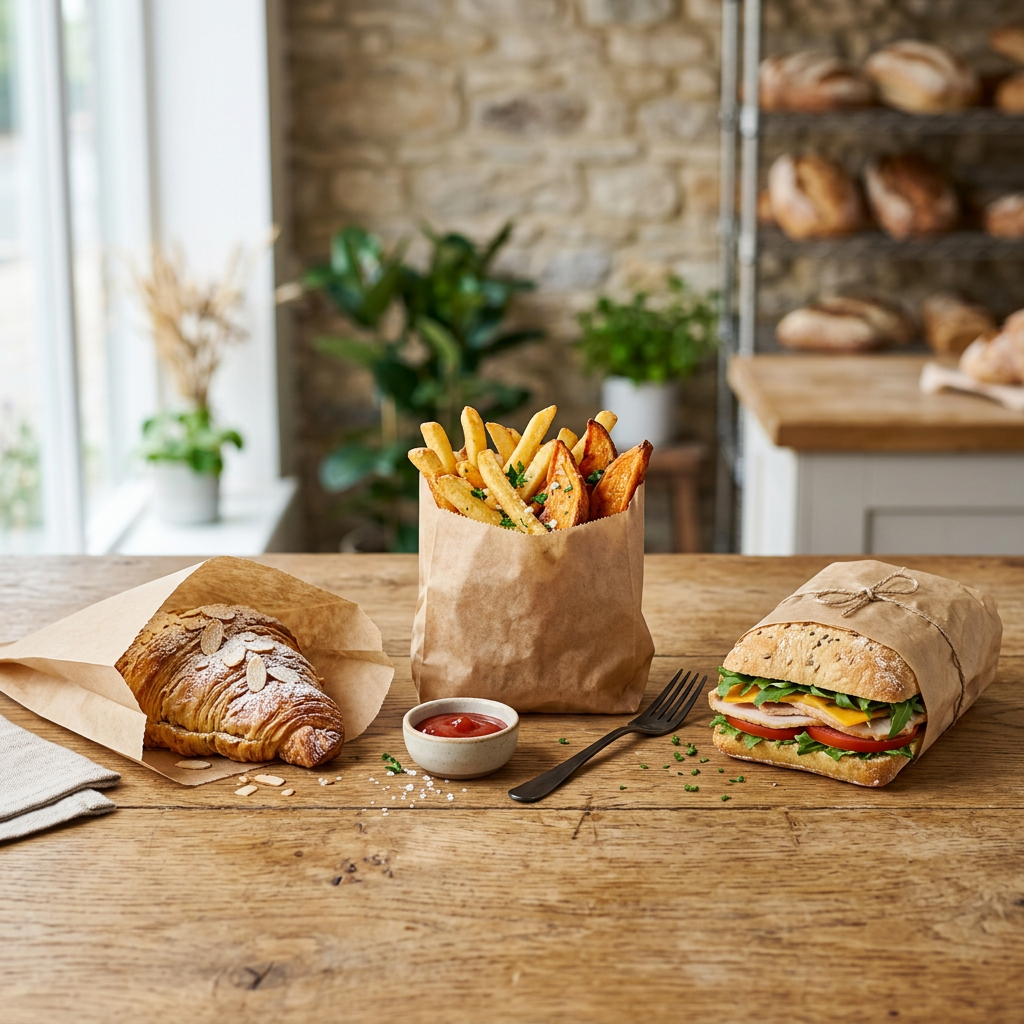
Start with the food and service conditions, then select a GSM range for sampling. The same greaseproof paper GSM may perform differently in a flat wrap, open-top pouch, folded bag, or machine-formed package.
Bakery products and pastries
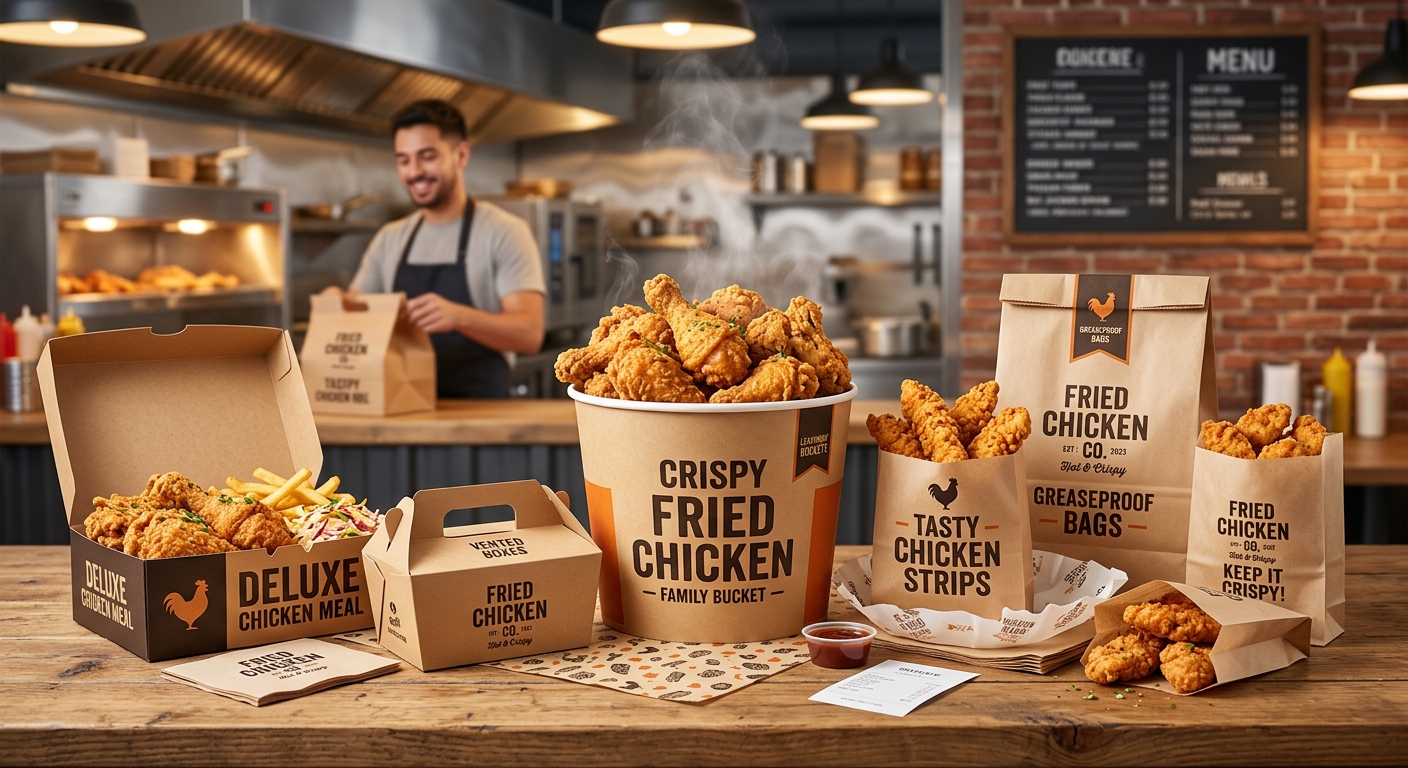
For bread, cookies, pastries, and similar products, consider the product’s surface oil, filling, temperature at packing, storage duration, and whether the package is displayed or transported. A paper bag must also open easily and resist tearing at the side seam and bottom. YBJ’s greaseproof bakery bags provide a reference point for discussing bag dimensions and paper specifications, but the correct GSM depends on the buyer’s product and format.
Fried snacks and takeaway foods
Chips, fried snacks, and takeaway foods can release oil, heat, and steam. Test the complete package after filling, including the base, seams, folds, and printed surface. A paper specification that resists visible oil may still allow moisture accumulation or lose stiffness during service.
Sandwiches and prepared foods
Sandwiches may require a balance between grease resistance, foldability, visibility, ventilation, and easy opening. Check whether the food is wrapped immediately, chilled, held for delivery, or reheated. The package may need a different structure from a simple greaseproof bag.
Retail and branded packaging
For printed retail bags, choose the material and surface based on artwork, ink system, colour requirements, and expected handling. YBJ’s printed greaseproof bags show how a stated 60 GSM paper specification may be paired with a custom bag format. Confirm the final GSM, paper colour, printing process, and artwork approval before production.
As a starting specification, buyers can request samples at more than one GSM when the application is uncertain. Compare opening, filling, carrying, oil marking, seam strength, and appearance under actual operating conditions.
Format, Folding, and Converting Considerations
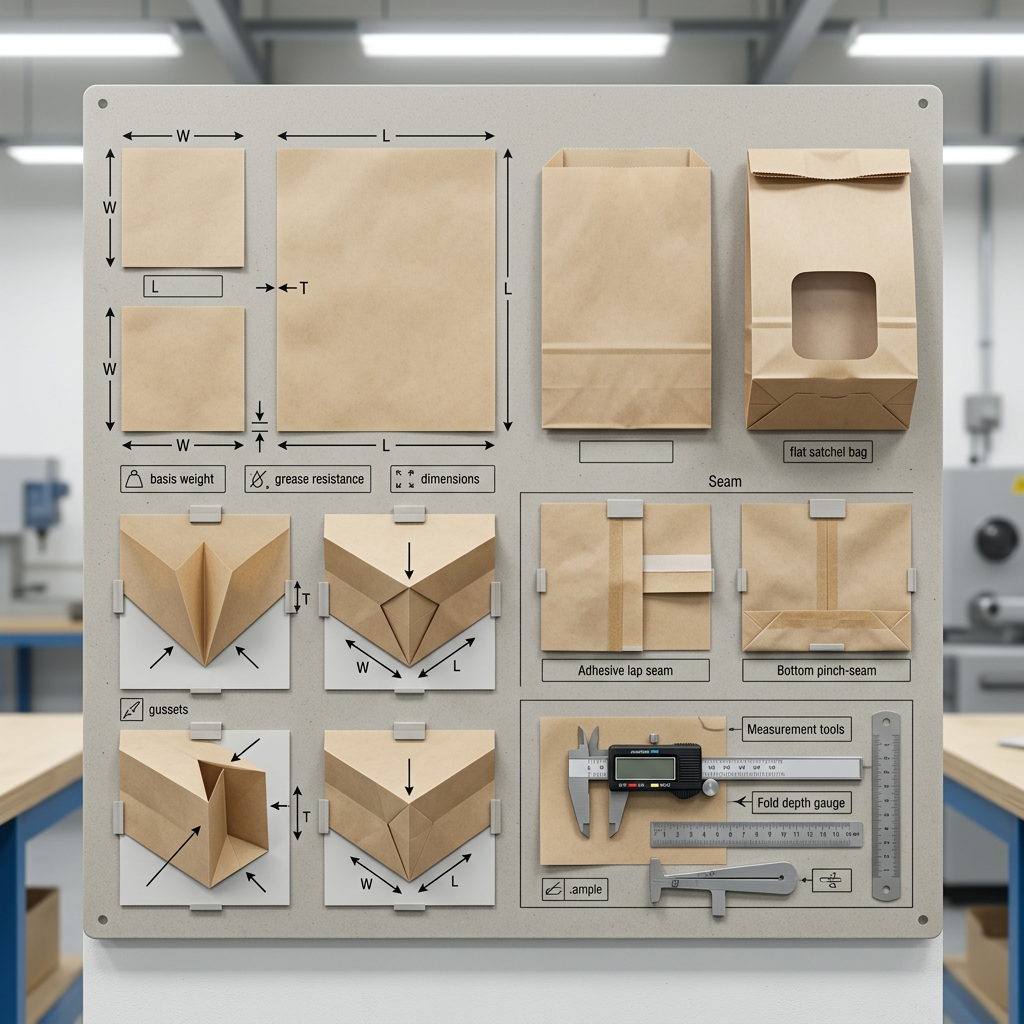
GSM should be specified alongside the finished format. A useful buyer specification may include flat width, finished width, height, gusset or bottom construction, opening, seam location, handle or closure, and tolerances. For sheets and wraps, state the cut size and whether the paper will be folded manually or by equipment.
Bag construction affects how paper weight is experienced in use. A narrow bag may need enough stiffness to remain open during filling, while a wide sheet may need flexibility for wrapping. Bottom folds and side seams concentrate stress, so sample checks should focus on those areas rather than on the paper sheet alone.
Printing can also affect converting. Ask whether the artwork is printed before bag making or on the converted bag, and confirm print coverage, ink colour references, registration tolerance, and rub or scuff expectations. A coated or dense surface may produce a different visual result from absorbent kraft paper.
When requesting a quotation, provide:
- Product type and food application
- Finished dimensions or sheet size
- Target capacity or product weight
- Paper colour and requested GSM
- Greaseproof structure, coating, or treatment requirements
- Printing colours, artwork, and coverage
- Handle, window, lid, closure, or accessory requirements
- Quantity, packing method, and destination market
Barrier Performance, Food Contact, and Testing

Grease resistance is application-specific. Before approving production, define what “barrier performance” means for your product: no visible oil on the outside, limited oil migration, maintained stiffness, clean handling, or a specified test result. These are not identical requirements.
Ask the supplier what paper structure or coating is proposed and whether it is suitable for the intended food-contact application. Food-contact requirements, declarations, testing, and documentation depend on the exact materials, inks, coatings, adhesives, product category, and destination market. Do not assume that a paper described as food grade automatically satisfies every requirement in your sales market.
A practical evaluation can include:
- Inspect GSM, dimensions, colour, surface, and print quality against the approved sample.
- Fill the package with the intended food or a representative substitute.
- Observe oil marking, leakage, staining, odour, sticking, and loss of stiffness.
- Check the seams, folds, bottom, and opening after the planned service or holding period.
- Evaluate the package during stacking, delivery, and normal handling.
- Record the test food, contact time, temperature, humidity, and acceptance criteria.
Where a customer, retailer, or regulator requires formal documentation, request the applicable food-contact documents and test reports for the final specification. A change in GSM, coating, ink, adhesive, supplier, or destination market may require a new review.
Sampling, Ordering, Storage, and Shipping Checks
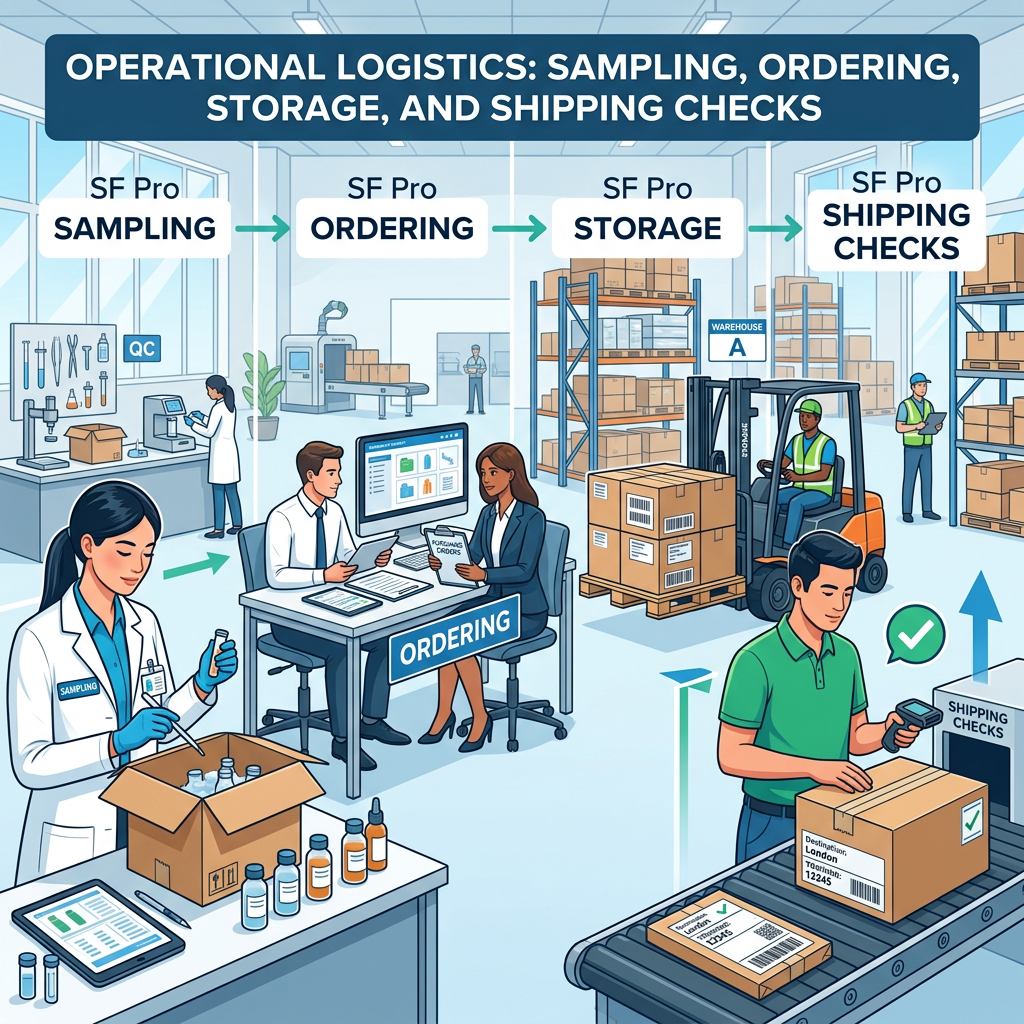
Sampling should confirm more than appearance. Ask for a sample made as close as possible to the proposed production specification, including GSM, paper colour, coating or treatment, dimensions, seams, printing, and accessories. If the application is sensitive, request alternative GSM or structure options for side-by-side testing.
For custom printed packaging, approve the artwork and physical sample before mass production. Confirm the measurement method and tolerance for GSM, finished dimensions, colour, print registration, bag count, carton count, and carton markings. Production quantities, minimum order quantity, sampling arrangements, pricing, and lead time depend on the exact specification and factory schedule, so obtain these details in the written quotation.
Quality control may include incoming paper checks, in-process dimension and print checks, finished-bag inspection, and quantity verification. Agree the inspection points before production rather than relying on a general term such as “high quality.” If a third-party inspection or customer protocol is required, communicate it before ordering.
Paper packaging should be stored in clean, dry conditions away from water, condensation, direct sunlight, strong odours, and contamination. Keep cartons protected during warehouse handling. Shipping protection should prevent crushing, moisture exposure, and deformation. Confirm carton dimensions, units per carton, pallet requirements, shipping marks, and destination documentation with the supplier. Export arrangements and logistics depend on the order and destination.
YBJ Packing supports design, samples, production, quality control, and export service for global B2B food packaging buyers. The company has operated in China since 1998, but every material performance, compliance document, MOQ, price, and lead time must be confirmed for the buyer’s exact project.
Conclusion: Specify More Than GSM
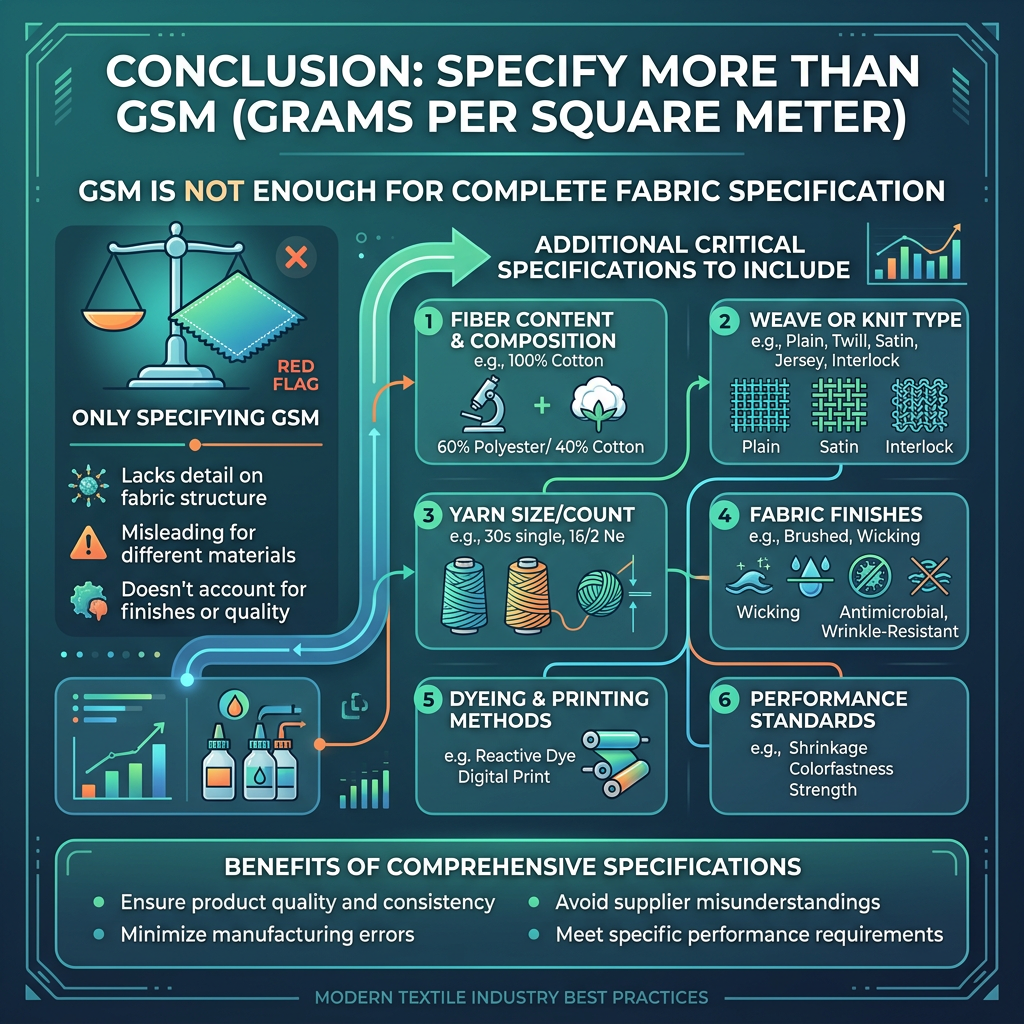
Greaseproof paper GSM is an important starting point, but it cannot determine barrier performance by itself. Select the paper by considering the food, oil and moisture exposure, package format, filling method, handling, printing, storage, destination-market requirements, and total quantity. Then confirm the choice through a representative sample and documented quality checks.
A reliable purchase specification should state GSM, paper structure, coating or treatment, finished dimensions, tolerances, printing, construction, food-contact requirements, packing, and shipping expectations. Because performance, compliance, MOQ, price, and lead time depend on the exact specification and destination market, request a project-specific recommendation rather than choosing a weight from a generic chart.