

Elevating Bakery Branding and Product Freshness
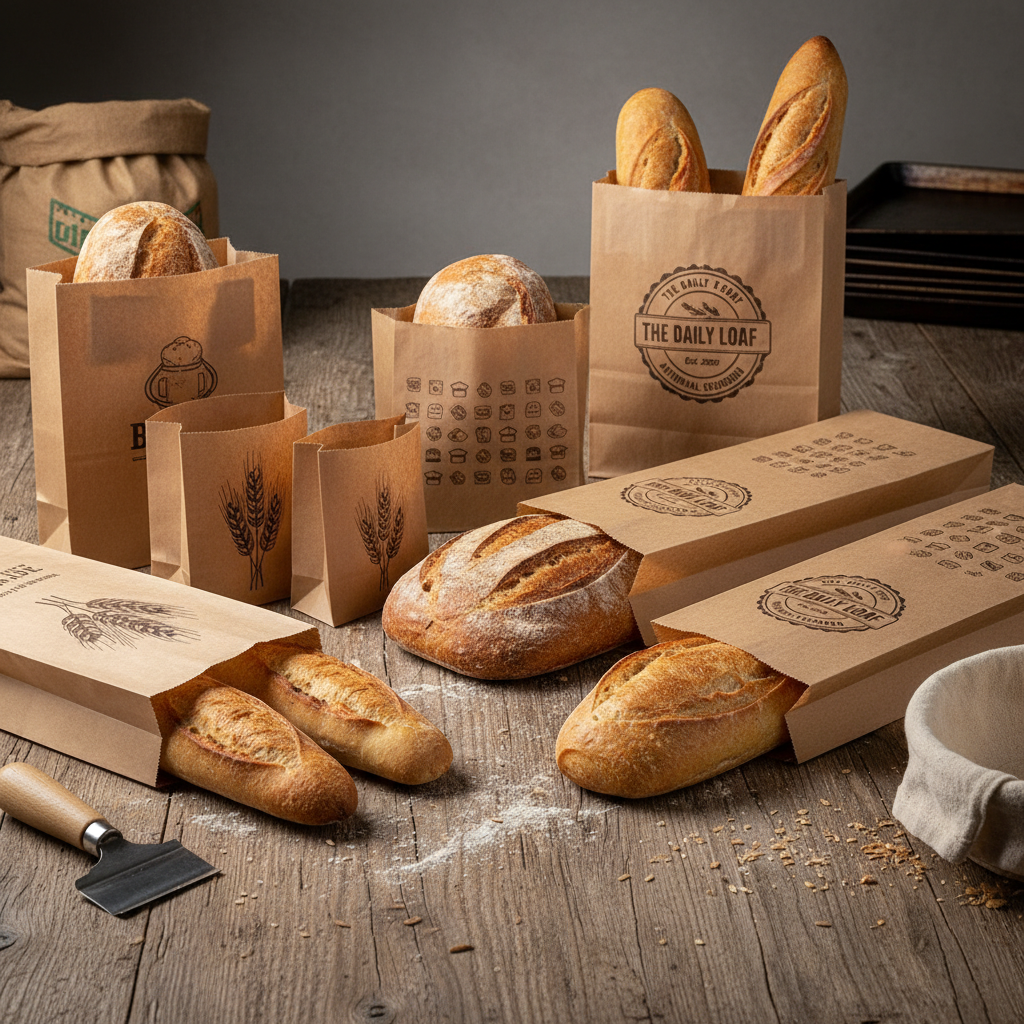
For artisan bakeries, commercial food manufacturers, and grocery chains, the packaging of baked goods is as critical as the recipe itself. Custom bread bags serve a dual purpose: they act as a mobile billboard for your brand while maintaining the delicate balance of moisture required to keep bread fresh. Unlike standard plastic options that can trap excessive moisture—leading to soggy crusts and accelerated mold growth—paper-based solutions allow the product to breathe.
Whether you are packaging crusty baguettes, soft sandwich loaves, or specialty pastries, choosing the right material and specifications is essential for procurement managers and bakery owners. This guide explores the technical aspects of selecting high-quality Custom Bread Bags that align with operational needs and sustainability goals.
Material Selection: Kraft Paper vs. Alternatives
The foundation of a high-performance bread bag is the paper substrate. The choice between materials impacts printability, strength, and customer perception.
Natural Brown Kraft
Brown kraft paper is the industry standard for organic and artisan brands. Unbleached and often made from recycled fibers, it communicates an eco-friendly message immediately. It provides excellent tear resistance and is highly breathable, making it ideal for crusty breads that need to release steam.
White Bleached Kraft
For brands requiring vibrant, multi-color logos or sharp photographic printing, white kraft paper offers a superior canvas. The neutral background ensures that specific brand colors (Pantone matching) appear accurate and bright. <a href="Custom logo food grade kraft bread paper bags“>Custom logo food grade kraft bread paper bags are often manufactured using white kraft when high-impact visual merchandising is the priority.
Greaseproof and Lined Options
For breads with higher fat content, such as focaccia or cheese-topped loaves, standard paper may spot or degrade. In these cases, bags can be treated with a grease-resistant coating or lined with a thin layer of PE (polyethylene) or PLA (polylactic acid) to prevent oil bleed-through while maintaining structural integrity.
Bag Styles and Functional Features
Bread packaging comes in various form factors designed to optimize shelf space and loading efficiency.
1. Flat and Satchel Bags
Commonly used for baguettes and single servings. These are cost-effective and space-saving during storage. <a href="Custom Food French Bread Paper Bags“>Custom Food French Bread Paper Bags typically utilize this long, narrow format to protect the length of the product without unnecessary bulk.
2. SOS (Self-Opening Sack) / Block Bottom Bags
These bags feature a flat, rectangular bottom that allows them to stand upright on shelves. This is the preferred style for sliced loaf breads, rolls, and bulk deliveries. The block bottom construction makes filling easier for automated packaging lines or manual bakery staff.
3. Window Patching
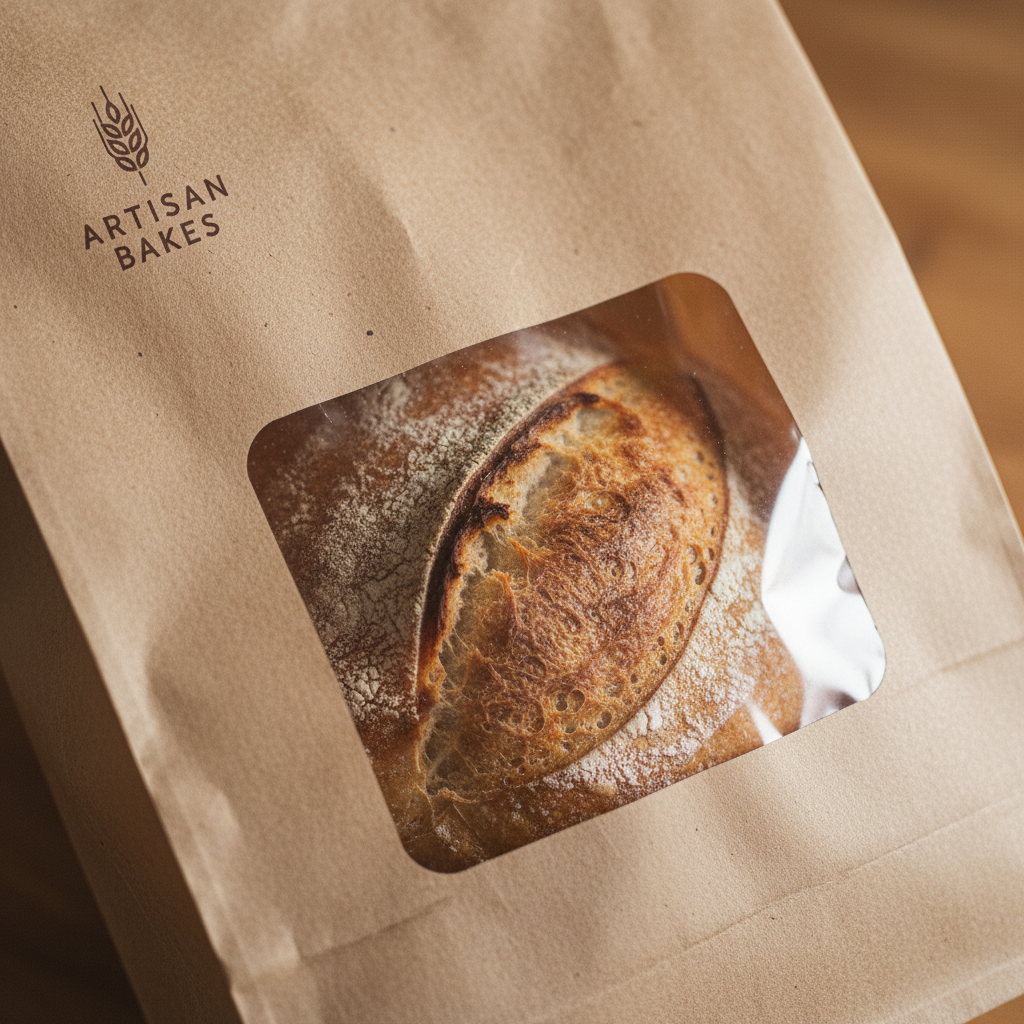
Visibility drives sales. Consumers often want to verify the texture and bake level of the bread before purchasing. <a href="custom paper bags for bread with window“>Custom paper bags for bread with window integrate a clear strip of film (OPP, PET, or biodegradable PLA) into the paper face. This hybrid approach combines the breathability of paper with the product visibility of plastic.
Technical Specifications and Sizing
When ordering custom packaging, precision in sizing is vital to reduce material waste and ensure a snug fit. While custom dimensions are always an option, standard industry sizes can offer cost savings due to existing tooling.
Common Industry Dimensions (WxDxH)
- Baguette / French Bread: 4.5″ x 2.5″ x 24″ (approx. 11 x 6 x 60 cm)
- Italian Loaf: 5″ x 3.5″ x 18″ (approx. 13 x 9 x 45 cm)
- Standard Sub / Hoagie: 5″ x 2″ x 16″
- Artisan Boule (Round): Requires wider gussets, typically 8″ x 5″ x 15″
Paper Weight (GSM): Most bread bags utilize paper ranging from 30 GSM to 60 GSM. Heavier weights (50-60 GSM) are recommended for larger multi-loaf bags or heavy artisan breads with sharp crusts that might puncture thinner paper.
Printing and Customization Options
Custom printing transforms a commodity item into a marketing asset. Manufacturers typically use Flexographic printing for bread bags, which allows for high-speed production and food-safe water-based inks.
- Ink Safety: Ensure your supplier uses food-grade, water-based inks that comply with international safety standards (such as FDA or EU regulations) to prevent chemical migration.
- Coverage: You can choose between spot printing (logo only) or full-bleed coverage. Note that heavy ink coverage on the exterior can sometimes affect the breathability of the paper, so a balanced design is often best.
- Minimum Order Quantities (MOQ): Custom printing usually requires an MOQ to justify plate setup costs. For industrial buyers, this typically starts around 10,000 to 30,000 units, though this varies by manufacturer.
Sustainability and End-of-Life
Sustainability is a primary driver in the packaging market. Paper bread bags offer significant advantages:
- Recyclability: Uncoated paper bags are 100% curbstide recyclable.
- Compostability: Kraft paper is naturally biodegradable. If window films are used, opting for PLA (corn-starch based) windows ensures the entire package is industrially compostable.
- Source Reduction: Paper bags generally use less plastic mass than rigid containers or full poly-bags.
Buying Guide: What to Ask Your Manufacturer
To ensure a smooth procurement process, have the following information ready when requesting a quote:
- Dimensions: Width x Gusset x Length.
- Material Preference: White vs. Brown Kraft, and desired GSM thickness.
- Window Requirement: Do you need a window? If so, standard plastic or biodegradable?
- Artwork: How many colors is your logo? Do you have vector files (AI/PDF) ready?
- Volume: What is your estimated monthly or quarterly usage?
Frequently Asked Questions (FAQs)
Do paper bread bags keep bread fresh longer than plastic?
For crusty artisan breads, yes. Paper allows moisture to escape, preventing the crust from becoming soft and chewy. For soft sandwich breads intended to last a week or more, a plastic liner or bag is usually preferred to retain moisture.
What is the lead time for custom printed bags?
Lead times typically range from 3 to 6 weeks depending on the complexity of the artwork and current factory capacity. New orders may require an additional week for plate creation.
Can you print nutritional facts on the bags?
Yes, high-resolution flexo printing allows for legible nutritional panels, ingredients lists, and barcodes to be printed directly on the back or gussets of the bag.
Are the bags freezer safe?
Standard paper bags are not moisture-proof and may get soggy if frozen and thawed. If freezing is intended, request a PE-lined paper bag or a wax-coated option.
Request a Quote
Ready to upgrade your bakery packaging? At YBJ Packing, we specialize in high-quality, food-safe paper packaging solutions tailored to your brand. Contact our team today to discuss your specifications and receive a competitive quote.