

Table of Contents
- Why Specification Matters in Foodservice Foil Containers
- Gauge and Material: Selecting Foil Thickness
- Rim Design and Lid Fit
- Stackability, Nesting, and Transport Stability
- Application-Based Specification Checklist
- Sampling, Testing, and Quality Control
- MOQ, Production, Storage, and Shipping Planning
- Conclusion: Specify the Complete Container System
Aluminum foil containers for foodservice should be specified by more than length, width, and depth. Gauge, rim geometry, lid fit, nesting, food application, transport conditions, and destination-market requirements all affect performance. This buyer guide explains the key specifications to confirm before sampling and production.
Why Specification Matters in Foodservice Foil Containers
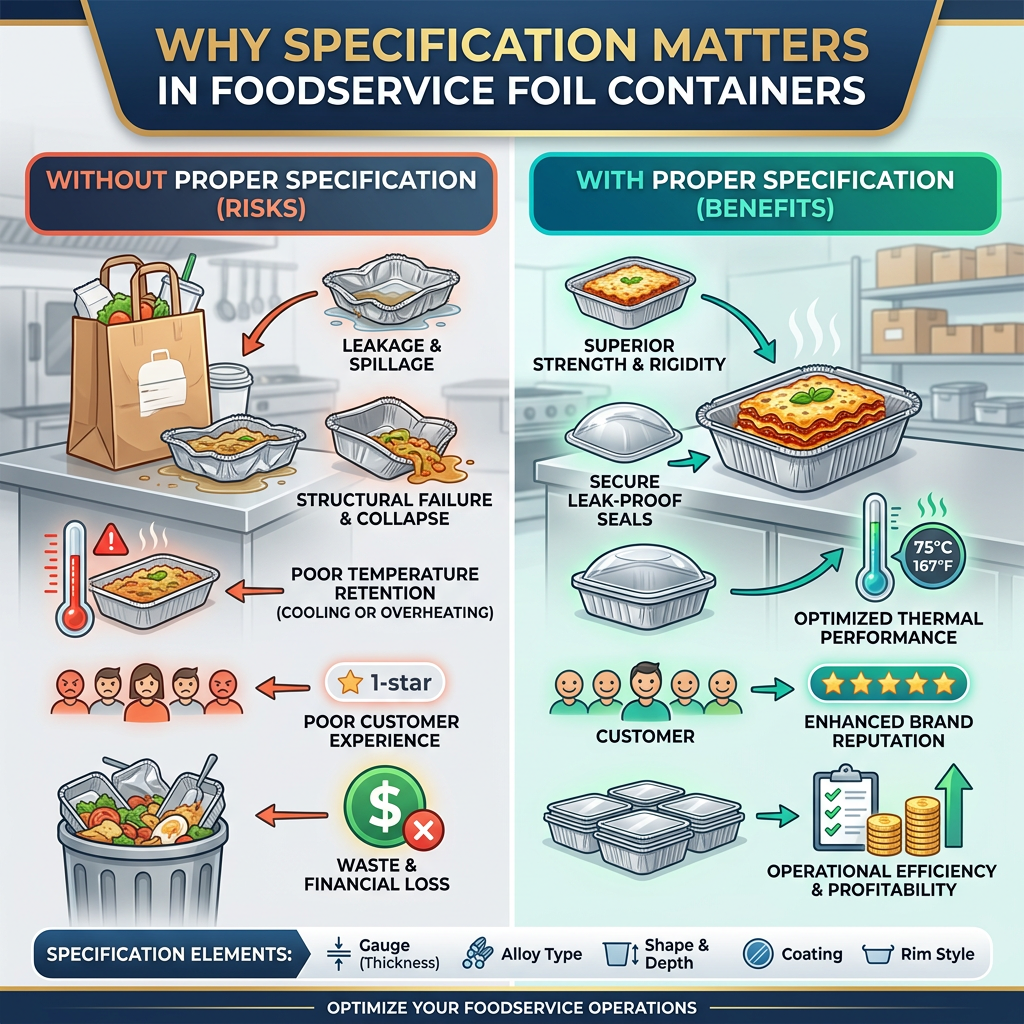
Aluminum foil containers for foodservice should be selected as a complete packaging system rather than as a simple disposable tray. The required foil thickness, rim profile, lid type, container depth, nesting clearance, and transport method depend on the food, filling process, service temperature, delivery route, and destination market.
Aluminum foil container means a formed tray made from aluminum foil for cooking, reheating, holding, displaying, or transporting food. Gauge refers to the foil thickness or material specification used to form the tray. In procurement discussions, the supplier should confirm the actual thickness or weight specification instead of relying only on a general label such as light-duty or heavy-duty.
For meal delivery, catering, bakery, prepared meals, and takeaway applications, the container must balance rigidity, heat handling, leak control, storage efficiency, and cost. A thicker container may improve resistance to bending, but it can increase material consumption and shipping weight. A lighter container may be suitable for a stable food and controlled handling process, but it may deform when filled, stacked, or transported.
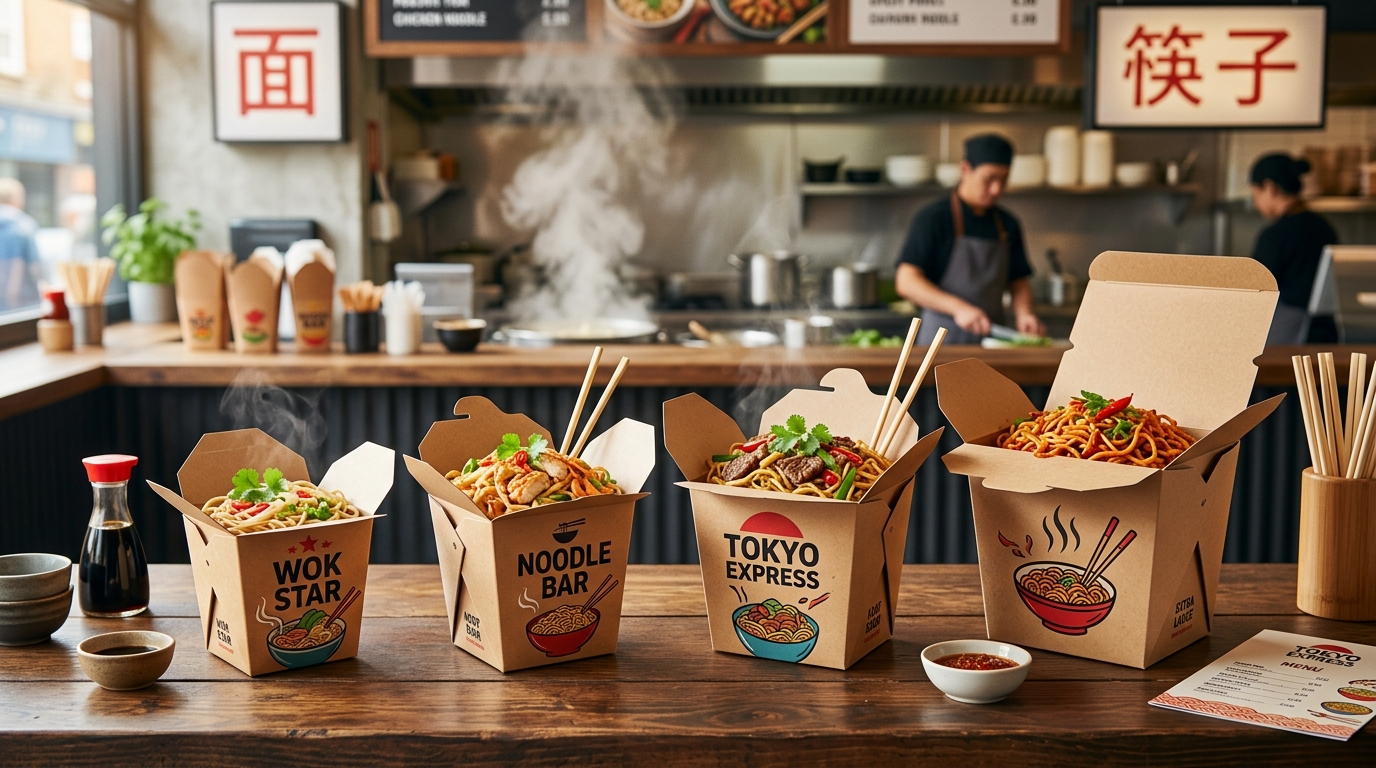
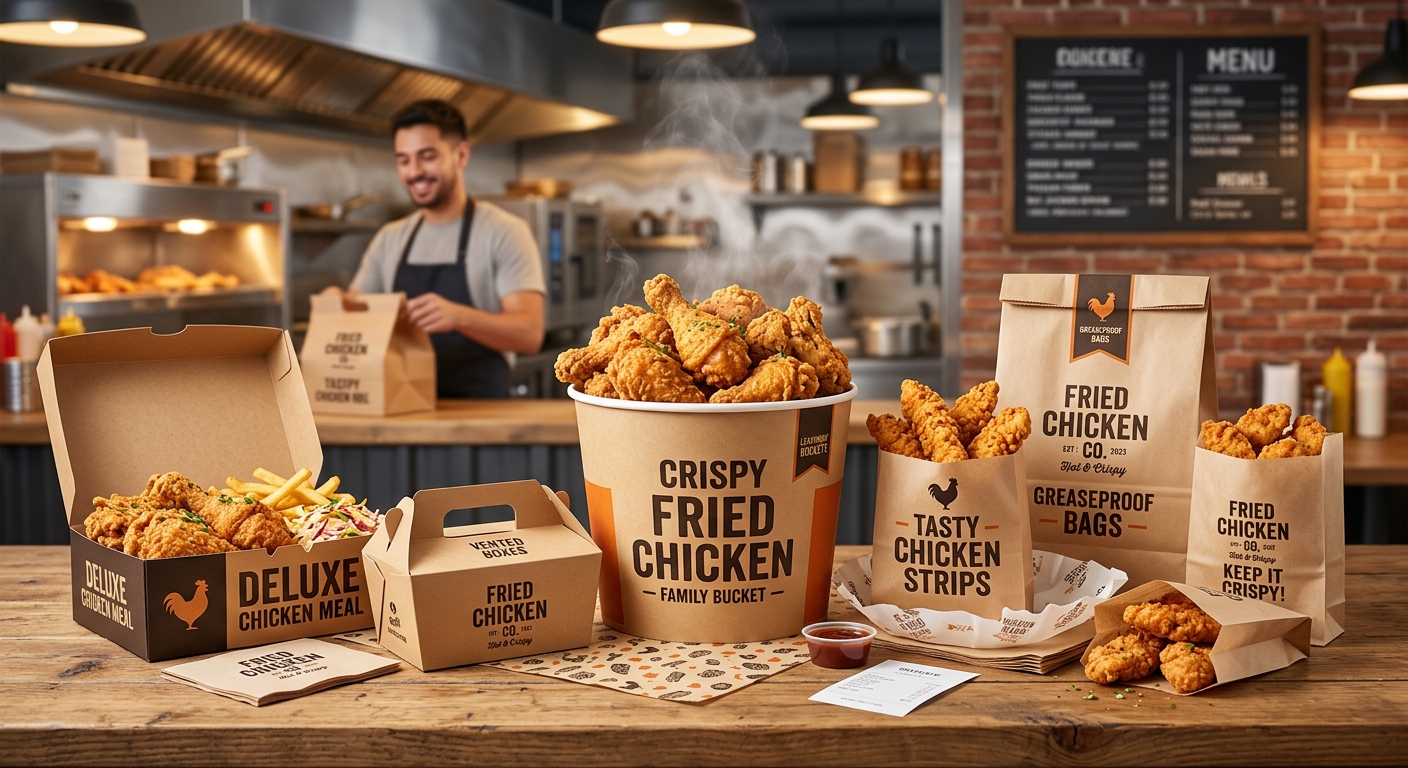
For broader application planning, review this meal prep and grab-and-go packaging guide and the catering packaging guide for trays, lids, and transport.
Gauge and Material: Selecting Foil Thickness
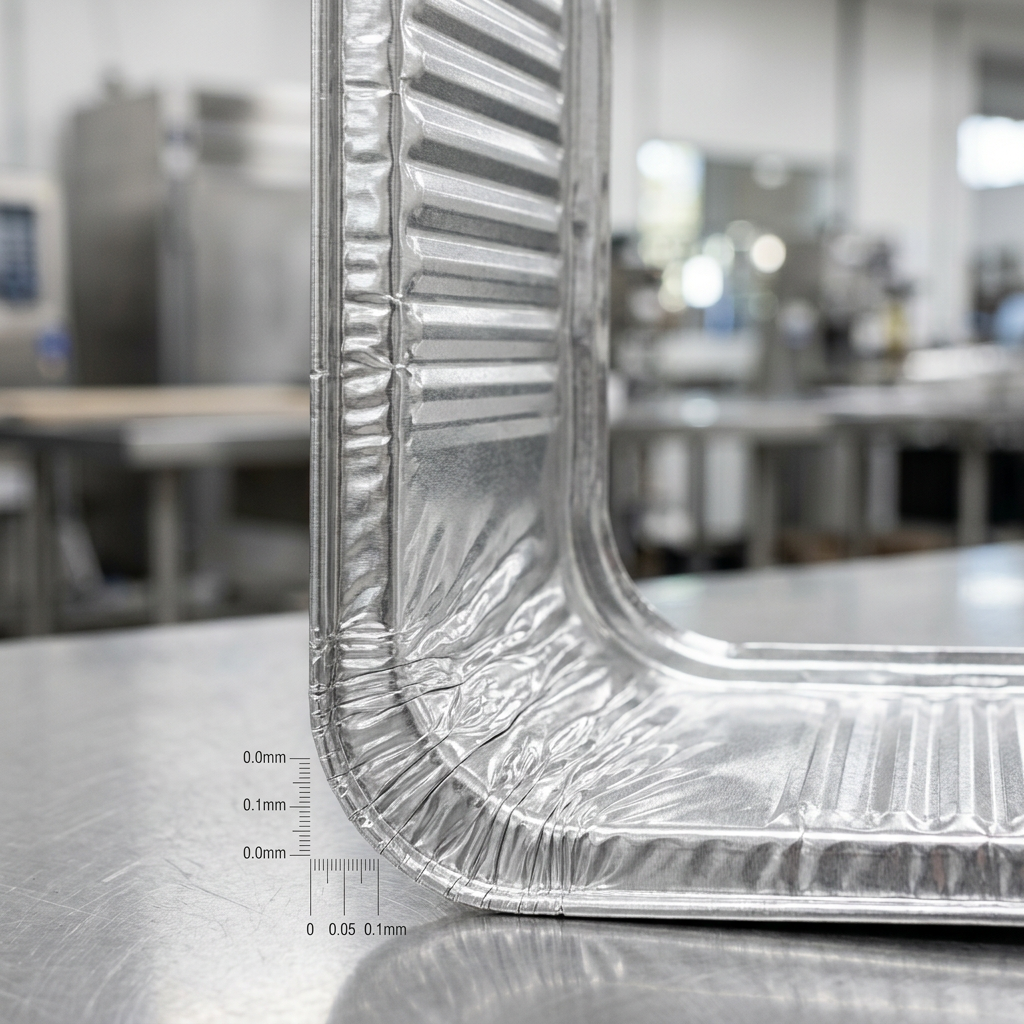
The correct aluminum foil container gauge is determined by the load and handling conditions, not by container size alone. A large, shallow tray may need a different material specification from a small, deep tray because its span, filled weight, and resistance to flexing are different.
What to confirm with the supplier
- Aluminum alloy or material grade used for forming.
- Nominal foil thickness or gauge and acceptable production tolerance.
- Container length, width, depth, base dimensions, and wall geometry.
- Filled weight and whether the tray will be lifted from one edge.
- Whether the container is intended for manual filling, automated filling, cooking, reheating, chilling, or delivery.
- Any coating, lacquer, ink, or surface treatment used and its food-contact suitability for the destination market.
Gauge should be assessed together with the formed geometry. Beaded walls, reinforced corners, flanges, and a stable base can affect rigidity as much as material thickness. The most reliable approach is to compare samples filled with the buyer’s actual product and handled through the intended workflow.
Do not assume that aluminum is automatically suitable for every food-contact situation. Acidic, salty, oily, or highly seasoned foods may require a specific material or coating review. Food-contact compliance depends on the exact substrate, coating, manufacturing process, and destination market. The buyer should request the relevant technical and compliance documentation before approving mass production.
Rim Design and Lid Fit
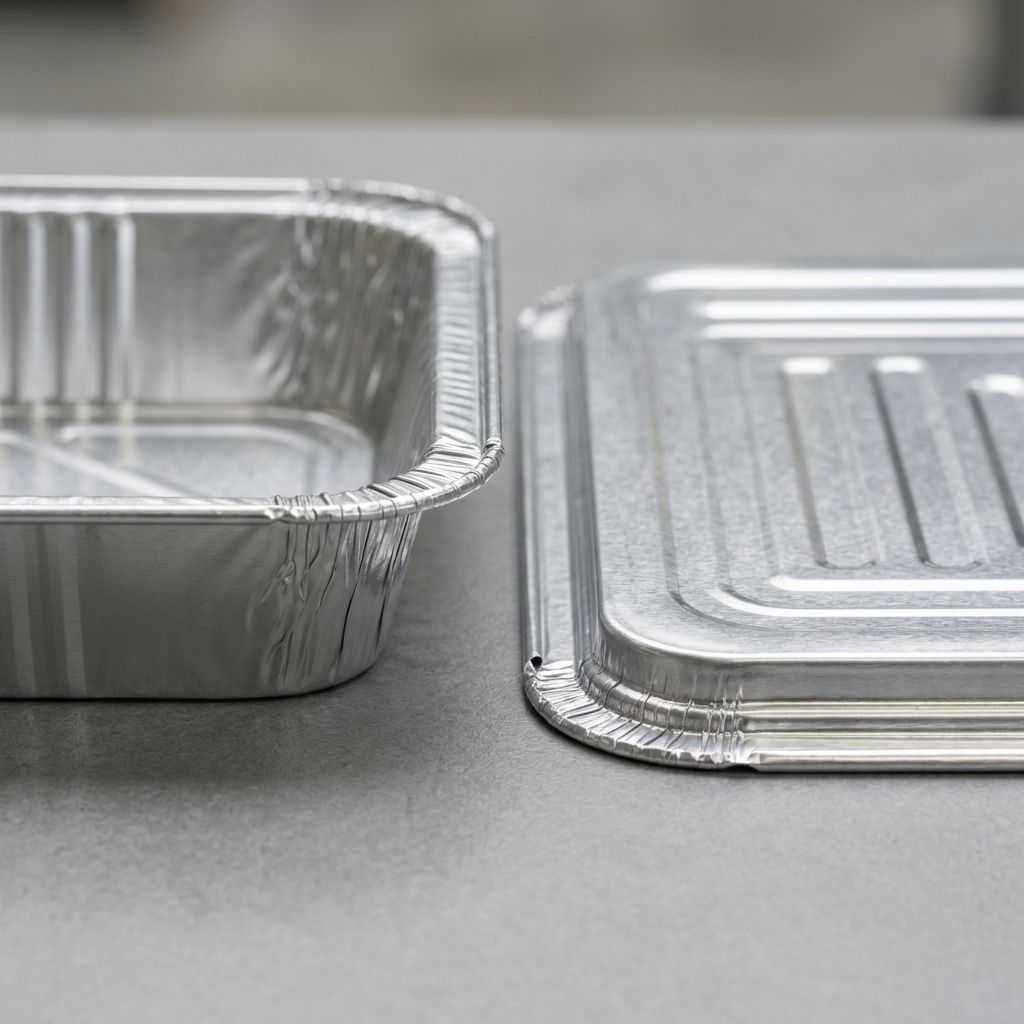
The rim is the upper edge or flange of the foil container. It influences lid engagement, sealing consistency, stacking, handling safety, and resistance to deformation. A suitable rim design must match the intended lid instead of being selected independently.
Common lid considerations
- Foil lid: useful when heat handling, folding, or a matching all-foil system is required. The closure method and edge fold should be tested for the application.
- Paperboard lid: can support printed branding and may be suitable for selected foodservice uses, but its grease, moisture, and heat resistance must be reviewed.
- Plastic lid: may provide visibility or a defined snap fit, but material selection, food-contact compliance, recycling communication, and temperature suitability require confirmation.
- Sealable film: requires a compatible rim, sealing equipment, film structure, and validated process settings.
Important rim and lid specifications include the rim width, flatness, corner shape, lid dimensions, engagement force, closure method, and whether the lid is intended to be resealable. Check for gaps, sharp edges, lid lifting, wrinkling, and loss of closure after filling and transport simulation.
A lid that fits an empty tray may not perform the same way after the container is filled, chilled, heated, or stacked. Buyers should test the complete tray-and-lid combination, including any label, sleeve, overwrap, or secondary carton used in distribution.
Stackability, Nesting, and Transport Stability
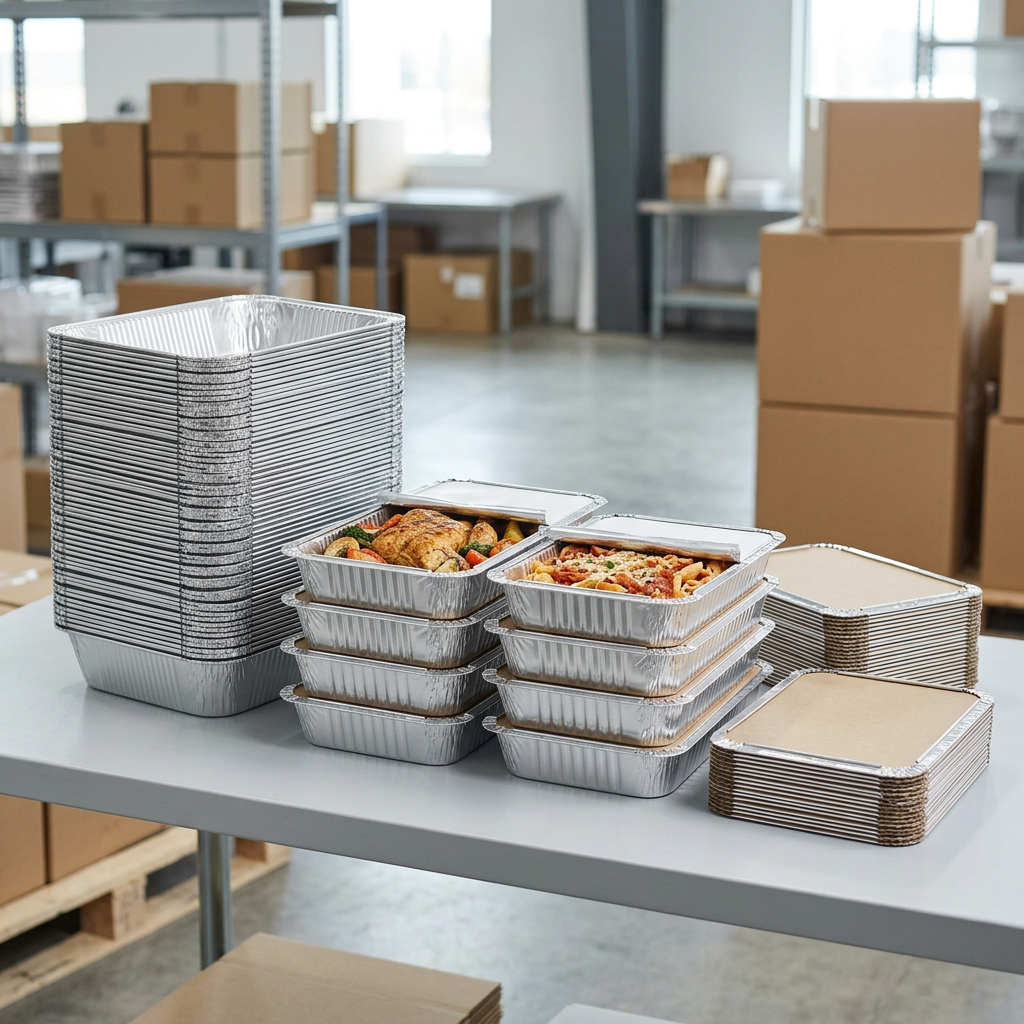
Stackability describes how filled or lidded containers remain aligned and stable when placed one above another. Nesting describes how empty containers fit inside one another. These are different requirements and should be specified separately.
Stackability checks
- Confirm whether stacking occurs empty, filled, lidded, boxed, or palletized.
- Measure the stable stack height and check for side-to-side movement.
- Check whether the lid bears load or whether the tray rim carries the load.
- Inspect corner alignment and the risk of lid displacement.
- Test the lowest container for deformation under the expected load.
- Review the effect of sauces, condensation, grease, and temperature changes.
Deep containers, tapered walls, formed feet, and designed nesting features can improve storage efficiency, but excessive nesting friction can make separation slow or damage rims. For delivery, a container that nests efficiently when empty may still require a divider, carton, carrier, or tray pack to prevent filled units from shifting.
For operators managing multiple meal components, the recommendations in this guide to durable and stackable food truck packaging may help with workflow planning. Packaging performance should be evaluated with the actual transport route rather than with visual appearance alone.
Application-Based Specification Checklist

Start with the food and process, then select the container configuration. Use the following checklist when preparing a packaging brief:
- Food type: dry, oily, sauced, acidic, salty, frozen, chilled, baked, roasted, or mixed.
- Capacity: nominal fill volume, target fill weight, headspace, and portion size.
- Dimensions: outside dimensions, inside dimensions, base size, depth, and required footprint.
- Process: manual filling, machine filling, cooking, reheating, chilling, freezing, display, or delivery.
- Closure: foil, paperboard, plastic, film, snap-on, crimped, or another specified lid system.
- Branding: plain or printed accessory, label area, carton requirements, and artwork process.
- Logistics: empty nesting ratio, filled stack height, case packing, pallet configuration, and destination.
Aluminum foil containers for foodservice may be recyclable in some local systems, but recyclability depends on local collection, sorting, contamination, and facility rules. Recyclable, compostable, biodegradable, and plastic-free are different claims and should not be used interchangeably. Packaging claims must be supported by the material specification and the requirements of the destination market.
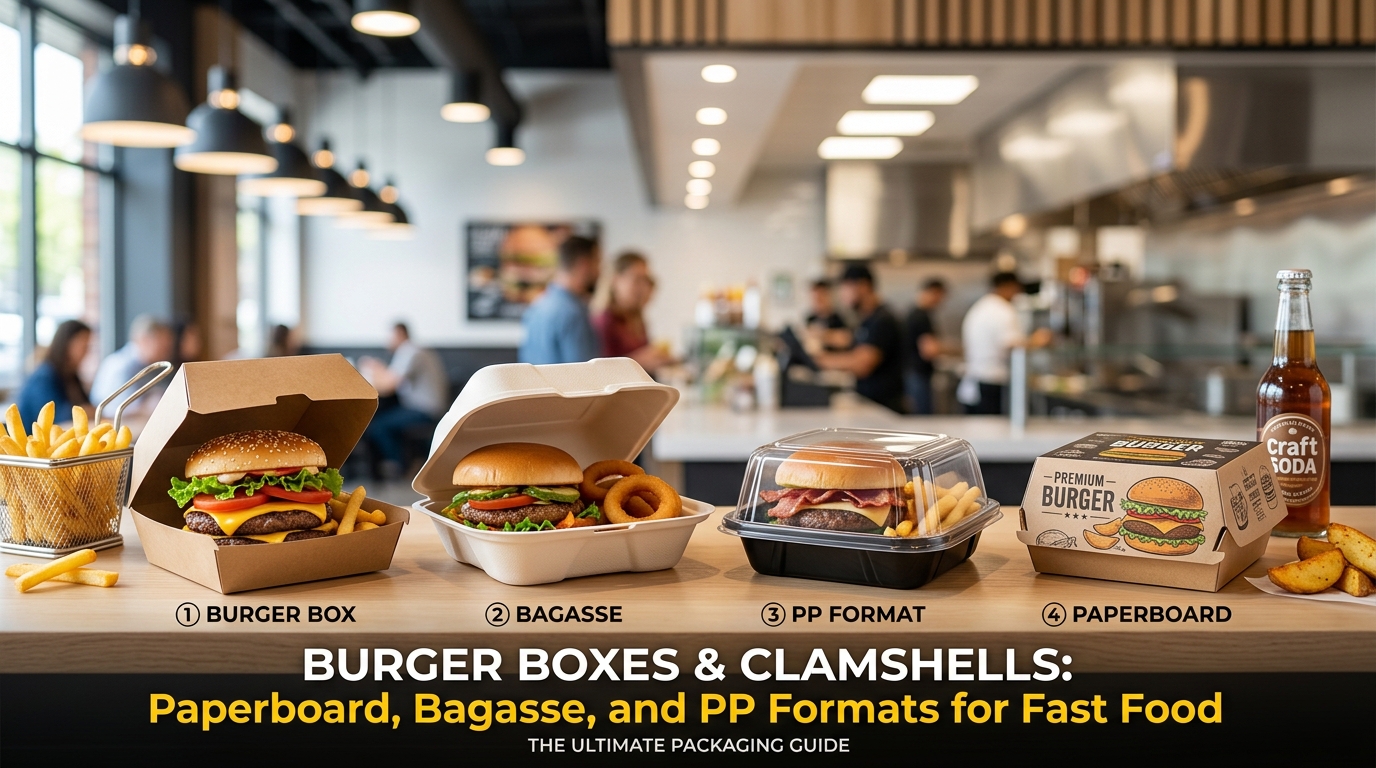
For a broader material decision, see this paper versus plastic food packaging comparison. The comparison should include the full system, including the lid and secondary packaging, rather than the tray alone.
Sampling, Testing, and Quality Control
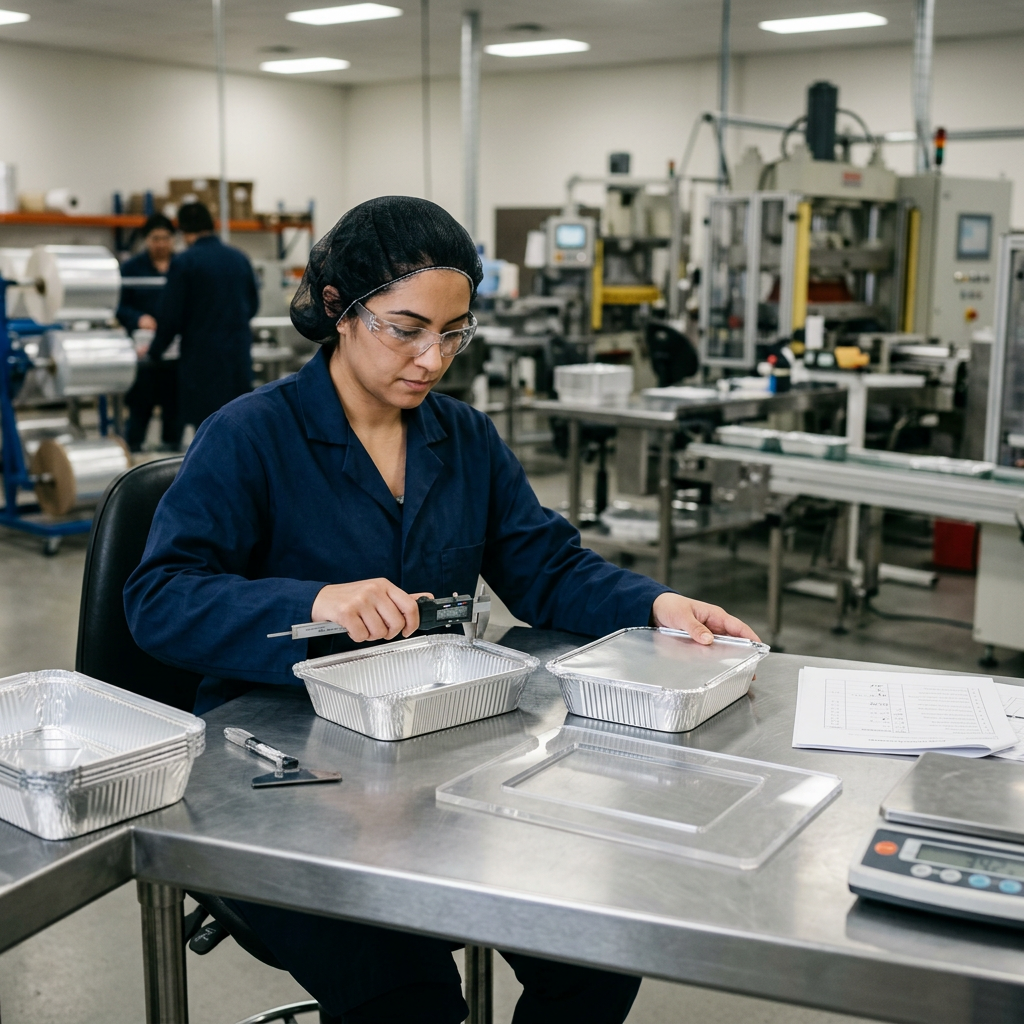
Samples should represent the proposed production specification, including the container, lid, coating, print, and packing method. A sample made from a different gauge or tool may not predict mass-production performance.
Recommended buyer checks
- Verify dimensions, depth, rim profile, base shape, and visible forming quality.
- Measure or request confirmation of the agreed material thickness and tolerance.
- Fill the tray to the intended weight and inspect lifting, flexing, and corner stability.
- Fit and remove the lid repeatedly to assess closure consistency.
- Conduct a leak or spill check using the actual food or a representative substitute.
- Evaluate stacking, nesting, case packing, and transport movement.
- Review surface cleanliness, burrs, wrinkles, pinholes, coating coverage, print registration, and carton condition.
Testing conditions should be recorded, including food type, fill level, time, handling method, and temperature conditions. Do not publish or approve a temperature rating, certification, test result, or compliance claim unless it has been verified for the exact product and market. Food-contact documentation and any required declarations should be reviewed by the buyer’s regulatory or quality team.
MOQ, Production, Storage, and Shipping Planning
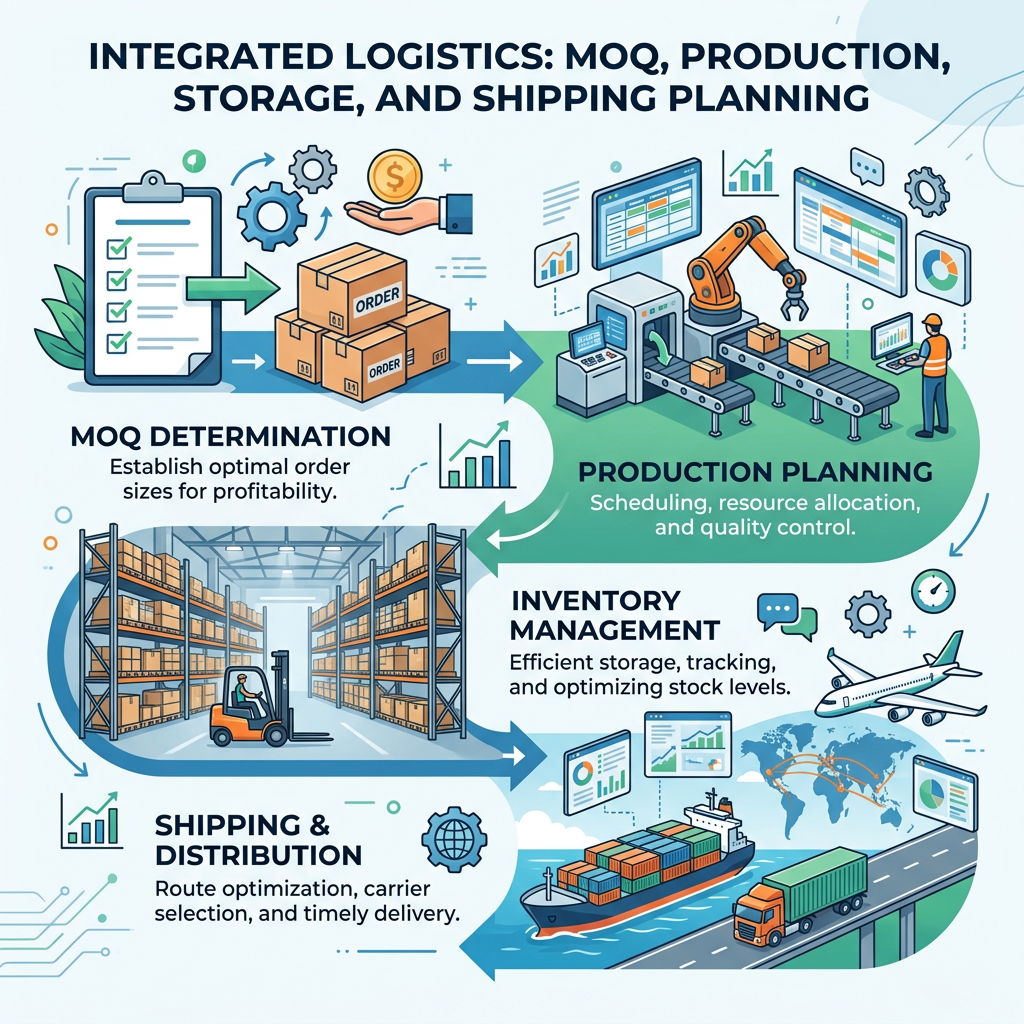
MOQ, price, production schedule, and shipping cost depend on the exact specification. Factors may include container size, forming tool, gauge, lid type, coating, printing, order quantity, packing method, and destination market. Request a written quotation that separates the product specification from assumptions about accessories and logistics.
Procurement information to prepare
- Product type, dimensions, capacity, and drawing or reference sample.
- Material and gauge requirement, including coating or surface treatment.
- Lid or accessory requirement and closure expectations.
- Quantity by size, estimated repeat-order volume, and packaging configuration.
- Printing, labeling, artwork, and carton-marking requirements.
- Destination port or delivery location and preferred shipping terms.
- Required food-contact documents and import or labeling requirements.
Store empty foil containers in clean, dry conditions away from chemicals, odors, excessive humidity, and crushing loads. Keep cartons protected from forklift damage and avoid placing heavy goods on top unless the packing design permits it. During shipping, review case dimensions, pallet stability, compression risk, moisture exposure, and the possibility of rim or lid deformation. The supplier should confirm packing details for the approved product rather than relying on a generic case estimate.
Conclusion: Specify the Complete Container System

The best aluminum foil containers for foodservice are not selected by gauge alone. A dependable specification connects foil thickness and formed geometry with the food, filling process, rim, lid, stackability, storage, transport, compliance documentation, and destination-market requirements.
Before mass production, approve a representative sample, test the filled container and closure, confirm the agreed material specification, and document the packing and shipping conditions. Performance, food-contact compliance, MOQ, price, and lead time vary with the exact configuration and destination. A complete technical brief helps the supplier recommend a practical design and reduces avoidable changes after tooling or production begins.