

The Strategic Importance of Takeaway Coffee Packaging
In the global beverage industry, coffee to-go packaging is no longer just a vessel for liquid; it is a critical touchpoint for brand identity and a fundamental component of the customer experience. For procurement managers, cafe owners, and distributors, selecting the right combination of coffee paper cups, lids, and accessories involves balancing cost-efficiency with structural integrity and environmental compliance.
As the demand for premium takeaway experiences grows, the technical specifications of your packaging—ranging from the GSM of the paperboard to the seal-tightness of the lid—directly impact your bottom line. This guide provides an in-depth analysis of the beverage packaging ecosystem, helping you navigate material choices, manufacturing standards, and customization options.
1. Coffee Paper Cups: The Core of Your Beverage Service
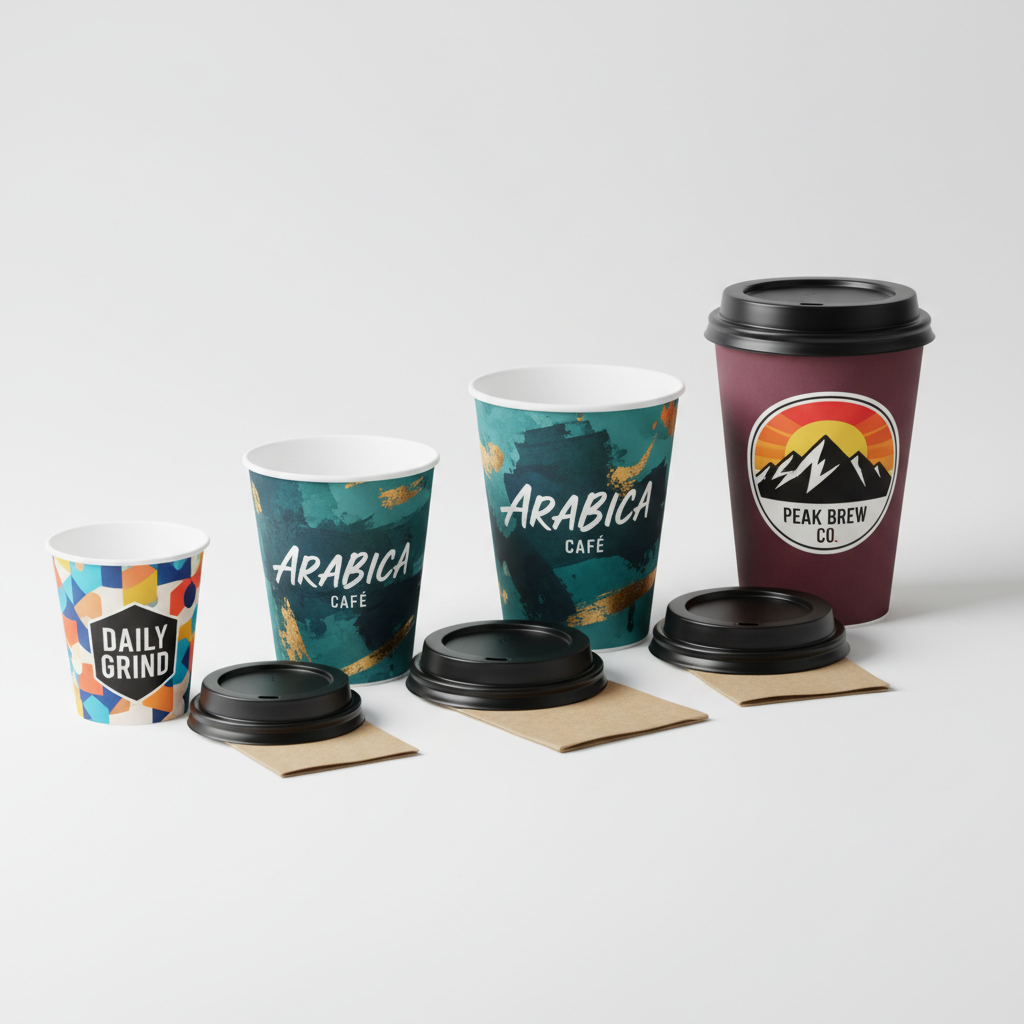
The foundation of any takeaway service is the cup. While they may appear simple, takeaway coffee cups are engineered products designed to withstand high temperatures while maintaining rigidity.
Single Wall vs. Double Wall Cups
- Single Wall Cups: These are the industry standard for cost-effectiveness. They require a cup sleeve for hot beverages to protect the consumer’s hands. They are lightweight and offer excellent printability for high-volume branding.
- Double Wall Cups: Featuring an extra layer of paperboard with an insulating air pocket, these cups eliminate the need for a separate sleeve. They provide superior heat retention and a premium, sturdy feel that resonates with high-end coffee brands.
- Ripple Wall Cups: A variation of the double-wall design, the corrugated outer layer provides maximum insulation and a non-slip grip, often preferred for extremely hot beverages like Americanos or herbal teas.
Material Substrates and Internal Linings
To prevent the paper from absorbing liquid, cups require a barrier coating. Understanding these coatings is vital for compliance with local environmental regulations:
- PE (Polyethylene) Lining: The traditional choice. It provides an excellent moisture barrier and is heat-sealable, though it presents challenges in standard recycling streams.
- PLA (Polylactic Acid) Lining: A plant-based plastic alternative derived from renewable resources like corn starch. These are often marketed as compostable in industrial facilities.
- Aqueous Coating: A newer technology where a water-based dispersion coating is applied. These cups are often easier to recycle in standard paper mills because the coating breaks down more readily during the pulping process.
2. Engineering the Perfect Lid: Fit, Flow, and Safety
A lid is the primary defense against spills and thermal loss. For a B2B buyer, the “click-fit”—the audible and tactile snap of a lid onto a cup rim—is the most important quality metric.
Common Lid Materials
- PS (Polystyrene): The most common material for hot cup lids due to its rigidity and high heat resistance. It maintains its shape even when exposed to steam.
- PP (Polypropylene): Slightly more flexible than PS and often perceived as a more recyclable plastic option in certain markets.
- CPLA (Compostable PLA): Crystallized PLA that can withstand higher temperatures than standard PLA, making it suitable for hot coffee lids while remaining compostable.
- Fiber/Pulp Lids: Made from bagasse or recycled paper, these are plastic-free alternatives that are gaining traction in regions with strict single-use plastic bans.
3. Cup Sleeves and Carriers: Enhancing the User Experience
Secondary packaging components like a cup sleeve or cup holder are essential for safety and convenience, especially for multi-drink orders.
The Utility of the Cup Sleeve
Custom-printed sleeves are a high-margin branding opportunity. Beyond heat protection, they allow cafes to use generic cups while still maintaining a branded presence. Most sleeves use 2-ply corrugated paperboard, which creates an insulating barrier of air between the hot cup and the hand.
Multi-Cup Carriers
For delivery and group orders, stability is paramount. Beverage packaging solutions for transport include:
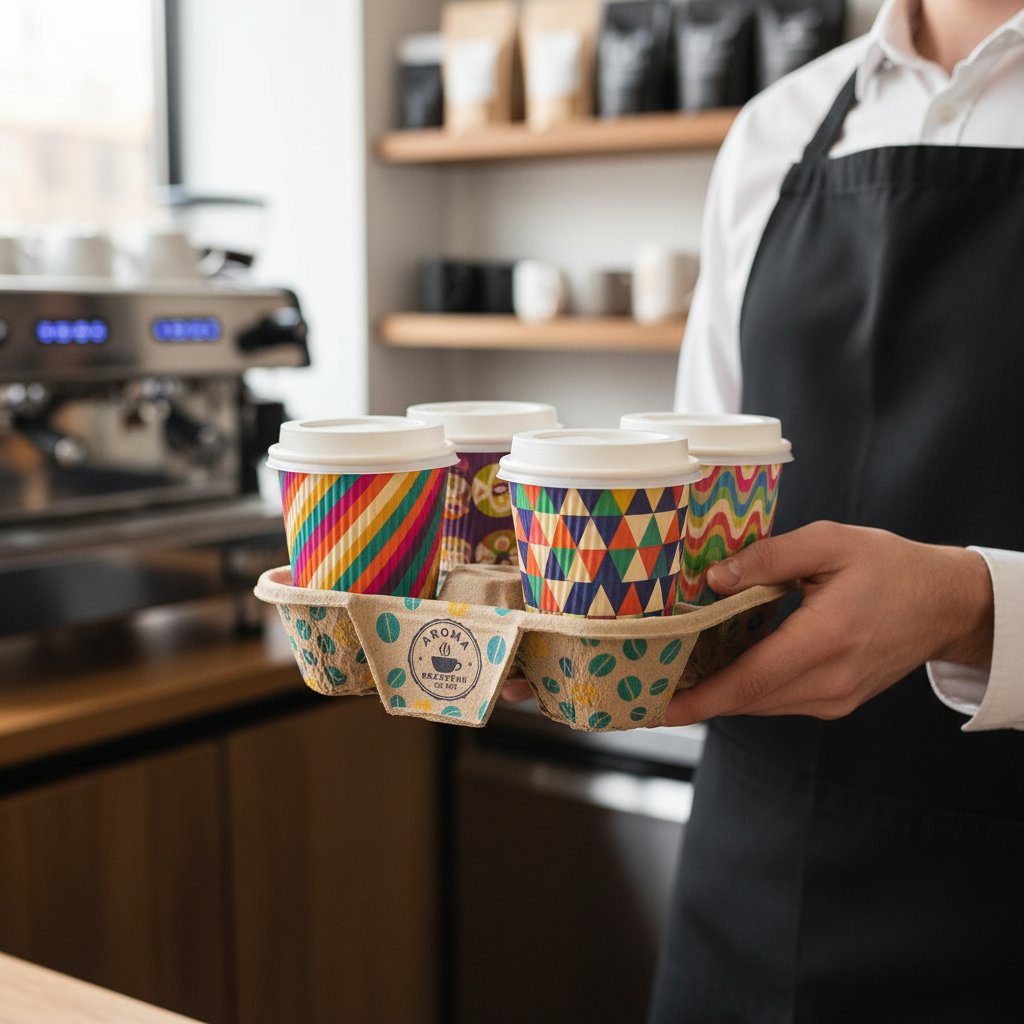
- Molded Pulp Trays: Typically available in 2-cup and 4-cup configurations. These are sturdy, biodegradable, and stackable, making them ideal for high-volume storage.
- Handle Carriers: Made from kraft paperboard, these are often used for premium branding and offer a more “gift-like” presentation for takeaway treats. These can be found in our food packaging box category for specialized sets.
4. Technical Specifications and Quality Control
When sourcing at scale, technical tolerances determine the success of your production run. Below are the key specifications procurement teams should monitor:
| Specification | Typical Range / Standard | Why It Matters |
|---|---|---|
| Paperboard Weight (GSM) | 190 GSM – 350 GSM | Determines the structural rigidity and hand-feel of the cup. |
| Coating Thickness | 15g – 20g PE/PLA | Prevents leaking and “soggy” bottoms during extended use. |
| Rim Diameter | 80mm (8oz) / 90mm (12-16oz) | Ensures universal lid fitment across different cup sizes. |
| Heat Resistance | Up to 95°C (203°F) | Ensures the cup and lid do not deform under boiling water temperatures. |
Quality Assurance Protocols
Reputable manufacturers perform several tests to ensure batch consistency:
- Leak Test: Samples are filled with hot liquid (90°C) and left for 4-24 hours to check for seam penetration.
- Rim Crush Test: Measures the force required to deform the top of the cup, ensuring it won’t collapse when a lid is applied.
- Color Matching: Using Pantone (PMS) standards to ensure brand colors are consistent across cups, food packaging bags, and sleeves.
5. Customization and Branding: From Design to Delivery
Customization is where your packaging turns into a marketing tool. For B2B orders, understanding the printing process is essential for budget planning.
Printing Methods
- Flexographic Printing: Best for high-volume orders. It uses flexible relief plates and is highly cost-effective for large runs of coffee paper cups.
- Offset Printing: Offers higher resolution and better color gradients. Often used for complex designs or smaller, premium batches.
- Digital Printing: Ideal for short runs or seasonal promotions, though unit costs are higher.
Artwork and Sampling
Before mass production, we recommend a strict sampling process. You should provide artwork in high-resolution vector formats (AI or PDF) with all fonts outlined. Once the digital proof is approved, a physical sample (mock-up) ensures the colors and dimensions meet your expectations. You can learn more about our process on our how to order page.
6. The Buying Guide: MOQs, Lead Times, and Logistics
Navigating the procurement of takeaway coffee cups requires a clear understanding of the manufacturing timeline.
- Minimum Order Quantity (MOQ): For custom-printed items, MOQs typically range from 10,000 to 50,000 units per size. Generic or unprinted items may have lower MOQs.
- Lead Times: Production usually takes 15-25 days after artwork approval. Shipping via sea freight can add another 20-40 days depending on your location.
- Storage Considerations: Paper products are sensitive to humidity. Ensure your warehouse environment is dry and cool to prevent the paper from warping or the PE lining from becoming brittle.
Frequently Asked Questions (FAQ)
Can I use the same lid for 12oz and 16oz cups?
Yes, most manufacturers design 12oz, 16oz, and 20oz cups with a standard 90mm rim diameter so they can share the same lid, reducing your inventory complexity.
What is the difference between compostable and recyclable cups?
Recyclable cups (usually PE-lined) are intended to be processed back into paper pulp. Compostable cups (PLA-lined) are designed to break down in industrial composting facilities. It is important to check your local waste management infrastructure before choosing.
Are your paper cups microwave safe?
Generally, paper cups with plastic linings (PE or PLA) are not recommended for microwave use as the lining can overheat and separate from the paper. They are designed for holding hot liquids, not for being subjected to microwave radiation.
How do I ensure my logo colors look the same on brown kraft and white paper?
Ink behaves differently on different substrates. Printing on brown kraft paper will result in more muted, earthy tones. If color precision is vital, we recommend white paperboard with a full-bleed print to mimic the kraft look while maintaining logo vibrancy.
Do you offer samples before I place a bulk order?
Yes, we provide both existing samples (to check quality and size) and custom samples (to check your specific branding). Please contact us to arrange a sample shipment.
Conclusion: Choosing the Right Partner
Selecting the right beverage packaging is a balance of technical performance, aesthetic appeal, and cost management. Whether you are looking for high-insulation double-wall cups or eco-friendly pulp carriers, the quality of your packaging reflects the quality of the coffee inside. At YBJ Packing, we specialize in providing end-to-end solutions for the food and beverage industry.
Ready to elevate your brand with custom takeaway solutions? Request a quote / Get a sample today and let our team help you design the perfect packaging suite.