

Meeting the Demand for Sustainable Food Service Solutions
The global shift away from single-use plastics has fundamentally reshaped the procurement strategies of restaurant chains, catering companies, and food distributors. As bans on plastic cutlery and containers tighten across Europe, North America, and Australia, the demand for viable, eco-friendly alternatives has surged. Among the top contenders, custom bamboo and wood tableware stands out not just for its sustainability, but for its premium aesthetic and durability.
For B2B buyers, however, sourcing these products is not as simple as swapping plastic for wood. The natural variation in materials, the complexities of food-safe printing, and the logistics of bulk importing require a deep understanding of specifications. A cheap wooden spoon that splinters in a customer’s mouth can cause significant brand damage. Conversely, high-quality, branded bamboo cutlery can elevate the dining experience and reinforce a company’s commitment to the environment.
This comprehensive guide explores the technical and commercial aspects of wholesale bamboo and wood tableware. From selecting the right timber species to navigating the nuances of hot-stamp customization, we provide the details procurement officers and brand managers need to make informed purchasing decisions.
Material Selection: Bamboo vs. Wood (Birch, Poplar, Pine)
While often grouped together, bamboo and wood offer different characteristics in terms of strength, cost, and finish. Understanding these differences is the first step in defining your product specifications.
Birch Wood (Betula)
Birch is the industry standard for disposable wooden cutlery (spoons, forks, knives) and stirrers. It is widely used because:
- Texture and Grain: Birch has a very tight grain, which allows for a smoother finish after polishing. This minimizes the risk of burrs and splinters, a critical quality control metric for mouth-contact products.
- Neutral Taste and Odor: Unlike pine or cedar, birch does not impart a resinous taste or smell to hot foods, preserving the flavor profile of the meal.
- Color Consistency: It offers a naturally pale, clean appearance that serves as an excellent canvas for custom branding and printing.
Bamboo
Bamboo is technically a grass, not a wood, and is renowned for its rapid regeneration rate. It is typically used for higher-end disposables or reusable-grade items.
- Strength-to-Weight Ratio: Bamboo is significantly harder and stronger than birch. This allows for thinner designs that maintain structural integrity, or heavy-duty cutlery that feels substantial in the hand.
- Appearance: It has a distinct fiber texture and a slightly darker, more natural hue than birch.
- Cost Implications: Processing bamboo is more labor-intensive (splitting, planing, carbonizing). Consequently, bamboo tableware often commands a higher price point than birch, making it suitable for premium fast-casual or upscale catering sectors.
Poplar and Pine
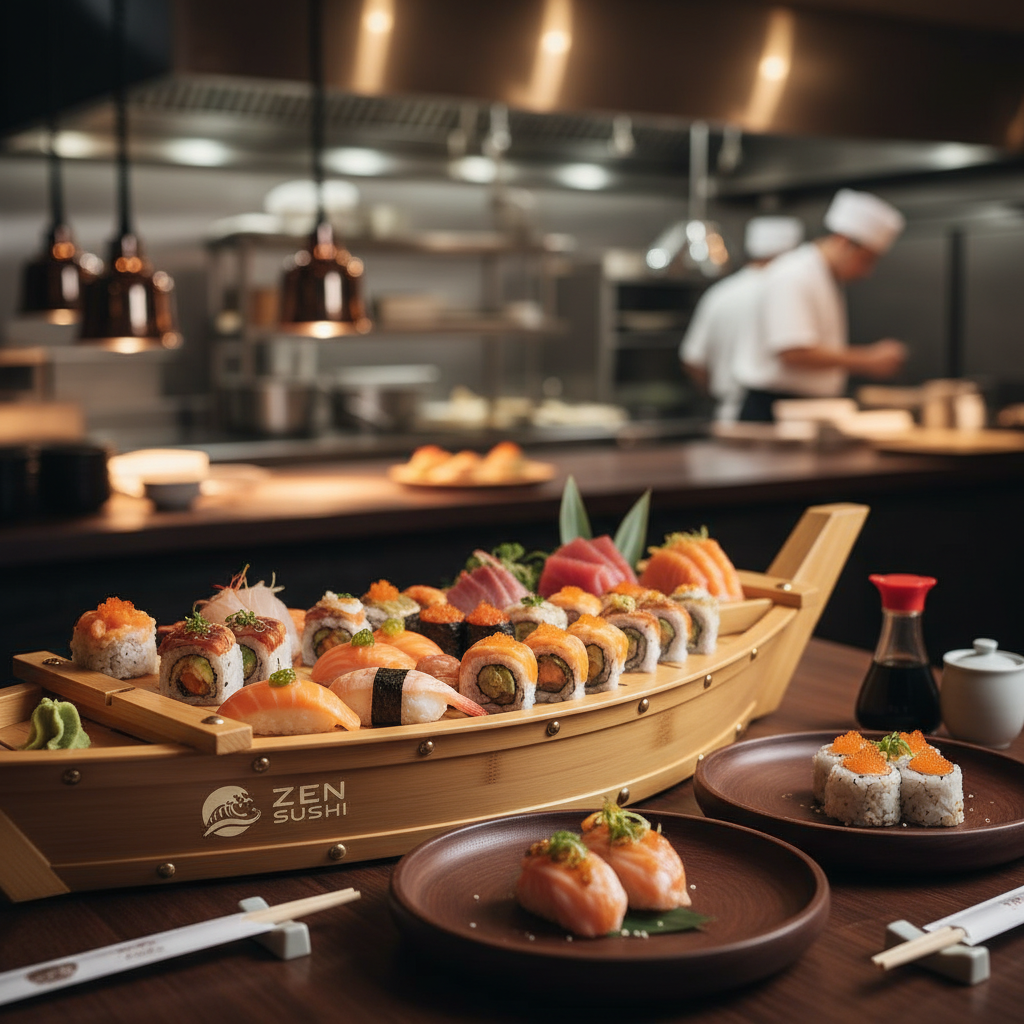
Poplar is softer and often used for chopsticks or lightweight containers (like wooden boats) rather than heavy-duty cutlery. Pine is rarely used for direct mouth-contact cutlery due to its strong scent and resin content, though it is sometimes utilized for outer packaging or display crates.
Customization and Printing Options
Branding is a primary driver for custom wholesale orders. Unlike plastic, which is easily printed with ink, wood and bamboo require specific techniques to ensure the branding is permanent, legible, and food-safe.
1. Hot Stamping (Branding)
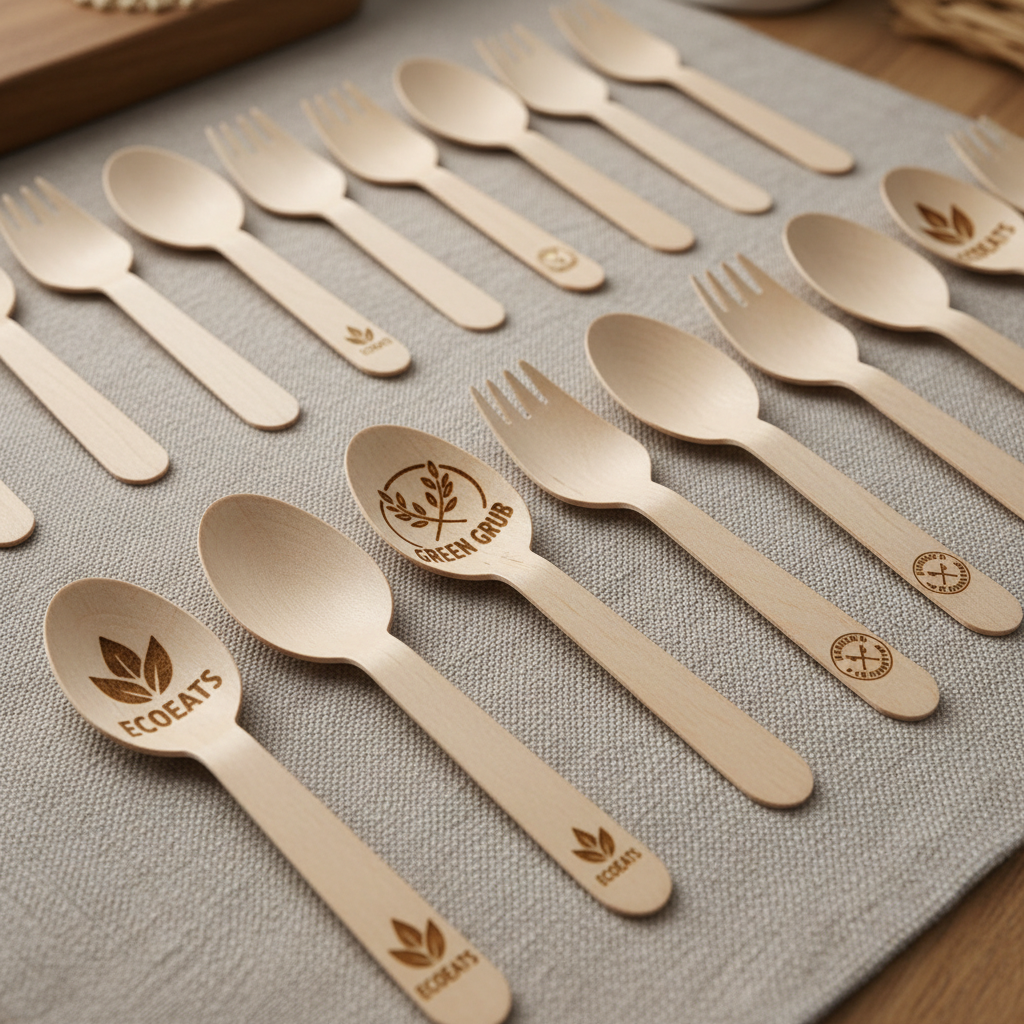
Hot stamping is the most prevalent method for branding wooden cutlery and stirrers. A heated metal die presses the logo into the wood, slightly scorching the surface to create a dark brown, debossed image.
- Pros: 100% food safe (no ink used), highly durable, eco-friendly aesthetic, no chemical migration risks.
- Cons: Limited to one color (dark brown/burnt wood tone), fine details can sometimes blur if the wood grain is coarse.
- Best For: Logos on spoon handles, fork shafts, and stirrers.
2. Laser Engraving
Laser engraving burns the design into the material using a high-precision laser beam. It offers similar visual results to hot stamping but with greater precision.
- Pros: No tooling cost (dies), capable of extremely fine detail, variable depth control.
- Cons: Slower production speed compared to stamping, making it more expensive for high-volume disposable items.
- Best For: Short runs, premium bamboo serving platters, or complex QR codes.
3. Ink Printing (Pad Printing)
Using food-safe inks to print color logos on wood is possible but comes with strict compliance requirements. The ink must not migrate into food, especially under heat.
- Pros: Allows for specific brand colors (Pantone matching).
- Cons: Higher regulatory scrutiny (FDA/EU compliance for food contact inks), potential for ink to wear off if not properly cured.
- Best For: Outer wrappers, handle ends of cutlery (non-food contact areas), and decorative flags.
4. Customized Wrappers and Packaging
For many buyers, the most cost-effective way to brand is through the packaging. Individual paper sleeves (cutlery kits) can be fully printed with multicolor artwork, nutritional info, and barcodes. This allows the wood product inside to remain standard while the packaging carries the marketing message.
Technical Specifications and Sizing
When requesting a quote for disposable tableware, precision in specifications prevents misunderstandings. Below are standard industry parameters.
Standard Cutlery Dimensions
- Length:
- Dessert/Ice Cream Spoons: 95mm – 110mm
- Standard Cutlery: 140mm – 160mm
- Heavy Duty/Dinner Cutlery: 165mm – 200mm
- Thickness: Standard birch cutlery is typically 1.6mm to 1.8mm thick. Premium “heavy weight” options may go up to 2.0mm or 2.2mm for added rigidity.
- Shape Profiles: Flat profile (pressed flat) vs. Thermo-formed (pressed with a curve for a deeper spoon bowl). Thermo-formed options are more expensive but offer a better eating experience for soups and liquids.
Plates and Boats
- Pine/Poplar Boats: Measured by length (e.g., 3-inch to 9-inch). Used for appetizers, sushi, or street food.
- Pressed Bamboo Plates: Available in round, square, or rectangular shapes. Thickness varies from 1mm to 3mm depending on the structural requirement.
Manufacturing Quality Control Checklist
Quality variance is a common challenge in importing natural fiber products. A reliable supplier must enforce strict QC protocols. When evaluating samples or inspecting shipments, look for:
1. Smoothness and Polishing (Tumbling)
Wooden cutlery is tumbled in large drums with food-grade wax or friction materials to remove rough edges. Insufficient tumbling results in burrs—small splinters attached to the edge of the fork tines or spoon bowl. This is a critical safety defect.
2. Moisture Content
Wood and bamboo are hygroscopic. If the moisture content is too high (typically above 10-12%) at the time of packing, mold can develop during ocean freight. Suppliers must use industrial drying chambers and include desiccants in master cartons.
3. Color Uniformity
While natural variation is expected, products should be graded. “Grade A” usually implies uniform whiteness (for birch) and minimal dark knots or mineral streaks. “Grade B” or “AB” may include more color variation and is often sold at a lower price point for budget markets.
4. Odor Neutrality
Open a sealed bag of samples and smell them immediately. A strong sour or chemical smell can indicate improper processing (e.g., using sulfur for bleaching excessively) or insufficient drying. High-quality birch should smell faintly woody or neutral.
Coatings and Grease Resistance
Standard wooden cutlery is uncoated. However, for specific applications, coatings may be necessary.
- Food-Grade Wax (Carnauba/Beeswax): Often applied during the tumbling process to give a smooth mouthfeel and slight moisture resistance.
- Plant-Based Lacquer: Used on premium bamboo tableware to make it reusable and washable. This creates a glossy finish and seals the grain completely.
- Bio-Coatings: For pressed wooden plates, a thin layer of PLA or similar bioplastic might be applied to prevent grease from soaking through the plate during a meal.
Ordering Guide: MOQs, Lead Times, and Logistics
Navigating the supply chain for custom products requires planning. Here is what to expect when you are ready to order.
Minimum Order Quantities (MOQ)
Customization drives MOQs. Setting up a production line for a custom shape or a hot-stamping machine for a specific logo incurs setup costs.
- Standard Unbranded Items: Low MOQs, often sold by the carton.
- Hot Stamped Logos: Typically 50,000 to 100,000 pieces per item.
- Custom Shapes/Molds: May require MOQs of 200,000+ pieces or a separate mold fee.
- Custom Printed Packaging (Inner Bags/Boxes): Printing plates for flexible packaging usually dictate an MOQ of roughly 20,000 bags or boxes.
Artwork and Prototyping
To ensure your brand looks sharp, provide vector artwork (AI, EPS, or PDF formats). Raster images (JPG, PNG) are often unsuitable for creating precise metal stamping dies. Always request a digital proof and, if possible, a physical pre-production sample to verify logo placement and clarity.
Lead Times
- Sampling: 7–14 days for custom branded samples.
- Mass Production: 25–40 days after deposit and artwork approval.
- Shipping: Ocean freight times vary globally (e.g., 30–45 days to North America or Europe).
For urgent requirements, discuss air freight options for a portion of the order, though this significantly increases costs.
Sustainability and Compliance
Buyers should verify that the wood sources are legal and sustainable. FSC (Forest Stewardship Council) certification is the gold standard, ensuring the timber comes from responsibly managed forests. Additionally, verify FDA or LFGB compliance for food contact safety, specifically regarding the absence of heavy metals and harmful chemicals (like PCP or formaldehyde).
Frequently Asked Questions (FAQ)
1. Can wooden cutlery be reused?
Standard birch cutlery is designed for single use. While it is durable enough to last through a meal, it absorbs moisture and bacteria over time if washed. Premium lacquered bamboo cutlery, however, is designed for multiple uses.
2. Is the hot stamping process safe for hot foods?
Yes. Hot stamping uses heat and pressure to change the color of the wood itself. No inks or dyes are added, making it completely safe for use with hot soups, coffees, and meals.
3. How do I prevent mold during storage?
Store bamboo and wood products in a cool, dry place. Keep cartons off concrete floors (use pallets) and away from direct moisture. Ensure the warehouse humidity is controlled, as these are natural materials that can absorb ambient moisture.
4. What is the difference between “OPP bag” and “Paper bag” for individual wrapping?
OPP (Oriented Polypropylene) is a clear plastic film, offering visibility of the product. Paper packaging is more eco-friendly and aligns better with the sustainability story of wooden cutlery, but it is opaque. Both can be printed.
5. Why is there a color variation in my wooden cutlery?
Wood is a natural material. Variations in grain pattern and color (from white to pale yellow) are normal and indicate the absence of harsh chemical bleaches. Extreme discoloration (grey or black spots), however, is a defect.
6. Can you match my specific Pantone color for the logo on the spoon handle?
If using hot stamping, no—the color is determined by the burnt wood effect (dark brown). If using ink printing, yes, Pantone matching is possible, but food safety regulations regarding ink must be strictly followed.
Ready to Source Custom Tableware?
Switching to bamboo and wood tableware enhances your brand’s sustainability profile while offering customers a premium dining experience. Whether you need standard bulk birch cutlery or custom-branded bamboo sets, YBJ Packing provides tailored solutions to meet your specifications.
If you are unsure about the right material or printing method for your project, our team can guide you through the selection process. Please visit our how to order page for more details on our workflow.
Contact us today to request a quote or a sample kit tailored to your needs.