

Introduction: The Strategic Value of Custom Food Packaging
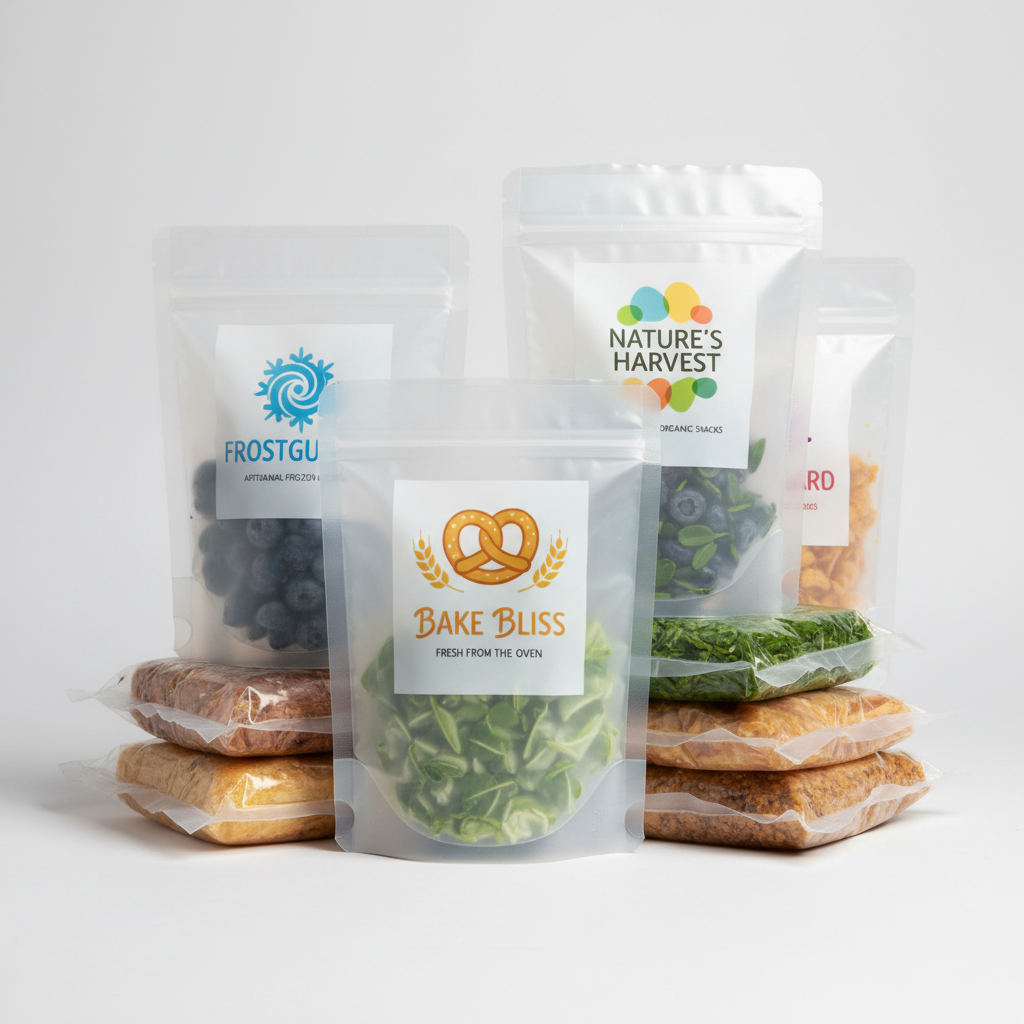
In the competitive food service and retail sectors, packaging is rarely just a vessel; it is a primary touchpoint for brand communication and product integrity. For procurement officers, restaurant chains, and food distributors, sourcing custom plastic food bag wholesale solutions requires balancing aesthetic appeal with rigorous technical specifications. Whether you are packaging hot bakery items, frozen goods, or fresh produce, the right plastic bag ensures food safety, extends shelf life, and serves as a mobile billboard for your brand.
Choosing the correct partner for your plastic food bag needs involves understanding material properties, printing technologies, and supply chain logistics. This comprehensive guide explores the technical landscape of bulk plastic food packaging, helping buyers navigate the complexities of customization, from polymer selection to final delivery.
1. Material Science: Selecting the Right Polymer for Food Applications
Not all plastic bags are created equal. The performance of a food bag depends entirely on the resin used during extrusion. When ordering food packaging bags in bulk, understanding the distinct properties of polyethylene (PE) and polypropylene (PP) variants is essential for ensuring the packaging matches the product’s requirements.
High-Density Polyethylene (HDPE)
HDPE is characterized by its high strength-to-density ratio. It is stiff, has a matte finish, and produces a crinkling sound when handled.
- Best for: Grocery bags, deli sheets, and lightweight produce bags.
- Pros: Excellent tensile strength, moisture resistance, and cost-effectiveness for high-volume usage.
- Cons: Lower clarity (hazy appearance) and less puncture resistance compared to LDPE.
Low-Density Polyethylene (LDPE)
LDPE is softer, more flexible, and possesses high clarity. It is the standard for applications where visual appeal and a soft touch are desired.
- Best for: Bread bags, frozen food bags, and general-purpose food storage.
- Pros: High gloss, excellent clarity, superior puncture resistance (stretches before breaking), and good heat-sealing properties.
- Cons: Lower tensile strength than HDPE; requires thicker gauges for heavy loads.
Polypropylene (PP) and BOPP
Polypropylene offers exceptional clarity, often described as “crystal clear.” Biaxially Oriented Polypropylene (BOPP) is stretched in two directions to increase strength and clarity further.
- Best for: Confectionery, cookies, snacks, and retail display bags where the product must be visible.
- Pros: High stiffness, excellent moisture barrier, and resists grease/oils better than PE.
- Cons: More brittle; seal strength can be lower than PE unless co-extruded.
Multi-Layer Laminates
For extended shelf life, manufacturers often laminate different films together (e.g., PET/PE or NY/PE). These structures provide specific barrier properties against oxygen, light, and moisture, crucial for sensitive products like coffee, dried fruits, or pet food.
2. Technical Specifications: Thickness, Sizing, and Tolerances
Defining the correct specifications prevents product failure (splitting bags) and unnecessary costs (over-engineering). When requesting a quote for custom plastic food bag wholesale orders, precision is key.
Understanding Thickness (Gauge/Mil/Micron)
Plastic thickness is measured in mils (thousandths of an inch) or microns.
- Light Duty (0.5 – 1.0 mil / 12 – 25 microns): Suitable for lightweight produce or bakery items (e.g., a single donut or bagel).
- Medium Duty (1.25 – 2.0 mil / 30 – 50 microns): Standard for frozen foods, bread loaves, and bulk grains (1-2 kg).
- Heavy Duty (2.5 – 4.0 mil / 60 – 100+ microns): Required for ice bags, heavy produce (potatoes/apples), or industrial food ingredients.
Sizing and Capacity
Bag dimensions are typically quoted as Width x Length (for flat bags) or Width x Depth (Gusset) x Length.
- Flat Bags: Measured simply by the opening width and total length.
- Gusseted Bags: Side or bottom gussets expand to accommodate bulky items. It is vital to specify if the gusset dimension is the “open” width or the “folded” depth.
- Dimensional Tolerances: In mass manufacturing, slight variations occur. Standard industry tolerances are typically ±3-5% for dimensions and ±10% for thickness. Buyers should confirm acceptable quality limits (AQL) with the manufacturer.
3. Printing Technologies for Branding Impact
The primary advantage of custom wholesale orders is the ability to print high-quality branding directly on the packaging. The choice of printing method depends on the design complexity and order volume.
Flexographic Printing (Flexo)
Flexography is the most common method for printing on plastic films. It uses flexible relief plates (made of rubber or photopolymer) to transfer ink.
- Suitability: Ideal for logos, text, and simple to medium-complexity graphics (up to 8-10 colors).
- Cost: Plate costs are moderate. Unit cost is very low for high volumes.
- Inks: Can use water-based or solvent-based food-safe inks.
Rotogravure Printing
Gravure uses engraved metal cylinders to transfer ink. It offers superior image quality and consistency.
- Suitability: Photo-realistic images, complex gradients, and extremely high-volume runs.
- Cost: Cylinder setup costs are high, making this viable only for large wholesale orders (typically 50,000+ units depending on size).
- Quality: Unmatched color density and precision.
Food Safety in Printing
Regardless of the method, inks must be food-grade if they come into direct contact with food, or the printing must be “reverse printed” (trapped between layers of laminate) so the ink never touches the product. Always verify that your supplier uses inks compliant with relevant food safety regulations.
4. Custom Features and Add-ons
Beyond the material and print, the functionality of the bag adds value to the end-user. Customization options include:
- Ventilation Holes: Essential for fresh produce to allow respiration and prevent condensation/mold. Micro-perforations or macro-punches can be specified.
- Handles:
- Die-Cut Handles: Sleek, integrated into the bag (common in retail).
- Patch Handles: Reinforced area around the handle for heavier loads.
- Soft Loop Handles: Premium feel, attached separately.
- Closures:
- Press-to-Close Zippers: Reusable convenience for consumers.
- Slider Zippers: Premium ease of use.
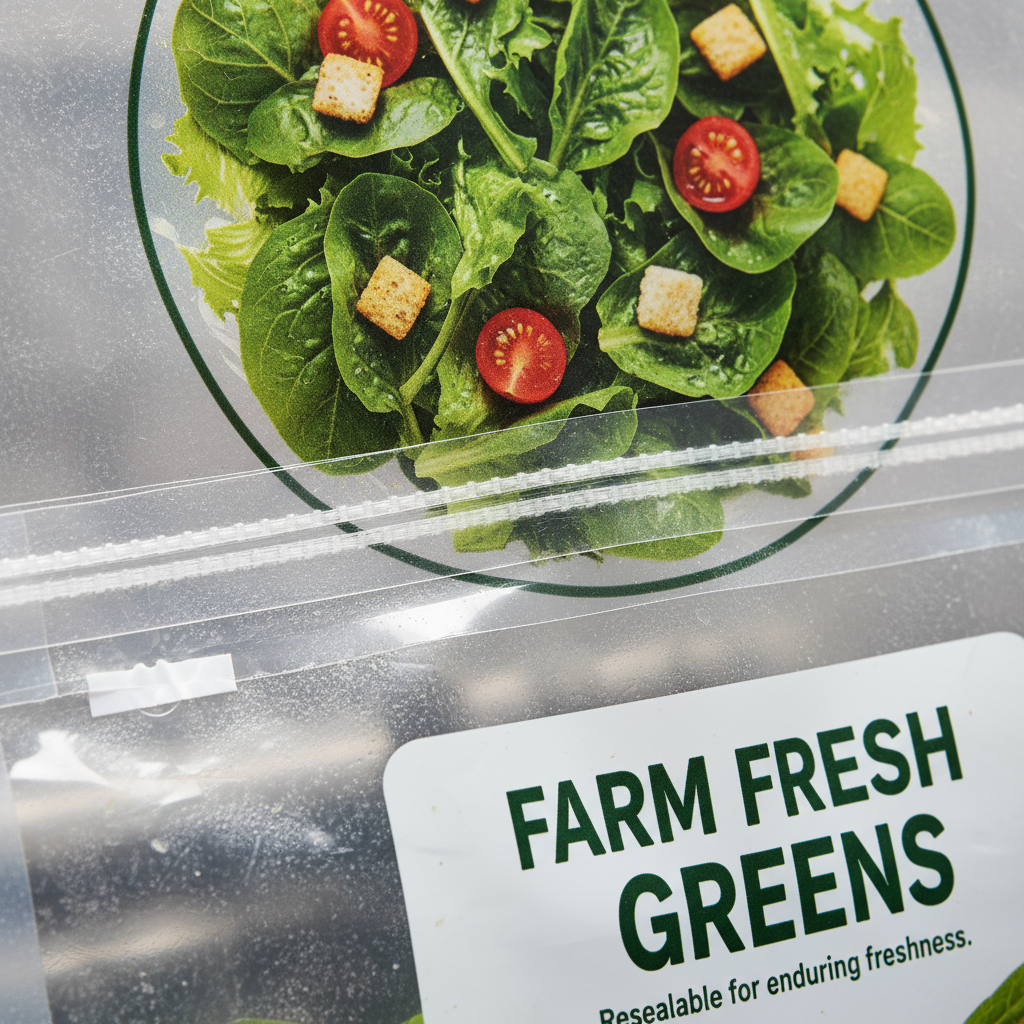
- Adhesive Strips: Permanent (tamper-evident) or resealable tape.
- Wicketed Bags: Bags stacked on a wire bracket (wicket) for high-speed automated filling lines, commonly used in bakeries and meat processing plants.
5. Wholesale Ordering Guide: From Quote to Delivery
Navigating the procurement process efficiently requires preparation. Here is a step-by-step guide to ordering custom plastic food bags.
Step 1: Determine Minimum Order Quantity (MOQ)
Custom manufacturing involves setup time and material waste during calibration. Consequently, MOQs are strict.
- Plain Bags: Lower MOQs, sometimes available from stock.
- Custom Printed: MOQs are often determined by the weight of the raw material (e.g., 200kg of film) rather than just unit count. This might translate to 5,000 large bags or 50,000 small bags.
Step 2: Artwork Preparation
To avoid delays, supply artwork in vector formats (AI, EPS, PDF).
- Colors: Specify Pantone (PMS) codes for exact color matching. CMYK is used for photo images.
- Bleed & Trap: Professional pre-press teams will adjust your art to account for plate movement (trapping) and edge printing (bleed).
Step 3: Sampling
Before full production, request a digital proof. For large orders, a physical pre-production sample may be possible, though it often incurs a setup fee. Standard stock samples can be requested to verify material feel and quality.
Step 4: Lead Times and Logistics
Custom production typically takes 2–4 weeks after artwork approval, plus shipping time. Ocean freight is cost-effective for bulk international orders but requires planning 4–6 weeks in advance. Air freight is faster but significantly more expensive.
For detailed steps on initiating your order, visit our How to Order page.
6. Quality Assurance and Compliance
In the food industry, packaging failure is not an option. Reputable manufacturers employ strict Quality Assurance (QA) protocols:
- Raw Material Traceability: Ensuring resins are virgin grade and food contact approved.
- Seal Strength Testing: Verifying that heat seals do not burst under pressure.
- Drop Testing: Ensuring filled bags survive standard logistics handling.
- Visual Inspection: Checking for print registration errors, color deviation, or artifacts.
Always ask your supplier about their internal testing standards to ensure consistency across batches.
7. Sustainability in Plastic Packaging
Modern buyers are increasingly conscious of environmental impact. Discuss these options with your supplier:
- Recyclable Mono-materials: Using pure PE or PP structures that are easier to recycle than multi-layer laminates.
- Post-Consumer Recycled (PCR) Content: Incorporating recycled plastic into non-food-contact layers (or FDA-approved PCR for food contact).
- Downgauging: Using stronger, advanced resins to reduce film thickness (and plastic usage) without compromising strength.
8. Common Use Cases & Recommendations
| Industry Segment | Recommended Material | Key Features Needed |
|---|---|---|
| Bakery (Fresh Bread) | LDPE or CPP | High clarity, wicketed for auto-packing, micro-perforations for crusty breads. |
| Frozen Foods | LDPE / PE-PE Laminate | Cold-crack resistance, high puncture resistance, strong seals. |
| Hot Deli / Rotisserie | CPP or Laminated PP | Anti-fog properties, heat resistance, grease resistance, handle for carry-out. |
| Produce | HDPE or LDPE | Venting (holes), tensile strength for weight, cost-efficiency. |
| Snacks / Confectionery | BOPP / Metalized Film | Moisture barrier, odor barrier, high-gloss print for shelf appeal. |
Frequently Asked Questions (FAQ)
1. What is the difference between spot color and process color printing?
Spot color uses specific premixed inks (Pantone) for vibrant, consistent solid colors (e.g., a brand logo). Process color (CMYK) layers four ink colors to create photographic images. Spot colors are generally cheaper and crisper for text/logos.
2. Can I order biodegradable plastic food bags?
Yes, options exist, such as compostable films (PLA/PBAT) or oxo-biodegradable additives. However, these materials have different shelf-life and storage requirements. It is best to consult with us to see if they fit your supply chain.
3. How do I measure a gusseted bag correctly?
For a side gusset bag, measure Face Width x Gusset Depth (fully expanded) x Length. For a bottom gusset, measure Width x Length + Bottom Gusset Depth. Always clarify if you are measuring the gusset “in” (folded) or “out” (open).
4. Are your inks safe for direct food contact?
We use food-grade inks suitable for food packaging. For surface printing, the ink is formulated to be safe. For laminated bags, the ink is trapped between layers, ensuring zero contact with the food.
5. What is the typical lead time for a custom printed order?
After artwork approval, production typically takes 15–25 days depending on quantity and complexity. Shipping time depends on the destination and method (sea vs. air).
6. Why is the Minimum Order Quantity (MOQ) higher for printed bags?
Printing requires creating custom plates/cylinders and setting up the press. This setup consumes time and material. To make the unit cost economical for you, a minimum volume of run-time is required.
7. Can you help with the artwork design?
While we recommend you provide finished vector files, our pre-press team can assist with layout adjustments, trap/bleed settings, and ensuring your design fits the bag template correctly.
8. What information do I need to get a quote?
To provide an accurate quote, we need: Bag type (flat, stand-up, etc.), Material preference, Dimensions (W x L x Gusset), Thickness, Number of print colors (and sides), and estimated Quantity.
Conclusion: Partnering for Packaging Success
Sourcing custom plastic food bag wholesale is a strategic decision that impacts your operational efficiency and brand perception. By understanding the nuances of material selection, printing capabilities, and ordering logistics, you can secure packaging that protects your product and promotes your business.
At YBJ Packing, we specialize in high-quality, custom-manufactured food packaging solutions tailored to international standards. Whether you need high-clarity bread bags or heavy-duty frozen food packaging, our team is ready to guide you through the process.
Ready to upgrade your food packaging?
Request a Quote / Get a Sample