

Introduction: Why the Right Container Matters for Your Brand
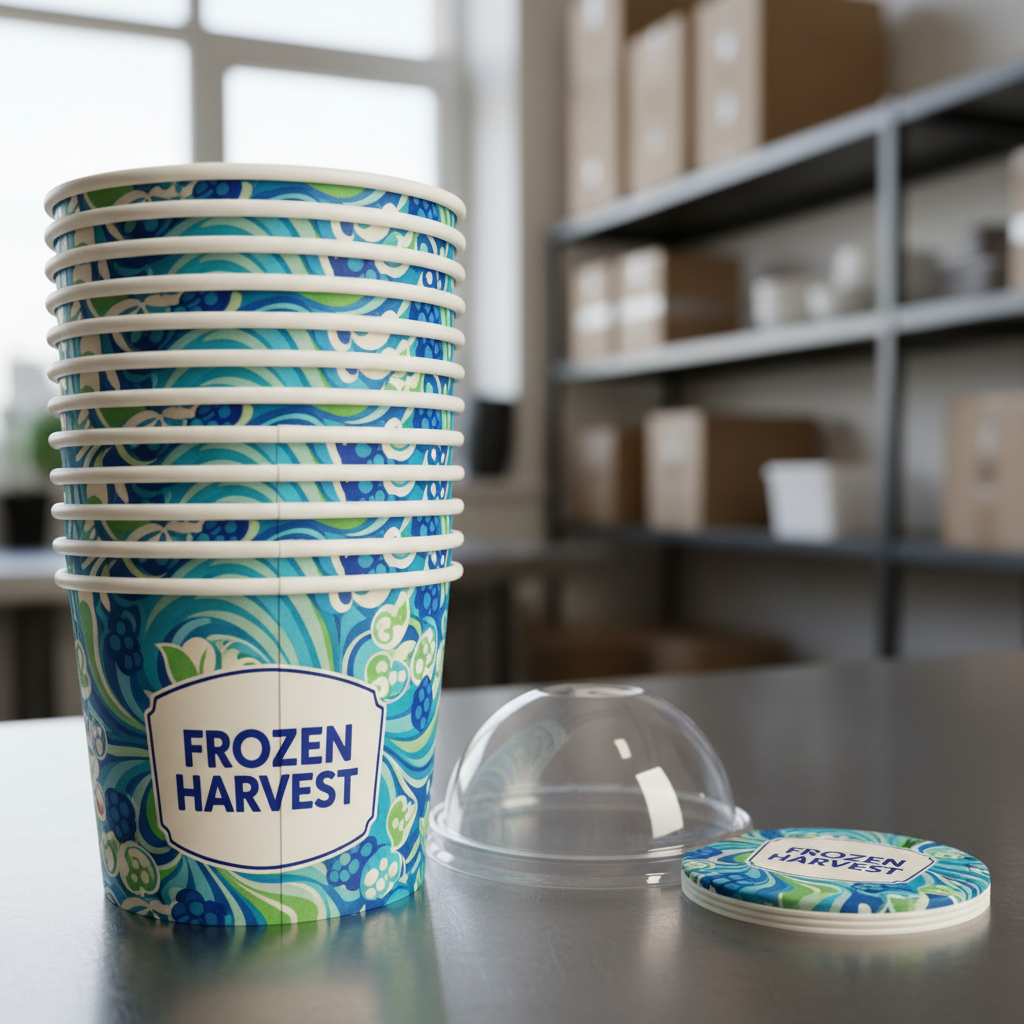
In the competitive landscape of food service and retail, packaging is more than just a vessel; it is the first physical touchpoint between your brand and your customer. For businesses selling frozen yogurt, parfaits, ice cream, or dairy products, the quality of the container dictates the customer experience. A soggy cup or a leaking lid can tarnish a brand’s reputation instantly, while a sturdy, vibrant, custom-printed container reinforces quality and trust.
This comprehensive buyer’s guide is designed for procurement officers, restaurant chain owners, and distributors looking to source high-quality yogurt containers. We will delve into the technical specifications of materials, the nuances of barrier coatings, sizing standards, and the critical factors that influence manufacturing and supply chain decisions.
1. Understanding Material Options: Paper vs. Plastic
When selecting containers for yogurt or frozen treats, the primary decision lies between paperboard and plastic. Each material offers distinct advantages depending on the product temperature, storage duration, and desired aesthetic.
Paperboard Containers
Paper cups are the industry standard for frozen yogurt shops and many takeaway food services. They offer excellent printability and a tactile feel that consumers associate with premium quality.
- Base Material: High-quality food-grade paperboard is used, typically measured in GSM (Grams per Square Meter). For yogurt containers, a higher GSM is preferred to ensure the cup does not collapse under the weight of the product or the pressure of a spoon.
- Insulation: Paper naturally offers some insulation, keeping the product cold and the customer’s hands comfortable.
- Sustainability: Many buyers prefer paper for its renewable origins, especially when paired with eco-friendly coatings.
Plastic Containers (PP and PET)
Plastic is often chosen for pre-packaged retail yogurt found in supermarket fridges due to its durability and moisture resistance.
- Polypropylene (PP): Known for being microwave-safe and heat-resistant, though for yogurt, its primary benefit is its flexibility and resistance to cracking.
- Polyethylene Terephthalate (PET): Highly transparent, making it ideal for parfaits where seeing the layers of fruit and granola is part of the appeal.
For the purpose of this guide, we will focus heavily on paper-based solutions, as they allow for the most versatility in branding and are increasingly the preferred choice for eco-conscious food service brands.
2. The Science of Coatings: PE, PLA, and Aqueous
Paper is naturally porous. To hold liquid or semi-liquid products like yogurt without disintegrating, it requires a barrier coating. Choosing the right coating is critical for performance.
Single Polyethylene (PE) Coating
A single layer of PE is applied to the interior of the cup. This is the standard for hot cups but can be used for short-term cold use. However, for frozen yogurt, condensation can form on the outside, weakening the paper if it isn’t protected.
Double Polyethylene (PE) Coating
For frozen yogurt and ice cream, Double PE is the industry recommendation.
- Interior Layer: Prevents the liquid from soaking into the paper.
- Exterior Layer: Protects the outside of the cup from condensation (sweating) caused by the temperature difference. This ensures the cup remains rigid and the printed artwork remains pristine, even after sitting out for 20 minutes.
PLA (Polylactic Acid) Coating
For brands prioritizing sustainability, PLA is a bioplastic derived from renewable resources like cornstarch. It functions similarly to PE but is industrially compostable. It is an excellent choice for businesses targeting eco-conscious demographics, though it requires specific storage conditions to prevent warping in high heat during transport.
Water-Based (Aqueous) Coatings
The newest innovation in the market is aqueous coating. This water-based solution is fully recyclable in standard paper streams, eliminating the need to separate a plastic liner. While slightly more expensive, it offers the highest level of eco-compliance.
3. Sizing and Capacity Guide
Selecting the right size mix is crucial for maximizing revenue and minimizing waste. In the frozen yogurt industry, pricing is often weight-based, meaning the cup size psychologically influences how much a customer dispenses.
Standard Market Sizes
Most manufacturers offer a range from 3oz to 32oz. Here is a typical breakdown of use cases:
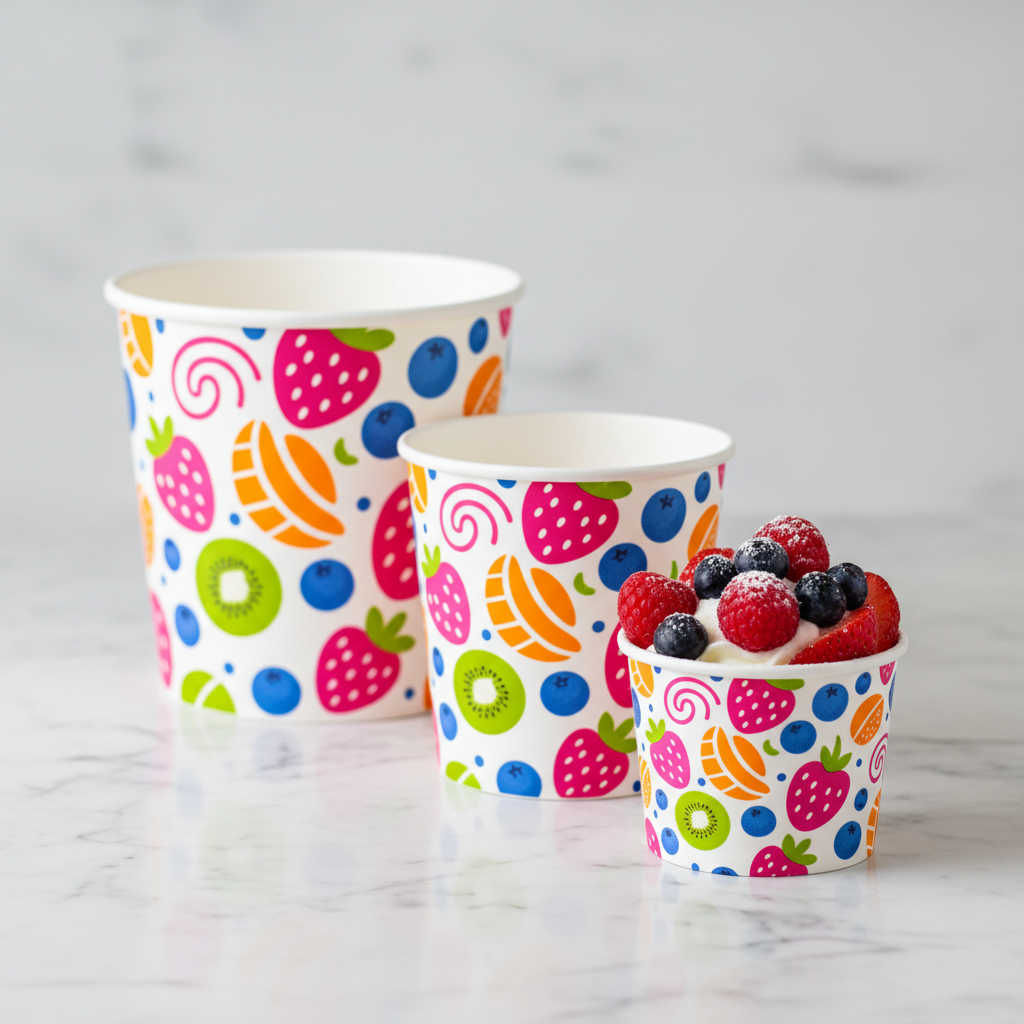
- 3oz – 5oz: Samples, child sizes, or small tasting portions.
- 8oz – 12oz: The “Standard” serving. This is the volume mover for most froyo shops. It accommodates a healthy portion of yogurt plus toppings.
- 16oz – 20oz: Large sizes, often used for “to-go” orders or shared portions.
- 24oz – 32oz: Bulk take-home containers. These require robust construction and tight-fitting lids to prevent freezer burn.
The “Flush Fill” vs. “Practical Fill”
When reviewing specifications, buyers should distinguish between flush fill (brim-full capacity) and practical fill. A 16oz cup filled to the brim might spill when a lid is applied. Always test samples with your specific product density to ensure the capacity aligns with your serving sizes.
4. Customization and Printing Technologies
Custom printing is the primary driver for ordering wholesale. Your cup is a walking billboard. Achieving high-definition graphics requires understanding the printing processes available.
Offset Printing
Offset printing is widely used for high-volume paper cup manufacturing. It offers high print quality and accurate color reproduction. It is cost-effective for large runs but may have higher setup costs.
Flexographic Printing
Flexo is ideal for simple designs and large quantities. It uses flexible relief plates and fast-drying inks. While traditionally lower resolution than offset, modern flexo technology produces excellent results for logos and pattern work.
Finish Options: Matte vs. Gloss
- Gloss: Makes colors pop and appear vibrant. It resists stains and moisture well.
- Matte: Provides a sophisticated, organic, and premium feel. It is trendy among artisanal and organic brands but can show grease spots if not properly coated.
When preparing your artwork, ensure you have vector files (AI or PDF) and specific Pantone (PMS) color codes to ensure brand consistency across batches.
5. Lids and Accessories Compatibility
A yogurt container is useless for takeout without a secure lid. Lid compatibility is determined by the rim diameter of the cup. Common diameters include 75mm, 90mm, 95mm, and 115mm.
Dome Lids
Essential for products with toppings. The dome shape provides clearance for fruit, granola, or whipped cream that sits above the rim of the cup. These are typically made from clear PET plastic for visibility.
Flat Lids
Used for transport, storage, or simple servings. Flat lids are stackable, making them ideal for delivery orders.
Paper Lids
For a 100% plastic-free solution, paper lids are available. These are often used for soups or hot foods but are gaining traction in the ice cream sector for pre-packed retail units.
Always verify that the lid fits the specific “rolled rim” of your chosen container. A mismatch of even 1mm can cause leaks. We recommend sourcing cups and lids from the same supplier to guarantee a snap-fit seal.
6. Manufacturing Quality and Testing
Not all paper cups are created equal. In a B2B environment, consistency is key. Defective cups jam dispensing machines and frustrate customers.
Key Quality Metrics
- Rim Rolling: The rim must be tightly rolled and perfectly round to ensure lid retention.
- Side Seam Bonding: The vertical seam of the cup is heat-sealed. Poor bonding here leads to leaks.
- Bottom Sealing: The bottom disc must be securely bonded to the sidewall. Manufacturers use destructive testing (cutting cups open) to verify bond strength.
- Leak Testing: Random samples should be subjected to liquid tests over set timeframes (e.g., 24 hours) to ensure no seepage occurs.
7. Use Cases Beyond Yogurt
While termed “yogurt containers,” these versatile packages serve a broad spectrum of the food industry. Viewing our wider food container category reveals their flexibility.
Hot Soups and Stews
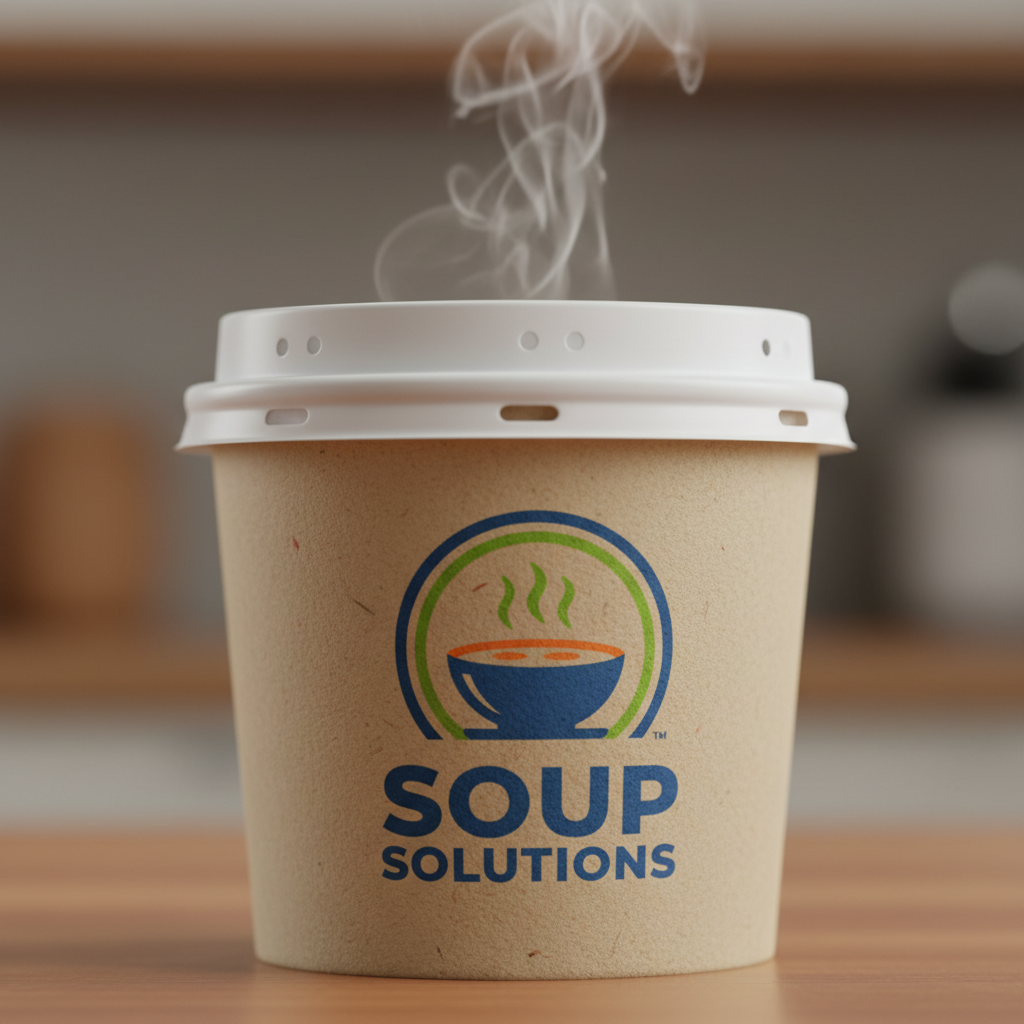
With the correct heavy-duty paper and venting lids, these containers are excellent for hot savory foods. The double PE coating that keeps cold condensation out also keeps heat in.
Deli Salads
Potato salads, coleslaws, and pasta salads are frequently packaged in printed paper bowls for a more eco-friendly look compared to clear plastic deli tubs.
Confectionery
Bakeries use them for cookie buckets, mini-donut holders, or popcorn containers. The grease-resistant coating prevents butter or oil from staining the exterior.
8. Buying Guide: Logistics and Ordering
Navigating the procurement process involves balancing cost, volume, and timeline. Here is a checklist for international buyers.
Minimum Order Quantity (MOQ)
Custom printing typically requires a higher MOQ than plain stock.
- Stock/Plain: Lower MOQs, faster shipping. Good for testing sizes.
- Custom Printed: MOQs usually start at 10,000 to 30,000 units depending on the size and number of ink colors. Higher volumes significantly reduce the unit cost.
Lead Times
Production for custom orders generally takes 2–4 weeks after artwork approval. Shipping times vary by method (air freight for samples, sea freight for bulk). Plan your inventory at least 3 months in advance to avoid stockouts.
Storage and Warehousing
Paper cups are bulky. Calculate your warehouse space based on case dimensions. Ensure cases are stored off the ground and away from high humidity to prevent the paper from absorbing moisture and warping before use.
How to Get Started
If you are ready to explore options, visit our How to Order page to understand the workflow from design submission to final delivery.
9. Sustainability and Compliance
Global regulations regarding single-use plastics are tightening. B2B buyers must be aware of the compliance landscape in their target market (e.g., EU Single-Use Plastics Directive).
Opting for FSC-certified paperboard or compostable PLA linings can help your brand meet these regulatory requirements and appeal to modern consumers. Always ask your supplier for material data sheets if compliance is a concern for your region.
FAQ: Common Questions from Buyers
1. Can I use hot food in frozen yogurt containers?
Generally, yes, if the container is high-quality paperboard. However, you must ensure the coating is suitable for heat. Double PE coating works for both hot and cold, but specialized “soup cups” often use a thicker board to prevent the cup from becoming too hot to hold.
2. What is the difference between CMYK and Pantone printing?
CMYK builds colors using Cyan, Magenta, Yellow, and Key (Black) dots, great for photos. Pantone (PMS) uses pre-mixed inks for exact color matching. For brand logos, Pantone is preferred to ensure your “brand red” is exactly the same on every cup.
3. Do you provide templates for artwork design?
Yes, reputable manufacturers provide die-line templates for every cup size. Your designer should curve the artwork according to the template to account for the conical shape of the cup.
4. How do I prevent freezer burn for take-home packs?
Use a Double PE coated cup to prevent moisture loss and ensure you use a tight-fitting, compatible lid. For long-term retail freezer storage, specific paper grades designed for deep freeze are recommended.
5. What is the lead time for a custom sample?
Digital proofing is usually fast (1-2 days). Physical pre-production samples with your print can take 7-10 days depending on the factory schedule.
6. Are the lids recyclable?
PET dome lids are widely recyclable. PP lids are also recyclable in many communities. Paper lids offer the highest recyclability but verify local recycling capabilities.
Conclusion
Sourcing the right yogurt containers involves balancing material performance, branding impact, and supply chain logistics. Whether you are launching a new frozen yogurt franchise or upgrading the packaging for a retail dairy line, understanding the details of GSM, coatings, and print finishes ensures you make an informed investment.
At YBJ Packing, we specialize in high-quality, custom-printed food packaging solutions tailored to your operational needs. Don’t compromise on the container that carries your brand.
Ready to elevate your brand? Request a quote or get a sample today. Our team is ready to guide you through material selection and design to create the perfect packaging for your product.