

Introduction: The Critical Role of Security in Food Logistics
In the rapidly evolving landscape of food service, the journey from the kitchen to the customer’s doorstep involves more variables than ever before. For restaurants, ghost kitchens, and distributors, maintaining the integrity of food during transit is not just a matter of quality—it is a matter of brand reputation and safety. The adoption of tamper-evident delivery bags has shifted from an optional upgrade to an operational necessity.
When a customer receives an order, the seal on the bag serves as a guarantee that the food has not been touched, sampled, or contaminated after leaving the restaurant. For B2B buyers—including procurement managers for restaurant chains and packaging distributors—selecting the right tamper-evident packaging requires a deep understanding of materials, adhesive technologies, and customization options. This guide provides a comprehensive technical overview to help you make informed purchasing decisions for your bulk packaging needs.
Why Tamper-Evident Packaging is Non-Negotiable
The rise of third-party delivery platforms has introduced a layer of opacity between the restaurant and the diner. Without direct control over the courier, restaurants bear the liability if an order arrives compromised. Tamper-evident packaging mitigates this risk by providing a clear visual indicator of security.
Liability and Chain of Custody
From a procurement perspective, investing in secure packaging is an investment in risk management. A broken seal immediately alerts the customer to a potential issue before they consume the product, allowing them to report it immediately. This clear chain of custody protects the restaurant from false claims regarding food quality or missing items, as the seal verifies that the order was complete when it left the premises.
Consumer Trust and Brand Integrity
In a competitive market, trust is a currency. A secure, branded delivery bag signals professionalism. It tells the customer that the establishment cares about hygiene and safety standards. For franchise operations, standardizing this level of security across all outlets is crucial for maintaining brand consistency.
Anatomy of a High-Quality Tamper-Evident Bag
Not all security bags are created equal. A high-performance delivery bag combines structural integrity with a foolproof sealing mechanism. Understanding the technical anatomy helps in specifying the right product for your supply chain.
The Adhesive Strip Mechanism
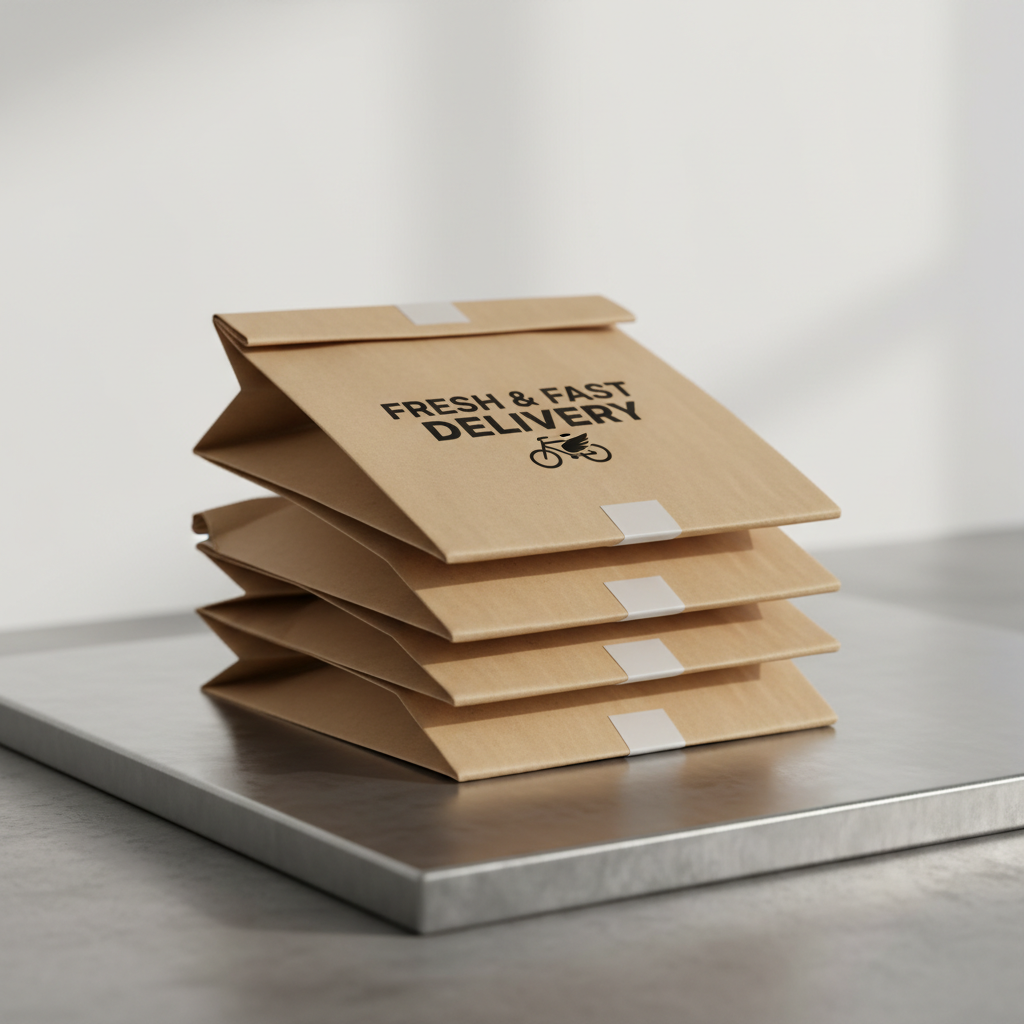
The core feature of these bags is the adhesive closure. B2B buyers should look for high-tack, permanent adhesives that bond aggressively to the bag’s surface. Unlike resealable tape used in apparel packaging, the adhesive on a delivery bag must be destructive. Once the liner is removed and the strip is pressed down, any attempt to peel it open should tear the paper fibers or distort the plastic, leaving obvious evidence of entry.
Perforations and Destructive Seals
Many premium paper delivery bags feature a specifically engineered perforation line across the seal area. This ensures that the bag cannot be opened without ripping the paper along the designated line. This mechanical failure point is intentional; it makes “silent” tampering impossible. When evaluating samples, test the perforation strength—it should be weak enough to tear easily when the customer wants to open it, but strong enough to withstand the rigors of handling during transit.
Venting vs. Heat Retention
A common challenge in takeaway packaging is moisture management. A completely sealed bag can trap steam, causing crispy foods (like fries or fried chicken) to become soggy. High-quality tamper-evident bags often incorporate discreet venting holes or die-cut handles that allow steam to escape while still maintaining the security of the main opening. Balancing heat retention with moisture release is a key specification to discuss with your manufacturer.
Material Options: Balancing Durability and Sustainability
The choice of material dictates the bag’s strength, cost, and environmental footprint. Most B2B buyers today lean towards paper-based solutions to align with sustainability goals, but the specific grade of paper matters.
Kraft Paper (Virgin vs. Recycled)
Virgin Kraft Paper: Known for its long fibers and superior tensile strength. It is ideal for heavy orders and provides a smooth surface for high-quality printing. It is naturally food-grade and offers excellent tear resistance.
Recycled Kraft Paper: A more sustainable option that appeals to eco-conscious brands. While slightly less durable than virgin paper, modern manufacturing techniques have improved its strength significantly. It is often used for lighter to medium-weight deliveries.
Grease-Resistant Coatings
For food service, paper alone is often insufficient against oil and grease. Buyers must specify the barrier properties required:
- PE (Polyethylene) Lining: A thin plastic layer laminated to the paper. It offers excellent grease and moisture resistance but can complicate recycling in some regions.
- Aqueous Coating: A water-based coating that provides moderate grease resistance. It is generally easier to recycle and compost, making it a preferred choice for green brands.
- Kit Levels: In technical specifications, grease resistance is often measured by “Kit levels” (1 to 12). A higher Kit level indicates better resistance to aggressive oils. Standard fast food applications typically require Kit 7 or higher.
Paper Weight (GSM)
The Grams per Square Meter (GSM) determines the thickness and sturdiness of the bag.
- 70–90 GSM: Suitable for light items like bakery goods or single sandwiches.
- 100–120 GSM: The standard for most meal delivery bags. It holds shape well and supports standard combo meals.
- 130+ GSM: Heavy-duty grade for large catering orders or heavy containers (e.g., soups, multiple beverage cups).
Sizing and Capacity: Matching Bags to Menu Items
Selecting the wrong size leads to two problems: crushed food (bag too small) or item shifting/spillage (bag too large). Wholesalers should stock a range of sizes to accommodate different order types.
Standard Dimensions and Use Cases
- Small (e.g., 280 x 280 x 150 mm): Ideal for single entrees, burger combos, or breakfast items.
- Medium (e.g., 300 x 300 x 180 mm): The workhorse size. Fits two standard takeaway containers stacked, plus sides.
- Large/Jumbo (e.g., 350 x 450 x 250 mm): Designed for family meals or catering trays. These often require reinforced handles and heavier paper stock (120 GSM+).
Gusset Width and Flat-Bottom Stability
The bottom gusset width is critical. A wide, rectangular bottom (SOS bag style) allows food containers to sit flat, preventing tipping and leaks. When ordering custom bags, ensure the gusset dimensions match the standard footprint of your takeaway containers.
Customization and Printing: Maximizing Brand Visibility
A delivery bag is a mobile billboard. Custom printing transforms a generic utility item into a marketing tool. For B2B buyers, understanding print processes helps in preparing artwork and managing costs.
Printing Technologies
Flexographic Printing: The industry standard for high-volume packaging. It uses flexible relief plates and fast-drying inks. It is cost-effective for large runs (10,000+ units) and supports up to 6-8 colors. It is ideal for bold logos and repeating patterns.
Offset Printing: Offers higher image quality and sharper detail, suitable for photographic designs or complex gradients. However, it typically comes with higher setup costs and MOQs.
Designing for the Fold
When designing artwork for tamper-evident bags, consider the “filled” state of the bag. Avoid placing critical text or logos in the gusset folds or the bottom inch of the bag where it might be obscured. The seal area itself is prime real estate—printing a message like “Sealed for Your Safety” directly on the adhesive flap reinforces the security value to the customer.
Ink Safety
Ensure that your supplier uses food-safe, low-migration inks, especially if the bag will have direct contact with food. Water-based (soy or vegetable) inks are the standard for sustainable food packaging.
Manufacturing and Quality Assurance
Reliability is key in the supply chain. Before placing a bulk order, buyers should verify the manufacturer’s quality control processes.
Load Bearing Tests
Ask for data on static load testing. A bag rated for 5kg should be able to hold that weight for the duration of a typical delivery cycle (30-60 minutes) without handle failure or bottom blowout. This is particularly important for paper bags exposed to steam, which can weaken the fibers.
Adhesive Performance in Varying Temperatures
Delivery bags face extreme conditions—from hot kitchens to cold winter air. The tamper-evident adhesive must remain functional across this range. Hot melt adhesives are typically used for their aggressive bond, but they must be formulated to resist popping open in steam or becoming brittle in freezing temps.
Procurement Guide: How to Order Wholesale
Navigating the ordering process efficiently requires preparation. Here is a checklist for procurement managers.
Minimum Order Quantities (MOQ)
Custom printed bags usually carry an MOQ ranging from 5,000 to 30,000 units depending on the size and print complexity. Unprinted stock items may have lower MOQs (e.g., 1,000 units). Clarify these thresholds early in the negotiation.
Lead Times
Production lead times for custom bags typically range from 3 to 6 weeks after artwork approval. Shipping (ocean freight) can add another 4 to 6 weeks for international orders. Plan inventory levels accordingly to avoid stockouts during peak seasons.
Sampling
Never commit to a full production run without a physical sample. Request a sample to verify the paper thickness, handle strength, and adhesive quality. Test the bag with your actual food containers to ensure fit.
Frequently Asked Questions (FAQ)
1. Can tamper-evident bags be reused?
No. The design is intentionally single-use. Opening the bag destroys the seal, rendering it non-reusable for security purposes. However, the paper body of the bag can often be recycled or composted after use.
2. Are these bags suitable for hot and cold foods simultaneously?
Yes, provided the paper is of sufficient weight and quality. However, we recommend separating hot and cold items where possible or using internal dividers to maintain temperature integrity.
3. How do I supply artwork for custom printing?
Artwork should be supplied in vector formats (AI, PDF, EPS) with fonts outlined. Your supplier will provide a dieline template for your design team to layout the graphics correctly.
4. Do you offer eco-friendly barrier coatings?
Yes, many manufacturers now offer aqueous coatings or PLA (corn starch based) linings that provide grease resistance while remaining compostable.
5. What happens if the adhesive strip doesn’t stick?
This is a quality defect usually caused by old adhesive or improper storage (high humidity). Ensure your supplier has strict QA protocols. Always store your bag inventory in a cool, dry place.
6. Can I order mixed sizes in one shipment?
Most suppliers allow you to mix sizes in a container load, though each size will likely have its own MOQ for printing purposes. Check our ordering guide for specific logistics details.
Conclusion
Tamper-evident delivery bags are a vital component of the modern food service ecosystem. They protect the consumer, reduce liability for the business, and offer a premium branding opportunity. By focusing on material specifications, correct sizing, and high-quality printing, buyers can secure a packaging solution that enhances the entire delivery experience.
Ready to upgrade your delivery packaging? Request a quote today to discuss your custom specifications and receive a tailored proposal for your business.