

Introduction: The Balancing Act of Packaging Procurement
In the competitive landscape of the food and beverage industry, packaging is often one of the most significant variable costs. For procurement managers and brand owners, the challenge is twofold: how to reduce packaging cost to protect margins without compromising the structural integrity, food safety, or aesthetic appeal that defines the brand. High-quality packaging is not just a container; it is a critical component of the supply chain that ensures product shelf-life and consumer trust.
When looking at wholesale packaging strategies, many companies mistakenly focus solely on the unit price. However, true packaging optimization requires a holistic view of the total cost of ownership (TCO), including material waste, logistics, storage, and labor. This guide outlines 12 practical levers to optimize your food packaging box and bag expenditures while maintaining—or even improving—the quality of your final product.
Lever 1: Material Rationalization and Down-Gauging
One of the most effective ways to impact custom packaging pricing is through material rationalization. This involves analyzing the thickness (gauge) and type of materials used to ensure they are matched perfectly to the product’s requirements.
The Science of Down-Gauging
Down-gauging refers to the process of using thinner materials that offer the same or better performance characteristics as thicker, traditional options. For example, moving from a 100-micron PE film to a high-performance 80-micron co-extruded film can reduce material weight by 20% without sacrificing puncture resistance. This directly reduces the cost of raw materials and can also lower environmental impact fees in certain regions.
Material Substitution
Consider whether a premium material is truly necessary. While high-barrier foils are essential for some products, others may perform equally well with metalized PET (VMPET) or specialized barrier coatings. In the realm of food packaging bags, switching from a three-layer laminate to a high-performance two-layer laminate can yield significant savings if the shelf-life requirements allow it.
Lever 2: Structural Design Optimization (Right-Sizing)
Shipping air is an expensive mistake. Many brands use oversized packaging to create a “premium” feel or simply because they use a “one-size-fits-all” approach for multiple products. Right-sizing is the process of tailoring the package dimensions to the product’s actual size.
- Reducing Headspace: Excess space in a pouch or box requires more material and reduces the number of units that can fit into a shipping carton.
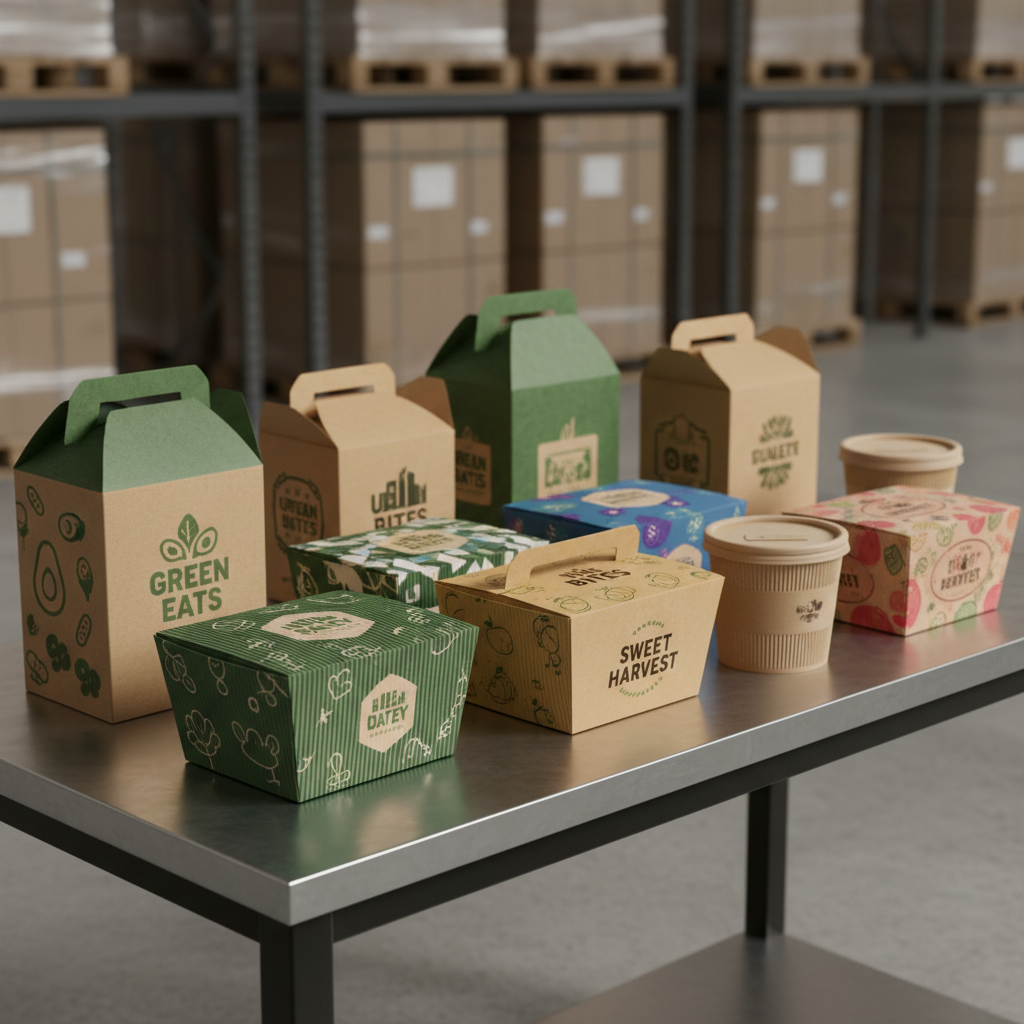
- Die-Line Efficiency: In box manufacturing, the layout of the die-line on the parent sheet determines the amount of scrap material. A slight adjustment in dimensions can sometimes allow for an extra unit to be printed per sheet, drastically reducing waste.
- Structural Integrity: Sometimes, adding a crease or a specific fold can increase the strength of a food container, allowing for a thinner (and cheaper) board grade to be used.
Lever 3: Printing Process Optimization
Printing is often where a large portion of the cost resides, especially for custom branding. Understanding the trade-offs between different printing technologies is vital for cost control.
Flexographic vs. Digital vs. Offset
For high-volume wholesale packaging, flexographic printing is usually the most cost-effective due to high speeds and low ink costs. However, the initial cost of printing plates can be high. For short runs or frequent design changes, digital printing eliminates plate costs, though the per-unit ink cost is higher. Offset printing remains the gold standard for high-detail food packaging boxes but is best suited for medium to high volumes.
Reducing Color Counts
Every additional spot color (Pantone) requires a separate station on the printing press, increasing setup time and ink costs. By optimizing designs to use CMYK (process) colors or reducing the total number of colors, brands can significantly lower their custom packaging pricing. Using the “white of the substrate” as a design element is a classic professional trick to save on ink.
Lever 4: SKU Consolidation
Managing fifty different packaging SKUs is significantly more expensive than managing ten. SKU consolidation involves standardizing packaging sizes across different product lines.
If three different products can fit into the same size box, you can order that box in much higher volumes. This triggers better volume discounts and reduces the number of changeovers on the production line. You can differentiate the products using labels or small variations in printing if necessary, but the base structure remains the same. This approach simplifies inventory management and reduces the risk of obsolete stock.
Lever 5: Flexible vs. Rigid Packaging Analysis
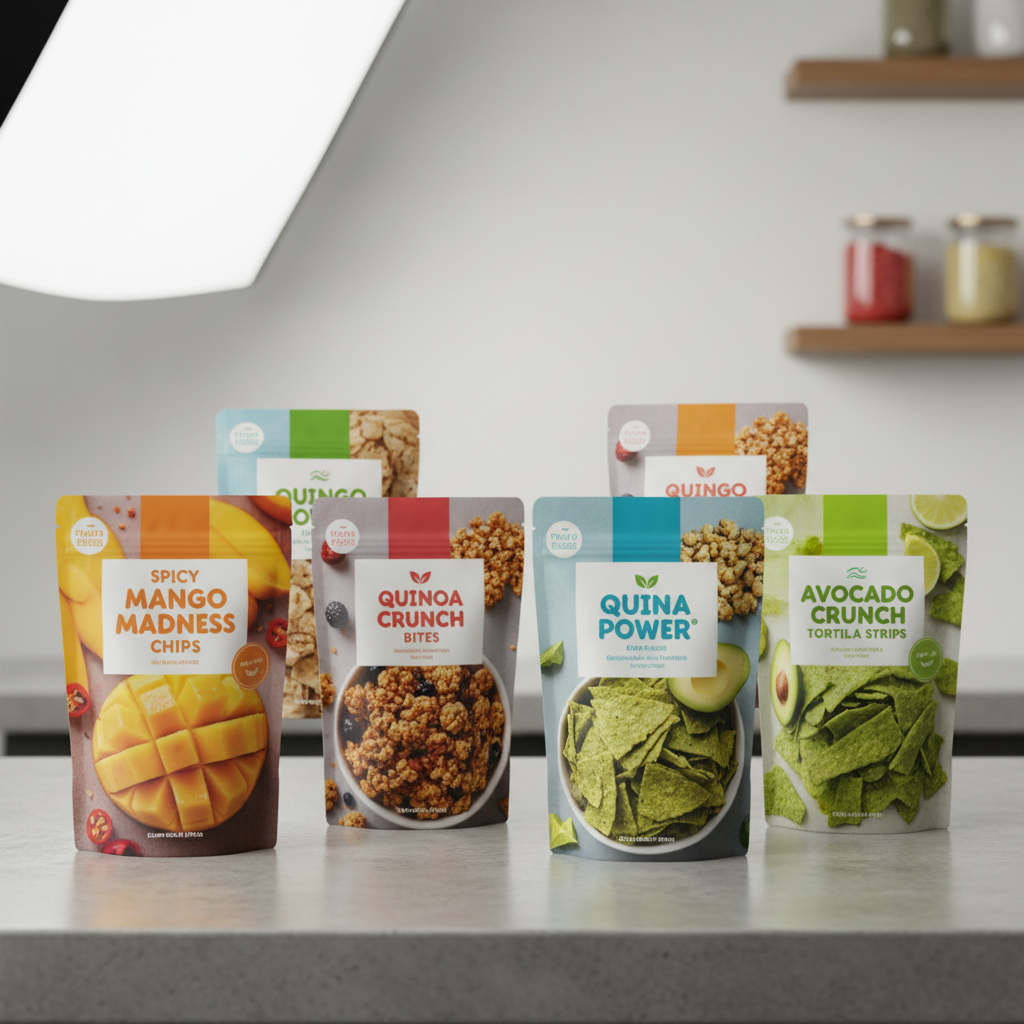
If your product currently uses rigid food containers or glass jars, switching to flexible packaging (like stand-up pouches) can offer dramatic cost savings. Flexible packaging typically uses less energy to manufacture, costs less to transport (it ships flat), and takes up significantly less warehouse space. While rigid packaging offers better physical protection for fragile items, many dry goods, sauces, and snacks are perfectly suited for flexible formats.
Lever 6: Designing for Logistics (Cube Utilization)
Packaging costs don’t end at the factory gate. Logistics costs are heavily influenced by how efficiently the packaging fits into shipping cartons and onto pallets.
- Flat-Packing: Ensure that boxes are designed to be shipped flat-packed to the filling facility.
- Pallet Patterns: Design your primary and secondary packaging dimensions based on standard pallet sizes (e.g., 1200x1000mm). Even a 5mm difference in box size can mean the difference between fitting 40 boxes per layer or 48.
- Weight Reduction: Lighter packaging reduces fuel surcharges and shipping rates, especially for air freight or long-distance trucking.
Lever 7: Strategic Sourcing and Wholesale Bulk Ordering
The relationship between volume and price is nowhere more evident than in packaging. However, bulk ordering requires a careful balance with cash flow and storage space.
Instead of ordering month-to-month, consider a 6-month or 12-month blanket order. This allows the manufacturer to purchase raw materials in bulk and schedule production during off-peak times, passing the savings to you. You can then pull stock as needed. To learn more about the logistics of large orders, visit our how to order page for a step-by-step guide.
Lever 8: Barrier Property Calibration
Over-engineering is a common source of waste. If a product has a 6-month shelf life, it does not need packaging designed for a 24-month shelf life. High-barrier materials like EVOH or Aluminum foil are expensive. By conducting shelf-life testing, you may find that a mid-range barrier (like VMPET or even certain coated OPP films) is sufficient. Matching the material’s oxygen transmission rate (OTR) and moisture vapor transmission rate (MVTR) to the product’s actual needs is a key lever in packaging optimization.
Lever 9: Design for Automation
Labor is a hidden cost in packaging. If a box design requires complex manual folding or hand-gluing, it will slow down your production line and increase labor costs. Transitioning to “auto-bottom” boxes or designs compatible with high-speed form-fill-seal (FFS) machinery can reduce the total cost per finished unit, even if the individual package price is slightly higher. Always consult with your operations team before finalizing a new design to ensure it runs efficiently on existing equipment.
Lever 10: Waste and Scrap Reduction
Quality issues lead to waste, and waste is money thrown away. Working with a supplier that has robust quality assurance (QA) processes is essential. A 2% rejection rate at the filling line might seem small, but across 100,000 units, that is 2,000 wasted packages plus the cost of the lost product and downtime. Choosing a reliable partner for wholesale packaging ensures that tolerances are met and defects are minimized.
Lever 11: Sustainable Material Economics
While some sustainable materials carry a premium, others can actually save money. For example, moving from multi-material laminates (which are hard to recycle) to mono-material PE structures can sometimes simplify the manufacturing process. Furthermore, as many regions implement “plastic taxes” based on recyclability, choosing eco-friendly options now can prevent significant future costs.
Lever 12: Supplier Collaboration and Prototyping
The final lever is the most strategic: involve your packaging supplier early in the design process. An experienced manufacturer can often suggest small technical changes—such as moving a seam or changing a varnish type—that have zero impact on quality but significantly reduce production complexity. Requesting samples and performing trial runs is a vital step in the packaging optimization journey.
Technical Specifications and Material Comparisons
To help you make informed decisions, the following table compares common materials used in food packaging and their typical cost/performance profiles.
| Material Type | Common Use Case | Barrier Level | Cost Profile |
| Kraft Paper / PE | Dry snacks, coffee, flour | Low to Medium | Economical |
| PET / VMPET / PE | Spices, dried fruit, nuts | High (Moisture/Light) | Mid-Range |
| PET / AL / PE | Retort food, high-fat liquids | Very High (Oxygen) | Premium |
| BOPP (Mono-layer) | Confectionery, pasta | Low | Very Low |
Manufacturing and Quality Considerations
When reducing costs, you must maintain strict QA standards to prevent “quality fade.” Key areas to monitor include:
- Seal Integrity: Especially important for food packaging bags to prevent oxidation and leakage.
- Color Consistency: Use Delta E (ΔE) measurements to ensure branding remains consistent across different batches.
- Coefficient of Friction (COF): Ensure films have the correct slipperiness to run through automated packing machines without jamming.
- Compression Strength: For food packaging boxes, ensure they can withstand the weight of stacked pallets during transit.
Buying Guide: Navigating Custom Packaging Pricing
When requesting a quote for custom food packaging, providing the following details will help you get the most accurate and competitive pricing:
- Dimensions: Length x Width x Gusset/Height (in mm).
- Material Structure: Specific layers and thickness (e.g., 12mic PET / 7mic AL / 60mic PE).
- Volume: Annual volume and per-order volume (MOQ).
- Artwork: Number of colors and type of finish (Matte, Glossy, Spot UV).
- Special Features: Zippers, tear notches, degassing valves, or window cut-outs.
Typical lead times for custom production range from 15 to 30 days depending on the complexity and shipping method. For urgent projects, always discuss “rush” options with your account manager via our contact page.
Frequently Asked Questions (FAQs)
1. How does MOQ affect the unit price of custom packaging?
MOQ (Minimum Order Quantity) is critical because setup costs (printing plates, machine calibration, material waste during startup) are fixed. Spreading these costs over 10,000 units instead of 1,000 units significantly lowers the price per piece. For wholesale packaging, higher volumes always yield the best ROI.
2. Can I reduce costs by switching from a box to a bag?
Yes, in many cases. Flexible food packaging bags often use less material and are cheaper to ship than rigid boxes. However, you must ensure the bag provides enough protection for the product’s physical shape.
3. Will down-gauging affect the shelf life of my food product?
Not necessarily. If you use higher-performance modern resins, you can often achieve the same barrier properties with a thinner film. Always perform a shelf-life stability test when changing material specifications.
4. What is the most cost-effective printing method for a startup?
For very small volumes (under 500-1,000 units), digital printing is usually best as it avoids plate charges. Once you scale beyond that, flexographic or offset printing becomes much more economical.
5. How can I save on shipping costs for packaging?
Design your packaging to be shipped flat and optimize the dimensions so that the shipping cartons perfectly fill a standard pallet. This maximizes “cube utilization” and lowers the cost per unit for freight.
6. Are eco-friendly materials always more expensive?
Initially, some compostable or recycled-content materials may have a higher unit price. However, they can reduce costs related to environmental regulations and improve brand loyalty, which offsets the initial investment.
Conclusion: Start Your Optimization Journey
Reducing packaging costs is not about buying the cheapest possible materials; it is about engineering the most efficient solution for your specific needs. By applying these 12 levers—from right-sizing and SKU consolidation to strategic printing and logistics design—you can achieve significant savings while maintaining the high standards your customers expect.
Ready to optimize your packaging strategy? Our team of experts is here to help you navigate custom packaging pricing and find the perfect balance of quality and cost. Contact us today for a professional consultation or to request a sample pack of our latest food-grade materials.
[Request a quote / Get a sample]