

In the high-volume world of food service and retail packaging, the humble plastic tray plays a critical role in logistics, presentation, and food safety. For procurement managers, restaurant chains, and distributors, selecting the right custom plastic tray is not merely about finding a container; it is about balancing material science, cost-efficiency, and brand presentation.
Whether you are packaging fresh produce for supermarkets, arranging hot meals for delivery, or sourcing durable serving platters for catering, the technical specifications of your tray define its performance. This comprehensive guide explores the nuances of sourcing plastic trays, from polymer properties to customization options, ensuring you make an informed decision for your supply chain.
1. The Strategic Importance of Selecting the Right Plastic Tray
Packaging is the first physical touchpoint a consumer has with your product. In B2B food service, the tray must perform multiple functions simultaneously:
- Protection: It must withstand transport vibration, stacking weight, and temperature fluctuations without cracking or deforming.
- Preservation: The material must provide adequate barriers against oxygen and moisture to maintain shelf life.
- Presentation: High clarity or vibrant printing is essential for attracting consumer attention on crowded shelves.
- Operational Efficiency: Trays must be easy to denest (separate) in automated packing lines and compatible with sealing machinery.
Choosing the wrong specification can lead to product spoilage, logistics failures, and brand damage. Therefore, understanding the underlying materials and manufacturing processes is mandatory for any buyer.
2. Material Science: Choosing the Right Polymer
The performance of a plastic tray is dictated primarily by the resin used. Different polymers offer distinct advantages regarding clarity, temperature resistance, and barrier properties. Below is a detailed breakdown of the most common materials used in wholesale plastic tray manufacturing.
Polypropylene (PP): The Heat-Resistant Workhorse
Polypropylene is widely regarded as the most versatile material for food service. Its defining characteristic is its high melting point, making it the standard for microwaveable containers.
- Temperature Range: Typically withstands up to 250°F (121°C), making it microwave-safe and suitable for hot-fill applications.
- Appearance: Naturally translucent or hazy. While it lacks the glass-like clarity of PET, modern manufacturing techniques have improved its transparency.
- Flexibility: PP is tough and flexible, meaning it is less likely to crack under impact compared to more brittle plastics.
- Best For: Hot meal delivery, microwaveable ready-meals, and heavy-duty catering trays.
Polyethylene Terephthalate (PET): The Standard for Clarity
If your product relies on visual appeal—such as fresh salads, sushi, or bakery items—PET is often the material of choice due to its crystal-clear optics.
- Clarity: Offers glass-like transparency, allowing the consumer to see the freshness of the food inside.
- Temperature Constraints: PET generally has a lower heat resistance (up to roughly 140°F or 60°C). It is not suitable for microwaves or high-heat environments.
- Barrier Properties: Excellent barrier against oxygen and moisture, which helps in preserving the freshness of cold foods.
- Recyclability: PET is the most recycled plastic globally, making it a preferable choice for brands focusing on circular economy goals.
Polystyrene (PS) and OPS (Oriented Polystyrene)
Historically common in bakery and deli settings, PS is rigid and cost-effective.
- Rigidity: Very stiff, which provides good structural support for stacking.
- Cost: Often cheaper than PET or PP, though the gap fluctuates with oil prices.
- Drawbacks: It is brittle and can crack easily if dropped. It is also becoming less popular due to environmental regulations in certain regions restricting Styrofoam (expanded PS), though solid PS remains in use.
Biodegradable Options (PLA)
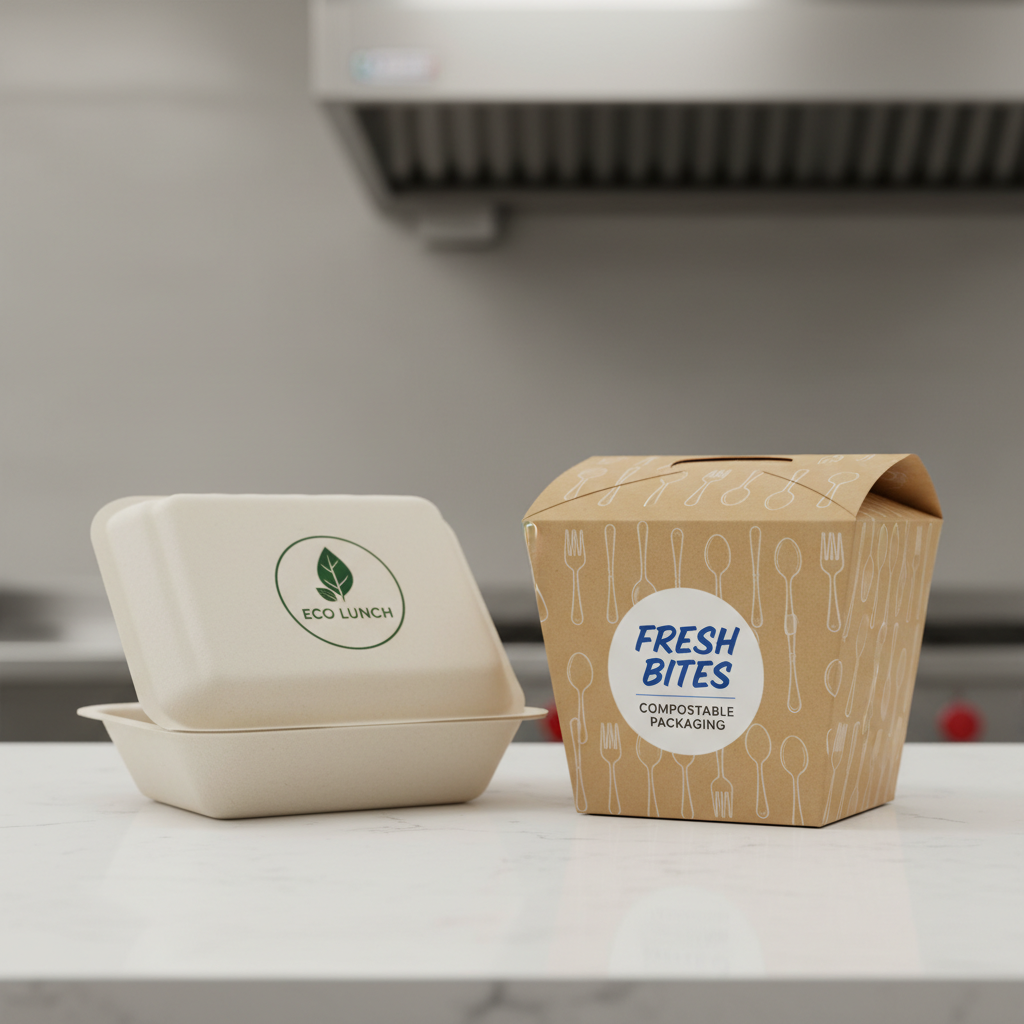
Polylactic Acid (PLA) is derived from renewable resources like corn starch. While it appeals to eco-conscious demographics, it has strict functional limits.
- Heat Sensitivity: Deforms at very low temperatures (often above 105°F or 40°C). It must be stored in cool conditions.
- Supply Chain: Best for cold supply chains and immediate consumption items.
Material Comparison Table
| Material | Clarity | Heat Resistance | Microwave Safe? | Primary Use Case |
|---|---|---|---|---|
| PP | Translucent | High | Yes | Hot meals, reheating |
| PET | High (Clear) | Low | No | Salads, cold cuts, bakery |
| PS/OPS | High (Clear) | Low | No | Bakery, deli lids |
3. Sizes, Shapes, and Compartment Configurations
Once the material is selected, the physical configuration of the tray must be determined. In the B2B sector, efficiency is key. Trays are often designed to fit standard crate sizes or display cases to maximize shelf density.
Standard vs. Custom Footprints
Many manufacturers offer “stock” sizes that align with industry standards (like Gastronorm sizes). Utilizing stock molds eliminates tooling costs and reduces lead times. However, a custom plastic tray allows you to optimize the package specifically for your product’s dimensions, reducing headspace and preventing food movement during transit.
Multi-Compartment Trays
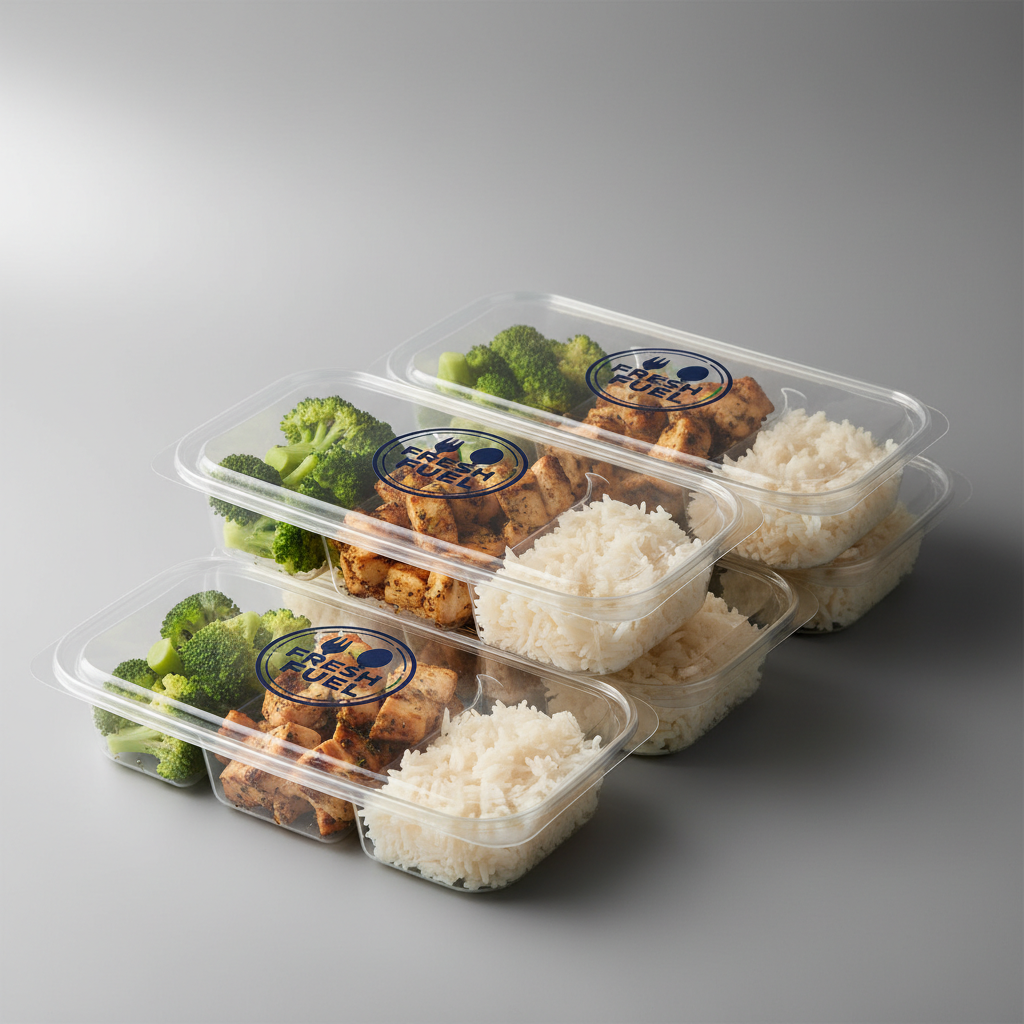
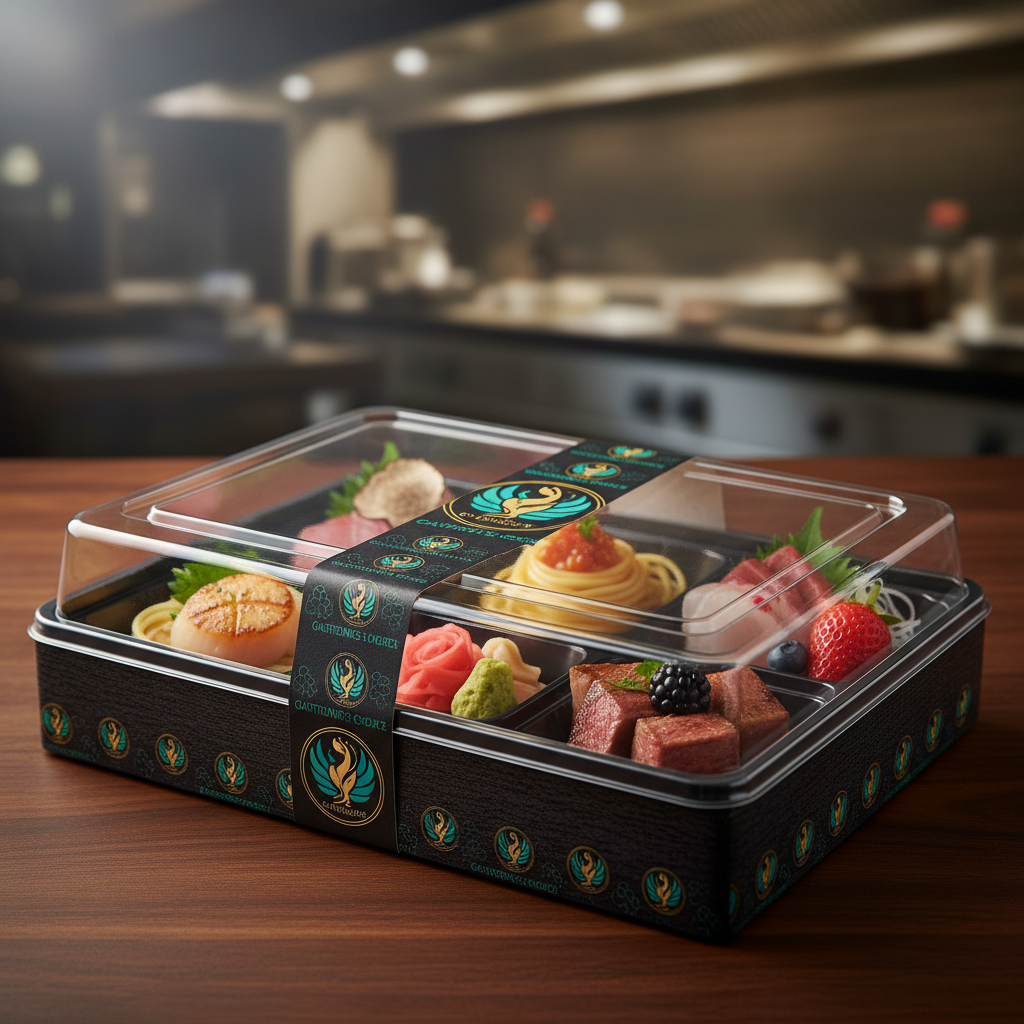
For meal kits, bento boxes, and ready-to-eat platters, compartment trays are essential. They separate wet and dry ingredients or distinct courses.
- Leak Prevention: High-quality compartment trays feature internal walls that seal against the lid (or top film) to prevent sauces from migrating between sections.
- Portion Control: Fixed compartment sizes help operators maintain consistent portioning, directly impacting food cost control.
Depth and Draft Angles
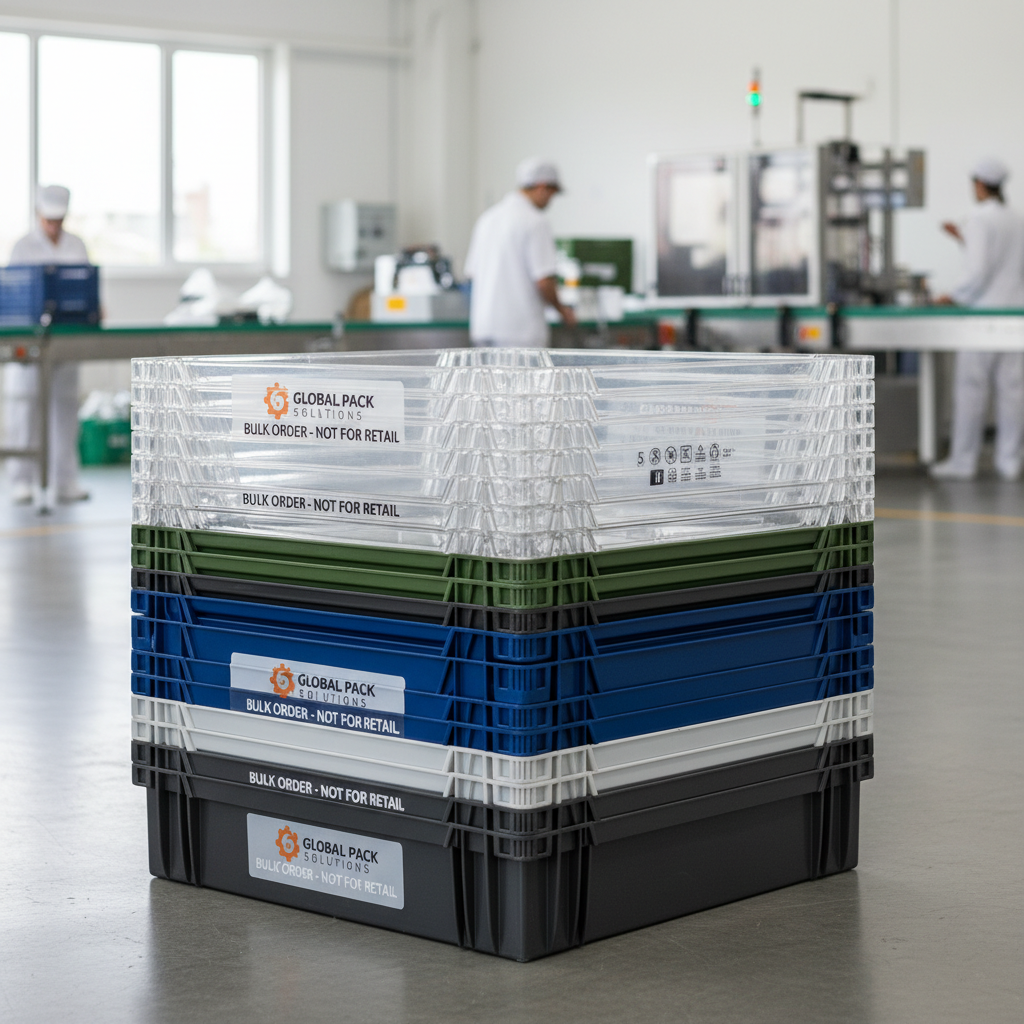
The depth of the tray (draw) affects the volume. Deep-draw trays require thicker starting material to ensure the walls do not become too thin during the thermoforming process. Additionally, the “draft angle” (the slope of the walls) is crucial for nesting. Trays must stack tightly for shipping but separate easily (denest) when placed in an automated dispenser.
4. Customization and Printing: Elevating the Brand
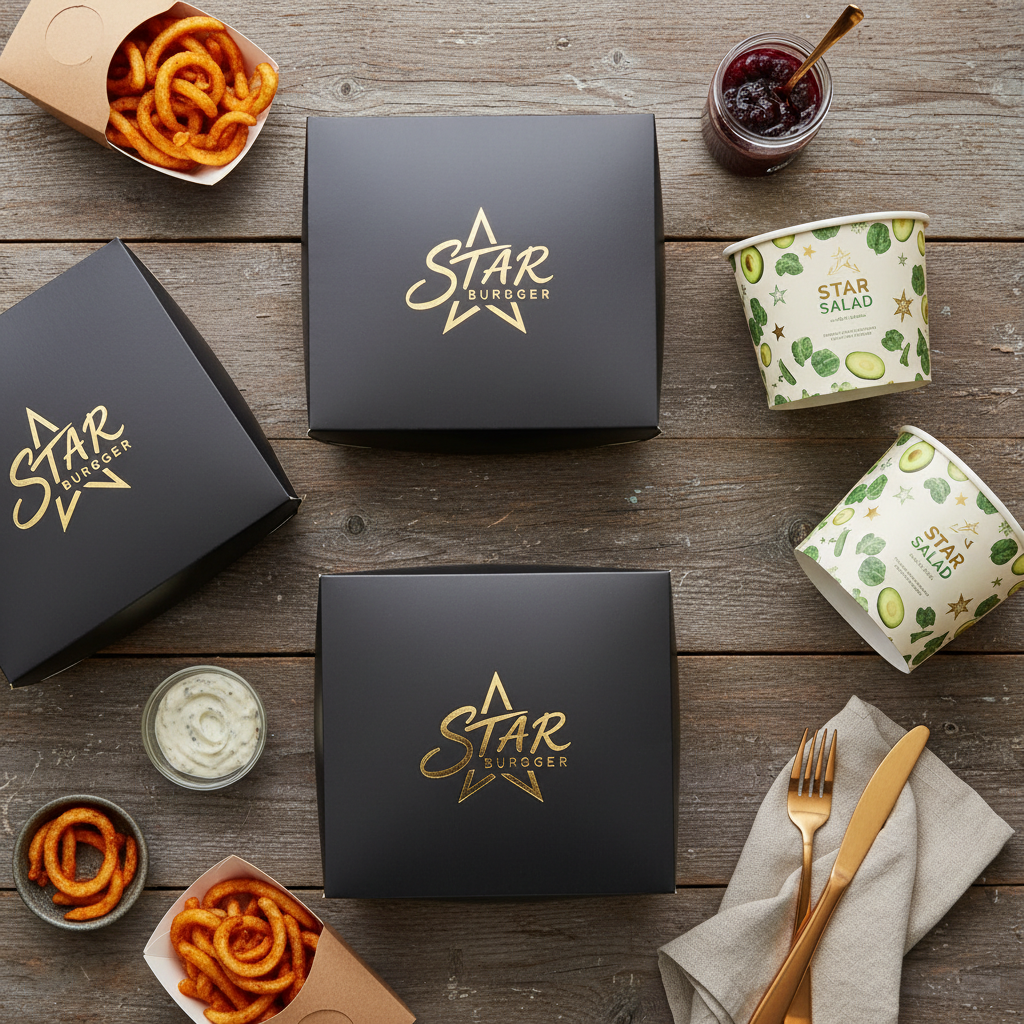
In a competitive market, a plain clear tray often isn’t enough. Customization transforms packaging into a marketing tool. Browse our food container categories to see examples of how branding can be applied.
Printing Technologies
Printing on plastic trays requires specialized inks and curing processes to ensure adhesion and food safety.
- Dry Offset Printing: Common for high-speed production. It transfers ink from a plate to a rubber blanket and then to the container. It is cost-effective for simple logos and text up to 6-8 colors.
- Flexographic Printing: Ideal for flexible films and thinner plastics, offering high speeds and good quality.
- In-Mold Labeling (IML): This advanced technique fuses a pre-printed label with the plastic during the molding process. The result is a seamless, high-definition graphic that is scratch-resistant and integral to the tray.
Embossing and Debossing
For a subtle, premium feel, custom tooling can emboss your brand logo directly into the plastic (usually on the bottom or lid). This adds no ink cost and is permanent, enhancing brand recognition even after the food is consumed.
Color Customization
While clear and black are industry standards, plastic resins can be mixed with masterbatch colorants to achieve any Pantone shade. This is particularly effective for brand consistency (e.g., a specific green for a healthy food line).
5. Technical Specifications and Quality Assurance
When creating a specification sheet for your supplier, precision is vital. Vague requests lead to inconsistent products.
Gauge (Thickness)
Measured in mils or microns. A higher gauge increases rigidity but also cost. You must find the “sweet spot” where the tray is strong enough to hold the food without collapsing but not so thick that you are paying for unnecessary material.
Tolerances
Thermoforming is a precise process, but slight variations occur. Define acceptable tolerances for dimensions (e.g., ±1mm). Tight tolerances are critical if the trays will be used with automated sealing machines, as a slight size mismatch can cause jamming or poor seals.
Coatings and Additives
- Anti-Fog Coating: Essential for clear lids or PET trays containing moist foods. It prevents condensation from obscuring the product view.
- Slip Agents: Added to help trays separate easily from a stack.
- UV Blockers: Can be added to protect light-sensitive foods from spoilage, though this often affects clarity.
6. Manufacturing Processes: Thermoforming vs. Injection Molding
Understanding how your tray is made helps in negotiating lead times and tooling costs.
Thermoforming
The vast majority of disposable plastic trays are thermoformed. A plastic sheet is heated until pliable and then pulled over a mold using vacuum or pressure.
- Pros: Lower tooling costs, faster production speeds for thin-wall containers, excellent for large surface areas.
- Cons: Limited ability to create complex 3D details or varying wall thicknesses.
Injection Molding
Molten plastic is injected into a steel mold cavity.
- Pros: Can create complex shapes, handles, and precise threading for screw-on lids. Produces very rigid, reusable-quality trays.
- Cons: High tooling costs and generally slower cycle times compared to thin-wall thermoforming.
7. Use Cases and Applications
Different sectors of the food industry have unique demands for their plastic trays.
Quick Service Restaurants (QSR) & Takeout
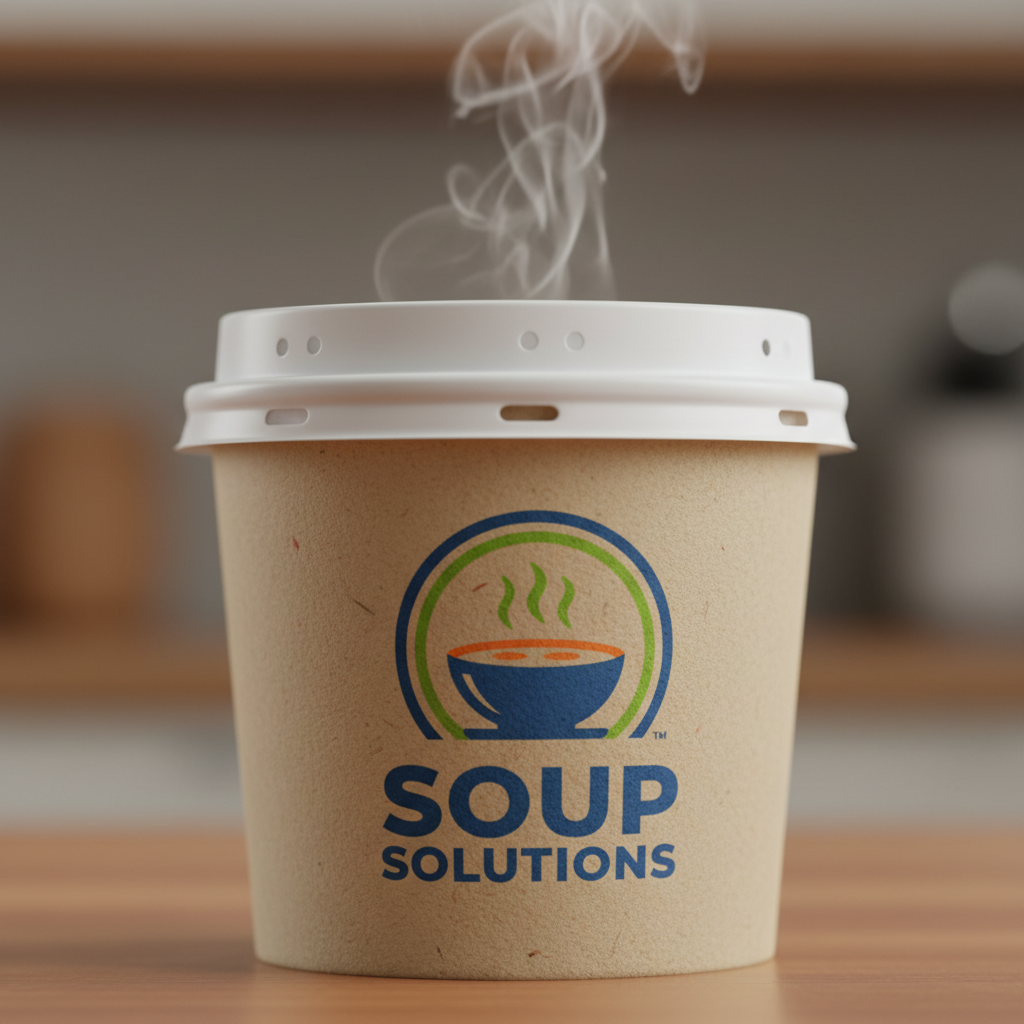
Speed and heat retention are paramount. PP trays with snap-on lids are the standard. They must be stackable in a delivery bag without crushing the bottom layers. Custom printing is highly recommended here to extend the brand experience into the customer’s home.
Supermarkets and Retail
Shelf life is the priority. Trays are often sealed with a top film using Modified Atmosphere Packaging (MAP) technology. The tray material must have high barrier properties to maintain the gas mixture inside. PET is common for cold deli items, while barrier-PP is used for ready-to-heat meals.
Catering and Events
Aesthetics drive the decision. Large, rigid trays (often black or crystal clear) that mimic the look of glass or ceramic are preferred. These are often heavier gauge to support the weight of large platters.
8. Buying Guide: How to Source Effectively
Ready to place an order? Here is a checklist to ensure a smooth procurement process.
Minimum Order Quantities (MOQ)
Custom trays typically require higher MOQs (often 10,000 to 50,000 units depending on size) to justify the setup and tooling. Stock items usually have much lower thresholds (case quantities).
Tooling Costs
If you require a custom shape, budget for the mold. Prototype molds (aluminum or 3D printed) are cheaper and faster for testing, while production molds (steel) are expensive but last for millions of cycles.
Lead Times
- Stock items: Typically ship within days.
- Custom printing: Adds 2-4 weeks.
- New custom molds: Can take 4-8 weeks for design, prototyping, and final production tooling.
Sampling
Always request samples before committing to a bulk order. Test the samples in your actual operational environment: put them in the microwave, stack them in your delivery vehicles, and run them through your sealing machines.
If you are unsure where to start, visit our how to order page for a step-by-step guide on initiating a custom project.
9. Frequently Asked Questions (FAQ)
1. Can plastic trays be recycled?
Yes, most plastic trays made from PET and PP are recyclable. However, black plastics can sometimes be difficult for optical sorting machines in recycling facilities to detect. It is best to check with local regulations or choose clear/light-colored plastics if recyclability is a priority.
2. What is the difference between CPET and APET?
APET (Amorphous PET) is clear and used for cold foods. CPET (Crystallized PET) is opaque and heat-resistant, capable of withstanding oven temperatures, making it a dual-ovenable option (microwave and conventional oven).
3. How do I know if a tray is microwave safe?
Look for the resin code. Polypropylene (PP, resin code #5) is generally microwave safe. PET and PS are not. Always verify the manufacturer’s data sheet for specific temperature ratings.
4. Can I print my logo on the bottom of the tray?
Yes, this can be done via embossing (raised plastic) or debossing (indented plastic) during the molding process. It is a great way to brand without using ink.
5. What file format do I need for custom printing?
Vector files (AI, EPS, PDF) are required for high-quality printing. These allow the artwork to be scaled without losing resolution.
6. Do you offer freezer-safe trays?
Yes. Materials like PP and specific grades of PET are formulated to resist “cold crack” (becoming brittle at freezing temperatures). If you are packaging frozen goods, specify this requirement to ensure the right impact modifiers are used in the plastic.
7. What is the lead time for a custom mold?
Creating a new custom mold typically takes 30 to 45 days, including design approval and test runs. Repeat orders are much faster.
Conclusion
Sourcing the right plastic tray involves more than comparing prices. It requires a deep understanding of your food product’s lifecycle—from the production line to the customer’s table. By selecting the appropriate material (PP vs. PET), optimizing the design for logistics, and leveraging customization for branding, you can turn a simple container into a competitive advantage.
At YBJ Packing, we specialize in high-quality, custom food packaging solutions tailored to the needs of international buyers. Whether you need a standard wholesale solution or a fully bespoke design, our team is ready to assist.
Ready to upgrade your packaging? Contact us today to request a quote or get a sample of our premium plastic trays.