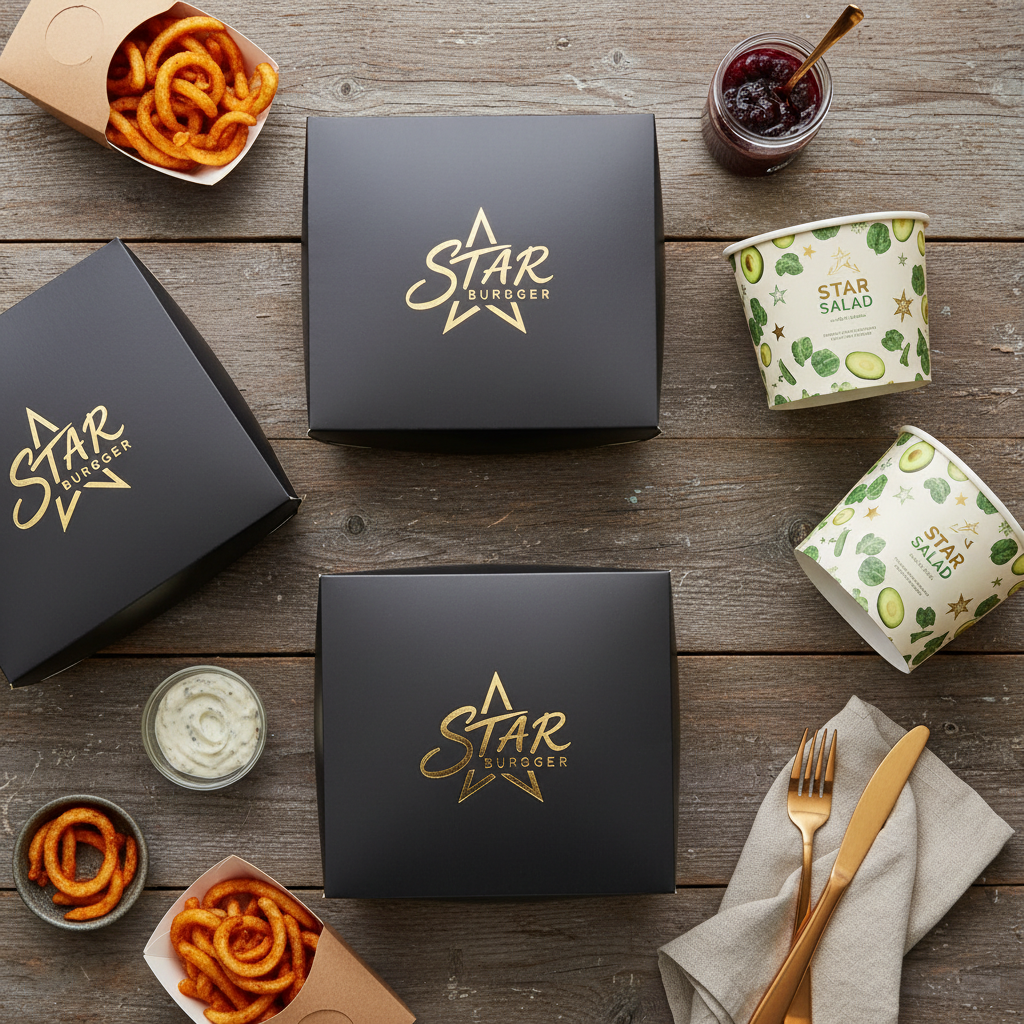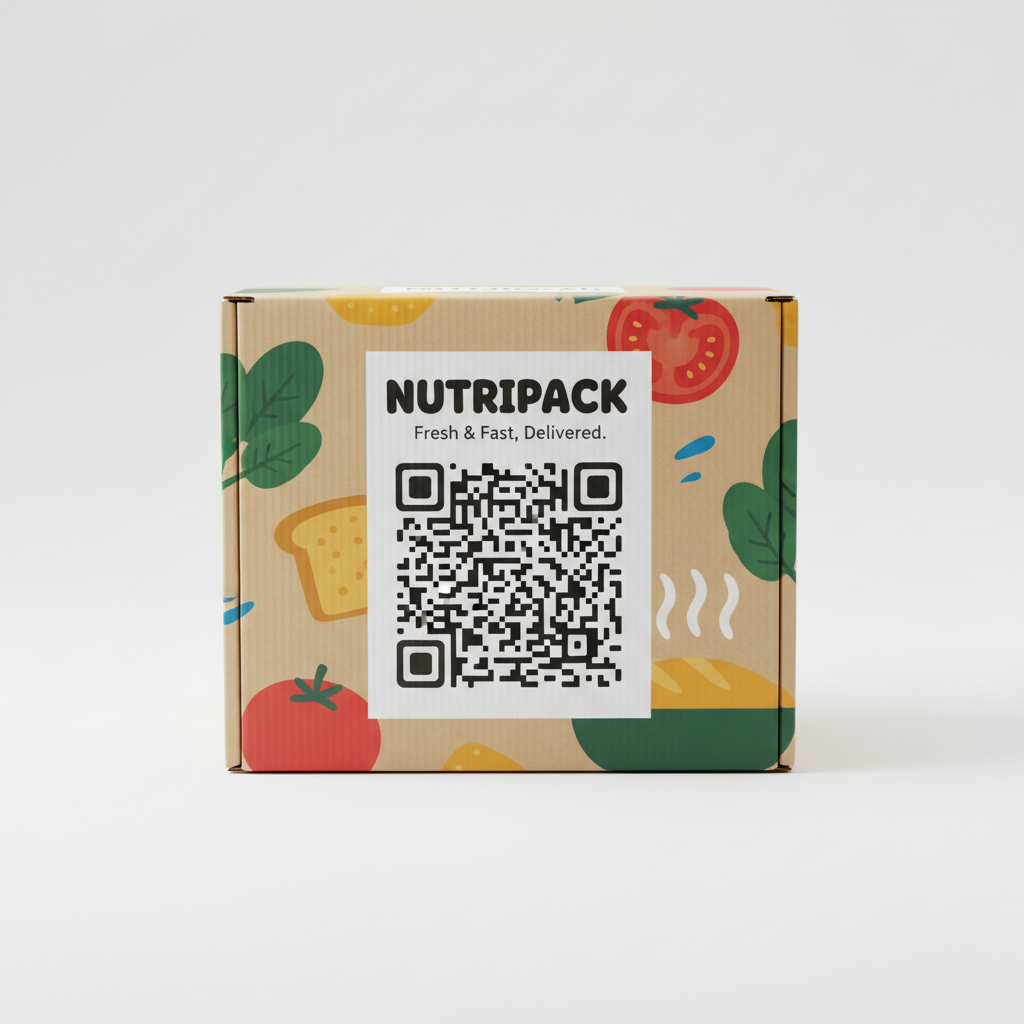


In the highly competitive fast-food landscape, packaging has evolved from a mere vessel into a critical component of brand identity and operational efficiency. Major global players like McDonald’s and Burger King have recently overhauled their visual systems, signaling a broader industry shift. For B2B buyers, restaurant chains, and food service distributors, understanding these trends is essential for sourcing packaging that not only protects food but also enhances the consumer experience.
This guide explores the technical and aesthetic innovations driving the market, moving beyond surface-level design to the structural engineering and material science that define modern food service packaging.
The Strategic Shift in Fast Food Packaging Design
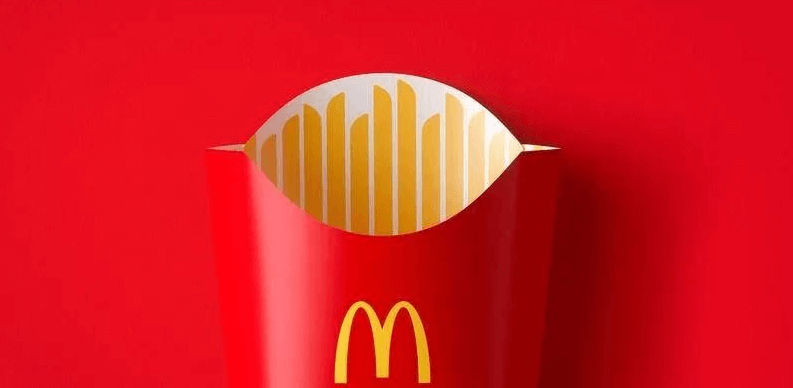
Recent updates by industry giants demonstrate that packaging is now a primary storytelling medium. The trend is moving away from cluttered, noisy graphics toward functional minimalism and intuitive color coding. This approach serves two purposes: it streamlines kitchen operations by making products instantly identifiable, and it creates a cleaner, more modern presentation for the consumer.
Visual Narratives and Color Coding
As seen in recent global rebrands, color is used functionally. For instance, utilizing green hues for vegetable-based items, brown for beef, and blue for fish allows staff to identify orders rapidly during peak hours. For independent brands and emerging chains, adopting a similar "visual system" can reduce errors and improve service speed.
When sourcing custom packaging, consider how your artwork interacts with the substrate. High-quality flexographic or offset printing can achieve vibrant, color-coded designs that serve as a personalized "dress" for each menu item, turning a generic burger box into a brand ambassador.
Minimalism and Flat Design
The move towards flat vector illustrations and simplified logos reflects a digital-first mindset. Packaging must look as appetizing on a smartphone screen (for delivery apps) as it does on a tray. B2B buyers should look for suppliers capable of precise registration and clean printing to ensure that minimalist designs remain sharp and professional.
Functional Innovations: Engineering for Quality
While aesthetics grab attention, structural integrity retains customers. The primary challenge in Innovation and Development of Hamburger and French Fries Packaging continues to be moisture management and temperature retention.
Structural Engineering for Crispiness (Fries)
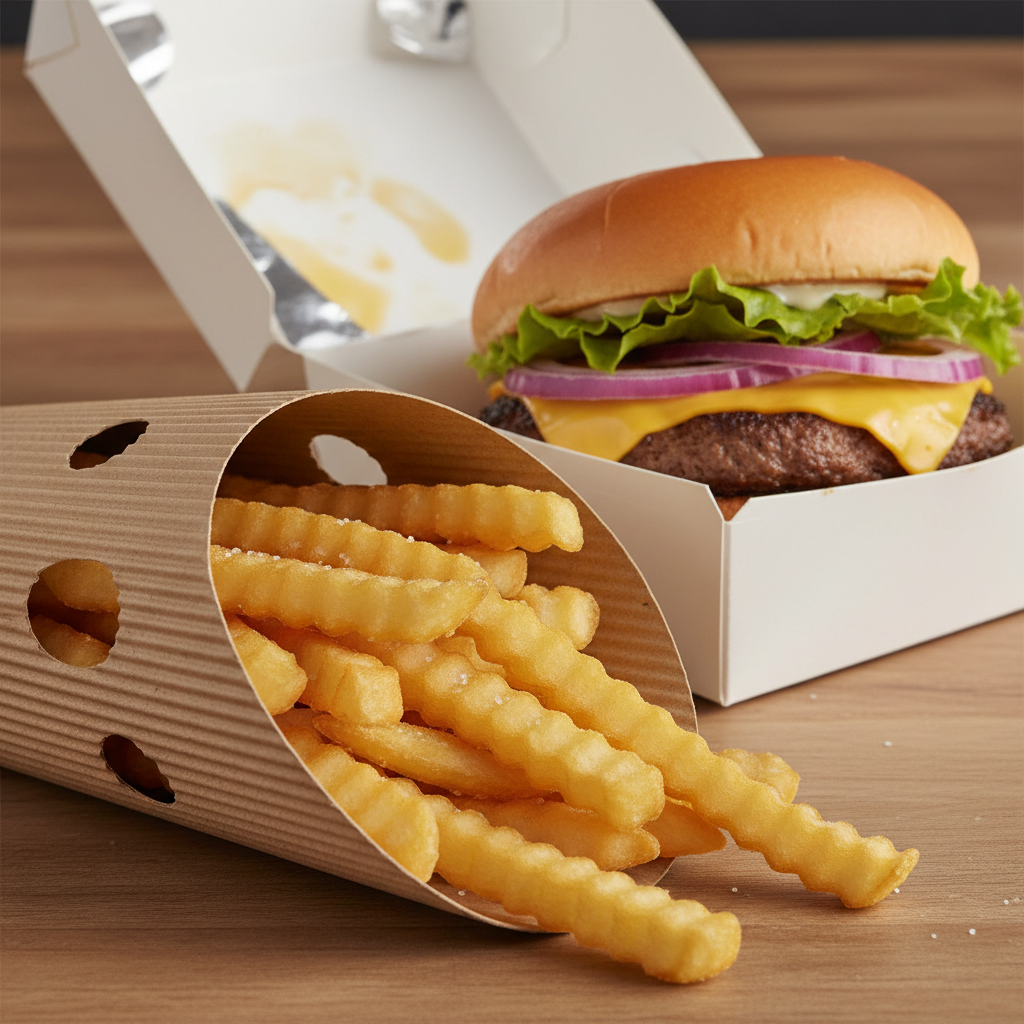
French fry packaging requires a delicate balance. If the container is sealed too tightly, steam is trapped, leading to soggy fries. If it is too open, heat escapes rapidly. Modern innovations in fry scoops and cartons focus on:
- Ventilation Logic: Strategic cutouts or breathable board grades that allow steam to escape while retaining radiant heat.
- Ergonomic Shapes: Scoops designed with a lower front lip for easy access and a higher back for structural support during filling and transport.
- Inner Box Detailing: Some new designs feature creative inner prints or hidden messages, but structurally, the focus is on grease-resistant coatings that prevent oil spots from ruining the visual appeal.
Thermal Retention and Grease Resistance (Burgers)
For hamburgers, the choice often lies between clamshell boxes and wrapping paper. Clamshells offer superior protection against crushing, particularly for delivery orders. Key technical specifications to consider include:
- Locking Mechanisms: Secure tab-locks that prevent accidental opening during transit.
- Grease Barriers: Traditional PE (polyethylene) coatings are effective but increasingly challenged by sustainability concerns. Newer aqueous (water-based) coatings offer grease resistance while remaining repulpable and compostable.
- Flute Type: For corrugated burger boxes, E-flute or F-flute micro-corrugated boards provide excellent insulation without adding unnecessary bulk.
Material Choices for B2B Buyers
Selecting the right material is a trade-off between cost, performance, and environmental impact.
Sustainable Alternatives
With plastic bans tightening globally, the demand for plastic-free packaging is surging. Buyers should investigate materials such as:
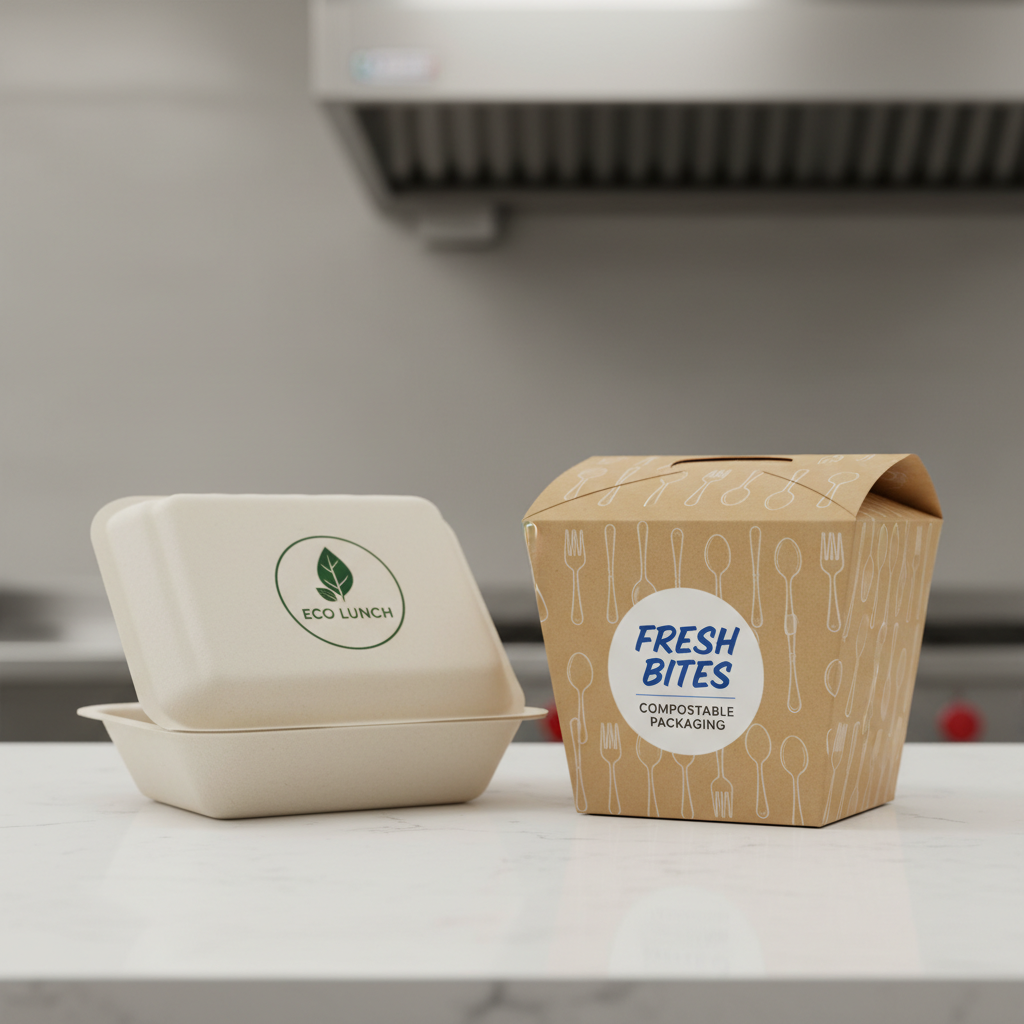
- Bagasse (Sugarcane Pulp): Excellent for molded clamshells, offering natural insulation and compostability.
- Kraft Paperboard: Unbleached Kraft conveys an eco-friendly image and is naturally strong, though it may require specific coatings for heavy grease applications.
- Bamboo Pulp: A rapidly renewable resource that rivals wood pulp in strength and aesthetic appeal.
Board Grades and Durability
For fry cartons and burger boxes, the rigidity of the board is crucial. Standard Ivory board (white bleach board) offers a premium printing surface, while Kraft back board provides a cost-effective solution with a rustic look. Ensure your supplier specifies the GSM (grams per square meter) appropriate for your food’s weight—typically 250gsm to 350gsm for standard fast food items.
Manufacturing and Sourcing Guide
When partnering with a packaging manufacturer, clarity on specifications prevents costly delays.
Printing Techniques
To achieve the "narrative" look of major brands, discuss printing options early:
- Offset Printing: Ideal for high-volume runs requiring photographic quality or complex gradients.
- Flexography: Cost-effective for simple vector graphics and solid colors, commonly used for high-speed production of fry scoops.
- Soy & Vegetable Inks: Request these for a safer, more eco-friendly print that aligns with food safety standards.
Prototyping and QA
Before committing to a mass production run (often 10,000+ units), request physical samples. Test these samples in your actual kitchen environment. Does the burger box close easily with gloves on? Does the fry scoop fit your warming station rack? Real-world testing is the only way to validate the "sense of technology" in packaging design.
FAQ: Sourcing Fast Food Packaging
What is the minimum order quantity (MOQ) for custom-printed burger boxes?
MOQs typically start around 10,000 to 30,000 units for custom printing due to machine setup costs. However, generic or unprinted options may be available in smaller quantities.
How can I ensure my packaging is grease-resistant without using plastic?
Ask for aqueous dispersion coatings or special grease-proof papers. These provide a barrier against oil penetration but are designed to break down in recycling or composting streams.
What is the lead time for a new packaging design?
New designs usually require 1-2 weeks for artwork approval and plate making, followed by 2-4 weeks for production, depending on the volume and complexity.
Can packaging improve food delivery quality?
Yes. Rigid clamshells prevent crushing, and proper ventilation prevents condensation, which is the primary cause of soggy food during delivery.
Innovation in fast food packaging is no longer just about a logo; it is about combining narrative design with high-performance engineering. Whether you are refreshing a local chain or sourcing for a global distributor, the right packaging partner can elevate your brand’s value proposition.
Ready to upgrade your food service packaging? Contact us today to request a quote or get a sample of our latest burger and fry packaging solutions.