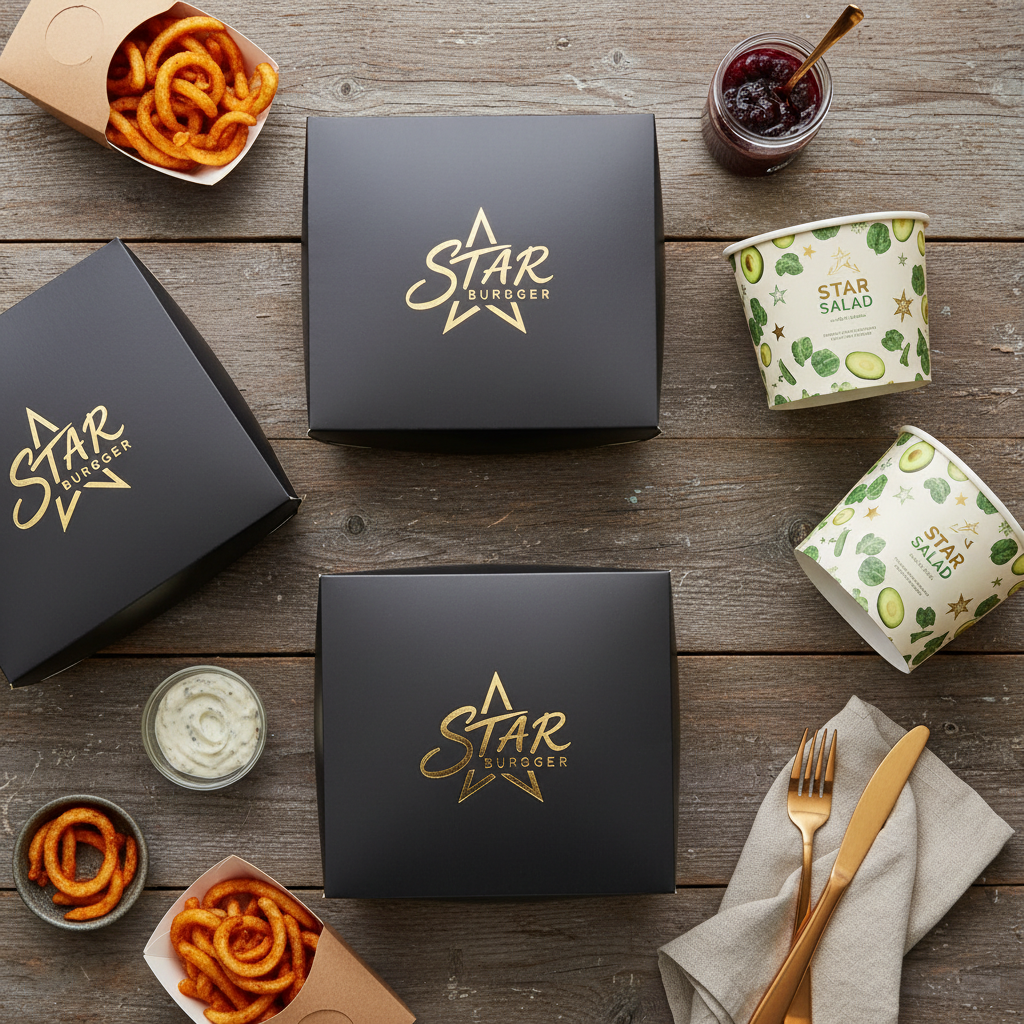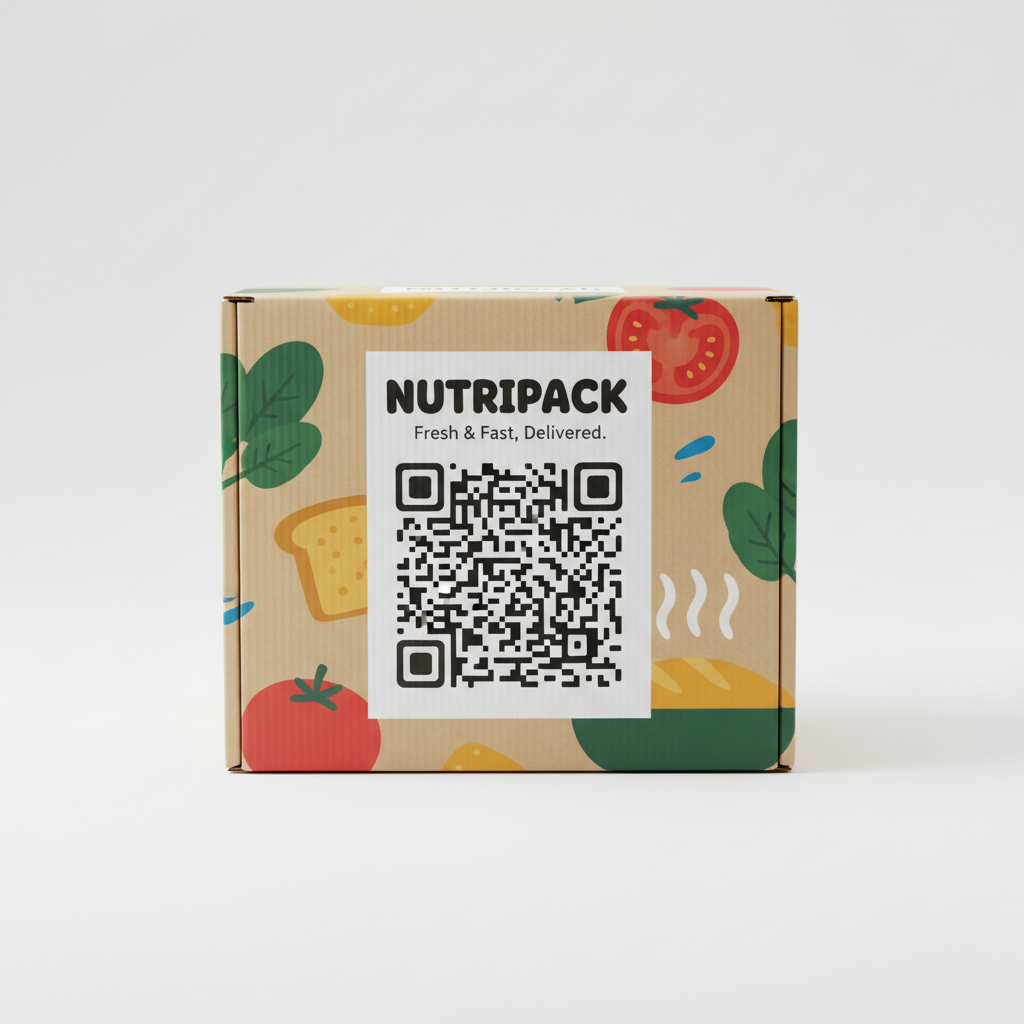



In the competitive food service and retail sectors, packaging size is not merely a dimensional specification; it is a strategic business lever. For procurement managers, brand owners, and operations directors, selecting the correct packaging dimensions influences everything from raw material costs and shipping efficiency to customer satisfaction and food waste reduction.
Getting the size wrong can result in spillage, poor presentation, excessive material waste, or inflated logistics costs due to shipping “air.” Conversely, optimizing your packaging size ensures precise portion control, enhances the unboxing experience, and maximizes your profit margin per serve.
This comprehensive guide explores the technical and commercial aspects of selecting the right packaging size. We will cover how to balance portion control with cost efficiency, the nuances of measuring different material types, and how to navigate the trade-offs between standard and custom dimensions.
The Economics of Packaging Size: Beyond the Unit Price
When sourcing B2B food packaging, buyers often focus on the unit price of the box, bag, or container. However, the physical size of the packaging dictates a much broader economic reality known as the “Total Landed Cost.” Understanding the interplay between dimensions and cost is the first step in making an informed procurement decision.
Material Yield and Waste
Manufacturing packaging involves cutting flat sheets of material (paperboard, corrugated board, or plastic film) into specific shapes. The efficiency of this process depends heavily on your dimensions.
- Nesting Efficiency: If your custom box design has irregular dimensions that do not nest well on a master sheet, the manufacturer must discard significant amounts of off-cut material. You pay for this waste. Slight adjustments to length or width—sometimes by just a few millimeters—can allow more units to fit on a standard sheet, reducing the unit cost.
- Film Usage: For flexible packaging, the width of the roll stock is fixed. Designing a bag that utilizes the maximum width of the web without requiring excessive trim can significantly lower material costs over high-volume runs.
Logistics and Volumetric Weight
Shipping costs are increasingly calculated based on volumetric weight (dimensional weight) rather than actual dead weight. This is particularly critical for international buyers importing packaging.
If you choose a rigid container that does not nest (stack inside one another), you are essentially paying to ship air. For example, a tapered bowl design allows for tight nesting, meaning you might fit 5,000 units on a pallet. A straight-walled cylinder of the same volume might only allow 1,000 units per pallet. This 5x difference in shipping density dramatically impacts your cost per unit when landed at your warehouse.
Portion Control: The Intersection of Product and Package
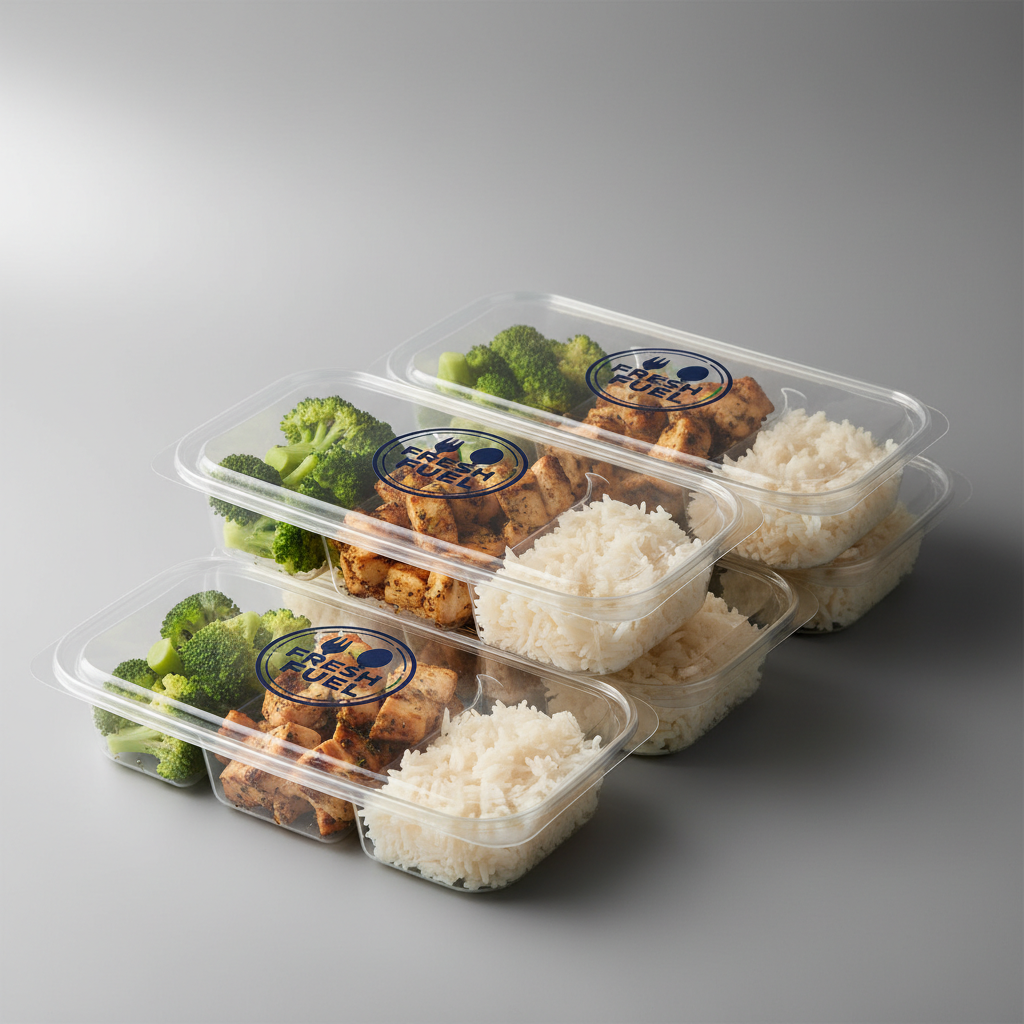
Portion control is vital for maintaining margins in QSR (Quick Service Restaurants), catering, and food manufacturing. The packaging size acts as the physical constraint that standardizes the serving size, ensuring consistency across franchise locations or production batches.
Defining the “Fill Level”
A common mistake is equating the total volume of the package with the serving size. Packaging should never be filled to the brim. Buyers must account for headspace—the empty space required to prevent spills, allow for lid closure, and accommodate product settling.
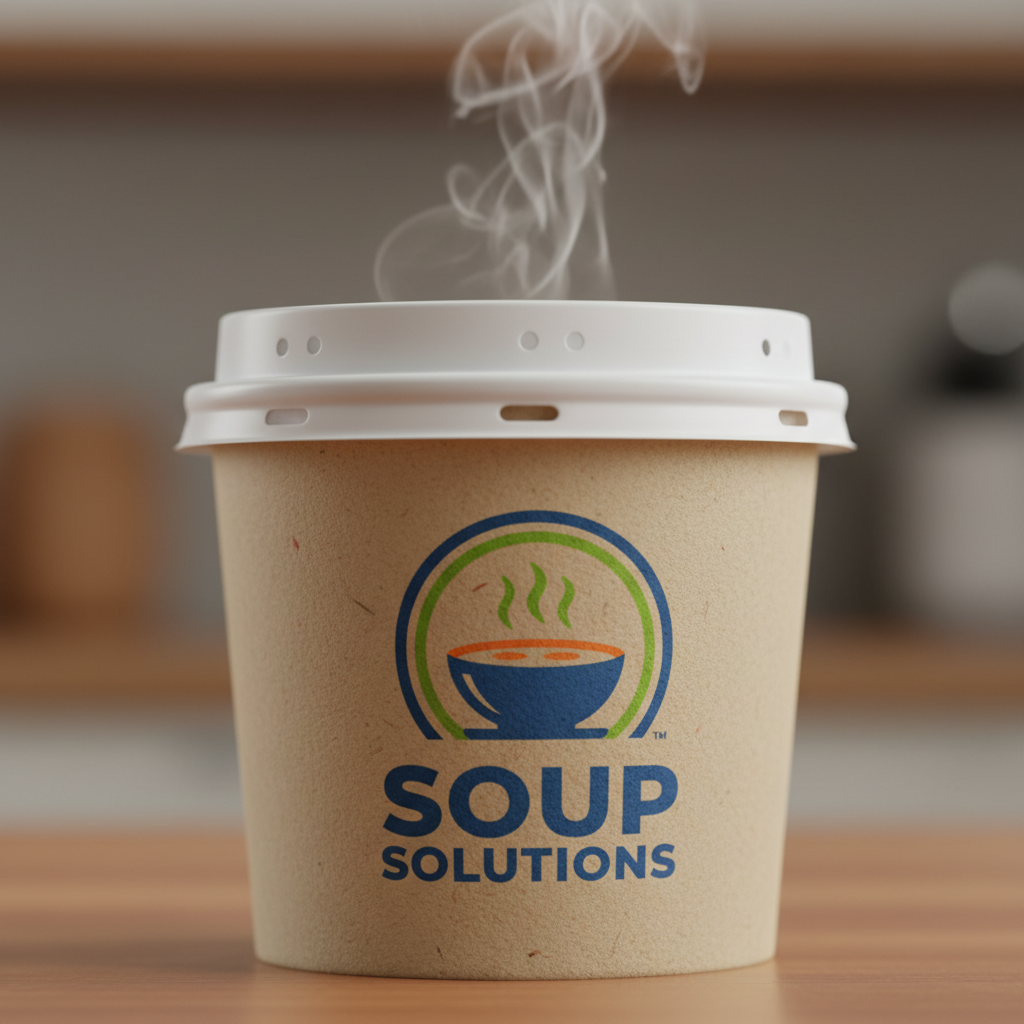
- Liquids (Soups, Sauces): Require 10-15% headspace to prevent leakage during transport.
- Fried Foods: Require air circulation to prevent sogginess. A tightly packed box will steam the food, ruining the texture.
- Powders/Granules: Often settle during shipping. A bag that looks full at the factory may look half-empty on the shelf if the size isn’t calculated based on settled density.
Psychology of Size
Packaging size influences value perception. A smaller portion in a well-fitted container looks generous, whereas the same portion in an oversized container looks stingy. For brands focusing on premium positioning, minimizing negative space (unless it is structural for protection) is crucial for customer satisfaction.
Technical Sizing Guide by Category
Different packaging formats require different measurement protocols. Understanding the difference between Internal Dimensions (ID) and External Dimensions (OD) is critical to ensuring your product fits.
1. Custom Food Packaging Boxes
When ordering custom food packaging boxes, precision is paramount. Boxes are typically measured by their Internal Dimensions (Length x Width x Depth) to ensure the product fits inside. However, the External Dimensions determine shipping volume and shelf space.
Material Thickness Impact
The thickness of the material (caliper) affects the difference between ID and OD.
- Folding Cartons (Ivory Board/Kraft): Material is thin (0.3mm – 0.6mm). The difference between ID and OD is negligible for general purposes but matters for tight master cartons.
- Corrugated Boxes (E-flute, B-flute): Material is thick (1.5mm – 3mm). If you design a corrugated pizza box based on internal needs, the external size will be significantly larger. Failing to account for flute thickness can result in boxes that do not fit into your standard delivery bags or shipping crates.
Locking Mechanisms and Glued Areas
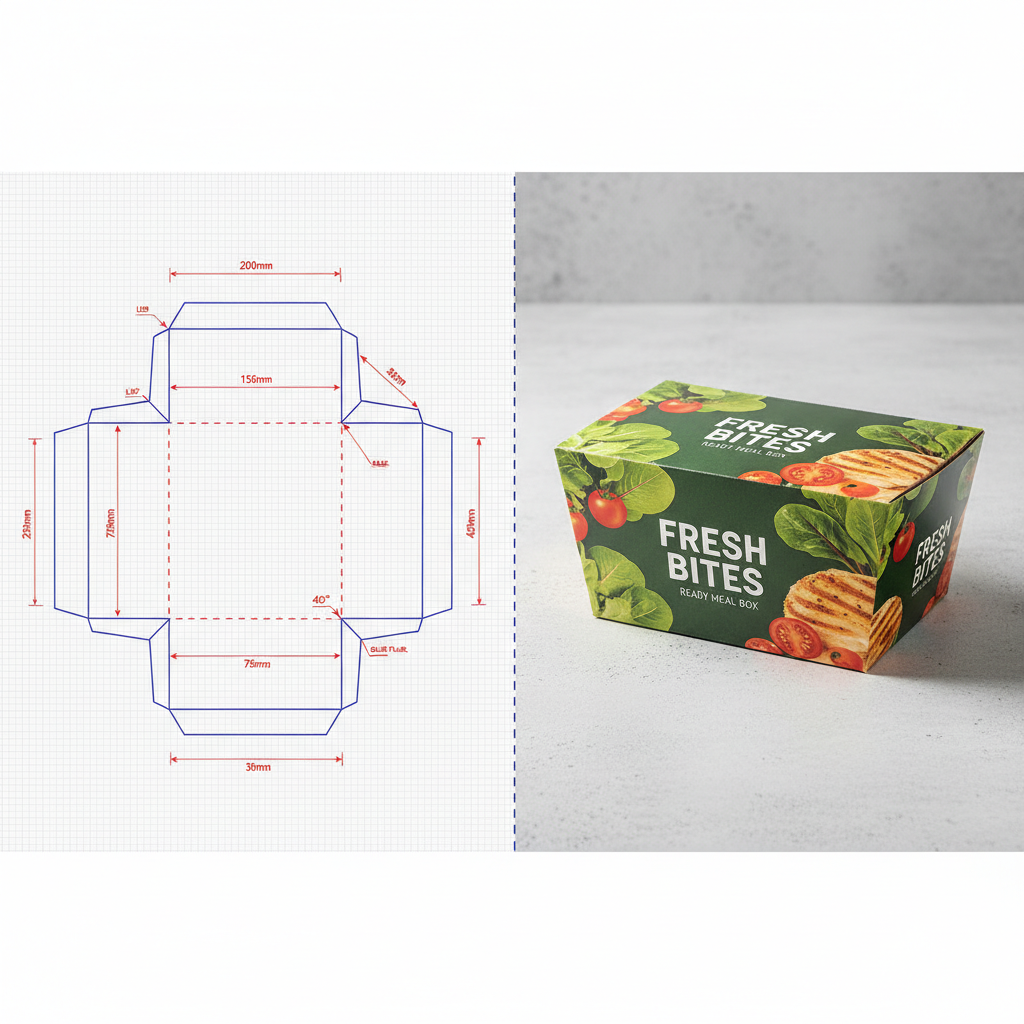
Complex closure styles, such as auto-lock bottoms or tuck-tops, consume more paperboard than simple designs. When calculating the “flat” size of the box for pricing, the manufacturer looks at the entire die-line, including the flaps and glue tabs. A deeper box requires longer flaps to close, which increases material usage exponentially compared to widening the box.
2. Flexible Food Packaging Bags
Sizing for flexible food packaging bags (pouches, gusset bags) is more complex due to the three-dimensional nature of the filled product.
The Gusset Factor
A flat pouch has two dimensions: Width and Height. A gusseted bag (bottom or side gusset) expands when filled.
- Bottom Gusset: Adds volume and stability, allowing the bag to stand. The depth of the gusset must be subtracted from the height when the bag is flattened.
- Side Gusset: Expands the width.
Seal Widths
The usable space inside a bag is reduced by the seal width (typically 5mm to 10mm on the edges). If your product is 100mm wide, a 100mm wide bag will not fit. You need to account for the seals and “play” (clearance) to allow for easy insertion during packing. A safe rule of thumb is to add 10-20mm to the product width for the bag width.
3. Disposable Food Containers
Rigid food containers (bowls, trays, cups) are usually defined by volume (milliliters or fluid ounces) and top diameter.
Fluid vs. Solid Volume
A 500ml container holds 500ml of water. It does not necessarily hold 500g of salad or pasta, as these solids have air gaps. For solid foods, trial and error with physical samples is the only accurate way to determine the correct size. We always recommend requesting samples before committing to a mass production run.
Lid Compatibility
Sizing also dictates lid compatibility. Many food service operations prefer to use a single lid size (e.g., 115mm diameter) that fits multiple container depths (e.g., 500ml, 750ml, 1000ml). This consolidates inventory and simplifies operations. When choosing a size, check if the diameter matches standard industry lids or if it requires a custom mold.
Material Selection and Its Effect on Sizing
The material you choose will dictate the structural integrity of the package, which in turn influences the necessary size and thickness.
Paperboard vs. Corrugated
If you are switching from a plastic container to a paper box, you may need to adjust the dimensions. Paper walls are thicker than plastic walls. Furthermore, paper absorbs moisture. If your food is hot and steamy, the box may need to be slightly larger to improve airflow, or constructed from a thicker grade of board to prevent collapsing, which changes the external footprint.
Eco-Friendly Alternatives
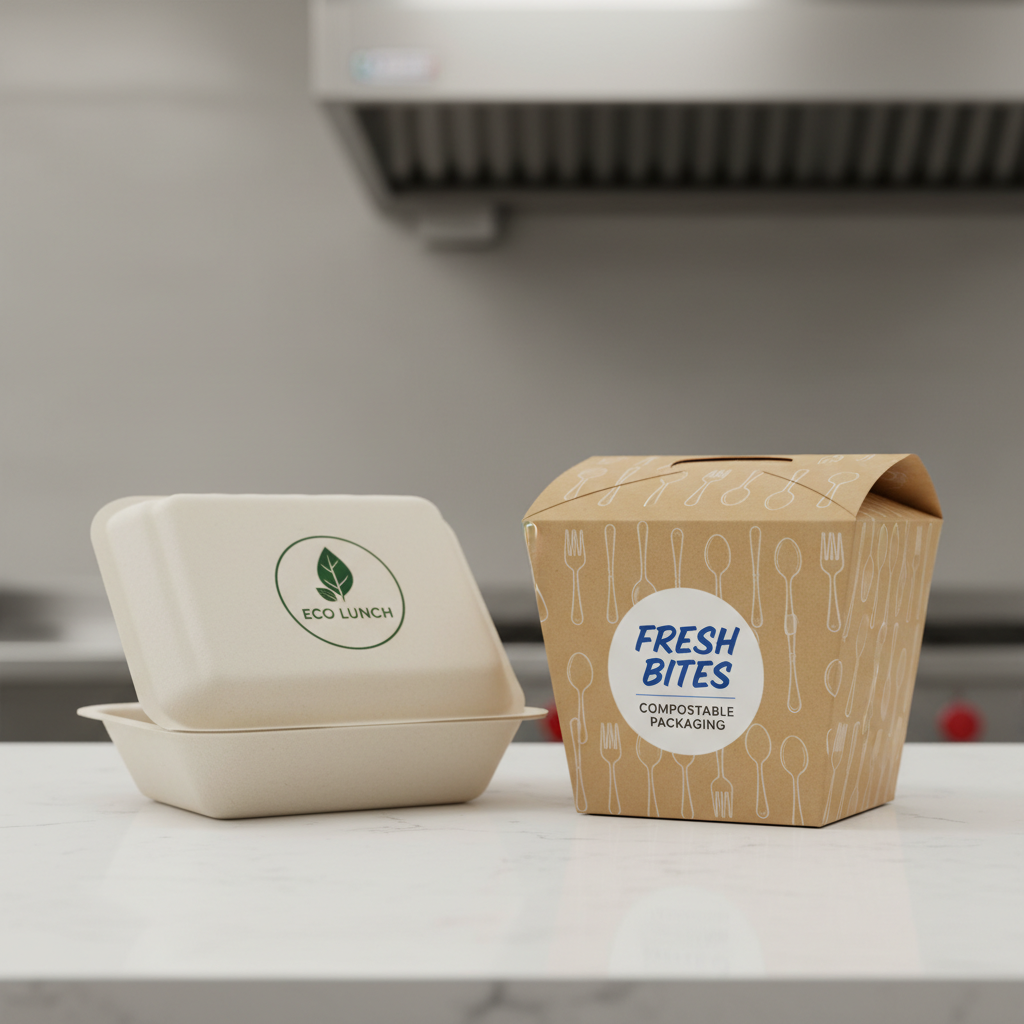
Bagasse (sugarcane pulp) and molded fiber containers have different wall angles compared to thermoformed plastic. They often require a steeper draft angle (taper) to release from the mold. This means the bottom dimensions might be significantly smaller than the top dimensions compared to a plastic counterpart. Buyers switching to eco-friendly options must verify that the internal volume at the bottom is sufficient for their portion sizes.
Standard Sizes vs. Custom Sizes: A Cost-Benefit Analysis
One of the most frequent questions we receive via our ordering process is whether to stick to standard sizes or invest in custom dimensions.
Standard Sizes (Stock Molds/Dies)
Pros:
- No Tooling Costs: The manufacturer already has the cutting dies or molds.
- Lower MOQs: Standard sizes are often produced in larger batches, allowing for lower Minimum Order Quantities.
- Faster Lead Time: Production can start immediately.
Cons:
- Imperfect Fit: Your product might rattle inside or be squeezed.
- Generic Look: Competitors may use the exact same shape.
Custom Sizes
Pros:
- Perfect Fit: Tailored exactly to your portion, minimizing movement and improving presentation.
- Brand Differentiation: Unique shapes stand out on the shelf.
- Optimized Logistics: Designed to fit perfectly on your specific pallets or shelves.
Cons:
- Tooling Fees: One-time cost for new cutting dies or printing plates.
- Higher MOQs: Manufacturers require higher volumes to justify the setup of a custom run.
Verdict: For new businesses testing the market, standard sizes are often the best starting point. For established brands with high volumes, custom sizing usually pays for itself through logistics savings and improved brand perception.
Designing for Print: How Size Affects Artwork
The size of your packaging dictates your canvas. When you move to contact our team for a quote, having a clear idea of your branding requirements is helpful.
Bleed and Safe Zones
Every packaging die-line has a “safe zone”—an area where text and logos should be placed to avoid being cut off or folded over. On small packaging, this real estate is precious. If you choose a very small bag or box, you may struggle to fit mandatory regulatory information (ingredients, nutritional facts, barcodes) alongside your branding.
Distortion on Curved Surfaces
For round containers or cups, artwork is printed on a flat sheet and then formed or wrapped. The design must be pre-distorted (warped) in the artwork file so that it looks correct when wrapped around a tapered cup. The specific dimensions of the cup determine the math behind this distortion. Changing the cup size by even a few millimeters requires a completely new artwork file.
Buying Guide: Key Considerations for Procurement
To streamline your procurement process and ensure you receive the perfect packaging solution, consider the following checklist before placing an order.
1. define the Product Characteristics
- State: Solid, liquid, powder, or mixed?
- Temperature: Frozen, refrigerated, ambient, or hot-fill?
- Weight vs. Volume: Know both. A bag of chips is high volume, low weight. A jar of sauce is low volume, high weight.
2. Determine Logistics Constraints
- Shelf Dimensions: What is the maximum height and depth your retail shelf can accommodate?
- Master Carton Limits: Do you have a standard shipping box size you must adhere to?
- Pallet Height: Are there restrictions on pallet height in your warehouse?
3. Request Prototypes
Never rely solely on digital mockups. Ask for a plain (unprinted) sample of the size you are considering. Test it with your actual product. Shake it, stack it, and simulate the delivery process. This small step prevents costly disasters during mass production.
4. Consider Future Scalability
If you plan to introduce larger or smaller portions later, try to choose a packaging family that offers multiple sizes with a consistent look and feel. This builds brand coherence.
Frequently Asked Questions (FAQs)
How do I measure a box correctly?
Always measure the Internal Dimensions (ID) in the order of Length x Width x Depth. Length is the larger dimension of the opening; Width is the smaller dimension. Depth is the distance from the opening to the bottom. Measuring externally can lead to the product not fitting.
What is the standard tolerance for packaging dimensions?
In industrial manufacturing, slight variations occur. For corrugated boxes, a tolerance of +/- 3mm is common. For folding cartons and plastic bags, +/- 1mm to 2mm is standard. Always discuss tolerances with your supplier if your product requires an extremely tight fit.
Does custom sizing increase the lead time?
Yes, typically by 1-2 weeks for the initial order. This time is needed to manufacture the custom cutting dies or molds and run test samples. Repeat orders for custom sizes usually have the same lead time as standard sizes.
Can I use the same box for multiple products?
Yes, this is a smart cost-saving strategy. You can use a generic sized box and apply different labels or sleeves to distinguish the products. Alternatively, you can use custom inserts (dividers) to secure smaller products inside a standard larger box.
What is the Minimum Order Quantity (MOQ) for custom sizes?
MOQ varies by material. For custom-sized cardboard boxes, MOQs can be as low as 500-1,000 units depending on the printing method. For flexible pouches requiring gravure printing, MOQs are often higher (e.g., 10,000+ units) due to machine setup requirements.
Conclusion
Choosing the right packaging size is a balancing act between physical protection, visual presentation, and economic efficiency. It requires a deep understanding of your product, your supply chain, and your customer’s expectations. By focusing on precise measurements, appropriate material selection, and strategic portion control, you can turn packaging from a simple expense into a value-adding component of your brand.
At YBJ Packing, we specialize in helping businesses navigate these technical details to find the perfect fit. Whether you need high-volume flexible pouches or custom-printed structural boxes, our team is ready to guide you through the specifications.
Ready to optimize your packaging? Request a quote today or ask for a sample kit to see our quality firsthand.