

Introduction: The Critical Role of Grease Resistance in Food Service
In the fast-paced world of food service, packaging is more than just a vessel; it is a functional tool and a brand ambassador. For bakeries, fast-food chains, and delis, the integrity of the packaging is paramount. A standard paper bag often fails when faced with the oils from a buttery croissant, a juicy burger, or hot fries, leading to unsightly stains, weakened structures, and a poor customer experience.
This is where greaseproof paper bags become essential. Engineered to resist oil penetration, these bags maintain a clean, professional appearance while keeping food fresh and customers’ hands clean. For procurement officers and business owners, selecting the right type involves navigating a complex matrix of materials, grease resistance levels (KIT values), sizing, and printing options.
This comprehensive guide explores the technical specifications and customization possibilities of greaseproof paper bags, helping you make informed purchasing decisions that align with your operational needs and brand identity.
1. Understanding Greaseproof Technology: How It Works
Not all paper bags are created equal. Understanding the science behind grease resistance is the first step in choosing the right packaging for your specific food products.
Mechanical vs. Chemical Greaseproofing
Grease resistance is typically achieved through one of two methods, or a combination of both:
- Mechanical Refining (Natural Greaseproof): In this process, the paper pulp is beaten extensively during manufacturing. This breaks down the fibers, creating a dense, tightly bonded sheet with very low porosity. The lack of air pockets makes it difficult for oil molecules to penetrate the paper. This is often referred to as “imitation greaseproof” or natural greaseproof paper and is ideal for dry or semi-dry oily foods like cookies.
- Chemical Treatment (KIT Levels): For higher resistance, paper is treated with oil-resistant agents. This treatment prevents oil from wicking into the fibers. The effectiveness of this resistance is measured using the KIT test.
- Poly-Lining (PE Coating): Another method involves laminating a thin layer of Polyethylene (PE) to the paper. This provides a complete barrier against both grease and moisture. While highly effective, it changes the recycling profile of the bag.
The KIT Test: Measuring Oil Resistance
When sourcing food packaging bag solutions, you will often encounter the term “KIT level.” The KIT test measures the degree of repellency to oil and grease on a scale from 1 to 12.
- KIT 1-3: Low resistance. Suitable for dry goods with minimal fat content.
- KIT 4-6: Medium resistance. Ideal for pastries, cookies, and sandwiches with standard mayonnaise or butter content.
- KIT 7-9: High resistance. Required for fried foods, oily hash browns, or buttery popcorn.
- KIT 10-12: Extreme resistance. Used for industrial applications or extremely oily substances, though rarely necessary for standard food service.
Choosing the correct KIT level ensures you do not overspend on unnecessary specs while avoiding the disaster of leaking bags.
2. Material Specifications: Kraft, White, and GSM
The base material of your bag dictates its strength, printability, and eco-credentials. Most custom greaseproof paper bags are manufactured from food-grade Kraft paper.
White vs. Brown (Natural) Kraft
Brown Kraft:
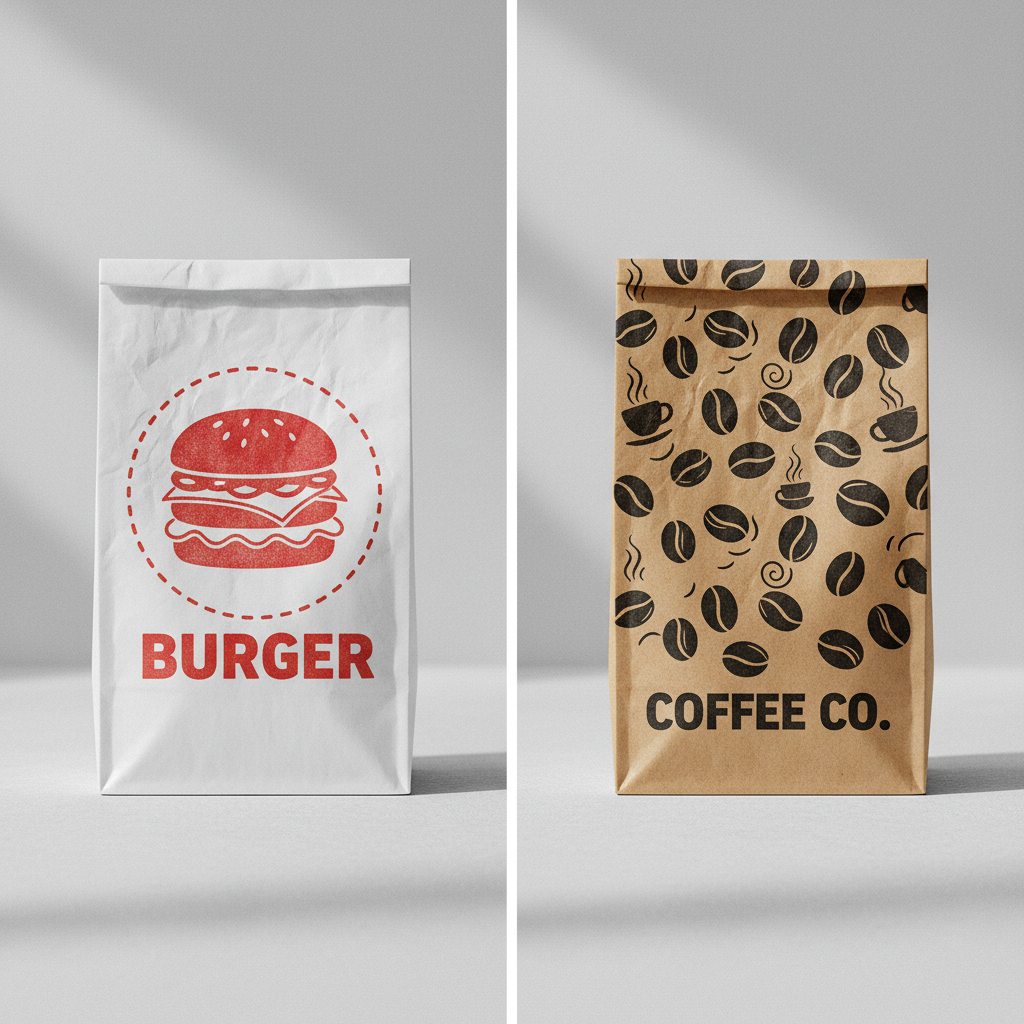
Offering a rustic, organic look, brown Kraft is a favorite for brands emphasizing sustainability. It is unbleached and provides excellent opacity. However, color printing on brown Kraft requires adjustments to artwork, as ink colors will appear darker and less vibrant than on a white background.
White Kraft (Bleached):
White greaseproof paper offers a pristine canvas for branding. It allows for vibrant, accurate color reproduction, making it the preferred choice for brands with complex logos or bright color palettes. It implies hygiene and cleanliness, which is often desirable in the medical or premium confectionery sectors.
Paper Weight (GSM)
The thickness of the paper is measured in Grams per Square Meter (GSM).
- 30-40 GSM: Very thin. Typically used for individual pastry sleeves or light sandwich bags.
- 40-60 GSM: Standard weight. Provides a good balance of durability and cost-effectiveness for burgers, fries, and bakery items.
- 60-80+ GSM: Heavy duty. Used for larger bags carrying multiple items or heavier foods to prevent tearing.
3. Bag Styles and Dimensions
The structural design of the bag affects how easy it is to load (operational efficiency) and how the customer consumes the product (user experience).
Flat vs. Satchel vs. SOS
- Flat Bags (V-Bottom): Simple, two-dimensional bags. Best for flat items like cookies, pretzels, or thin sandwiches. They are cost-effective and space-saving.
- Satchel Bags (Gusseted): These feature side gussets (folds) that expand to accommodate bulkier items like thick sandwiches or multiple pastries. They do not stand upright on their own.
- Square Bottom (SOS – Self Opening Sack): These bags have a flat, rectangular bottom and side gussets, allowing them to stand upright. This is the standard format for fast-food takeout orders, allowing for easy loading of burger boxes and fry cartons.
Standard Size Guide (Approximate)
While custom sizes are available, adhering to industry standards can reduce lead times and tooling costs.
- Small (approx. 10×15 cm): Cookies, single donuts.
- Medium (approx. 15×20 cm): Sandwiches, burgers, pastries.
- Large (approx. 20×30 cm +): Baguettes, multiple items, large bread loaves.
4. Customization and Printing Options
In B2B food service, a bag is a mobile billboard. High-quality printing turns a commodity item into a marketing asset. When ordering wholesale greaseproof paper bags, consider the following printing technologies.
Flexographic Printing
Flexography is the industry standard for printing on paper bags. It uses flexible relief plates and fast-drying inks.
Pros:
– Cost-effective for high volumes.
– Supports water-based, food-safe inks.
– Good for solid colors and logos.
Cons:
– Higher setup costs (plates) for small runs.
– Not ideal for photo-realistic images.
Offset Printing
Used less frequently for bags but available for high-end luxury packaging. It offers superior image quality and gradient detail but comes at a higher unit cost.
Artwork Considerations
- Vector Files: Always supply artwork in AI, PDF, or EPS formats to ensure crisp lines.
- Ink Coverage: Heavy ink coverage on thin greaseproof paper can sometimes affect the paper’s curl or texture. Minimalist designs often work best.
- Food Safety: Ensure your supplier uses certified food-grade inks (water-based or soy-based) that comply with FDA or EU regulations.
5. Common Use Cases and Recommended Specs
To help you select the right product, here are typical specifications for common food service applications.
The Burger Joint
Requirement: High grease resistance, heat retention, easy loading.
Recommendation: 45-50 GSM White or Brown Kraft, KIT level 6-7, Gusseted Satchel or L-fold shape.
Why: Prevents ketchup and meat juices from leaking; gussets accommodate the bun height.
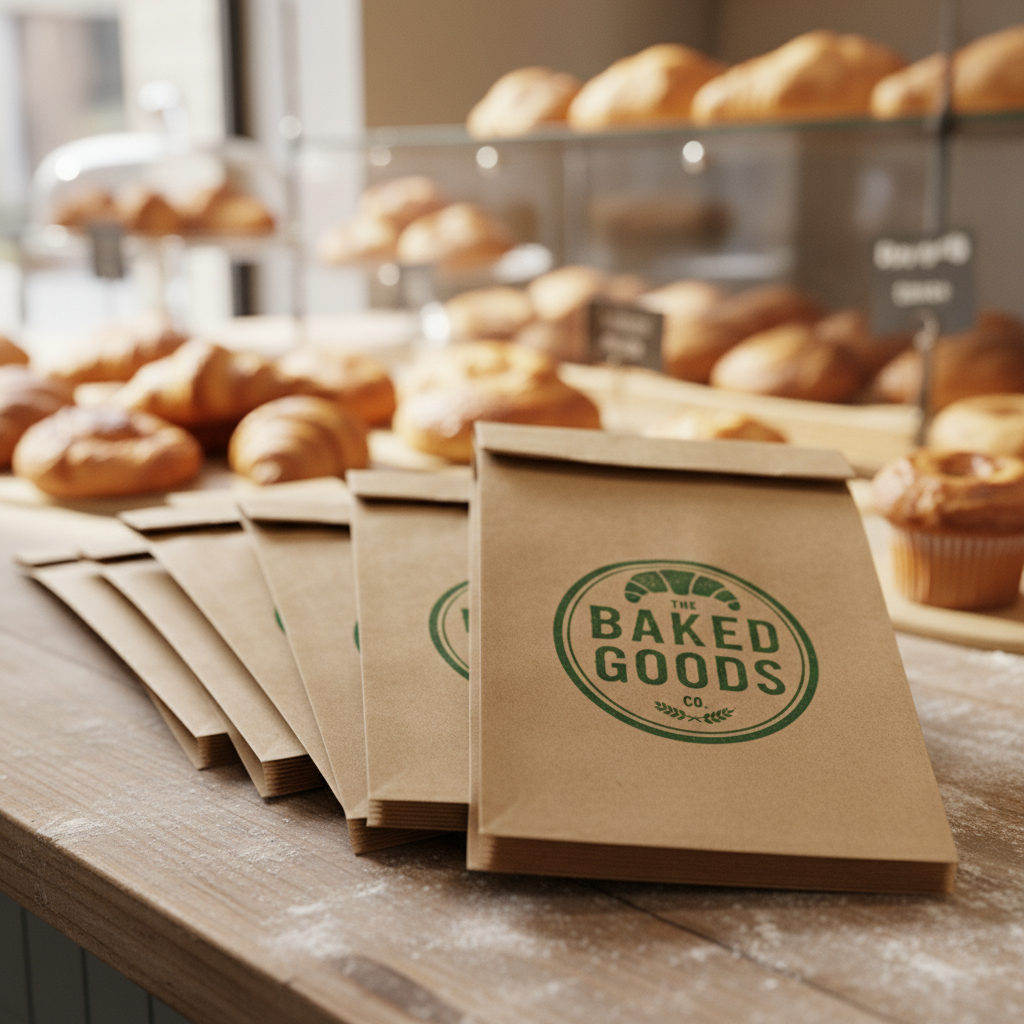
The Artisan Bakery
Requirement: Breathability (for crusty bread), aesthetic appeal, moderate grease resistance.
Recommendation: 35-40 GSM Brown Kraft, KIT level 3-4, Window option (optional).
Why: Bread needs to breathe to stay crusty; too much coating can make the crust soggy. A lower KIT level is usually sufficient for dough-based products.
Fried Chicken / Fries
Requirement: Maximum grease hold-out, tear resistance.
Recommendation: 50-60 GSM, KIT level 8+ or PE-Lined.
Why: Hot oil is aggressive. Standard paper will turn translucent and weak almost instantly without high-level treatment.
6. Quality Assurance and Manufacturing Standards
When evaluating a manufacturer for greaseproof paper bags, look beyond the price per unit. Quality assurance protocols are critical to ensuring consistency across millions of units.
Key Quality Checks
- Grease Resistance Testing: Regular batch testing using the KIT method to ensure the chemical barrier is active.
- Seam Strength: Adhesives used to seal the bottom and sides must be food-grade and heat-resistant. A bag that bursts open at the bottom is a liability.
- Dimensional Accuracy: Automated machinery should ensure tight tolerances so that bags fit perfectly into dispensing systems or outer cartons.
7. Buying Guide: How to Order Wholesale
Navigating the procurement process requires attention to logistics and volume. Here is a checklist for international buyers.
Minimum Order Quantities (MOQ)
Custom printing typically requires a higher MOQ than stock items due to the setup time for printing plates.
– Stock Items: Lower MOQs, faster delivery, but no branding.
– Custom Print: MOQs often start at 10,000 to 30,000 units depending on size and color complexity.
Lead Times
Production times vary based on complexity. A standard timeline might look like this:
– Artwork Approval: 2-5 days.
– Plate Making: 3-7 days.
– Production: 15-25 days.
– Shipping: Variable based on destination (Air vs. Sea).
Sampling
Before committing to a full container load, always request samples. You can contact our team to request physical samples to test with your actual food products. This validates the size and grease resistance in a real-world environment.
8. Sustainability and Environmental Impact
Modern consumers are eco-conscious. Moving away from plastic to paper is a great step, but the details matter.
- Compostability: Unlined greaseproof paper (fluorochemical treated) is often compostable, whereas PE-lined paper requires specialized recycling facilities to separate the plastic layer.
- FSC Certification: Ask if the raw pulp is sourced from responsibly managed forests.
- Water-Based Inks: These reduce Volatile Organic Compound (VOC) emissions during manufacturing.
9. Troubleshooting Common Issues
Even with the best suppliers, issues can arise if specs aren’t matched to the application.
- Problem: Bag becoming translucent.
Cause: KIT level too low for the oil content of the food.
Solution: Increase KIT level or switch to PE-lined. - Problem: Ink smudging.
Cause: Poor quality ink or insufficient drying time before packing.
Solution: Ensure the supplier uses high-quality flexo processes and UV curing if necessary. - Problem: Soggy food.
Cause: Bag is too sealed (e.g., fully PE lined) for a hot, steaming product.
Solution: Use perforated bags or breathable greaseproof paper to let steam escape.
Frequently Asked Questions (FAQ)
1. What is the difference between wax paper and greaseproof paper?
Wax paper is coated with paraffin wax. While it resists grease, it cannot withstand high heat (the wax melts) and is not suitable for hot foods. Greaseproof paper is chemically or mechanically treated to resist oil and can typically withstand higher temperatures without transferring residue to the food.
2. Can greaseproof bags be microwaved?
Generally, standard greaseproof paper is microwave-safe. However, bags with foil linings or specific metallic inks are not. Always verify the spec sheet for microwave suitability.
3. Are your greaseproof bags recyclable?
Unlined greaseproof bags are widely recyclable and compostable. Bags with a Polyethylene (PE) lining are recyclable only in facilities that can separate the plastic from the paper. We recommend checking local recycling guidelines.
4. How do I determine the right size for my product?
Measure your food product (Length x Width x Height). Add 1-2 cm to the width and 3-5 cm to the height to allow for easy loading and folding over the top. For gusseted bags, ensure the gusset width matches the thickness of your product (e.g., a burger bun).
5. What file format do you need for my logo?
We require vector files (AI, EPS, or PDF) to ensure the highest print quality. Raster images (JPEG, PNG) often result in pixelated or blurry prints on paper textures.
6. Can I print on the inside of the bag?
Printing on the inside is possible but generally not recommended for direct food contact unless specific food-safe barrier coatings are applied over the ink. It is more cost-effective and safer to print on the exterior.
7. What is the minimum order for custom printed bags?
MOQs vary by size and design complexity. Typically, custom runs start at 30,000 units to make the unit cost viable. Please check our ordering guide for specifics.
Conclusion
Choosing the right greaseproof paper bag is a balance of functionality, aesthetics, and budget. Whether you are serving artisan croissants or greasy street food, the right packaging protects your product and elevates your brand.
At YBJ Packing, we specialize in helping businesses navigate these choices with high-quality, custom-printed solutions tailored to the food service industry. Don’t let poor packaging compromise your customer’s experience.
Ready to upgrade your food packaging? Request a quote today or ask for a sample kit to see our quality firsthand.