

In the competitive landscape of food service and retail, packaging is more than just a vessel—it is a critical component of operational efficiency and brand identity. Among the various packaging solutions available, the Self-Opening Sack (SOS) paper bag stands out as a versatile, reliable, and cost-effective standard. For procurement managers, restaurant chains, and distributors, understanding the technical nuances of custom SOS paper bag wholesale sourcing is essential to optimizing costs and ensuring product quality.
This comprehensive guide delves deep into the specifications, material science, printing technologies, and supply chain strategies required to make informed purchasing decisions. whether you are sourcing for a multinational fast-food chain or a boutique bakery network, this guide covers everything from GSM selection to logistics.
1. Understanding the SOS Paper Bag: Definition and Mechanics
The term “SOS” stands for Self-Opening Sack (or sometimes Self-Opening Satchel). It refers to a specific structural design of paper bag characterized by a rectangular block bottom and side gussets. This design allows the bag to stand upright on its own when opened, making it exceptionally efficient for rapid filling in high-paced environments like checkout counters and kitchens.
Key Structural Components
- Block Bottom: Unlike flat bags or pinch-bottom bags, the SOS bag has a flat, rectangular base. This provides stability, preventing the bag from tipping over when loaded with heavy or bulky items like glass jars, stacked containers, or bulk grains.
- Side Gussets: These expandable folds on the sides allow the bag to accommodate volume without stressing the material. They also provide additional printable surface area for branding.
- Thumb Cut (Optional): A small semi-circular cut at the top opening to facilitate easy gripping and opening of the bag.
- Serrated Top Edge: Most SOS bags feature a serrated cut at the top, a result of the high-speed manufacturing process, which also reduces the risk of paper cuts compared to straight-edge knife cuts.
For buyers exploring SOS paper bags, the primary advantage lies in the “self-opening” feature. When a worker flicks the bag, the air resistance against the gussets and bottom forces it open instantly, saving seconds per transaction—time that accumulates significantly in high-volume operations.
2. Material Specifications: Choosing the Right Substrate
Selecting the correct paper grade is the most critical technical decision in the buying process. The choice impacts the bag’s strength, printability, grease resistance, and cost.
Kraft Paper Variants
The backbone of most SOS bags is Kraft paper, produced via the chemical sulfate process which maintains long fibers for superior strength.
- Natural Brown Kraft (Virgin): Made from unbleached wood pulp. It offers the highest tensile strength and tear resistance. Ideal for heavy-duty applications like grocery bags or hardware packaging. It communicates an eco-friendly, rustic aesthetic.
- White Bleached Kraft: Treated to remove the natural brown color. This substrate provides a pristine canvas for high-quality, vibrant printing. It is preferred by brands requiring precise color matching (Pantone) and sharp graphics.
- Recycled Kraft: Composed of post-consumer or post-industrial waste. While slightly weaker than virgin pulp due to shortened fibers, it is a sustainable choice for lighter loads. Buyers should specify the percentage of recycled content required for their sustainability goals.
Paper Weight (GSM) Guidelines
Paper thickness is measured in Grams per Square Meter (GSM). Choosing the wrong GSM can lead to bag failure (tearing) or unnecessary cost (over-engineering).
| Application | Recommended GSM Range | Notes |
|---|---|---|
| Light Pastries / Cookies | 40 – 60 GSM | Cost-effective, sufficient for lightweight, dry items. |
| Fast Food / Takeout | 70 – 90 GSM | Balances structure with flexibility; often requires greaseproofing. |
| Grocery / Heavy Retail | 90 – 120+ GSM | High tear resistance required for canned goods or bottles. |
Grease Resistance and Coatings
For the food service industry, paper strength is not enough; the material must resist oil and moisture penetration. Standard paper absorbs grease, leading to unsightly stains and weakened structural integrity.
- Kit Levels (Greaseproof Paper): “Kit” is a standard measure of grease resistance, ranging from 1 to 12. A Kit 3-5 is suitable for baked goods like croissants, while Kit 7+ is necessary for fried foods or oily items. This treatment is often integrated into the paper pulp.
- PE Coating (Polyethylene): A thin layer of plastic laminated to the interior. It provides a complete barrier against moisture and grease. Ideal for hot, steamy food or items with sauces.
- PLA Coating (Polylactic Acid): A biodegradable alternative to PE, derived from plant starches. It offers similar barrier properties but is compostable, aligning with strict environmental regulations.
3. Sizing and Capacity: The Standard “#” System
SOS bags often follow a legacy numbering system (e.g., #4, #12), but international manufacturing usually relies on precise metric dimensions: Width (W) x Gusset (G) x Height (H).
Common Industry Sizes
- Small (#4 – #6): Typically used for single items, candies, or small sides. Dimensions approx. 127mm x 76mm x 240mm.
- Medium (#8 – #12): The standard lunch bag size. Fits a sandwich, drink, and side. Dimensions approx. 155mm x 100mm x 300mm.
- Large (#20 – #25): Used for larger takeout orders or small grocery runs. Dimensions approx. 210mm x 125mm x 400mm.
- Jumbo / 1/6 Barrel: The standard large grocery sack size, designed to fit the volume of roughly 1/6 of a barrel.
Pro Tip: When requesting a quote, always specify the dimensions in millimeters to avoid conversion errors. Measure the height from the bottom of the bag to the top edge, and the width across the front face (excluding gussets).
4. Printing Technologies for Custom Branding
Custom printing transforms a commodity item into a powerful marketing tool. The choice of printing method depends on your design complexity and order volume.
Flexographic Printing (Flexo)
This is the industry standard for sos paper bag wholesale production. It uses flexible relief plates and fast-drying inks.
- Pros: Extremely cost-effective for high volumes; supports up to 4-6 colors; water-based inks are food safe.
- Cons: High setup costs (plates); lower resolution compared to offset; not ideal for photographic images.
- Best For: Logos, patterns, text, and vector graphics on large runs (10,000+ units).
Offset Printing
Used for premium packaging where image quality is paramount.
- Pros: Photo-realistic quality; superior color gradients and details.
- Cons: More expensive per unit; slower production process.
- Best For: Luxury retail bags, promotional events, or complex artwork requiring high fidelity.
Artwork Preparation Checklist
To ensure a smooth production workflow with your supplier:
- File Format: Provide vector files (AI, EPS, PDF). Raster images (JPG, PNG) will pixelate when scaled.
- Color Codes: Specify Pantone (PMS) or CMYK codes. Do not rely on screen colors (RGB).
- Safety Margins: Keep critical text and logos at least 10mm away from the edges and bottom fold to prevent them from being cut off or hidden in the gusset fold.
- Ink Coverage: Heavy ink coverage on thin paper can cause warping. Consult with your manufacturer about “ink saturation” limits.
5. Quality Control and Compliance
In B2B food packaging, quality assurance is non-negotiable. A bag failure can result in spilled food, customer dissatisfaction, and liability issues.
Key Testing Parameters
- Tensile Strength Test: Measures the force required to break the paper strip. Ensures the bag won’t rip under normal load.
- Burst Strength (Mullen Test): Measures the pressure required to puncture the paper. Critical for bags carrying sharp-edged boxes.
- Bottom Paste Adhesion: The block bottom is glued. Manufacturers must test the adhesive bond to ensure the bottom doesn’t drop out, especially when the contents are hot (which can soften some glues).
- Migration Testing: For food-contact bags, tests ensure that inks and paper chemicals do not migrate into the food.
Regulatory Compliance
Ensure your supplier complies with relevant standards for your target market, such as FDA (21 CFR 176.170) for the US or Regulation (EC) No 1935/2004 for Europe. Always request a Declaration of Compliance (DoC) for food-grade materials.
6. The Wholesale Buying Guide: Strategy & Logistics
Navigating the food packaging solutions market requires understanding the trade-offs between cost, volume, and lead time.
Minimum Order Quantities (MOQ)
Custom printing requires machine setup, plate creation, and ink mixing. Therefore, MOQs for custom SOS bags are typically higher than stock items.
- Typical Custom MOQ: 30,000 to 50,000 units depending on size and print complexity.
- Stock MOQ: Often sold by the carton (e.g., 500 units), but without customization.
Strategy: If your storage space allows, ordering a 6-month supply can significantly reduce the unit price compared to ordering monthly, as it amortizes the setup and shipping costs over a larger volume.
Lead Times and Planning
Production timelines vary based on factory load and complexity.
- Artwork Approval: 2-5 days.
- Plate Making: 5-7 days.
- Production: 15-25 days.
- Shipping: 30-45 days for sea freight (international).
Recommendation: Start your ordering process at least 3 months before you need the stock on hand, especially for new designs.
Logistics: Volume vs. Weight
Paper bags are dense when packed flat. However, shipping costs are calculated based on the greater of actual weight or volumetric weight. Optimizing carton sizes to fit standard pallets (1.0m x 1.2m) maximizes container space and reduces freight costs per unit.
7. Use Cases: Matching the Bag to the Business
Bakeries and Cafés
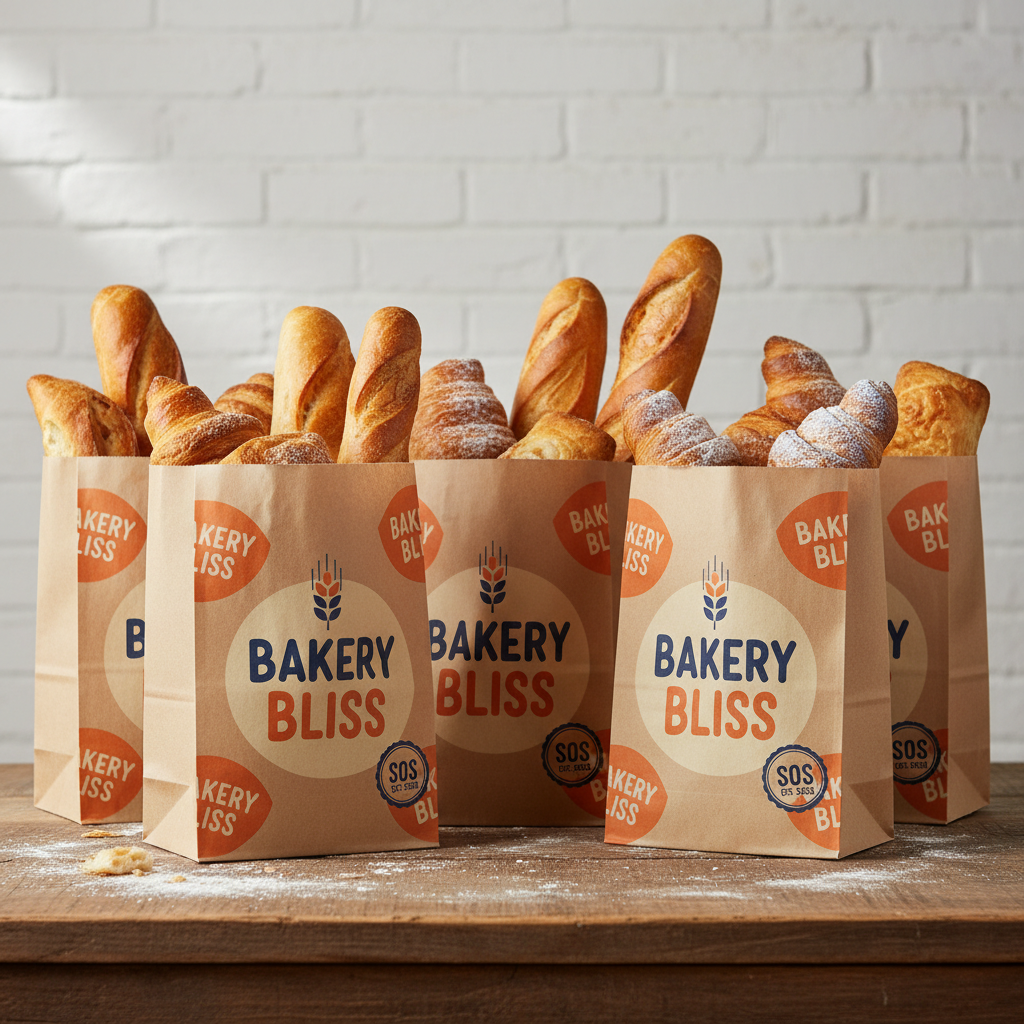
Requirement: Grease resistance and breathability. Hot bread needs to release steam to stay crusty, but butter shouldn’t stain the bag.
Solution: Brown Kraft SOS with window patching (optional) and Kit 5 grease resistance. No PE coating (to allow breathing).
Fast Food Chains
Requirement: Speed and volume. Bags must pop open instantly.
Solution: Standard white SOS bags, lower GSM (70gsm) for cost efficiency, optimized for tray-less service.
Premium Retail / Gift Shops
Requirement: Aesthetics and rigidity.
Solution: High GSM (100+) white Kraft, offset printed with matte varnish, potentially with twisted handles (though technically a different category, the SOS structure remains the base).
8. Frequently Asked Questions (FAQ)
Q1: Can SOS paper bags be microwaved?
A: Generally, yes, plain paper bags are microwave safe. However, bags with foil linings or metallic inks are NOT microwave safe. Bags with PE coatings should be tested, as the plastic may melt at high temperatures. Always confirm with the manufacturer.
Q2: What is the difference between SOS and Pinch Bottom bags?
A: SOS bags have a flat, block bottom that allows them to stand upright. Pinch bottom bags have a tapered, envelope-like bottom and cannot stand on their own. SOS bags offer greater volume and ease of filling.
Q3: How do I choose between White and Brown Kraft?
A: Choose Brown Kraft for an eco-friendly, natural look and slightly higher strength. Choose White Kraft if your branding requires bright, accurate colors or a clean, clinical appearance.
Q4: Are your inks food safe?
A: Yes, reputable manufacturers use water-based or soy-based inks for food packaging that comply with food safety regulations. They are low-odor and non-toxic.
Q5: Can I print on the gussets (sides)?
A: Yes, gusset printing is a great way to maximize brand exposure. It is visible even when bags are stacked. However, avoid complex designs exactly on the fold line.
Q6: What is the shelf life of paper bags?
A: If stored correctly (cool, dry place, away from direct sunlight), paper bags can last for years. However, high humidity can affect paper stiffness and glue integrity over long periods (12+ months).
Q7: Can I get a physical sample before the full run?
A: Yes. We can provide stock samples for quality checking immediately. For a custom-printed sample, there is usually a sampling fee to cover the setup of the machine for a single unit, which is often refundable upon placing a bulk order.
Conclusion: Sourcing Success Starts with Specifications
Choosing the right custom SOS paper bag is a balance of functionality, branding, and budget. By clearly defining your requirements—from GSM and grease resistance to print coverage and logistics—you can secure a packaging solution that enhances your operational flow and delights your customers.
At YBJ Packing, we specialize in helping international buyers navigate these technical choices to produce high-quality, food-grade packaging solutions tailored to your brand.
Ready to upgrade your packaging? Review our ordering process or contact our team today to request a quote and free sample kit.