

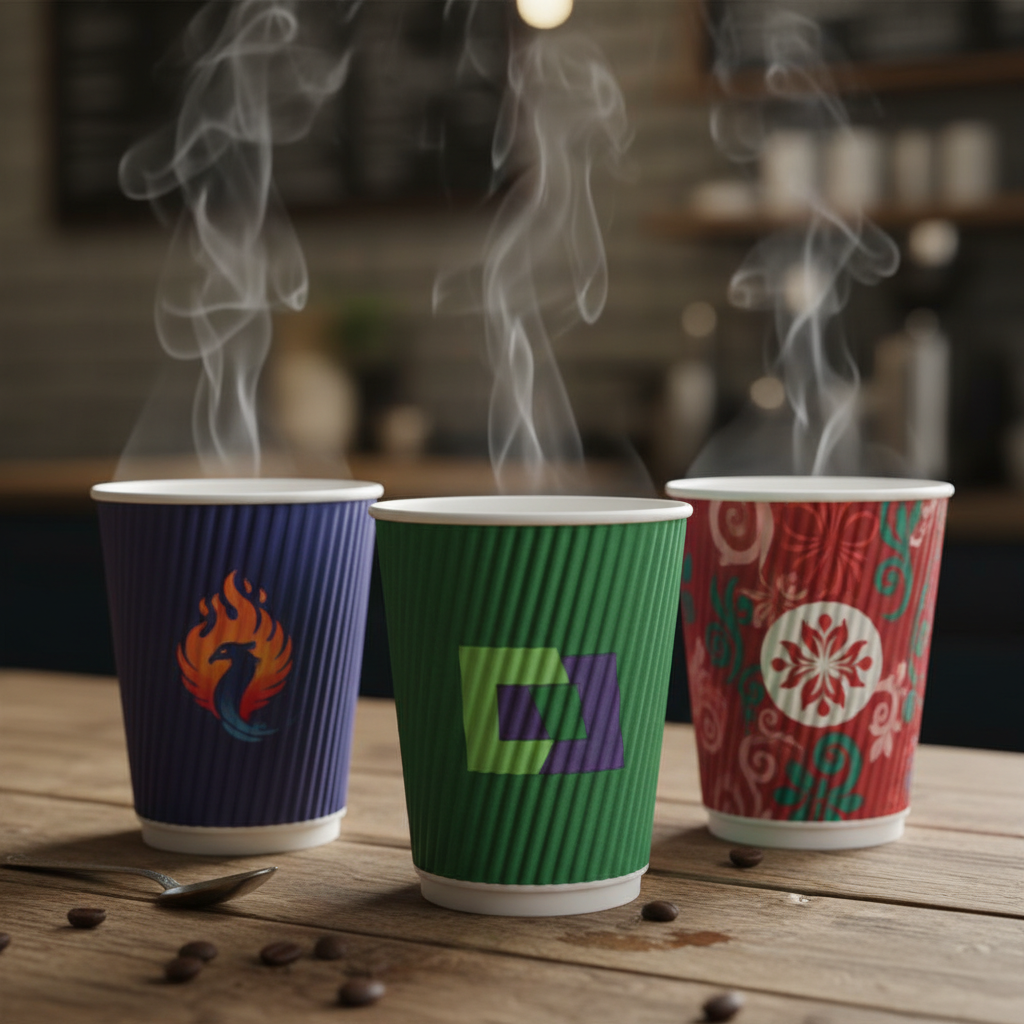
In the competitive landscape of food service and beverage distribution, the humble paper cup serves a dual purpose: it is a functional vessel for hot liquids and a mobile billboard for brand identity. Among the various options available to procurement managers and coffee shop owners, custom ripple wall paper cups stand out as a premium choice. They offer superior insulation, eliminating the need for separate sleeves, while providing a unique tactile experience for the consumer.
For international buyers—whether you are sourcing for a cafe chain, a distributor network, or a corporate campus—understanding the technical nuances of ripple wall cups is essential. From the grammage of the paperboard to the intricacies of printing on a textured surface, every detail affects the final cost, performance, and brand perception.
This comprehensive guide explores the manufacturing standards, material options, and purchasing strategies for sourcing ripple wall paper cups wholesale. We will examine how to balance cost with quality, ensure lid compatibility, and navigate the customization process to deliver a product that enhances your brand’s reputation.
What Sets Ripple Wall Cups Apart?
Ripple wall cups, often referred to as corrugated cups, are distinct from standard single-wall or smooth double-wall cups due to their textured exterior. This design is not merely aesthetic; it is a functional engineering solution to the problem of heat transfer.
The Triple-Layer Construction
Unlike a standard cup, a high-quality ripple wall cup typically involves a three-layer construction strategy:
- The Inner Cup: This is the structural core, usually made from food-grade virgin paperboard lined with a moisture barrier (PE, PLA, or aqueous coating) to prevent leakage.
- The Corrugated Middle: A layer of fluted or rippled paper is wrapped around the inner cup. This creates the defining texture.
- The Outer Wrap (Optional but common): In some designs, a thin outer layer binds the ripples, but in classic ripple cups, the ripples themselves form the outer surface, offering maximum grip.
This multi-layered approach significantly increases the rigidity of the cup. For wholesale buyers, this means the cups are less likely to deform when gripped firmly, reducing the risk of spills and burns—a critical safety consideration for hot beverages.
Thermal Insulation Mechanics
The primary advantage of sourcing ripple wall paper cups is their thermal efficiency. The corrugation creates air pockets between the inner wall and the outer surface. Air is a poor conductor of heat, meaning these pockets act as an insulating barrier.
This design keeps the beverage hot for longer periods while ensuring the outer surface remains cool enough to hold comfortably without a cardboard sleeve (clutch). For high-volume coffee shops, eliminating the need to stock and apply sleeves can simplify inventory management and speed up service times, offsetting the slightly higher unit cost of the cup itself.
Technical Specifications & Sizing
When ordering bulk ripple wall paper cups, precision in specifications is vital to ensure the product fits your specific operational needs and lid inventory.
Standard Capacities and Dimensions
While custom molds are possible, most manufacturers adhere to industry-standard sizes to ensure compatibility with standard lids. Common specifications include:
- 4 oz (approx. 118ml): Typically used for espresso or sampling. Top diameter is usually around 60-62mm.
- 8 oz (approx. 237ml): The standard “small” size. Common top diameter is 80mm.
- 12 oz (approx. 355ml): A versatile medium size. Top diameter is often 90mm, though 80mm versions exist (tall/slim).
- 16 oz (approx. 473ml): The standard “large.” Usually shares the 90mm lid with the 12oz cup, simplifying inventory.
- 20 oz (approx. 590ml): Extra-large size, also typically using a 90mm lid.
Buyer Tip: Always confirm the “Brim Capacity” versus the “Practical Fill” capacity. A cup listed as 12oz usually holds 12oz to the very brim, meaning the practical serving size is closer to 10-11oz to allow room for milk foam and a lid.
Material Grades and GSM
The strength of the cup is determined by the Paper Substance, measured in GSM (Grams per Square Meter). A typical specification for a premium ripple cup might look like this:
- Inner Layer: 300gsm + 18g PE lining.
- Ripple Layer: 120gsm – 160gsm corrugated paper.
- Backing Sheet (if applicable): 100gsm.
Higher GSM results in a stiffer, more premium-feeling cup. If you are targeting the luxury market, request samples with higher GSM specifications. For budget-conscious high-volume environments, slightly lower GSM can reduce costs, but be wary of going too low, which can cause the cup to feel flimsy when filled with hot liquid.
Lining Options: PE, PLA, and Water-Based
The internal lining is crucial for preventing the cup from turning into pulp. Buyers currently face three main choices:
- PE (Polyethylene): The traditional standard. Excellent moisture barrier and heat sealing properties. It is recyclable only in specialized facilities.
- PLA (Polylactic Acid): Derived from renewable resources like corn starch. It is industrially compostable but requires specific conditions to break down.
- Aqueous (Water-Based) Coating: The newest innovation. This coating is much thinner and allows the cup to be repulped and recycled more easily in standard paper streams in many jurisdictions.
Choosing the right lining depends on your local regulations and your brand’s sustainability goals. Be sure to check with your cups and accessories supplier regarding the certification of their coatings.
Custom Printing on Ripple Surfaces
Branding is the primary driver for custom orders. However, printing on a ripple wall cup presents different challenges compared to smooth cups.
Flexographic vs. Offset Printing
Flexographic Printing is commonly used for high-volume runs. It uses flexible relief plates and is cost-effective for simple designs with spot colors (Pantone). It is fast and efficient for bulk orders.
Offset Printing offers higher image quality and is better suited for complex artwork with gradients or photographic elements. However, due to the texture of ripple cups, the benefits of offset printing are sometimes less visible than on smooth double-wall cups.
Design Challenges with Corrugated Textures
The ripple texture physically interrupts the surface of the cup. This affects how the design is perceived:
- Fine Text: Avoid extremely small fonts or thin lines. The ink may break over the ridges of the ripple, making text illegible.
- Registration: Tight registration (lining up different colors perfectly) can be trickier on uneven surfaces.
- Distortion: The artwork is printed on a flat sheet before the corrugation process (in some methods) or printed on the outer liner before it is glued to the ripples. In the “S-flute” or vertical ripple designs, the print surface is interrupted.
Best Practice: Use bold logos and strong contrasting colors. If your brand relies on intricate details, consider a “double wall” cup with a smooth outer layer instead, or ask your manufacturer if they offer a “flat” ripple style where the corrugation is internal.
Ink Safety and Compliance
For food packaging, safety is non-negotiable. Ensure your manufacturer uses food-grade, low-migration inks. These inks are designed to prevent chemicals from leaching into the beverage or transferring from the outside of one cup to the inside of another when stacked (set-off). Request compliance documentation (such as FDA or EU regulatory compliance) for both the paperboard and the inks used.
Manufacturing and Quality Assurance
Understanding how your cups are made helps in assessing supplier capability.
The Corrugation Process
The manufacturing process involves feeding the outer paper layer through corrugating rollers to create the flute. This fluted paper is then laminated to a liner or directly to the inner cup. The precision of the glue application is critical; too little glue and the layers delaminate (separate), too much and the cup becomes heavy and expensive.
Leak Testing and Rim Rolling
A cup is useless if it leaks. Quality manufacturers perform regular leak tests during production runs, often using a colored liquid to spot failures quickly. Furthermore, the rim roll is a critical quality point. The rim must be tightly rolled and perfectly round to ensure a snap-fit with the lid. A deformed rim is the leading cause of coffee spills. When evaluating a sample, always test the rim stiffness and lid fitment immediately.
Comparing Ripple Wall to Double Wall and Single Wall
| Feature | Single Wall | Double Wall (Smooth) | Ripple Wall |
|---|---|---|---|
| Insulation | Low (Needs Sleeve) | High (Air Gap) | Very High (Corrugation) |
| Print Quality | Excellent | Excellent | Good (Texture limits detail) |
| Tactile Feel | Smooth/Hot | Smooth/Warm | Textured/Cool |
| Cost | Lowest | Medium-High | Medium-High |
Wholesale Buying Guide
Sourcing custom food packaging effectively requires navigating Minimum Order Quantities (MOQs), lead times, and logistics.
Understanding MOQs
For fully custom printed ripple cups, MOQs are typically higher than for plain cups. This is due to the setup costs involved in creating printing plates and calibrating the machinery for a specific design.
- Small Run: Some suppliers offer digital printing for quantities as low as 1,000–5,000 units, but the unit price will be significantly higher.
- Standard Run: Typical MOQs for flexo printing start around 30,000 to 50,000 units per size. This volume allows for a competitive unit price.
- High Volume: Orders exceeding 100,000 units usually unlock the best wholesale pricing tiers.
File Preparation for Custom Orders
To speed up the ordering process, have your artwork ready in vector format (AI, EPS, or PDF). Vector graphics allow the manufacturer to resize the logo without losing quality. Be prepared to provide Pantone (PMS) color codes to ensure your brand colors are matched accurately. Relying on RGB (screen colors) or CMYK values alone can sometimes lead to variations in the final print.
Logistics and Shipping
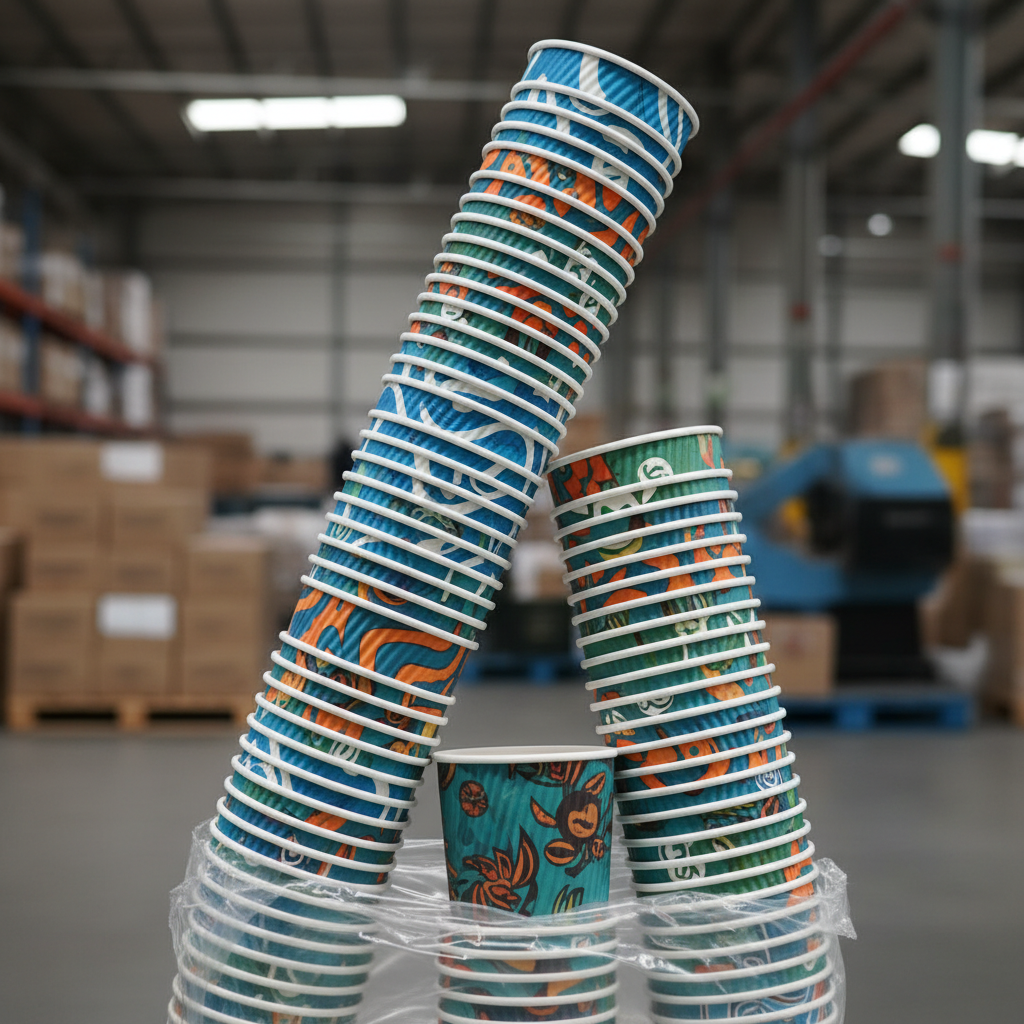
Paper cups are lightweight but voluminous. They “cube out” a shipping container before they “weigh out.” This means freight costs are calculated based on volume. To maximize efficiency, try to order in full container loads (20ft or 40ft HQ) or work with a supplier who can consolidate your order with other packaging items like lids, straws, or bags.
If you are ready to explore options, you can learn how to order directly or reach out to the sales team.
Sustainability in Disposable Cups
Sustainability is no longer a niche requirement; it is a market expectation. When ordering wholesale ripple cups, consider the end-of-life scenario for your product.
- Recyclability: Standard PE-lined cups require specialized recycling facilities that can separate the plastic lining from the paper.
- Compostability: PLA-lined cups are compostable but generally require industrial composting facilities (high heat) to break down. They do not decompose effectively in home compost bins or landfills.
- Forest Stewardship: Ask your supplier if the paperboard is sourced from sustainably managed forests (e.g., FSC certified sources).
Communicating these eco-credentials on the cup itself (e.g., printing “Compostable” or recycling logos) can enhance your brand value and assist consumers in disposing of the cup correctly.
Frequently Asked Questions (FAQ)
1. Can I print on the entire surface of a ripple wall cup?
Yes, full-wrap printing is possible. However, due to the corrugated texture, designs with large blocks of solid color or simple patterns often look better than intricate photographic images.
2. Do ripple wall cups require a separate sleeve?
No. The primary benefit of ripple wall cups is their superior insulation, which eliminates the need for an additional cardboard sleeve, saving you money and storage space.
3. What is the typical lead time for custom printed orders?
Lead times vary by season and factory capacity, but generally, you should allow 3–5 weeks for production after artwork approval, plus shipping time. Sea freight can add another 4–6 weeks depending on your location.
4. Are the lids included with the cups?
Typically, lids are sold separately. This allows you to choose between different styles (sip lids, reclosable lids) and colors (black, white). Ensure you order lids that match the rim diameter of your cups (usually 80mm or 90mm).
5. Can I get a physical sample before placing a large order?
Yes, reputable suppliers will provide samples. It is highly recommended to request samples to test the insulation quality and lid fitment before committing to a bulk order. You can contact us to request a sample pack.
6. How do I choose the right size for my coffee shop?
Analyze your sales mix. If you sell mostly flat whites and cappuccinos, the 8oz and 12oz sizes will be your high-volume items. If you serve large lattes or iced drinks, the 16oz is essential. Most shops stock 8oz, 12oz, and 16oz to cover all bases.
7. Is the ripple layer made of recycled paper?
Often, yes. While the inner cup that touches the beverage must be virgin food-grade board, the outer corrugated layer is frequently made from recycled content to improve sustainability and reduce costs.
Conclusion
Sourcing custom ripple wall paper cups wholesale is a strategic decision that impacts your customer’s experience and your bottom line. These cups offer excellent thermal protection, a premium tactile feel, and a strong canvas for your brand. By paying attention to material specifications, printing limitations, and lid compatibility, you can secure a product that meets international quality standards.
Whether you are launching a new coffee chain or upgrading the packaging for a corporate office, choosing the right manufacturer is key to ensuring consistent quality and reliable delivery.
Ready to elevate your beverage packaging? Request a quote today to discuss your custom requirements and get a competitive price on bulk orders.