

Introduction: The Strategic Importance of High-Performance Noodle Packaging
In the competitive landscape of the food service industry, packaging serves a dual purpose: it is both a functional vessel and a primary marketing channel. For restaurants, Asian cuisine franchises, and food distributors, the humble noodle box represents a critical touchpoint between the brand and the consumer. When sourcing custom noodle boxes wholesale, buyers must navigate a complex array of material specifications, printing technologies, and structural designs to ensure the final product meets the rigorous demands of hot, liquid-heavy foods.
The rise of food delivery apps has intensified the need for robust packaging. A noodle box must withstand high temperatures, resist grease and liquid penetration, and retain heat during transit, all while maintaining structural integrity. A soggy, leaking box can damage a restaurant’s reputation faster than a negative review. Conversely, a well-engineered, beautifully printed box enhances the dining experience, reinforces brand identity, and encourages social sharing.
This comprehensive guide is designed for procurement officers, operations managers, and business owners. We will explore the technical nuances of manufacturing noodle boxes, from paperboard grades and barrier coatings to advanced printing options and supply chain considerations. Whether you are scaling up operations or rebranding, understanding these details will help you make informed purchasing decisions.
Material Science: Selecting the Right Board and Coating
The foundation of any high-quality food container is the raw material. For noodle boxes, which often contain sauces, broths, and oils, the choice of paperboard and coating is non-negotiable. Using standard cardstock without appropriate treatment will lead to immediate structural failure.
1. Paperboard Grades
Most commercial noodle boxes are manufactured from food-grade paperboard. The two most common types are:
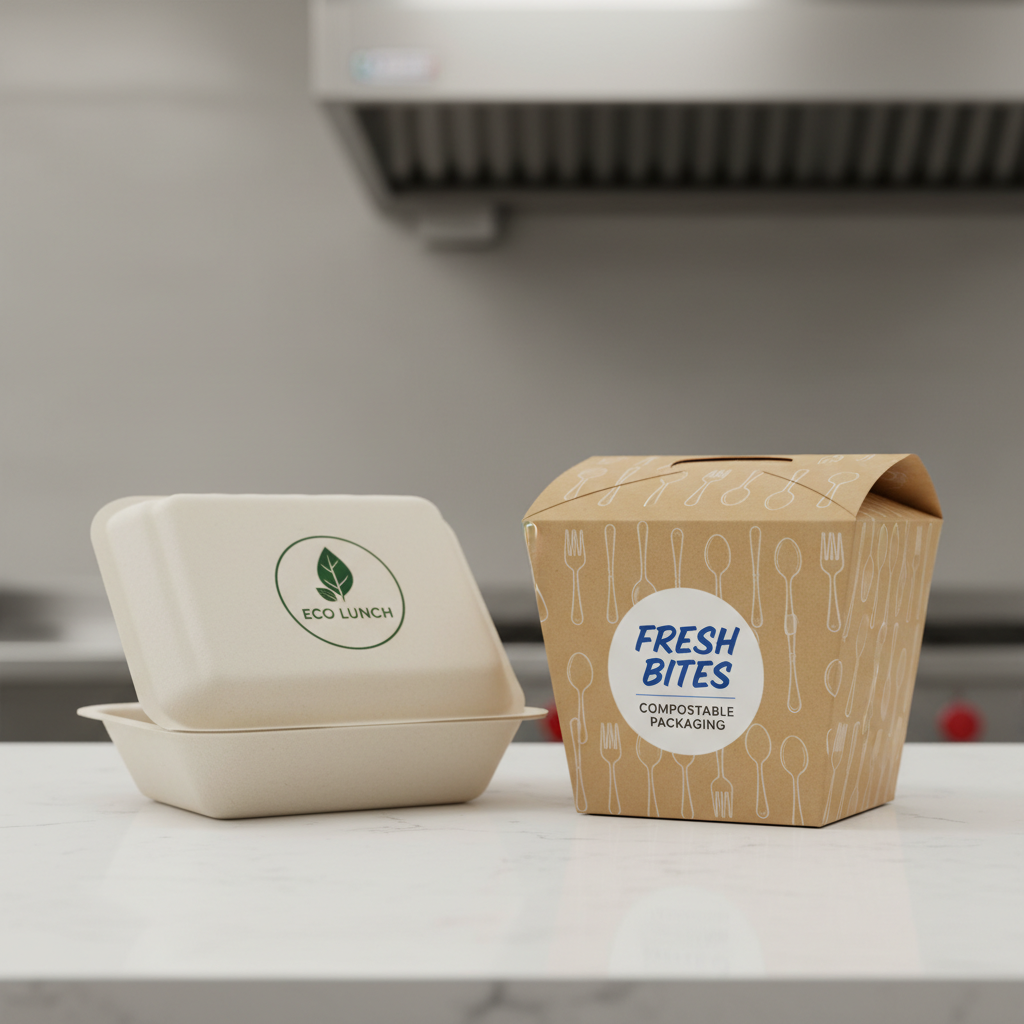
- Kraft Paperboard (Brown): Known for its high tear resistance and eco-friendly aesthetic. Unbleached Kraft board is popular among brands emphasizing organic, natural, or sustainable values. It provides a rustic look but can affect how printed colors appear (colors may look darker or more muted).
- Ivory Board / SBS (Solid Bleached Sulfate): This is a premium, white paperboard produced from bleached chemical pulp. It offers a smooth, bright white surface that is ideal for high-resolution, vibrant printing. If your brand relies on complex graphics, gradients, or specific Pantone color matching, SBS is the superior choice.
2. Thickness and Weight (GSM)
Paper thickness is measured in Grams per Square Meter (GSM). For noodle boxes, the board must be rigid enough to hold heavy contents without buckling.
- Standard Range (280gsm – 320gsm): This is the industry standard for small to medium-sized boxes (e.g., 16oz to 26oz). It offers a good balance of cost and durability.
- Heavy Duty (320gsm – 350gsm+): Required for larger capacities (32oz and above) or for menus featuring particularly dense or wet foods. Higher GSM ensures the walls of the box do not collapse when stacked in a delivery bag.
3. Barrier Coatings: Grease and Liquid Resistance
Paper is naturally porous. To hold noodles with sauce, the interior (and sometimes the exterior) must be coated. This is often the most critical specification in your food packaging solutions order.
- PE (Polyethylene) Coating: The traditional industry standard. A thin layer of plastic is laminated onto the paperboard.
- Single PE: Coating on the inside only. Sufficient for most standard takeout orders.
- Double PE: Coating on both the inside and outside. This prevents condensation from weakening the box from the outside (common with very hot foods in cold climates) and adds extra rigidity.
- PLA (Polylactic Acid) Coating: A biodegradable alternative derived from renewable resources like corn starch. PLA offers similar grease resistance to PE but is compostable in industrial facilities. It is an excellent choice for brands targeting eco-conscious consumers.
- Aqueous Coating: A water-based coating that provides moderate grease resistance. While more easily recyclable, it may not be suitable for extremely liquid-heavy dishes like soup noodles.
Structural Design: Shapes, Bottoms, and Closures
The structural design of the box dictates how easily it can be filled, how well it stacks, and how the customer consumes the food.
Round Bottom vs. Square Bottom
Round Bottom Pails:
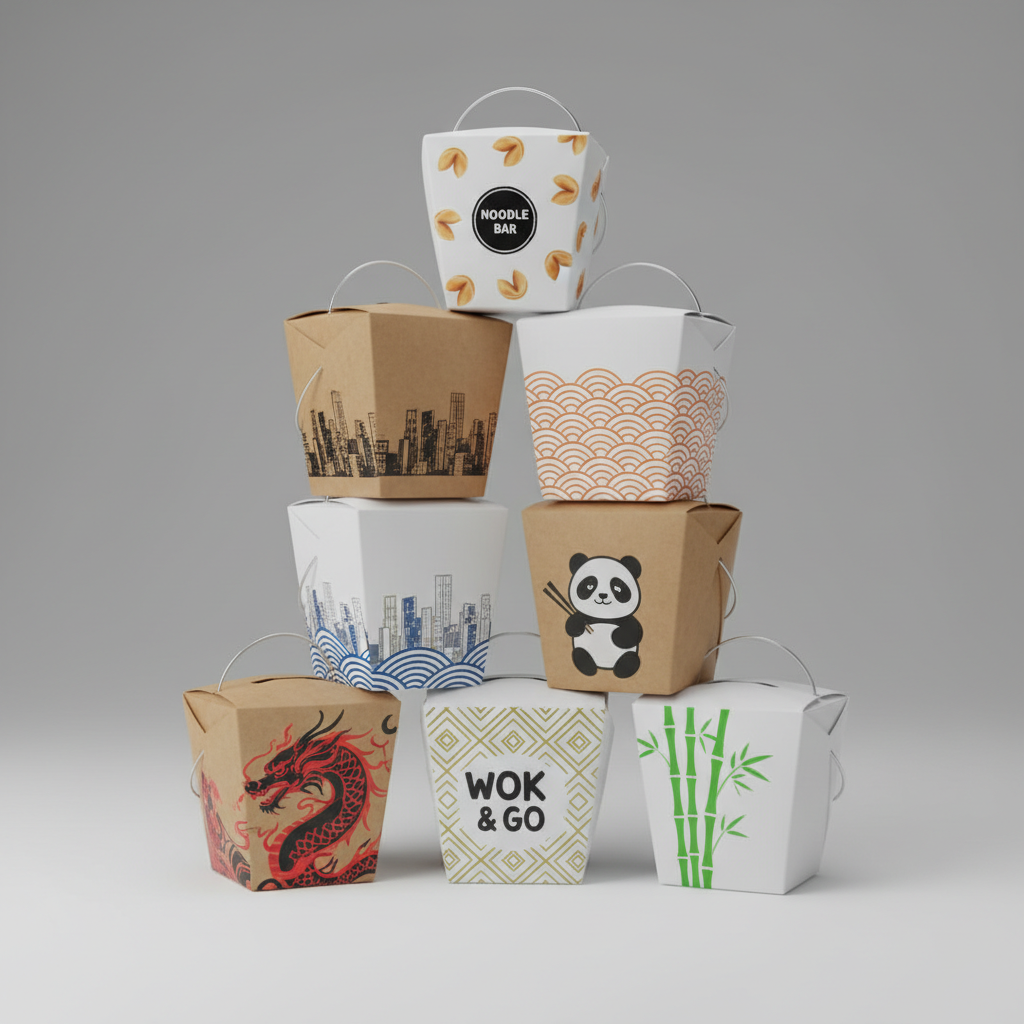
Often associated with classic American-Chinese takeout, these pails are usually formed from a single piece of paperboard.
Pros: Iconic shape, excellent liquid retention (fewer seams at the bottom).
Cons: Can be unstable if not packed tightly; harder to print complex artwork across the curved surface.
Square Bottom Boxes:
These resemble an inverted truncated pyramid.
Pros: Extremely stable on flat surfaces, easy to stack in delivery bags, offers flat panels for clear branding.
Cons: The folded corners at the bottom must be glued precisely to prevent leaks.
Handle Options
- Wire Handles: The traditional wire bail handle allows for easy carrying. However, boxes with metal handles cannot be microwaved. This is a significant drawback for modern consumers who often reheat leftovers.
- No Handle / Fold Top: Many modern noodle boxes rely on a folding top closure (often an interlocking petal or tab lock) without a handle. This makes the box 100% microwave-safe (provided the coating is also safe) and easier to stack.
Leak-Proof Construction
For noodle dishes with significant sauce content, request “webbed corners” or a folded-bottom construction rather than a glued-seam bottom if possible. High-quality manufacturing ensures that any glued seams are reinforced and tested for liquid hold-out times.
Printing Technologies and Customization
Custom printing transforms a generic container into a mobile billboard. When ordering custom noodle boxes, understanding the printing process helps you manage costs and quality expectations.
1. Offset Printing (Lithography)
Offset printing is the gold standard for high-volume, high-quality packaging.
Best for: Photographic images, complex gradients, and precise color matching.
Pros: Superior image quality; unit cost decreases significantly as volume increases.
Cons: High setup costs (plates), making it expensive for short runs.
2. Flexographic Printing
Flexo uses flexible relief plates and is commonly used for simpler designs.
Best for: Logos, patterns, and designs with solid blocks of color.
Pros: Lower tooling costs than offset; fast production speeds.
Cons: Cannot achieve the same high resolution or gradient smoothness as offset.
3. Color Systems: CMYK vs. Pantone (PMS)
- CMYK (Cyan, Magenta, Yellow, Key/Black): Used for full-color printing. Essential for photos.
- Pantone (PMS): Used for specific brand colors. If your brand logo is a specific shade of “Coca-Cola Red” or “Tiffany Blue,” specify the PMS code to ensure consistency across different batches and materials.
4. Finishes and Effects
To make your packaging stand out, consider post-print finishes:
- Matte Lamination: A sophisticated, non-reflective finish that feels premium to the touch.
- Gloss Lamination: Makes colors pop and adds a shiny, protective layer.
- Spot UV: Applies a high-gloss finish to specific areas (like a logo) against a matte background, creating visual depth.
- Embossing/Debossing: Physically raising or recessing parts of the design for a tactile effect.
Sizing Guide and Capacity Planning
Noodle boxes are typically measured in fluid ounces (oz). Choosing the right size is crucial for portion control and presentation. A box that is too large makes the portion look small; a box that is too small risks overflow.
| Size (Approx) | Typical Use Case | Capacity Notes |
|---|---|---|
| 16 oz (Small) | Side dishes, rice portions, small noodle appetizers, kids’ meals. | Compact, easy to hold. Good for high-margin sides. |
| 26 oz (Medium) | Standard lunch portions, Pad Thai, Chow Mein. | The most popular size for general noodle dishes. |
| 32 oz (Large) | Dinner portions, soup-heavy noodle dishes (Laksa, Ramen), sharing sizes. | Requires heavy-duty board (300gsm+) to maintain shape. |
Note: Dimensions (Top x Bottom x Height) can vary slightly between manufacturers. Always request a template or sample before finalizing artwork.
Manufacturing Quality Assurance
When dealing with wholesale suppliers, quality consistency is paramount. A reputable manufacturer will have strict QC protocols in place.
- Leak Testing: Random samples should be taken from the production line and filled with hot liquid (often colored water or oil) to test for leakage over a set period (e.g., 2 hours).
- Odor Testing: Food packaging must be odorless. High-quality manufacturers use food-grade, low-migration inks and adhesives to ensure no chemical smell transfers to the food.
- Fit and Form: The locking mechanisms (tabs/flaps) must function smoothly without tearing. The boxes should de-nest (separate) easily from the stack to speed up service in the kitchen.
Buying Guide: Ordering Wholesale
Ordering custom packaging is a significant investment. Here is a checklist to streamline the process when you are ready to order.
1. Minimum Order Quantity (MOQ)
Custom printing requires setting up production lines. Consequently, MOQs for fully custom boxes typically start around 10,000 to 30,000 units.
Tip: If you have limited storage but high volume, ask if the supplier can offer “warehousing and drip-feed” shipping, though this usually incurs extra costs.
2. Artwork Preparation
You will need to provide vector files (AI, PDF, EPS) of your design. The manufacturer will provide a “dieline” (a flat template of the box). Your designer must map the artwork onto this dieline, paying attention to “bleed” areas (where the ink goes past the cut line) and “safe zones” (keeping text away from folds).
3. Sampling
Before authorizing a production run of 50,000 boxes, request a sample.
Digital Sample: A 3D rendering or flat PDF proof (Check spelling and positioning).
Physical Sample: A prototype box. Note that a physically printed sample often costs significantly more due to setup, but it is the only way to verify color accuracy and material feel.
4. Lead Times and Logistics
Production time for custom orders is typically 2–4 weeks after artwork approval. Shipping (especially international sea freight) can add another 4–8 weeks. Plan your inventory accordingly. Ensure you account for holidays (like Lunar New Year if sourcing from Asia) which can pause production.
Sustainability and Environmental Trends
Modern consumers are increasingly hostile toward single-use plastics. While noodle boxes are paper-based, the plastic lining (PE) can make recycling difficult in some municipalities.
The Move to Eco-Friendly Options:
To future-proof your brand, consider switching to PLA-lined boxes or certified compostable boards. Ensure any “biodegradable” claims are backed by certifications relevant to your target market (e.g., EN 13432 for Europe, BPI for USA). Additionally, using soy-based inks rather than petroleum-based inks is a strong selling point for eco-conscious diners.
Frequently Asked Questions (FAQ)
1. Can I put custom noodle boxes in the microwave?
If the box has a wire handle, absolutely not. If the box is 100% paper with a microwave-safe coating (like PP or certain heat-resistant aqueous coatings), yes. Always confirm the temperature rating with the manufacturer.
2. What is the difference between “poly-lined” and “wax-coated”?
Wax coatings are an older technology. They are grease-resistant but cannot handle high heat (the wax melts). Poly-lined (PE) is the modern standard, offering superior heat and leak resistance.
3. Why is the color on my box different from my screen?
Screens use RGB (Red, Green, Blue) light to display color, while printers use CMYK ink. There is always a slight variance. For exact matching, you must use Pantone (PMS) color codes.
4. Do custom boxes cost more than plain white ones?
Yes, due to printing plates and setup costs. However, at high volumes (e.g., 50,000+ units), the price difference per unit becomes negligible compared to the marketing value gained.
5. How should I store my bulk order of noodle boxes?
Store them in a cool, dry place, off the ground (on pallets). High humidity can cause the paperboard to absorb moisture, making the boxes soft or causing them to warp, which affects stackability.
6. Can I print on the inside of the box?
Printing on the inside is possible but requires food-safe, odorless inks and often a protective coating over the ink to prevent direct food contact. This adds cost but offers a premium unboxing experience.
7. What is the standard lead time for a custom order?
Typically, allow 3-5 weeks for production after artwork approval, plus shipping time. Rush orders may be available but will incur premiums.
Conclusion: Elevating Your Brand with the Right Packaging
Custom noodle boxes are more than just disposables; they are a vital component of your operational efficiency and brand storytelling. By carefully selecting the right material thickness, barrier coatings, and print finishes, you ensure your food arrives exactly as the chef intended—hot, fresh, and visually appealing.
At YBJ Packing, we specialize in high-volume, high-quality food packaging solutions tailored to your specifications. Whether you need a standard kraft pail or a full-color, custom-shaped noodle box, our team is ready to guide you through the engineering and design process.
Ready to upgrade your packaging? Contact our team today for a quote or to request a sample kit.