


In the competitive world of frozen desserts, packaging does more than just hold the product; it preserves flavor, prevents freezer burn, and acts as the primary billboard for your brand. For procurement managers, brand owners, and food service distributors, sourcing custom ice cream containers wholesale involves navigating a complex matrix of material specifications, printing technologies, and supply chain logistics.
Choosing the right manufacturing partner is critical. A container that fails under freezing conditions or leaks during transport can damage a brand’s reputation instantly. Conversely, high-quality, vibrant packaging can elevate a product from a commodity to a premium experience. This comprehensive guide covers everything you need to know about specifying, designing, and ordering custom ice cream packaging for the B2B market.
The Importance of Specialized Frozen Packaging
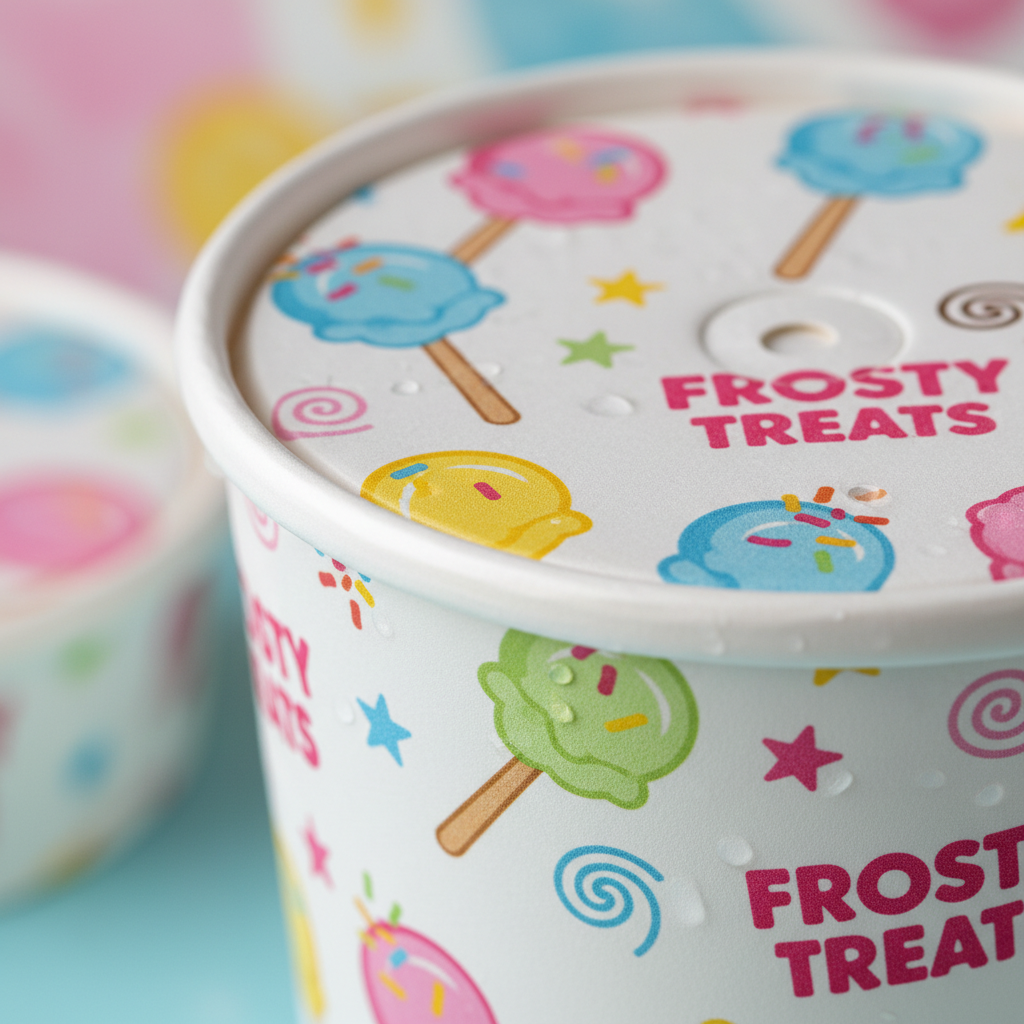
Ice cream packaging faces unique challenges compared to standard hot or dry food containers. The supply chain involves deep freezing (often below -20°C), temperature fluctuations during transport, and the inevitable condensation that occurs when a customer removes the product from the freezer. Standard paper cups often fail in these environments, becoming soggy or losing structural integrity.
Professional ice cream containers are engineered with specific barrier coatings and paperboard densities to withstand moisture from both the inside (the product) and the outside (condensation). Understanding these technical requirements is the first step in procurement.
Material Specifications: Paperboard and Coatings
1. Food-Grade Paperboard
The foundation of any high-quality ice cream cup is the base paper. Manufacturers typically use high-quality, food-grade virgin wood pulp. This material offers excellent stiffness and a clean, white surface for printing.
Paper Weight (GSM): The thickness of the paper is measured in Grams per Square Meter (GSM). For ice cream, the GSM requirement increases with the container size to ensure the cup doesn’t collapse when scooped.
- Small Cups (3oz – 5oz): Typically use 210gsm to 230gsm paper.
- Medium Cups (8oz – 12oz): Often require 250gsm to 280gsm.
- Large Tubs (16oz – 32oz): Usually range from 300gsm to 350gsm for maximum durability.
2. Barrier Coatings: Single vs. Double PE
Moisture resistance is non-negotiable. The industry standard coating is Polyethylene (PE), but the application method matters significantly.
- Single PE Coating (Inside only): Common for dry foods or short-term use. Generally not recommended for premium retail ice cream pints because condensation forming on the outside of the cup can weaken the paperboard.
- Double PE Coating (Inside and Outside): This is the gold standard for ice cream packaging. The internal coating prevents the ice cream from soaking into the paper, while the external coating protects the cup from the condensation that forms when the cold cup meets warm air. This ensures the container remains rigid and the print remains pristine from factory to freezer to spoon.
3. Eco-Friendly Alternatives
As sustainability becomes a priority for many brands, alternatives to traditional PE are gaining traction.
- PLA (Polylactic Acid): A bioplastic derived from renewable resources like corn starch. It offers similar moisture resistance to PE but is industrially compostable.
- Aqueous (Water-Based) Coatings: These coatings are fully recyclable and plastic-free, offering a sustainable barrier. However, buyers should verify the freeze-thaw stability of aqueous coatings with their supplier before placing large orders.
Size and Capacity Guide
Selecting the right size is about more than just volume; it’s about market positioning. Different sizes serve different consumption occasions.
Single-Serve Options (3oz – 8oz)
These sizes are staples for scoop shops, sampling events, and catering.
- 3oz – 4oz: Ideal for “kiddie” scoops or samplers.
- 5oz – 8oz: The standard single or double scoop serving size.
When ordering wholesale, consider whether these will be used for immediate consumption (lidless) or retail sale (requires tight-fitting lids).
Retail Pints and Quarts (12oz – 32oz)
The “Pint” (typically 16oz or 473ml) is the battleground for premium ice cream brands in supermarkets.
- 12oz – 16oz: Standard retail sizes. High-quality printing is crucial here as the packaging must sell the product on the shelf.
- 26oz – 32oz: Family size or quart options. These require heavier paperboard to maintain shape when stacked in freezers.
Bulk Tubs
For food service and B2B supply, larger tubs (half-gallon or larger) are used. These often require reinforced rims and specialized lids to prevent cracking during transport.
Lid Options: Ensuring a Secure Seal
A container is only as good as its closure. Freezer burn is the enemy of ice cream texture, caused by air entering the package. Buyers have several lid options to consider:
- Paper Lids: Offer a cohesive look with full branding capabilities. They are typically double PE coated to prevent warping. Vented paper lids allow trapped air to escape during the lidding process, preventing the lid from popping off as the air contracts in the freezer.
- Plastic Dome Lids: Often used in scoop shops where the ice cream is piled high above the rim. These are usually made from PET (highly clear) or PP.
- Flat Plastic Lids: A cost-effective option for takeout, allowing for stacking.
- Membrane Seals: For retail pints, a tamper-evident membrane seal (film) heat-sealed to the rim adds a layer of protection and freshness.
Explore our wider range of food containers to see how lid compatibility works across different product lines.
Printing Technologies and Customization
The visual appeal of your packaging directly influences consumer perception. Wholesale manufacturers typically offer two main printing methods.
Offset Printing
Offset printing is known for its superior image quality. It uses metal plates to transfer ink onto a rubber blanket, which then rolls the image onto the paper.
- Pros: Extremely high resolution, smooth gradients, and precise color matching. Ideal for photorealistic designs.
- Cons: Higher setup costs, making it suitable for larger production runs.
Flexographic Printing
Flexo uses flexible relief plates and is highly efficient for high-volume runs.
- Pros: Cost-effective for large quantities; fast production speeds.
- Cons: While quality has improved significantly, it may struggle with very complex gradients compared to offset.
Color Management: CMYK vs. Pantone (PMS)
For brand consistency, understanding color models is vital.
- CMYK (Cyan, Magenta, Yellow, Key/Black): Used for full-color images and photographs.
- Pantone (PMS): Used for specific brand colors (e.g., a specific shade of blue). Specifying a PMS code ensures that your brand color looks exactly the same on every batch, regardless of the printer used.
Finishes and Effects
To differentiate a product on the shelf, consider special finishes:
- Gloss Lamination: Enhances colors and adds a shiny, protective layer.
- Matte Finish: Provides a modern, premium, tactile feel.
- Gold/Silver Foil Stamping: Adds a metallic luxury element, often used for premium gelato or artisanal brands.
- Spot UV: Applies a gloss finish to specific areas (like a logo) against a matte background for contrast.
Manufacturing and Quality Assurance
When you source custom ice cream containers wholesale, you are relying on the manufacturer’s QA processes. Defects in ice cream packaging can be disastrous (e.g., leaking melted ice cream in a customer’s bag).
Key Quality Checks
- Rim Rolling: The rim must be tightly rolled and perfectly round to ensure the lid snaps on securely. An oval or crushed rim will lead to lid failure.
- Seam Bonding: The side seam and bottom disc must be heat-sealed effectively (ultrasonic or heat bonding) to prevent leaks.
- Odor and Taste Testing: Using food-grade, low-migration inks is mandatory to ensure no chemical smell or taste transfers to the delicate dairy product.
- Stacking Strength: Cups are tested to ensure they can withstand the weight of being stacked in pallets and freezers without buckling.
Buying Guide: How to Order Wholesale
Navigating the ordering process efficiently can save time and money. Here is a step-by-step guide for B2B buyers.
1. Determine Your Volume (MOQ)
Minimum Order Quantities (MOQ) vary by manufacturing method.
- Digital/Short Run: Some suppliers offer low MOQs (e.g., 1,000 units) for market testing, but per-unit costs are higher.
- Standard Run (Offset/Flexo): Typical MOQs range from 10,000 to 30,000 units per size/design. This volume unlocks the most competitive wholesale pricing.
2. Prepare Your Artwork
Manufacturers will provide a “dieline” (a flat template of the cup). Your design team must map the artwork onto this template.
- Vector Files: Always supply artwork in vector formats (AI, PDF, EPS) to ensure crisp lines.
- Bleed Area: Ensure the design extends beyond the trim line to avoid white edges during cutting.
- Curvature Distortion: Remember that a flat design wraps around a conical cup. Professional designers or the manufacturer’s prepress team will adjust the artwork to compensate for this distortion.
3. Request Samples
Before committing to a full production run, request samples.
- Stock Samples: Check the physical quality, rigidity, and lid fit of existing cups.
- Digital Proofs: A PDF showing how the design will look.
- Hard Proofs: A physical printed sample of your specific design (often incurs a setup fee but highly recommended for large orders).
4. Lead Times and Logistics
Custom manufacturing takes time.
- Production Time: Typically 15–30 days after artwork approval.
- Shipping: Ocean freight for international wholesale orders can take 4–6 weeks. Plan your inventory needs well in advance of the summer season.
For details on our specific timelines, please visit our how to order page.
Sustainability and Compliance
Global regulations regarding single-use plastics are tightening. It is the buyer’s responsibility to understand the regulations in their target market (e.g., EU Single-Use Plastic Directive).
Ask your supplier about:
- FSC Certification: Ensuring the paper pulp comes from responsibly managed forests.
- Compostability Certifications: If buying PLA or aqueous cups, ensure they meet standards like EN 13432 or ASTM D6400.
- Recyclability: Check if the local recycling facilities in your distribution area accept poly-coated paper cups.
Comparison: Generic vs. Custom Printed
| Feature | Generic (Stock) Containers | Custom Printed Containers |
|---|---|---|
| Branding | None or generic patterns. Requires stickers. | Full 360-degree high-impact branding. |
| Cost | Lower upfront; higher labor if labeling manually. | Higher setup; lower per-unit cost at volume. |
| Perception | Functional, basic. | Premium, professional, trustworthy. |
| Lead Time | Immediate (if in stock). | Requires production lead time. |
Common Pitfalls to Avoid
- Ignoring Condensation: Ordering single-wall, single-PE cups for retail pints is a common mistake. They will get soft. Always specify double PE or heavy-duty board.
- Mismatched Lids: Sourcing cups and lids from different suppliers often leads to fitment issues. Always buy cups and lids as a matched set from the same manufacturer.
- Last-Minute Ordering: Rushing production increases the risk of errors and incurs high air-freight costs. Start the process at least 3 months before you need the stock.
Frequently Asked Questions (FAQ)
1. What is the difference between single PE and double PE coating?
Single PE is coated only on the inside to hold liquid. Double PE is coated on both the inside and outside. Double PE is essential for ice cream and frozen desserts to protect the paper from external condensation and prevent the cup from softening in the freezer.
2. Can I print on the bottom of the cup?
Typically, the bottom disc is not printed for custom branding in standard runs, but it may contain recycling codes or manufacturing traceability info. Custom printing on the bottom is possible but may require specialized tooling.
3. Are your ice cream containers freezer-safe?
Yes, our custom ice cream containers are specifically manufactured for deep-freeze environments, utilizing freezer-grade paperboard and coatings that resist cracking at low temperatures.
4. What is the minimum order quantity (MOQ) for custom printing?
MOQs vary by size and printing method. Generally, custom offset printing starts around 10,000 to 30,000 pieces. Contact us for specific details regarding your project.
5. Do you supply matching lids?
Yes, we supply compatible paper lids (custom printable) and plastic dome or flat lids to ensure a secure, leak-proof fit.
6. How do I ensure my artwork looks good on a curved surface?
We provide a curved dieline template. Your designer should apply the artwork to this template. Our prepress team also checks files for distortion issues before printing.
7. Can I get a physical sample before full production?
Yes, we can provide pre-production samples. Note that producing a single custom printed sample involves setup costs, so fees may apply, which are often credited towards the final bulk order.
8. Are the inks food safe?
Absolutely. We use food-grade, low-migration inks compliant with international food safety standards to ensure there is no odor or taste transfer to the ice cream.
Ready to Elevate Your Brand?
Packaging is the physical touchpoint between your ice cream and your customer. Investing in high-quality, custom-printed containers ensures your product tastes as good as it looks and arrives in perfect condition.
Whether you are launching a new gelato brand or scaling up distribution for a frozen yogurt chain, YBJ Packing has the technical expertise and manufacturing capability to support your growth. Don’t compromise on quality where it matters most.
Request a quote today or get a sample pack to experience our quality firsthand.