

Introduction to Wholesale Flat Paper Bags
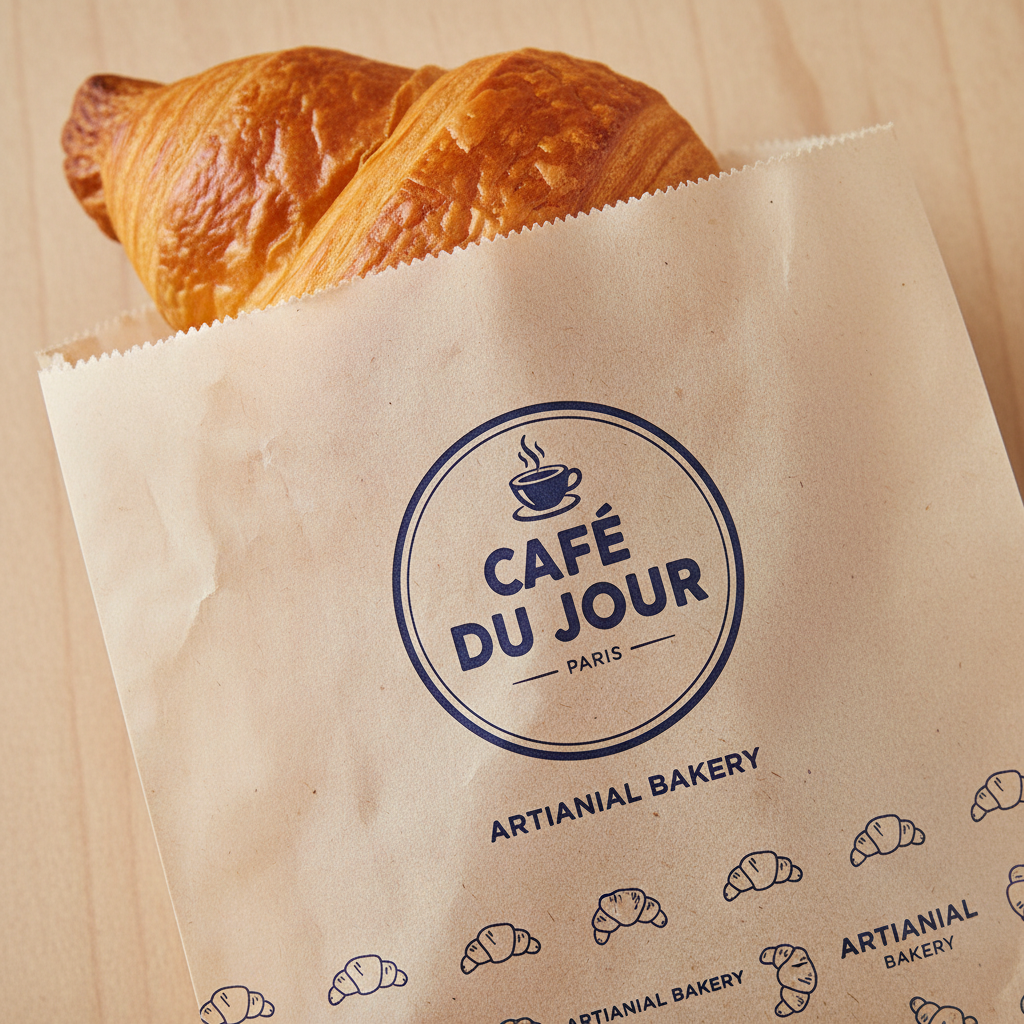
In the competitive landscape of food service and retail, packaging serves two critical functions: operational efficiency and brand communication. For procurement managers, restaurant chains, and distributors, sourcing custom flat paper bag wholesale solutions is not merely a transaction—it is a strategic decision that impacts product integrity, customer experience, and the bottom line.
Flat paper bags, often referred to as V-bottom bags or pinch-bottom bags, are among the most economical and versatile packaging formats available. Unlike gusseted bags with square bottoms (SOS bags), flat bags are designed for items that do not require a flat base to stand upright. They are the industry standard for bakeries, fast-food outlets, pharmacies, and street food vendors.
This guide provides a comprehensive technical overview for B2B buyers. We will explore material specifications, grease-resistance ratings, printing technologies, and the logistical considerations necessary to streamline your procurement process. Whether you are upgrading your current packaging or launching a new product line, understanding these details ensures you select the right flat paper bag for your specific application.
1. The Anatomy of a Flat Paper Bag
Before diving into materials, it is essential to understand the structural characteristics that define this packaging type. A flat paper bag is constructed from a single sheet of paper, folded and glued to create a tube, then cut and sealed at one end.
Key Structural Features
- V-Bottom Construction: The bottom is folded and sealed flat, creating a sharp "V" shape. This design is cost-effective to manufacture and allows for high-density storage.
- Side Seams: Typically, the longitudinal seam is located on the back of the bag. High-quality manufacturing ensures this seam is consistent and does not interfere with the front-facing branding.
- Top Opening: The opening can be straight-cut or serrated (thumb-cut) to facilitate easy opening during high-speed service environments.
- Expandability: While they are "flat," many designs incorporate side gussets (expansions) to accommodate thicker products like sandwiches or multiple pastries.
2. Material Specifications and Paper Grades
Selecting the correct substrate is the most critical step in the buying process. The material determines the bag’s strength, appearance, and suitability for food contact.
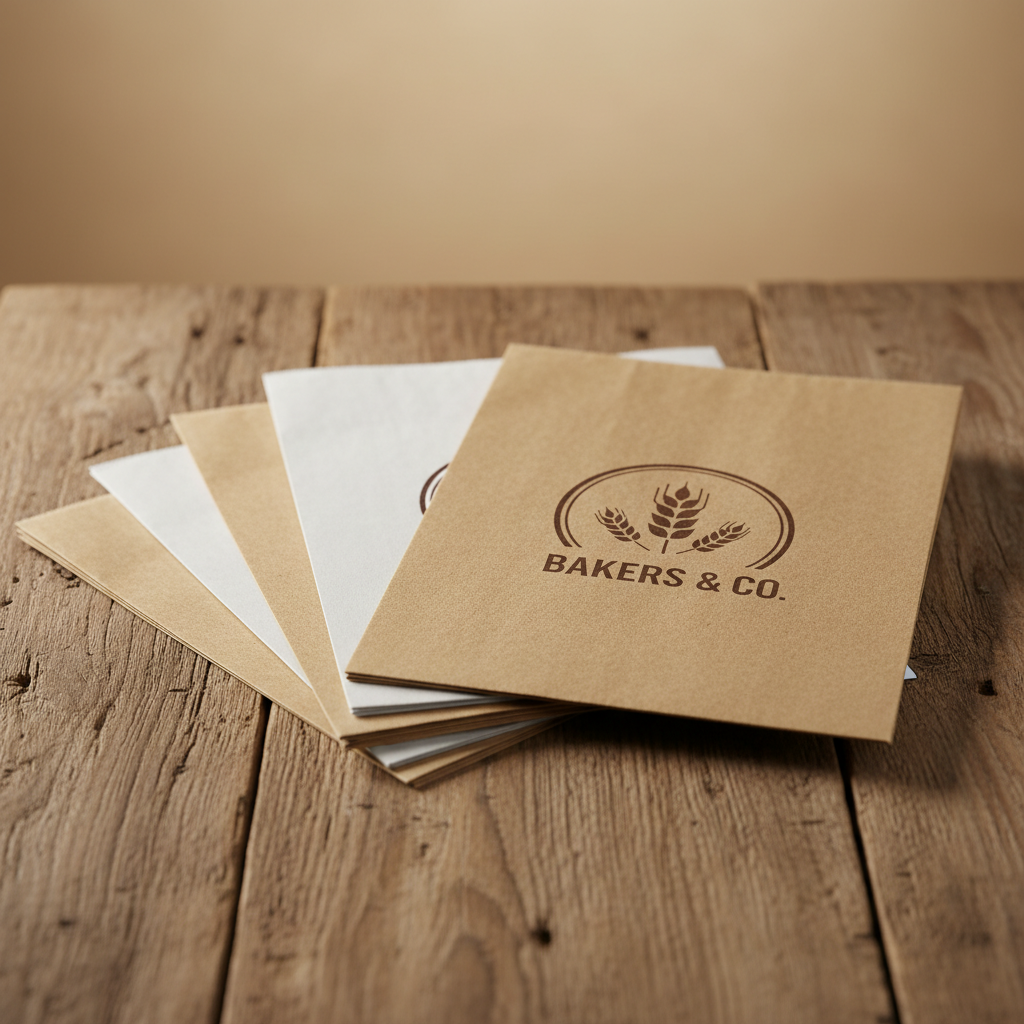
Brown Kraft Paper (Natural)
Unbleached Kraft paper is the standard for eco-conscious brands. It offers high tensile strength and a rustic, organic aesthetic.
- Typical GSM: 30gsm to 80gsm.
- Best For: Dry goods, breads, pharmacy items, and hardware.
- Note: Colors printed on brown kraft will appear darker and less vibrant than on white paper.
White Bleached Kraft Paper
White Kraft paper provides a pristine canvas for high-quality, colorful branding. It is chemically treated to remove lignin, resulting in a smooth, bright surface.
- Typical GSM: 30gsm to 80gsm.
- Best For: Branded bakery bags, pharmacy bags, and applications requiring sharp logo reproduction.
Greaseproof Paper
For food service applications involving oils, butter, or sauces, standard Kraft paper is insufficient. Greaseproof paper is processed to reduce porosity.
- Kit Levels: Grease resistance is often measured in "Kit" levels (typically Kit 3 to Kit 7 for standard food bags). Higher numbers indicate greater resistance to oil penetration.
- Best For: Cookies, croissants, buttery pastries.
Laminated Paper (PE or PLA Lining)
When maximum barrier protection is required, paper is laminated with a thin layer of plastic (Polyethylene – PE) or bioplastic (Polylactic Acid – PLA).
- Function: Provides a complete barrier against moisture and heavy grease. It also allows the bag to be heat-sealed.
- Best For: Hot foods, fried chicken, kebabs, and products that might leak.
3. Grease Resistance and Barrier Coatings
One of the most common failures in food packaging is grease staining, which compromises the customer’s experience and the brand’s image. When ordering food packaging bags, you must specify the level of resistance required.
Standard Greaseproof vs. PE Coated
| Feature | Standard Greaseproof Paper | PE Coated Paper |
|---|---|---|
| Composition | Dense paper fibers (mechanical barrier) | Paper + Plastic Layer |
| Breathability | High (keeps crusts crispy) | Low (retains heat/moisture) |
| Grease Resistance | Moderate (resists spotting) | High (total blockage) |
| Recyclability | Widely recyclable | Requires separation facilities |
For items like french fries or hash browns, a PE coating is often preferred to prevent oil from soaking through to the customer’s hands. For artisan breads, a breathable greaseproof paper is better to prevent the product from becoming soggy.
4. Custom Printing Options
Printing is where a commodity product transforms into a marketing asset. In the wholesale manufacturing of flat paper bags, Flexographic Printing is the industry standard.
Flexographic Printing (Flexo)
Flexo printing uses flexible relief plates and fast-drying inks. It is ideal for high-volume runs common in B2B procurement.
- Colors: Typically up to 4-6 colors.
- Inks: Water-based inks are the standard for food packaging. They are non-toxic, odorless, and environmentally friendly.
- Cost: Plate costs are a one-time setup fee. Unit costs drop significantly as volume increases.
Printing Capabilities to Specify
- Spot UV: While rare on low-cost flat bags, some high-end options allow for glossy accents.
- Full Bleed: Printing that extends to the very edge of the bag. This requires precise cutting and may incur slightly higher costs due to trim waste.
- Registration Accuracy: Ensure your supplier guarantees tight registration (alignment of colors), especially for intricate logos.
5. Sizing and Capacity Guide
Flat paper bags come in a vast array of sizes. Choosing the right size minimizes waste and ensures product stability. Dimensions are usually expressed as Width (W) x Height (H) + Side Gusset (G) (if applicable).
Common Industry Sizes
- Small (e.g., 10×15 cm): Cookies, single donuts, small hardware items.
- Medium (e.g., 15×20 cm): Pastries, sandwiches, greeting cards.
- Large (e.g., 20×30 cm +): Baguettes, multiple items, pharmacy prescriptions.
Custom Sizing
As a manufacturer, we can adjust machine settings to produce custom dimensions. However, custom sizes may require new molds or tooling if they deviate significantly from standard gear ranges. Always verify the minimum and maximum machine capabilities when requesting a custom size.
6. Manufacturing Quality Control
When sourcing wholesale, consistency is key. A reputable supplier should have strict QC protocols in place. Here is what to check for in your samples:
Adhesion Strength
The bottom seal and side seam must be robust. Test this by filling a sample bag to its intended capacity and shaking it gently. The glue lines should not separate.
Odor Neutrality
Food packaging must be odorless. Low-quality inks or adhesives can impart a chemical smell to food, particularly warm items. Ensure your supplier uses food-grade, low-migration consumables.
Dimensional Tolerance
In automated packaging lines, size variations can cause jams. Standard industry tolerance is typically +/- 2mm to 5mm depending on the bag size. Ensure this tolerance fits your operational requirements.
7. Use Cases and Industry Applications
Flat paper bags are ubiquitous across several sectors. Understanding the specific needs of each sector helps in selecting the right specifications.
Bakery and Confectionery
Requirement: Breathability and grease resistance.
Recommended: 40-50gsm white kraft or greaseproof paper. Often printed with brand logos to enhance shelf appeal.
Fast Food and Fried Snacks
Requirement: High grease barrier and heat retention.
Recommended: PE-lined paper or high-kit greaseproof paper. These bags often need to be slightly thicker (50-70gsm) to hold heavier, hot items like fried chicken or wedges.
Pharmacy and Retail
Requirement: Opacity and privacy.
Recommended: Standard brown or white kraft (60-70gsm). These bags prioritize tensile strength over grease resistance.
8. Sustainability and Environmental Compliance
Sustainability is no longer optional. International buyers are under increasing pressure to reduce plastic usage.
FSC Certified Paper
Ask for paper sourced from responsibly managed forests. This certification is a strong selling point for end-consumers.
Compostability vs. Recyclability
- Uncoated Kraft: 100% compostable and recyclable.
- PE Lined: Recyclable only in specialized facilities where the plastic lining can be separated.
- PLA Lined: Industrially compostable, offering a plastic-free narrative while maintaining barrier properties.
9. The Buying Guide: MOQs, Lead Times, and Logistics
Navigating the procurement process requires attention to logistical details. Here is how to optimize your order.
Minimum Order Quantity (MOQ)
For custom printed bags, MOQs are dictated by the efficiency of the printing press. Setting up a flexo press takes time and material.
- Typical MOQ: Often starts at 30,000 to 50,000 units for fully custom sizes/prints.
- Stock Items: Unprinted bags may be available in lower quantities (e.g., 1-5 cartons).
Artwork Preparation
To avoid delays, provide artwork in vector formats (AI, PDF, EPS). Vector files allow for infinite scaling without loss of quality. Specify Pantone (PMS) color codes to ensure brand consistency across different production runs.
Lead Times
Production timelines vary based on complexity and volume.
- Sampling: 7-10 days for custom printed samples.
- Mass Production: Typically 15-25 days after artwork approval.
- Shipping: Factor in sea freight times for international orders (often 4-6 weeks).
10. Why Choose YBJ Packing?
At YBJ Packing, we specialize in high-volume manufacturing of food-grade paper packaging. Our facility is equipped with advanced flexographic presses and automated bag-forming lines that ensure consistent quality at competitive wholesale rates.
We understand the nuances of international trade, from compliance with food safety standards to optimizing pallet configurations for container shipping. Whether you need a simple kraft bag for a pharmacy chain or a high-barrier greaseproof bag for a fast-food franchise, we have the technical capability to deliver.
Frequently Asked Questions (FAQ)
1. Can you print on the bottom of the flat bag?
Technically yes, but it is not recommended. The bottom is folded and glued, which can distort images or text. We recommend keeping critical branding on the front and back panels.
2. What is the difference between GSM and Microns?
GSM stands for "Grams per Square Meter" and measures the weight of the paper. Microns measure thickness. While related, they are not identical. In paper bags, we primarily use GSM to specify material quality.
3. Are your inks food safe?
Yes. We use water-based, heavy-metal-free inks that comply with international food safety standards. They are safe for direct contact with food.
4. Can I get a physical sample before placing a full order?
Absolutely. We encourage sampling to verify size and material feel. Please contact our team to request samples.
5. Do you offer biodegradable coatings?
Yes, we offer PLA (Polylactic Acid) coatings which provide grease resistance similar to PE but are derived from plant starch and are compostable.
6. How do I measure a flat bag correctly?
Measure the Width (face) and the Height (length). If there is a side gusset, measure the depth of the fold. Always measure the bag when it is lying flat.
7. What is the shelf life of these bags?
Paper bags should be stored in a cool, dry place. If stored correctly, they have a shelf life of 1-2 years. High humidity can affect the adhesive and paper stiffness over time.
Ready to Order?
Sourcing the right packaging is the first step toward operational excellence. If you are ready to discuss your specifications or need guidance on the best material for your product, our team is here to help.
Visit our How to Order page for a step-by-step guide, or click below to start a conversation about your custom project.