

Introduction: The Strategic Value of Die-Cut Paper Bags in Food Service
In the competitive landscape of food service and retail, packaging serves two primary functions: operational efficiency and brand communication. For wholesale buyers—ranging from procurement managers at fast-food chains to distributors supplying local bakeries—selecting the right carry-out solution is a critical decision. Among the myriad options available, die-cut paper bags have emerged as a preferred choice for businesses seeking a balance between sleek aesthetics, cost-effectiveness, and environmental responsibility.
Unlike traditional twisted-handle or flat-handle bags, die-cut bags feature a handle punched directly into the bag’s structure, often reinforced for added strength. This design offers a streamlined profile that is easy to store, quick to open, and distinctively modern. However, sourcing these bags at a wholesale level involves navigating a complex matrix of material specifications, printing technologies, and supply chain logistics.
This comprehensive guide explores the technical and commercial aspects of ordering custom die-cut paper bags. We will cover everything from paper grades and grease-resistance coatings to the nuances of flexographic printing and inventory management. Whether you are rebranding a franchise or stocking a distribution warehouse, this guide provides the actionable data needed to make informed procurement decisions.
1. Defining the Die-Cut Paper Bag: Structure and Functionality
What Sets Die-Cut Bags Apart?
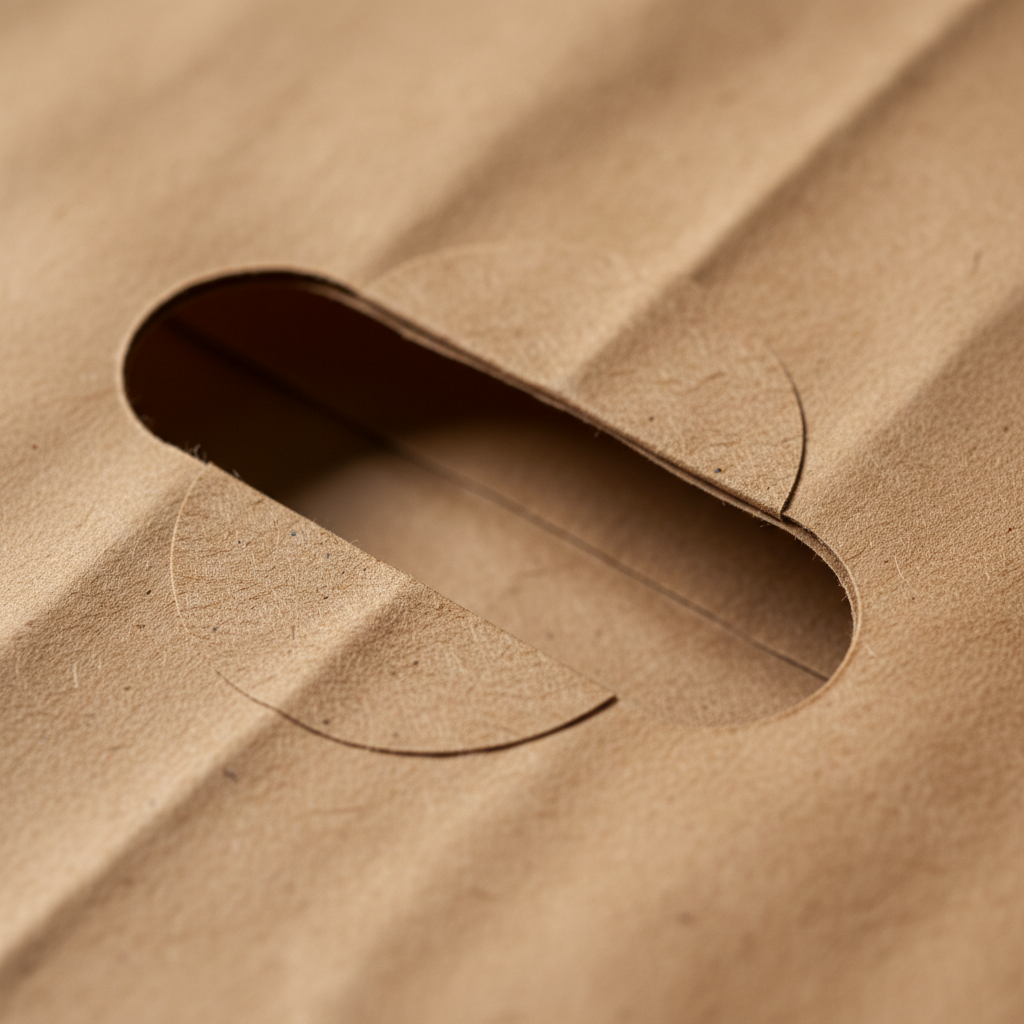
The defining feature of a die-cut paper bag is the integrated handle. Instead of attaching separate paper handles using adhesive and reinforcement strips (a process that adds bulk and potential failure points), the handle is created by cutting a specific shape—usually an oval, kidney, or rectangle—out of the upper portion of the bag.
Key Structural Characteristics:
- Reinforced Patch: High-quality die-cut bags often include a hidden reinforcement patch (cardboard or extra paper layer) glued around the handle area inside the bag. This prevents tearing under load.
- Streamlined Profile: Without protruding handles, these bags stack flatter than any other carrier bag type. This maximizes shipping density and reduces storage space requirements in crowded commercial kitchens or retail backrooms.
- Aesthetic Appeal: The flat surface area extends all the way to the top of the bag, providing an uninterrupted canvas for branding.
Common Applications in B2B Markets
While versatile, these bags are particularly dominant in specific sectors:
- Bakeries and Patisseries: Ideal for lightweight boxes of pastries where the bag needs to stay upright and flat.
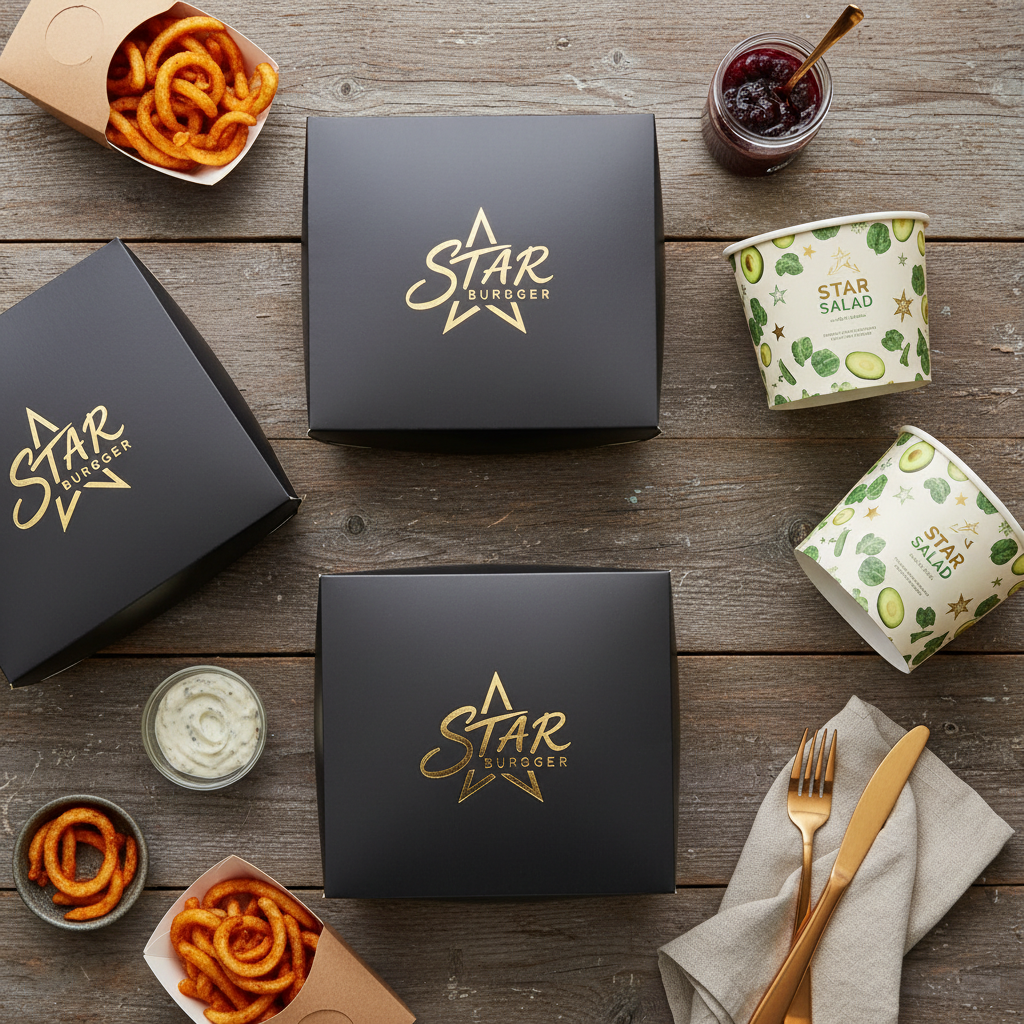
- Fast Food Takeout: Perfect for “grab-and-go” orders, specifically for burger clamshells and fry cups.
- Retail Boutiques: Used for small items like cosmetics, accessories, or pharmacy goods where a premium, minimalist look is desired.
2. Material Specifications: Choosing the Right Substrate
The performance of a die-cut bag relies heavily on the paper stock chosen. Wholesale buyers must balance tensile strength (resistance to snapping) with tear resistance (resistance to ripping once a cut has started). Below are the primary material categories.
Kraft Paper (Virgin vs. Recycled)
Virgin Kraft Paper: Produced directly from wood pulp, virgin kraft offers the highest strength-to-weight ratio. The long fibers provide excellent durability, making it the standard choice for bags that must carry heavier loads (e.g., multiple beverage bottles or dense food containers).
- Natural Brown Kraft: Unbleached, offering a rustic, eco-friendly look. It is often perceived by consumers as more sustainable.
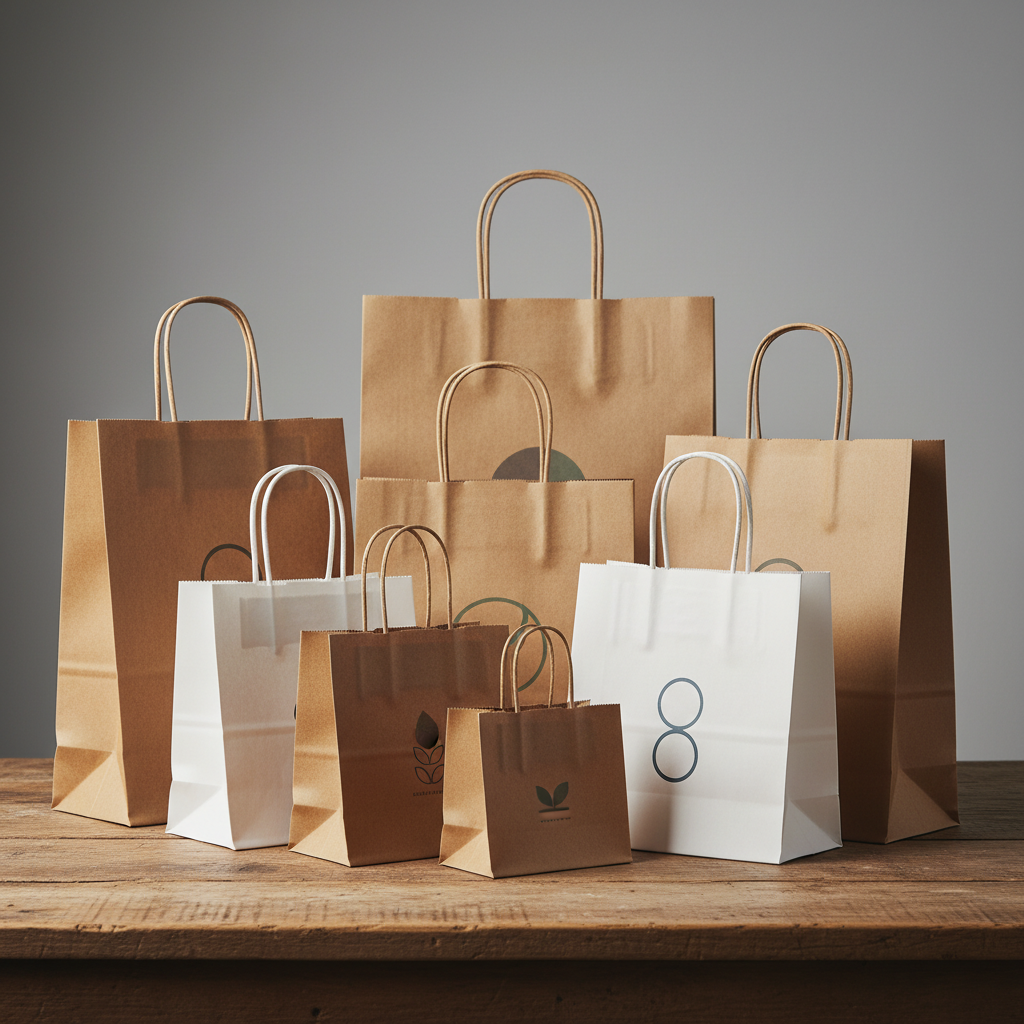
- White Bleached Kraft: Chemically treated to remove the brown color. This provides a pristine white canvas that ensures vibrant color reproduction for logos and complex artwork.
Recycled Kraft Paper: Made from post-consumer waste. While slightly weaker than virgin fiber due to shorter fiber lengths, it is a top choice for brands prioritizing circular economy credentials. For die-cut handles, recycled paper usually requires a slightly higher GSM (Grams per Square Meter) or a reinforcement patch to match the performance of virgin paper.
Paper Weight (GSM) Guidance
Selecting the correct GSM is crucial for cost control and performance. Over-specifying wastes money; under-specifying leads to bag failures.
- 60–80 GSM: Suitable for very light items (single pastries, pharmacy prescriptions).
- 90–110 GSM: The industry standard for most food service takeout bags. Offers a good balance of rigidity and flexibility.
- 120–150 GSM: Heavy-duty grade. Used for larger bags carrying multiple meal boxes or retail items like clothing.
Coatings and Grease Resistance
For food packaging bag solutions, paper alone is often insufficient, especially when handling oily or moist items.
- PE (Polyethylene) Lining: A thin layer of plastic laminated to the interior. It provides excellent grease and moisture resistance. However, it complicates the recycling process in some regions.
- Greaseproof Paper (Kit Level): Paper treated chemically to resist oil penetration without a plastic film. “Kit levels” (ranging from 1 to 12) denote the degree of oil resistance. A Kit 5–7 is typical for bakery items.
- Water-Based Coatings: Newer, eco-friendly varnishes that provide temporary moisture resistance while remaining fully repulpable.
3. Printing Technologies and Customization Options
Branding is the primary driver for custom wholesale orders. Understanding the printing process helps you prepare artwork correctly and manage budget expectations.
Flexographic Printing (The Wholesale Standard)
Flexography is the most common method for high-volume paper bag production. It uses flexible relief plates and fast-drying inks.
- Pros: Extremely cost-effective for large runs (10,000+ units); works well on rough surfaces like brown kraft; supports high-speed production.
- Cons: Higher setup costs (plate charges); difficulty with photo-realistic images or gradients.
- Best For: Logos, text, solid color patterns, and simple vector graphics.
Offset Printing (Lithography)
Offset printing transfers ink from a plate to a rubber blanket, then to the paper. It is generally done on the paper roll before the bag is formed.
- Pros: Superior image quality; capable of complex gradients, shadows, and CMYK photography.
- Cons: More expensive per unit; generally requires higher Minimum Order Quantities (MOQs) to justify the setup.
- Best For: Premium retail bags or promotional campaigns requiring high-fidelity imagery.
Inks and Sustainability
Modern buyers should inquire about the ink composition:
- Soy/Vegetable-Based Inks: These release fewer Volatile Organic Compounds (VOCs) than petroleum-based inks and are easier to de-ink during the recycling process.
- Water-Based Inks: The standard for food packaging due to low toxicity and odor.
4. Technical Specifications & Sizing Strategy
When ordering custom die-cut bags, precision in sizing is non-negotiable. A bag that is 5mm too narrow for your standard takeout container renders the entire shipment useless.
Anatomy of Bag Dimensions
Bag dimensions are typically expressed as Width x Gusset x Height.
- Width (Face): The front measurement of the bag.
- Gusset (Depth): The side or bottom expansion. Die-cut bags can have side gussets (SOS style) or bottom gussets (satchel style). For food containers, a wide bottom gusset is essential to keep boxes flat.
- Height: The vertical measurement. Note: Ensure you calculate the “usable height,” which is the distance from the bottom to the bottom of the die-cut handle hole, not the top of the bag.
Standard Size Ranges (Typical)
| Size Category | Typical Dimensions (W x G x H) | Common Use Case |
|---|---|---|
| Small | 150mm x 80mm x 200mm | Cookies, single pastries, small fries. |
| Medium | 250mm x 130mm x 300mm | Sandwich meals, burger combos, pharmacy items. |
| Large | 320mm x 180mm x 400mm | Family meal deals, clothing, large bakery boxes. |
5. Manufacturing Quality Assurance
How do you ensure the bags you receive match the samples approved? A robust QA process at the manufacturing level is vital.
Handle Strength Testing
The die-cut area is the stress point. Manufacturers should perform static load testing, hanging weights from the handle for set durations to ensure the paper (and reinforcement patch) does not tear.
Gluing Integrity
Food bags are often exposed to heat (from hot food) and steam. The adhesives used for the side seams and bottom seal must be heat-resistant and food-safe. Poor quality glue will cause bags to burst open when loaded with hot items.
Dimensional Tolerances
In paper bag manufacturing, a tolerance of +/- 2mm to 5mm is standard. However, if your internal packaging (boxes) fits tightly, communicate strict tolerance requirements to your supplier early in the ordering process.
6. Buying Guide: Navigating Wholesale Orders
Ordering custom packaging is a capital commitment. Here is a checklist to streamline the procurement process.
Minimum Order Quantities (MOQ)
MOQs are dictated by the machine setup time. For custom printed die-cut bags:
- 10,000 – 30,000 units: Typical starting point for flexo printing.
- 50,000+ units: Access to better volume pricing and more complex customization options.
- Tip: If you cannot meet the MOQ for custom printing, consider buying stock plain bags and applying custom stickers, or ask if the supplier offers “digital overprinting” for smaller batches (though this is rarer for industrial suppliers).
Artwork Preparation
To avoid delays, have your design team prepare files correctly:
- Format: Vector files (AI, PDF, EPS) are mandatory. Raster images (JPEG, PNG) will pixelate and are unsuitable for plate making.
- Colors: Specify Pantone (PMS) codes. CMYK values can vary significantly between printers, whereas PMS ensures brand consistency.
- Bleed lines: Ensure artwork extends beyond the cut lines if you want the design to go to the edge.
Lead Times and Logistics
Production time typically ranges from 3 to 5 weeks after artwork approval. However, shipping adds another layer. Ocean freight is the standard for bulk packaging due to the volume-to-weight ratio. Air freight is prohibitively expensive for paper bags unless for emergency stock.
7. Sustainability and Compliance
As regulations regarding single-use plastics tighten globally, paper bags are the primary alternative. However, not all paper bags are equal.
FSC Certification
Look for suppliers who can source paper from Forest Stewardship Council (FSC) certified mills. This guarantees the wood pulp comes from responsibly managed forests.
Compostability vs. Recyclability
- Recyclable: Standard kraft bags are highly recyclable.
- Compostable: Bags with PLA (corn starch) linings or uncoated bags are compostable. Traditional PE-lined bags are generally not compostable and require specialized recycling facilities.
Food Contact Safety
Ensure the manufacturer complies with relevant standards (such as FDA in the US or EC 1935/2004 in Europe) regarding materials in contact with food. This applies to the paper, the glue, and the ink.
8. Common Pitfalls to Avoid
- Ignoring Volume Weight: Paper bags are heavy when packed in bulk. Ensure your warehouse has the capacity to handle palletized loads.
- Overlooking the “Usable Space”: Designing a logo that sits too high on the bag, only to have it cut through by the handle punch. Always use the manufacturer’s die-line template.
- Underestimating Grease: Ordering standard kraft for fried food without a greaseproof layer or lining, resulting in unsightly oil spots on the bag exterior.
Frequently Asked Questions (FAQs)
1. Can die-cut paper bags support the same weight as twisted handle bags?
Yes, provided they are specified correctly. While twisted handles distribute weight differently, a die-cut bag with a reinforced patch and appropriate GSM paper is extremely sturdy. For very heavy loads (e.g., wine bottles), a higher GSM is recommended.
2. What is the difference between a “patch handle” and a standard die-cut?
A standard die-cut is simply a hole punched in the paper. A patch handle includes an extra layer of material (paper or plastic) glued around the hole on the inside to prevent tearing. For professional use, patch handles are strongly recommended.
3. Can I print on the bottom gusset of the bag?
Yes, printing on the bottom is a popular trend. It allows for branding or barcodes to be visible even when the bag is being held or stacked. This usually requires a custom production run.
4. How should I store paper bags to prevent damage?
Paper is hygroscopic, meaning it absorbs moisture. Store bags in a cool, dry place, off the ground (on pallets), and away from direct sunlight to prevent fading and warping. Ideal humidity is around 40-60%.
5. Is it possible to get a window in a die-cut bag?
Yes, die-cut windows (often covered with clear PLA or PE film) are common for bakery bags to display the product inside. This involves an additional manufacturing step and may affect the cost.
6. How do I get a quote for a custom size?
To get an accurate quote, you need to provide the dimensions (W x G x H), paper type, GSM, number of print colors, and estimated quantity. You can contact our team directly with these details for a rapid estimation.
Conclusion
Custom die-cut paper bags offer a sophisticated, robust, and eco-friendly packaging solution for B2B food service and retail buyers. They combine the operational efficiency of flat storage with the marketing power of a broad, printable surface. By understanding the nuances of paper grades, printing limitations, and reinforcement options, buyers can source packaging that not only protects their product but also elevates their brand.
Ready to upgrade your packaging strategy? Whether you need high-volume plain bags or fully branded custom solutions, YBJ Packing has the expertise to deliver.
Request a Quote today or browse our full range of food packaging solutions to find the perfect fit for your business.