

Introduction: The Strategic Value of Cup Accessories in Food Service
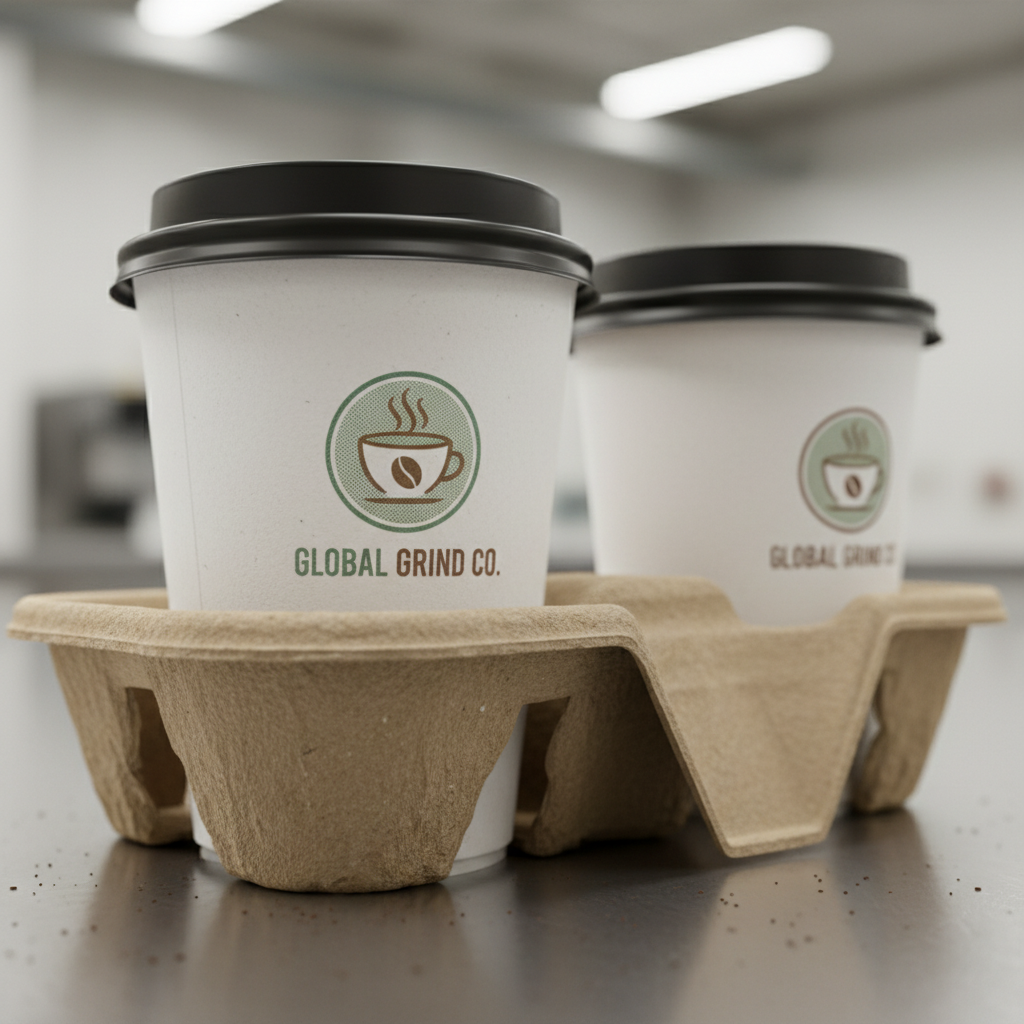
In the high-volume food and beverage industry, cup accessories like sleeves and holders are often viewed as secondary consumables. However, for procurement managers and brand owners, they represent a critical intersection of functionality, safety, and brand visibility. A well-engineered cup sleeve prevents burns and improves grip, while a sturdy cup holder ensures that multi-drink orders arrive intact, reducing waste and refunds.
Furthermore, these items serve as mobile billboards. With the rise of third-party delivery services and takeaway culture, the packaging that leaves your establishment is often the only physical touchpoint a customer has with your brand outside the store. Sourcing custom cup holder and sleeve solutions at wholesale scale requires a deep understanding of material specifications, printing technologies, and logistical considerations.
This guide provides a comprehensive technical overview for B2B buyers looking to optimize their supply chain for printed cup accessories. We will cover material grades, customization limits, quality control standards, and how to navigate the ordering process with a cup holder and sleeve manufacturer.
Part 1: Cup Sleeves (Jackets/Clutches) – Technical Specifications
Cup sleeves are essential for single-wall paper cups containing hot beverages. They provide the necessary air gap and insulation to keep the beverage hot while keeping the surface cool enough to hold.
Material Composition and Fluting
The performance of a cup sleeve depends largely on the paper stock and the internal structure.
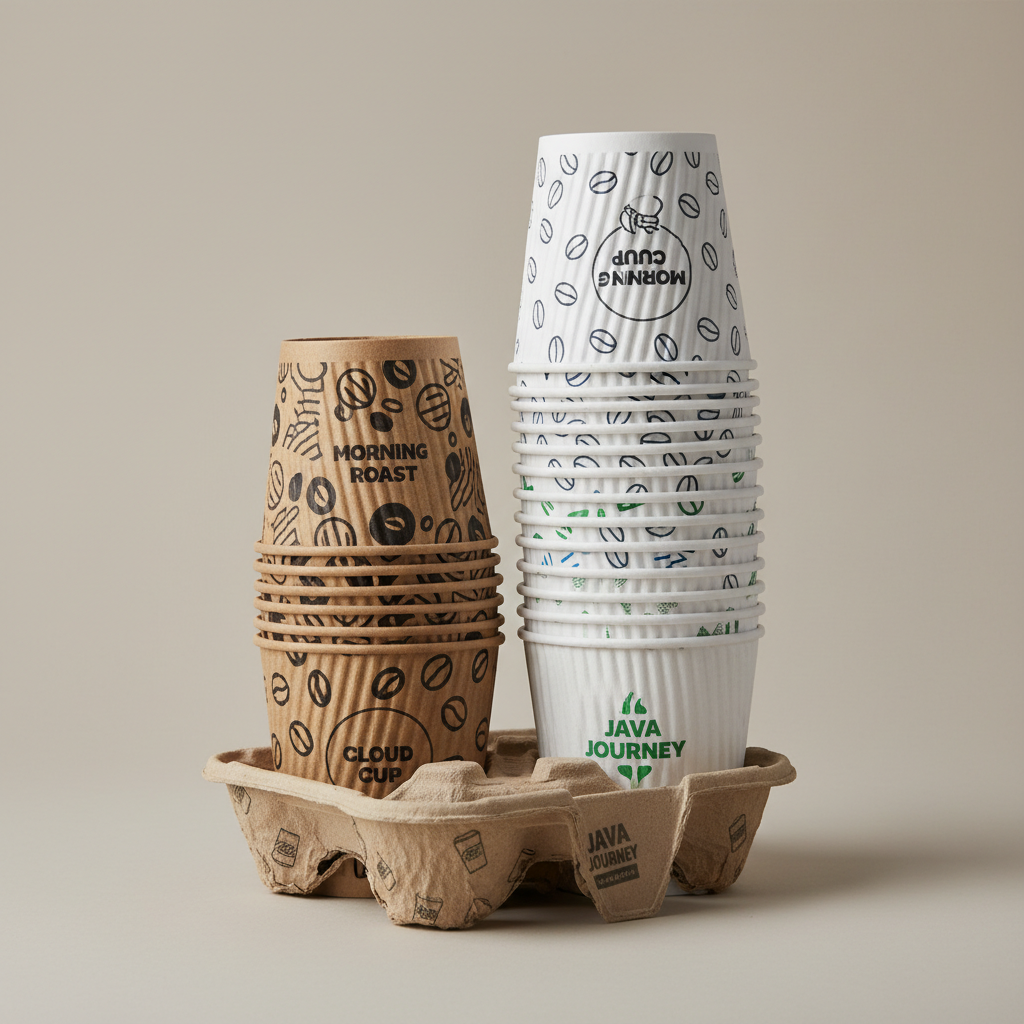
- Corrugated Paper (E-Flute or F-Flute): The most common choice for premium insulation. The wavy inner layer (fluting) creates air pockets that act as thermal barriers.
- E-Flute: Approximately 1.5mm thick. Offers a good balance between printability and insulation.
- F-Flute: Thinner (approx. 0.8mm), offering a sleeker look but slightly less insulation.
- Embossed Paperboard: Instead of a corrugated middle layer, thick paperboard is mechanically embossed to create texture and reduce surface contact area. This is often used for cost-efficiency but may have lower thermal resistance than corrugated options.
- Kraft vs. White Board:
- Kraft (Brown): Unbleached, perceived as eco-friendly, excellent for simple 1-2 color logos.
- White Board: Bleached surface, ideal for vibrant, full-color (CMYK) printing where color accuracy is paramount.
Sizing and Compatibility
One of the most frequent issues in cup holder and sleeve wholesale purchasing is fit. A loose sleeve slides off, creating a safety hazard; a tight sleeve crushes the cup.
Standard sleeves are designed to fit tapered cups. Common size groupings include:
- Small/Universal: Fits 8oz to 10oz cups.
- Large/Standard: Fits 12oz, 16oz, and 20oz cups (often 90mm rim diameter cups share the same taper angle).
Buyer Tip: Always request samples to test fitment on your specific cup stock before approving a bulk production run. Slight variations in cup diameter between manufacturers can affect sleeve grip.
Adhesives and Assembly
Sleeves are typically glued on one side. The adhesive used must be heat-resistant. Low-quality glues can soften when in contact with a 90°C (194°F) beverage, causing the sleeve to pop open. Ensure your supplier uses food-safe, high-temperature adhesives.
Part 2: Drink Carriers and Cup Holders – Structural Options
When customers order multiple drinks, the carrier becomes the primary vessel. Failure here results in spills and lost revenue.
Molded Pulp Trays
Made from recycled paper slurry (newspaper, cardboard) formed into a mold and dried.
- Pros: Extremely rigid, absorbs minor spills, biodegradable, holds cups very securely due to deep wells.
- Cons: Bulky to store (nesting helps, but they take up volume), limited printability (usually unbranded or embossed only).
- Best For: Fast food drive-thrus, high-volume coffee shops where speed is key.
Corrugated Foldable Carriers
Made from flat corrugated board that folds into a box or tray shape with handles.
- Pros: Ships flat (massive freight savings), high-quality print surface for branding, sturdy handle design.
- Cons: Requires assembly time (seconds count in QSR), can weaken if soaking wet.
- Best For: Food delivery apps, premium takeaway, catering events where presentation matters.
For businesses prioritizing branding, the corrugated foldable carrier is the superior choice for custom cup holder and sleeve projects because it offers a larger canvas for marketing messages.
Explore various carrier styles in our Cup Holder and Sleeve Category.
Printing Technologies for Bulk Orders
Understanding print methods helps you manage costs and expectations regarding quality.
Flexographic Printing (Flexo)
- Process: Uses flexible relief plates and fast-drying inks.
- Ideal For: High-volume runs (100,000+ units).
- Quality: Good for logos and solid colors. Gradients may appear less smooth than offset.
- Cost: High setup costs (plates), but very low unit cost.
Offset Printing (Lithography)
- Process: Transfers ink from a plate to a rubber blanket, then to the paper.
- Ideal For: Medium to high volumes requiring photo-quality images or complex designs.
- Quality: Superior sharpness and color depth.
- Cost: Moderate to high setup, moderate unit cost.
Digital Printing
- Process: Direct inkjet or laser application.
- Ideal For: Small batches, prototypes, or seasonal promotions.
- Quality: Excellent, allows for variable data (e.g., different names on each batch).
- Cost: Zero setup cost, high unit cost. Generally not viable for massive wholesale orders.
Customization Features & Brand Differentiation
Beyond standard printing, several customization options can elevate your packaging.
1. Die-Cutting
Custom shapes can make a sleeve stand out. For example, the upper edge of the sleeve can be die-cut to follow the contour of a logo or character. While this requires a custom die tool, it adds significant visual appeal.
2. Thermal Sensitive Inks
Some brands utilize inks that change color when heated. This interactive element engages customers and signals that the beverage is hot.
3. Handle Reinforcement (For Holders)
For 4-cup carriers, handle strength is critical. Request double-wall fold-over handles to ensure the carrier can support the weight of four 20oz liquids (approx. 2.4kg or 5.3lbs) without tearing.
Supply Chain & Logistics: Ordering Wholesale
When sourcing from a cup holder and sleeve supplier, logistics play a huge role in the total landed cost.
Volume vs. Weight
Cup holders, especially molded pulp types, have a high dimensional weight. They are light but bulky.
- Foldable Carriers: Ship flat, maximizing container space.
- Pre-formed Trays: Ship nested. Efficient, but less so than flat-packed items.
MOQ (Minimum Order Quantity)
Custom printing requires machine setup.
- Typical MOQ for Custom Sleeves: Often starts at 10,000 to 30,000 units depending on the manufacturer.
- Typical MOQ for Custom Holders: Can be lower for corrugated boxes (e.g., 5,000) but higher for molded pulp due to mold tooling costs.
Lead Times
- Design Approval: 3-5 days.
- Production: 15-25 days (variable by season).
- Shipping: 30-45 days for ocean freight.
Planning Tip: Always order holiday-themed packaging (Christmas, Halloween) at least 3-4 months in advance.
For details on our specific timelines, please visit our How to Order page.
Quality Control Checklist
Before accepting a full shipment, or when evaluating samples, check the following:
- Adhesion Test: Pull the glued seam of the sleeve. The paper should tear before the glue gives way (fiber tear).
- Fitment Test: Place the sleeve on a filled hot cup. It should sit securely in the middle-to-upper section, not slide down to the bottom.
- Odor Test: The packaging should be odorless. Strong ink or glue smells can taint the flavor of the coffee.
- Load Test (Holders): Place full cups in the carrier and hold it by the handle for 1 minute. Check for tearing or bottom sagging.
- Print Registration: Ensure colors align correctly and text is sharp, not blurry.
Sustainability and Compliance
Modern buyers must consider environmental impact.
- Recycled Content: Many kraft sleeves are made from 100% post-consumer recycled fiber.
- Compostability: Verify that inks and glues do not inhibit compostability. Water-based inks are the industry standard for food packaging.
- FSC Certification: Ask if the paper source is certified by the Forest Stewardship Council, ensuring responsible forestry.
Comparison: Generic vs. Custom Printed
| Feature | Generic (Stock) | Custom Printed |
|---|---|---|
| Cost | Lowest | Moderate (higher setup, similar unit cost at volume) |
| Lead Time | Immediate | 4-8 weeks |
| Branding | None | High visibility |
| MOQ | Low (often 1 case) | High (10k+) |
| Perceived Value | Standard | Premium |
Common Pitfalls in Purchasing
1. Ignoring Storage Space
Ordering 100,000 sleeves to get a better price is great, but do you have the warehouse space? Sleeves are compact, but holders are bulky. Ensure you have the logistics to handle the volume.
2. Overlooking Artwork Bleed
When designing for sleeves, the artwork must extend beyond the cut line (bleed) to ensure edge-to-edge printing without white gaps. Always use the die-line template provided by the manufacturer.
3. Incompatible Cup Sizes
Assuming “Standard” fits all. A 12oz “squat” cup has a different diameter than a 12oz “tall” cup. Always send physical cup samples to your supplier if you are unsure.
How to Request a Quote Effectively
To get an accurate quote quickly from a manufacturer, provide the following details:
- Product Type: Cup Sleeve or Cup Holder (Tray/Handle Box).
- Size/Capacity: E.g., “Sleeve for 12-16oz cup” or “2-cup carrier”.
- Quantity: Total units required.
- Material Preference: Kraft, White, Corrugated, etc.
- Printing Specs: Number of colors (e.g., 2-color logo vs. full color).
- Destination: For freight estimation.
You can browse our full range of accessories at Cups & Accessories to find the base models that suit your needs.
FAQ: Buying Custom Cup Holders and Sleeves
1. Can I print on the inside of the cup sleeve?
Generally, no. The inside of a corrugated sleeve is textured and glued to the cup. Printing is typically restricted to the outer face. Some double-wall carriers can be printed inside, but it increases cost significantly.
2. Are your sleeves recyclable?
Yes, most paper sleeves are recyclable. However, if they have heavy foil stamping or plastic lamination, they may require specialized recycling facilities. Plain paper with water-based ink is the most eco-friendly option.
3. Do you offer sleeves for cold cups?
Yes. While cold cups (plastic/PET) don’t need insulation from heat, sleeves are often used for condensation absorption and branding. The sizing might differ slightly from hot cups, so specify “cold cup” when ordering.
4. What is the difference between CMYK and Pantone (PMS) printing?
CMYK builds colors by mixing Cyan, Magenta, Yellow, and Black dots. It is best for photos. Pantone uses pre-mixed inks for exact color matching. If your brand requires a very specific shade of green, for example, Pantone is the better choice for consistency.
5. How do I know if the sleeve will fit my cups?
The best method is to send us samples of your cups. Alternatively, provide the top rim diameter, bottom diameter, and height of the cup, along with the angle of the taper.
6. Can I order a mix of designs within one minimum order quantity?
Usually, the MOQ applies per design because each design requires unique printing plates. If the MOQ is 30,000, you cannot split it into three designs of 10,000 without incurring extra setup fees.
7. What is the standard thickness for a cup holder?
For corrugated carriers, B-flute or E-flute is common. The board needs to be rigid enough to not buckle under weight. We ensure the grammage (GSM) is sufficient for the intended load (e.g., 4 x 20oz drinks).
Conclusion
Investing in custom cup holder and sleeve wholesale solutions is a direct investment in your brand’s image and customer safety. Whether you are a distributor stocking up for local cafes or a franchise owner standardizing packaging across regions, the key to success lies in specifying the right materials and working closely with a reliable manufacturer.
From choosing between corrugated and embossed textures to selecting the right carrier for your delivery operations, every detail counts. Ensure your artwork is ready, your storage is prepped, and your specifications are clear.
Ready to elevate your beverage packaging? Contact us today to request a quote or get a sample kit of our premium cup accessories.