

Introduction: The Strategic Importance of Professional Cake Packaging
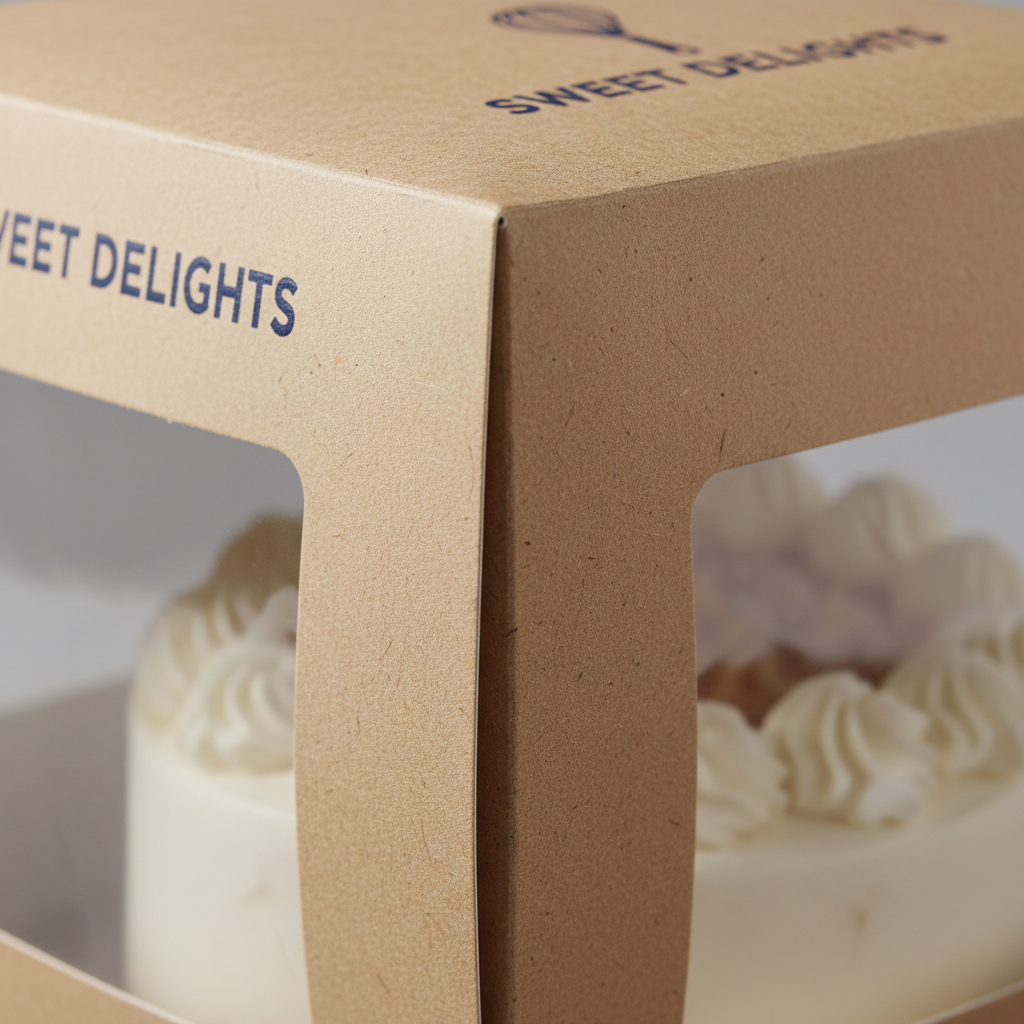
In the competitive bakery and food service industry, packaging serves two critical roles: protecting the product during transit and acting as a mobile billboard for the brand. For procurement managers, bakery chains, and distributors, sourcing custom cake box wholesale solutions is not merely about finding a container; it is about engineering a solution that maintains structural integrity under the weight of heavy tiers, resists grease and moisture, and presents a pristine brand image upon delivery.
Choosing the right manufacturing partner requires a deep understanding of material specifications, printing technologies, and structural design. A box that collapses under pressure or absorbs buttercream grease can damage a bakery’s reputation instantly. Conversely, high-quality, food-grade packaging enhances customer perception and justifies premium pricing.
This comprehensive guide covers everything professional buyers need to know about sourcing custom cake boxes, from paperboard grades and grease-resistant coatings to print finishes and logistics. Whether you are scaling a franchise or distributing packaging supplies, this guide will help you navigate the technical trade-offs to secure the best value.
1. Material Specifications: Choosing the Right Substrate
The foundation of any high-performance cake box is the paperboard. In wholesale manufacturing, cost often correlates with the grade of paper used, but so does performance. Understanding the terminology is essential for specifying your requirements accurately.
1.1. Ivory Board (SBS / C1S)
Solid Bleached Sulfate (SBS), often referred to as Ivory Board in international markets, is the premium standard for custom cake boxes. It is a virgin fiber grade that is bleached white throughout.
- Characteristics: Extremely smooth surface, pure white appearance, excellent stiffness, and superior printability.
- Typical Grammage: 300gsm to 400gsm for standard cakes; higher for tiered cakes.
- Best For: High-end bakery brands, wedding cake boxes, and retail-ready packaging where print vibrancy is paramount.
1.2. Kraft Paperboard (CUK / Unbleached)
Coated Unbleached Kraft (CUK) or natural Kraft board is increasingly popular for brands focusing on sustainability and organic aesthetics. It is made from virgin pine fibers, giving it exceptional tear resistance.
- Characteristics: Brown/natural look, high tensile strength, moisture resistance.
- Typical Grammage: 250gsm to 350gsm.
- Best For: Rustic bakery concepts, heavy cakes requiring extra tear strength, and eco-conscious brands.
1.3. Duplex Board (CCNB)
Clay Coated News Back (CCNB) or Duplex board features a white coated top layer for printing and a grey recycled fiber back. This is the most cost-effective option for high-volume wholesale orders.
- Characteristics: Lower cost, good print surface, but less stiff than virgin boards. The grey interior is not direct-food-contact safe without a barrier.
- Best For: Mass-market distribution, cost-sensitive projects, and outer boxes where the cake sits on a separate board.
1.4. Corrugated Board (E-Flute / F-Flute)
For large, heavy, or tiered cakes, standard paperboard may not provide sufficient stacking strength. Micro-flute corrugated board (laminated with a printed top sheet) offers structural rigidity.
- Characteristics: Multi-layered structure (liner-flute-liner), high crush resistance, thermal insulation.
- Best For: Transport boxes, wholesale delivery cartons, and heavy wedding cakes (3kg+).
For a wide selection of material options, explore our cake box category to see how different substrates affect the final look.
2. Grease Resistance and Food Safety Coatings
One of the most common failures in cake packaging is grease migration. Butter, shortening, and cream can soak into untreated paper fibers, causing unsightly dark spots and weakening the box structure. Specifying the correct coating is mandatory for direct-food-contact packaging.
2.1. PE (Polyethylene) Lamination
A thin layer of PE plastic is extruded onto the inner surface of the paperboard.
- Pros: 100% barrier against grease and moisture; heat sealable.
- Cons: Makes the box harder to recycle in standard paper streams (requires specialized facilities).
- Usage: Best for moist cakes, cheesecakes, or oily pastries.
2.2. Aqueous (Water-Based) Grease Barrier
An eco-friendly alternative to PE, this is a coating applied during the printing process.
- Pros: Repulpable and recyclable; sufficient for standard buttercream.
- Cons: Less effective than PE for extremely wet or hot items over long durations.
- Usage: Standard bakery boxes where sustainability is a key selling point.
2.3. Varnish vs. Lamination
While internal coatings protect the board from the cake, external coatings protect the print.
- Gloss/Matte Lamination: A plastic film applied to the outside. Adds burst strength and protects ink from scratching during delivery.
- UV Varnish: A liquid coating cured by UV light. Provides gloss but less physical protection than lamination.
3. Structural Design Options: Balancing Aesthetics and Assembly
Labor costs in retail bakeries are high. Therefore, the speed at which a box can be assembled is a key purchasing factor for your clients. Wholesale buyers must balance the cost of manufacturing with the ease of use.
3.1. Lock Corner (Four-Corner Beers)
These boxes ship flat but have pre-glued corners that snap into place instantly.
- Assembly Speed: Very Fast.
- Storage: Flat packed.
- Ideal For: High-volume bakeries needing rapid packing during rush hours.
3.2. Auto-Lock Bottom
The bottom of the box locks automatically when the box is popped open.
- Assembly Speed: Instant.
- Load Capacity: High (excellent for heavy cakes).
- Cost: Slightly higher manufacturing cost due to gluing.
3.3. Six-Corner / One-Piece Foldable
A classic style where the lid is attached to the base. It requires manual folding of tabs.
- Assembly Speed: Moderate.
- Cost: Lower (often no gluing required).
- Ideal For: Donuts, sheet cakes, and pastries.
3.4. Two-Piece (Telescope Lid & Base)
Separate lid and base. This is the premium standard for tall cakes.
- Pros: Adjustable height (to an extent); very rigid; premium “unboxing” experience.
- Cons: Inventory management of two SKUs (lid and base).
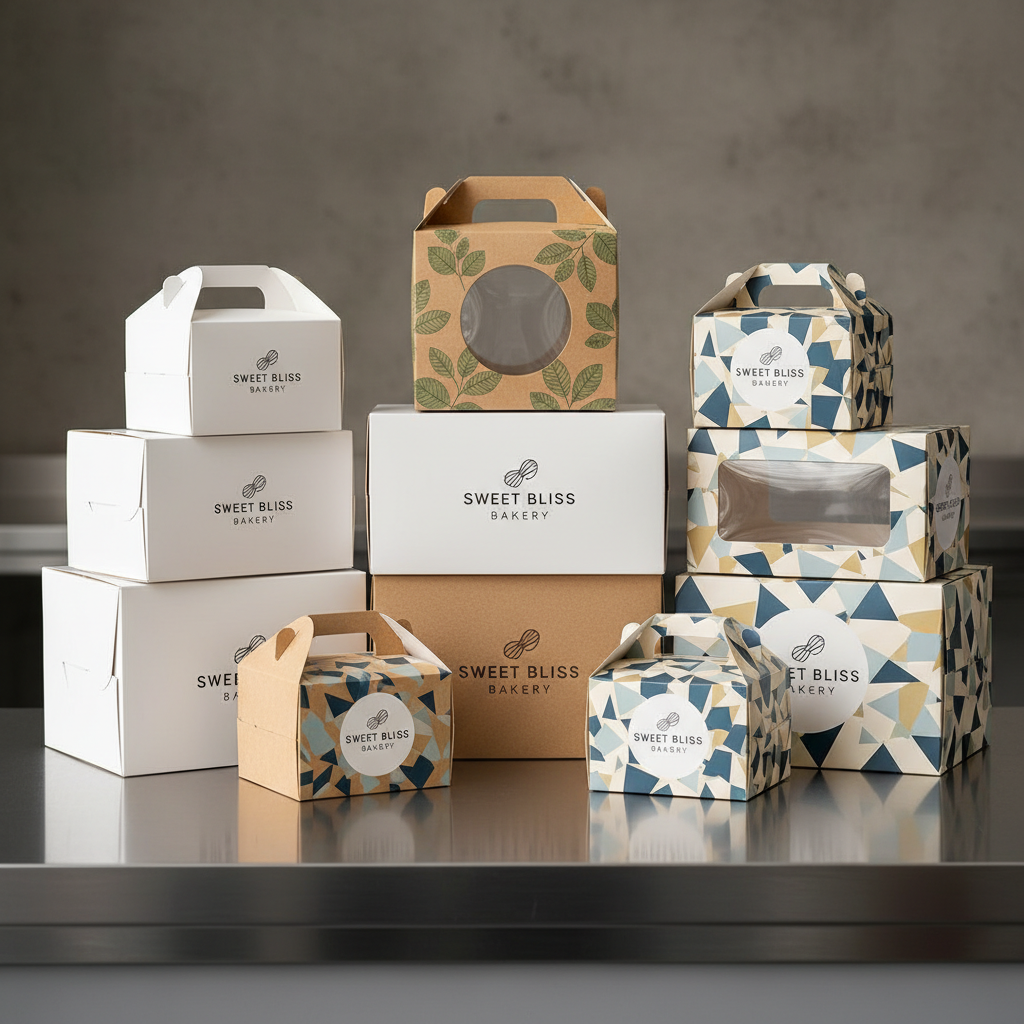
3.5. Window Patching
Adding a clear window allows customers to see the decoration without opening the box, reducing handling risks. Windows are typically made from PET (high clarity) or PLA (biodegradable). Ensure the window glue lines are robust to prevent detachment in humid refrigeration environments.
4. Custom Printing & Branding Capabilities
For B2B buyers, the box is a marketing tool. High-quality printing differentiates a premium bakery from a generic one. When ordering wholesale food packaging, you generally have three main printing options:
4.1. Offset Printing (Lithography)
The gold standard for high-volume wholesale orders.
- Quality: Photographic quality, sharp text, and precise color gradients.
- Colors: CMYK + Pantone (PMS) matching.
- Efficiency: High setup cost, but very low unit cost for orders over 1,000–5,000 units.
4.2. Flexographic Printing
Often used for simple logos on Kraft boxes or corrugated shippers.
- Quality: Lower resolution than offset; good for bold graphics and text.
- Cost: Economical for very large runs.
4.3. Special Finishes
To elevate the packaging, consider secondary processes:
- Hot Foil Stamping: Metallic gold or silver foil applied to logos. Adds a luxury feel.
- Spot UV: High-gloss varnish applied only to specific areas (like a logo) against a matte background.
- Embossing/Debossing: Creating raised or recessed textures on the paperboard.
5. Size and Capacity Guide
Sizing is critical. A box that is too small ruins the frosting; a box that is too large allows the cake to slide, leading to damage. When specifying dimensions to a manufacturer, always state Inner Dimensions (ID) to ensure the product fits.
Standard Industry Sizes (Inches)
| Box Size (LxWxH) | Cake Board Size | Common Usage |
|---|---|---|
| 6 x 6 x 4 | 6 inch | Mini cakes, “Bento” cakes, large muffins |
| 8 x 8 x 5 | 8 inch | Standard birthday cakes (single tier) |
| 10 x 10 x 5 | 10 inch | Standard 8-9 inch cakes, cheesecakes |
| 12 x 12 x 6 | 12 inch | Large party cakes, taller decorations |
| 14 x 14 x 10+ | 14 inch | Tiered wedding cakes (requires corrugated) |
Pro Tip: Always allow 0.5 to 1 inch of clearance on all sides of the cake board for easy insertion and removal. For height, measure the tallest decoration (toppers, candles) and add 1 inch.
6. Manufacturing & Quality Assurance
Reliable manufacturing is about consistency. When sourcing from overseas, specifically for food-contact items, you must ensure the factory adheres to strict quality protocols.
6.1. Ink Migration Testing
Inks used on the exterior must not migrate to the interior. Low-migration inks are recommended for food packaging. While the cake usually sits on a board, the box environment is sealed, so odor and chemical safety are paramount.
6.2. Load Bearing Tests
Manufacturers should perform compression tests (BCT – Box Compression Test) to ensure the boxes can be stacked during shipping without crushing the bottom units. This is vital for distributors who palletize goods.
6.3. Odor Neutrality
Paperboard and glue must be odorless. A “chemical” smell can taint the flavor of the cake, particularly high-fat products like buttercream which absorb odors easily.
7. Buying Guide: How to Order Wholesale
Navigating the procurement process efficiently can save weeks of lead time. Here is a step-by-step guide to ordering custom cake boxes.
Step 1: Define Your Specifications
Before contacting a supplier, gather the following data:
- Dimensions: Length x Width x Height (Inner).
- Material Preference: SBS, Kraft, or Corrugated.
- Quantity: Total units (MOQ affects price significantly).
- Print Requirements: Number of colors, special finishes.
- Features: Window? Handle? Inserts?
Step 2: Understanding MOQs (Minimum Order Quantities)
Custom packaging relies on economies of scale.
- 500 – 1,000 units: Often produced digitally or via die-cutting stock sheets. Higher unit price.
- 5,000+ units: Unlocks offset printing and custom tooling. optimal unit price.
- Container Load: Best pricing for distributors.
Step 3: Artwork Preparation
Suppliers will provide a dieline (template). Your designer must place artwork onto this dieline. Ensure all fonts are outlined and images are at least 300 DPI. Specify Pantone codes if brand colors must be exact.
Step 4: Sampling
Never proceed to mass production without a sample.
- Digital Sample: A printed mock-up to check size and spelling. (Fast, cheaper).
- Pre-production Sample: Made on the actual production machine. (Slower, expensive, but accurate for color).
Ready to start? You can check our guide on how to order or reach out directly via our contact page to discuss your specs.
8. Logistics and Storage Considerations
Cake boxes are bulky. Even when flat-packed, 10,000 cake boxes take up significant warehouse space.
- Palletization: Ensure boxes are packed in master cartons that are not too heavy for staff to lift (typically under 15kg).
- Climate Control: Paper absorbs moisture. Warehouses must be dry to prevent the boxes from warping or developing mold.
- Shipping Volume: Calculate the CBM (Cubic Meter) volume to optimize shipping container usage. Corrugated boxes take up more space than folding carton styles.
9. Sustainability in Cake Packaging
Modern consumers demand eco-friendly packaging. To align with this trend without sacrificing quality:
- Use Unbleached Kraft: Signals “natural” to the consumer.
- Avoid Plastic Windows: Or switch to cellulose-based windows if visibility is needed.
- Soy-Based Inks: Ask your manufacturer about vegetable-based inks which are easier to de-ink during recycling.
- Right-Sizing: Reducing the box size by even 0.5 inches can save tons of paper over a large production run.
10. Frequently Asked Questions (FAQ)
Q1: What is the standard board thickness for a 1kg cake?
For a standard 1kg cake, 350gsm SBS (Ivory Board) is typically sufficient. If the cake is dense or tall, we recommend upgrading to 400gsm or using a corrugated E-flute material for added rigidity.
Q2: Can I print inside the cake box?
Yes, printing inside the box creates a premium unboxing experience. However, the ink must be food-grade, or the inside must be laminated with a food-safe barrier to prevent direct contact between the ink and the food.
Q3: What is the difference between a “lock corner” and an “auto-bottom” box?
A lock corner box requires manual folding of the corners to assemble. An auto-bottom box is pre-glued so that the bottom structure snaps into place automatically when the box is opened, which is faster but slightly more expensive.
Q4: How do I prevent the cake from sliding inside the box?
The box should be sized to fit the cake board snugly. For example, if you use a 10-inch cake board, the box should be 10 x 10 inches. If the box is larger, you can request a custom insert to hold the cake base in place.
Q5: Are window patches recyclable?
Standard PET windows are recyclable but must be separated from the paper in some recycling streams. PLA (corn-starch based) windows are biodegradable/compostable but have a shorter shelf life and lower heat resistance.
Q6: What is the lead time for custom printed orders?
Typically, once artwork is approved, production takes 15–25 days depending on quantity and complexity. Shipping times depend on the method (air vs. sea freight).
Q7: Can you match my brand’s specific color?
Yes, by using Pantone (PMS) color matching, we can ensure your brand color is consistent across all packaging materials, unlike CMYK printing which can vary slightly between runs.
Q8: Do you offer grease-proof options for butter cakes?
Yes, we can apply a PE lamination or an aqueous grease-resistant coating to the interior of the box to prevent oil spots.
Conclusion
Sourcing custom cake boxes wholesale is a balance of structural engineering, brand aesthetics, and cost efficiency. By selecting the right materials—whether it’s sturdy corrugated board for tiered wedding cakes or elegant ivory board for pastries—you ensure your product arrives safely and makes a lasting impression.
At YBJ Packing, we specialize in helping businesses navigate these choices to produce high-quality, food-safe packaging solutions tailored to your operational needs.
Ready to upgrade your bakery packaging? Request a quote today or browse our cake box catalog to get started.