

Introduction: The Strategic Value of Branded Baking Cups
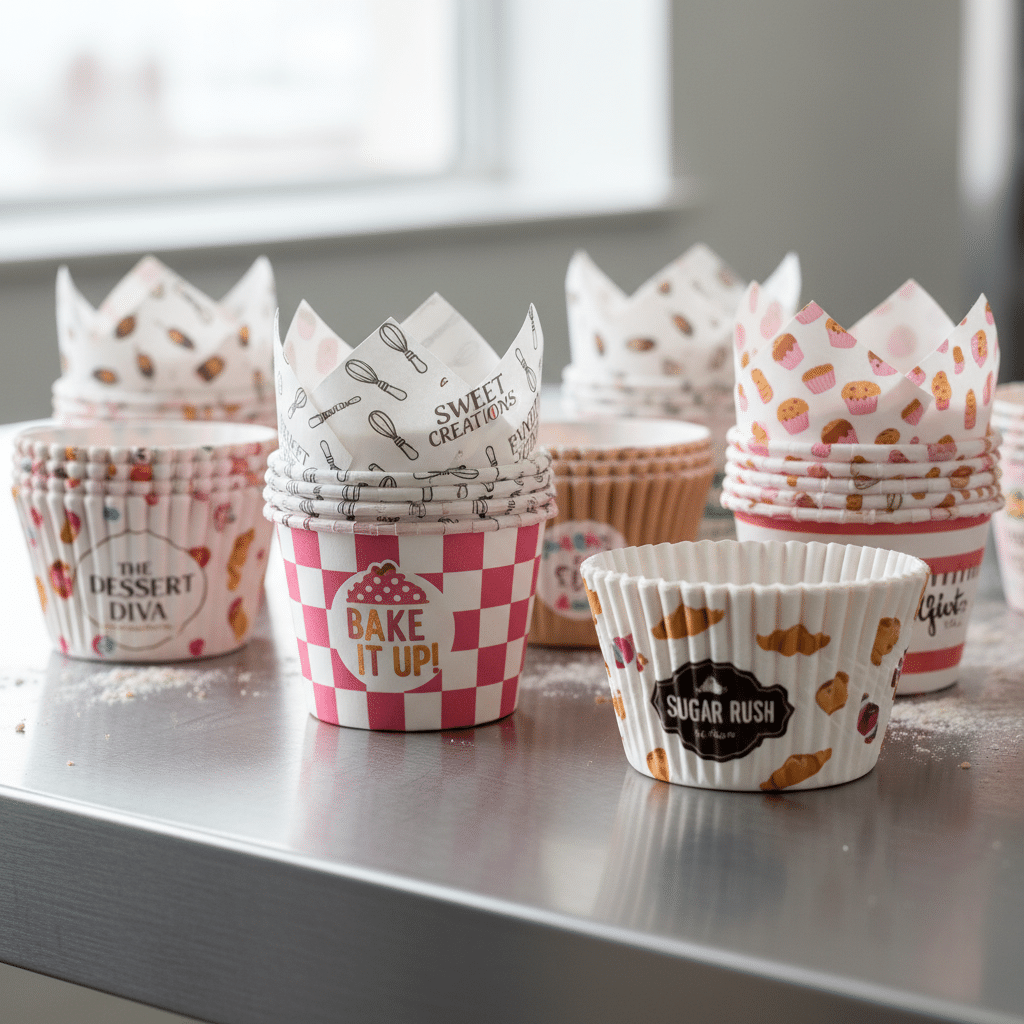
In the competitive landscape of commercial baking and food service, packaging plays a dual role: it is a critical tool for production efficiency and a powerful vehicle for brand visibility. For wholesale buyers, sourcing custom baking cups is not merely about finding a container for batter; it is about securing a technical component that withstands high temperatures, releases baked goods cleanly, and communicates brand quality to the end consumer.
Whether you are a large-scale industrial bakery, a franchise coffee chain, or a specialized distributor, understanding the nuances of baking cup manufacturing—from paper density (GSM) to food-safe ink technologies—is essential for making informed procurement decisions. Poorly chosen baking cups can lead to production downtime due to de-nesting issues, grease bleed-through that ruins presentation, or structural failure during baking.
This comprehensive guide explores the technical specifications, material options, and customization possibilities available for wholesale buyers. We will examine how to balance cost with performance and how to navigate the ordering process to ensure your wholesale custom baking cups arrive exactly as specified.
1. Material Science: Selecting the Right Substrate
The performance of a baking cup is dictated primarily by the raw material used. In the B2B market, “paper” is a broad term that covers several distinct grades of substrate, each designed for specific baking environments and product types.
Standard Greaseproof Paper
Greaseproof paper is the industry standard for general-purpose baking. It is treated mechanically to reduce porosity, creating a barrier that resists grease penetration. This material is breathable, allowing steam to escape during the baking process, which is vital for achieving the correct crumb texture in muffins and cupcakes.
- Best for: Standard muffins, cupcakes, and dry baked goods.
- GSM Range: Typically 40gsm to 60gsm.
- Pros: Cost-effective, good general performance.
Glassine Paper
Glassine is a super-calendered paper, meaning it has been passed through high-pressure rollers to create a very smooth, glossy, and dense surface. It offers superior grease resistance compared to standard greaseproof paper and has a semi-transparent, premium look.
- Best for: Confectionery, chocolates, and oily batters.
- Performance: Excellent release properties; often used for slip-easy cups.
Vegetable Parchment (Silicone Coated)
For industrial applications requiring the highest level of non-stick performance, vegetable parchment—often coated with food-grade silicone—is the material of choice. This substrate can withstand higher temperatures and ensures that even sticky, high-sugar batters release cleanly without tearing the product.
- Best for: Gluten-free baking, high-sugar recipes, cheese-based products.
- Temperature Resistance: Can typically withstand up to 230°C (446°F).
Foil-Laminated Papers
Foil baking cups consist of an outer layer of aluminum foil laminated to an inner layer of greaseproof paper. The foil acts as a complete barrier to grease and moisture, ensuring the outer appearance remains pristine regardless of the batter’s oil content. Structurally, foil cups are rigid enough to stand alone on a baking sheet, often eliminating the need for a muffin pan.
- Best for: Heavy batters, catering displays, and situations where muffin pans are unavailable.
- Visual Impact: Available in gold, silver, and various metallic colors for premium branding.
2. Functional Coatings and Grease Resistance
Beyond the base material, the coating applied to the paper determines its interaction with the food product. Understanding these coatings helps in selecting the right cup for specific recipes.
Slip-Easy vs. Greaseproof
Not all baking cups are non-stick. “Greaseproof” simply means oil won’t soak through instantly. “Slip-easy” or “easy-release” implies a specific treatment (usually silicone or a specialized chemical sizing) that allows the paper to peel away effortlessly. For automated de-nesting machines in large bakeries, slip-easy properties are crucial to prevent machine jams.
PE (Polyethylene) Coating
While less common for baking due to melting points, PE coatings are sometimes used for cold-use cups (like ice cream or unbaked treats). However, for baking applications, verify that any plastic coating is heat-stable and FDA/EU compliant for oven use.
3. Styles and Shapes: Matching Form to Function
Customization extends beyond print; the physical shape of the cup influences product presentation and portion control. As a provider of comprehensive bakery packaging solutions, we see demand for various structural designs.
Standard Round Cups
The ubiquitous crimped cup. Dimensions are critical here. A “standard” cup usually has a 50mm base, but wall heights vary.
- Wall Height: Affects the “mushrooming” of the muffin top. Higher walls support the batter longer as it rises.
Tulip Baking Cups
Made from a single square sheet of greaseproof paper pressed into a mold to form peaks. This style offers an artisanal, bakery-fresh aesthetic.
- Advantage: The peaks allow for variable batter heights and generous toppings without spillage.
- Branding: Excellent canvas for random-repeat logo printing.
Lotus / Brioche Cups
Similar to tulip cups but with a more structured, flared rim that resembles a flower. These are often used for premium single-serve desserts.
Rolled Rim Cups
These are rigid paper cups with a reinforced rim, capable of standing freely. They function as both the baking mold and the serving packaging.
4. Technical Specifications: Sizing and Tolerances
When ordering wholesale baking cups, precision in sizing is non-negotiable. A variance of a few millimeters can cause cups to fit poorly in baking pans, leading to crumpled bottoms or uneven baking.
How to Measure
To ensure accuracy when requesting a quote, provide three key measurements:
- Base Diameter: The measurement across the bottom of the cup. (e.g., 50mm)
- Wall Height: The vertical height of the side. (e.g., 35mm)
- Flattened Diameter: The total diameter of the paper circle before it is formed. This is crucial for determining material usage and cost.
Tolerances
Industrial manufacturing involves high-speed forming machines. Standard industry tolerances for paper cups are typically +/- 1mm for dimensions. If your automated depositors require tighter tolerances, this must be communicated during the sampling phase.
5. Printing Technologies and Ink Safety
Branding is the primary driver for custom orders. The technology used to print your logo impacts cost, minimum order quantity (MOQ), and visual fidelity.
Flexographic Printing
Flexography is the most common method for high-volume baking cup production. It uses flexible relief plates and fast-drying inks.
- Pros: Economical for large runs, consistent color, supports food-safe water-based inks.
- Cons: Higher setup costs for plates; less suitable for photographic quality.
Offset Printing
Used less frequently for formed cups but common for flat sheets. It offers higher resolution but can be more expensive for short runs.
Food-Safe Inks
This is a critical compliance area. Inks used on baking cups must be:
- Heat Stable: Colors must not shift, fade, or release odors when exposed to oven temperatures (up to 220-230°C).
- Migration Safe: Chemicals from the ink must not migrate into the food. We utilize water-based or vegetable-based inks that meet international food safety standards.
- Odorless: The ink must not impart any taste or smell to the delicate baked goods.
6. Customization Checklist: Designing for Production
To streamline the ordering process, buyers should prepare their design specifications carefully. Here is a checklist for your design team:
1. Step-and-Repeat vs. Registered Print
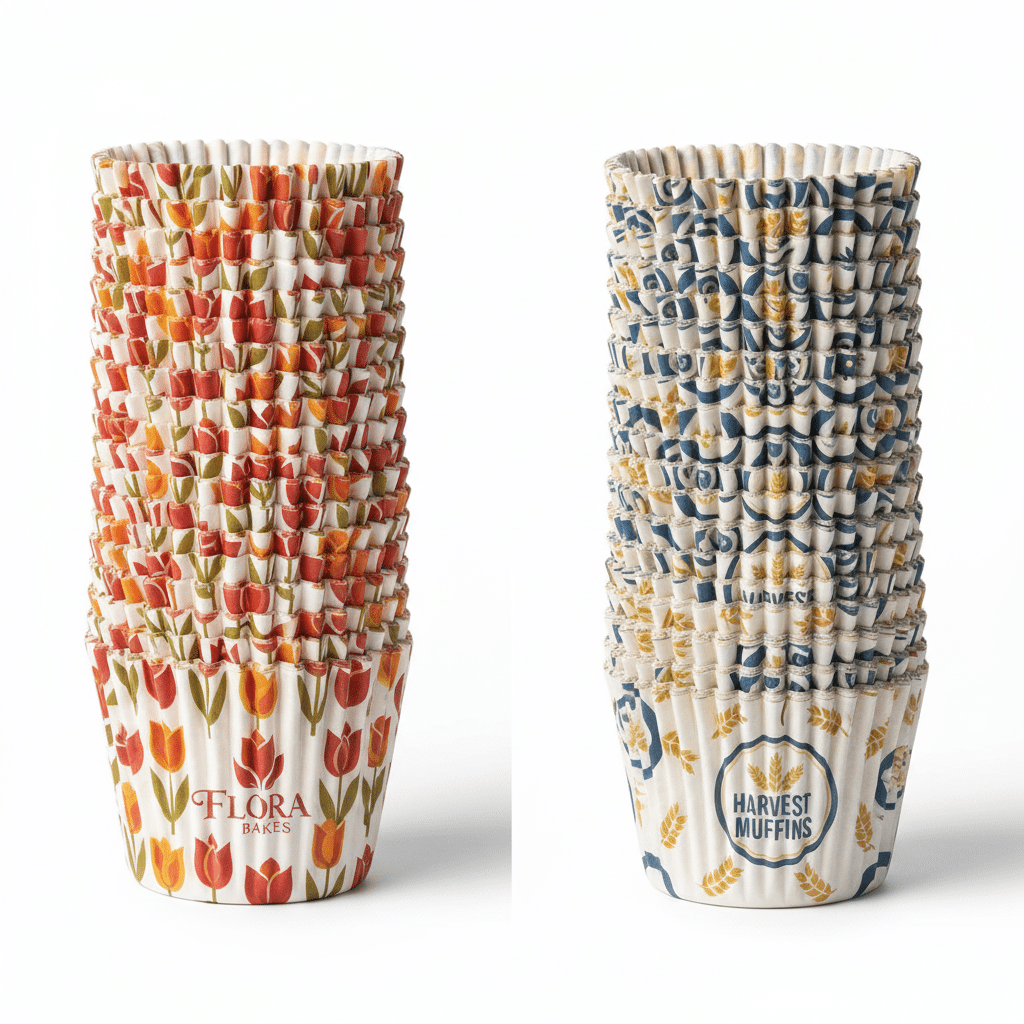
- Random/Step-and-Repeat: The logo is repeated in a pattern across the paper. When the paper is cut and formed, the logo falls randomly. This is cost-effective and avoids alignment issues.
- Registered Print: The logo is positioned in a specific spot (e.g., exactly centered on the bottom or side). This requires precision die-cutting and usually incurs higher costs and MOQs due to the technical difficulty of aligning the print with the forming tool.
2. Color Matching
Provide Pantone (PMS) codes for your brand colors. Note that printing on uncoated, absorbent greaseproof paper can result in slightly less vibrant colors than printing on glossy coated paper. A physical proof is recommended for critical color matching.
3. Artwork Files
Always supply vector files (AI, EPS, PDF) rather than raster images (JPG, PNG). Vector files allow the factory to scale the artwork without loss of quality.
7. Manufacturing Process and Quality Control
Understanding the production line helps in estimating lead times and managing expectations.
The Production Workflow
- Raw Material Inspection: Checking paper density, moisture content, and certification.
- Printing: The large rolls of paper are printed with the custom design.
- Slitting: The printed rolls are slit into narrower reels suitable for the forming machines.
- Die-Cutting and Forming: The paper is punched and pressed into molds using heat and pressure to create the cup shape (crimping).
- Packaging: Cups are nested (stacked) and wrapped in plastic to maintain hygiene and shape.
Quality Assurance Checks
- De-nesting Test: Ensuring cups separate easily (critical for automated bakeries).
- Dimension Check: Verifying base and height against specs.
- Ink Adhesion Test: Ensuring ink does not rub off or transfer.
8. Buying Guide: MOQs, Lead Times, and Logistics
Navigating the commercial aspects of wholesale procurement requires attention to logistics.
Minimum Order Quantities (MOQ)
Custom printing requires the creation of printing plates and machine setup. Therefore, MOQs are necessary to amortize these setup costs.
Typical MOQs:
– Standard sizes: Often start around 50,000 to 100,000 pieces.
– Custom sizes/shapes: May require higher volumes (e.g., 200,000+) to justify custom tooling.
Lead Times
Custom orders generally follow this timeline:
1. Artwork Approval: 2-5 days.
2. Plate Making: 5-7 days.
3. Production: 15-25 days (depending on volume).
4. Shipping: Varies by method (Air vs. Sea).
Pro Tip: Always factor in an extra buffer for seasonal peaks (e.g., pre-Christmas production runs).
Packaging for Transport
Baking cups are lightweight but voluminous and fragile. They can be easily crushed. Ensure your supplier uses rigid corrugated cartons and proper inner packs (e.g., plastic sleeves or tubes) to protect the crimping during transit.
9. Sustainability: Eco-Friendly Options
Modern consumers demand sustainable packaging. B2B buyers can opt for:
- FSC-Certified Paper: Sourced from responsibly managed forests.
- Compostable Inks: Ensuring the entire cup can be industrially composted.
- Unbleached Paper: Using natural kraft greaseproof paper reduces chemical processing and signals an eco-friendly brand image.
10. Diverse Use Cases Beyond Muffins
While muffins are the obvious application, custom baking cups are versatile tools in the food service industry.
- Savory Applications: Mini quiches, meat pies, and egg bites.
- Confectionery: Truffles, caramels, and chocolate bonbons (using glassine mini cups).
- Sauce & Sample Cups: Sturdy, rolled-rim cups are excellent for portioning sauces or offering food samples at trade shows.
- Deli Display: Separating items in a bento box or deli tray to prevent flavor transfer.
11. Frequently Asked Questions (FAQ)
Q1: Can I bake directly in these cups without a pan?
A: It depends on the paper weight. Standard 40-50gsm cups require a muffin pan for support. However, rigid rolled-rim cups or heavy-duty foil laminated cups can stand alone on a flat baking sheet.
Q2: Will the printed logo fade in the oven?
A: No, provided high-quality, heat-resistant food-grade inks are used. We ensure all custom prints are tested for colorfastness at standard baking temperatures.
Q3: What is the difference between “greaseproof” and “glassine”?
A: Greaseproof is breathable and matte; Glassine is super-calendered, making it glossy, denser, and more resistant to oil, often used for chocolates or high-fat cookies.
Q4: Do you offer custom sizes not listed on the website?
A: Yes, custom tooling is possible. However, this incurs a tooling fee and typically requires a higher MOQ. Contact our sales team to discuss specific dimensional requirements.
Q5: How should baking cups be stored?
A: Store in a cool, dry place away from direct sunlight and humidity. High humidity can cause the paper to curl or lose its crimp shape, affecting machine performance.
Q6: Can I get a sample before placing a full order?
A: Yes. We can provide stock samples to check material quality and sizing. For custom printed samples, a sampling fee applies due to the setup costs involved.
Conclusion
Sourcing custom baking cups wholesale is a balance of aesthetics, engineering, and logistics. By selecting the right material—be it robust vegetable parchment or elegant tulip-style greaseproof paper—and partnering with a manufacturer who understands the intricacies of food-safe printing, you protect your product’s integrity and enhance your brand’s market presence.
Ready to elevate your bakery packaging? Whether you need a standard size with a custom logo or a completely bespoke solution, our team is ready to assist.