

Introduction: The Strategic Value of Custom Bakery Packaging
In the competitive food service industry, packaging serves two critical roles: protecting the integrity of the product and acting as a mobile billboard for the brand. For procurement managers, bakery owners, and distributors, sourcing custom bakery bags wholesale is not merely a transaction—it is a strategic decision that impacts operational efficiency, product freshness, and customer perception.
Whether you are packaging crusty artisanal baguettes that need to breathe or buttery croissants that require grease resistance, the technical specifications of your packaging define the end-user experience. A bag that tears under the weight of a sourdough loaf or develops unsightly grease spots can damage a brand’s reputation instantly. Conversely, a well-engineered, high-quality custom printed bag reinforces brand value and ensures the product arrives in the same condition it left the oven.
This comprehensive guide explores the technical landscape of custom bakery bags. We will examine material substrates, grease-resistance levels (KIT values), printing technologies, and the logistical considerations necessary for successful bulk procurement.
1. Material Selection: Substrates and Sustainability
The foundation of any high-performance bakery bag is the raw material. In the wholesale market, “paper” is a broad category. Understanding the specific properties of different paper grades ensures you select the right substrate for your specific application.
Brown Kraft vs. White Bleached Kraft
The choice between brown (natural) and white kraft paper often comes down to branding preference and required print vibrancy.
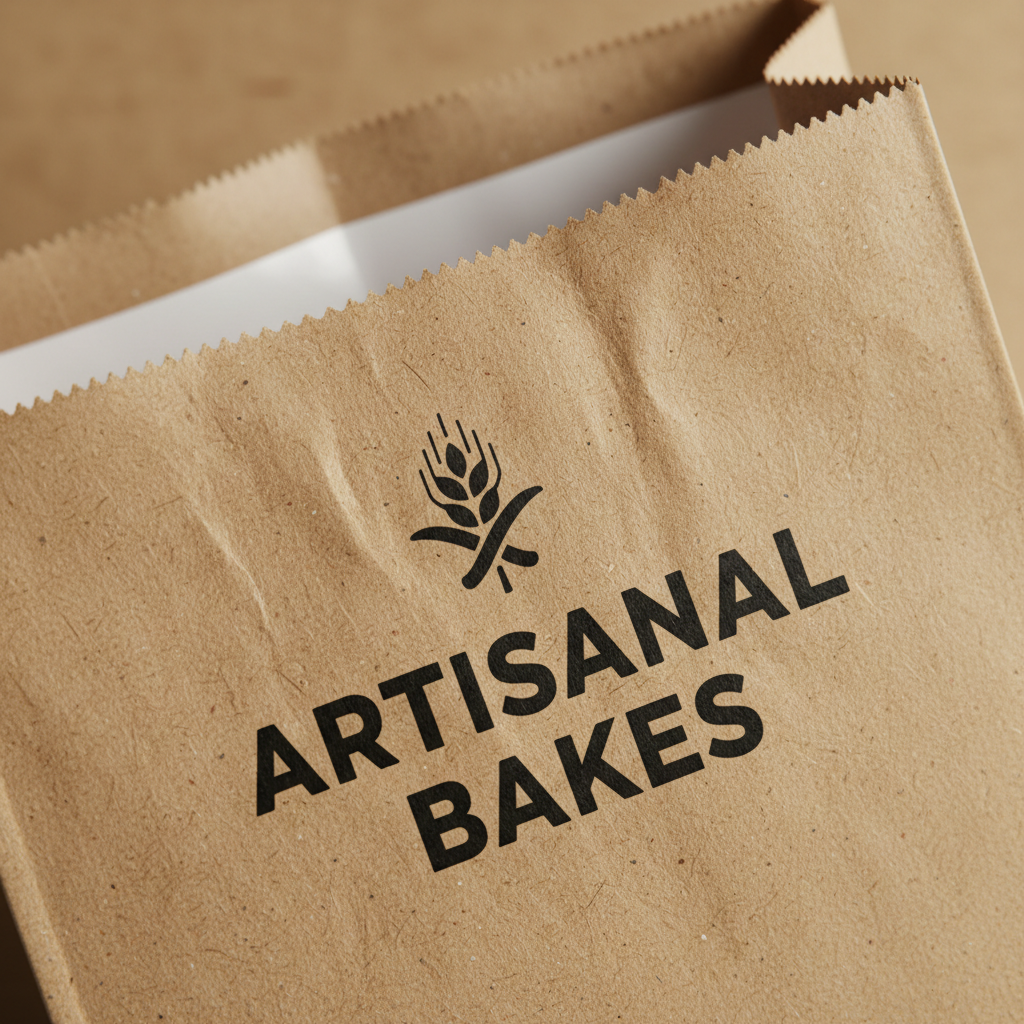
- Natural Brown Kraft: Made from unbleached wood pulp, this material suggests sustainability and a rustic, artisanal quality. It is the standard for organic bakeries and traditional bread packaging. However, printing colors on brown kraft can result in muted tones; white ink is often required as a base layer if vibrant colors are needed.
- White Bleached Kraft: This paper undergoes a bleaching process to remove the natural brown color. It provides a pristine, neutral canvas that allows for sharp, vibrant print results. It is often preferred by modern brands or those with complex, colorful logos.
Paper Density (GSM) Considerations
Paper thickness is measured in Grams per Square Meter (GSM). Selecting the incorrect GSM is a common procurement error.
- 30–40 GSM: Lightweight. Suitable for single pastries, cookies, or lightweight pretzel bags. Cost-effective but offers minimal structural support.
- 45–60 GSM: Standard weight. Ideal for baguettes, multiple pastries, and general food packaging solutions. Balances durability with cost.
- 70–80+ GSM: Heavyweight. Required for heavy artisan loaves, dense cakes, or bags that need to stand upright on a shelf (SOS bags).
Grease Resistance and Coatings
Bakery products often have high fat or moisture content. Standard kraft paper is porous and will absorb grease, leading to staining. To prevent this, specific treatments are applied.
- Greaseproof Paper (KIT Levels): This paper is treated during manufacturing to resist oil penetration without a plastic coating. Resistance is measured by KIT levels (typically 1–12). A KIT level of 3–5 is standard for dry baked goods, while 7+ is recommended for oily items like donuts or croissants.
- PE (Polyethylene) Coating: A thin layer of plastic is extruded onto the paper. This provides a total barrier against grease and moisture. It is ideal for hot foods or very sticky items but can complicate recycling processes in some regions.
- Wax Coating: An older method, offering good release properties (non-stick) and moderate grease resistance. It is often used for individual pastry sheets or slide-in bags.
2. Bag Styles and Structural Engineering
The architecture of the bag determines how easy it is to load, how it displays on a shelf, and how much volume it can hold.
Flat and Satchel Bags (V-Bottom)
These are the most economical options, constructed from a single web of paper folded and glued.
- Design: Sharp V-shaped bottom.
- Best For: Flat items like cookies, pretzels, or single baguette sleeves.
- Limitations: They do not stand up on their own and have limited expansion capacity.
Square Opening Satchel (SOS) Bags
Also known as “block bottom” bags, these are engineered to stand upright.
- Design: Rectangular flat bottom with side gussets.
- Best For: Stacking on shelves, bulk orders (e.g., a dozen bagels), and heavier items. The flat bottom simplifies loading for staff during peak hours.
- Logistics: These take up more space per unit when shipping compared to flat bags but offer superior presentation.
Window Bags
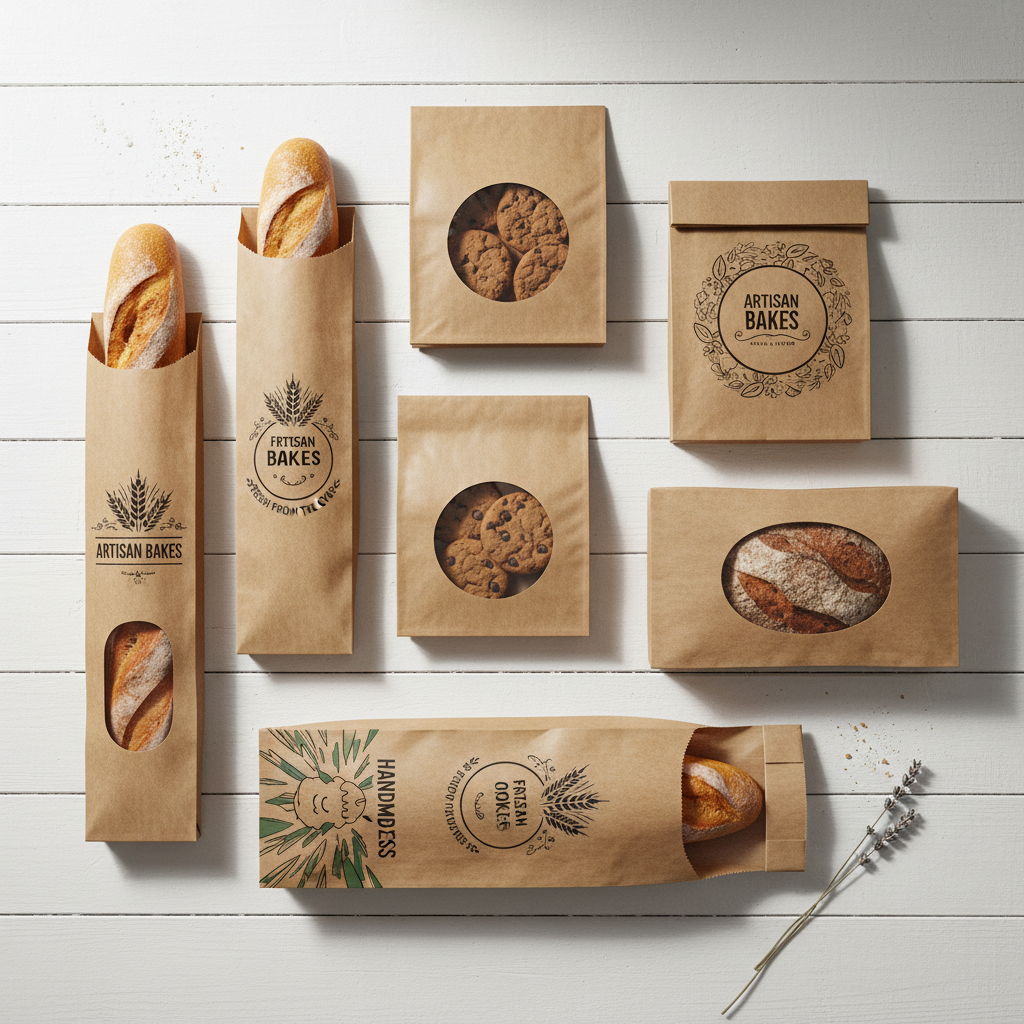
Visibility drives sales. Window bags integrate a clear panel to showcase the product while maintaining hygiene.
- Strip Windows: A narrow vertical strip, often used for artisan bread to show the crust.
- Die-Cut Windows: Custom shapes centered on the bag face.
- Material: Windows are typically made from BOPP (polypropylene) for clarity or PLA (polylactic acid) for compostability. Ensure the window material aligns with your brand’s sustainability claims.
3. Printing Technologies and Branding Options
When ordering custom bakery bags wholesale, the printing method affects cost, lead time, and visual quality. Most wholesale manufacturers utilize Flexographic printing for its efficiency.
Flexographic Printing (Flexo)
Flexo is the industry standard for packaging. It uses flexible relief plates to transfer ink onto the substrate.
- Pros: Extremely cost-effective for high volumes. Supports water-based inks (food safe). High-speed production.
- Cons: Initial plate costs apply. Registration (alignment of colors) tolerances are generally wider than offset printing, meaning very intricate designs may need simplification.
- Spot Color vs. CMYK: Most bakery bags use Spot Colors (Pantone). This ensures exact brand color matching (e.g., “Starbucks Green”). CMYK (Process) printing is used for photographic images but is more expensive and complex to control on absorbent kraft paper.
Ink Safety Considerations
For food packaging, ink safety is non-negotiable. Reputable manufacturers use water-based or soy-based inks that are low-migration and free from heavy metals. Always confirm that the inks comply with relevant food safety standards for indirect food contact.
Artwork Preparation Checklist
To ensure a smooth production process, procurement teams should prepare artwork files correctly:
- Format: Vector files (AI, EPS, PDF) are mandatory. Raster images (JPG, PNG) will pixelate and result in poor print quality.
- Fonts: Outline all fonts to prevent substitution errors.
- Bleed: If the design runs to the edge of the bag, include appropriate bleed (usually 3–5mm).
- Colors: Specify Pantone (PMS) codes clearly. Do not rely on screen appearance (RGB).
4. Sizing and Measurement Guide
Ordering the wrong size is a costly mistake. Industry standard measurements follow the format: Width x Gusset x Height.
- Width (Face): The measurement across the front of the bag.
- Gusset (Side/Depth): The expandable side fold. This is critical for voluminous items like round loaves. A larger gusset makes the bag easier to open and load.
- Height (Length): The vertical measurement. Remember to account for the “closure area”—the top portion of the bag that will be folded over or tied. If your baguette is 50cm long, a 50cm bag is too short; you need 55–60cm to cover the end properly.
Common Bakery Bag Sizes (Reference Only)
- Baguette: 10-12cm (W) x 4-6cm (G) x 60-70cm (H)
- Cookie/Pastry (Small): 12cm (W) x 15cm (H) (Flat)
- Bread Loaf (Large): 20cm (W) x 10cm (G) x 35cm (H)
5. Technical Specifications & Quality Assurance
When evaluating a supplier or a sample batch, look for specific quality indicators.
Breathability vs. Barrier
Crusty breads (sourdough, baguettes) need to breathe. If sealed in a plastic-lined air-tight bag, the crust will soften and become chewy within hours. For these products, uncoated paper with micro-perforations or simply breathable kraft is superior. Conversely, soft buns and sliced bread require a barrier to retain moisture and prevent staling.
Seam Strength
The adhesive used on the bottom and back seams must withstand the product’s weight and potential heat. Hot bread releases steam, which can weaken low-quality glues. Test samples by loading them with hot product to ensure the bottom does not fall out.
Dimensional Tolerances
In mass manufacturing, slight variations occur. A standard industry tolerance is ±2-3mm for dimensions. Ensure your product fits comfortably within the bag with some room for error.
6. Wholesale Buying Guide: Logistics and Ordering
Navigating the wholesale supply chain requires attention to Minimum Order Quantities (MOQs), lead times, and shipping logistics.
Understanding MOQs
Custom manufacturing involves setup costs (machine calibration, ink mixing, plate mounting). Therefore, MOQs are necessary to make the run economical.
- Unprinted/Stock Bags: Low MOQs (often by the carton).
- Custom Printed Bags: Typically start at 10,000 to 30,000 units depending on the size and complexity. Higher volumes drastically reduce the unit price.
Lead Times and Planning
Custom production is not instantaneous. A typical timeline might look like this:
- Design Approval & Proofing: 3–5 days.
- Plate Making: 5–7 days.
- Production: 15–25 days.
- Shipping: Varies by method (Air vs. Sea).
Buyers should plan inventory 2–3 months in advance to avoid stockouts. Rush orders are often possible but incur significant premiums.
Storage and Shelf Life
Paper bags should be stored in a cool, dry environment. High humidity can cause paper to curl or absorb moisture, affecting machineability if you use automated loading systems. Keep cartons sealed until use.
7. Sustainability and Compliance
Environmental responsibility is a major driver in the packaging sector. Buyers should clarify the disposal profile of their packaging.
- Recyclable: Uncoated kraft bags are widely recyclable. Bags with heavy plastic coatings may require specialized facilities.
- Compostable: Look for certified compostable materials (paper + PLA) if your market demands industrial compostability.
- FSC Certification: Ask suppliers if they source paper from Forest Stewardship Council certified mills, ensuring responsible forestry practices.
8. Frequently Asked Questions (FAQ)
Q: Can I print on the inside of the bakery bag?
A: Generally, no. Printing on the food-contact side requires specialized, highly regulated inks and processes. Most standard branding is done on the exterior to ensure maximum food safety.
Q: How do I know which grease-proof level I need?
A: Test it. Request samples of different KIT levels (e.g., KIT 3 vs KIT 7). Place your product in the bag for 24 hours. If spots appear, you need a higher KIT level or a PE coating.
Q: What is the difference between a Tin-Tie and a standard bag?
A: A Tin-Tie bag has a metal strip integrated into the top, allowing the customer to re-close the bag to maintain freshness. This adds cost but significant value for products consumed over time, like coffee or granola.
Q: Do you offer samples before full production?
A: Yes. While a full custom-printed sample runs can be expensive due to setup, most suppliers provide digital proofs and physical samples of previous work (or unprinted size samples) to verify material quality and dimensions.
Q: How are the bags packed for shipping?
A: Bags are typically counted into bundles (e.g., 50 or 100) and packed in corrugated master cartons. For high-volume orders, these cartons are palletized and shrink-wrapped.
Q: Can I mix different designs in one order to meet the MOQ?
A: Usually, no. The MOQ applies per design/size because the machinery must be stopped and plates changed for every new design. However, discuss your total annual volume with the supplier; blanket orders with scheduled releases might be an option.
Conclusion
Sourcing the right custom bakery packaging is a balance of aesthetics, protection, and economics. By understanding the nuances of paper grades, coatings, and print capabilities, buyers can secure packaging that not only protects their goods but elevates their brand in the marketplace.
Ready to upgrade your bakery packaging? Whether you need high-volume baguette sleeves or grease-resistant pastry bags, our team is ready to assist with technical guidance and competitive pricing.
Review our ordering process to get started, or contact our team today to request a quote and free samples.