

Introduction: The Strategic Value of High-Performance Pizza Packaging
In the competitive food service landscape, the vessel that holds the product is nearly as important as the product itself. For pizzerias, wholesale bakeries, and frozen food distributors, the custom aluminum foil pizza tray represents a critical intersection of functionality, cost-efficiency, and brand presentation. Unlike standard cardboard boxes which can absorb grease and lose structural integrity, aluminum foil trays offer superior thermal conductivity, grease resistance, and rigidity.
For procurement managers and operations directors, selecting the right aluminum foil pizza tray is not merely a purchasing task—it is a quality control decision. The right thickness ensures the tray doesn’t buckle under a loaded deep-dish pizza. The correct rim style ensures compatibility with automated lidding machines. And the right customization elevates a generic commodity into a branded experience.
This guide provides a deep dive into the technical specifications, manufacturing processes, and purchasing strategies for wholesale aluminum foil pizza trays. We will explore how to balance material costs with performance and how to navigate the customization options available for bulk orders.
Why Aluminum? Material Science in Food Service
Before discussing customization, it is essential to understand why aluminum remains the material of choice for baking and transport. Aluminum’s unique properties make it indispensable for the modern food supply chain.
Thermal Conductivity and Baking Uniformity
Aluminum is an exceptional heat conductor. When a pizza is baked directly in a foil tray, heat is distributed evenly across the bottom surface. This promotes a crisp crust and prevents the “soggy center” often associated with materials that insulate rather than conduct. For frozen pizza manufacturers, this conductivity ensures that the consumer’s reheating experience mimics a pizzeria oven.
Barrier Properties and Hygiene
Food-grade aluminum alloys provide a total barrier against light, gases, and moisture. This is crucial for extending shelf life, particularly for frozen or par-baked products. Furthermore, the manufacturing process of aluminum foil involves high-temperature annealing, which renders the surface sterile. Unlike porous materials, aluminum does not harbor bacteria or absorb oils, maintaining the hygiene standards required by HACCP protocols.
Sustainability and Circular Economy
In an era where sustainability dictates procurement policies, aluminum scores highly. It is infinitely recyclable without loss of properties. For B2B buyers, sourcing from a supplier that utilizes recycled content or offers easily recyclable trays can be a key selling point to eco-conscious end-consumers.
Technical Specifications: Defining Your Requirements
When requesting a quote for food packaging boxes and trays, specificity prevents errors. Below are the key technical parameters you must define.
1. Alloy and Temper
Not all aluminum is the same. The alloy determines the strength and formability of the tray.
- Alloy 3003: The most common alloy for food containers. It contains manganese, which increases strength by about 20% over pure aluminum. It has excellent workability and corrosion resistance.
- Alloy 8011: Often used for thinner gauges, offering good ductility.
- Temper: Usually H22 or H24. This indicates the hardness. H24 is half-hard, providing enough rigidity to hold heavy toppings while still allowing the rim to be curled or crimped without cracking.
2. Gauge (Thickness)
Thickness is measured in microns (µm) or mils. The choice depends heavily on the application:
- Light Duty (50–70 microns): Suitable for small, thin-crust pizzas or serving trays that won’t be lifted by the edge when full.
- Medium Duty (70–90 microns): The standard for most fresh takeaway pizzas. Offers a balance of cost and rigidity.
- Heavy Duty (100+ microns): Required for deep-dish pizzas, heavy topping loads, or frozen pizzas that travel through complex supply chains.
3. Rim Styles
The rim configuration dictates how the tray interacts with lids and machinery.
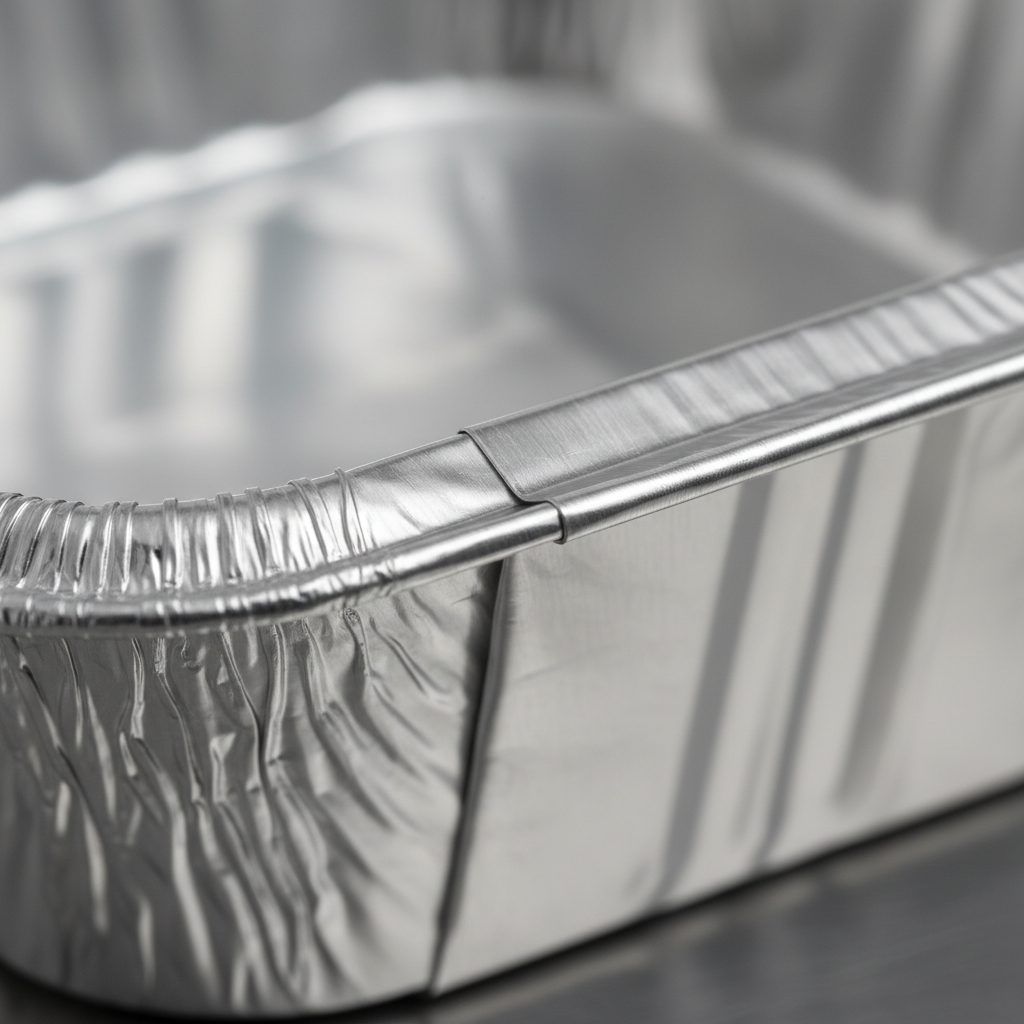
- Full Curl (FC): A smooth, rolled edge. Ideal for aesthetics and safety (no sharp edges). Compatible with snap-on plastic dome lids or foil-laminated board lids.
- Interrupted Vertical Curl (IVC): Designed for automated closure. A machine folds the vertical flange over a flat lid.
- Hemmed Edge: The raw edge is folded down tight against the wall. Provides extra rim strength and safety.
- Raw Edge: Rarely used for consumer-facing products due to safety concerns, but sometimes found in industrial baking liners.
Customization and Printing Options
Customization allows your brand to stand out. While printing directly onto the formed aluminum surface has limitations compared to paperboard, there are sophisticated ways to brand these trays.
Embossing
Embossing is the most permanent and premium way to brand an aluminum tray. During the stamping process, a custom mold presses your logo or pattern into the bottom of the tray. This adds structural rigidity and ensures your brand is visible even after the pizza is eaten.
Note: Custom embossing requires the creation of a dedicated mold, which involves an initial tooling fee.
Color Lacquering
Aluminum trays can be coated with food-safe lacquers. Common options include gold, black, or copper finishes. A black-lacquered tray, for instance, offers a premium “oven-to-table” aesthetic that appeals to high-end retailers. These coatings also provide additional protection against acidic ingredients (like tomato sauce) which can occasionally react with uncoated aluminum over long storage periods.
Lid Branding
Often, the primary branding real estate is the lid.
- Cardboard/Aluminized Lids: These can be printed with high-resolution offset printing (CMYK) to display product photos, nutritional info, and barcodes.
- Plastic Dome Lids: Usually transparent to show the product, but can accept adhesive labels or sleeves.
Sizing and Capacity Guide
Selecting the right diameter and depth is crucial for portion control and packaging fit.
| Size Category | Typical Diameter | Depth Range | Common Application |
|---|---|---|---|
| Personal / Kids | 6″ – 8″ | 15mm – 25mm | School lunches, airline meals, individual frozen pies. |
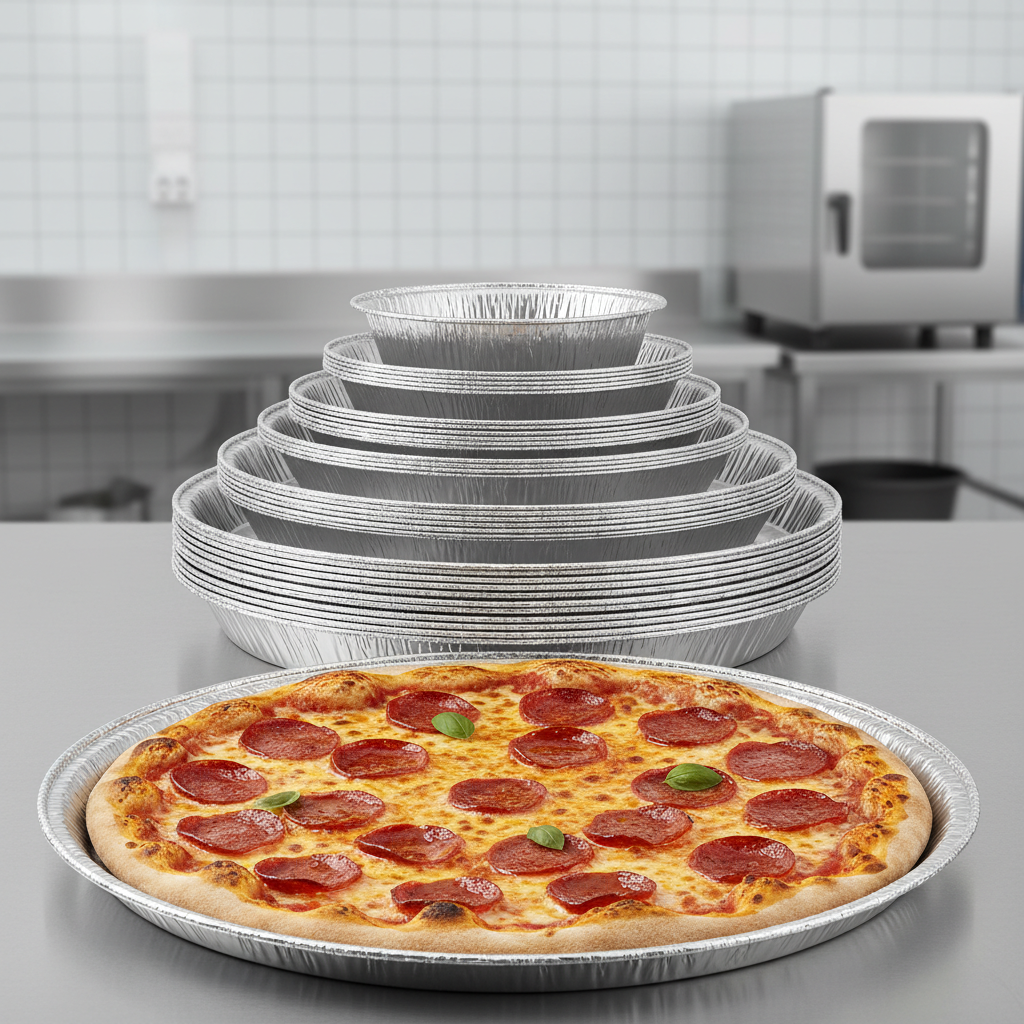
| Standard Medium | 9″ – 12″ | 15mm – 30mm | Retail frozen pizzas, takeaway medium orders. |
| Large / Family | 14″ – 16″ | 20mm – 35mm | Family size takeaway, wholesale deli counters. |
| Deep Dish | 9″ – 14″ | 35mm – 50mm | Chicago-style pizzas, heavy quiches, pot pies. |
Manufacturing Quality and Testing
For wholesale buyers, consistency is key. A variance in rim diameter can jam a capping machine, causing downtime. Here is what to look for in a supplier’s quality assurance process.
Lubrication Control
During the stamping process, food-grade lubricants are used to prevent the foil from tearing. High-quality manufacturing ensures that residual lubricants are minimal and strictly food-grade (FDA/EU compliant). Excess oil can look unsightly and affect label adhesion.
Stackability and Denesting
Trays are shipped nested (stacked inside one another). If they are packed too tightly without proper engineering (like stacking lugs or specific sidewall angles), they can vacuum-lock together. This makes them difficult to separate manually or by machine. Always ask about “denesting” features if you use automated dispensers.
Load Testing
Reliable manufacturers perform load testing to ensure the tray does not collapse when held by one side while hot and loaded. This is particularly important for larger 16-inch trays.
The Buying Guide: Ordering Wholesale
Navigating the procurement process for custom aluminum packaging requires attention to logistics and volume.
Minimum Order Quantities (MOQ)
Because aluminum tray manufacturing is a high-speed, automated process, MOQs are typically higher than for handmade packaging.
- Standard Sizes: Often available in lower quantities (e.g., 1–5 pallets) as they are run regularly.
- Custom Sizes/Embossing: May require MOQs of 50,000 to 100,000 units to justify the machine setup and tooling costs.
Lead Times
Standard items might ship within 1–2 weeks. Custom molds, however, require:
- Mold design and approval (1 week).
- Mold fabrication (2–4 weeks).
- Production and shipping (variable).
Plan your inventory roughly 8–10 weeks in advance for new custom projects.
Shipping and Storage
Aluminum trays are lightweight but voluminous. They are prone to crushing if pallets are double-stacked improperly. Ensure your warehouse team is aware that while the boxes are light, they are fragile. Shipping costs are calculated by volumetric weight, so maximizing the nesting density is crucial for reducing landed costs.
How to Request a Quote
To get the most accurate pricing quickly, have the following details ready when you visit our ordering page or contact sales:
- Top Out Diameter: The measurement from outside rim to outside rim.
- Top In Diameter: The measurement inside the rim (crucial for lid fit).
- Bottom Diameter: The base measurement.
- Vertical Depth: How deep the tray is.
- Volume: Estimated annual usage.
- Application: Freezing, baking, or reheating?
Frequently Asked Questions (FAQ)
1. Are aluminum foil pizza trays microwave safe?
Generally, aluminum foil can be used in modern microwaves if the appliance allows it and the tray does not touch the walls, preventing arcing. However, for mass-market consumer instructions, it is safer to recommend oven use only unless you have specific “microwave-safe” designs (e.g., smooth-wall lacquered trays).
2. Can I get a custom shape, like a rectangle or heart?
Yes. While round is standard for pizza, custom molds can be created for any shape. Rectangular trays are popular for Detroit-style pizza. Keep in mind that irregular shapes may require custom tooling fees.
3. What is the difference between “wrinkle-wall” and “smooth-wall” trays?
Wrinkle-wall trays have pleated sides. They are cheaper to produce and lighter. Smooth-wall trays are heavier, have a flat flange for heat-sealing film, and offer a more premium, rigid feel, often used for high-end ready meals.
4. Do you supply lids for these trays?
Yes, we can supply compatible lids, including foil-laminated cardboard lids (ideal for takeout) and plastic dome lids. Compatibility depends on the rim style (full curl vs. vertical).
5. Is the aluminum recycled?
Most industrial aluminum contains a percentage of recycled content. Aluminum is 100% recyclable post-use. If you require specific percentages of post-consumer recycled (PCR) content for compliance, please specify this in your inquiry.
6. How do I test if the tray is strong enough for my pizza?
We recommend requesting a sample pack. Bake your heaviest pizza variation in the sample tray, freeze it (if applicable), and then reheat it to simulate the consumer journey. Contact us to request samples.
7. Can acidic foods react with the aluminum?
Uncoated aluminum can react with highly acidic or salty foods (like tomato sauce or anchovies) over prolonged periods, potentially causing pitting or metallic taste. For long shelf-life acidic products, we recommend a lacquered/coated tray.
Conclusion
Choosing the right aluminum foil pizza tray is a balance of engineering and economics. Whether you need a standard 12-inch tray for a busy takeaway chain or a custom-embossed, heavy-duty vessel for a premium frozen pizza line, understanding the specs is the first step to success.
At YBJ Packing, we specialize in helping businesses navigate these choices, ensuring you get packaging that protects your product and promotes your brand.
Ready to upgrade your pizza packaging? Request a quote today or explore our full range of aluminum foil trays to find the perfect fit for your operation.