

Introduction: The Strategic Importance of Cupcake Packaging
For industrial bakeries, retail chains, and food distributors, the cupcake box is more than just a container; it is a critical component of logistics and brand equity. In the competitive food service landscape, packaging must perform two distinct but vital functions: it must protect delicate confectioneries during transit, and it must serve as a silent salesperson on the retail shelf.
Sourcing custom cupcake boxes requires a deep understanding of material specifications, structural design, and print finishes. A box that collapses under stacking weight results in product loss. A box with poor grease resistance leads to unsightly staining that damages brand reputation. Conversely, well-engineered packaging streamlines assembly for staff, reduces storage footprint, and enhances the customer unboxing experience.
This guide provides procurement managers and bakery owners with the technical knowledge needed to make informed purchasing decisions. We will explore material grades, insert engineering, printing technologies, and the logistical factors that influence total cost of ownership.
1. Material Specifications: Choosing the Right Substrate
The structural integrity of a cupcake box depends entirely on the quality of the paperboard used. Unlike general retail packaging, bakery packaging must withstand moisture and grease while maintaining rigidity. Below are the primary material options available for wholesale buyers.
Solid Bleached Sulfate (SBS)
SBS is the gold standard for premium bakery packaging. It is a virgin paperboard made from bleached chemical pulp, offering a pristine white surface throughout the sheet (both inside and out).
- Pros: Excellent printability, superior stiffness, and a clean, hygienic appearance. It holds embossing and foil stamping exceptionally well.
- Typical Caliper/Weight: For single or dual cupcake boxes, 18pt (approx. 300-350 GSM) is standard. For larger boxes (6-pack or 12-pack), a heavier stock (20-24pt or 400+ GSM) is recommended to prevent sagging.
- Best For: High-end retail, wedding favors, and brands requiring vibrant, full-color graphics.
Coated Unbleached Kraft (CUK) / Natural Kraft
For brands focusing on sustainability or a rustic aesthetic, unbleached Kraft paperboard is the preferred choice. It features a natural brown color and is often composed of long pine fibers, providing excellent tear resistance.
- Pros: High strength-to-weight ratio, eco-friendly perception, and naturally hides minor scuffs.
- Considerations: Printing colors on brown stock will appear darker and less vibrant. White ink or metallic foils are often used to create contrast.
- Best For: Organic bakeries, eco-conscious brands, and heavy-duty transport boxes.
Corrugated Fiberboard
While folding cartons (paperboard) are suitable for retail display, corrugated board (E-flute or F-flute) is necessary for shipping boxes or large catering orders (e.g., 24-count boxes). The fluting provides cushioning and stacking strength that single-ply paperboard cannot match.
2. Grease Resistance and Coatings
Buttercream, ganache, and moist cake sponges contain oils that can migrate into standard paper, causing dark, greasy spots on the exterior of the box. To prevent this, specific barrier coatings are applied.
Poly-Coated (PE) Interiors
A thin layer of polyethylene (PE) is extruded onto the inner surface of the board. This creates a robust barrier against moisture and grease. It is the most effective solution for moist products but can impact the recyclability of the box depending on local recycling infrastructure.
Clay Coated Newsback (CCNB) / Clay Coated Kraft Back (CCKB)
These materials have a clay coating on the printing side for smoothness but may require an additional food-safe varnish on the inside to resist grease. For direct food contact, ensure the manufacturer uses FDA-compliant or food-grade coatings.
Water-Based Aqueous Coatings
For a more eco-friendly alternative to PE, water-based barrier coatings can provide moderate grease resistance. These are often sufficient for cupcakes sitting in liners but may not hold up to direct contact with heavy frosting over long periods.
3. Structural Design: Inserts and Box Styles
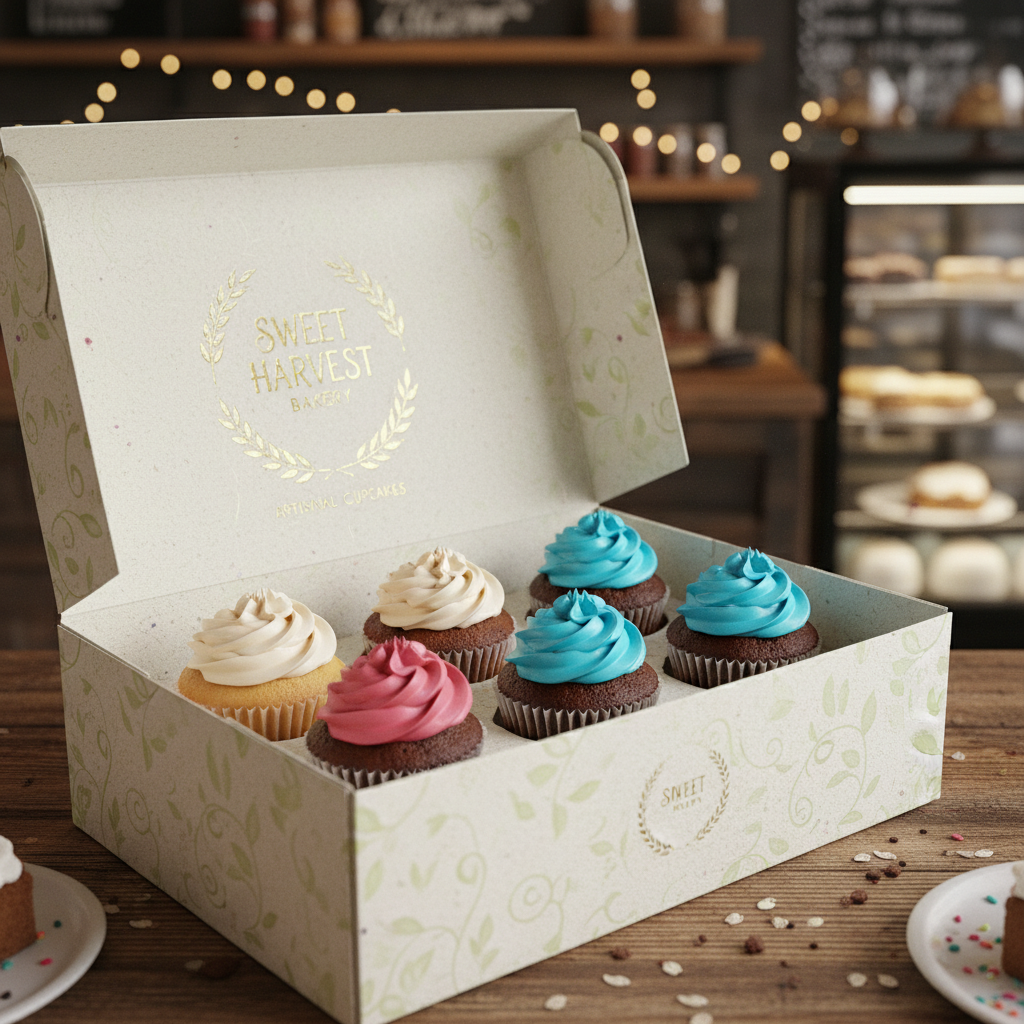
The defining feature of a cupcake box is the insert. Without a properly engineered insert, cupcakes will tip, slide, and collide, ruining the icing decoration.
The Importance of the Insert
Inserts are die-cut sheets of paperboard that fold to create a platform with circular cutouts (cavities) for the cupcakes.
- Cavity Diameter: The standard cupcake base is typically 2.5 inches (approx. 6.35 cm). Mini cupcakes usually require a 1.5-inch cavity, while jumbo muffins may need 3 inches or more. Custom sizing is critical; a cavity that is too loose allows movement, while one that is too tight makes insertion and removal difficult.
- Finger Holes: Professional inserts include small semi-circular cutouts (finger tabs) around the cavity. These allow the end-consumer to lift the cupcake out without digging their fingers into the frosting.
- Height: The insert raises the cupcake slightly, ensuring the dome of the frosting does not touch the top of the box.
Box Styles
- Reverse Tuck End (RTE): A cost-effective style where the top and bottom flaps tuck in opposite directions. Requires manual assembly.
- Auto-Lock Bottom: The bottom of the box snaps into place automatically when the box is popped open. This is slightly more expensive to manufacture but significantly reduces assembly time for bakery staff—a crucial factor for high-volume operations.
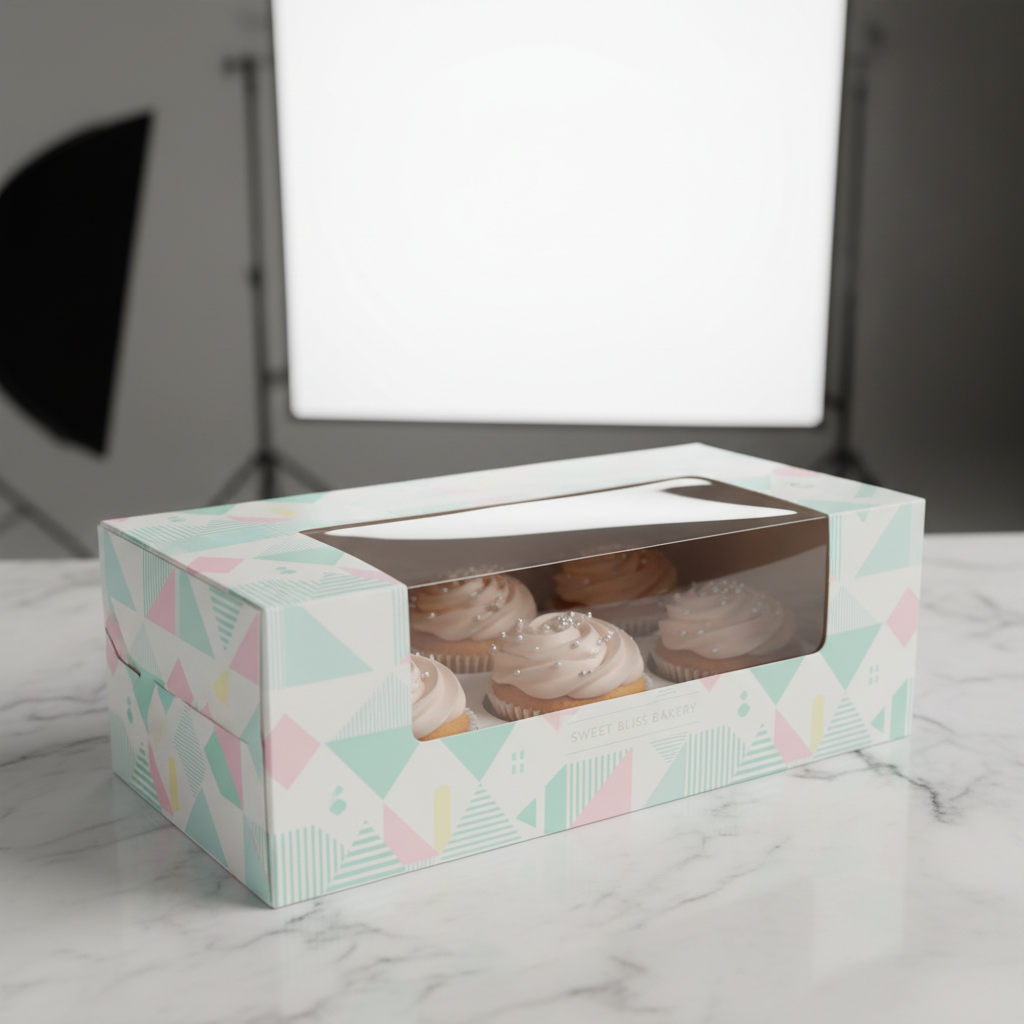
- Window Patching: Most cupcake boxes feature a clear window to display the product. The window material is typically PET (polyethylene terephthalate) for clarity and strength, or PLA (polylactic acid) for compostable requirements. The window must be securely glued to prevent detaching during assembly.
4. Standard Sizes and Configurations
When ordering wholesale bakery packaging, standardization helps reduce tooling costs. However, custom dimensions are often necessary for unique brand presentations.
Common Configurations
- Single (1-pack): Popular for wedding favors and corporate gifts. Often features a handle.
- 2-Pack & 4-Pack: Standard for retail grab-and-go sales.
- 6-Pack & 12-Pack: The industry standard for catering and family-sized purchases. These boxes require thicker board (24pt or micro-flute) to support the weight.
Height Considerations
A frequent oversight is vertical clearance. Standard boxes may be 3 to 3.5 inches tall. If your bakery specializes in high-pile gourmet frosting or elaborate toppers, you may need a custom height of 4 inches or more to prevent crushing.
5. Printing and Customization Options
Your packaging is a marketing vehicle. High-quality printing differentiates your brand on the shelf.
Printing Techniques
- Offset Lithography: The standard for high-volume, high-quality bulk orders. It delivers sharp images, accurate color matching (Pantone/PMS), and becomes very cost-effective at volumes over 1,000-3,000 units.
- Flexography: Often used for simpler designs on corrugated boxes or kraft materials. It is faster but has lower resolution compared to offset.
- Digital Printing: Ideal for short runs or prototyping. It allows for quick turnaround but typically has a higher per-unit cost for large batches.
Finishes and Embellishments
- Lamination (Gloss/Matte): Adds a protective layer that prevents cracking on fold lines and enhances moisture resistance. Matte lamination offers a sophisticated, modern look, while gloss makes colors pop.
- Spot UV: A high-gloss clear varnish applied to specific areas (like a logo) to create contrast against a matte background.
- Hot Foil Stamping: Applies metallic foil (gold, silver, rose gold) to the box using heat and pressure. This is highly recommended for premium or luxury product lines.
- Embossing/Debossing: Raises or lowers the surface of the paperboard for a tactile effect.
6. Use Cases and Market Applications
Different sales channels require different packaging strategies. Understanding your primary use case helps in selecting the right features.
Retail Bakeries & Cafes
Priority: Speed of assembly and visual appeal.
Recommendation: Auto-lock bottom boxes with large PET windows. 1, 2, and 4-pack sizes are most common for impulse buys.
Catering & Events
Priority: Transport stability and volume.
Recommendation: 12-pack or 24-pack boxes made from sturdy corrugated board or heavy-duty SBS. Inserts must be tight to prevent movement during van delivery.
Gifting & Corporate Orders
Priority: Unboxing experience and branding.
Recommendation: Premium SBS boxes with soft-touch lamination, foil stamping, and ribbon closures. Single cupcake boxes with handles are popular here.
7. Manufacturing and Quality Assurance
When working with a manufacturer, understanding the production process helps in setting quality expectations.
Die-Cutting Precision
The die-cutting process creates the shape of the box and the insert. Poorly maintained dies can result in ragged edges or inserts that don’t fold cleanly. It is vital to request samples to check the crispness of the cuts and scores.
Gluing and Folding
For auto-bottom boxes and window patching, the gluing process must be precise. Excess glue can stick boxes together, while insufficient glue can cause windows to pop out. reputable manufacturers use automated inspection systems to ensure consistency.
Food Safety Compliance
Ensure that the paperboard and inks used are compliant with relevant food safety regulations (such as FDA or EU standards) for indirect or direct food contact. Low-migration inks are essential to prevent chemical odors from affecting the taste of the pastry.
8. Buying Guide: How to Order Custom Boxes
Navigating the procurement process can be complex. Here is a checklist to streamline your order.
Determine Your Dimensions
Measure your cupcake with the wrapper on. Measure the height of your tallest decoration. Do not guess; a millimeter difference can affect the fit of the insert.
Select Your Material & Quantity
Balance your budget with your branding goals. If you are ordering 500 boxes, digital printing might be best. If you are ordering 10,000, offset printing offers the best value. Check the Minimum Order Quantity (MOQ) with your supplier.
Prepare Your Artwork
Suppliers need vector files (AI, PDF, EPS) for printing. Ensure all fonts are outlined and colors are defined in CMYK or Pantone codes. If you are unsure, ask for a dieline template to pass to your designer.
Request Prototyping
Before committing to a full production run, request a plain sample (dummy) to test the size and structure. For larger orders, a pre-production proof (printed sample) is advisable to verify color accuracy.
Ready to start your project? Learn more about our process on our ordering guide.
FAQ: Common Buyer Questions
What is the difference between SBS and C1S paperboard?
SBS (Solid Bleached Sulfate) is white on both sides and is generally stronger. C1S (Coated One Side) is white and coated on the outside for printing, but rougher and uncoated on the inside. SBS is preferred for premium food packaging where the inside appearance matters.
Can I print inside the box?
Yes, printing on the interior is a great way to enhance the unboxing experience. It requires double-sided printing capabilities and necessitates the use of food-safe, low-migration inks since the food is in closer proximity to the interior surface.
Do I really need an insert?
For cupcakes, yes. Unlike cookies or donuts which can stack, cupcakes are top-heavy and delicate. Without an insert to secure the base, they will topple over during handling, ruining the frosting.
What is the standard lead time for custom printed boxes?
Lead times vary by complexity and quantity. Typically, production takes 2-4 weeks after artwork approval. Shipping times depend on your location and the freight method (air vs. sea).
Are the windows biodegradable?
Standard windows use PET plastic, which is recyclable but not biodegradable. However, PLA (corn-starch based) windows are available upon request for fully compostable packaging solutions.
How do I calculate the correct box size?
Measure the diameter of the widest part of your cupcake (usually the top of the wrapper or the frosting edge) and add 0.5 inches for clearance. Measure the height and add at least 0.5 to 1 inch to ensure the lid doesn’t squash the topping.
Can you match my brand colors exactly?
Yes, by using Pantone (PMS) color matching, manufacturers can achieve consistent brand colors across different production runs. CMYK printing is also available for photographic images but has slight variations.
Conclusion
Selecting the right cupcake box is a balance of engineering, aesthetics, and economics. From the sturdiness of the insert to the finish on the exterior, every detail communicates quality to your customer. Whether you are scaling up a local bakery or managing procurement for a national chain, choosing a supplier that understands these nuances is key to success.
At YBJ Packing, we specialize in high-quality, custom food packaging solutions tailored to your operational needs. If you are ready to elevate your brand with professional packaging, contact our team today to request a quote or get a sample.