

Why Premium Packaging is Critical for Bakery Success
In the competitive confectionery market, the packaging is often as important as the product itself. For commercial bakeries, patisseries, and industrial cake manufacturers, the box serves two primary functions: robust protection during transit and powerful brand communication. A well-engineered cake box ensures that delicate icings, structural tiers, and intricate decorations arrive at their destination intact, whether that journey is across town or across the country.
Beyond protection, custom packaging is a silent salesman. When a customer carries a branded box out of a store, they become a walking advertisement. Sourcing from a specialized supplier allows businesses to leverage high-quality materials and advanced printing techniques that elevate the perceived value of the product. Whether you are looking for Congratulation! This is the premium source of cake boxes! or specialized containers for cupcakes and pies, understanding the technical specifications of bakery packaging is essential for procurement professionals.
Material Selection: Balancing Strength and Aesthetics
Choosing the right substrate is the first step in designing effective cake packaging. The material must be food-grade, durable, and capable of holding the specific weight of the bakery item.
1. Solid Bleached Sulfate (SBS) Paperboard
SBS is the standard for high-end retail bakery boxes. It offers a pristine white surface that is excellent for vibrant, full-color printing. It is ideal for lightweight items like pastries, donuts, and single-layer cakes. The smooth finish supports high-resolution graphics, making it perfect for brands focusing on shelf appeal.
2. Corrugated Board (E-Flute or B-Flute)
For heavier cakes, multi-tiered wedding cakes, or bulk shipments, corrugated board is necessary. The fluted layer provides cushioning and structural rigidity that prevents the box from collapsing under weight or external pressure.
- E-Flute: Thin profile, good for printing, offers better protection than standard paperboard.
- B-Flute: Thicker and stronger, used for heavy industrial bakery shipments.
3. Kraft Paper (Eco-Friendly Option)
Brown Kraft paper is increasingly popular for its natural, organic look. It signals sustainability to the consumer. While slightly more absorbent than coated SBS, high-quality Kraft board is treated to be grease-resistant, ensuring butter and oils do not stain the exterior.
Customization and Finishing Techniques
To stand out in a crowded market, standard white boxes often aren’t enough. Modern packaging manufacturing offers a suite of finishing options that add a luxury feel to custom cake boxes.
Visual Enhancements
- Spot UV Coating: Applies a glossy finish to specific areas (like a logo), creating a striking contrast against a matte background.
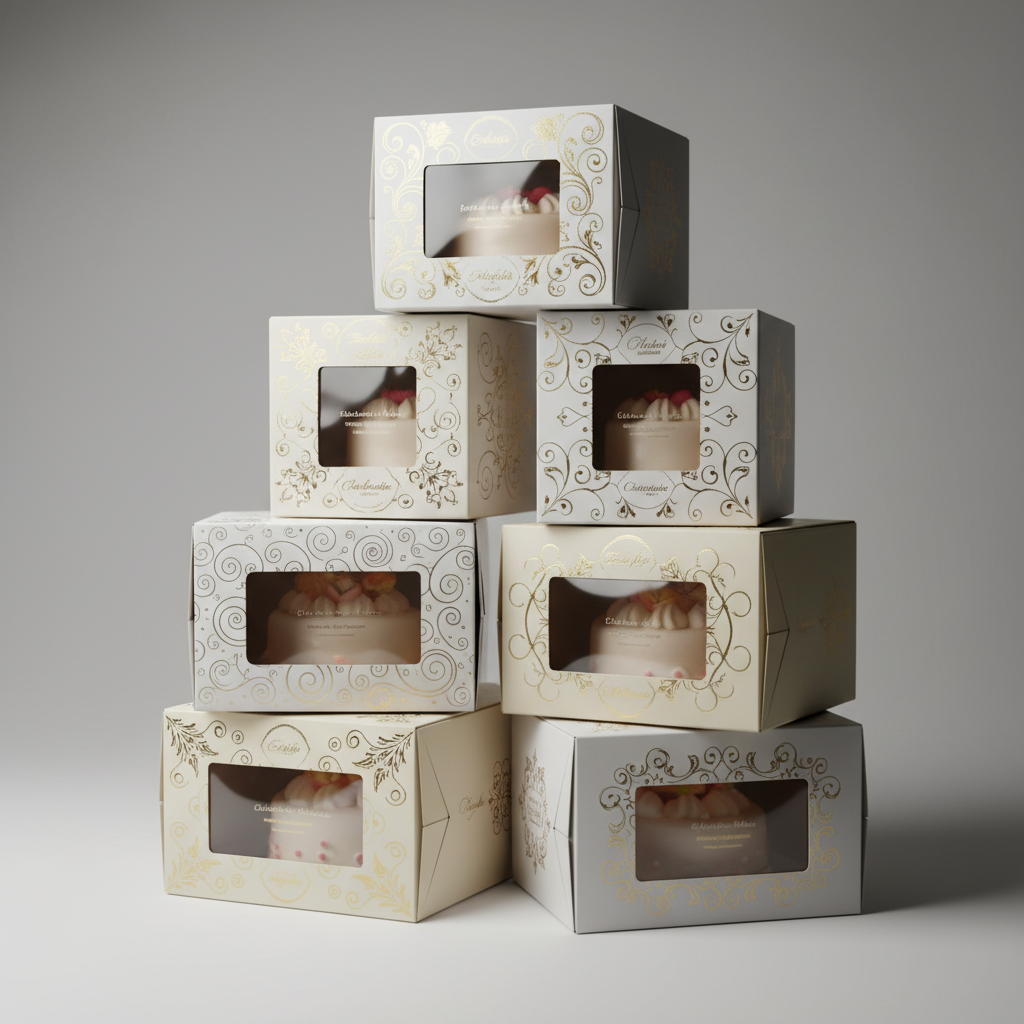
- Foil Stamping: Uses heat to apply metallic foil (gold, silver, rose gold), adding a premium, reflective element often associated with high-end confectioneries.
- Embossing/Debossing: Raises or recesses parts of the design for a tactile experience.
Structural Features
- Window Patching: A clear PET or PLA (biodegradable) window allows customers to see the product inside, which is crucial for impulse buys in retail environments.
- Die-Cut Inserts: Essential for cupcakes or muffins, inserts prevent movement inside the box, ensuring the frosting remains untouched.
- Lock-Corner vs. Auto-Bottom: Auto-bottom boxes are pre-glued and pop open instantly, saving valuable assembly time in high-volume production lines. Lock-corner boxes are shipped flat and require manual folding but are often more cost-effective.
Logistics and Supply Chain Considerations
Sourcing packaging wholesale, particularly from manufacturing hubs like China, requires careful planning regarding lead times and logistics.
Flat Shipping for Cost Efficiency
Bakery boxes are engineered to be shipped flat (knocked down). This significantly reduces shipping volume and storage space requirements. Procurement managers should ensure that the design allows for easy assembly at the point of use to minimize labor costs.
MOQ and Production Timelines
While some suppliers offer low Minimum Order Quantities (MOQs) for stock items, custom designs typically require higher volumes to amortize setup costs (plates and dies). A typical production cycle might look like this:
- Design & Approval: 3-5 days (digital mockups and dielines).
- Production: 10-15 days depending on complexity.
- Shipping: Varies by method (Air freight for speed, Sea freight for bulk cost savings).
Sustainability in Bakery Packaging
Modern consumers are environmentally conscious. Transitioning to eco-friendly cake boxes is not just an ethical choice but a business imperative. Look for suppliers who offer:
- Recyclable Materials: Ensure coatings (like lamination) do not render the box non-recyclable.
- Soy-Based Inks: A sustainable alternative to petroleum-based inks that offers vibrant colors without harmful VOCs.
- Biodegradable Windows: Replacing standard plastic windows with cellulose-based alternatives.
Buying Guide Checklist
Before requesting a quote for your bakery packaging, ensure you have the following details ready to streamline the process:
- Dimensions: Length x Width x Depth (Internal dimensions are critical for fit).
- Weight of Product: Determines the necessary board thickness.
- Artwork: Vector files (AI or PDF) are required for crisp printing.
- Quantity: Higher volumes significantly reduce unit cost.
- Special Features: Handles, windows, or inserts.
Frequently Asked Questions (FAQ)
What is the difference between a cake box and a bakery box?
While the terms are often used interchangeably, cake boxes are typically taller and sturdier to accommodate frosted layers and decorations. General bakery boxes may be flatter, designed for pastries, cookies, or donuts.
Are your boxes food safe?
Yes, reputable manufacturers comply with FDA regulations regarding food contact materials. Always request verification that the paperboard and inks used are food-grade.
Can I get a physical sample before placing a full order?
Most suppliers offer sampling services. Digital samples are often free, while physical prototypes (especially with custom printing) may incur a setup fee that is sometimes refundable upon placing a bulk order.
How do I determine the right size box for my cake?
Ideally, the box should be 1-2 inches larger than the cake board (drum) to allow for easy insertion and removal without damaging the frosting. For tiered cakes, height is the most critical dimension to check.
Do you offer shipping to the USA and Europe?
Yes, global shipping is standard. With production facilities often located in China to optimize costs, logistics networks are established to deliver to the US (including the Lower 48 states) and Europe efficiently.
Ready to Upgrade Your Bakery Packaging?
Packaging is the final ingredient in your recipe for success. Whether you need heavy-duty corrugated carriers for tiered wedding cakes or elegant window boxes for cupcakes, choosing the right partner is key. Explore our capabilities and secure a supply of high-quality, custom-printed Congratulation! This is the premium source of cake boxes! today.
Contact us now to request a quote or get a free sample kit tailored to your brand’s needs.