

Introduction: The Strategic Importance of the Coffee Cup
In the competitive landscape of the food and beverage industry, the humble paper cup serves two critical functions: it is a vessel for delivering your product safely, and it is a mobile billboard for your brand. For procurement managers, coffee shop owners, and foodservice distributors, selecting the right coffee paper cup is not merely a matter of grabbing the cheapest option off the shelf. It involves balancing thermal performance, brand visibility, environmental compliance, and supply chain logistics.
Whether you are sourcing for a high-traffic coffee chain requiring millions of units or a boutique roastery looking for a premium tactile experience, understanding the technical specifications of paper cups is essential. This guide covers everything from paperboard grades and barrier coatings to wall structures and printing technologies, ensuring you make an informed purchasing decision that aligns with your operational needs.
1. Anatomy of a Coffee Paper Cup
To evaluate quality, buyers must first understand the raw materials and construction methods used in manufacturing. A paper cup is an engineered product designed to withstand heat, liquid, and handling.
Base Paper (Cup Stock)
The structural integrity of any cup begins with the base paper, often referred to as "cup stock." High-quality cup stock is typically made from virgin wood pulp to ensure food safety and structural stiffness. Unlike recycled paper, which may contain contaminants or weaker fibers, virgin pulp offers the consistency required for high-speed forming machines and leak-proof performance.
Key Metric: GSM (Grams per Square Meter)
The weight of the paper determines the cup’s sturdiness. Common ranges include:
- 190–230 GSM: Used for smaller cups (4oz) or inner layers of double-wall cups.
- 260–300 GSM: Standard for single-wall 8oz to 16oz cups.
- 320+ GSM: Used for premium, large-capacity cups requiring extra rigidity.
Barrier Coatings (Lining)
Paper is naturally porous. To hold liquid, it must be coated. The choice of coating affects both the cup’s functionality and its environmental footprint.
- PE (Polyethylene) Lining: The industry standard. A thin layer of plastic is bonded to the paperboard. It provides excellent leak resistance and heat tolerance. While effective, it requires specialized facilities for recycling.
- PLA (Polylactic Acid) Lining: Derived from renewable resources like corn starch. PLA behaves like plastic but is commercially compostable. It is the preferred choice for brands targeting eco-conscious consumers.
- Aqueous (Water-Based) Coating: A newer technology where a water-based dispersion creates the barrier. These cups are often easier to recycle in standard paper streams as they contain significantly less polymer.
For businesses exploring our range of options, you can view our coffee paper cup collection to see how these materials are applied in production.
2. Wall Structures: Single, Double, or Ripple?
Selecting the right wall structure is a tradeoff between cost, insulation, and storage efficiency.
Single Wall Cups
Construction: One layer of coated paperboard.
Pros: Lowest cost, high stacking efficiency (takes up less warehouse space), uses less material.
Cons: Poor insulation. Hot drinks can burn hands, often requiring a separate cardboard sleeve (clutch).
Best For: Cold drinks, warm beverages served with a sleeve, or high-volume environments where cost is the primary driver.
Double Wall Cups
Construction: Two layers of paperboard with a small air gap in between.
Pros: Excellent insulation. The air gap acts as a thermal barrier, eliminating the need for a sleeve. The extra layer also adds significant rigidity, giving the cup a premium, sturdy feel.
Cons: Higher unit cost and increased shipping volume compared to single wall.
Best For: Premium coffee shops, to-go service where customer comfort is paramount.
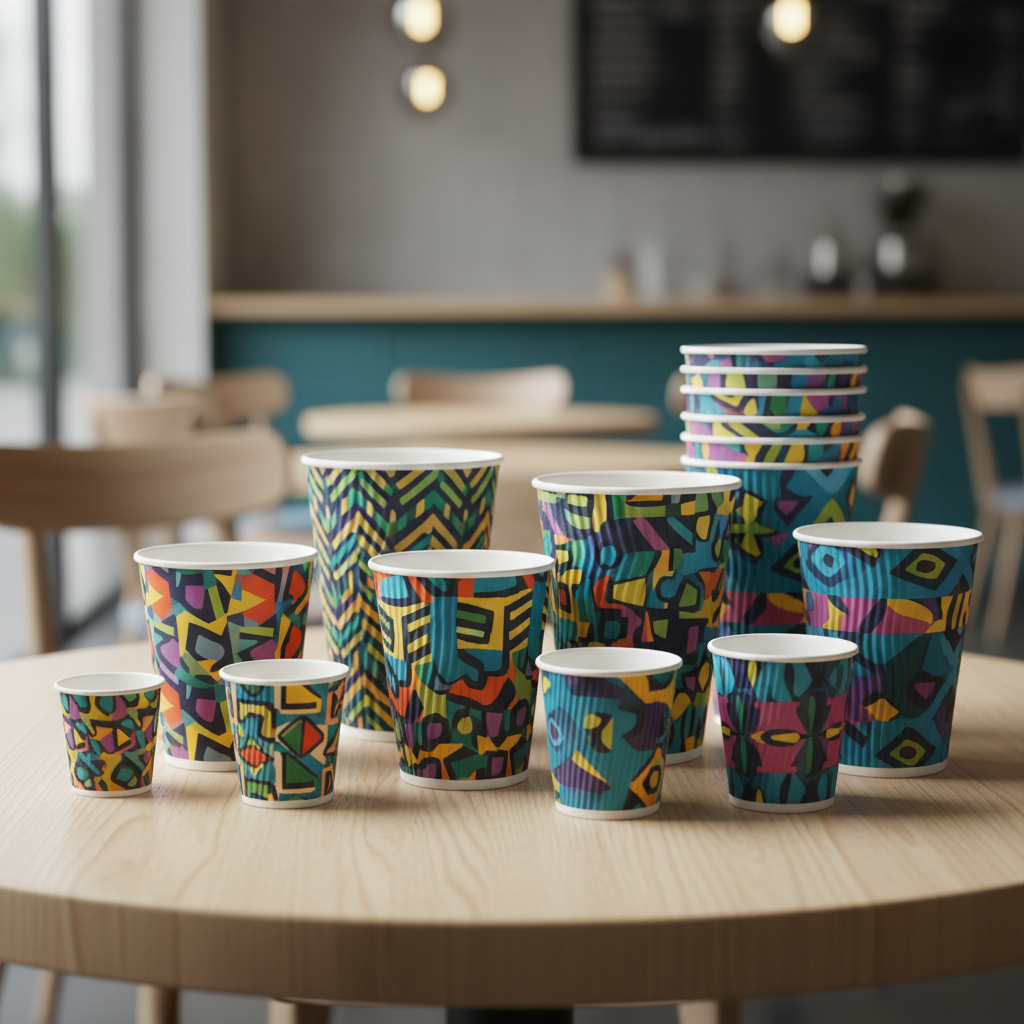
Ripple Wall (Corrugated) Cups
Construction: An inner cup layer wrapped with a corrugated or embossed outer paper layer.
Pros: Maximum heat protection. The corrugation creates airflow channels that dissipate heat effectively. The texture also provides a better grip.
Cons: Highest bulk in shipping; print quality on the textured surface can be challenging for fine details.
Best For: Very hot beverages (teas, Americanos) and brands wanting a distinct tactile experience.
3. Sizing Guide and Capacity Standards
Coffee cup sizes are generally standardized globally, but slight variations in dimensions (especially rim diameter) can affect lid compatibility. It is crucial to confirm the "top diameter" to ensure your lids fit securely.
Common Sizes
- 4oz (approx. 118ml): Espresso shots, sampling cups. typically 60mm or 62mm top diameter.
- 8oz (approx. 237ml): Small coffee, flat white, cappuccino. Standard top diameter is 80mm.
- 12oz (approx. 355ml): Regular/Medium coffee. usually 80mm or 90mm top diameter.
- 16oz (approx. 473ml): Large coffee, latte. Standard top diameter is 90mm.
- 20oz/24oz (approx. 590ml+): Extra large, iced coffee. Standard top diameter is 90mm.
The Lid Fit Factor
One of the most common complaints in the foodservice industry is leaking lids. This often happens when a buyer sources cups from one supplier and lids from another. Even a 0.5mm difference in rim roll can cause a leak. We strongly recommend sourcing cups and lids together or requesting samples to verify the "snap fit." You can explore compatible options in our cups and accessories category.
4. Printing and Customization Options
Custom printing is where a generic commodity becomes a brand asset. Understanding the printing processes helps you prepare artwork correctly and manage costs.
Flexographic Printing (Flexo)
This is the most common method for high-volume runs. It uses flexible relief plates and fast-drying inks.
Advantages: Cost-effective for large quantities (10,000+ units), food-safe water-based inks are standard.
Limitations: Setup costs (plates) can be high; gradients and photo-realistic images may not be as sharp as offset.
Offset Printing (Lithography)
Used for high-quality, complex designs.
Advantages: Superior image quality, capable of fine details and smooth gradients.
Limitations: Higher cost per unit for smaller runs; longer setup times.
Artwork Considerations
- CMYK vs. Pantone (PMS): For brand consistency, specify Pantone colors. CMYK is used for full-color images but may vary slightly between production runs.
- Bleed and Safe Area: Ensure your design extends beyond the cut line (bleed) to avoid white edges. Keep logos away from the bottom rim where the cups are stacked, as friction can damage the print.
- Ink Safety: Always ensure the manufacturer uses food-grade, low-migration inks, especially for areas near the rim (the "lip zone").
5. Buying Guide: Logistics and Procurement
When you are ready to place an order, several logistical factors will influence your timeline and budget.
Minimum Order Quantity (MOQ)
MOQ is the primary barrier for custom branding.
Stock/Plain Cups: Usually have low MOQs (e.g., 1 carton).
Custom Print: MOQs typically start at 10,000 to 30,000 pieces per size due to machine setup requirements. Some digital printing options allow for lower runs but at a significantly higher unit price.
Lead Times
Custom manufacturing is not instantaneous.
Design Approval: 2–5 days.
Production: 15–30 days depending on factory capacity.
Shipping: Ocean freight can take 4–6 weeks. Air freight is faster but prohibitively expensive for bulky items like cups.
Tip: Plan your inventory at least 3 months in advance to avoid stockouts.
Storage and Warehousing
Paper cups are bulky. A 40ft container can hold hundreds of thousands of cups, but you need the warehouse space to store them. Ensure your storage area is dry and cool; humidity can soften the paperboard, causing cups to warp or stick together.
For detailed information on initiating an order, please review our guide on how to order.
6. Quality Control Checklist
Before accepting a large shipment, or when evaluating samples, check the following:
- Rim Rigidity: Squeeze the top rim. If it collapses easily, the lid will pop off when the customer picks up the cup.
- Seam Integrity: Inspect the side seam and bottom seal. Fill a sample with boiling water and let it sit for 30 minutes to check for pinhole leaks.
- Odor Test: Paper cups should be odorless. A strong chemical smell indicates poor quality ink or improper curing.
- Separation: Take a stack of cups and ensure they separate easily. "Blocking" (cups sticking together) slows down service speed.
7. Sustainability and Compliance
Environmental regulations are tightening globally. Buyers must navigate terms like "biodegradable," "compostable," and "recyclable."
- Compostable (PLA): Only degrades in industrial composting facilities with controlled heat and moisture. Do not claim they are "home compostable" unless certified.
- Recyclable (PE): While technically recyclable, the plastic lining requires specialized pulping facilities. Check your local waste management capabilities.
- FSC Certification: Look for Forest Stewardship Council certification to ensure the wood pulp comes from responsibly managed forests.
8. Use Case Scenarios
Scenario A: The High-Volume Commuter Cafe
Priority: Speed and Cost.
Recommendation: Single wall cups with a generic print or simple logo, paired with a dispenser for sleeves. This keeps the unit cost low while allowing heat protection only when needed.
Scenario B: The Premium Roastery
Priority: Brand Experience and Quality.
Recommendation: Double wall cups with a matte finish and spot UV logo. No sleeve required, preserving the brand aesthetic and offering a solid hand-feel.
Scenario C: Outdoor Events/Festivals
Priority: Safety and Sustainability.
Recommendation: Compostable (PLA) double wall cups. Events often have closed-loop waste systems where compostable packaging can be properly processed.
Frequently Asked Questions (FAQ)
1. Can I use single wall cups for hot tea?
Technically yes, but the heat transfer will be immediate and uncomfortable. Tea is often served at higher temperatures than milk-based coffees. We strongly recommend using a sleeve or opting for double wall cups for tea service.
2. What is the difference between 8oz and 8oz squat?
An "8oz squat" cup is wider and shorter than a standard 8oz cup. It typically uses a 90mm lid (same as 12oz/16oz), which allows a shop to use one lid size for all drinks. Standard 8oz cups usually take an 80mm lid.
3. Why do my paper cups smell like chemicals?
This is usually due to uncured ink or low-quality solvents used in the printing process. High-quality manufacturers use food-grade, low-migration inks and ensure proper drying time to prevent odor.
4. How long can I store paper cups?
The typical shelf life is 12–18 months. However, they must be stored in a dry environment. High humidity can cause the paper to absorb moisture, weakening the cup structure.
5. Do you offer templates for artwork design?
Yes, reputable manufacturers provide die-cut templates (dielines) for every cup size. Your designer should overlay your artwork onto these templates to ensure correct positioning.
6. Can I print on the bottom of the cup?
Printing on the very bottom (underneath) is possible but uncommon for marketing purposes. However, printing inside the cup is generally not done due to food safety regulations regarding ink contact with the beverage.
7. What is the difference between CMYK and Pantone printing on cups?
CMYK builds colors using four inks (Cyan, Magenta, Yellow, Black) and is best for photographic images. Pantone uses pre-mixed specific colored inks, ensuring that your brand’s specific "Red" or "Blue" looks exactly the same on every production run.
Conclusion
Choosing the right coffee paper cup is a balance of engineering, marketing, and logistics. By understanding the nuances of wall construction, material grades, and printing options, you can select a product that not only holds coffee but also holds up your brand’s reputation.
At YBJ Packing, we specialize in helping businesses navigate these choices with manufacturing precision and customization flexibility. Whether you need a stock solution or a fully branded fleet of packaging, we are here to support your growth.
Ready to upgrade your coffee packaging? Request a quote or get a sample today and let our team assist you with your specific requirements.