

Introduction: The Critical Role of Lid Selection in Food Packaging
In the competitive landscape of food and beverage service, the container often gets the most attention, but the lid is the functional hero of the packaging equation. For procurement managers, brand owners, and operations directors, selecting the correct lid is not merely an aesthetic choice—it is a decision that impacts operational efficiency, customer safety, and brand reputation. A lid that fails to seal properly can lead to spills, burns, and ruined clothing, resulting in customer dissatisfaction and potential liability. Conversely, a well-engineered lid enhances the consumption experience, maintains temperature, and serves as a mobile billboard for your brand.
When sourcing packaging for international markets, understanding the technical nuances of lid mechanics—from snap-fit tolerances to material thermal properties—is essential. This guide provides an exhaustive analysis of lid selection for hot soups and cold beverages, detailing the differences between dome and flat designs, the engineering behind leak-proof seals, and the rigorous testing protocols required to ensure quality. Whether you are packaging hot ramen or iced lattes, understanding these factors will streamline your procurement process and ensure product integrity.
1. The Engineering of the Seal: How Lids Actually Work
Before distinguishing between styles, it is vital to understand the mechanics of how a lid attaches to a container. The effectiveness of a lid is determined by the interaction between the container’s rolled rim and the lid’s locking mechanism. In B2B procurement, specifying the correct diameter is only the first step; the geometry of the fit is where success or failure happens.
The Snap-Fit Mechanism
Most disposable lids utilize a snap-fit mechanism. This relies on an “interference fit,” where the lid’s locking ring is slightly smaller than the container’s rim diameter. When pressure is applied, the material deforms elastically to slide over the rim and then snaps back into its original shape, trapping the rim in a groove.
- Undercut Depth: The security of the lid depends on the depth of the undercut—the section of the lid that hooks under the rolled rim of the cup or bowl. A deeper undercut provides a stronger hold but requires more force to apply and remove.
- Insertion Force: For high-volume operations, the force required to apply the lid (insertion force) must be low enough to prevent operator fatigue or crushed containers, yet high enough to ensure a secure seal.
- Audible Feedback: A high-quality snap-fit lid should provide an audible “click” upon engagement. This sensory feedback confirms to the server that the seal is secure before handing the product to the customer.
Dimensional Tolerances
A common pitfall in sourcing is assuming that all “90mm lids” fit all “90mm cups.” Manufacturing tolerances vary between suppliers. A cup rim with a tolerance of ±0.5mm combined with a lid tolerance of ±0.5mm can result in a mismatch of up to 1mm, leading to leaks or lids that pop off. When sourcing food containers and lids separately, verifying these tolerances is critical. Ideally, sourcing both from a single manufacturer ensures matched tooling and consistent fit.
2. Material Selection: Thermal Properties and Clarity
The material of the lid dictates its performance, particularly regarding temperature resistance and clarity. Choosing the wrong material for the application can lead to melted lids on hot soups or brittle failures in frozen transport.
Polypropylene (PP)
Polypropylene is the industry standard for hot applications. It has a high melting point (approx. 160°C / 320°F) and is resistant to fatigue.
- Best for: Hot soups, noodles, curries, and hot beverages.
- Key Feature: Microwavability. PP lids can often remain on the container during reheating (provided they are vented).
- Appearance: naturally translucent or opaque; difficult to make glass-clear.
Polyethylene Terephthalate (PET)
PET is prized for its crystal clarity and rigidity. It provides a premium look that showcases the product inside.
- Best for: Cold drinks, smoothies, salads, and fresh fruit.
- Limitation: Low heat resistance. PET will deform if exposed to temperatures above approx. 60°C (140°F). It is unsuitable for hot soups.
- Recyclability: Highly recyclable and widely accepted in municipal waste streams.
Polylactic Acid (PLA) and CPLA
For brands focused on sustainability, PLA (corn starch-based plastic) is a common choice for cold items. For hot items, Crystallized PLA (CPLA) is modified to withstand higher temperatures.
- Trade-offs: PLA materials often have shorter shelf lives and stricter storage requirements (sensitive to heat and humidity in warehouses) compared to traditional plastics.
Paper Lids
Paper lids are gaining traction for food packaging boxes and soup bowls to create a mono-material package (paper bowl + paper lid). These are typically lined with PE or PLA to prevent sogginess. They offer excellent branding real estate but require precise rim rolling on the container for a tight fit.
3. Lid Styles: Dome vs. Flat vs. Functional Designs
The shape of the lid serves specific functional purposes beyond covering the food. The choice between dome, flat, and specialty lids affects logistics (stacking) and product presentation.
Flat Lids
Flat lids are the standard for efficiency. They allow containers to be stacked, which is crucial for takeaway orders involving multiple items.
- Pros: Stackability, lower material usage (often cheaper), easier to store in bulk.
- Cons: Compresses toppings; less visual impact.
- Use Case: Standard coffees, hot soups where garnish height is minimal, bulk delivery orders.
Dome Lids
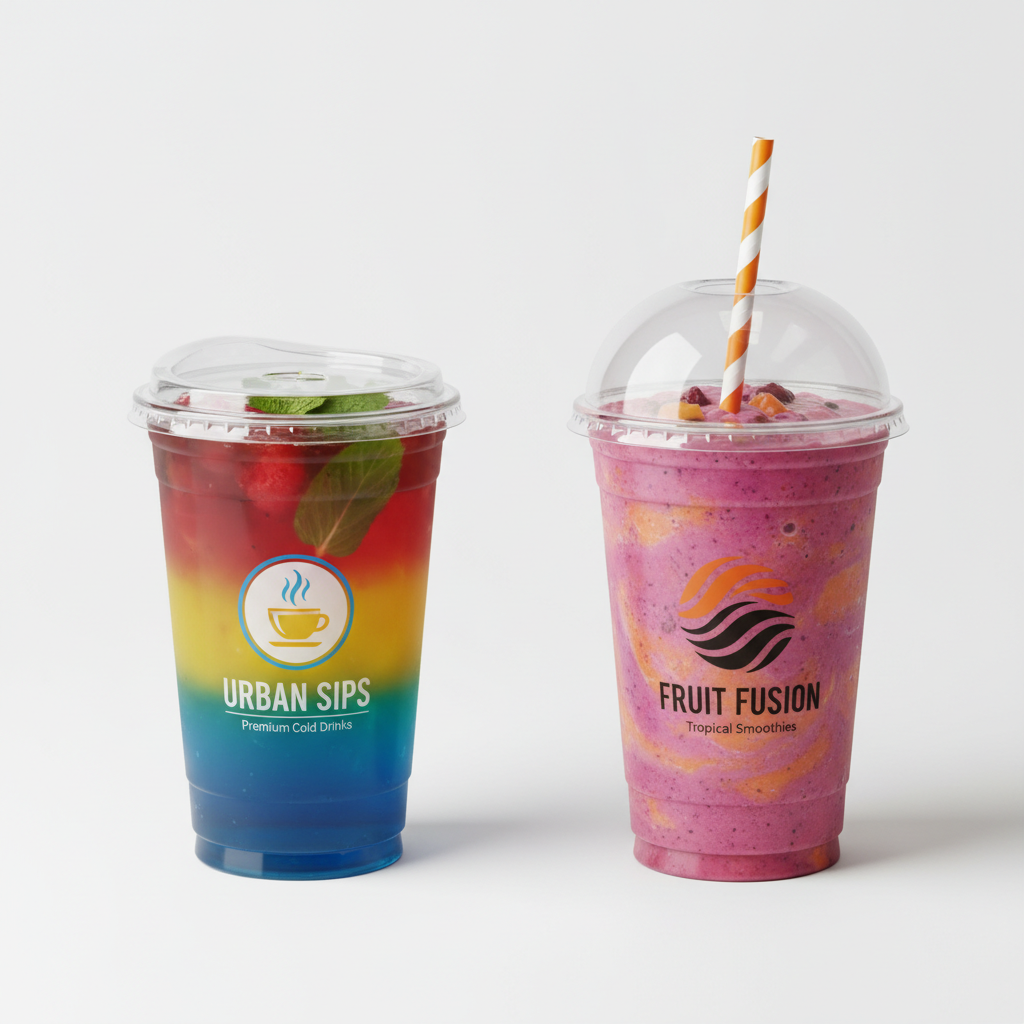
Dome lids create headspace above the container rim. This is essential for products with toppings, whipped cream, or bulky solid ingredients.
- Pros: Accommodates whipped cream, slushies, or piled-high salads. Enhances perceived value of the product.
- Cons: Cannot be stacked easily (unless designed with a flat top platform). Requires more storage space in the warehouse.
- Use Case: Premium iced coffees, smoothies, bubble tea, fruit salads.
Sip Lids vs. Straw Slots
With global regulations reducing plastic straw usage, “sip lids” (or strawless lids) are becoming the norm for cold beverages. These lids feature a raised ergonomic spout. For hot drinks, a small vent hole is standard to allow airflow, ensuring smooth liquid flow without “glugging.”
Vented Lids for Hot Foods
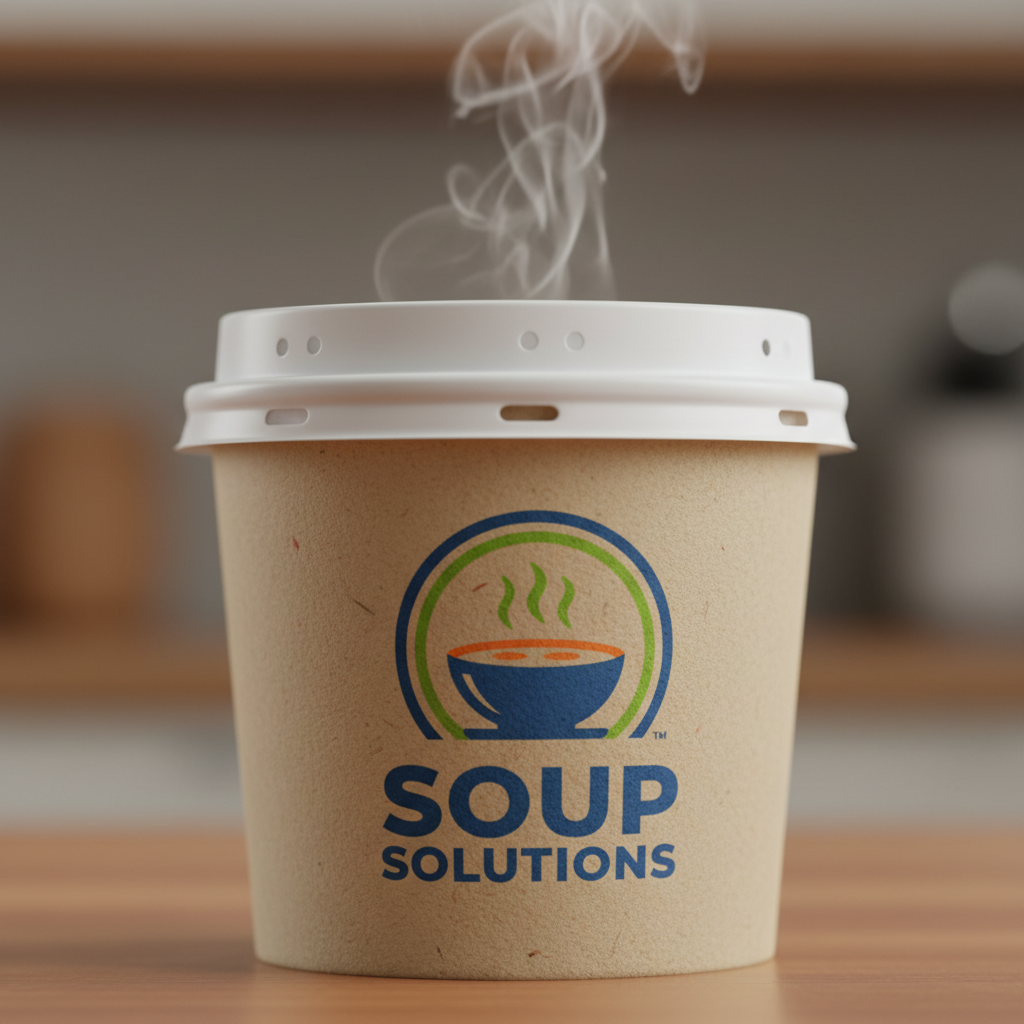
For hot soups and stews, venting is non-negotiable. When hot food is sealed, steam builds up pressure. Without a vent, this pressure can pop the lid off violently or cause the container to deform (vacuum collapse) as the food cools.
- Steam Management: Vented lids allow steam to escape while retaining heat.
- Safety: Prevents pressure buildup that could cause splashes upon opening.
- Application: Essential for paper soup bowls and heavy-duty food containers used for curries or pasta.
4. Leak Testing and Quality Assurance Protocols
For B2B buyers, “leak-proof” is a contractual term that must be verified. Manufacturers use several testing protocols to ensure lid performance. Understanding these tests allows buyers to set clear quality standards in their purchase orders.
The Inversion Test
The most basic field test involves filling the container with liquid (often colored with blue dye for visibility), applying the lid, and inverting it for a set period (e.g., 30 seconds to 2 minutes). Quality standards will dictate whether “zero drops” or “minor weeping” is acceptable.
The Shake Test
Simulating real-world usage, the container is filled and shaken vertically and horizontally. This tests the resilience of the snap-fit mechanism against hydraulic shock. A lid that stays on during inversion might still pop off when shaken if the undercut isn’t deep enough.
Vacuum Leak Testing
For high-precision applications, manufacturers place sealed containers in a vacuum chamber. As external pressure drops, the pressure difference forces air/liquid out through any microscopic gaps in the seal. This is common for products intended for long shelf lives or retail distribution.
Compression/Top-Load Testing
This measures how much weight a lidded container can bear before the lid collapses or disengages. This is critical for determining how many units can be stacked in a delivery bag or on a pallet without crushing the bottom layer.
5. Customization and Branding Opportunities
Lids offer prime real estate for branding, often overlooked in favor of the cup or bowl. However, the lid is what the customer looks at every time they take a sip.
Printing on Lids
Advanced printing techniques allow for logos, QR codes, or promotional messages to be printed directly on plastic or paper lids. For plastic, dry offset printing is common. For paper, flexographic or offset printing provides high-resolution results.
Embossing/Debossing
For a more subtle, premium feel, custom molds can emboss a logo directly into the plastic lid. This adds tactility and reinforces brand identity without the use of ink. It requires an initial investment in custom tooling (molds) but adds zero unit cost to the ongoing production.
Sticker Labeling
For smaller runs or seasonal promotions where custom printing isn’t viable due to Minimum Order Quantities (MOQ), applying a custom sticker over the vent hole or center of the lid is a cost-effective alternative. This is frequently used for food packaging bags and boxes that are sealed with a branded label for tamper evidence.
6. Buying Guide: Procurement Considerations
When preparing a Request for Quotation (RFQ) for lids and containers, consider the following logistical and commercial factors.
Matching Materials
Ensure the lid material is compatible with the container material, not just in fit but in disposal. A PLA cup should ideally have a PLA lid to simplify composting. A PET cup should have a PET lid for recycling streams.
Minimum Order Quantities (MOQ)
Standard white or clear lids often have low MOQs. Custom printed or embossed lids will have higher MOQs (often 50,000+ units) to justify the setup or tooling costs. Ask about “gang runs” if your volume is lower.
Lead Times and Tooling
If you require a custom shape (e.g., a unique dome geometry or a specific sip-hole shape), factor in 4–6 weeks for mold creation and sampling before mass production begins. Standard lids are usually stock items or have short production lead times.
Packaging Efficiency
Ask for the “nesting height” of the lids. Lids that stack tightly (high density) reduce shipping volume and storage costs. However, if they stack too tightly, they can become difficult for staff to separate during a rush (denesting issues). A good manufacturer designs “denesting lugs” into the lid to prevent them from locking together.
7. Common Pitfalls to Avoid
- Ignoring Temperature Ratings: Using a PET lid on a hot soup bowl will result in the lid warping and collapsing into the soup. Always verify the temperature range.
- Mismatched Suppliers: Buying cups from Supplier A and lids from Supplier B is the most common cause of leaks. Even if both claim to be “90mm,” slight variations in rim roll radius can cause failure. Always try to source both from the same vendor or request samples to test compatibility vigorously.
- Overlooking Venting for Hot Foods: Putting a non-vented flat lid on hot chili or curry can cause the lid to pop off due to steam pressure in the delivery bag.
8. FAQs: Expert Answers for Buyers
Q: What is the difference between CPLA and standard PLA lids?
A: Standard PLA deforms at around 40°C (105°F), making it suitable only for cold items. CPLA (Crystallized PLA) has been processed to withstand temperatures up to approx. 85°C (185°F), making it suitable for hot coffee and soups while still being compostable.
Q: Can I use the same lid for different cup sizes?
A: Often, yes. Many manufacturers design a range of cups (e.g., 8oz, 12oz, 16oz) that all share a common rim diameter (e.g., 90mm). This reduces SKU complexity and inventory costs. Check with your supplier if their cup series shares a “common lid fit.”
Q: How do I know if a lid is truly “leak-proof”?
A: No disposable lid is 100% leak-proof under all conditions (like being stepped on). However, you should look for “spill-resistant” ratings. Ask for samples and perform the “shake test” and “inversion test” with hot water, as heat can soften plastics and affect the seal.
Q: What is the best lid for delivery services?
A: For delivery, security is paramount. Choose lids with a deep undercut for a strong snap-fit. For drinks, use lids with a plug or adhesive seal over the sip hole. For soups, ensure the lid is vented but tight. Consider using tamper-evident stickers that bridge the lid and the container.
Q: Does printing on the lid affect recyclability?
A: Generally, no. Most inks used on packaging are compatible with recycling processes. However, heavy coverage of dark inks can sometimes affect the optical sorters in recycling plants. Minimalist branding is often more eco-friendly and cost-effective.
Conclusion
Selecting the right lid is a balance of physics, material science, and consumer psychology. It requires looking beyond the unit price to consider the cost of potential spills, the efficiency of your operations, and the sustainability goals of your brand. Whether you need high-heat PP lids for savory stews or crystal-clear domes for elaborate desserts, the right choice elevates the entire product.
At YBJ Packing, we specialize in providing integrated packaging solutions where lids and containers are engineered to perform together flawlessly. From custom printing to specific material requirements, we help you navigate the technical details to find the perfect fit.
Ready to secure your packaging supply chain? Contact our team today to discuss your specifications, or request a sample kit to test our leak-proof designs yourself.