

Introduction: The High-Stakes Environment of Mobile Food Service
In the fast-paced world of mobile gastronomy, the constraints of a food truck kitchen create a unique set of challenges that differ significantly from traditional brick-and-mortar restaurants. Space is a premium commodity, speed is the currency of service, and the distance between the pass and the customer’s hands is zero—until they walk away. For procurement managers, brand owners, and operations directors, selecting the right packaging is not merely a branding exercise; it is a critical operational decision that impacts workflow efficiency, food quality, and the bottom line.
Unlike standard restaurant supplies, food truck packaging must perform a triple duty. First, it must be exceptionally durable to withstand the rigors of heavy, often saucy street food without collapsing or leaking. Second, it must be stackable, both in its pre-assembled flat state to save storage space and in its filled state to facilitate large orders. Third, and perhaps most importantly, it requires fast assembly. When a queue is thirty people deep, every second spent folding a complex box is a second lost in revenue.
This comprehensive guide explores the technical and practical aspects of sourcing high-performance packaging specifically designed for the mobile food industry. We will examine material specifications, structural designs, and customization options that help businesses scale their operations while maintaining product integrity.
The Triad of Performance: Durability, Stackability, Speed
1. Durability and Material Integrity
Street food is often synonymous with indulgence—heavy burgers, loaded fries, and rich sauces. Packaging that fails under the weight or moisture of these items is a liability. Durability in this context is defined by three factors: Wet Strength, Grease Resistance, and Structural Rigidity.
- Wet Strength: This refers to the paperboard’s ability to maintain its shape when exposed to steam and moisture. Standard untreated paper often loses 50-70% of its strength when wet. High-quality food boards use long-fiber virgin kraft or chemically treated recycled fibers to retain stiffness.
- Grease Resistance: Without a proper barrier, oils will migrate through the packaging, staining customers’ hands and weakening the container. Solutions range from traditional PE (Polyethylene) linings to modern aqueous coatings and PLA (Polylactic Acid) bioplastics.
- Structural Rigidity: The caliper (thickness) of the board matters. For a standard burger box, a weight of 250–300 GSM (Grams per Square Meter) is typical. However, for loaded trays, moving up to 350 GSM or using micro-flute corrugated board provides the necessary support to prevent buckling.
2. Stackability: The Logistics of Limited Space
In a food truck, every cubic centimeter counts. Packaging must be stackable in two distinct phases:
- Pre-Service (Storage): Inventory must arrive flat-packed or tightly nested. A box design that folds completely flat can reduce storage volume by 90% compared to pre-formed rigid containers.
- Post-Service (Delivery): Once filled, containers must stack securely without crushing the food inside. Interlocking tabs or recessed lids can provide stability, allowing customers or delivery drivers to carry multiple items safely.
3. Fast Assembly: The Time-Motion Factor
Complex origami has no place in a rush hour service. The ideal food truck box features “auto-erect” or “crash-lock” bottom mechanisms. These designs allow a flat box to be popped open and locked into shape in a single motion, taking less than a second. Compare this to standard tuck-end boxes, which may take 5-10 seconds to assemble. Over a 300-cover service, this difference equates to nearly 45 minutes of labor saved.
Material Selection: Balancing Cost, Performance, and Sustainability
Kraft Paper vs. Ivory Board
The choice of base material sets the tone for the brand and dictates performance limits. Kraft paper (brown) is the industry standard for an organic, rustic aesthetic. It is naturally strong due to its long fibers and hides minor grease spots better than white paper. Ivory board (white bleach sulfate) offers a premium, clean surface that is excellent for vibrant, full-color printing but requires higher quality coatings to resist staining.
For businesses looking for versatile solutions, our range of custom food packaging boxes includes both options, allowing for tailored stiffness and printability based on the menu requirements.
Corrugated Board for Heat Retention
For items that need to stay hot (like fried chicken or BBQ ribs), micro-flute corrugated board (E-flute or F-flute) is superior. The air layer between the liners acts as insulation, keeping food hot while preventing the exterior from becoming too hot to hold. It also offers the highest stacking strength.
Coatings and Liners
Selecting the right coating is essential for leak-proofing:
- PE Coating: The traditional choice. Excellent moisture barrier, heat sealable, and cost-effective.
- PLA Coating: A biodegradable alternative derived from corn starch. It performs similarly to PE but is compostable in industrial facilities.
- Aqueous Coating: A water-based coating that provides moderate grease resistance and is fully recyclable in standard paper streams.
- Wax Coating: Rarely used now due to recycling difficulties, but historically used for cold wet items.
Top Packaging Styles for Mobile Kitchens
The Clamshell and Burger Box
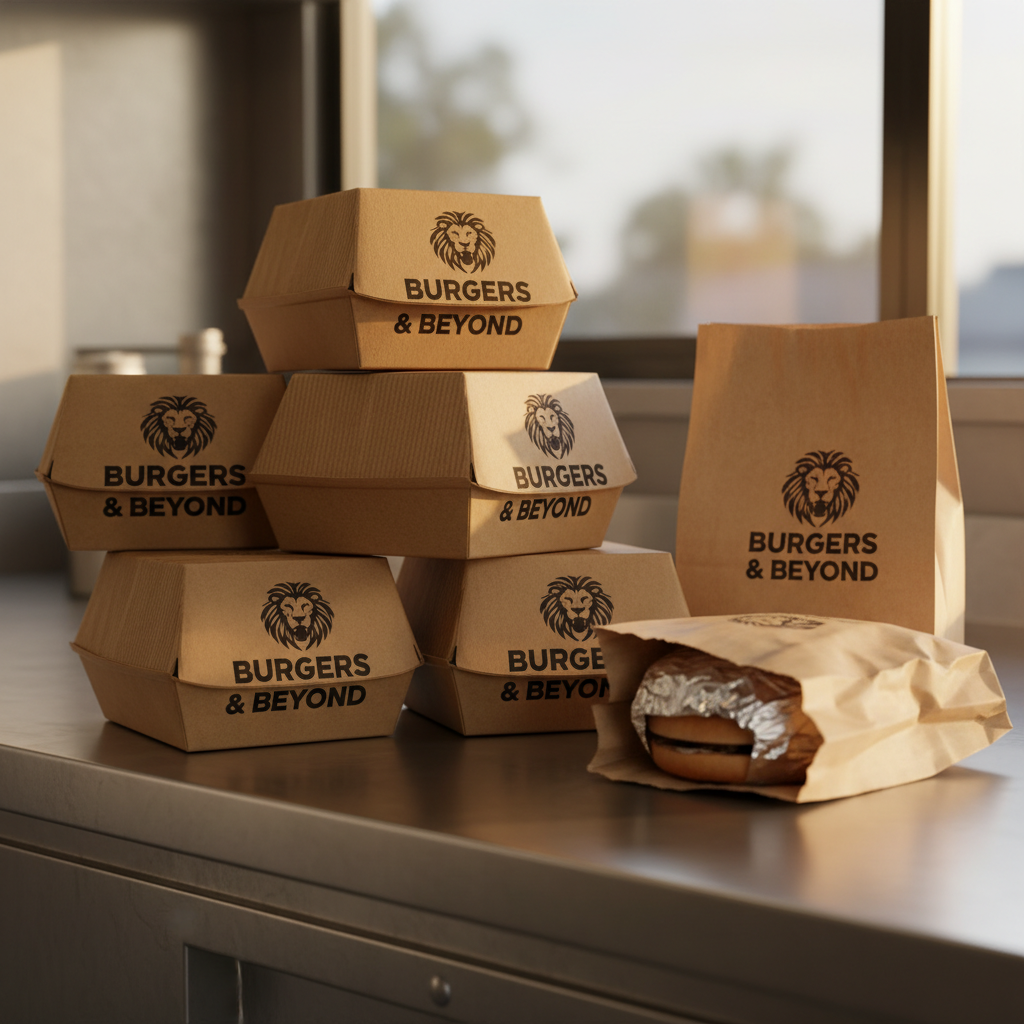
The one-piece clamshell is the workhorse of the industry. Its hinged lid ensures that the cover is never lost, and it closes securely with a simple tab lock. Advanced designs include vents to release steam, preventing crispy buns from becoming soggy. When sourcing these, look for “nestable” designs where the open boxes can stack efficiently before use.
Open Trays and Boats
For items meant to be eaten immediately while walking, open trays (or boats) are ideal. They offer high visibility for the food—essential for social media marketing—and are incredibly fast to serve. High-walled trays prevent toppings from sliding off.
Noodle Pails and Folded Takeout Boxes
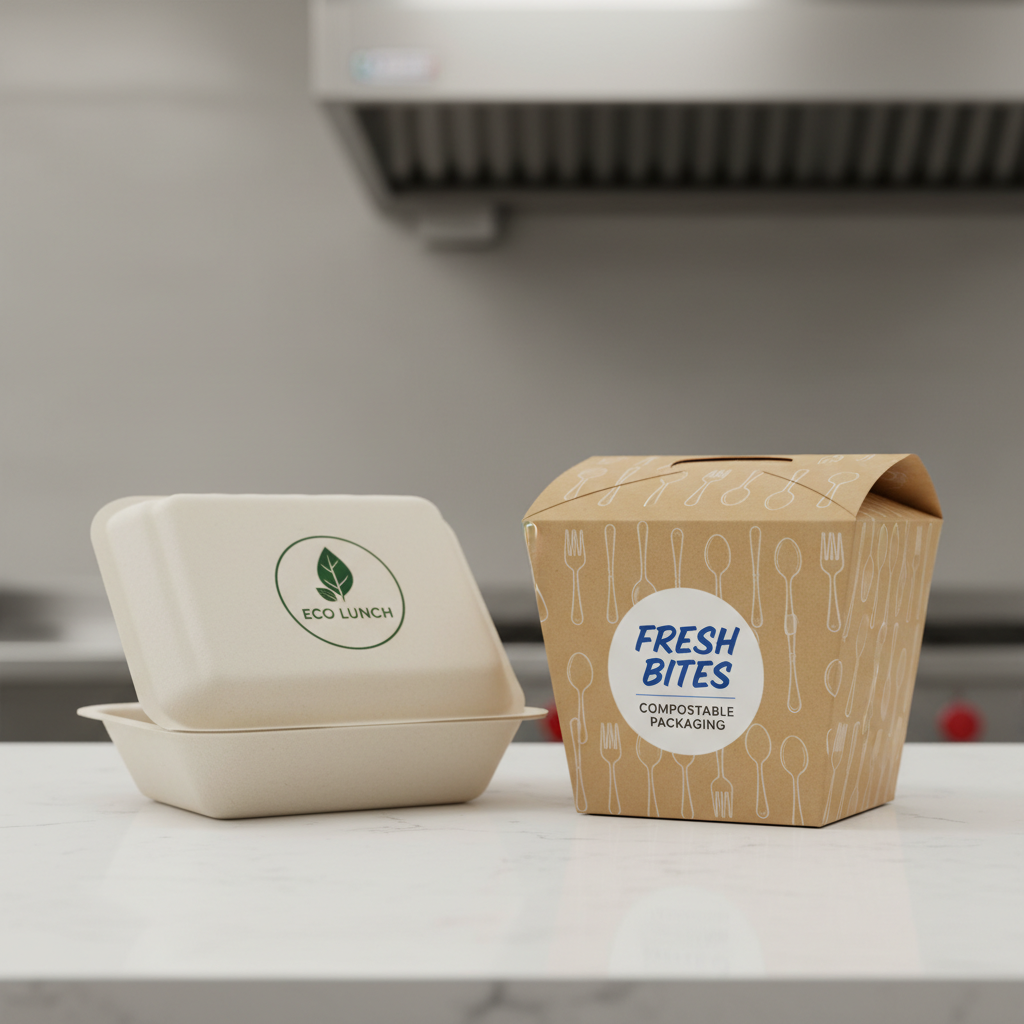
For Asian fusion, pasta, or rice dishes, the folded takeout pail is iconic. These are typically made from a single piece of poly-coated board folded to create a leak-proof bottom. The wire handle options are convenient for carrying, though microwave-safe versions (without metal) are increasingly popular.
Paper Bags: The Unsung Hero
Not everything needs a box. Paper food bags are crucial for sides, breads, and wrapping smaller items. SOS (Self-Opening Sack) bags with square bottoms stand upright on their own, making them easy to fill. Foil-lined bags are excellent for retaining heat in grilled sandwiches or kebabs.
Soup and Salad Containers
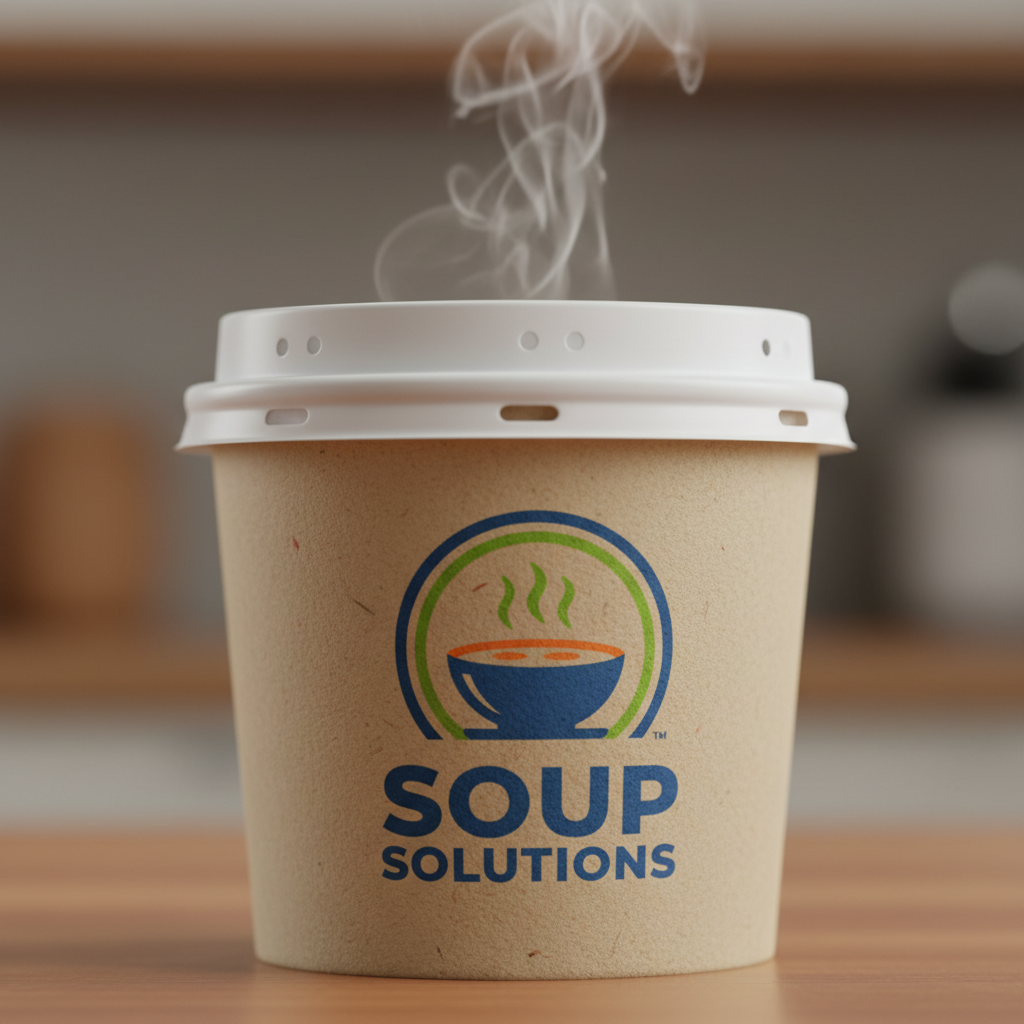
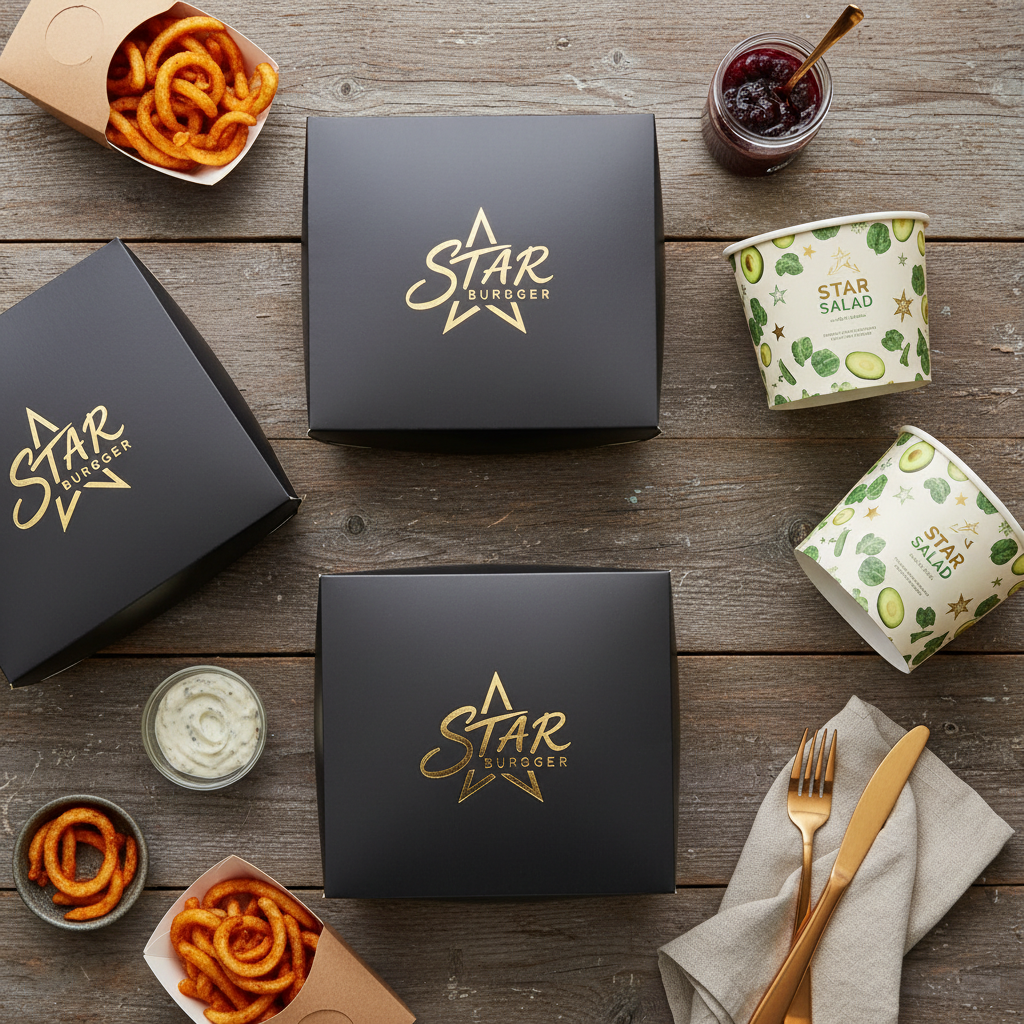
Liquid-heavy items require specialized disposable food containers. Round paper bowls with tight-fitting lids (vented paper or clear PP/PET) are standard. The rolled rim provides rigidity and a secure snap-fit for the lid, which is critical to preventing spills during transport.
Customization: Branding on the Go
A food truck is a moving billboard, and every customer walking away with a package is an extension of that advertisement. Custom printing is not just about aesthetics; it is a strategic marketing tool.
Printing Technologies
- Flexography: The most common method for high-volume packaging. It uses flexible relief plates and fast-drying inks. It is cost-effective for simple designs (1-4 colors) and large runs.
- Offset Printing: Offers the highest image quality, suitable for photographic designs and complex gradients. It is typically used for premium boxes where visual impact is paramount.
- Digital Printing: Ideal for short runs or seasonal promotions. It requires no plates, allowing for quick turnaround, though the unit cost is higher.
Design Considerations for Food Safety
When customizing, it is vital to use food-safe, low-migration inks. These inks are formulated to ensure that no harmful chemicals transfer to the food, even at high temperatures. Additionally, designers should consider the “assembled view” of the package—ensuring logos are visible when the box is closed and held.
Operational Logistics: Storage and Supply Chain
The “Flat-Pack” Advantage
Space optimization is a science. A standard pallet can hold thousands of flat-folded burger boxes but only a few hundred pre-formed foam containers. Buying flat-pack reduces shipping costs and maximizes the limited storage available inside the truck or at the commissary kitchen.
Inventory Management
Running out of packaging mid-service is a disaster. Professional buyers often establish a “safety stock” level. However, predicting usage can be difficult. Working with a supplier that offers reliable lead times and consistent quality is crucial. Understanding the difference between production time (often 10-20 days) and shipping time (variable by location) helps in planning orders effectively.
Buying Guide: Navigating MOQs and Specifications
Minimum Order Quantities (MOQ)
Custom packaging typically comes with MOQ requirements due to the setup costs of printing plates and die-cutting molds. For bespoke sizes or full-color printing, MOQs might start at 10,000 or 30,000 units. However, for standard sizes with a simple logo stamp or sticker application, lower volumes may be accessible. It is important to balance the lower unit cost of high-volume orders with the cost of warehousing that stock.
Sampling and Prototyping
Never commit to a full production run without testing a sample. Food behaves differently than inert objects. Hot grease, steam, and weight can cause a box to fail in ways a specification sheet won’t reveal. We strongly recommend requesting plain samples to test with your actual menu items. Check for:
- Sogginess: Does the bottom hold up after 15 minutes?
- Heat Retention: Does the food stay warm?
- Fit: Does the portion size look generous or lost in the box?
- Closure: Is the locking mechanism easy to use with gloved hands?
Ready to explore options? You can learn more about our process at our how to order page.
Sustainability and Compliance
The shift away from single-use plastics is a global trend affecting food trucks heavily. Many cities have banned Styrofoam and rigid plastics. Fiber-based packaging is the primary alternative.
- Compostable: Packaging that breaks down into organic matter. Requires industrial composting facilities.
- Recyclable: Packaging that can be reprocessed. Note that grease-stained paper is often rejected by recyclers, making compostable options or tear-away liners a smart choice for greasy foods.
- FSC Certification: sourcing paper from responsibly managed forests ensures your brand aligns with environmental values.
FAQ: Common Questions from Food Truck Operators
1. Can paper packaging really hold liquids like curry or soup?
Yes, but it requires the right lining. Double-poly (PE) coated paperboard or heavy-duty PLA-lined bowls are designed specifically for hot liquids. Standard uncoated boxes will leak.
2. What is the fastest box style to assemble?
The “crash-lock” or “auto-bottom” box is the fastest. Pushing the sides causes the bottom to lock automatically. Pre-glued 4-corner tray designs are also instant-setup options.
3. How do I calculate the right size box for my portion?
Measure the volume of your food (in ml or oz) and the physical dimensions (length x width x height). Ideally, the food should fill 80-90% of the box volume to prevent it from sliding around, which keeps presentation neat.
4. Is custom printing expensive for small businesses?
It depends on the volume. While the initial setup for flexo plates costs money, the per-unit cost drops significantly with volume. For very small runs, applying branded stickers to stock generic boxes is a cost-effective interim solution.
5. How does shipping affect the cost of packaging?
Packaging is voluminous but light. Shipping is often charged by dimensional weight. Flat-packing is essential to keep these costs down. ordering in bulk to fill a container (LCL or FCL) is usually more economical than frequent small air-freight shipments.
Conclusion
Choosing the right packaging for a food truck is a balancing act between durability, speed, and brand presentation. The right box protects your product, speeds up your service, and markets your brand long after the truck has driven away. Whether you need heavy-duty burger boxes, grease-resistant bags, or leak-proof soup containers, understanding the materials and mechanics of packaging ensures you get the best value for your operation.
At YBJ Packing, we specialize in helping businesses navigate these choices with high-quality, custom-manufactured solutions. If you are ready to upgrade your food truck’s packaging efficiency, contact our team today to request a quote or discuss your specific requirements.