

For food service brands and packaging procurement officers, grease resistance is rarely just a cosmetic preference—it is a functional necessity. A burger box that turns translucent with oil spots before it reaches the customer damages brand perception. A paper bag that leaks grease onto a car seat creates a liability. As the global demand for takeout and delivery surges, the engineering behind grease-resistant packaging has become increasingly sophisticated.
Choosing the right grease barrier involves navigating a complex matrix of material science, regulatory compliance, sustainability goals, and cost performance. Buyers must decide between traditional polyethylene (PE) coatings, modern aqueous dispersions, fluorochemical-free papers, and mechanical greaseproof substrates.
This comprehensive guide explores the technical landscape of grease resistance in B2B food packaging. We will examine the differences between coatings and liners, explain industry-standard testing methods like the Kit Test, and provide actionable advice for sourcing the right packaging for your specific food applications.
The Science of Grease Migration: Why Paper Needs Protection
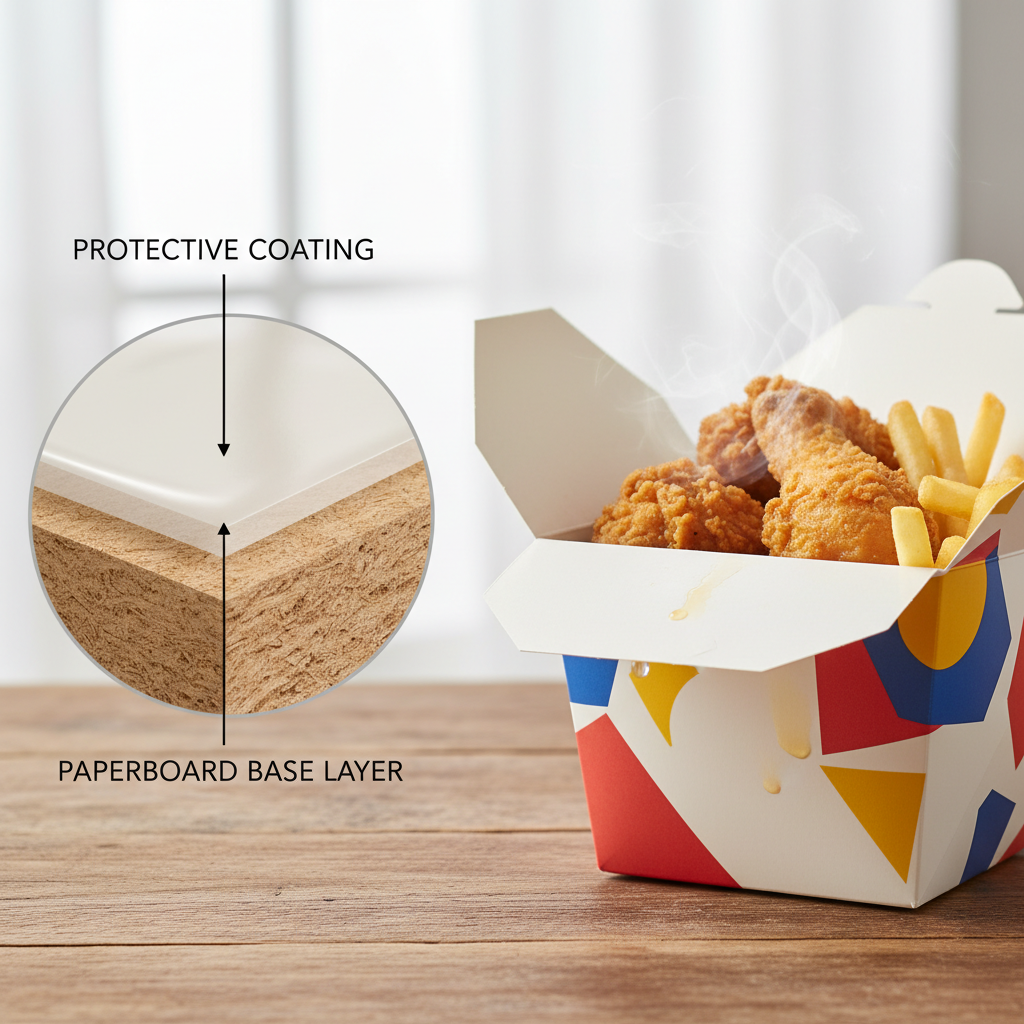
To understand grease resistance, one must first understand the structure of paper. Standard paper is a porous network of cellulose fibers. These fibers are hydrophilic (water-loving) but also oleophilic (oil-loving) to varying degrees. Without treatment, oils and fats from food lower the surface tension of the paper fibers, allowing the liquid grease to penetrate the capillaries of the paper sheet rapidly. This process, known as wetting, results in the unsightly staining and structural weakening often seen in low-quality packaging.
Grease resistance is achieved by altering the surface energy of the paper. This is typically done in one of two ways:
- Mechanical Densification: Beating the pulp fibers so intensely that the physical pores are too small for grease molecules to pass through easily (e.g., glassine or vegetable parchment).
- Chemical/Barrier Coating: Applying a layer that physically blocks or chemically repels oil. This can be a separate film (lamination) or a liquid coating applied during or after the papermaking process.
Hydrophobic vs. Lipophobic
It is crucial for buyers to distinguish between water resistance and grease resistance. A cup may be waterproof (hydrophobic) but not necessarily grease-proof (lipophobic), and vice versa. For example, simple wax coatings are excellent for water but can dissolve when exposed to hot oils. Conversely, certain fluorochemical treatments repel oil aggressively but may not hold liquid water for long durations. For mixed-menu items—like a hot burger with sauce—packaging requires a dual-functional barrier.
Types of Grease-Resistant Coatings and Liners
When selecting food packaging boxes or containers, the barrier material dictates performance, recyclability, and cost. Below are the primary technologies currently available in the market.
1. Polyethylene (PE) Coatings
Polyethylene remains the industry standard for high-performance grease and moisture barriers. It involves extruding a thin layer of plastic onto the paperboard.
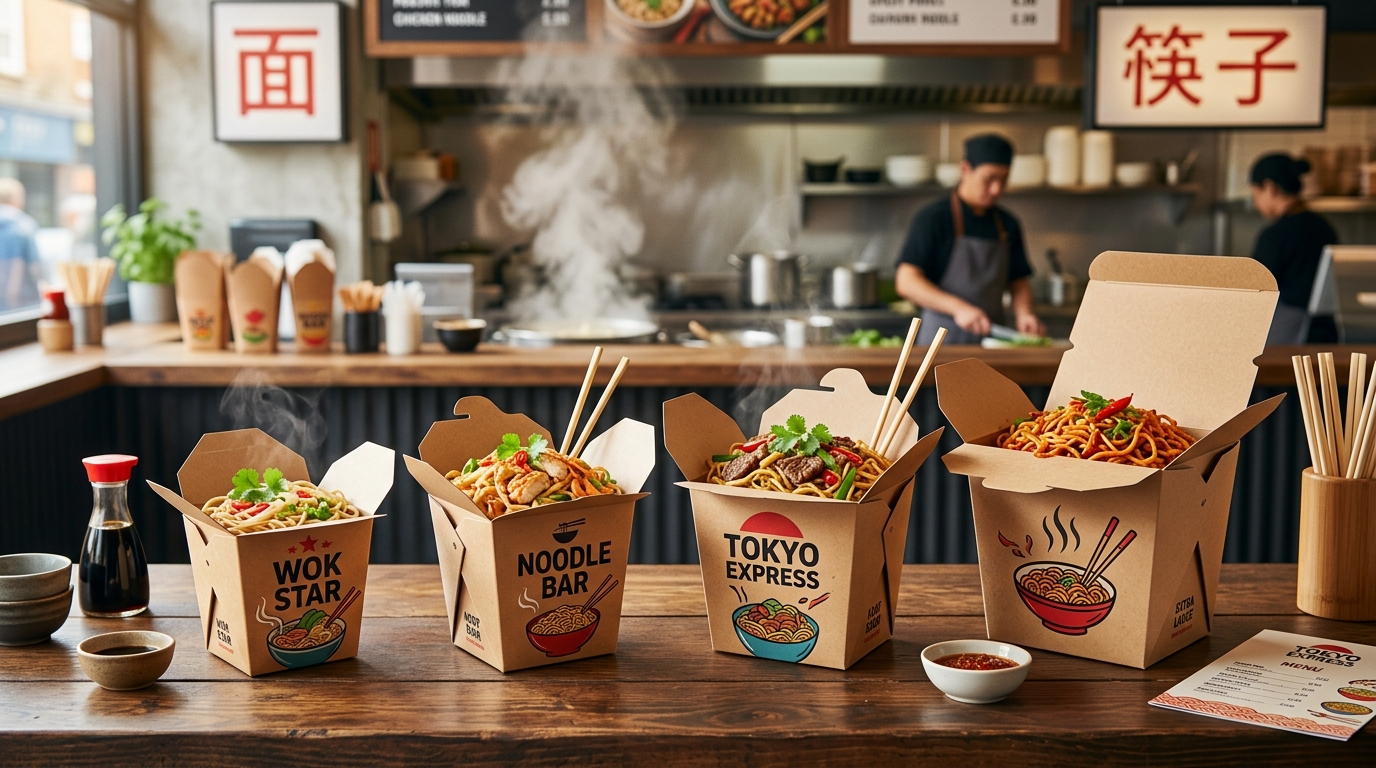
- Pros: Excellent barrier against both hot grease and liquids; heat-sealable (essential for forming leak-proof corners in noodle boxes and cups); relatively low cost.
- Cons: Difficult to recycle in standard paper streams (requires specialized facilities to separate the plastic); not biodegradable.
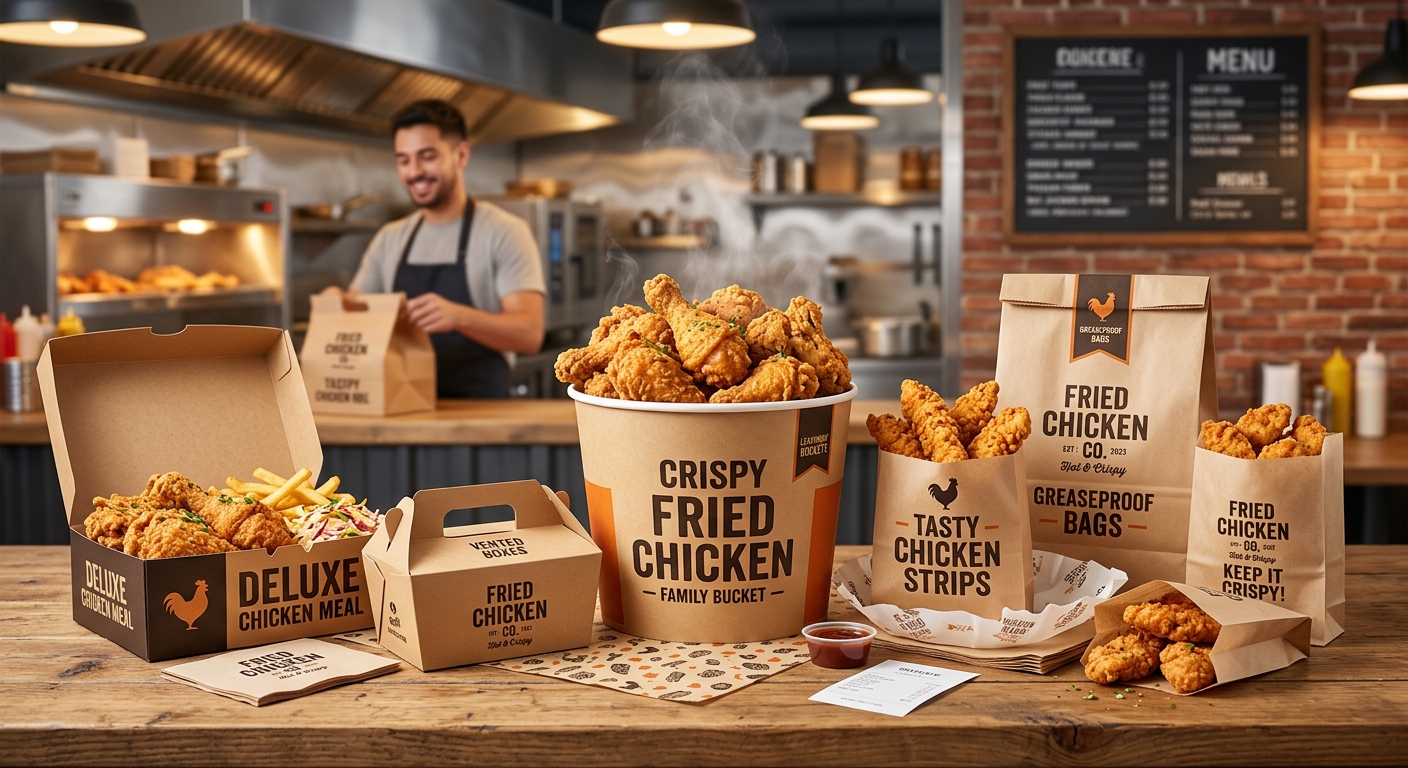
- Best For: Hot soups, saucy noodles, fried chicken buckets, and cold drinks.
2. Aqueous (Water-Based) Coatings
Aqueous coatings are the fastest-growing segment in sustainable packaging. These are water-based dispersions applied like ink during the printing or converting process.
- Pros: Repulpable and recyclable in standard paper streams; often compostable; no plastic film separation required.
- Cons: Generally lower barrier performance compared to PE (may not hold hot liquids for hours); can be more expensive; heat sealing is challenging without specific additives.
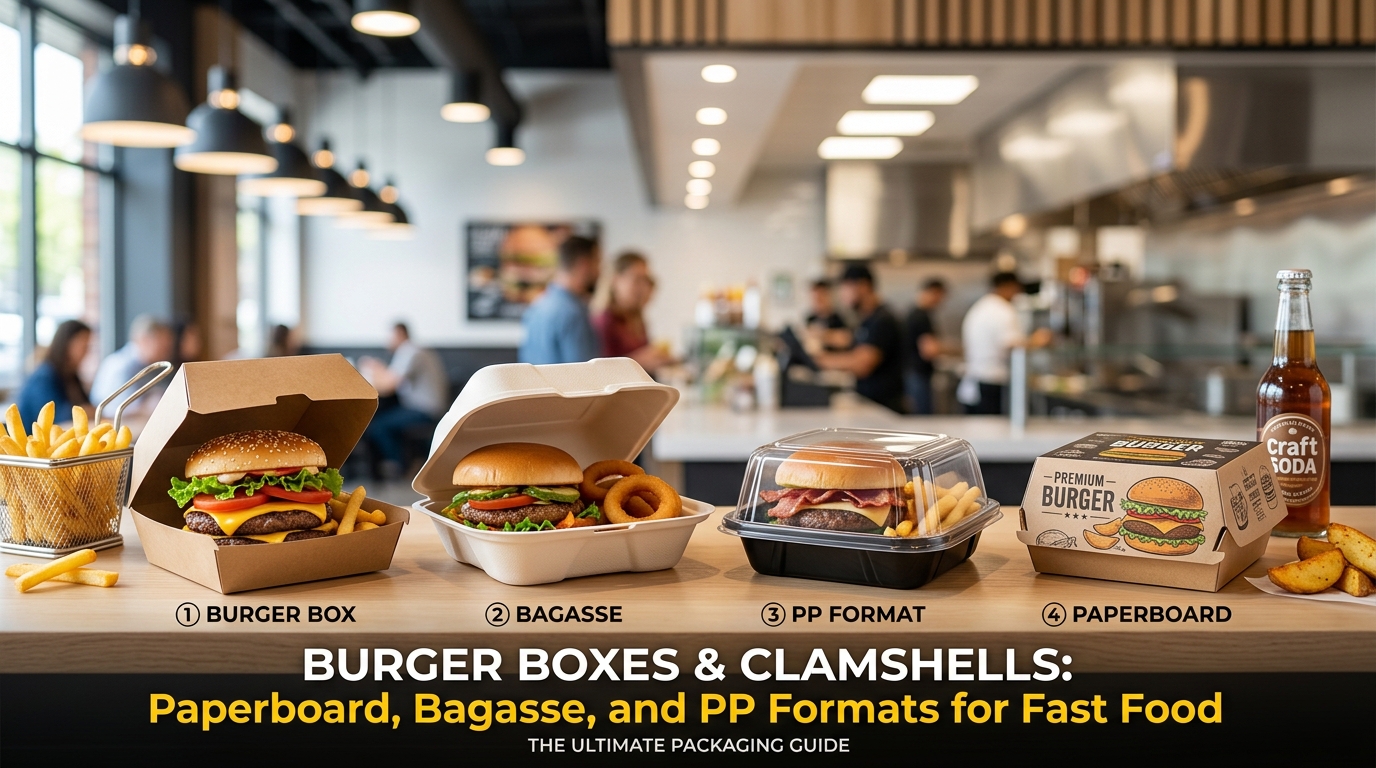
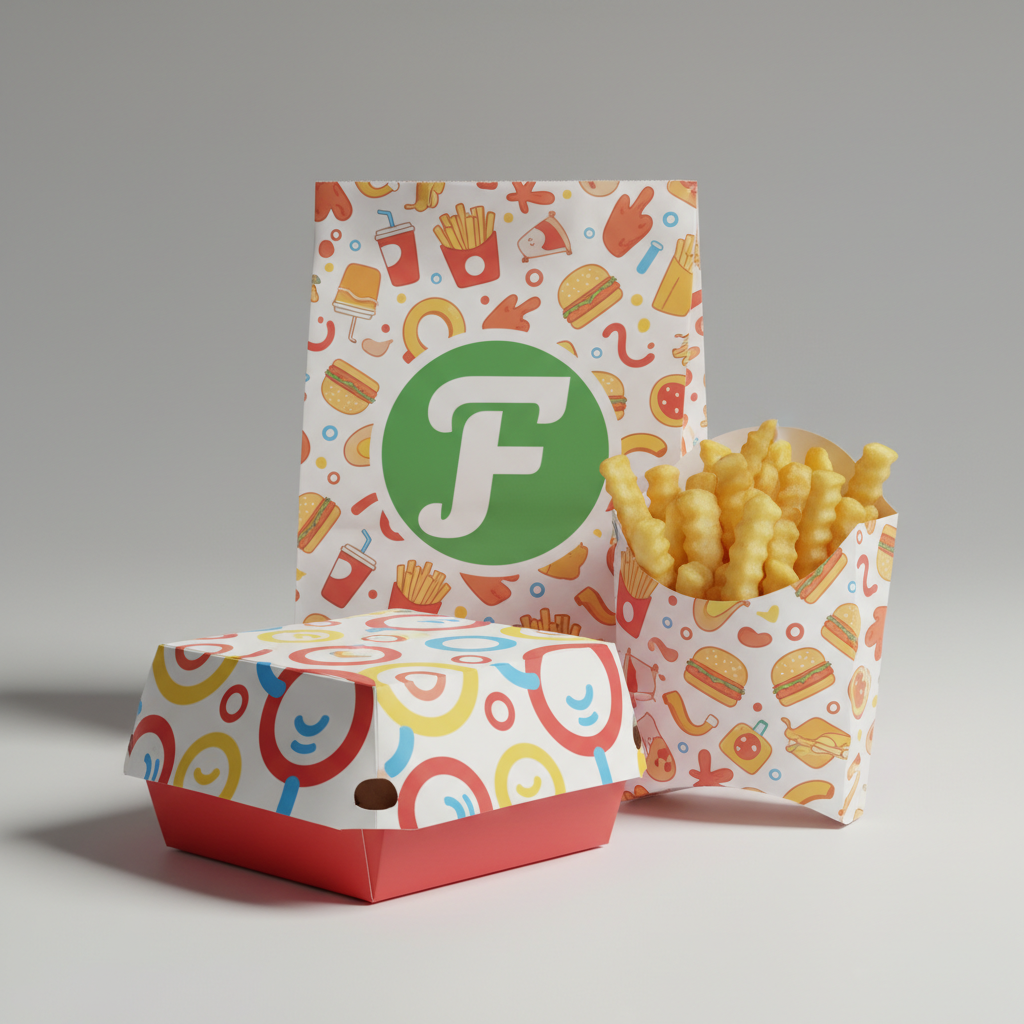
- Best For: Burger clamshells, french fry scoops, bakery boxes, and items where the food is consumed relatively quickly.
3. PLA (Polylactic Acid) Liners
PLA is a bioplastic derived from renewable resources like corn starch. It mimics the functionality of PE but is industrially compostable.
- Pros: Compostable; renewable source; good grease barrier.
- Cons: Low heat tolerance (can deform or melt above 40–50°C unless specialized crystallized versions are used); requires industrial composting facilities (rarely composts in home setups).
- Best For: Cold salads, warm (not hot) deli items, and eco-conscious brands.
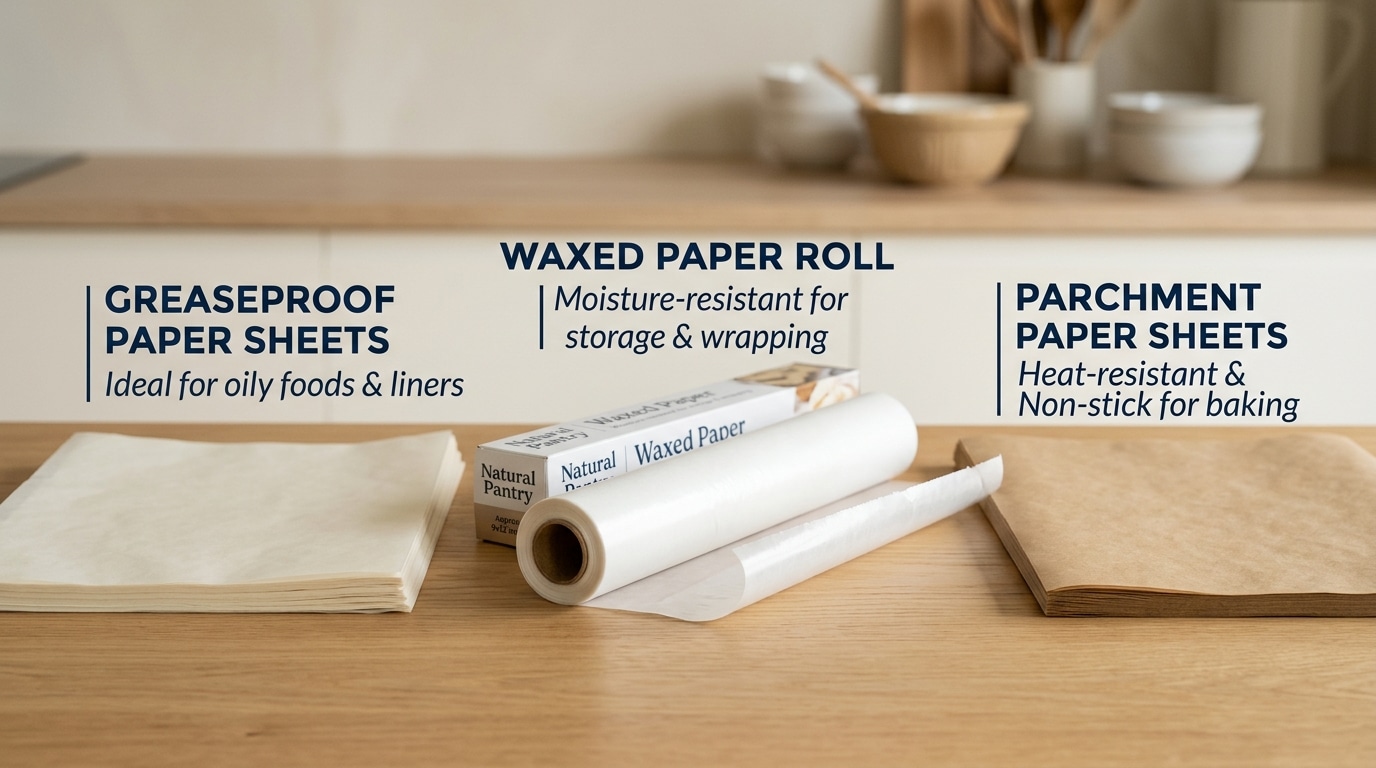
4. Wax Coatings (Dry and Wet Wax)
Dry Wax: The wax is driven into the paper fibers, leaving no surface residue. The paper remains breathable.
Wet Wax: The wax sits on the surface, creating a high-gloss barrier.
- Pros: Excellent release properties (food doesn’t stick); cost-effective.
- Cons: Not suitable for hot foods (wax melts); usually not recyclable.
- Best For: Butcher wrap, deli sheets, candy wrappers.
5. Fluorochemical-Free (PFAS-Free) Papers
Historically, many greaseproof papers used PFAS (per- and polyfluoroalkyl substances) to repel oil. Due to health and environmental concerns, the industry is shifting rapidly toward PFAS-free alternatives. These new papers use natural starches, enzymatic treatments, or high-density refining to achieve resistance.
- Pros: Regulatory compliance (US and EU restrictions on PFAS are increasing); safer for consumers.
- Cons: Often have a lower “Kit Level” (see below) than traditional chemical papers; may spot more easily with very hot, penetrating oils.
- Best For: Food packaging bags for pastries, sandwiches, and dry fried foods.
Measuring Performance: The Kit Test and Beyond
In B2B procurement, vague terms like “grease resistant” are insufficient. You need quantifiable metrics to ensure the packaging meets your specific food requirements. The industry uses several standard tests.
The Kit Test (TAPPI T 559)
The Kit Test is the most common standard for quantifying grease resistance in paper and board. It involves applying a series of reagents (mixtures of castor oil, toluene, and heptane) to the paper surface. The reagents are numbered 1 to 12, with 12 being the most aggressive solvent.
- Kit Level 1–3: Low resistance. Suitable for dry foods like crackers or bread.
- Kit Level 4–6: Medium resistance. Suitable for pastries, cookies, and pretzels.
- Kit Level 7–9: High resistance. Required for fried foods, burgers, and french fries.
- Kit Level 10–12: Extreme resistance. Needed for oily pet foods or industrial applications.
Buyer Tip: For a standard burger box or french fry bag, specifying a Kit Level of 7–9 is typically sufficient. Requesting Level 12 unnecessarily increases cost.
The Cobb Test (Water Absorption)
While primarily for water, the Cobb test measures the mass of water absorbed by a specific area of paper in a given time. For packaging that holds sauces (like food containers for curry or pasta), a low Cobb value is just as important as the Kit level to prevent the container from becoming soggy and collapsing.
Crease and Fold Testing
A flat sheet of paper might pass a Kit Test perfectly, but what happens when it is folded into a box? The “score lines” or folds can crack the barrier coating, creating a leak point. High-quality grease-resistant packaging must maintain barrier integrity even after being die-cut and folded. Suppliers should perform “creased” barrier tests, not just flat tests.
Application-Specific Recommendations
Different foods exert different pressures on packaging. Here is a breakdown of common applications and their ideal grease-resistance profiles.
Fried Chicken and Heavy Oils
Fried chicken comes out of the fryer hot (160°C+) and releases steam. The combination of heat, moisture, and oil is aggressive.
- Recommended: PE-coated board or high-Kit (9+) PFAS-free board.
- Why: The heat lowers the viscosity of the oil, making it penetrate faster. Steam can weaken paper fibers, allowing oil to break through. Ventilation holes are crucial to release steam and prevent the breading from getting soggy, but the board itself must be robust.
Burgers and Sandwiches
Burgers introduce grease from the patty, moisture from lettuce/tomato, and acidity from ketchup/mustard.
- Recommended: Aqueous coated board or greaseproof paper wraps (Kit 6–8).
- Why: You need a balance. A full PE lining might be overkill for a wrap, but a box needs enough holdout to survive a 30-minute delivery radius. Clamshells often use aqueous coatings to allow for better recyclability.
Bakery and Pastries
Croissants and donuts release butter/oil slowly over time (wicking).
- Recommended: Uncoated greaseproof paper (Glassine) or Kit 4–6 treated paper.
- Why: The goal is to prevent the bag from becoming translucent. Since the food is usually room temperature, the thermal stress on the barrier is low.
Manufacturing Considerations: Printing and Converting
Adding branding to grease-resistant packaging introduces new challenges. At YBJ Packing, we ensure that the interplay between ink, coating, and paper yields a premium result.
Ink Adhesion on Coated Surfaces
Printing directly onto a grease-resistant surface (especially PE or heavy wax) requires specialized inks (often UV-cured or oxidation-drying inks) to ensure they don’t smear. For aqueous coated boards, the coating is usually applied over the printing (as a varnish) or on the inside of the box while printing is on the outside.
Glueability
Grease-resistant coatings are designed to repel things—including glue. When manufacturing boxes, the areas where glue is applied (the glue flaps) must either be left uncoated (knockouts) or use aggressive hot-melt adhesives designed for low-surface-energy materials. Poor gluing is a common failure point in cheap grease-resistant packaging.
Buying Guide: Sourcing Grease-Resistant Packaging
When you are ready to order, having a clear specification sheet helps manufacturers provide accurate quotes and samples. Here is what you need to define.
1. Define the “Aggressiveness” of the Food
- Temperature: Will the food be filled boiling hot, warm, or cold?
- Fat Content: Is it a dry cookie or a bucket of fried wings?
- Liquid Content: Are there sauces involved?
- Duration: Is this for immediate consumption (5 mins) or delivery (45 mins)?
2. Choose Your Structure
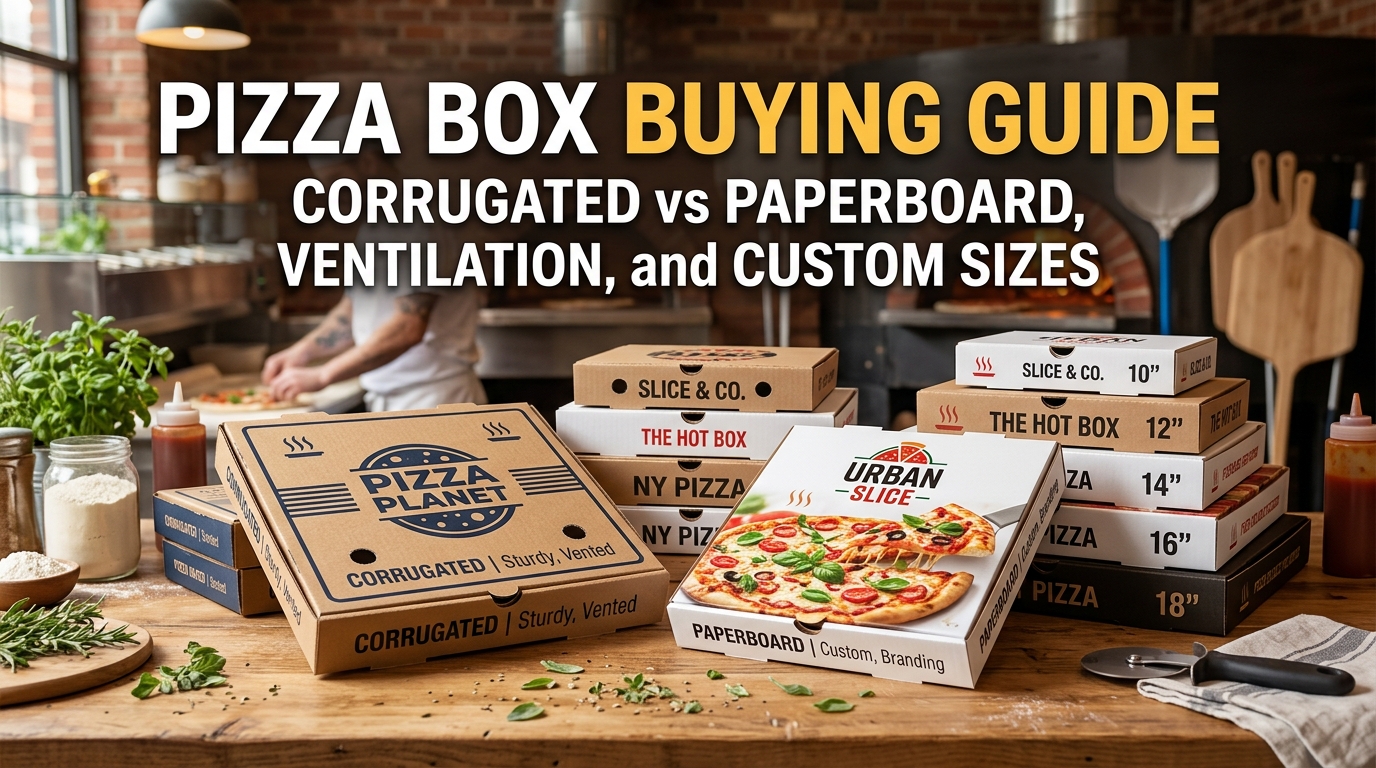
- Single Layer vs. Multi-Wall: For heavy grease, a double-wall bag or a corrugated box with a grease-resistant liner might be necessary.
- Coating Location: Do you need coating on the inside only (poly-1-side) or both sides (poly-2-side)? Double-sided is usually reserved for cold cups (condensation) or very oily environments.
3. Compliance and Sustainability
- If you export to the EU or specific US states (like California or New York), verify PFAS-free requirements.
- Decide if “recyclable” is a marketing claim you intend to make. If so, avoid standard PE linings unless you have a closed-loop recycling partner.
4. Sampling and Prototyping
Never place a bulk order without a “real food test.” Standard lab tests (Kit Test) are indicators, but they don’t replicate the weight of a stacked burger or the steam of hot rice. Request samples and physically test them with your actual menu items. You can request a quote and discuss sampling options via our contact page.
FAQ: Common Questions About Grease Resistance
What is the difference between “Greaseproof” and “Grease Resistant”?
While often used interchangeably, “Greaseproof” technically refers to paper with high density (low porosity) achieved mechanically (like glassine), which has a natural resistance. “Grease Resistant” usually implies a chemical treatment or coating has been added to standard paper to achieve the barrier.
Can I print inside a grease-resistant box?
Technically yes, but it is generally discouraged for food safety reasons unless using certified food-safe, low-migration inks. Most brands print on the outside and use the inside coating purely for functional barrier properties.
Is PE-coated paper biodegradable?
Standard PE (polyethylene) is not biodegradable. However, it degrades into smaller microplastics over centuries. For biodegradability, you should opt for PLA linings or aqueous coatings.
How do I know if my current packaging contains PFAS?
You cannot tell by looking and touching. You must request a certification or lab test report from your supplier. Modern PFAS-free papers perform very similarly to older fluorochemical papers, so testing is the only verification method.
Does grease resistance affect the shelf life of food?
Yes. A better grease barrier often correlates with a better air barrier (oxygen transmission rate). This can keep baked goods fresher for longer by preventing the oil in the food from oxidizing (going rancid) via contact with the paper.
Conclusion
Grease resistance is a critical specification that impacts customer satisfaction, operational efficiency, and environmental compliance. Whether you need a high-durability PE-lined container for hot soups or a sustainable aqueous-coated clamshell for burgers, understanding the trade-offs between materials is key to smart procurement.
At YBJ Packing, we specialize in customizing barrier properties to fit your menu and your brand’s sustainability goals. From custom-printed greaseproof bags to heavy-duty leak-proof boxes, we provide solutions that perform in the real world.
Ready to upgrade your food packaging? Learn how to order or request a quote today to get packaging samples tailored to your specific grease-resistance needs.