

Introduction: The Intersection of Functionality and Branding
In the competitive landscape of the food service industry, packaging serves a dual purpose: it protects the product and communicates the brand. For restaurants, delis, fast-food chains, and bakeries, custom food wrap paper is often the first tactile interaction a customer has with the food. It is not merely a disposable utility; it is a strategic asset. Sourcing food wrap paper wholesale allows businesses to maintain consistency, reduce unit costs, and ensure a steady supply of high-quality, food-grade packaging.
However, navigating the technical specifications of food paper—ranging from grease resistance levels (Kit values) to coating types and printing constraints—can be complex for procurement officers and business owners. Choosing the wrong material can lead to grease leakage, poor heat retention, or compromised ink safety. Conversely, the right choice elevates the customer experience and operational efficiency.
This comprehensive guide explores the critical aspects of manufacturing and ordering printed food wrap paper. We will cover material science, printing technologies, cost drivers, and the logistics of bulk procurement, ensuring you make informed decisions for your supply chain.
1. The Strategic Value of Custom Printed Food Wrap
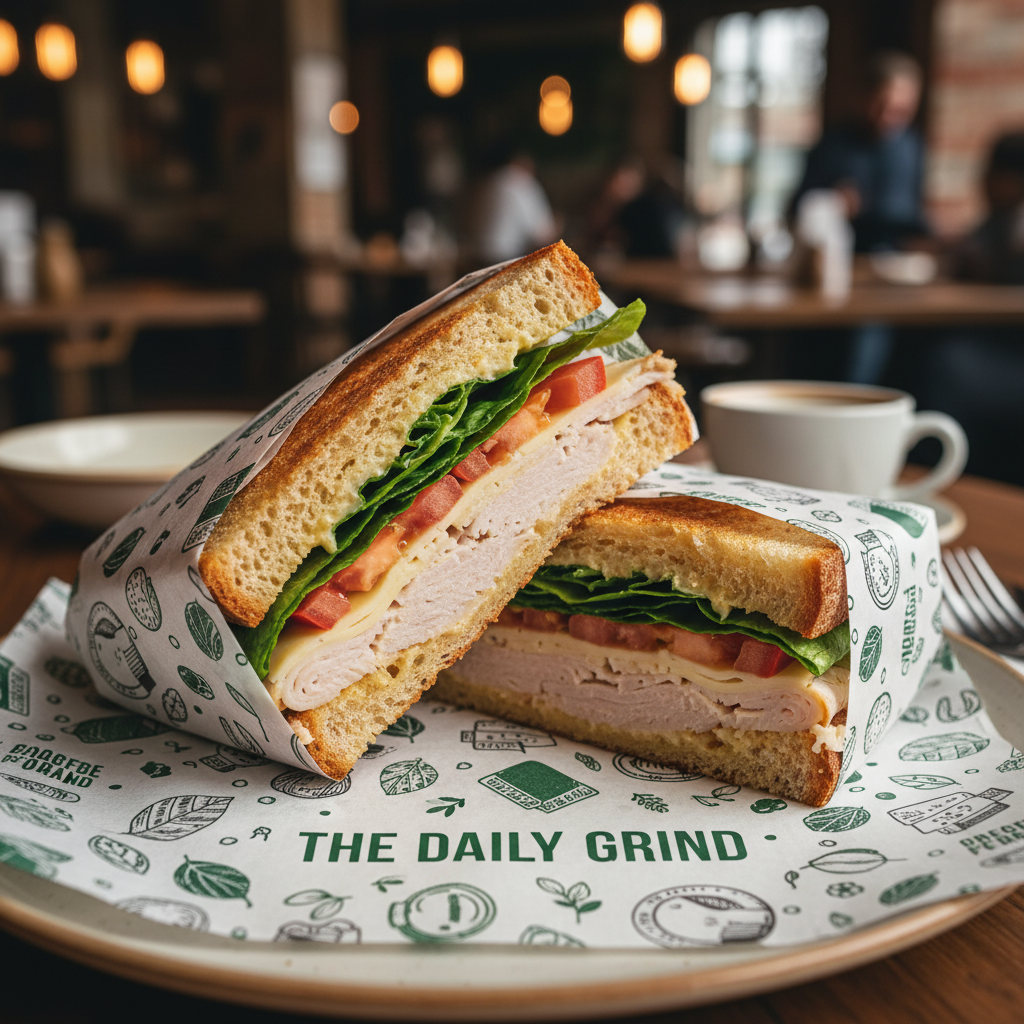
Why invest in customization? In the age of social media, “unboxing” food is a shareable moment. Generic white or brown paper represents a missed marketing opportunity. Custom printed wrap turns every burger, sandwich, and pastry into a mobile billboard. Beyond aesthetics, custom wrap serves functional roles in operations, such as color-coding different menu items (e.g., using blue-patterned paper for fish sandwiches and red for beef) to reduce kitchen errors.
2. Understanding Base Materials and Substrates
The foundation of high-quality food wrap is the base paper. The choice of substrate dictates the paper’s strength, appearance, and suitability for specific food types. When browsing food wrap paper options, you will typically encounter the following base materials:
2.1. MG (Machine Glazed) Paper
Machine Glazed paper is characterized by a shiny, smooth surface on one side and a rougher texture on the reverse. This is achieved during the drying process on the paper machine. The smooth side provides an excellent surface for high-resolution printing, making it ideal for branded wrappers where logo clarity is paramount. It generally offers moderate strength and is often treated for grease resistance.
2.2. MF (Machine Finished) Paper
Machine Finished paper has a similar texture on both sides. It is often slightly more porous than MG paper but offers a more natural, matte look. It is commonly used for standard deli wraps where a rustic or organic aesthetic is desired.
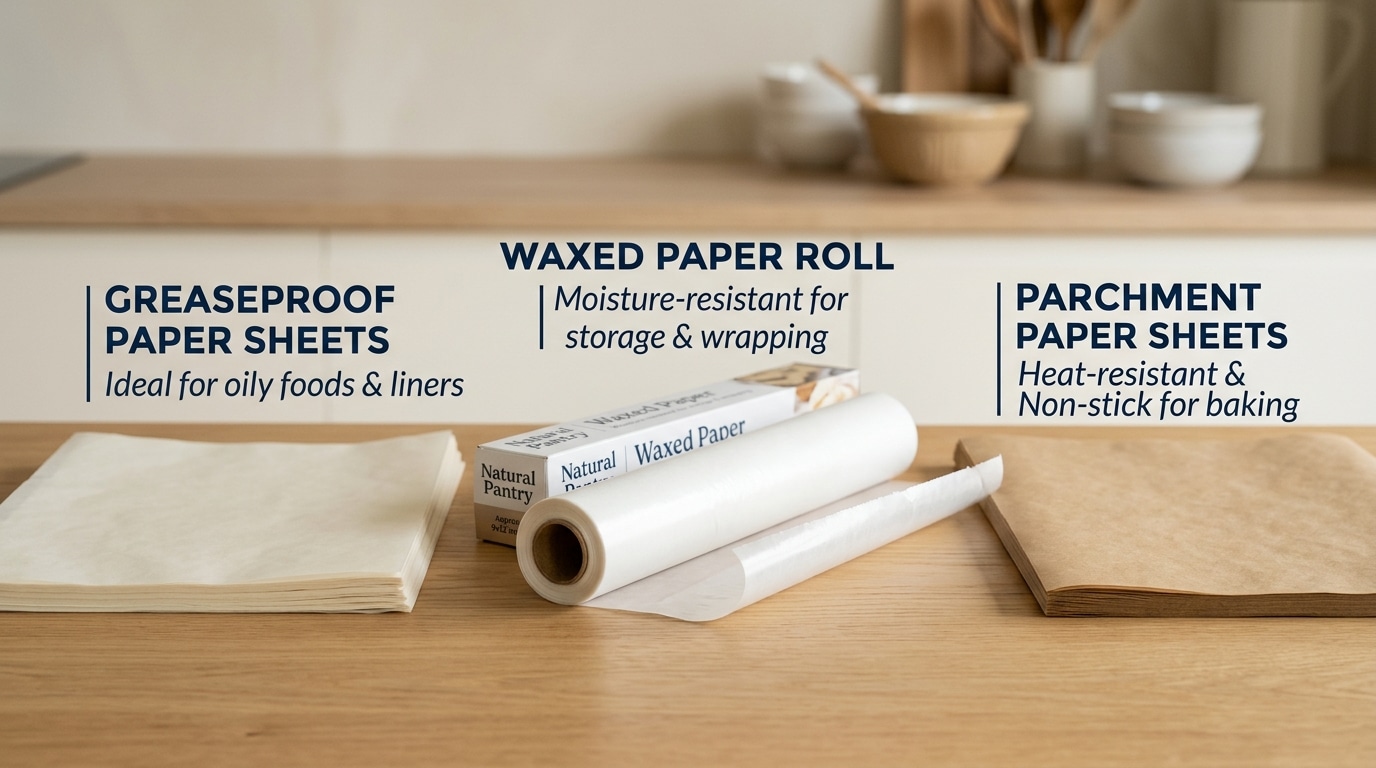
2.3. Greaseproof Paper (The “Kit” Standard)
“Greaseproof” is a performance characteristic rather than just a paper type. It is achieved by refining the paper pulp to reduce porosity (mechanical greaseproof) or by adding fluorochemicals or bio-based alternatives (chemical greaseproof). The industry measures grease resistance using the Kit Test (TAPPI T 559), which rates resistance on a scale from 1 to 12.
- Kit 1-3: Low resistance. Suitable for dry goods like cookies or bread.
- Kit 4-6: Medium resistance. Ideal for sandwiches, pastries, and items with moderate oil content.
- Kit 7-9: High resistance. Required for burgers, fried chicken, and greasy street food.
- Kit 10-12: Extreme resistance. Used for very oily industrial applications or long-duration storage.
2.4. Wax Coated Paper
Wax paper involves coating a base sheet (usually tissue or kraft) with paraffin or soybean wax. There are two primary application methods:
- Dry Wax: The wax is driven into the paper fibers. No surface residue remains. This allows the paper to breathe, preventing soggy sandwiches, while still providing a moisture barrier.
- Wet Wax: The wax sits on the surface, creating a high-gloss finish. This offers superior moisture resistance and is excellent for wrapping raw meat or very sticky items.
3. Coating Technologies: PE, PLA, and Clay
For applications requiring absolute moisture and grease barriers, simple paper fibers may not suffice. Coatings are applied to enhance performance.
- PE (Polyethylene) Coating: A thin layer of plastic is extruded onto the paper. This provides a complete barrier against liquids and grease. It is heat-sealable, making it useful for pouches. However, it affects recyclability.
- PLA (Polylactic Acid) Coating: A biodegradable alternative to PE, derived from plant starches. It offers similar barrier properties but is compostable in industrial facilities.
- Clay Coating: Often used on heavier weight papers (like freezer paper), clay coating improves printability and provides a basic barrier, though less effective against heavy grease than PE.
4. Printing Specifications and Technologies
When ordering custom food wrap paper wholesale, the printing process is the most critical variable affecting lead time and cost. Most food packaging manufacturers use Flexographic Printing.
4.1. Flexography (Flexo)
Flexo printing uses flexible relief plates (usually made of photopolymer) to transfer ink onto the substrate. It is highly efficient for high-volume runs.
- Plate Costs: Each color in your design requires a separate printing plate. If your design has 4 colors, you will need 4 plates. This is a one-time setup cost.
- Speed: Flexo presses run at high speeds, making them cost-effective for large wholesale orders (e.g., 50,000+ sheets).
- Inks: Water-based inks are the standard for food packaging due to low VOCs and safety compliance. UV inks are rarely used for direct food contact wraps due to migration concerns.
4.2. Spot Color vs. Process Color
Most branded food wraps use Spot Colors (Pantone/PMS). This ensures that your brand’s specific shade of red or blue is reproduced exactly, regardless of the production run. CMYK (Process Color) is used for photographic images but is less common on thin food wraps due to registration challenges on lightweight paper.
4.3. Design Considerations
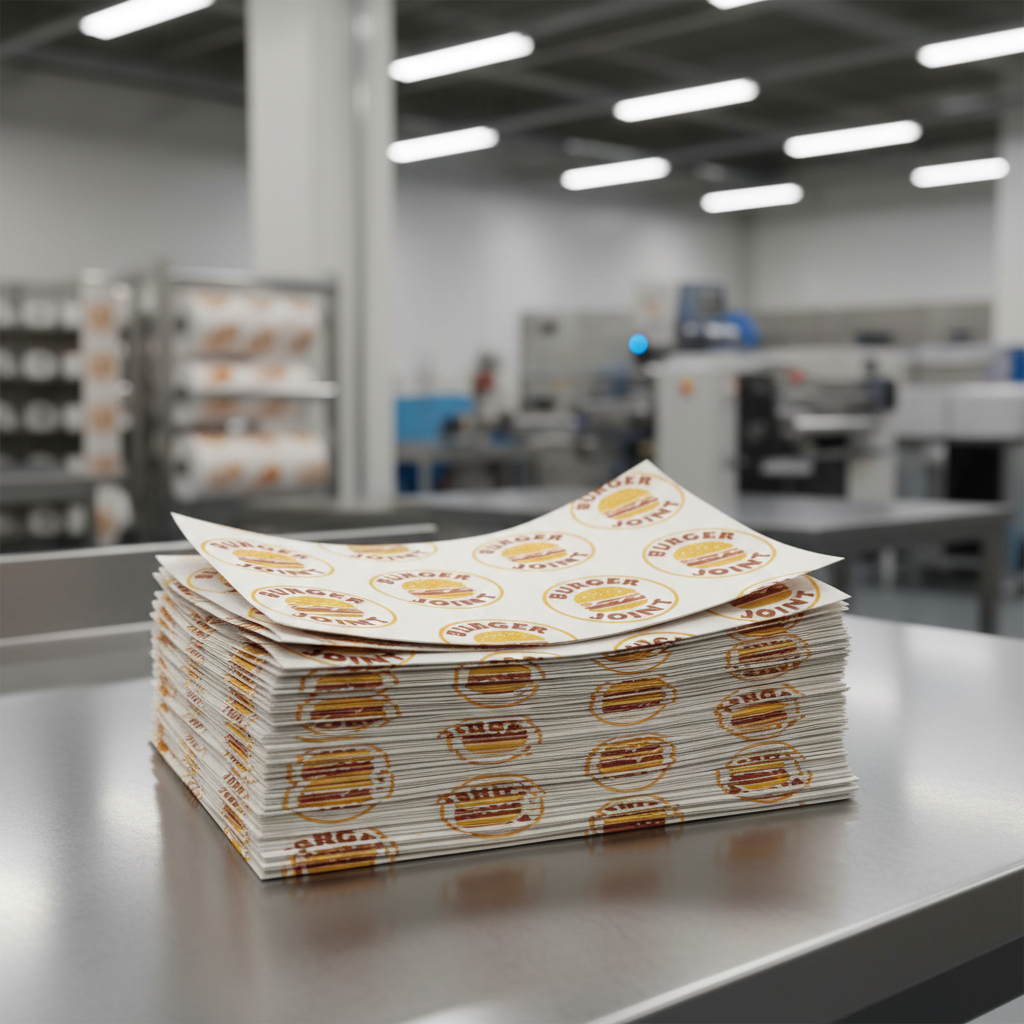
- Step-and-Repeat: The most common design layout. Your logo repeats diagonally or horizontally across the sheet. This ensures that no matter how the food is wrapped, the brand is visible.
- Registered Print: The design is centered on each cut sheet. This requires precise cutting equipment and usually incurs a higher cost due to slower production speeds and higher waste rates.
- Ink Coverage: High ink coverage (e.g., a solid black background) can affect the paper’s performance and may lead to ink odor. It is generally recommended to keep ink coverage moderate for direct food contact items.
5. Sizing and Formats: Sheets vs. Rolls
Food wrap is supplied in two main formats, depending on your operational workflow.
5.1. Pre-Cut Sheets
Sheets are the most convenient option for fast-paced kitchens. Staff can grab a single sheet without tearing. Common sizes include:
- 12″ x 12″ (30cm x 30cm): Standard for burgers and sandwiches.
- 10″ x 10″ (25cm x 25cm): Good for smaller items like bagels or cookies.
- 12″ x 16″ or 14″ x 18″: Used for tray liners or basket liners.
5.2. Rolls
Rolls are preferred by butcher shops or delis that wrap items of varying sizes. They require a dispenser with a cutter blade. While rolls offer flexibility, they can slow down service in high-volume fast-food environments.
6. Food Safety and Compliance
Safety is non-negotiable. When sourcing from a manufacturer, ensure the products meet relevant food contact standards (such as FDA in the US or EC 1935/2004 in Europe). Key safety factors include:
- FDA-Approved Inks: Inks must not contain heavy metals or toxic solvents.
- Migration Testing: Ensuring that chemicals from the paper or coating do not leach into the food, especially under heat.
- PFAS-Free Options: With increasing regulation against “forever chemicals” (PFAS) often used for grease resistance, many buyers are shifting toward PFAS-free greaseproof papers that use mechanical refining or bio-coatings.
7. Wholesale Buying Guide: How to Order
Ordering custom packaging requires preparation. Here is a checklist to streamline the process when you are ready to place an order.
7.1. Determine Your Specs
- GSM (Grams per Square Meter): Standard food wrap is typically 30gsm to 40gsm. Heavier tray liners may be 50gsm to 60gsm. Lighter paper is cheaper but tears more easily.
- Quantity (MOQ): Custom printing requires a Minimum Order Quantity to justify the setup of the press. Typical MOQs range from 30,000 to 100,000 sheets depending on the manufacturer.
- Size: Measure your food product and tray to determine the optimal sheet size.
7.2. Prepare Your Artwork
You will need vector files (AI, EPS, or PDF) of your logo. Raster images (JPG, PNG) are generally not suitable for flexo plate making. Specify your Pantone colors clearly.
7.3. Requesting Samples
Before committing to a full production run, request physical samples. Test them with your actual food products to verify grease resistance and heat retention. Does the burger grease bleed through after 10 minutes? Does the paper tear when wrapping a wet sandwich?
8. Cost Drivers in Food Wrap Manufacturing
Understanding what drives cost helps in negotiation and budgeting:
- Number of Colors: More colors = more plates and longer setup times.
- Paper Grade: Imported virgin pulp is more expensive than recycled blends (though recycled is rarely used for direct food contact due to safety). Greaseproof treatments add cost.
- Volume: The per-sheet cost drops significantly as volume increases due to the amortization of setup costs.
- Freight: Paper is heavy. Shipping costs can be substantial for international orders. optimizing pallet usage is key.
9. Sustainability Trends
Modern consumers are eco-conscious. Offering sustainable packaging can be a brand differentiator.
- Compostable: Papers that break down in industrial composting facilities (often verified by standards like EN 13432).
- Recyclable: Uncoated or clay-coated papers are easily recyclable. Wax and PE coatings often render paper non-recyclable in standard streams.
- FSC Certified: Ensuring the pulp comes from responsibly managed forests.
10. Common Use Cases
- Burger Wrap: Requires high grease resistance (Kit 6+) and heat retention.
- Basket Liners: Focus is on aesthetics and moderate grease resistance. Often lighter weight.
- Bakery Tissue: Low grease resistance (Kit 1-3), primarily for hygiene and handling dry pastries.
- Cheese Paper: Specialized coated paper that regulates humidity to prevent cheese from drying out or molding.
11. Storage and Logistics
Paper is hygroscopic—it absorbs moisture from the air. Proper storage is vital to prevent curling or jamming.
- Store in a cool, dry place away from direct sunlight.
- Keep cases sealed until ready for use.
- Do not stack pallets too high to avoid crushing the bottom cartons.
12. Frequently Asked Questions (FAQs)
What is the difference between dry wax and wet wax paper?
Dry wax is impregnated into the paper fibers, leaving a dry surface suitable for hot foods that need to breathe. Wet wax sits on the surface, creating a glossy, high-barrier finish better suited for meats or candies.
Can I print on both sides of the food wrap?
Technically yes, but it is rarely done for direct food contact. Printing on the food-contact side increases the risk of ink migration. Standard practice is to print on the outer side only.
What is the typical lead time for custom printed orders?
After artwork approval, production typically takes 2-4 weeks, depending on the factory’s schedule. Shipping time must be added to this calculation.
Is custom printed food wrap recyclable?
It depends on the coating and ink. Uncoated greaseproof paper with water-based inks is often recyclable or compostable. PE-coated or heavy wax papers are usually not recyclable in standard paper streams.
What file format do I need for my logo?
Vector formats like Adobe Illustrator (.ai), .eps, or editable PDF are required for crisp printing plates.
How do I choose the right size for my product?
A general rule is that the paper diagonal should be 2.5 to 3 times the width of the product (for burgers). For precise sizing, we recommend testing with generic sheets before ordering custom sizes.
Do you offer PFAS-free greaseproof paper?
Yes, the industry is moving toward PFAS-free alternatives. Please specify this requirement when requesting a quote.
Conclusion
Custom food wrap paper is a technical product that requires careful consideration of materials, coatings, and design. It is a powerful tool for brand reinforcement and operational efficiency. By understanding the nuances of grease resistance, printing technologies, and wholesale ordering metrics, buyers can secure the best packaging solutions for their food service needs.
At YBJ Packing, we specialize in high-quality, custom-printed food service packaging solutions tailored to your brand’s specifications. Whether you need high-grease-resistance burger wraps or elegant bakery tissue, our team is ready to guide you through the process.
Ready to elevate your food packaging? Contact us today to request a quote or get a sample of our premium food wrap papers.