

In the competitive food service industry, every touchpoint matters. For restaurants, hotel chains, and catering companies, the dining table is not just furniture—it is a primary branding surface. Custom tablecloths and placemats serve a dual purpose: they protect the dining surface and hygiene standards while acting as a billboard for your brand identity. Sourcing these items wholesale requires a deep understanding of materials, printing technologies, and food safety compliance.
Whether you are a procurement manager for a fast-food chain or a distributor supplying local cafes, choosing the right disposable table covers involves balancing cost, aesthetics, and functionality. This guide provides a technical deep dive into specifying, designing, and ordering custom tablecloths and placemats in bulk.
The Role of Disposable Tableware in Modern Dining
The shift towards disposable tableware has been accelerated by hygiene concerns and the need for operational efficiency. Unlike linen, which requires laundering, ironing, and replacement due to staining, disposable options offer a fresh, sanitary surface for every guest. For B2B buyers, the key is finding a supplier who can deliver high-volume consistency without sacrificing the tactile quality that customers expect.
Key Benefits for Food Service Operators
- Hygiene Assurance: Single-use items eliminate cross-contamination risks, a critical factor for hospitals, care homes, and high-volume restaurants.
- Operational Speed: Table turnover times are reduced significantly when staff can simply bundle up a paper tablecloth and replace it instantly.
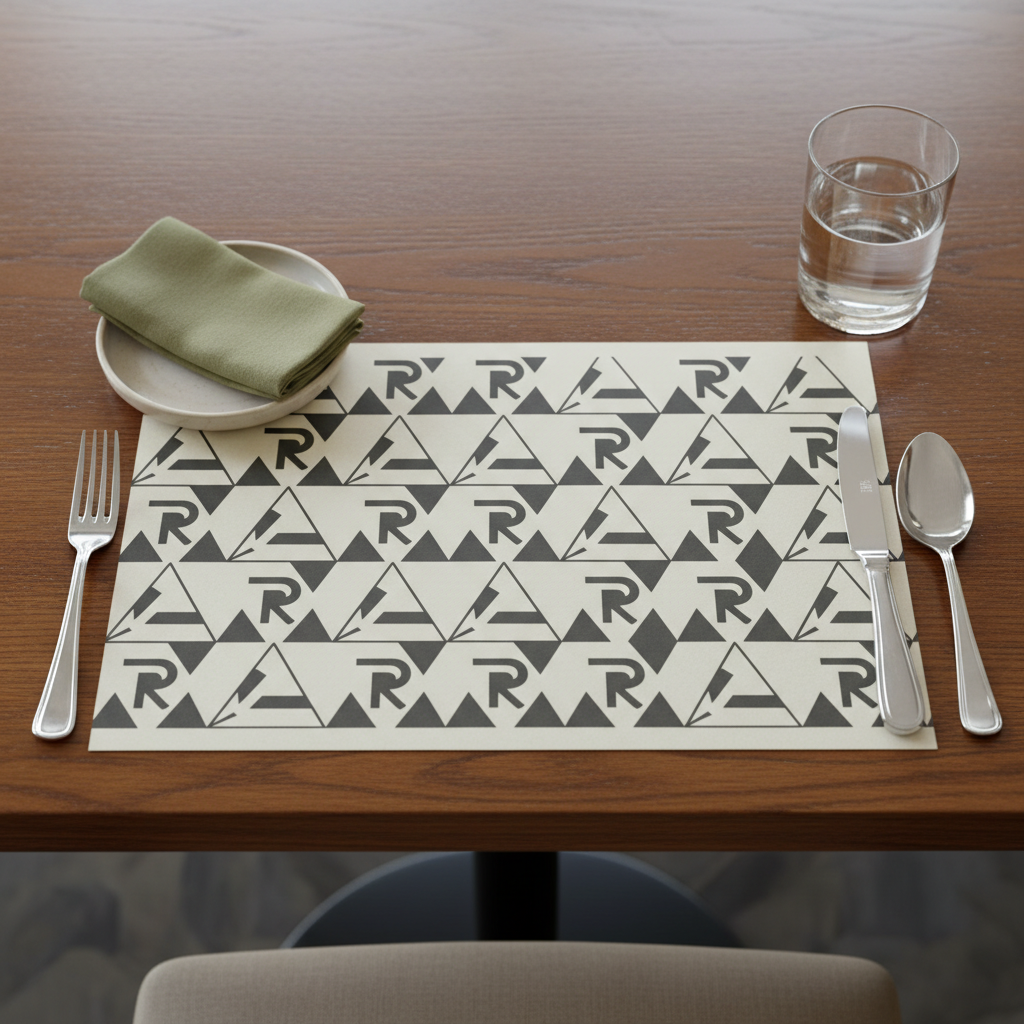
- Marketing Real Estate: A printed placemat is a captive media channel. It can display menus, promotions, QR codes, or brand storytelling directly in front of the customer.
Material Specifications: Choosing the Right Substrate
When ordering wholesale food packaging and table covers, the substrate (material) dictates the price, feel, and performance. Understanding the nuances of paper grades and plastics is essential for writing accurate purchase orders.
1. Offset Paper (Woodfree)
This is the standard for most dining placemats. It has a matte finish that is easy to read and write on (ideal for kids’ menus with puzzles). It absorbs ink well but has low grease resistance unless coated.
- Typical GSM: 60gsm to 100gsm.
- Best Use: Casual dining, breakfast trays, dry food service.
2. Kraft Paper (Brown & White)
Kraft paper offers high tear resistance and a rustic, eco-friendly aesthetic. Brown Kraft is popular with farm-to-table concepts, while White Kraft offers a cleaner look with similar strength.
- Typical GSM: 70gsm to 120gsm.
- Best Use: Steakhouses, burger joints, eco-conscious brands.
3. Greaseproof & Coated Paper
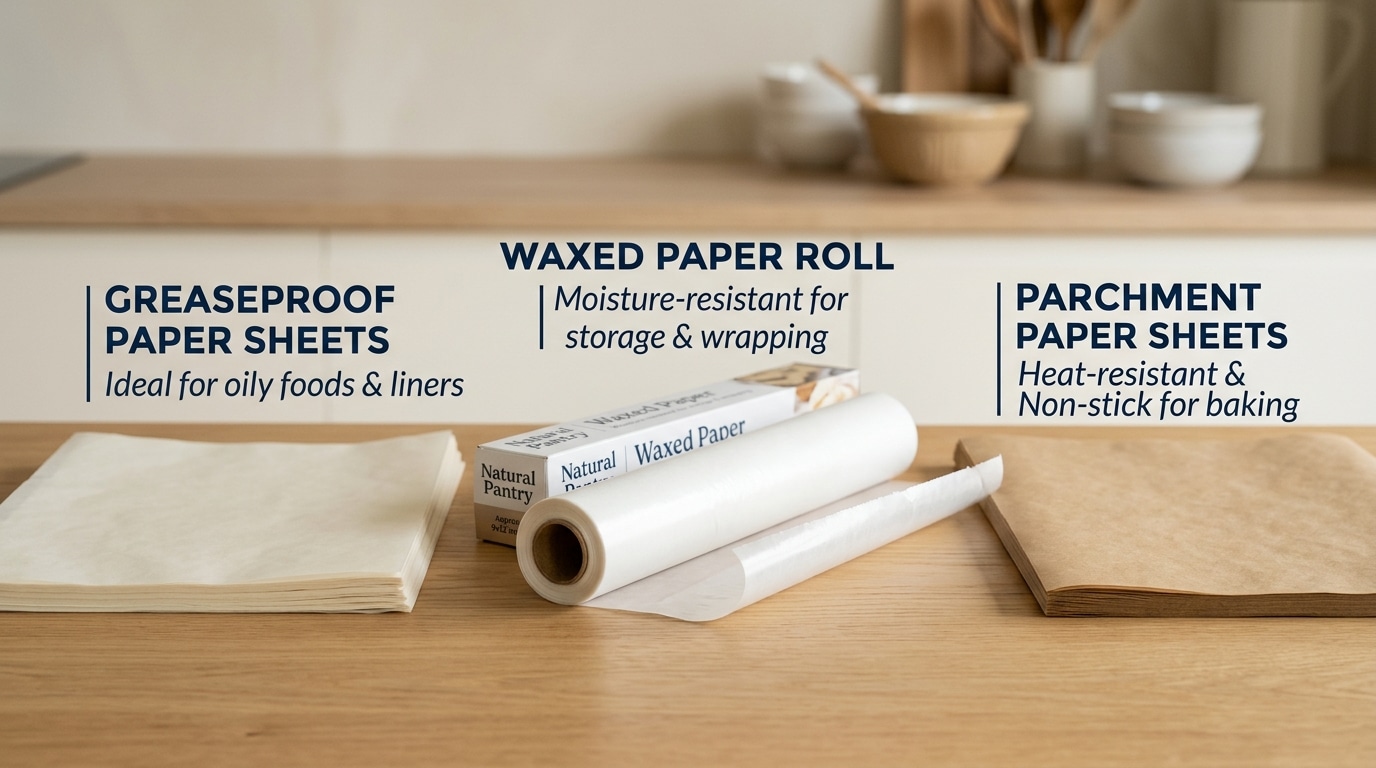
For menus featuring fried foods or heavy sauces, standard paper will stain and become translucent. Greaseproof papers (often treated with a kit-level sizing agent) or PE-coated papers prevent oil soak-through.
- PE Coating: A thin layer of polyethylene (usually 10-15gsm) provides a moisture and grease barrier.
- Best Use: Tray liners for fast food, basket liners, messy dining environments.
4. Non-Woven & Airlaid Materials
For a premium feel that mimics linen, airlaid paper or non-woven polypropylene is used. These are thicker, softer, and more absorbent than standard paper.
- Best Use: Banquet halls, premium catering, airline business class trays.
Printing Technologies for Bulk Orders
The quality of your branding depends heavily on the printing method used by the manufacturer. When sourcing disposable tableware, you will typically encounter two main printing processes.
Flexographic Printing (Flexo)
Flexo is the industry standard for high-volume packaging. It uses flexible relief plates and fast-drying inks. It is cost-effective for large runs and works exceptionally well on rougher surfaces like Kraft paper or non-woven fabrics.
- Pros: Low unit cost for high volumes; water-based inks are common (food safe).
- Cons: Higher initial setup costs (plates); registration may not be as tight as offset for photo-realistic images.
Offset Printing
Offset printing transfers an inked image from a plate to a rubber blanket, then to the paper. It produces sharp, clean images and accurate color reproduction.
- Pros: Superior image quality; gradients and fine text are crisp.
- Cons: Generally more expensive per unit than flexo; slower production speeds for massive rolls.
Food-Safe Inks
Regardless of the method, compliance is non-negotiable. Ensure your supplier uses food-grade inks (often water-based or soy-based) that comply with FDA or EU regulations for indirect food contact. Inks should be low-migration and low-odor to prevent tainting the food experience.
Sizing and Formats
Standardization helps reduce waste and cost, but custom sizes are often necessary for specific table configurations or tray dimensions.
Standard Placemat Sizes
- A3 (approx. 297 x 420 mm): A common standard for generous coverage.
- Tray Sizes: Fast food trays vary. Common dimensions include 10″ x 14″ or 12″ x 16″. Always measure the flat inner surface of your trays before ordering liners.
Tablecloth Formats
- Cut Sheets: Pre-cut squares or rectangles ready to lay. Ideal for formal dining setups.
- Rolls: Continuous rolls (e.g., 100 meters) allow staff to cut to length. This is common for banquet tables or casual seafood boils.
Customization Checklist for Buyers
When you are ready to request a quote for printed tablecloths and placemats, having a complete specification sheet will speed up the process and ensure accuracy.
1. Define the Dimensions
Be precise. “Standard size” can mean different things in different regions. Specify width and length in millimeters or inches. If ordering rolls, specify the core diameter and roll length.
2. Artwork Preparation
Most manufacturers require vector files (AI, PDF, EPS) for logos and text. If you are printing photographic images, ensure they are high resolution (300 DPI minimum at actual size). Define your colors using Pantone (PMS) codes to ensure brand consistency across different substrates.
3. Grease Resistance Level (Kit Level)
If you are buying placemats that will double as food wrappers or tray liners, specify the “Kit Level.” Kit levels range from 1 to 12, indicating resistance to oil penetration. A Kit level of 3–5 is standard for light grease; 7+ is needed for heavy oils.
4. Edge Finish
For placemats, do you want straight cut edges or scalloped edges? Straight cuts are modern and cheaper; scalloped edges offer a classic, decorative look often used in diners or tea rooms.
Ordering & Logistics: MOQ and Lead Times
Wholesale manufacturing operates on economies of scale. Understanding Minimum Order Quantities (MOQ) is crucial for budget planning.
Understanding MOQs
For custom printed items, the MOQ is driven by the machine setup time. Setting up a flexo press takes time and wastes material until the registration is correct.
- Typical MOQ: Expect MOQs starting at 50,000 to 100,000 pieces for custom placemats. For table rolls, it might be measured in total length or weight (e.g., 1 ton of material).
- Price Breaks: Unit costs drop significantly as volume increases. It is often cheaper to order a 6-month supply at once than to order monthly batches.
Lead Times and Shipping
Custom manufacturing involves artwork approval, plate making, production, and shipping. A typical timeline might look like this:
- Design Approval: 2–5 days.
- Plate Making: 5–7 days.
- Production: 10–20 days (depending on volume).
- Shipping: Variable based on destination and method (sea vs. air).
Always factor in an extra buffer for customs clearance when importing international shipments.
Quality Assurance and Testing
Before accepting a full shipment, smart buyers request pre-production samples. However, for high-speed printing, a single “proof” might be digital, which doesn’t show the exact ink absorption of the final press run. Ask for a “press proof” if color accuracy is critical, though this may incur extra costs.
On-site Inspection Checklist:
- Dimension Check: Are the placemats cut to the exact tolerance (+/- 2mm)?
- Rub Test: Does the ink smudge when rubbed with a dry or damp cloth?
- Smell Test: Is there a strong solvent odor? Food-grade packaging should be odorless.
- Count Verification: Is the packaging count accurate (e.g., 1000 sheets per carton)?
Sustainability in Disposable Tableware
Sustainability is no longer optional. Many regions have restrictions on single-use plastics. Fortunately, the industry has evolved.
- FSC Certified Paper: Ensures the wood pulp comes from responsibly managed forests.
- Soy/Vegetable Inks: A renewable alternative to petroleum-based inks.
- Compostability: Ensure that if you market your placemats as compostable, the inks and any coatings (like PLA instead of PE) are also certified compostable.
How to Order from YBJ Packing
Sourcing directly from a manufacturer like YBJ Packing ensures you get factory-direct pricing and full control over customization. Here is how to navigate the process:
- Review the Catalog: Browse the disposable tableware category to see base materials and capabilities.
- Prepare Your Specs: Gather your estimated monthly usage, size requirements, and artwork files.
- Request a Quote: Visit the contact page to submit your inquiry. Be specific about whether you need grease resistance or special coatings.
- Sampling: Ask for samples of similar previous work to evaluate material quality before committing to your own custom run.
Frequently Asked Questions (FAQs)
1. Can I print on both sides of the placemat?
Yes, double-sided printing is possible, but it increases cost. It also requires a thicker paper stock to prevent the image from showing through (opacity issues) and to prevent ink from the bottom side transferring to the table surface.
2. What is the difference between PE coated and uncoated placemats?
Uncoated placemats are standard paper, good for dry foods and writing. PE (Polyethylene) coated placemats have a thin plastic layer that makes them water and grease resistant, ideal for messy foods or tray liners.
3. Do you offer custom die-cut shapes?
Yes, beyond standard rectangles, custom dies can be made to create round, oval, or uniquely shaped placemats to fit specific table designs or branding themes.
4. How do I know if the ink is safe for food contact?
Reputable manufacturers use inks compliant with FDA or EU regulations for indirect food contact. Always request a compliance certificate (such as SGS or FDA reports) if this is a concern for your compliance team.
5. What file format is best for my logo?
Vector formats like .AI, .EPS, or .PDF are best. These allow the design to be scaled infinitely without losing quality. All fonts should be converted to outlines.
6. Can I get a physical sample of my design before full production?
Getting a single printed sample on the actual production press is expensive due to setup costs. Usually, digital proofs are provided for layout approval, and generic physical samples are sent to approve material quality.
7. What is the shelf life of paper placemats?
Paper products have a long shelf life if stored correctly. They should be kept in a cool, dry place away from direct sunlight and humidity to prevent curling or yellowing. PE-coated products are even more stable.
Conclusion
Custom tablecloths and placemats are a high-impact, low-cost marketing tool for any food service business. By understanding the technical aspects—from GSM and coatings to printing methods—you can source products that not only look professional but perform flawlessly in a busy dining environment.
Ready to upgrade your dining experience with custom branding? Check our ordering guide or contact our team today to discuss your wholesale requirements.