

Introduction: Elevating the Dining Experience with Custom Cutlery
In the competitive landscape of food service, every touchpoint matters. While often overlooked, disposable cutlery is a physical extension of your brand that customers interact with directly. For wholesale buyers, restaurant chains, and distributors, sourcing custom plastic cutlery is not just about utility; it is a strategic branding opportunity. Whether it is a heavy-duty fork for a steakhouse takeout or a lightweight spoon for a gelato franchise, the quality, weight, and design of your flatware speak volumes about your operational standards.
This comprehensive guide explores the technical specifications, material choices, and customization possibilities available for B2B buyers. We will delve into the nuances of Polystyrene (PS) versus Polypropylene (PP), the intricacies of custom mold injection versus printed packaging, and the critical logistics of ordering plastic cutlery wholesale. Our goal is to equip procurement officers and business owners with the knowledge to make informed, cost-effective decisions that align with their brand identity.
1. Material Science: PS vs. PP Plastic Cutlery
Choosing the right resin is the first step in the procurement process. The performance of your cutlery—its rigidity, heat resistance, and flexibility—depends entirely on the material used during injection molding.
Polystyrene (PS): The Rigid Choice
Polystyrene is the industry standard for rigid, high-gloss cutlery. It is characterized by its stiffness and glass-like clarity (in its uncolored form). PS cutlery feels solid in the hand, making it a preferred choice for heavy-duty applications where bending is unacceptable.
- Pros: High rigidity, excellent surface gloss, snaps cleanly rather than bending, easy to color match.
- Cons: Lower heat resistance (can deform above 180°F/82°C), brittle under extreme pressure.
- Best For: Cold foods, salads, desserts, and general dining where high stiffness is required.
Polypropylene (PP): The Heat-Resistant Choice
Polypropylene is softer and more flexible than PS. It has a natural translucency and a “waxy” feel. Its defining feature is its high melting point and flexibility.
- Pros: Superior heat resistance (safe up to 250°F/121°C), flexible (will bend before breaking), chemically resistant.
- Cons: Less rigid than PS, slightly duller finish, can feel “flimsy” in lighter weights.
- Best For: Hot soups, stir-fries, heavy entrees, and takeout meals that may be reheated.
2. Weight Classes and Specifications
In the wholesale market, plastic cutlery is categorized by weight and length. Understanding these classifications is crucial for ensuring you don’t overpay for unnecessary weight or under-spec for a premium meal.
Light Weight (Economy)
Typically used for budget-conscious applications like street food, sampling, or school cafeterias. These utensils are designed for functionality at the lowest possible cost.
- Typical Weight: 2g – 3.5g per piece.
- Characteristics: Shorter handle, thinner profile, prone to bending under heavy loads.
Medium Weight (Standard)
The workhorse of the fast-food industry. Balanced enough for most meals without the premium cost of heavy-duty options.
- Typical Weight: 4g – 5.5g per piece.
- Characteristics: Standard length (approx. 6 inches), sufficient rigidity for pasta, rice, and soft meats.
Heavy Weight (Premium)
Designed to mimic the size and feel of silverware. Essential for fast-casual dining, catering, and premium takeout.
- Typical Weight: 6g – 10g+ per piece.
- Characteristics: Full length (7 inches+), reinforced neck, highly rigid. Often available in “heavy duty” PS for maximum stiffness.
3. Customization Options: Printing and Branding
Customization transforms generic white utensils into brand assets. There are three primary ways to brand your disposable tableware: custom colors, direct printing/embossing, and printed packaging.
Option A: Custom Color Matching
Most manufacturers offer standard white, black, and clear options. However, for bulk orders, cutlery can be injection molded in any Pantone (PMS) color to match your brand palette. This is done by mixing masterbatch pigments with the raw resin pellets before molding.
- MOQ Implications: Custom colors usually require higher Minimum Order Quantities (MOQs) to justify the machine purge and setup.
- Consistency: Ensure your supplier uses food-safe pigments and provides samples to verify color accuracy under different lighting conditions.
Option B: Embossing and Debossing (Custom Molds)
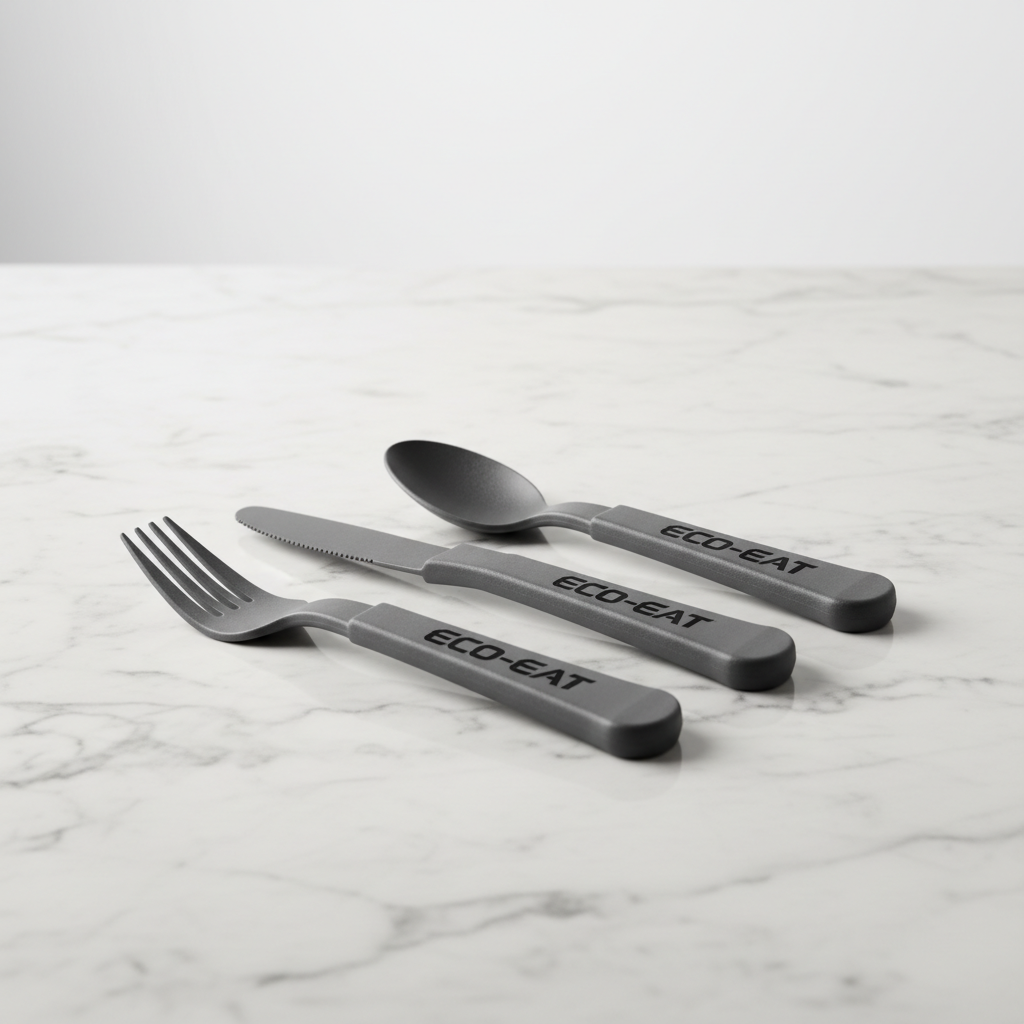
The most permanent branding method is incorporating your logo directly into the mold. This creates a raised (embossed) or recessed (debossed) logo on the handle of the fork, spoon, or knife.
- Process: Requires the creation of a custom mold or a changeable mold insert.
- Cost: Involves a one-time tooling fee. However, the per-unit cost remains similar to generic cutlery once the mold is paid for.
- Durability: The branding never fades or rubs off.
Option C: Pad Printing on Cutlery
Pad printing allows for ink to be applied directly to the handle of the plastic cutlery. While less common due to food safety strictness and cost, it is possible for premium promotional items.
- Constraints: The print area is small (usually the handle). Inks must be food-grade and resistant to abrasion.
- Application: Best for airline catering or high-end event marketing where visual impact is paramount.
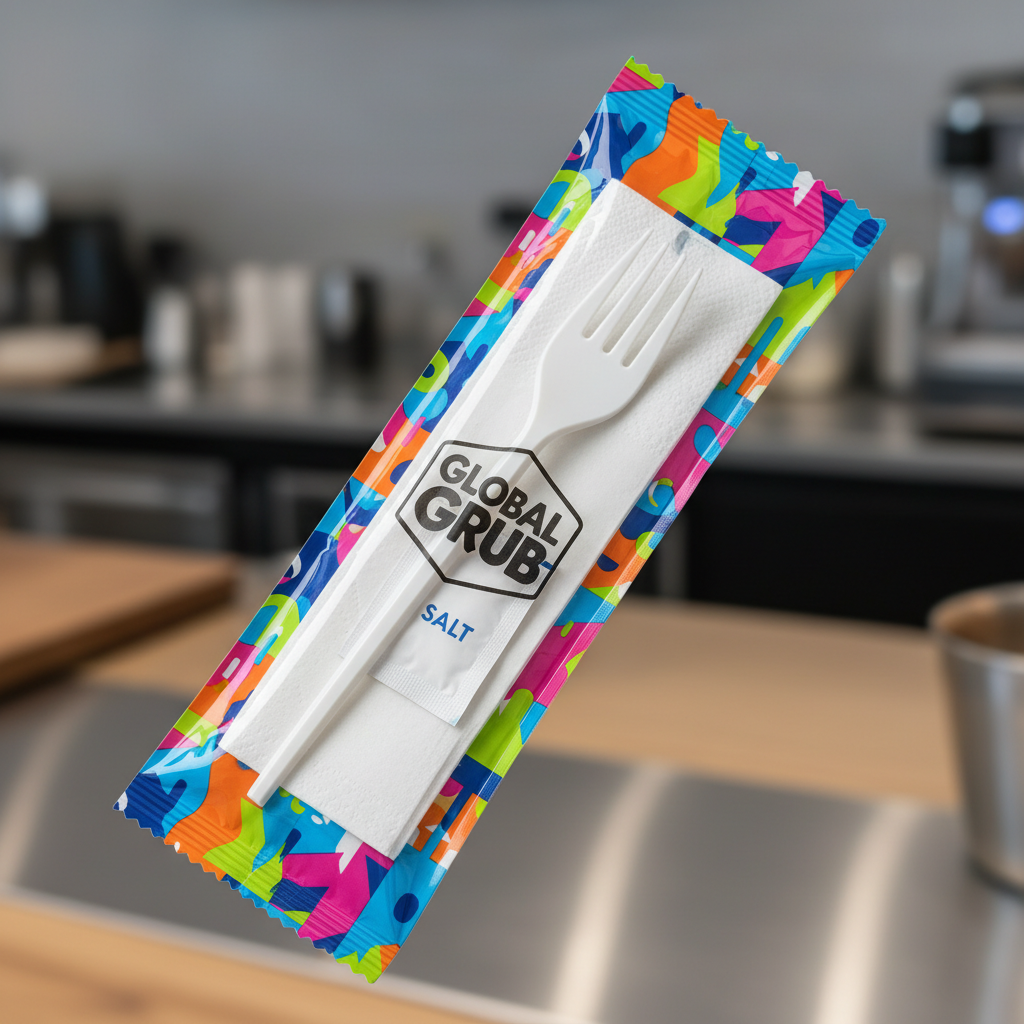
Option D: Printed Wrappers (Cutlery Kits)
For hygiene and branding, individually wrapped cutlery kits are the industry standard. The branding here is applied to the plastic film (BOPP or CPP) wrapper rather than the utensil itself.
- Flexibility: You can print full-color logos, websites, QR codes, and promotional messages on the film.
- Components: Kits can include a fork, knife, spoon, napkin, salt/pepper sachets, and even a wet wipe.
- Technology: Rotogravure or flexographic printing ensures sharp, vibrant details on the packaging film.
4. Cutlery Kits: The Hygienic Solution
Post-pandemic, the demand for pre-packaged cutlery kits has surged. These kits offer a sanitary solution where the end-user is the first person to touch the utensils.
Composition Options
- 2-in-1: Fork + Napkin
- 3-in-1: Fork + Knife + Napkin
- 4-in-1: Fork + Knife + Spoon + Napkin
- 6-in-1: Fork + Knife + Spoon + Napkin + Salt + Pepper
The napkin itself offers another layer of customization. While standard napkins are white 1-ply or 2-ply, custom printed napkins can be included inside the kit for added brand exposure.
5. Manufacturing and Quality Assurance
Understanding the manufacturing process helps in vetting suppliers. Plastic cutlery is produced via Injection Molding.
The Process
- Melting: Plastic pellets (resin) are melted at high temperatures.
- Injection: The molten plastic is injected under high pressure into a steel mold containing cavities shaped like the utensils.
- Cooling: Water channels inside the mold cool the plastic rapidly to solidify it.
- Ejection: The mold opens, and ejector pins push the finished cutlery out.
Quality Checkpoints
When inspecting samples or receiving a shipment, look for these common defects:
- Flash (Burrs): Excess plastic on the edges where the mold halves meet. This is a sign of poor mold maintenance or incorrect pressure settings. It can be sharp and dangerous for users.
- Short Shots: Incomplete utensils where the plastic didn’t fill the mold entirely (e.g., missing fork tines).
- Flow Marks: Visible streaks on the surface indicating uneven cooling or flow.
- Brittleness: Test the cutlery by applying reasonable pressure. A good PS fork should have some resistance before snapping; a PP fork should bend significantly without breaking.
6. Ordering Guide: Logistics and MOQs
Ordering custom wholesale cutlery involves specific logistical considerations. Here is a checklist to streamline your procurement.
Minimum Order Quantities (MOQ)
Because injection molding is a high-volume process, MOQs are generally high.
- Generic Stock: Lower MOQs (often by the carton).
- Custom Kits/Printed Wrappers: Typically require 50,000 to 100,000 sets due to film printing setup.
- Custom Molds: May require commitment to container-load volumes to amortize tooling costs.
Lead Times
- Sampling: 7–14 days for custom molds or printed proofs.
- Production: 20–35 days depending on order volume and factory schedule.
- Shipping: Ocean freight adds 3–6 weeks depending on the destination.
Artwork Files
For printed wrappers or embossed logos, you must provide vector files (AI, PDF, EPS). Ensure all fonts are outlined and Pantone colors are specified to ensure the final product matches your brand guidelines.
7. Common Use Cases and Recommendations
Different food service sectors have distinct requirements. Here is how to match the product to the application:
Fast Food & QSR
Recommendation: Medium-weight PP or PS.
Why: Balance of cost and function. PP is preferred if hot foods (mashed potatoes, gravy) are served. Custom printed wrappers are essential for branding.
Fast Casual & Takeout
Recommendation: Heavy-weight PS or Heavy-duty PP.
Why: Customers paying $15+ for a meal expect utensils that don’t bend. Black or clear PS cutlery offers a premium look.
Catering & Events
Recommendation: Silver-look (metallized) PS cutlery.
Why: Provides the elegance of silverware with the convenience of disposables. Perfect for weddings and corporate events.
Ice Cream & Frozen Yogurt
Recommendation: Heavy-weight PS Spoons or specialized Gelato Spades.
Why: PS is rigid enough to cut through hard-frozen desserts. Custom colors are very popular in this sector.
8. Frequently Asked Questions (FAQ)
1. What is the difference between PS and PP cutlery?
PS (Polystyrene) is rigid and glossy but brittle; it is best for cold or warm foods. PP (Polypropylene) is flexible and has a high heat tolerance, making it ideal for hot foods and safety-conscious environments.
2. Can I print my logo directly on the spoon or fork?
Yes, this can be done via pad printing (ink) or by creating a custom mold that embosses the logo onto the handle. Embossing is more durable and food-safe, while pad printing offers color but can wear off.
3. What is the minimum order for custom printed cutlery kits?
Typically, custom printed films for cutlery kits require an MOQ of roughly 50,000 to 100,000 sets. This covers the setup cost for the printing cylinders used for the wrapper film.
4. Are there eco-friendly alternatives to standard plastic?
Yes. While this guide focuses on traditional plastic, many manufacturers offer PLA (cornstarch-based) or CPLA (crystallized PLA for heat resistance) options. These are compostable in industrial facilities.
5. How do I know if I need heavy-duty or medium-weight cutlery?
If you serve steak, dense proteins, or heavy pastas, you need heavy-duty (approx. 6g+). For salads, rice bowls, or soft desserts, medium-weight (approx. 4g) is usually sufficient.
6. Can I mix and match items in a cutlery kit?
Absolutely. You can specify exactly what goes into the kit: fork only, fork+knife, adding salt/pepper, or including a wet wipe. The wrapper size will be adjusted to fit the contents.
7. How long does it take to get a custom mold made?
Creating a new injection mold typically takes 30–45 days. Once the mold is ready, production speeds are the same as standard cutlery.
8. Is the plastic cutlery recyclable?
PS (Recycling Code 6) and PP (Recycling Code 5) are technically recyclable. However, acceptance depends heavily on local municipal recycling facilities. Always check local regulations.
Conclusion: Sourcing with Confidence
Selecting the right custom plastic cutlery involves balancing aesthetics, functionality, and budget. By understanding the material properties of PS and PP, and leveraging customization options like printed wrappers and embossed handles, you can enhance your brand’s presence at every meal. Whether you are restocking for a nationwide chain or launching a new delivery brand, attention to these details ensures your customers have a seamless dining experience.
Ready to upgrade your food packaging? Visit our contact page to discuss your specifications, or browse our how to order guide to get started with a quote today.