

Introduction: The Hidden Efficiency Layer in Commercial Kitchens
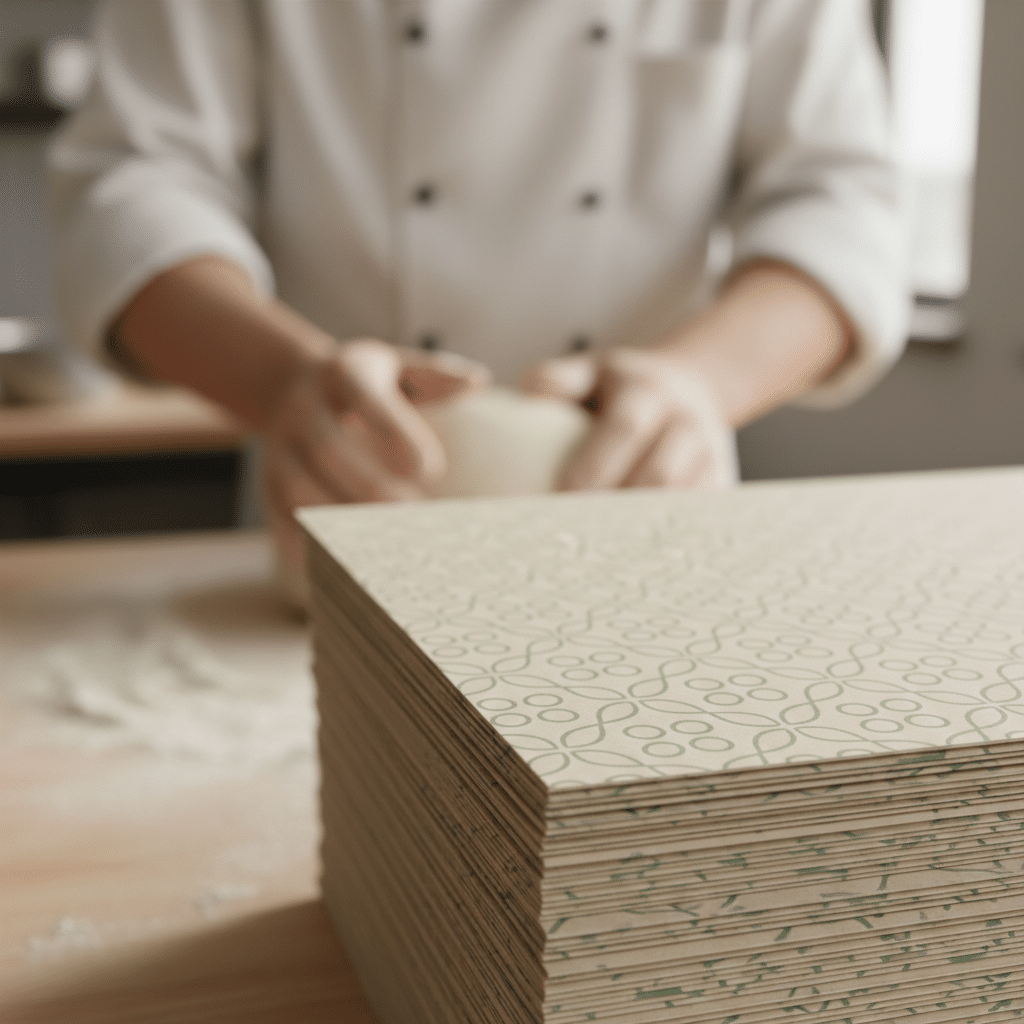
In high-volume food service operations, efficiency and consistency are the cornerstones of profitability. While ovens, mixers, and ingredients often get the most attention during procurement, the humble baking liner plays a critical role in daily throughput. For industrial bakeries, restaurant chains, and food distributors, the right baking liner is not just a consumable accessory; it is a tool that reduces cleanup time, minimizes food waste, and—when customized—serves as a powerful branding vehicle.
Choosing the correct liner involves more than picking a standard sheet size. Procurement managers and operations directors must navigate a matrix of material specifications, coating types, grease resistance levels (Kit levels), and heat tolerances. A liner suited for high-sugar macaroons may fail when used for high-fat roasting. Furthermore, as the demand for sustainable packaging grows, understanding the distinction between compostable, silicone-coated, and Quilon-coated papers is essential for compliance and brand reputation.
This comprehensive guide is designed for B2B buyers. We will dissect the technical specifications of baking liners, explore material differences, and provide a roadmap for ordering custom-printed solutions that align with your operational needs and marketing goals.
1. Core Concepts: What Defines a Commercial Baking Liner?
A baking liner is a barrier material placed between the food product and the cooking surface (pan, tray, or belt). Its primary functions are release (non-stick), protection (keeping the pan clean), and heat transfer management. In a commercial setting, these functions translate directly to labor savings. If a dishwasher spends 30 fewer minutes scrubbing pans per shift, the ROI on high-quality liners is immediate.
Key Performance Indicators (KPIs) for Liners
- Release Capabilities: How easily does the food detach after baking? This is determined by the coating (usually silicone).
- Heat Resistance: The maximum temperature the paper can withstand before becoming brittle or scorching. Standard commercial parchment typically handles up to 425°F–450°F (220°C–230°C).
- Wet Strength: The paper’s ability to hold together when in contact with steam or moisture-heavy batters.
- Grease Resistance: Measured by the "Kit Level," this indicates how long the paper resists oil penetration.
2. Material Deep Dive: Parchment vs. Greaseproof vs. Glassine
Not all baking papers are created equal. Understanding the substrate is the first step in sourcing the right product from a baking liner manufacturer.
Genuine Vegetable Parchment (GVP)
Genuine vegetable parchment is treated with a sulfuric acid bath that fuses the paper fibers into a dense, unified mass. This process gives the paper high density, superior wet strength, and natural grease resistance without chemical additives. However, for non-stick properties, it is often coated with silicone.
- Best for: Heavy-duty baking, en papillote cooking, and applications requiring high wet strength.
- Cost: Premium.
Silicone-Coated Baking Paper (The Industry Standard)
Most "parchment paper" used in commercial kitchens today is actually a refined wood pulp paper coated with food-grade silicone on one or both sides. The silicone provides the release agent. This is the most versatile option for bakeries.
- Double-Sided: Essential for high-speed environments where staff shouldn’t waste time checking which side is up.
- Single-Sided: More economical, but requires training to ensure the coated side faces the food.
Greaseproof Paper
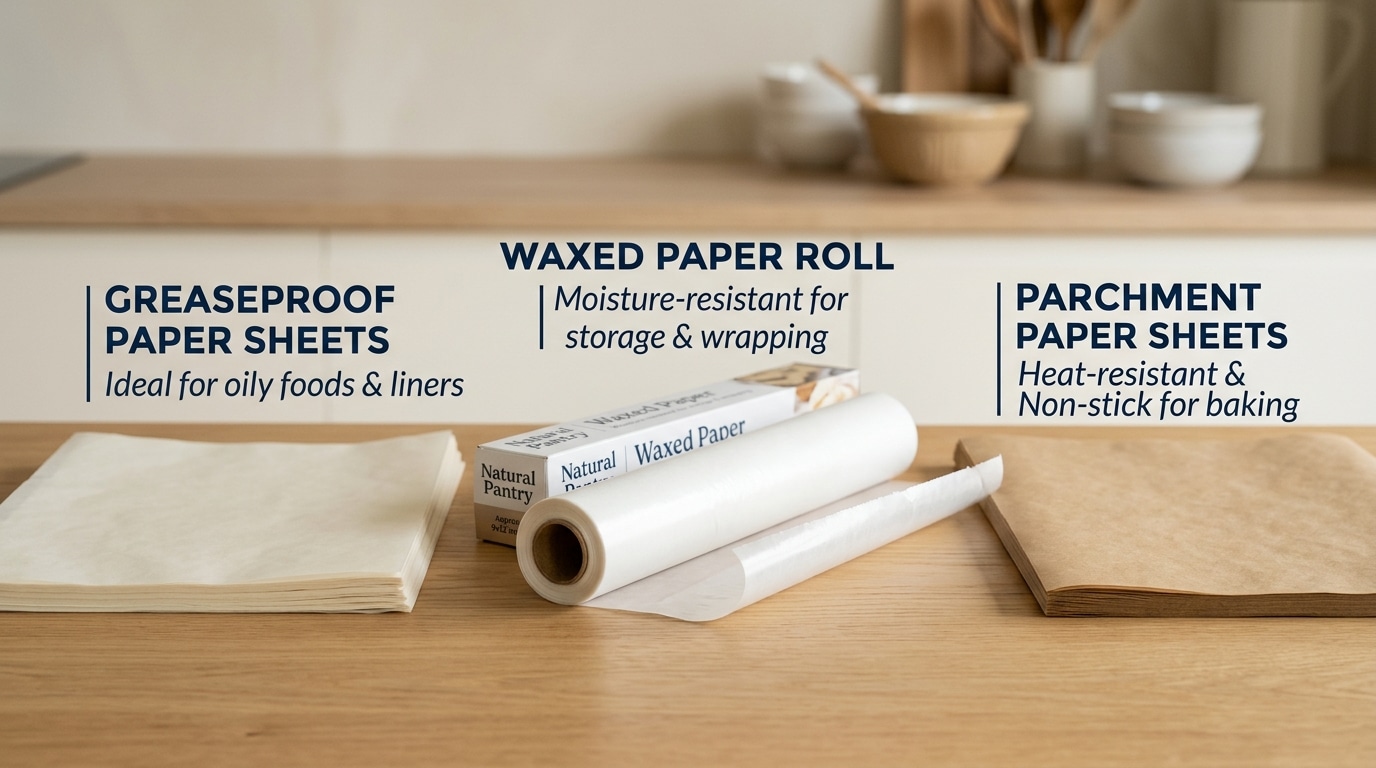
Greaseproof paper is produced by refining the paper stock to reduce porosity. While it resists oil, it is not inherently non-stick or heat-resistant to the same degree as silicone-coated parchment. It is excellent for wrapping and lining baskets but may stick if used for baking sticky items like cookies.
- Best for: Sandwich wraps, basket liners, interleaving between frozen dough.
- Limitation: Lower heat tolerance; not always suitable for oven use unless specified.
Glassine
Glassine is a super-calendered paper, meaning it has been pressed between rollers to create a smooth, glossy finish. It is often used for cupcake liners or confectionery dividers. It is dense and grease-resistant but generally thinner than baking sheets.
3. Technical Specifications and Coatings
When requesting a quote from a supplier, vague requests like "good quality paper" often lead to misalignment. Use specific technical parameters to ensure you get exactly what your operation requires.
Grammage (GSM)
The weight of the paper is measured in Grams per Square Meter (GSM).
- 35–38 GSM: Standard retail quality. Good for light baking.
- 40–45 GSM: Commercial standard. Durable enough for cookies, breads, and roasting vegetables.
- 50+ GSM: Heavy-duty. Required for heavy doughs, high-moisture foods, or multiple reuses in a single shift.
Silicone vs. Quilon Coatings
This is a critical distinction in the B2B market.
- Silicone (Cured): The gold standard for non-stick baking. It is expensive but highly effective. It withstands higher heat and releases the stickiest sugar/egg mixtures.
- Quilon (Chrome Complex): A chemical treatment that provides grease resistance and some release properties. It is generally cheaper than silicone. However, Quilon is less effective for baking sticky items and is falling out of favor in some markets due to preferences for silicone’s inert profile.
Bleached vs. Unbleached (Kraft)
- White (Bleached): The pulp is bleached to remove lignin. It offers a clean, sterile look and provides the best contrast for custom logo printing.
- Brown (Unbleached/Kraft): Retains the natural wood color. It signals "organic" or "natural" to consumers. Note that printing colors may appear darker or less vibrant on a brown background.
4. Size Matters: Formats and Dimensions
Efficiency in the kitchen is often dictated by how well the liner fits the pan. Ill-fitting liners cause product deformation (curled edges) or burnt bottoms.
Standard Sheet Sizes
In the US and international markets, baking pans follow standard dimensions. Your liners should match.
| Pan Type | Pan Dimensions (Approx) | Ideal Liner Size |
|---|---|---|
| Full Sheet Pan | 18" x 26" (46 x 66 cm) | 16.375" x 24.375" |
| Half Sheet Pan | 13" x 18" (33 x 46 cm) | 12.125" x 16.375" |
| Gastronorm (GN 1/1) | 530 x 325 mm | 500 x 300 mm (approx) |
Rolls vs. Sheets
- Pre-Cut Sheets: The preferred choice for high-volume consistent baking (e.g., a factory producing 10,000 cookies a day). It eliminates the labor of cutting and ensures uniformity.
- Rolls (Jumbo or Retail): Better for variable-sized needs or catering operations where pan sizes vary wildly.
Die-Cut Shapes
For specialized manufacturing, such as lining round cake tins, springform pans, or air fryer baskets, custom bakery packaging suppliers can provide die-cut circles or squares with lift tabs. This significantly speeds up the "panning up" process.
5. Custom Printing and Branding
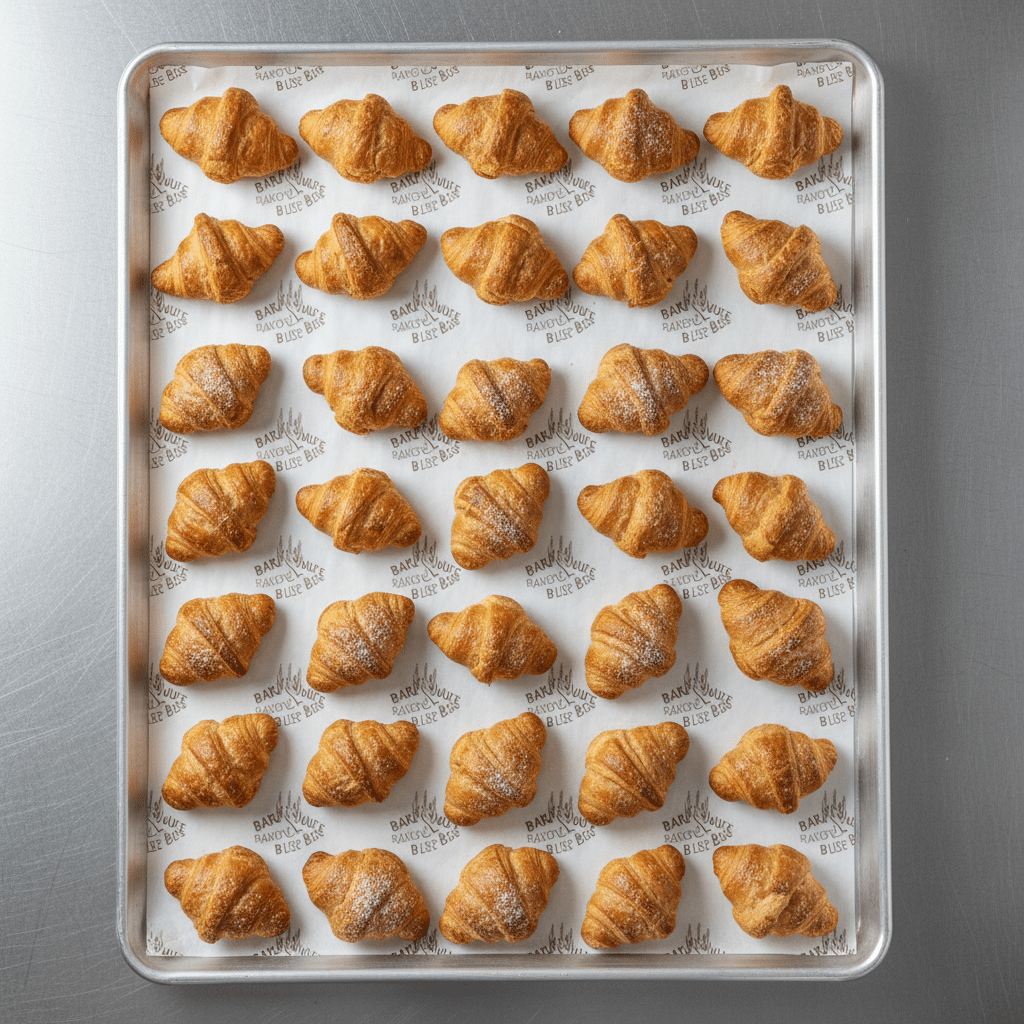
For B2B buyers serving front-of-house operations (cafes, bakeries serving directly to customers), the baking liner is a prime branding estate. Custom printed liners turn a functional item into a marketing tool.
Food Safety in Printing
This is the most critical aspect of custom liners. The ink will be in direct contact with food, often under high heat.
- Water-Based Inks: Commonly used for food packaging. They must be heat-stable so they do not transfer (offset) onto the food or release odors during baking.
- Flexographic Printing: The standard method for printing on baking paper. It allows for repeating patterns (logos, icons) across the roll or sheet.
- Regulation Compliance: Ensure your manufacturer verifies that inks meet FDA or EU food contact standards.
Design Considerations
- Pattern Density: A step-and-repeat logo pattern is standard. Avoid heavy, solid blocks of ink, as high ink coverage can sometimes affect the non-stick properties or smoke at very high temperatures.
- Color Matching: Pantone (PMS) matching is usually possible, but be aware that the translucency of parchment paper affects how the color is perceived.
6. Use Cases and Applications
Different culinary environments require different liner attributes. Here is how to match the product to the application.
High-Sugar Baking (Macarons, Meringues)
Sugar becomes extremely sticky when molten.
Recommendation: Premium double-sided silicone-coated parchment (40+ GSM). Do not use standard greaseproof paper, as the product will fuse to the paper.
Roasting (Meats, Vegetables)
High temperatures and heavy fat release.
Recommendation: High-heat resistant parchment (up to 450°F). Ensure the paper size exceeds the pan slightly to catch grease splatters, reducing pan scrubbing.
Steaming (Dim Sum, Buns)
High moisture environment.
Recommendation: Perforated parchment paper. The holes allow steam circulation while preventing the dough from sticking to the bamboo or steel steamer.
Interleaving (Frozen Dough, Burger Patties)
Separating layers of food to prevent freezing together.
Recommendation: Wax-coated paper (for cold use only) or standard greaseproof paper. Silicone parchment is often overkill for cold storage unless the item will go straight from freezer to oven.
Air Fryers
Rapid hot air circulation.
Recommendation: Perforated liners or bowl-shaped liners made of high-heat parchment. The paper must allow airflow to ensure crisping.
7. Manufacturing and Quality Control
When sourcing wholesale baking liners, understanding the manufacturing process helps in auditing suppliers.
The Production Line
- Pulping: Wood pulp is processed. For food grade, virgin pulp is mandatory (no recycled content due to contamination risks).
- Coating: The paper web passes through a silicone bath and is cured in ovens.
- Printing: If custom, the paper runs through flexo presses.
- Slitting/Sheeting: Large master rolls are cut into specific sheet sizes.
- Packaging: Sheets are counted and boxed.
Quality Red Flags
- Curling: If the paper curls excessively when removed from the box, the moisture balance during manufacturing was incorrect.
- Silicone Transfer: If you rub the paper and silicone flakes off, the curing process was defective.
- Odor: Baking paper should be odorless. A chemical smell upon heating indicates poor quality ink or coating agents.
8. Strategic Buying Guide
Ready to place an order? Here is a checklist to ensure a smooth procurement process.
Defining Your Requirements
Before contacting a supplier, define:
- Target Temperature: What is your max oven temp?
- Usage Cycle: Single use or multi-use (2-3 times)?
- Product Type: High fat, high sugar, or high moisture?
- Dimensions: Exact pan size.
MOQ (Minimum Order Quantity)
For custom printed baking liners, MOQs are higher than plain stock. Manufacturers need to justify the setup cost of printing plates.
- Plain Stock: Usually sold by the carton (e.g., 500 or 1,000 sheets).
- Custom Print: MOQs often start at 50,000 sheets or a specific tonnage of paper.
Sampling
Always request a sample before a full production run. Test the sample in your actual ovens with your actual recipes. A liner that works for cookies might fail with pretzels.
Lead Times and Logistics
Custom manufacturing takes time.
- Artwork Approval: 3–5 days.
- Plate Making: 5–7 days.
- Production: 15–25 days depending on volume.
- Shipping: Factor in sea freight times for international orders. Baking paper is heavy; palletization must be robust to prevent crushed corners.
9. Troubleshooting Common Issues
Even with high-quality paper, issues can arise. Here is how to diagnose them.
- Paper Burning/Charring: The oven temperature exceeds the paper’s rating, or the paper is touching the heating elements/walls of the oven. Ensure the liner fits the pan properly.
- Product Sticking: You may be using greaseproof paper instead of silicone parchment, or the silicone coating is too thin (low GSM). Switch to a double-coated premium sheet.
- Smoke Generation: Excess flour or grease on the exposed parts of the paper can burn. Or, the paper quality is low.
10. Frequently Asked Questions (FAQ)
Q1: Can baking liners be composted?
Many silicone-coated papers are compostable in industrial facilities, but it depends on the specific certification of the manufacturer. Always check for compostability standards (like EN 13432) if sustainability is a priority.
Q2: What is the difference between wax paper and parchment paper?
Wax paper is coated with paraffin or soybean wax. It will melt and smoke in the oven. It is for cold storage only. Parchment paper is silicone-coated and heat-resistant. Never use wax paper for baking.
Q3: Can I reuse baking liners?
High-quality parchment (40+ GSM) can often be reused 2–4 times for dry baking (like cookies) within the same baking cycle. However, for hygiene and structural integrity, single-use is standard in most commercial kitchens.
Q4: How do I know if the ink is safe?
Ask for the Material Safety Data Sheet (MSDS) or compliance certificates from the manufacturer. Reputable suppliers use water-based, food-grade inks specifically formulated for high-heat applications.
Q5: Is there a difference between white and brown parchment performance?
Functionally, they are very similar if the GSM and silicone coating are identical. The choice is primarily aesthetic. Brown (unbleached) is preferred for eco-centric brands, while white is preferred for color accuracy in printing.
Q6: What is Quilon and should I avoid it?
Quilon is a chemical release agent. While approved for food use in many jurisdictions, silicone is generally considered superior for non-stick performance and is more widely accepted in strict markets. If you need premium non-stick, specify silicone.
Conclusion
Selecting the right baking liner is a balance of performance, cost, and brand presentation. For B2B buyers, the move from generic commodity paper to a specified, potentially custom-branded solution can yield operational efficiencies and marketing wins. Whether you need high-heat resistance for roasting or delicate release for pastries, understanding the specs ensures you buy right the first time.
At YBJ Packing, we specialize in helping businesses find the perfect balance between durability and design. From bulk wholesale rolls to custom-printed sheets that elevate your brand, our team is ready to guide you through the specifications.
Ready to upgrade your bakery packaging? Request a quote today or contact our engineering team to discuss your custom requirements.