

Introduction: Beyond the Basic Wrapper
For industrial bakeries, food service chains, and wholesale distributors, the humble baking cup is more than just a piece of paper—it is a critical component of the manufacturing process, a tool for portion control, and a primary vehicle for brand visibility. Choosing the wrong baking cup can lead to production line jams, poor product release, unsightly grease spotting, or a negative customer experience. Conversely, the right specification enhances efficiency, ensures consistent baking results, and elevates the final presentation.
This comprehensive buyer’s guide explores the technical landscape of commercial baking cups. We will break down material substrates, structural styles, sizing standards, and customization options to help procurement managers and bakery engineers make informed purchasing decisions. Whether you are scaling up muffin production or sourcing premium wrappers for artisanal cupcakes, understanding these variables is essential.
Understanding Baking Cup Materials: The Foundation of Quality
The performance of a baking cup is dictated primarily by its raw material. In the B2B sector, “paper” is a broad term that covers several distinct grades of substrate, each with specific heat resistance, grease resistance, and release properties. Selecting the correct material prevents issues such as the paper sticking to the batter or the cup collapsing during the bake.
Standard Greaseproof Paper
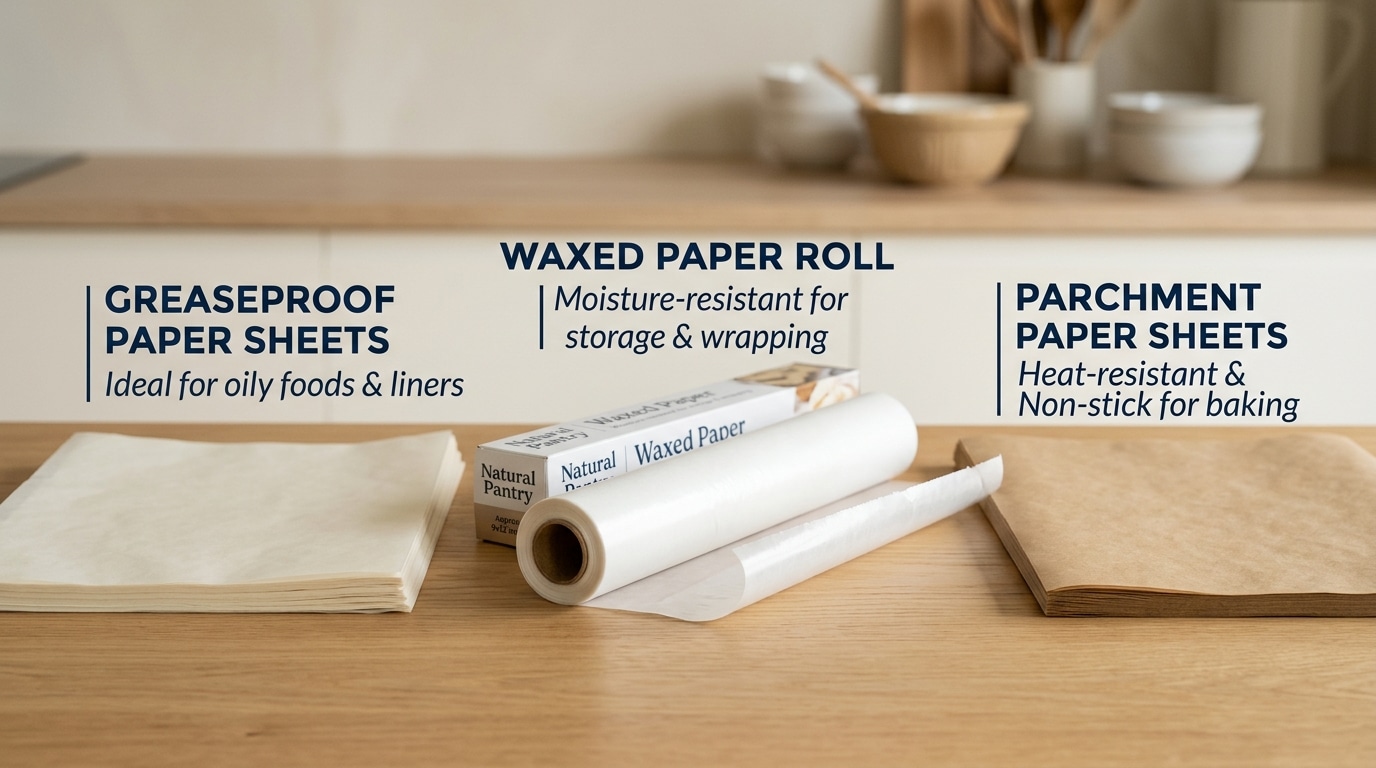
Standard greaseproof paper is the workhorse of the industry. It is treated to resist oil penetration, ensuring that the butter or oil in the batter does not immediately soak through and render the cup translucent or messy.
- Best for: Standard muffins, cupcakes, and high-volume baking where cost-efficiency is a priority.
- Key Characteristic: Moderate grease resistance (often rated by Kit levels). It allows the cake to breathe while maintaining structural integrity.
- Trade-off: For extremely high-fat batters, standard greaseproof may eventually show some spotting, which is why testing samples with your specific recipe is recommended.
Glassine Paper
Glassine is a super-calendered paper, meaning it has been passed through high-pressure rollers to create a very smooth, dense, and glossy surface. It is naturally grease-resistant due to this mechanical process rather than chemical coatings alone.
Glassine offers a premium look and feel. It is often thinner and more translucent than standard kraft options but provides excellent release properties. It is widely used for confectionery and high-end bakery items where presentation is paramount. When you see custom baking cups with intricate prints, they are frequently printed on glassine because the smooth surface holds fine detail well.
Silicone-Coated Parchment
For the most demanding applications, silicone-coated parchment is the gold standard. This material features a thin layer of silicone on one or both sides, providing the ultimate “easy release.”
- Non-Stick Performance: Ideal for sticky batters (like gluten-free mixes or recipes high in sugar/fruit) that tend to adhere to standard paper.
- Heat Resistance: typically withstands higher temperatures (often up to 220°C/428°F) without becoming brittle.
- Usage: Essential for automated de-nesting machines where cups must separate easily from the stack without jamming.
Aluminum Foil & Laminated Options
Foil baking cups usually consist of an outer layer of aluminum foil laminated to an inner layer of food-grade paper. This structure offers two distinct advantages: structural rigidity and total grease barrier.
Foil cups can often stand independently on a baking sheet (depending on the thickness), reducing the need for metal muffin pans in some operations. Furthermore, the foil prevents any grease transfer to the outside, ensuring the color of the cup remains vibrant and unaffected by the baking process.
Structural Styles: Matching the Cup to the Product
The shape and fold of the cup influence not only the aesthetics but also the baking dynamics and packaging efficiency.
Standard Fluted Cups
The classic round cup with vertical flutes (crimps). The fluting adds structural strength, allowing the paper to hold the batter’s weight. These are compatible with standard muffin tins and are the most cost-effective option for mass production. The density of the flutes can vary; tighter fluting generally offers a more rigid sidewall.
Tulip Baking Cups
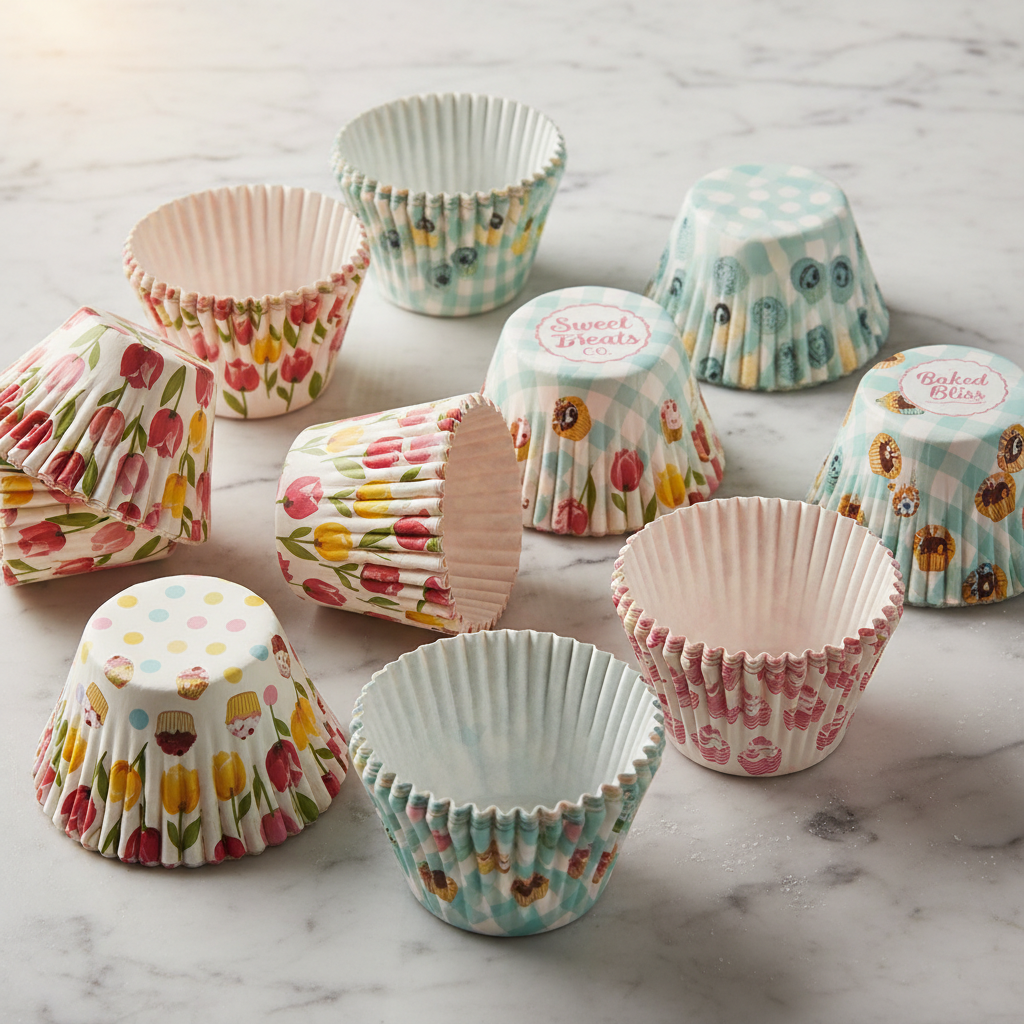
Tulip cups are formed from a single square sheet of greaseproof paper pressed into a mold to create four distinct peaks, resembling a tulip flower.
- Aesthetic Appeal: They offer an artisanal, “bakery-fresh” look that commands a higher price point in retail settings.
- Functionality: The high peaks allow for generous batter portions and muffin tops without overflow. They are excellent for holding toppings like crumble or berries in place.
- Sourcing: Many buyers source these as wholesale bakery packaging solutions to upgrade their product line’s visual appeal without changing the recipe.
Lotus / Petal Cups
Similar to tulip cups but with a more uniform, rounded petal arrangement. These provide a modern, elegant presentation often used for premium cupcakes or wedding favors. The outward flare of the petals displays the frosting and decoration effectively.
Rolled Rim & Muffin Wraps
Rolled rim cups are rigid enough to stand alone. They have a reinforced upper edge (rim) that maintains a perfect circle. These are often used for heavy fruitcakes or panettones. Muffin wraps, on the other hand, are often supplied flat or semi-formed and require specific machinery or manual assembly, offering a rustic, straight-walled look.
Sizing Guide: Base, Wall, and Volume
One of the most common errors in procurement is ordering the wrong size. In the baking industry, dimensions are typically expressed as Base Diameter x Wall Height.
How to Measure Correctly
To ensure compatibility with your baking pans, measure the bottom diameter of your muffin tin cavity. The base of the baking cup should match this measurement exactly or be slightly smaller (by 1-2mm) to drop in easily. If the cup base is larger than the pan floor, it will wrinkle and deform the cake.
Wall Height determines the capacity. A taller wall allows for more batter but requires a deeper pan or a stiff enough paper to stand above the pan rim.
Common Commercial Sizes
- Mini/Petite: Base ~35mm. Used for bite-sized treats and truffles.
- Standard Cupcake: Base ~50mm (2 inches). Wall ~30-35mm. The industry standard for retail cupcakes.
- Jumbo/Texas Muffin: Base ~60-70mm. Wall ~45-55mm. Used for large coffee-shop style muffins.
Custom Sizing for Automated Lines
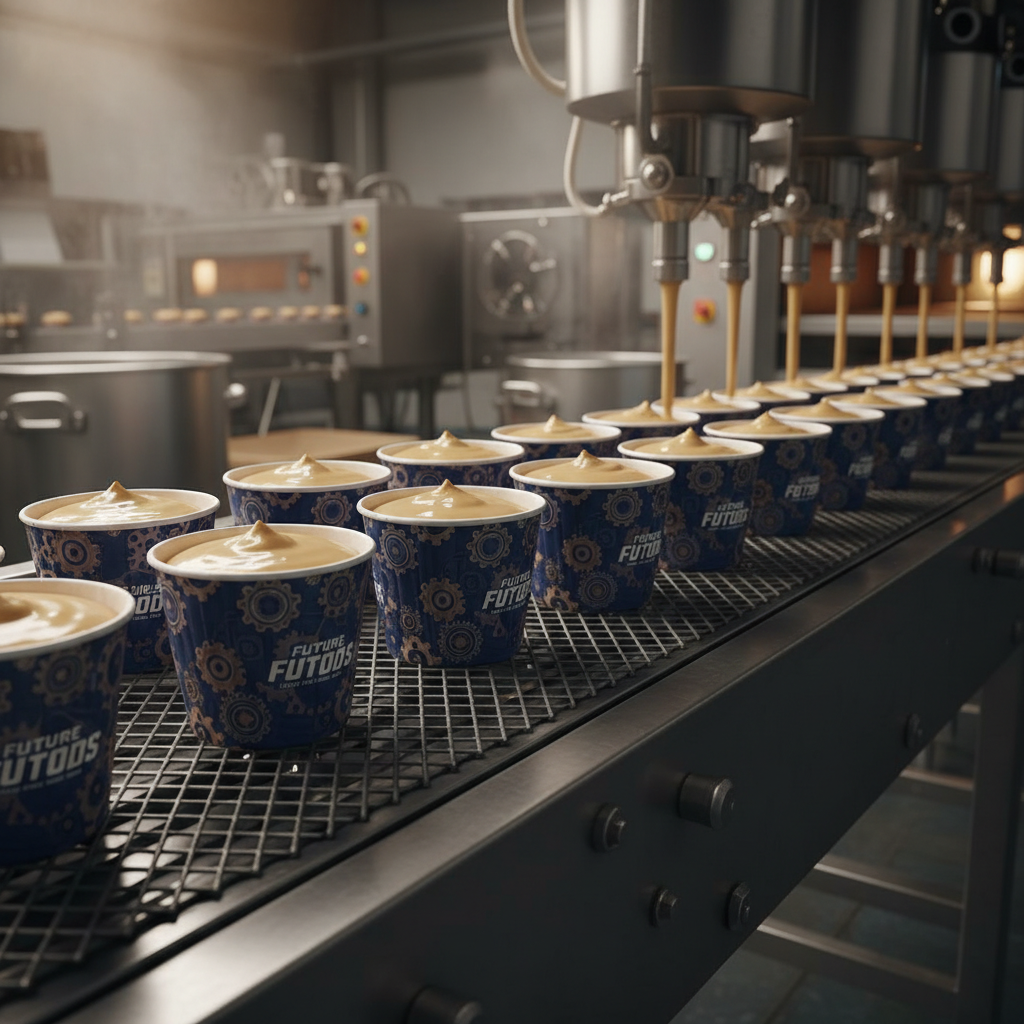
For industrial facilities using automated depositors and de-nesters, standard sizes may not suffice. Custom sizing ensures the cup fits the specific tolerance of the automation equipment. When you contact our team for custom orders, be prepared to provide the exact specifications of your baking molds to ensure a perfect fit.
Technical Specifications & Performance
Beyond size and shape, technical performance specs are vital for quality assurance managers.
Grease Resistance (Kit Levels)
Grease resistance is often measured in “Kit” levels (e.g., Kit 3, Kit 5, Kit 7). A higher Kit number indicates higher resistance to oil penetration. For recipes with high butter content or oil-based carrot cakes, a high Kit rating (or silicone coating) is necessary to prevent the paper from becoming translucent and oily to the touch.
Heat Tolerance & Oven Safety
Most food-grade baking papers are rated for temperatures up to 220°C (428°F). However, dwell time matters. A product baked for 15 minutes at 200°C puts less stress on the paper than a fruitcake baked for 2 hours at 160°C. Always verify the maximum temperature and time duration with your supplier, especially for dark-colored papers which absorb more heat.
“Slip” and Separation for De-nesting
“Slip” refers to how easily cups separate from one another in a stack. In a high-speed bakery, if the suction between cups is too strong, the de-nesting machine will pull multiple cups at once or fail to pull any, causing line stoppages. Manufacturers control slip through paper texture and embossing patterns. If you use automation, requesting a sample specifically to test de-nesting performance is critical.
Branding & Printing: Turning Waste into Advertising
Printed baking cups are a cost-effective marketing tool. Since the customer interacts directly with the wrapper while eating, it is prime real estate for logos, slogans, or QR codes.
Food-Safe Inks & Regulations
Safety is non-negotiable. Printing inks used on baking cups must be food-grade and heat-stable. They must not off-gas or migrate into the food during baking. Water-based or soy-based inks are commonly used. Suppliers should be able to provide compliance documentation regarding heavy metals and chemical migration.
Design Considerations for Fluted Surfaces
Designing for a fluted cup is different from designing for a flat box.
- Distortion: The flutes will break up continuous lines. Bold, simple logos or repeating patterns (step-and-repeat) work best.
- Placement: Important text should be positioned on the wall, not the base (which gets covered by the cake) or the very rim (which gets crimped).
- Background Color: Full-flood background colors can look striking but ensure the ink coverage doesn’t affect the paper’s release properties or smell during baking.
Use Cases: From Oven to Display
High-Volume Industrial Baking
Priority: Machineability and consistency.
Choice: Standard white or kraft fluted cups with high slip properties. Silicone coating is preferred to minimize product loss (cake sticking to paper).
Retail & Coffee Shop Display
Priority: Visual impact and perceived value.
Choice: Tulip cups or Lotus cups in dark brown or branded prints. The irregular peaks of a tulip cup suggest a handmade, premium product.
Confectionery & Truffles
Priority: Grease resistance and size precision.
Choice: Small glassine cups. These are rarely baked in; instead, finished chocolates are placed inside. The paper must prevent cocoa butter from staining the packaging.
Procurement Checklist: How to Order Wholesale
Ready to source? Here is a checklist to streamline the process when working with a manufacturer.
MOQ (Minimum Order Quantities)
Custom printing usually requires higher MOQs due to the setup costs of printing plates. While stock white cups might be available by the carton, custom branded cups often require runs of 50,000 to 100,000 units depending on the size. Clarify these thresholds early in the conversation.
Lead Times & Logistics
Custom manufacturing involves artwork approval, plate making, production, and shipping. For international orders, factor in 4-8 weeks for sea freight on top of production time. Rush orders via air freight are possible but significantly more expensive. Plan your seasonal inventory (e.g., Christmas or Valentine’s designs) at least 3-4 months in advance.
Quality Assurance & Sampling
Before committing to a full container load, request samples. Test them in your specific ovens with your specific batter. Check for:
- Color fastness (does the dye bleed?).
- Release (does the cake come out clean?).
- Fit (does it sit flat in your pans?).
For details on how to initiate this process, review our ordering guide.
Frequently Asked Questions (FAQ)
1. Can baking cups be used in air fryers or microwaves?
Yes, paper baking cups are generally microwave safe. For air fryers, they are safe provided they are weighed down by batter; loose paper can fly into the heating element and burn. Always check the specific temperature rating.
2. What is the difference between “greaseproof” and “parchment”?
Greaseproof paper resists oil but is not necessarily non-stick. Parchment (especially silicone-coated) is non-stick and heat resistant. For very sticky cakes, parchment is superior.
3. Do you offer eco-friendly or compostable options?
Many baking cups are made from unbleached kraft paper which is biodegradable. However, verify if the coatings (like silicone or quilon) meet your local compostability standards.
4. How do I choose the right size for my muffin pan?
Measure the bottom diameter of the pan’s cavity. The cup’s base diameter should be identical or 1-2mm smaller. Do not guess; a mismatch leads to crumpled cups.
5. What file format is needed for custom printing?
Vector files (AI, EPS, or PDF) are required for crisp printing. Raster images (JPG, PNG) often result in blurry text when printed on textured paper.
6. Why do my baking cups pull away from the muffins after baking?
This is often due to moisture imbalance. If muffins are cooled in the pan too long, steam gets trapped. Alternatively, under-baking can cause shrinkage. It is rarely a defect in the paper itself, though paper permeability plays a role.
Conclusion & Next Steps
Selecting the right baking cup is a balance of engineering and aesthetics. Whether you need a high-performance silicone-coated parchment for an automated line or a custom-printed tulip cup to build your brand identity, the details matter. By defining your requirements regarding material, size, and volume early, you can secure a supply chain that supports your bakery’s efficiency and growth.
Ready to upgrade your bakery packaging? Request a quote today to discuss your specifications, request samples, and explore our custom printing capabilities.