

In the competitive bakery and food service industry, packaging does more than just transport product—it is the first tangible touchpoint between your brand and the customer. For commercial bakeries, distributors, and large-scale food service operations, sourcing custom cupcake boxes is a strategic decision that impacts logistics, product integrity, and brand perception.
Choosing the right packaging partner involves navigating complex specifications, from paperboard grades (GSM) and grease-resistant coatings to print finishes and structural engineering. A box that collapses during transit or stains from buttercream grease can damage vendor relationships and increase waste. Conversely, a well-engineered, high-quality printed box enhances value and ensures the product arrives in pristine condition.
This comprehensive guide explores the technical and commercial aspects of ordering custom cupcake boxes at a wholesale level. We will cover material specifications, printing technologies, insert design, and essential tips for streamlining your procurement process.
1. The Strategic Value of Custom Packaging in B2B
For wholesale buyers, packaging serves three critical functions: protection, preservation, and promotion. Unlike generic stock packaging, custom solutions allow you to tailor the box dimensions to your specific cupcake size—whether mini, standard, or jumbo—minimizing movement and damage.
Furthermore, custom printing turns every delivered unit into a marketing asset. For distributors supplying cafes and supermarkets, branded packaging reinforces consistency. For direct-to-consumer brands, unboxing is a key part of the customer experience. Investing in professional-grade bakery packaging ensures that the quality of the packaging matches the quality of the confectionery inside.
2. Material Specifications: Choosing the Right Substrate
The foundation of any high-quality cupcake box is the paperboard. Selecting the wrong material can lead to flimsy boxes that crush under stacking weight. Here are the standard materials used in professional manufacturing:
Ivory Board / SBS (Solid Bleached Sulfate)
This is the industry standard for premium retail packaging. It is a virgin paper pulp that is white throughout, offering a smooth surface excellent for high-resolution printing.
- Typical Weight: 300gsm to 400gsm.
- Pros: Superior print quality, clean look, rigid feel.
- Best For: Retail packs (2, 4, or 6 cupcakes), gift boxes, and brands prioritizing high-end aesthetics.
Kraft Paper (Virgin or Recycled)
Kraft paper offers a natural, eco-friendly aesthetic often associated with organic or artisanal brands. It is available in brown/brown or brown/white variations.
- Typical Weight: 250gsm to 350gsm.
- Pros: High tear resistance, eco-friendly perception, cost-effective.
- Best For: Eco-conscious brands, rustic bakery themes, and high-volume wholesale orders.
Corrugated Board (E-Flute or F-Flute)
For larger quantities (12-pack or 24-pack) or shipping boxes, standard cardstock may not provide enough structural support. Micro-flute corrugated board adds a layer of cushioning and rigidity.
- Structure: A fluted sheet sandwiched between two flat liners.
- Pros: Excellent stacking strength, impact protection.
- Best For: Large capacity boxes, shipping cartons, and heavy products.
3. Grease Resistance and Food Safety Coatings
Cupcakes are rich in butter, oils, and moisture. Standard paper is porous and will absorb these fats, leading to unsightly grease spots that ruin the packaging’s appearance. In a B2B context, this is a quality control failure.
PE (Polyethylene) Coating
A thin layer of food-grade plastic is laminated onto the interior of the box. This provides a robust barrier against moisture and grease.
- Application: Essential for boxes where the cake directly touches the paper.
- Trade-off: Can make recycling more complex depending on local facilities, though options exist.
Water-Based Barrier Coatings
For brands seeking plastic-free solutions, water-based coatings offer moderate grease resistance. While not as impermeable as PE, they are often sufficient for cupcakes sitting in liners and are fully repulpable.
Food Grade Compliance
Regardless of the coating, all materials must meet food contact safety standards. Ensure your manufacturer uses food-grade paper stocks and low-migration inks to prevent chemical transfer to the food product.
4. Structural Design: Inserts and Box Styles
The structural engineering of a cupcake box is defined by how well it holds the product in place. The “insert” is arguably more important than the box itself.
The Importance of Custom Inserts
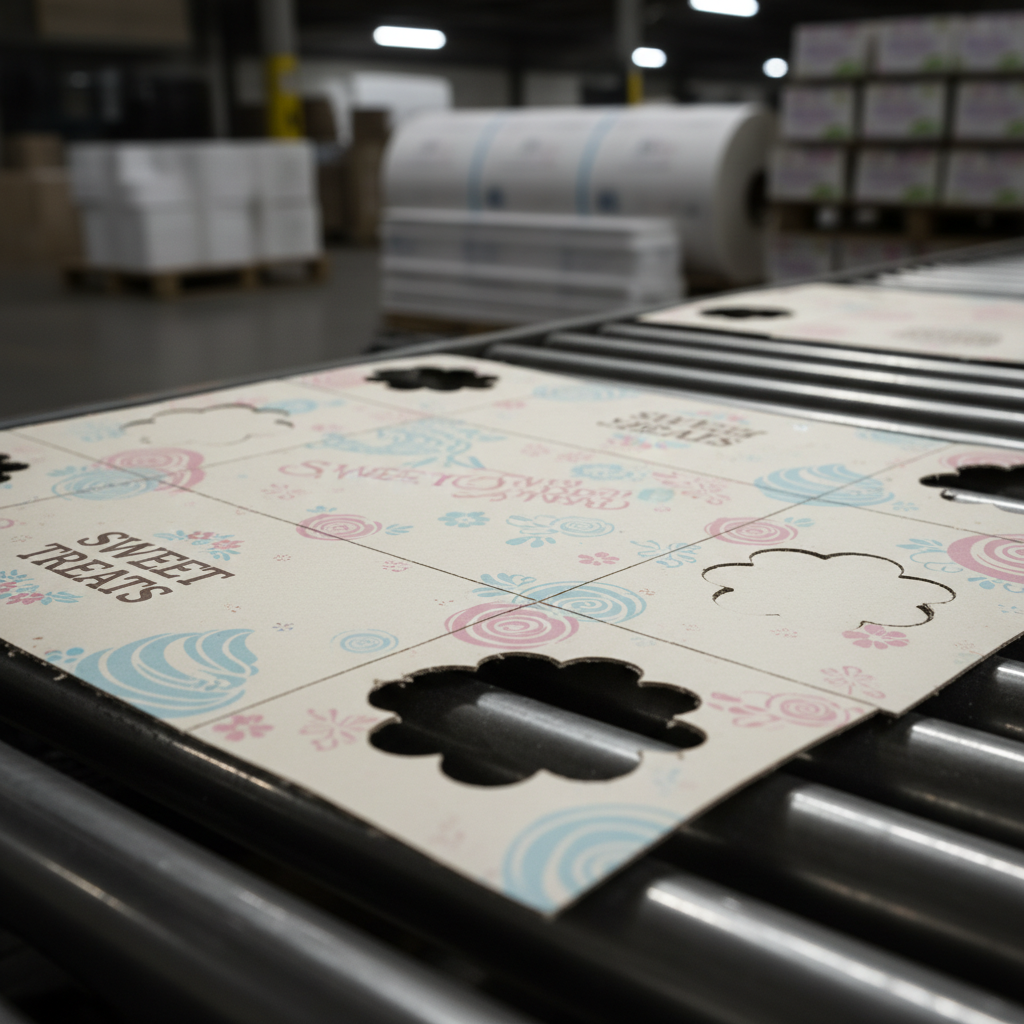
An insert prevents cupcakes from tipping over or colliding during transit. Standard inserts have holes cut to specific diameters. When ordering wholesale, you can customize these diameters:
- Mini Cupcakes: Typically 3.8cm – 4.5cm diameter holes.
- Standard Cupcakes: Typically 6cm – 6.5cm diameter holes.
- Jumbo Cupcakes: Typically 7cm – 8cm diameter holes.
Pro Tip: Request finger tabs (small semi-circular cuts) around the insert holes. This allows the end-user to remove the cupcake without digging their fingers into the frosting.
Common Box Styles
- Auto-Lock Bottom: Pre-glued bottom that pops open instantly. Best for high-volume assembly lines as it saves manual labor time.
- Tuck Top (Reverse or Straight): Standard retail style. Economical but requires manual folding.
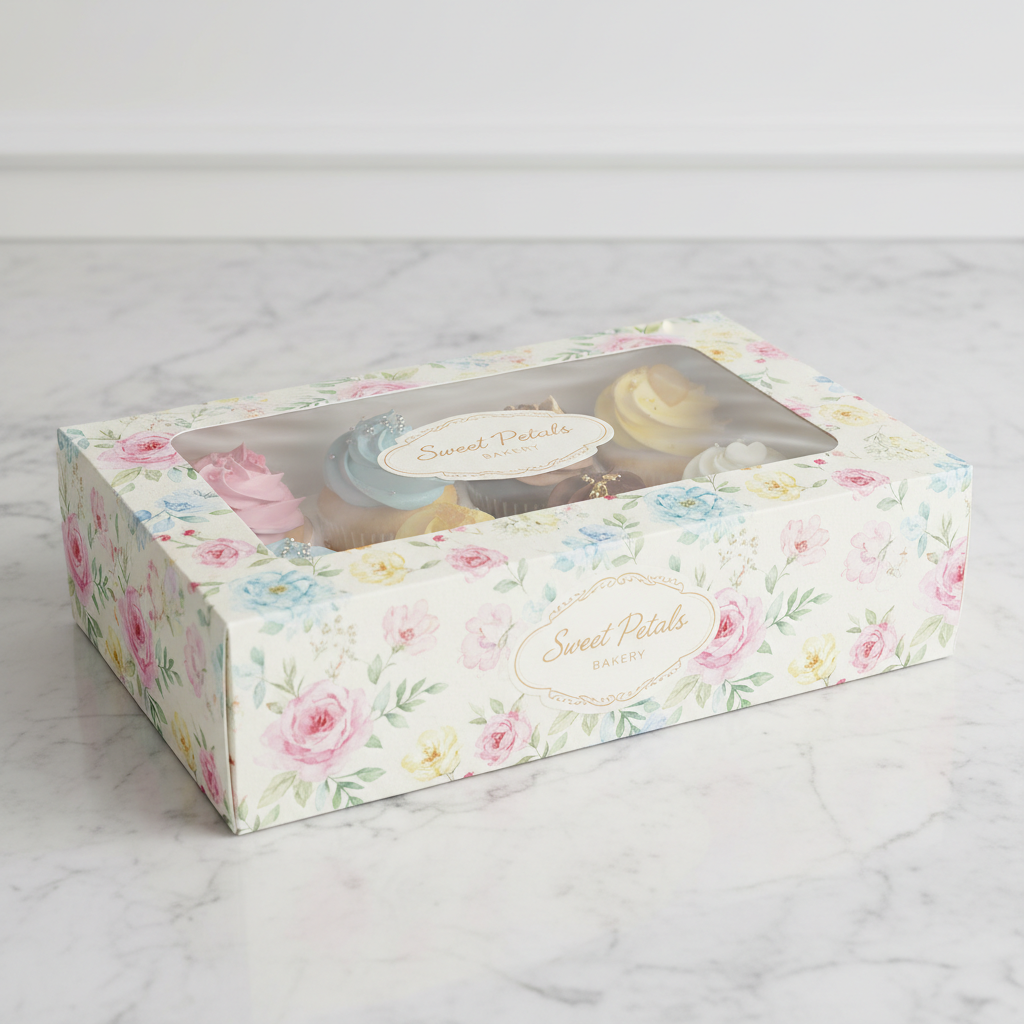
- Window Patching: A clear PET or PLA window on the lid allowing visibility. Essential for retail environments where visual appeal drives impulse buys.
- Handle Boxes: Integrated handles on top. Popular for takeaway and gifting, eliminating the need for an external carrier bag.
5. Printing Technologies & Finishing Options
To differentiate your brand, the print quality must be sharp and color-accurate. Understanding the printing process helps you manage costs and expectations.
Offset Printing (Lithography)
The gold standard for high-volume wholesale orders. It uses plates to transfer ink onto rubber blankets and then onto the paper.
- Advantages: Highest image quality, cost-effective at high volumes (1,000+ units), supports special finishes.
- Colors: CMYK (Full color) and Pantone (PMS) for exact brand color matching.
Flexographic Printing
Often used for simpler designs on corrugated shipping boxes or simple kraft boxes. It acts like a high-speed rubber stamp.
- Advantages: Very fast, cheaper for simple 1-2 color logos.
- Limitations: Lower resolution than offset; not suitable for photographic images.
Finishing Techniques
Post-print finishes add tactile value and protection:
- Matte Lamination: Elegant, non-reflective, soft touch.
- Gloss Lamination: High shine, makes colors pop, resists dirt.
- Spot UV: A high-gloss clear coat applied only to specific areas (like a logo) against a matte background for contrast.
- Hot Foil Stamping: Metallic gold, silver, or copper foil pressed onto the box. Adds a premium, luxury feel suitable for weddings or high-end bakeries.
- Embossing/Debossing: Raising or recessing parts of the design for a 3D effect.
6. Sizing and Capacity Guide
Ordering the wrong size is a common pitfall. A box that is too short will crush the frosting; a box that is too wide will allow sliding. When defining specs for your custom cupcake box, consider the “Clearance Height.”
Height Considerations
Standard cupcakes are often 7-8cm tall including simple frosting. However, gourmet cupcakes with elaborate toppers or high swirls can reach 10-12cm. Always measure your tallest product variation and add 1-2cm of headspace clearance.
Standard Configurations
| Capacity | Typical Use Case | Material Suggestion |
|---|---|---|
| Single (1-pack) | Wedding favors, promotional giveaways | 300gsm SBS or Kraft |
| 2-pack / 4-pack | Retail sales, couple treats | 350gsm SBS |
| 6-pack / 12-pack | Family packs, party orders | 350gsm – 400gsm or Corrugated |
| 24-pack (Mini) | Catering events | Corrugated (E-Flute) essential |
7. Wholesale Buying Guide: MOQ, Sampling & Logistics
Navigating the procurement process requires attention to detail. Here is a step-by-step guide to ensuring a smooth transaction.
Minimum Order Quantity (MOQ)
Custom manufacturing requires setup time (making plates, dies, and calibrating machines). Therefore, MOQs are necessary to amortize these costs. While digital printing allows for smaller runs (e.g., 500 units), offset printing typically becomes economical at 1,000 to 3,000 units. For fully custom structures, MOQs may be higher.
Artwork and Dielines
Before production, your supplier will provide a “dieline”—a flat template of the box. Your designer must map the artwork onto this template.
- Vector Files: Always supply artwork in AI or PDF format (vector) for crisp lines.
- Bleed: Ensure background colors extend beyond the cut lines (bleed area) to avoid white edges.
- Safe Zone: Keep text and logos away from fold lines.
Sampling Process
Never proceed to mass production without a sample. There are two types:
- Digital Sample: A printed mock-up (often not on the final press) to check size and layout. Fast and cheap.
- Pre-production Sample: A box made on the actual production line with final materials and finishes. More expensive but essential for large orders to verify color accuracy and structural strength.
Shipping and Storage
Cupcake boxes are shipped flat to save volume. Ensure you have adequate dry storage space. High humidity can warp paperboard, so keep boxes in their master cartons until needed.
8. Quality Control Checklist
When your shipment arrives, or when approving a sample, check the following:
- Locking Mechanism: Do the tabs lock securely without popping open?
- Gluing: Is the side glue seam strong? Pull it gently to test adhesion.
- Color Match: Does the printed color match your Pantone reference?
- Smell: Is the box free of strong chemical odors? (Crucial for food packaging).
- Insert Fit: Does the insert fit snugly inside the box without buckling?
9. Sustainability in Bakery Packaging
Modern consumers and businesses prioritize sustainability. Discuss these options with your manufacturer:
- Recycled Content: Using board with a percentage of post-consumer waste.
- Biodegradable Windows: Replacing standard PET plastic windows with PLA (polylactic acid) derived from cornstarch.
- Soy-Based Inks: Using vegetable-based inks instead of petroleum-based ones for better biodegradability.
10. How to Request a Quote Effectively
To get an accurate price quickly, provide your supplier with the following details upfront:
- Dimensions: Length x Width x Height (specify if these are internal or external).
- Quantity: The number of units needed (ask for price breaks at different tiers).
- Material Preference: e.g., “350gsm White Ivory Board”.
- Printing Specs: e.g., “CMYK outside, plain inside” or “1 Pantone color + Gold Foil”.
- Insert Requirements: e.g., “Insert for 6 standard cupcakes”.
If you are unsure about the specs, explain your product (weight, size) and ask for recommendations. You can learn more about the process on our how to order page.
Frequently Asked Questions (FAQs)
1. What is the difference between food-grade and regular cardboard?
Food-grade cardboard is manufactured under strict hygiene standards and does not contain harmful chemicals that could migrate into food. It often features FDA or ISEGA compliant coatings for direct food contact.
2. Can I print on the inside of the cupcake box?
Yes, printing on the inside adds a premium unboxing experience. However, it requires food-safe inks and potentially a coating to ensure the ink does not transfer to the cupcake.
3. Do you supply custom inserts for non-standard cupcake sizes?
Absolutely. Inserts are die-cut to order. If you have mini muffins or jumbo cupcakes, the hole diameter can be adjusted to fit your product perfectly.
4. How long does production take for custom printed boxes?
Typically, production takes 10–20 days after artwork approval, depending on the complexity (e.g., foil stamping takes longer) and quantity. Shipping time is additional.
5. Why do I need a window on my cupcake box?
Windows are highly recommended for retail environments. They allow customers to see the decoration and freshness of the product without opening the box, which reduces handling and potential damage.
6. What is the best material for heavy 12-pack cupcake boxes?
For 12-packs, we recommend a sturdy corrugated board (E-flute) or a high-grammage (400gsm+) cardstock to prevent the box from sagging in the middle when lifted.
7. Can I order a sample before committing to a full wholesale run?
Yes, sampling is a standard part of the process. We encourage checking a physical sample to ensure the size and print quality meet your expectations.
Conclusion
Ordering custom cupcake boxes wholesale is a balance of aesthetics, engineering, and logistics. By selecting the right materials, ensuring food-safe coatings, and designing for structural integrity, you protect your product while elevating your brand.
Whether you need a simple kraft box for a rustic bakery or a high-gloss, foil-stamped box for a luxury patisserie, understanding these specifications ensures you get the best value for your investment. Ready to start your custom packaging project? Contact us today to request a quote or discuss your specific requirements with our packaging experts.