

In the evolving landscape of food service packaging, the shift from plastic to sustainable alternatives is no longer just a trend—it is a regulatory and consumer-driven mandate. For restaurant chains, distributors, and beverage brands, sourcing custom paper straws wholesale offers a dual advantage: environmental compliance and a powerful mobile branding opportunity.
Unlike plain generic straws, custom-printed options allow businesses to maintain brand consistency right down to the last sip. However, purchasing paper straws in bulk requires a technical understanding of materials, ply counts, adhesives, and printing technologies to ensure the product performs well under real-world conditions.
This comprehensive guide covers everything procurement managers and buyers need to know about specifying, customizing, and ordering high-quality paper straws. From diameter selection for specific beverages to understanding food-safe ink requirements, we provide the technical clarity needed to make informed purchasing decisions.
The Business Case for Custom Branded Paper Straws
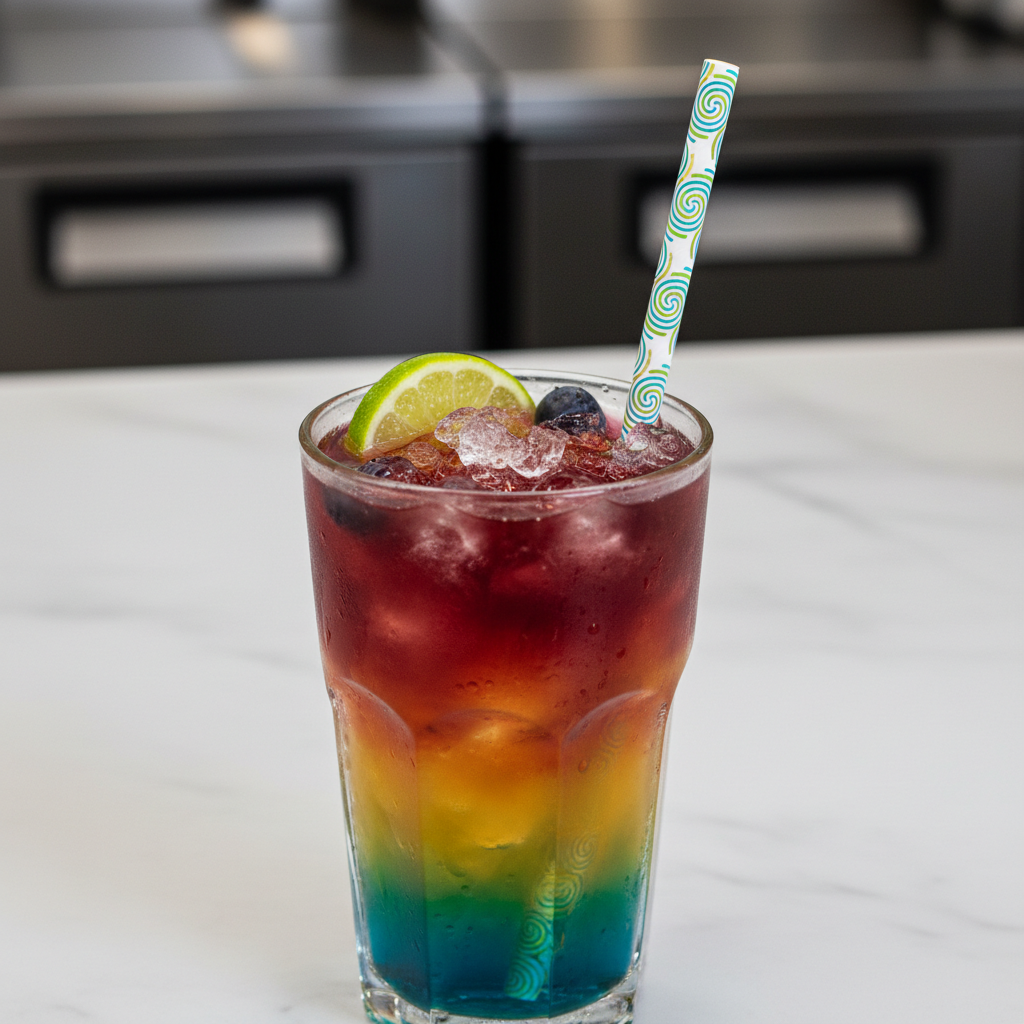
Paper straws serve as a subtle yet effective marketing tool. When a customer carries a drink from a coffee shop or quick-service restaurant (QSR), the straw is often visible. Customization turns a functional commodity into a brand asset.
- Brand Visibility: Printing logos, slogans, or brand colors directly on the straw or its wrapper reinforces brand identity.
- Premium Perception: High-quality, branded packaging suggests attention to detail, elevating the perceived value of the beverage.
- Social Sharing: Aesthetically pleasing drinks are frequently shared on social media; a branded straw ensures your logo is part of the user-generated content.
For distributors and wholesalers, offering a robust catalog of custom paper straws is essential to meeting the diverse needs of coffee chains, bubble tea shops, and bars.
Technical Specifications: What Makes a High-Quality Paper Straw?
Not all paper straws are created equal. The difference between a straw that collapses in minutes and one that lasts for hours lies in the manufacturing specifications. Buyers should pay attention to the following technical details.
1. Paper Grade and Material Sourcing
The core material must be high-grade, food-safe kraft paper. Lower-quality recycled papers can compromise structural integrity and hygiene.
- Virgin Kraft Paper: Typically used for the outer layers to ensure a smooth printing surface and superior strength.
- FSC Certification: Many buyers prioritize paper sourced from responsibly managed forests.
- GSM (Grams per Square Meter): Higher GSM paper provides better stiffness. Industrial standards often involve specific blends to balance flexibility with rigidity.
2. Ply Count (Layer Construction)
The durability of a paper straw is largely determined by the number of paper layers (plies) wound together.
- 3-Ply Construction: The industry standard for most general-purpose straws (soda, water, juice). It offers a good balance of cost and performance.
- 4-Ply Construction: Recommended for prolonged use or thicker beverages. The extra layer significantly increases crush resistance and longevity in liquid.
3. Food-Grade Adhesives
The glue holding the layers together must be FDA-compliant and water-resistant. Poor quality adhesives are the primary cause of straws unraveling or tasting “papery.” High-quality manufacturing uses specialized wet-strength adhesives designed to withstand immersion without leaching chemicals.
Size and Diameter Guide: Matching the Straw to the Drink
Selecting the correct dimensions is critical for customer satisfaction. A straw that is too narrow for a thick shake or too short for a venti cup renders the product useless.
| Straw Type | Typical Diameter | Typical Length | Best Use Cases |
|---|---|---|---|
| Standard / Soda | 6mm (0.23″) | 197mm – 210mm | Soft drinks, water, iced coffee, juice. |
| Jumbo / Smoothie | 8mm – 10mm | 200mm – 230mm | Thick milkshakes, smoothies, frappes. |
| Bubble Tea (Boba) | 12mm (0.47″) | 210mm – 230mm | Drinks with tapioca pearls, jelly, or fruit chunks. |
| Cocktail / Sip | 5mm – 6mm | 130mm – 150mm | Short cocktails, tasting samples, kids’ cups. |
For businesses offering a wide range of beverages, we recommend stocking a variety of sizes from our cups and accessories category to ensure every drink has an appropriate companion.
Printing and Customization Options
When ordering wholesale paper straws, understanding the printing capabilities allows you to maximize branding without compromising safety.
1. Direct Straw Printing
This method involves printing directly onto the outer layer of paper before it is wound into a straw.
- Ink Safety: All inks must be food-grade, typically soy-based or water-based vegetable inks. They should not bleed when wet.
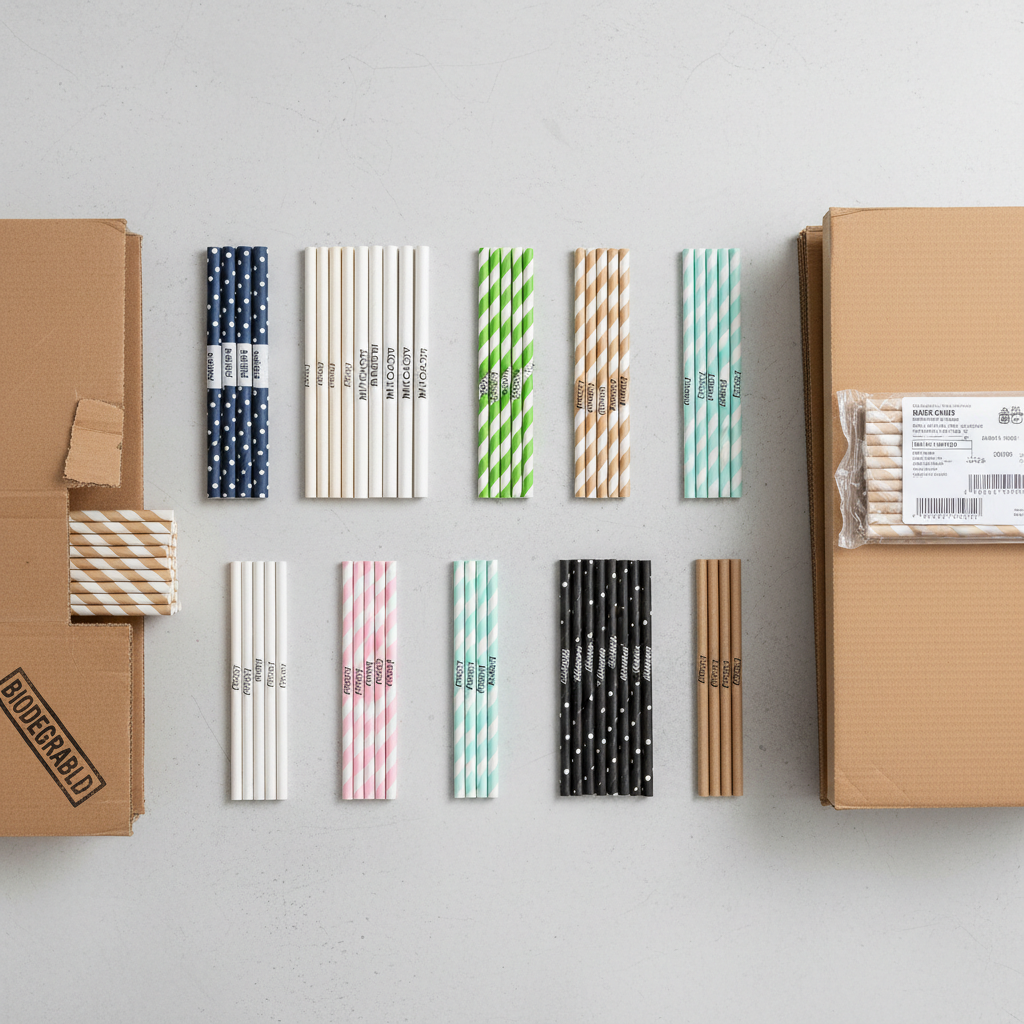
- Design Limitations: Due to the spiral winding process, continuous patterns (stripes, stars, polka dots) work best. Logos can be used but require careful alignment (registered print) which may incur higher setup costs or MOQs.
- Colors: Pantone (PMS) color matching is usually available to align with corporate branding.
2. Wrapper Customization
For hygiene, many establishments prefer individually wrapped straws. The paper wrapper itself offers excellent real estate for branding.
- Advantages: You can print complex logos and text on the wrapper without worrying about the spiral distortion of the straw itself.
- Hygiene: Ideal for self-service stations and takeout orders.
3. Cut Styles
- Flat Cut: Standard for safety and general use.
- Angled (Sharp) Cut: Essential for piercing the plastic sealing film on bubble tea cups or juice boxes.
Durability: Addressing the “Soggy Straw” Concern
The biggest objection to paper straws is performance longevity. To ensure you are buying a product that won’t frustrate customers, inquire about the following:
- Over-oiling/Coating: Some premium straws use a light, food-safe bio-coating to repel liquid absorption.
- Immersion Testing: reputable manufacturers conduct immersion tests (e.g., 2 hours in cold water, 1 hour in warm water) to ensure the straw retains structural rigidity.
- Temperature Tolerance: While paper straws are primarily for cold drinks, high-quality thick-walled straws can withstand warm beverages for short periods without collapsing immediately.
Wholesale Ordering Checklist
Preparedness streamlines the procurement process. Before you start your order, ensure you have the following details ready.
Minimum Order Quantities (MOQ)
Customization requires specific production runs. MOQs for custom-printed straws are typically higher than stock items.
Typical Range: Custom runs might start from 50,000 to 100,000 units depending on the complexity of the print and the size of the straw.
Artwork Requirements
To ensure crisp printing:
- File Format: Provide vector files (AI, EPS, PDF).
- Fonts: Outline all fonts to prevent missing text errors.
- Color Codes: Specify Pantone Solid Coated numbers for accurate color matching.
Lead Times and Logistics
Custom manufacturing involves plate creation, printing, winding, drying, and cutting.
Estimation: Allow 2-4 weeks for production after artwork approval, plus shipping time. Ocean freight is cost-effective for bulk orders but requires planning ahead.
FAQ: Common Questions from B2B Buyers
1. Are the inks used on custom straws safe for consumption?
Yes. We use strictly food-grade, vegetable-based inks that comply with international food safety standards (such as FDA and LFGB). They are odorless and do not migrate into the beverage.
2. Can I order a mix of sizes in one shipment?
Absolutely. Many distributors order a container load mixed with standard 6mm straws, 12mm boba straws, and coffee stirrers to optimize shipping costs. Check our beverage packaging category to mix and match.
3. How long do paper straws last in a drink?
A high-quality 3-ply or 4-ply paper straw typically maintains its structure for 2 to 4 hours in cold liquids. Performance varies with temperature and liquid acidity.
4. Are these straws biodegradable and compostable?
Yes, paper straws made from natural cellulose fibers are biodegradable and industrially compostable, offering a significant environmental advantage over plastic.
5. Do you offer samples before placing a bulk order?
Yes, sampling is a standard part of our B2B process. We encourage you to test the durability and print quality. You can contact our team to request a sample pack.
6. Can I print on the paper wrapper instead of the straw?
Yes, printing on the wrapper is a popular option. It allows for more detailed branding while keeping the straw itself plain or simply colored.
7. What is the difference between sharp and flat ends?
Flat ends are standard for open cups. Sharp (diagonal cut) ends are specifically designed for piercing the plastic film seals common on bubble tea and takeout juice cups.
Conclusion: Elevate Your Brand with Quality Packaging
Sourcing custom paper straws wholesale is a strategic decision that balances brand visibility, customer experience, and environmental responsibility. By selecting the right specifications—ply count, diameter, and print quality—you ensure that your packaging reflects the quality of the beverage inside.
At YBJ Packing, we specialize in helping businesses navigate these technical details to deliver high-performance packaging solutions globally.
Ready to enhance your beverage service? Request a quote today to discuss your custom specifications and get a competitive proposal for your bulk requirements.