

Introduction: The Strategic Importance of Popcorn Packaging
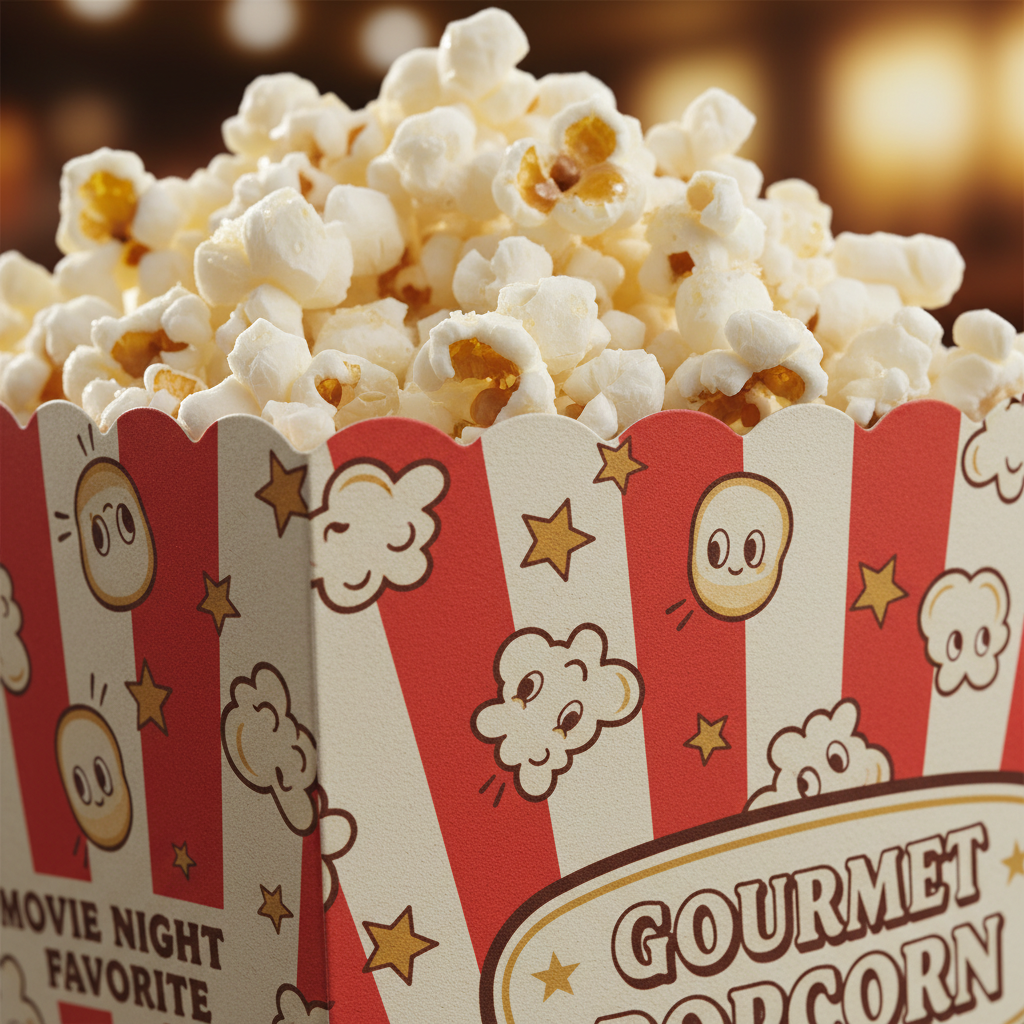
In the competitive landscape of food service—whether in cinemas, stadiums, amusement parks, or retail chains—packaging serves two critical functions: operational efficiency and brand reinforcement. For popcorn, a high-volume, high-margin product, the container is not merely a vessel; it is a mobile billboard that travels through your venue, appears in social media posts, and directly influences the consumer’s perception of quality.
Choosing the right custom popcorn containers involves balancing structural integrity, grease resistance, aesthetic appeal, and cost-effectiveness. A container that leaks butter or collapses under the weight of a large serving damages the customer experience. Conversely, a well-engineered, vibrantly printed bucket enhances the perceived value of the snack and drives concession sales.
This comprehensive guide is designed for procurement officers, operations managers, and brand owners. We will dissect the technical specifications of popcorn packaging, from paperboard grades and barrier coatings to printing technologies and logistical considerations, helping you make informed purchasing decisions for your supply chain.
1. Material Selection: The Foundation of Quality
The structural integrity of a popcorn container depends entirely on the base material. Unlike dry goods packaging, popcorn containers must withstand heat, steam, and significant amounts of oil and butter without losing rigidity.
Food-Grade Paperboard Options
Most industrial popcorn containers are manufactured from high-quality food-grade paperboard. The choice of board affects printability, stiffness, and cost.
- Ivory Board (White Bleached Sulfate): This is the industry standard for premium popcorn buckets. It offers a pristine white surface that is ideal for high-resolution, full-color printing. It provides excellent stiffness and a clean, sanitary appearance.
- Kraft Board (Unbleached): Increasing in popularity due to its eco-friendly, rustic aesthetic. Kraft board is strong and tear-resistant. While it absorbs ink differently than white board (resulting in more muted, natural colors), it signals sustainability to the consumer.
- Duplex Board: A multi-ply board with a coated white exterior and a grey or white interior. This is often a cost-effective option for folding boxes where high stiffness is required at a lower price point, though it is less common for round tubs.
Understanding GSM (Grams per Square Meter)
Paper weight is measured in GSM. The larger the container, the higher the GSM required to maintain shape.
- Small Containers (32oz – 46oz): Typically use 210gsm to 260gsm paperboard. These sizes hold less weight and require less structural reinforcement.
- Medium to Large Containers (64oz – 85oz): Require 260gsm to 300gsm. This range prevents the sidewalls from bowing when filled.
- Jumbo/Family Buckets (130oz – 170oz+): Demand 300gsm to 350gsm+. At this capacity, the container must support significant weight without collapsing, especially when customers grip the bucket firmly with one hand.
2. Barrier Coatings and Grease Resistance
Popcorn is inherently oily. Without an effective barrier, butter and oil will penetrate the paper fibers, causing unsightly grease spots (staining) and compromising the structural integrity of the bucket. This is a critical specification for food packaging solutions.
PE (Polyethylene) Lining
The most common barrier method is extrusion coating with Polyethylene (PE).
- Single PE (1PE): Coating on the inside only. This is standard for popcorn buckets as it prevents grease penetration from the inside. The outside remains uncoated paper, which is excellent for printing.
- Double PE (2PE): Coating on both the inside and outside. This is necessary if the containers will be stored in humid environments (like open-air stadiums) or if condensation is a concern (e.g., if the bucket is also used for ice). For standard popcorn use, Single PE is usually sufficient.
Aqueous & Dispersion Coatings
For brands seeking plastic-free alternatives, water-based (aqueous) coatings provide grease resistance without a polymer film. These are easier to recycle in standard paper streams but may have lower resistance thresholds for extremely buttery products compared to PE.
PLA (Polylactic Acid) Lining
PLA is a bioplastic derived from renewable resources like corn starch. It offers similar performance to PE but is industrially compostable. This is the material of choice for brands with strict sustainability mandates.
3. Structural Styles: Buckets, Boxes, and Scoops
The shape of the container impacts storage efficiency, serving speed, and customer convenience.
Round Popcorn Tubs (Buckets)
Best for: Cinemas, theaters, large venues.
Pros: Extremely sturdy; easy to hold; wide opening allows for easy sharing; high perceived value; nestable for shipping.
Cons: Higher shipping volume compared to flat-folded boxes.
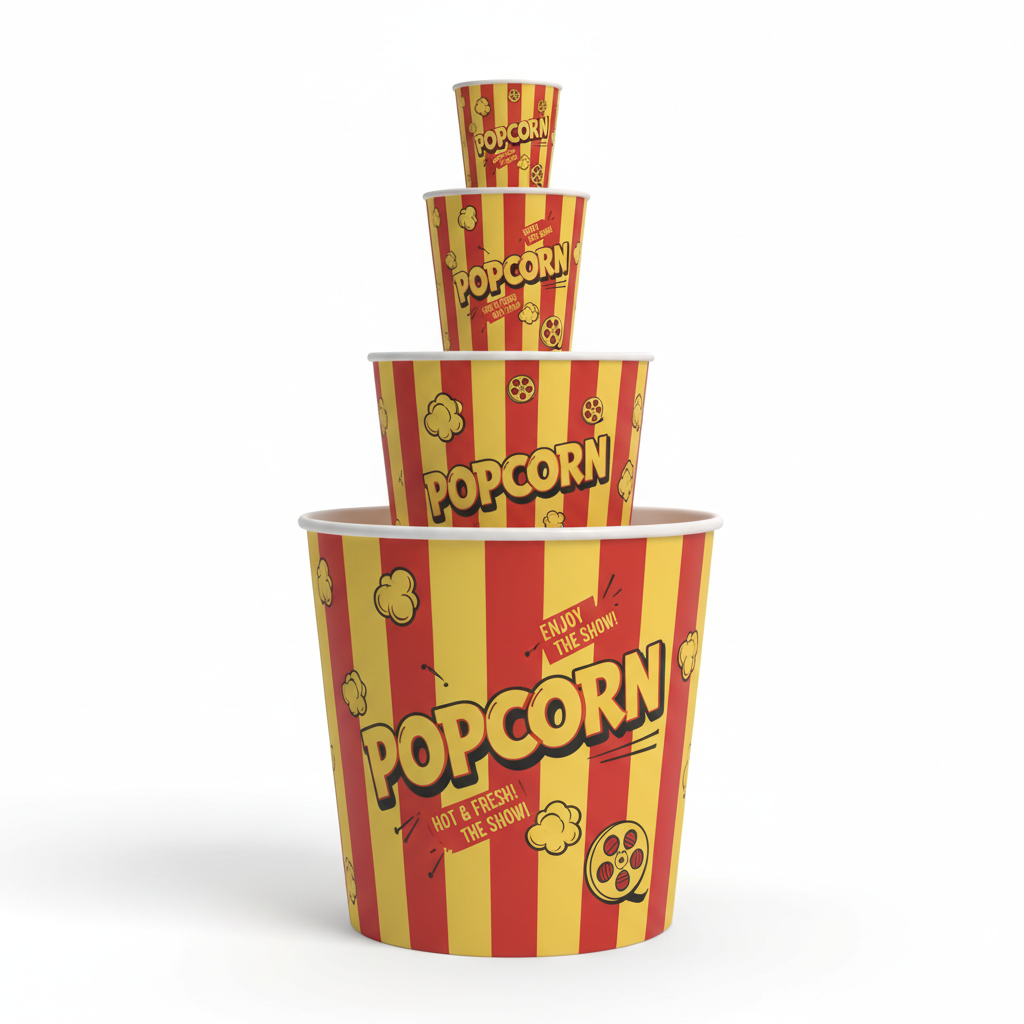
Round tubs are the gold standard for movie theaters. They are typically formed at the factory and shipped nested (stacked inside one another). The rolled rim provides extra rigidity and comfort for the user.
Folding Popcorn Boxes
Best for: Carnivals, parties, retail kits, venues with limited storage.
Pros: Ships flat (extremely efficient logistics); lower unit cost; classic nostalgic look.
Cons: Requires assembly (popping open) at the point of sale; generally less rigid than round tubs; not suitable for extremely heavy loads.
Popcorn Scoops/Cups
Best for: Quick-service scenarios, walking vendors.
Pros: Open top design facilitates rapid filling; easy to eat from while walking.
Cons: Not sealable; lower capacity options.
4. Sizing Guide and Capacity Planning
Selecting the right size mix is crucial for maximizing revenue (upselling larger sizes) and reducing waste. Capacities are typically measured in fluid ounces (oz), representing the volume.
Common Industry Sizes
- 32 oz (Small): Individual serving. Good for children or light snackers.
- 46 oz / 64 oz (Medium): Standard individual portion. The 64oz is often the “Regular” size in many cinema chains.
- 85 oz (Large): A substantial portion, often perceived as high value.
- 130 oz / 170 oz (Jumbo/Family): Designed for sharing. These buckets often feature wide mouths to allow multiple hands to reach in simultaneously.
Dimensions Checklist
When ordering wholesale popcorn containers, verify the three key dimensions:
- Top Diameter: Ensures the lid (if used) fits and determines how easy it is to reach inside.
- Bottom Diameter: Determines stability and cup holder compatibility (critical for drive-in theaters or stadium seating).
- Height: Affects stacking and shelf presence.
5. Custom Printing and Branding Options
In the B2B market, the visual impact of packaging is a primary differentiator. High-quality printing transforms a commodity item into a marketing asset.
Printing Technologies
- Offset Printing: The superior choice for high-volume, high-quality runs. It delivers sharp images, accurate color reproduction, and smooth gradients. Ideal for photographic designs or complex movie artwork.
- Flexographic Printing: Often used for simpler designs or very high-volume runs. While cost-effective, it may not achieve the same resolution as offset printing for intricate details.
Color Management
- CMYK (Process Color): Used for full-color images and photography.
- Pantone (PMS): Essential for maintaining brand consistency (e.g., Coca-Cola Red). Specify PMS codes to your manufacturer to ensure your logo colors are exact.
Finishes and Effects
To make your packaging stand out in a dim theater or crowded stadium, consider specialized finishes:
- Gloss Lamination: Enhances color vibrancy and provides a shiny, protective finish.
- Matte Varnish: Offers a sophisticated, non-reflective look.
- Spot UV: A high-gloss coating applied only to specific areas (like a logo), creating a striking contrast against a matte background.
- Embossing/Debossing: Adds tactile texture to the container walls.
6. Manufacturing and Quality Assurance
Understanding the manufacturing process helps in assessing supplier capability.
The Production Workflow
- Printing: Large reels or sheets of paperboard are printed.
- Die-Cutting: The printed board is cut into the flat “fan” shape of the cup sidewall.
- Forming: The sidewall is wrapped around a mandrel, and the bottom disc is heat-sealed or glued in place.
- Rim Rolling: The top edge is rolled to create a smooth lip.
Quality Control Checkpoints
Reliable suppliers implement strict QC protocols:
- Leak Testing: Random samples are filled with liquid (often a solution more aggressive than oil) to ensure bottom seals are tight.
- Odor Testing: Ensuring inks and glues are food-grade and do not impart any chemical smell to the warm popcorn.
- Adhesion Testing: Tape tests are performed to ensure ink does not peel off the coated surface.
7. Logistics, Storage, and Supply Chain
Popcorn buckets are lightweight but voluminous. Logistics costs can be significant.
Nesting and Stacking
Round buckets are designed to nest. The “stacking height” is the vertical space added by each additional cup in a stack. Minimizing this gap maximizes the number of units per case and per pallet, directly reducing freight costs.
Storage Conditions
Paperboard is hygroscopic. Store cases off the ground in a cool, dry environment. High humidity can cause buckets to warp or become soft, while extreme dryness can make them brittle.
8. Buying Guide: How to Order
When you are ready to source popcorn containers, preparing the following information will streamline the process.
Minimum Order Quantity (MOQ)
Custom printing requires setup (plates, calibration). Therefore, MOQs for custom buckets are typically higher than stock items. Expect MOQs starting from 30,000 to 50,000 units for fully custom offset printing, though this varies by size and manufacturer.
Lead Times
- Sampling: 7–10 days for digital or physical proofs.
- Production: 20–30 days after artwork approval.
- Shipping: Depends on freight method (ocean vs. air) and destination.
Artwork Preparation
Request a dieline template from your supplier before designing. Ensure your artwork extends into the “bleed” area to avoid white edges. Outline all fonts and embed images.
Requesting Samples
Always request a sample before committing to a full production run. Test the sample with your specific product (hot popcorn with your specific butter/oil ratio) to verify grease resistance.
9. Frequently Asked Questions (FAQ)
Q1: Can popcorn buckets be used for other foods?
A: Yes. The grease-resistant coating makes them suitable for fried chicken, nachos, and other dry or semi-dry oily snacks. However, always verify the temperature rating if serving extremely hot items.
Q2: Are your popcorn containers microwave safe?
A: Standard PE-lined paper buckets are generally not recommended for microwave use as the shape and materials are not designed for it. If microwaveability is a requirement, specify this to the manufacturer so appropriate materials (like clay-coated board without poly) can be considered, though this is rare for theater-style buckets.
Q3: What is the difference between single and double wall popcorn cups?
A: Most popcorn buckets are single wall. Double wall cups are typically reserved for hot beverages (coffee) to provide insulation. Since popcorn does not require high thermal insulation to protect the hand, single wall is the industry standard and is more cost-effective.
Q4: How do I ensure my branding colors are accurate?
A: Provide Pantone (PMS) color codes. Computer screens (RGB) display colors differently than printed ink (CMYK/Pantone). A physical color proof is the best way to verify accuracy.
Q5: Is there a setup fee for custom printing?
A: Yes, there is usually a one-time plate charge for each color used in your design. If you reorder the same design later, you typically do not pay this fee again.
Q6: Can you print on the inside of the bucket?
A: Generally, printing is done on the exterior only for food safety reasons. The interior surface that touches the food must remain a certified food-contact safe barrier.
Conclusion
Sourcing the right popcorn containers is a balance of engineering and marketing. The right container protects your product, keeps customers clean, and promotes your brand long after the movie or event is over.
Whether you need a standard 85oz cinema tub or a custom-shaped folding box for a promotional event, YBJ Packing offers a range of material and printing solutions tailored to the B2B market. We understand the nuances of grease resistance, print quality, and supply chain reliability.
Ready to elevate your concession packaging? Learn how to order or contact our team today to request a quote and free samples.