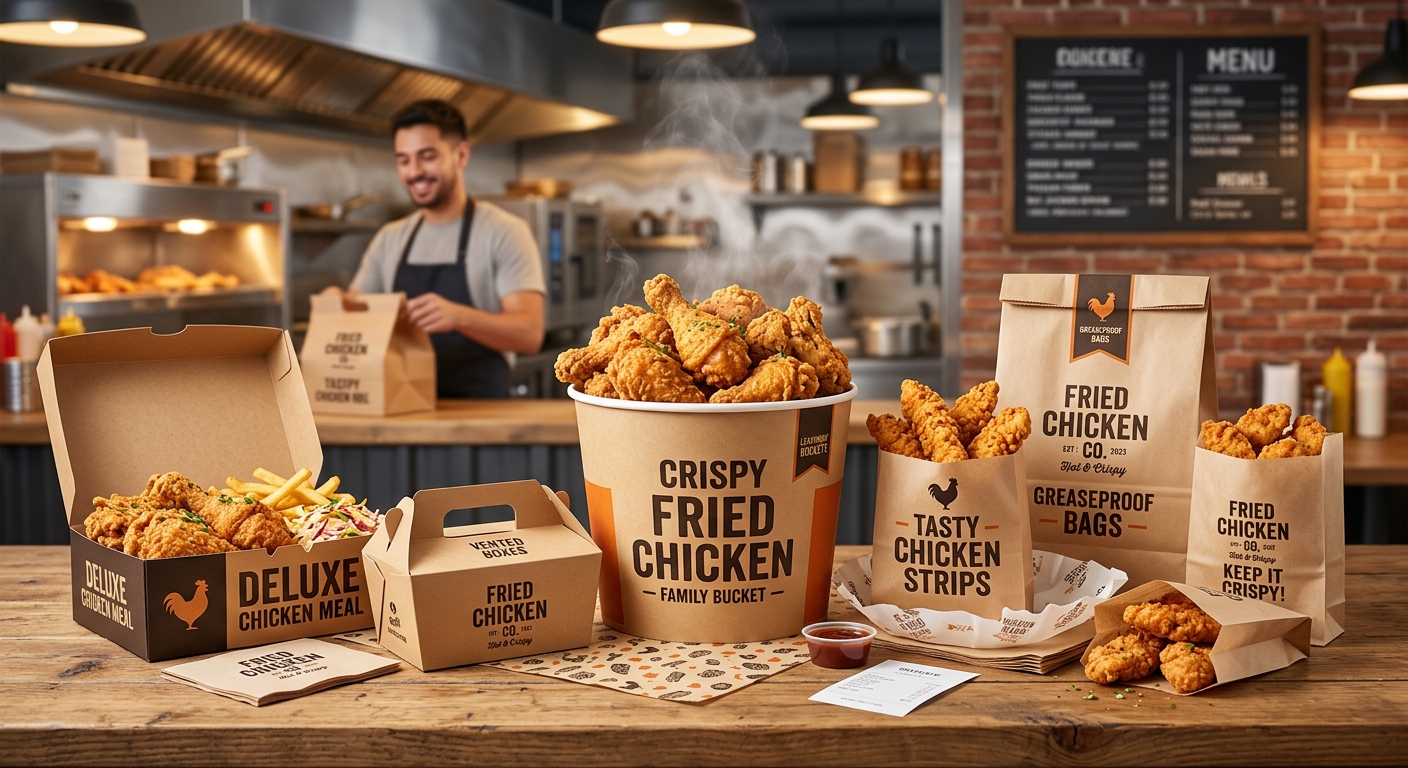


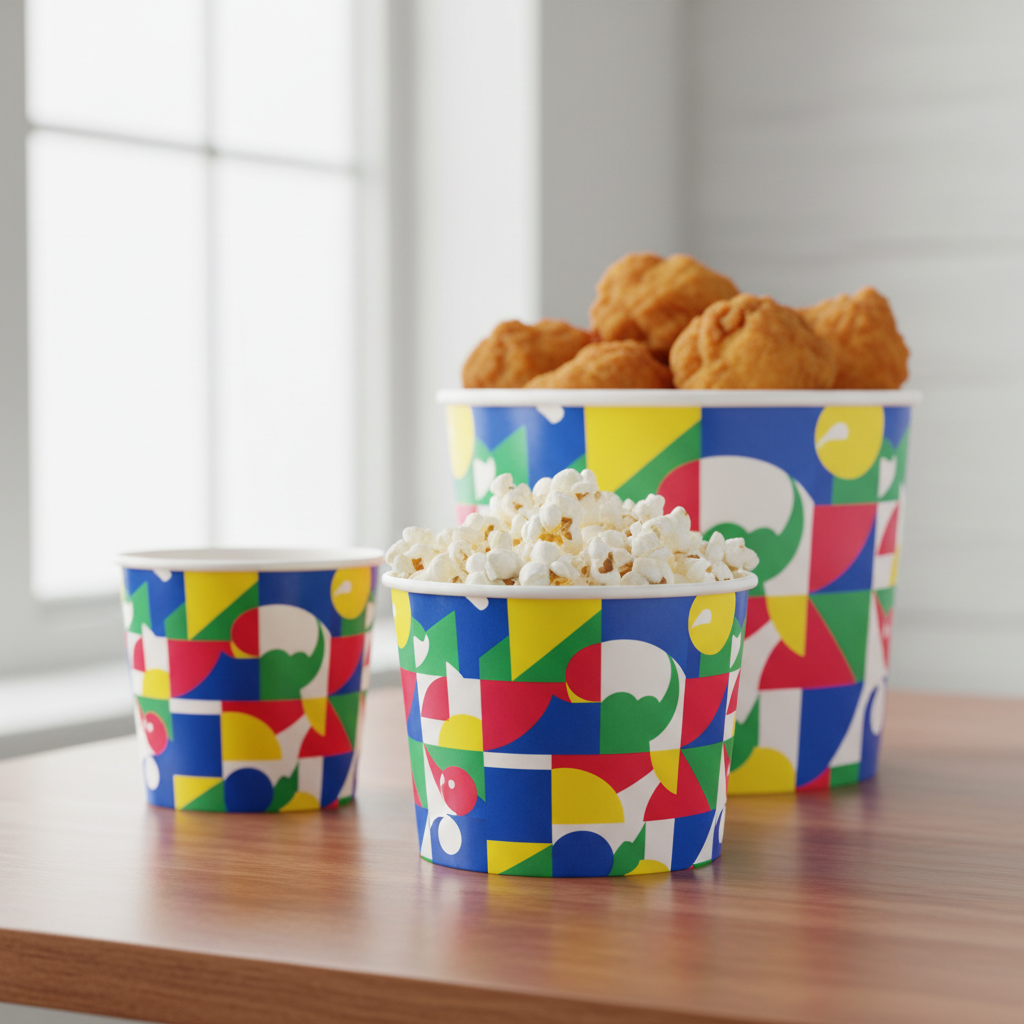
In the competitive landscape of modern food service, packaging serves two critical roles: protecting the product and projecting the brand. For fast-food chains, cinemas, concession stands, and family-style restaurants, the custom paper food bucket has become an iconic vessel. Whether it is holding crispy fried chicken, buttery popcorn, or a bulk serving of soup, the structural integrity and visual appeal of these containers directly influence customer satisfaction.
Sourcing paper food buckets wholesale is a strategic decision that involves more than just picking a size. Buyers must navigate a complex matrix of material specifications, barrier coatings, printing technologies, and supply chain logistics. A mismatch in specifications—such as using a single-poly coating for ice cream—can lead to soggy packaging and product failure. Conversely, over-engineering a bucket for dry snacks can unnecessarily inflate costs.
This comprehensive guide is designed for procurement officers, brand managers, and operations directors. We will explore the technical nuances of manufacturing custom printed paper food buckets, compare material options, and provide a step-by-step roadmap for ordering from a manufacturer like YBJ Packing.
The Strategic Shift to Paper Food Buckets
The global shift away from rigid plastics and Expanded Polystyrene (EPS) foam has positioned paperboard as the dominant material for large-volume food containers. However, the transition is not merely regulatory; it is functional and aesthetic.
Brand Real Estate
Unlike clamshells or generic wrappers, a food bucket offers a 360-degree canvas for high-impact graphics. It acts as a mobile billboard. When a customer walks through a stadium or a mall carrying a branded bucket, they are generating impressions. High-quality offset or flexographic printing allows brands to use this space for storytelling, promotional codes, or striking visual identities that drive appetite appeal.
Thermal and Structural Performance
Paperboard, when engineered correctly with the right thickness (GSM) and geometry, offers excellent thermal insulation. It keeps hot foods hot without burning the customer’s hands and prevents cold foods from melting too quickly. The tapered cylindrical shape is also structurally superior for stacking and nesting, optimizing storage space in crowded commercial kitchens.
Anatomy of a High-Quality Paper Bucket
To order the right product, buyers must understand the raw materials. A paper bucket is a composite product, typically consisting of a paperboard substrate and a barrier coating.
1. The Substrate: Food-Grade Paperboard
The core strength of the bucket comes from the paperboard. In the wholesale market, you will typically encounter two main types:
- White Cup Stock (Bleached): This is chemically bleached pulp that provides a pristine, bright white surface. It is the preferred choice for brands requiring vibrant, high-contrast color printing. The smooth surface ensures that fine details in logos and text are sharp.
- Natural Kraft Board (Unbleached): Made from unbleached wood pulp, Kraft board has a brown, rustic appearance. It is increasingly popular for brands emphasizing organic ingredients, sustainability, or an artisanal aesthetic. While printing colors may appear slightly more muted on Kraft, the eco-friendly look is a strong selling point for certain demographics.
Thickness and GSM: Durability is determined by the Grams per Square Meter (GSM) of the paper. Small popcorn cups might use 190gsm to 230gsm board, while large 170oz fried chicken buckets typically require 300gsm to 350gsm board to support the weight of the food without buckling.
2. Barrier Coatings: Managing Moisture and Grease
Paper is naturally porous. Without a coating, grease from fried chicken would stain the bucket, and moisture from hot soup would cause it to disintegrate. Choosing the right coating is the most technical part of the specification process.
| Coating Type | Best Use Cases | Key Characteristics |
|---|---|---|
| Single PE (Polyethylene) | Hot coffee, fried snacks, popcorn, dry foods. | Coating on the inside only. Prevents liquid penetration from the inside out. |
| Double PE | Cold drinks, ice cream, heavy soups, humid environments. | Coated on inside and outside. The outer layer protects the paper from condensation (sweating) which would otherwise soften the cup. |
| PLA (Polylactic Acid) | Eco-focused brands, compostable requirements. | Plant-based bioplastic. Compostable in industrial facilities. Good barrier properties but heat sensitivity varies. |
| Aqueous Coating | Plastic-free mandates. | Water-based dispersion coating. Fully recyclable with standard paper streams in many regions. |
For a deeper dive into specific container types, you can explore the Paper Food Buckets category to see how these materials are applied to different products.
Standard Sizes and Capacities
Standardization helps reduce tooling costs, but custom sizes are available for large volume orders. Capacities are usually measured in fluid ounces (oz). It is vital to distinguish between “flush fill” (filled to the brim) and “practical fill” (serving size).
Small to Medium (24oz – 64oz)
These sizes are ideal for individual servings of popcorn, nuggets, or side dishes. A 32oz bucket is a standard size for a medium movie theater popcorn or a large serving of french fries.
Large Family Sizes (85oz – 170oz)
This is the domain of the “family meal.”
- 85oz: Often used for bucket-for-two meals.
- 130oz: The classic fried chicken bucket size, holding approximately 8-12 pieces of chicken depending on the cut.
- 170oz+: Used for extra-large party packs or bulk popcorn.
When selecting a size, consider the lid fit. If you plan to sell takeout meals that require closure, ensure the bucket diameter matches standard lid sizes (paper or plastic). You can view various configurations in the general Food Containers section.
Printing Technologies: Flexo vs. Offset
The quality of the print reflects the quality of the food. When ordering custom printed paper food buckets, you will generally choose between two printing methods.
Flexographic Printing (Flexo)
Flexo uses flexible relief plates. It is highly efficient for high-volume runs and simple designs (e.g., 1-4 spot colors).
Pros: Lower unit cost at high volumes; faster production speeds; uses food-safe water-based inks easily.
Cons: Lower resolution than offset; gradients and photo-realistic images can be challenging.
Offset Printing (Lithography)
Offset printing transfers the inked image from a plate to a rubber blanket, then to the paper.
Pros: Superior image quality; capable of complex gradients, shadows, and photo-realistic designs; excellent color accuracy (CMYK + Pantone).
Cons: Higher setup costs; typically requires higher Minimum Order Quantities (MOQs) to be cost-effective.
Finishing Touches
To truly stand out, brands can add specialized finishes:
- Spot UV: A glossy coating applied to specific areas (like a logo) to make them pop against a matte background.
- Embossing: Creating a raised texture on the bucket surface (common in premium coffee cups, less common but possible for buckets).
- Gold/Silver Stamping: Foil stamping for a luxury appearance, often used for holiday specials or premium product lines.
Manufacturing and Quality Assurance
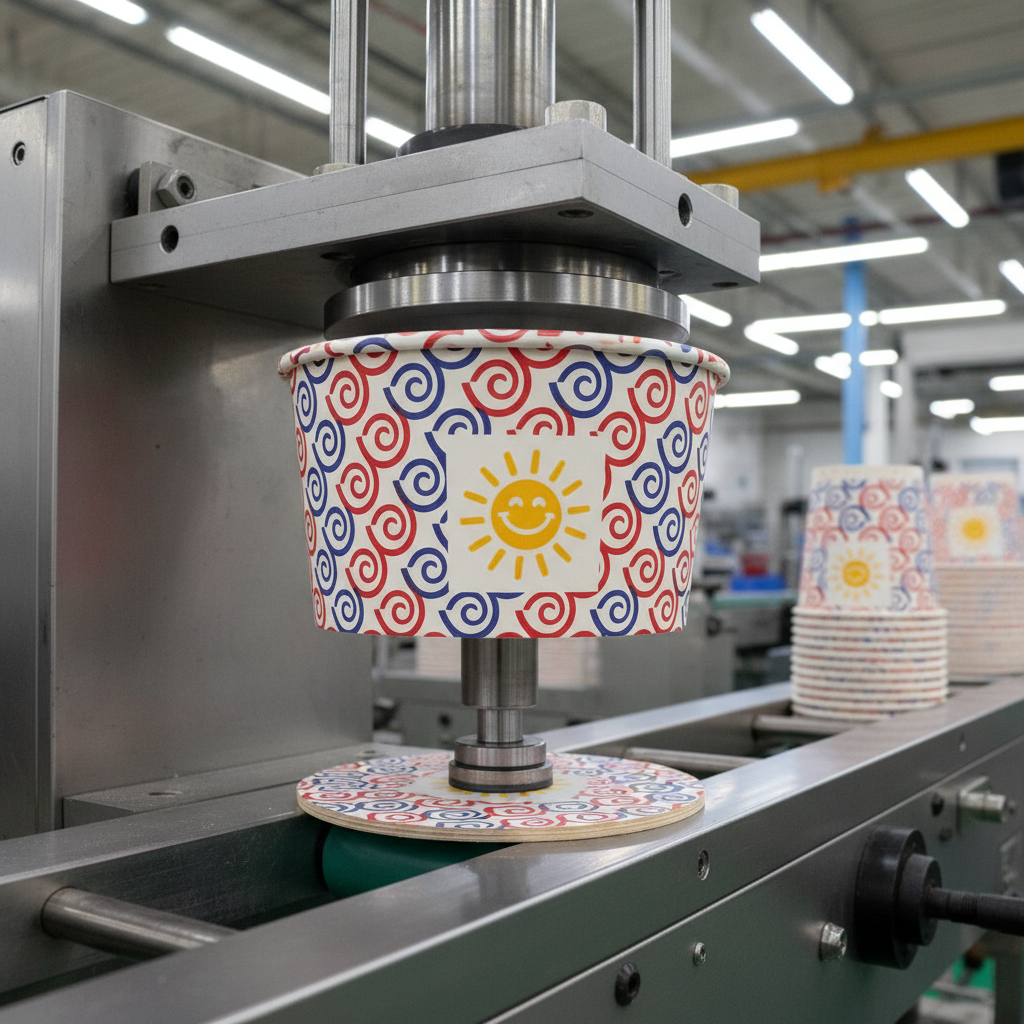
Understanding the manufacturing process helps in anticipating lead times and potential quality issues. The production of a paper bucket involves several stages:
- Printing: The raw paper roll is printed with the custom artwork.
- Die-Cutting: The printed roll is cut into “fan” shapes (the sidewalls of the bucket) and circular bottoms.
- Forming: The fan is wrapped around a mandrel. The side seam is sealed (usually via ultrasonic or heat bonding), and the bottom disc is inserted and sealed.
- Rim Rolling: The top edge of the paper is rolled to create a smooth lip, which provides rigidity and a secure fit for lids.
Quality Checkpoints
Reliable manufacturers implement strict QC protocols:
- Leak Testing: Random samples are filled with a testing liquid (often containing a dye) to ensure the bottom seal is watertight.
- Adhesion Testing: Checking that the side seam does not pop open under stress.
- Odor Testing: Ensuring that inks and glues do not impart any smell to the food product.
Buying Guide: How to Order Wholesale
Sourcing from a manufacturer involves specific logistics. Here is a checklist to streamline the process.
1. Define Your Specifications
Before requesting a quote, gather the following data:
- Volume: (e.g., 130oz)
- Dimensions: Top Diameter, Bottom Diameter, Height. (If you need a custom mold, tooling costs will apply).
- Material: White or Kraft? Single PE or Double PE?
- Quantity: Total units required.
- Lids: Do you need matching lids (Paper, PP, PET)?
2. Understand MOQs
Custom printing requires setting up production lines. Therefore, Minimum Order Quantities (MOQs) are standard.
Typical MOQ: 30,000 to 50,000 units is common for custom sizes or complex prints. Stock items (plain white/kraft) may have lower MOQs, but branding them requires labels.
3. Artwork Preparation
Once you engage with a supplier, they will provide a die-line template.
- Use vector software (Adobe Illustrator) for the best results.
- Ensure all fonts are outlined.
- Account for “bleed” (extending artwork beyond the cut line) to avoid white edges.
- Keep critical text and logos away from the bottom seam and the rim roll area to prevent distortion.
4. Sampling
Always request a sample.
- Digital Proof: A PDF showing how the art wraps around the bucket.
- Physical Sample: A handmade sample to check size and material feel (printing may be digital for the sample).
- Pre-production Sample: A sample from the actual production line (costly and time-consuming, usually reserved for massive orders).
For detailed steps on initiating an order, refer to our guide on How to Order.
Sustainability Considerations
Modern consumers are eco-conscious. If your brand values sustainability, consider discussing the following with your supplier:
- FSC Certified Paper: Ensures the wood pulp comes from responsibly managed forests.
- Water-Based Inks: Reduce Volatile Organic Compounds (VOCs).
- End-of-Life: Clearly label the bucket with disposal instructions (e.g., “Compostable” or “Recyclable where facilities exist”).
Logistics and Storage
Paper buckets are bulky. A 40ft High Cube shipping container can hold hundreds of thousands of nested buckets, but shipping air is expensive.
Nesting Ratio: Ask your manufacturer about the nesting capability. Tighter nesting reduces shipping volume but requires precise rim rolling to prevent buckets from jamming together (sticking).
Storage: Store paper buckets in a cool, dry place. Excessive humidity can cause paperboard to warp or absorb moisture, weakening the structure before use.
Frequently Asked Questions (FAQ)
1. Can I put hot soup in a standard fried chicken bucket?
Not recommended. Fried chicken buckets are typically grease-resistant but may not have the watertight bottom seal or the Double PE coating required for hot liquids. Always specify if the bucket is for liquid use so the manufacturer can apply the correct sealing method.
2. What is the lead time for custom printed buckets?
Typically, production takes 2-4 weeks after artwork approval, depending on the factory’s schedule. Shipping (ocean freight) can add another 4-6 weeks for international orders. Plan at least 2-3 months in advance.
3. Why is the color on the bucket different from my screen?
Screens use RGB (light), while printing uses CMYK (ink). Additionally, the paper substrate (especially Kraft) absorbs ink, which can darken colors. Always use Pantone (PMS) codes for color matching to ensure consistency.
4. Are there setup fees?
Yes, custom printing usually incurs a one-time plate charge per color. If you change the design later, new plates are needed.
5. Can I print on the bottom of the bucket?
Yes, printing on the bottom is possible and is a great place for barcodes, QR codes, or recycling information. However, it may require a separate printing pass depending on the machine.
6. Do you supply lids that fit these buckets?
Yes, most manufacturers offer compatible lids. It is crucial to source lids and buckets from the same supplier or verify the rim diameter (in millimeters) to ensure a leak-proof “snap” fit.
7. Is it possible to get a sample before placing a full order?
Yes, getting a sample is a standard part of the process. You can contact us to request samples of our previous work to evaluate quality.
Conclusion
Custom paper food buckets are more than just disposables; they are a vital touchpoint in the customer experience. From the tactile feel of the paperboard to the vibrancy of the print and the reliability of the leak-proof seal, every detail matters.
By understanding the specifications—coating types, paper weight, and printing options—you can source packaging that protects your food and elevates your brand. Whether you are launching a new fried chicken chain or upgrading your cinema’s popcorn tubs, choosing the right manufacturing partner is key to success.
Ready to elevate your food packaging? Request a quote today or explore our custom bucket options to get started.